


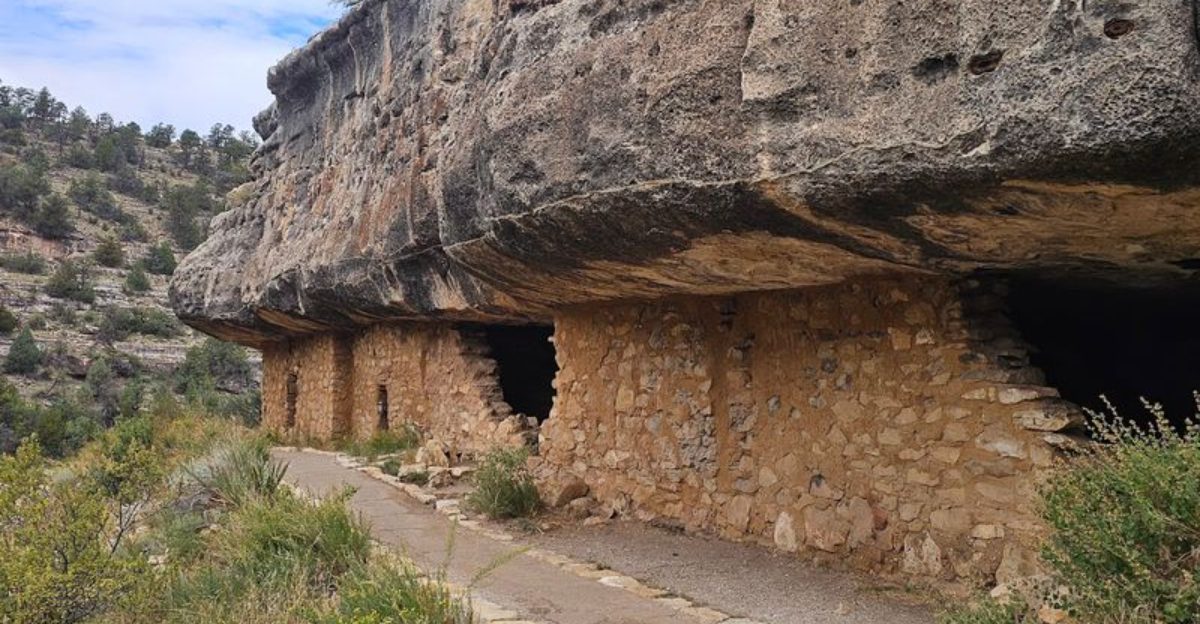
Tucked just outside Flagstaff, Arizona, Walnut Canyon National Monument is one of the Southwest’s best-kept secrets. Here, a short one-mile trail winds past real cliff dwellings built by the Sinagua people over 800 years ago.
You can walk right alongside ancient stone rooms perched into the canyon walls, making history feel incredibly close. Whether you’re a seasoned hiker or just looking for a quick adventure, this place will leave you speechless.
What Makes Walnut Canyon So Special
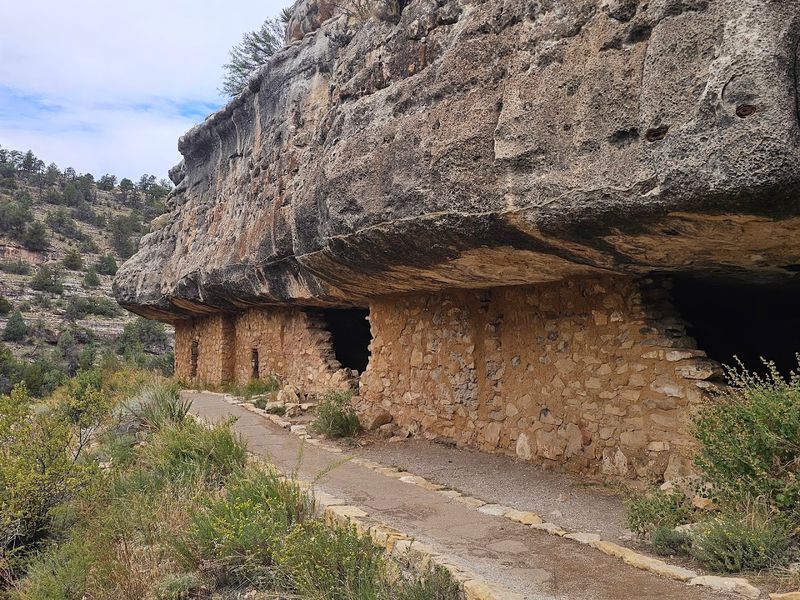
Some places just stop you in your tracks the moment you see them. Walnut Canyon National Monument is exactly that kind of place.
Carved over millions of years, this curved canyon near Flagstaff, Arizona holds a remarkable secret tucked into its limestone walls — the ancient homes of the Sinagua people.
What makes this spot truly unforgettable is how close you get to real history. Unlike many archaeological sites where ruins are roped off far in the distance, Walnut Canyon lets you walk right alongside these 800-year-old dwellings.
You can peek inside doorways and imagine families cooking, laughing, and going about daily life.
Rated 4.8 stars by thousands of visitors, this national monument consistently earns praise for its breathtaking scenery and well-preserved ruins. It’s the kind of hidden gem that makes you wonder why it isn’t talked about more often.
Getting to Walnut Canyon — Location and Access
Finding Walnut Canyon is surprisingly easy, which makes it a perfect road trip stop. Located just off Interstate 40, about 7.5 miles east of Flagstaff, Arizona, the monument sits at coordinates 35.1690, -111.5043.
A clearly marked exit leads you straight to the parking area without any complicated navigation.
Several visitors have called it a wonderful way to break up a long drive on I-40. One reviewer noted it’s “right off the highway” and can be explored in under two hours.
That kind of accessibility is rare for a site this impressive.
Parking is available on-site, though the lot is on the smaller side. Arriving early — especially on weekends — is strongly recommended to secure a spot.
The monument is open daily from 9 AM to 5 PM. You can call ahead at +1 928-526-3367 or visit nps.gov/waca for current conditions.
Admission Fees and the America the Beautiful Pass
Here’s some great news for budget-conscious travelers — if you already own an America the Beautiful Pass, entry to Walnut Canyon is completely free. This annual pass covers entrance fees at hundreds of federal recreation sites across the country, and Walnut Canyon is one of them.
Without the pass, there is a standard entrance fee to pay at the visitor center. Many reviewers specifically mentioned how the national parks pass makes the visit even more worthwhile, especially when combined with nearby sites like Wupatki National Monument and Sunset Crater Volcano.
One important note: the America the Beautiful Pass does NOT cover Grand Canyon National Park, which charges separately. So if you’re planning a larger Arizona adventure, keep that in mind.
For the most current fee information, check the official NPS website at nps.gov/waca or call the monument directly before your visit.
The Visitor Center — Your First Stop
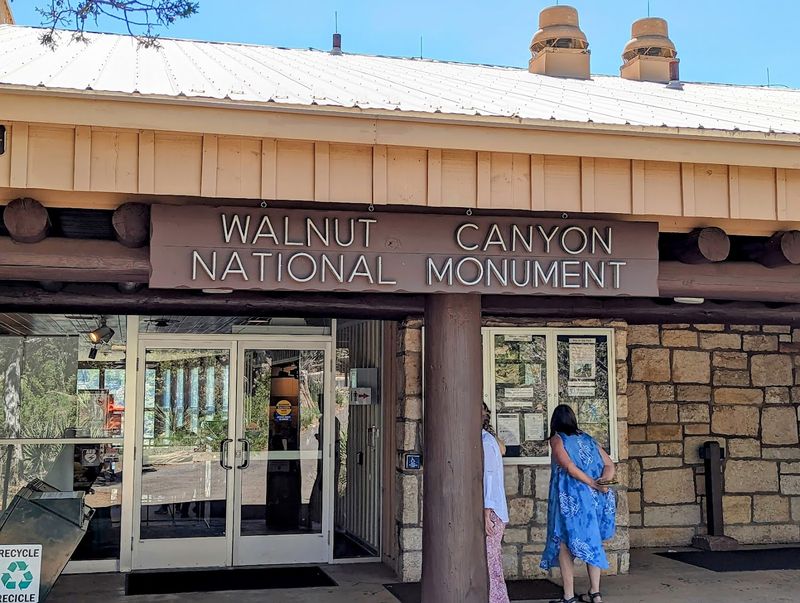
Before hitting the trail, spend a few minutes inside the visitor center — it genuinely enhances everything you’ll see outside. Located right at the trailhead, the center features a small but thoughtful exhibit area where you can learn about the Sinagua people, their culture, and the artifacts they left behind in the canyon.
Restrooms and water fountains are available here, making it a smart place to prepare before the hike. A small gift shop sells snacks, souvenirs, and locally made art pieces — perfect for picking up a memorable keepsake.
Staff members are known for being exceptionally friendly and helpful.
One visitor shared that Ranger Lucy stayed past closing time to thoroughly explain the site’s history, making their experience truly special. The Island Trail begins right out the back door of the visitor center, so after browsing the exhibits, you’re just steps away from stepping into ancient history.
The Island Trail — The Star of the Show
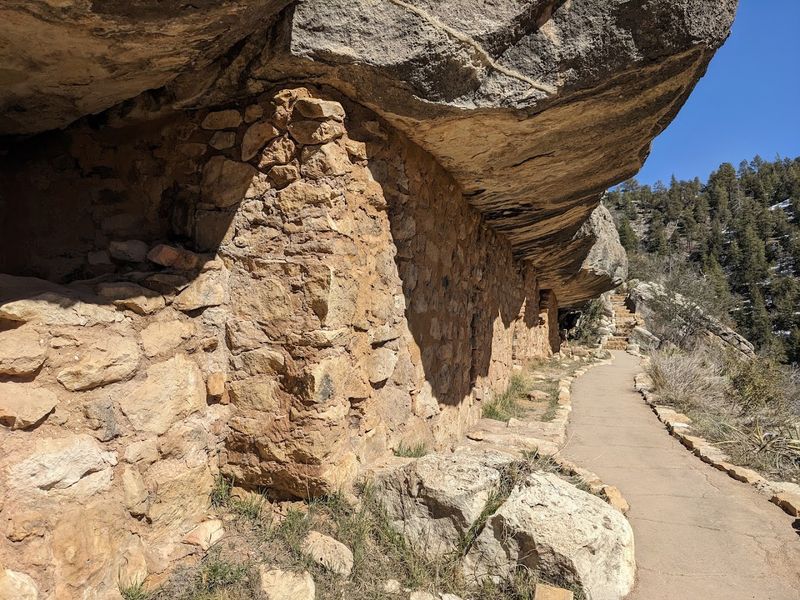
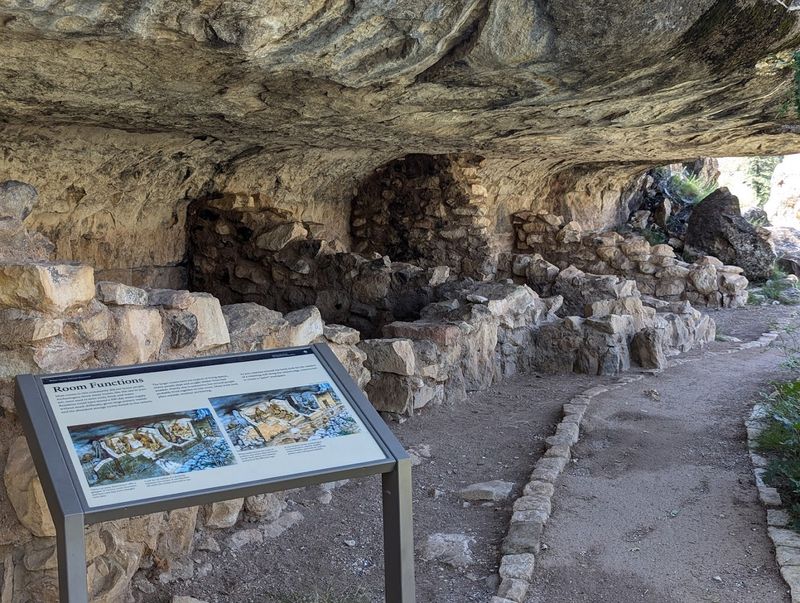
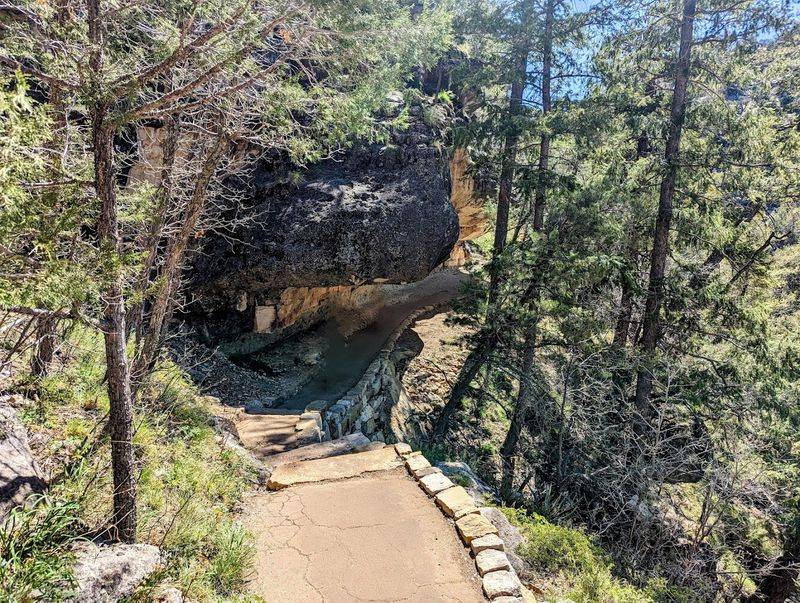
Ask any visitor which trail to take and the answer is unanimous — the Island Trail is the one not to miss. This roughly one-mile loop descends into the canyon and wraps around a limestone “island” formation, placing you within arm’s reach of dozens of ancient Sinagua cliff dwellings.
The trail is well-paved and clearly marked, with informative boards posted along the way to explain what you’re seeing. One reviewer described it perfectly: “Walkways take you into the canyon and around the cliffs to view the cliff dwellings.
Lots of informative boards on the walkway which help you imagine how people lived here.”
Plan for about 45 minutes to complete the loop at a relaxed pace, though most people linger longer because the views are so captivating. Every twist in the trail reveals another stunning perspective of the canyon and its ancient stone homes nestled into the rock.
The Famous 700 Steps — What to Expect
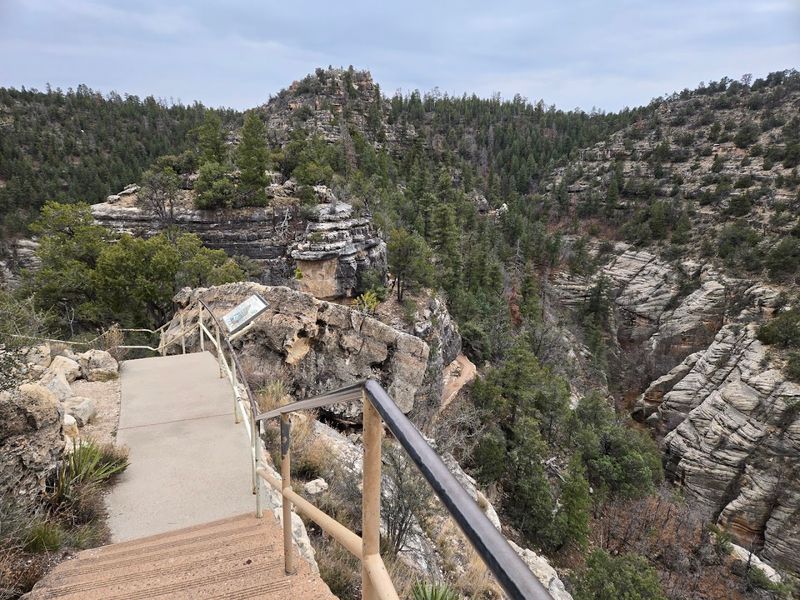
Fair warning — the steps are real, and they will remind your legs of their existence. The Island Trail involves roughly 185 to 240 steps going down into the canyon, with the equivalent of about 13 flights of stairs total.
On the way back up, you’ll climb approximately 270 steps to return to the visitor center.
Some visitors joke about “700 stairs” or even “10 billion stairs,” and while the actual count is lower, the elevation gain is genuinely noticeable. Walnut Canyon sits above 6,600 feet, so the thinner air makes the climb feel more intense than it might at sea level.
The good news? The steps are well-maintained, paved, and manageable for most healthy adults.
Take your time, rest when needed, and enjoy the views at each landing.
One reviewer summed it up best: “You’ll feel the 700 stairs on the way out, but it is so worth it.”
The Sinagua People — Who Built These Cliff Dwellings
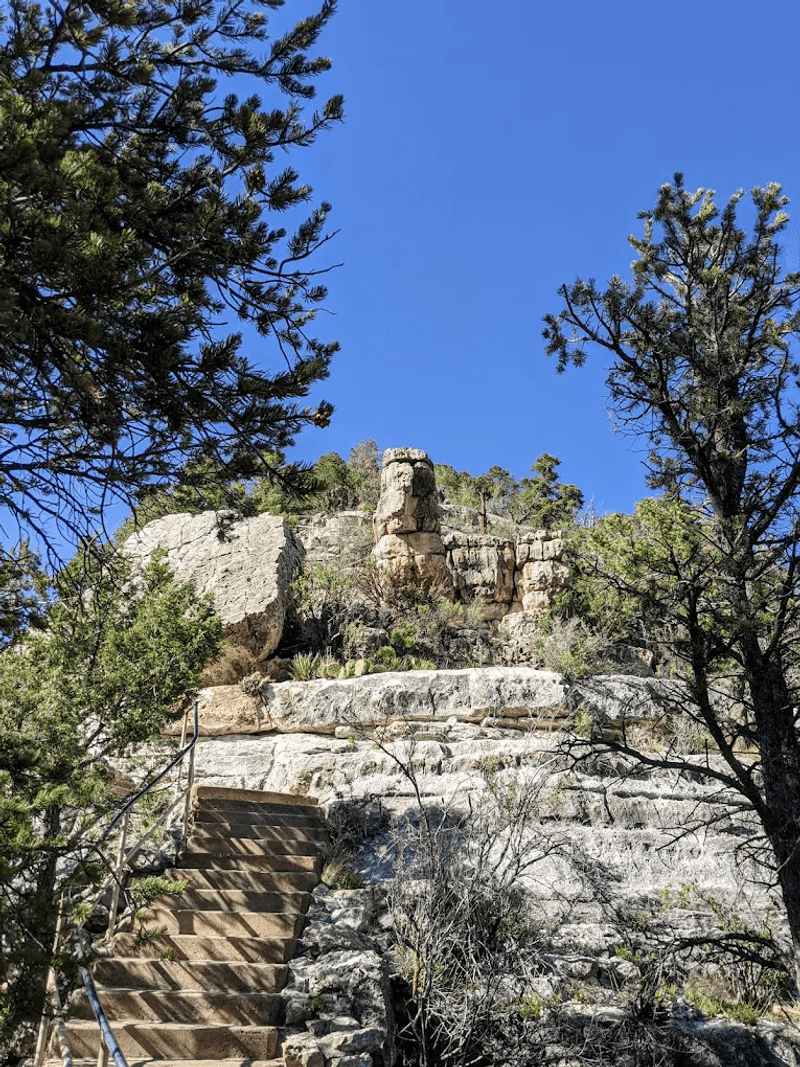
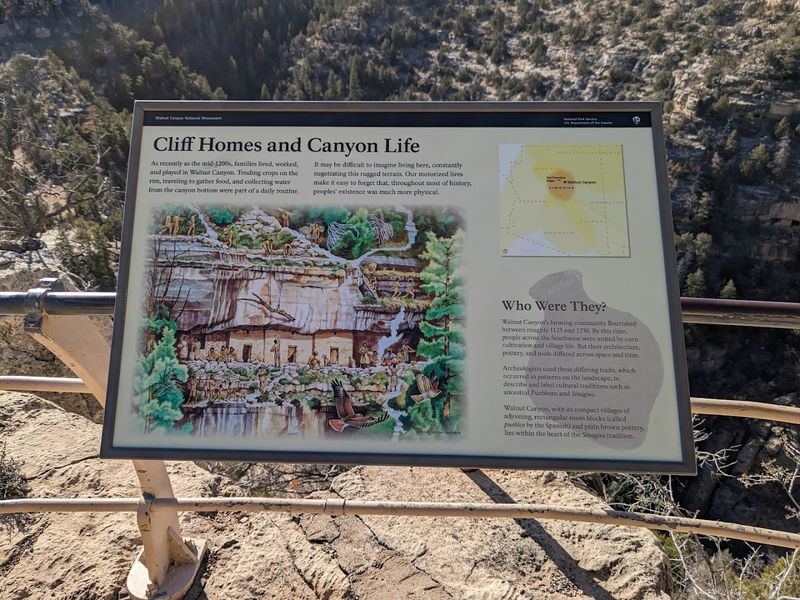
Around 800 years ago, a group of skilled people known as the Sinagua made their homes along the curved walls of Walnut Canyon. Using the natural limestone overhangs as roofs and shelter, they constructed stone rooms that blended seamlessly into the canyon’s geology.
At its peak, the canyon may have housed over 100 individual rooms.
The Sinagua were resourceful farmers and traders who cultivated crops in the surrounding area and traded goods with neighboring cultures. Their decision to build homes into canyon walls offered protection from weather and potential threats.
Walking past these rooms today, it’s easy to imagine the sounds of daily life — cooking fires, children playing, and the hum of a tight-knit community.
One reviewer captured this feeling beautifully: “For a moment I imagined the late afternoon haze that must have hovered there as families prepared their food. The smell of wood and the sounds of families talking.”
The Rim Trail — A Gentler Alternative
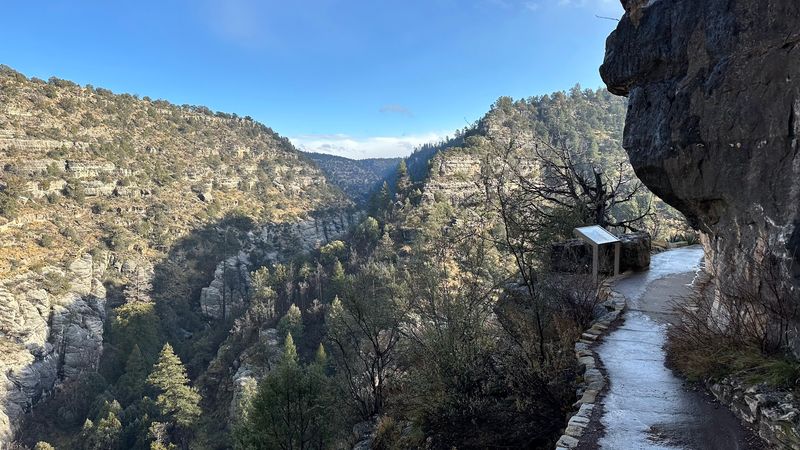
Not everyone is ready to tackle 200-plus steps, and that’s completely fine. The Rim Trail offers a flat, easy stroll along the top of the canyon that’s accessible to almost everyone.
At roughly half a mile, it provides gorgeous overlook views of the canyon without requiring any significant descent.
Several informational signs along the Rim Trail explain the geology and history of the area, making it educational even without the up-close dwelling experience. Families with young children, older visitors, or anyone dealing with mobility concerns will find this trail a comfortable and rewarding option.
One reviewer noted that the Rim Trail is “an easy stroll” compared to the Island Trail’s more demanding descent. If you’re short on time or energy, this trail still delivers stunning canyon scenery and a real sense of the monument’s scale.
Combined with a visit to the visitor center, it makes for a satisfying and complete experience.
Elevation and Altitude — Know Before You Go
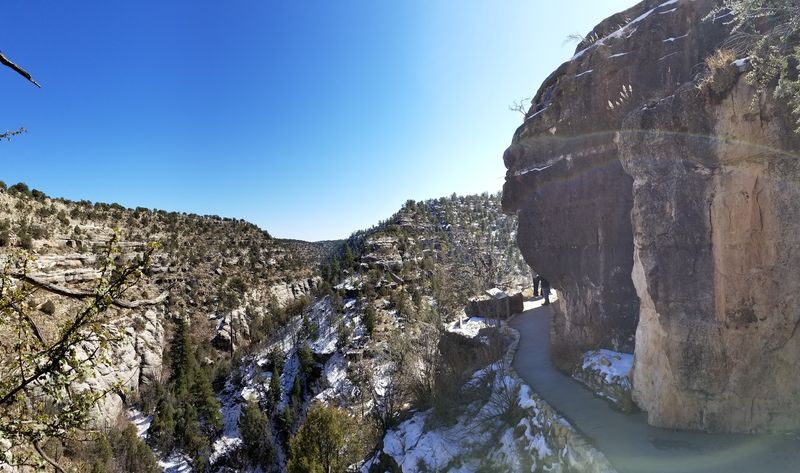
One detail that surprises many first-time visitors is just how high up Walnut Canyon sits. The monument sits at over 6,600 feet above sea level, which is significantly higher than most places along the East Coast or in lower-elevation states.
For travelers arriving from sea level, that altitude difference is something to take seriously.
At this elevation, oxygen levels are noticeably lower, meaning your heart and lungs work harder — especially on the stair-heavy Island Trail. Symptoms like shortness of breath, light-headedness, or fatigue can sneak up quickly, even on people who consider themselves fit.
Hydrate well before and during the hike, take breaks without guilt, and listen to your body. One reviewer wisely advised: “Take it easy.
The air is thinner than you might expect, and before you know it, your heart will be working overtime.” Knowing this ahead of time makes the hike much more enjoyable and safe.
Best Time to Visit Walnut Canyon
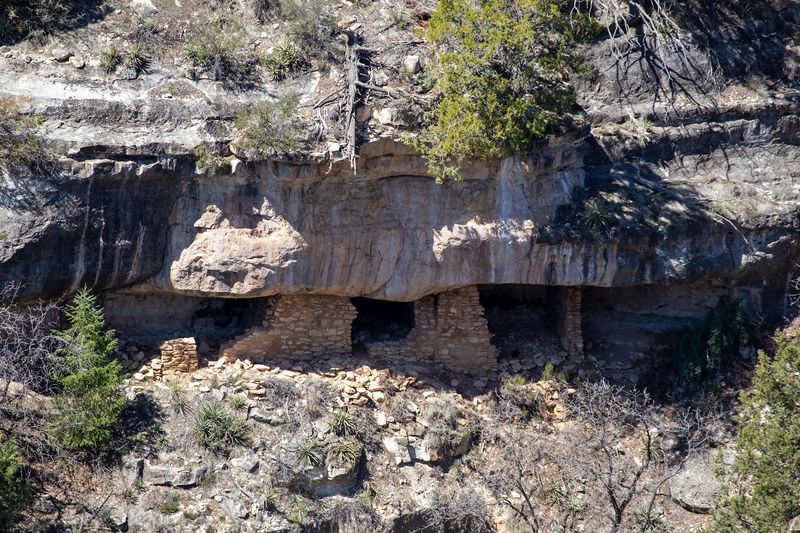
Walnut Canyon is genuinely beautiful year-round, but each season brings a completely different atmosphere. Spring and fall offer mild temperatures and comfortable hiking conditions, making them the most popular times to visit.
Summer mornings can be pleasant, though afternoon thunderstorms are common in Arizona’s monsoon season from July through September.
Winter visits are surprisingly magical. One reviewer described hiking during a snowstorm as “one of the most beautiful experiences” they’d ever had there.
The contrast of red canyon rock dusted in white snow against the ancient stone dwellings creates a truly surreal scene that few visitors ever get to witness.
Regardless of season, arriving early in the day is smart to beat crowds and secure parking. The monument opens at 9 AM daily and closes at 5 PM.
Calling ahead at +1 928-526-3367 during winter or stormy weather is a good idea to confirm trail conditions before making the trip.
Rangers and Volunteers — The Heart of the Experience
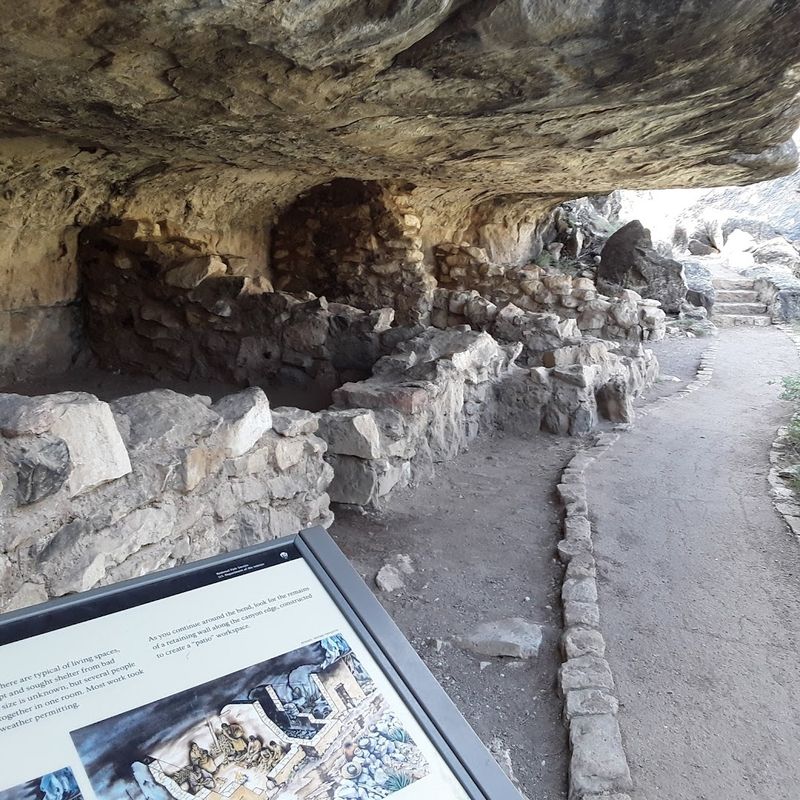
A great hike becomes an unforgettable one when knowledgeable people help bring the history to life. At Walnut Canyon, the rangers and volunteers consistently receive glowing praise from visitors for their warmth, patience, and depth of knowledge.
They genuinely seem to love this place — and it shows.
Multiple reviewers singled out specific staff members for going above and beyond. One visitor raved about Ranger Lucy, who stayed after closing time to give a thorough, caring explanation of the site.
Another noted that volunteers along the Island Trail were “very informative” and added real depth to the experience.
The staff can answer questions about the Sinagua people, trail conditions, and what to look for along the route. If you’re curious about the history or geology, don’t hesitate to ask — these folks love sharing their expertise.
Their dedication is a big part of what makes Walnut Canyon feel so special.
Combining Walnut Canyon With Nearby Attractions
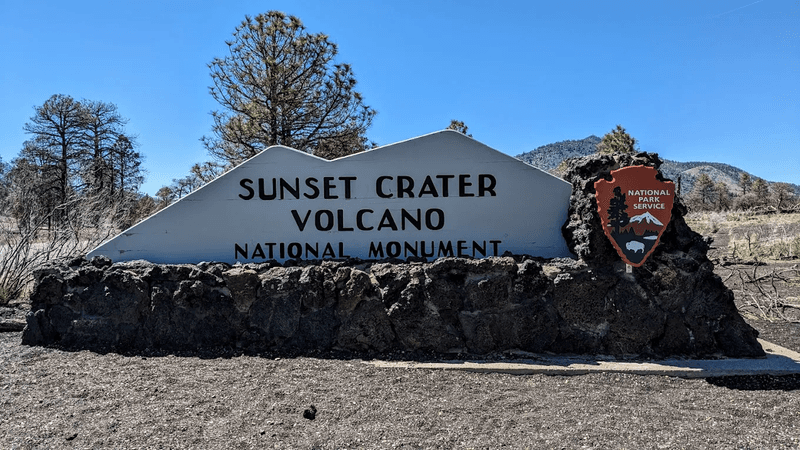
Walnut Canyon pairs beautifully with several other incredible sites in the Flagstaff area, making it easy to build a full day — or even a full weekend — of exploration. Two of the most recommended companions are Wupatki National Monument and Sunset Crater Volcano National Monument, both located north of Flagstaff on the same scenic loop road.
Wupatki features large, above-ground pueblo ruins built by ancestral peoples, offering a fascinating contrast to Walnut Canyon’s cliff-side architecture. Sunset Crater showcases a dramatic volcanic landscape that helped shape the region’s geology and human history.
Together, all three sites tell a connected story of ancient life in northern Arizona.
One reviewer specifically suggested visiting all three together for a richer, more complete trip. Since the America the Beautiful Pass covers all of them, combining the visits is easy on your wallet too.
Allow a full day to explore all three without feeling rushed.
Practical Tips for First-Time Visitors
A little preparation goes a long way toward making your Walnut Canyon visit smooth and enjoyable. Wear comfortable, closed-toe shoes with good grip — some sections of the trail can be slick, especially after rain or snow.
Bring plenty of water, even for a short hike, since the elevation and dry Arizona air can dehydrate you faster than expected.
Arrive early, particularly on weekends and holidays, since the parking lot is small and fills up quickly. The monument opens at 9 AM, so getting there right at opening is a solid strategy.
Photography enthusiasts will love the morning light on the canyon walls.
The gift shop inside the visitor center carries snacks if you forgot to pack any. Cell service can be spotty, so download offline maps beforehand.
Most importantly, slow down and take it all in — this is one of those rare places where rushing means missing everything that makes it worth the trip.
Enjoyed this story?
Add Fast Food Club as a preferred source to see more of our reporting on Google.