


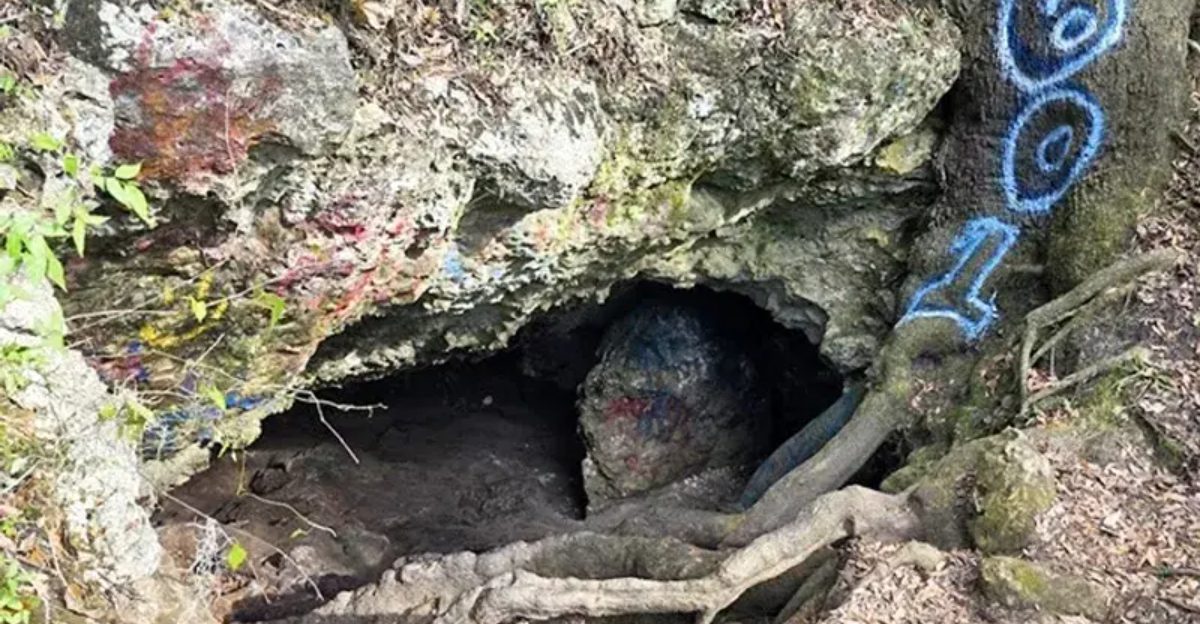
Tucked away in the forests of Inverness, Florida, the Trail to Lizzie Hart Sink is one of the state’s most underrated outdoor adventures. This roughly 4-mile route winds through stunning natural scenery, passing caves, a dramatic sinkhole, and fascinating rock formations that feel unlike anything else in Florida.
Whether you’re a seasoned hiker or just looking for a cool weekend escape, this trail has something genuinely surprising in store. Pack your boots, watch your step on the roots and rocks, and get ready to explore one of Central Florida’s hidden gems.
The Trailhead at Stage Coach Trail
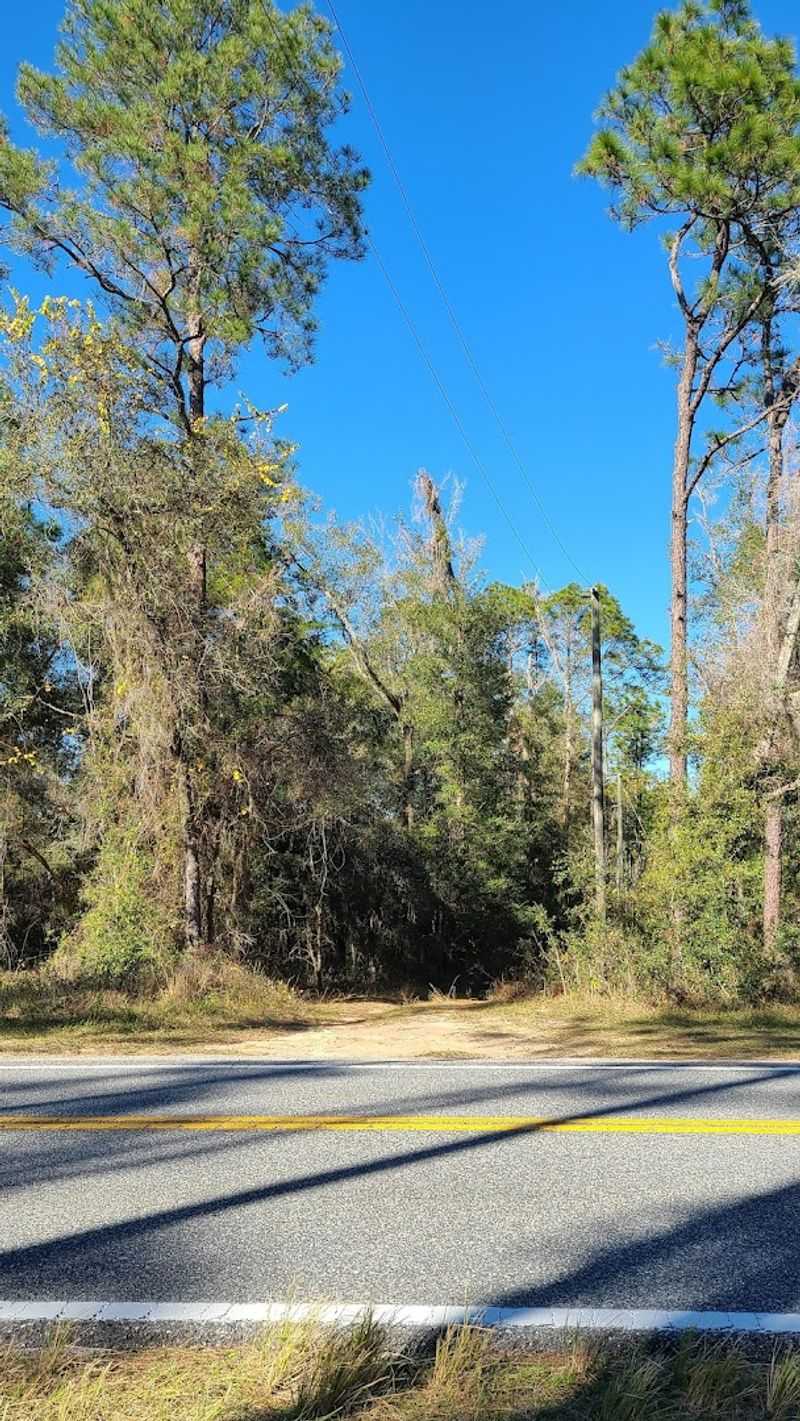
Finding the trailhead can feel like part of the adventure itself. Located at 129 W Stage Coach Trail in Inverness, FL, the entrance is easy to miss because brush and tree limbs often block the opening.
Don’t let that fool you — the trail is very much accessible if you walk around the overgrowth.
Hikers who know the secret simply step around the blocked section to reach Trail 15 heading north. Because so few people figure this out, the trail sees almost no foot traffic, making your walk feel wonderfully private and peaceful.
Parking is simple and free, and there are no entrance fees. Arriving early in the morning gives you the best light and the coolest temperatures.
Bring water, wear sturdy shoes, and keep an eye out for the yellow tree markings that guide you along the correct path.
Trail 15 — The Northern Corridor
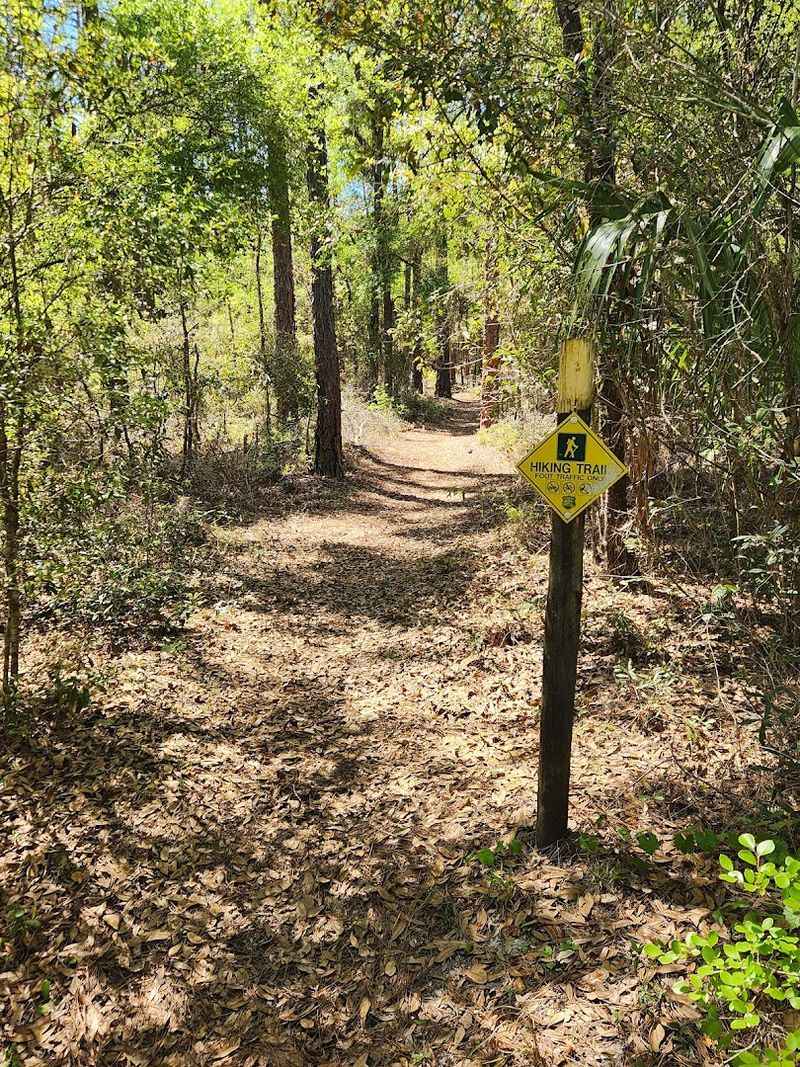
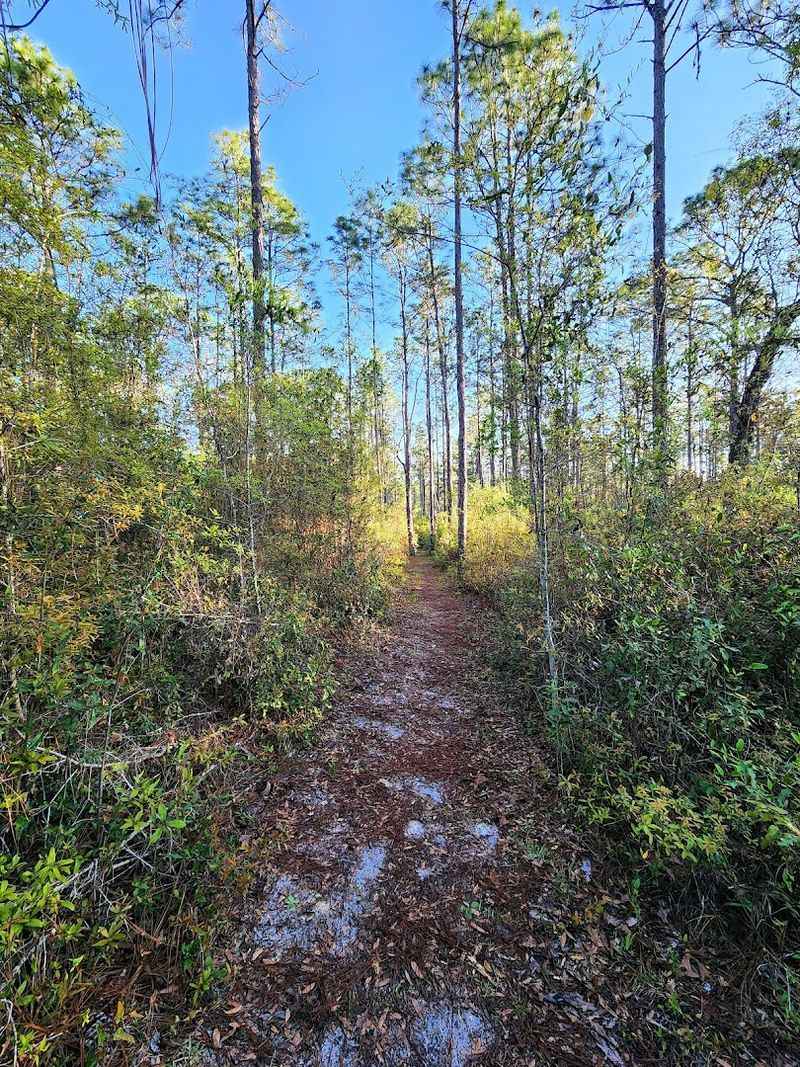
Trail 15 is the backbone of this hike, stretching northward from the trailhead through quiet, undisturbed forest. Because the blocked entrance keeps most visitors away, walking this corridor feels almost meditative — just you, the trees, and the sounds of birds overhead.
The path is well-marked with yellow paint blazes on tree trunks, so navigation stays manageable even for first-timers. Still, it helps to pay attention, especially at junctions where the trail splits and you could accidentally head in the wrong direction.
One reviewer described the walk as “very tranquil,” and that word fits perfectly. The forest here is thick and shady, which makes the hike comfortable even on warmer days.
Plan for about 45 minutes round trip if you move at a steady pace, though most hikers slow down to soak in the scenery along the way.
The Forest Road Segment and Farmland Views
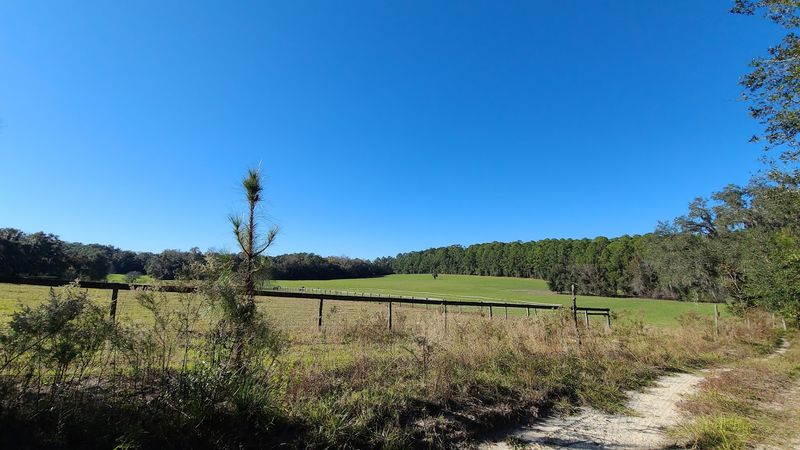
Right after the trailhead, the route shifts onto a forest road segment that runs parallel to beautiful open farmland. This part of the hike has a completely different feel from the wooded trail sections — the sky opens up, the land stretches wide, and you almost forget you’re still in a forest preserve.
Green pastures roll alongside the road, and if you’re lucky, you might spot local wildlife grazing near the fence line. One hiker reported seeing both a bobcat and a white-tailed doe along this stretch, which adds a thrilling element of wildlife watching to the experience.
The contrast between the open farmland and the dense forest ahead makes this segment a natural transition point in the hike. Enjoy the views while they last, because once you turn onto the Florida Trail, the canopy closes in and the real adventure begins.
The Fork in the Trail — Don’t Miss the Zag Left
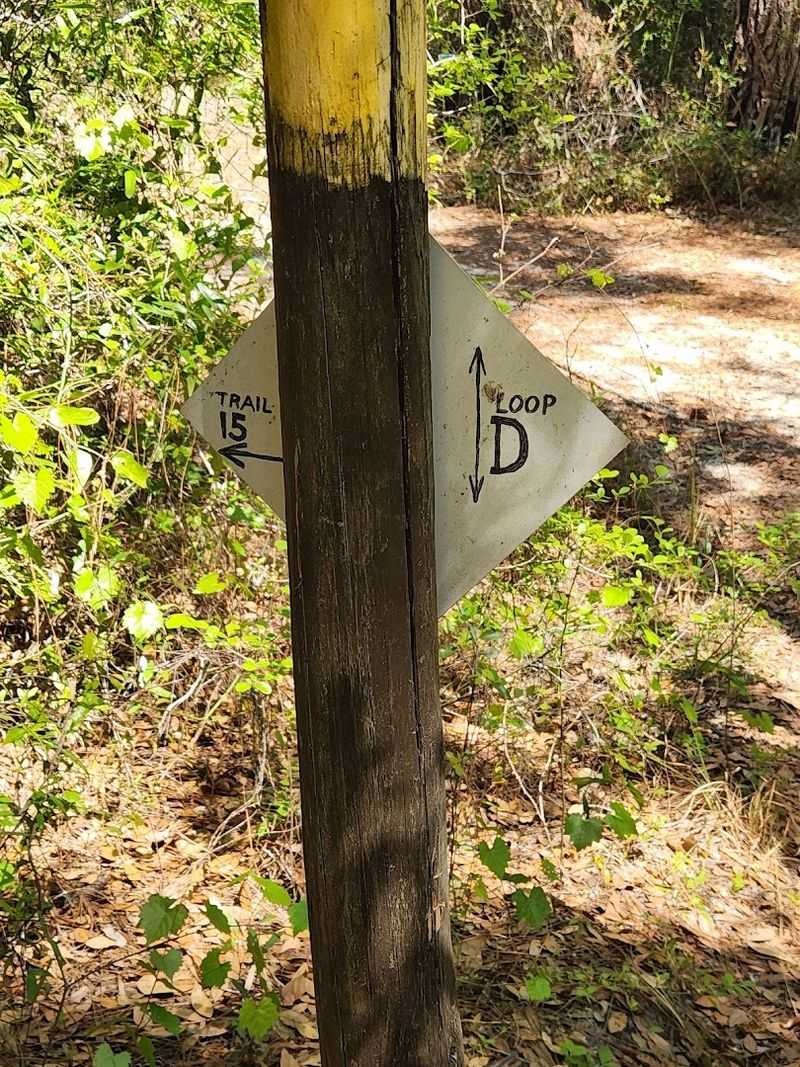
About 10 minutes into the hike, you’ll hit a fork that trips up a surprising number of visitors. The key move here is to zag left — and it’s easy to miss if you’re not paying attention.
Multiple hikers have mentioned this junction as the most confusing part of the entire route.
Heading left keeps you on the correct path toward Lizzie Hart Sink. Going right sends you toward Brush Sink and eventually loops back to Stage Coach Trail, which is a completely different experience.
Both routes are interesting, but if Lizzie Hart Sink is your goal, the left turn is non-negotiable.
Take a moment at the fork to check the tree markings before committing to a direction. Yellow blazes confirm you’re on track.
It’s a small detail that makes a big difference, especially if you’re hiking solo without a map or GPS device.
The Florida Trail Connection
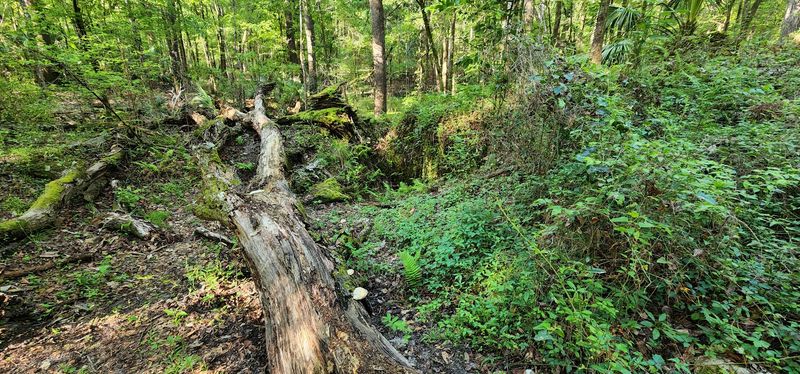
When the forest road meets the Florida National Scenic Trail, the character of the hike changes completely. The Florida Trail is one of America’s 11 National Scenic Trails, stretching nearly 1,500 miles across the state — and this section near Inverness is one of its more rugged and rewarding stretches.
Turning left onto the Florida Trail takes you toward Lizzie Hart Sink. The path narrows here and becomes noticeably more challenging, with exposed tree roots and uneven limestone underfoot.
Footing demands full attention, especially after rain when surfaces get slippery.
Despite the difficulty, the scenery rewards every careful step. Tall oaks and palmettos form a natural canopy overhead, while ferns carpet the forest floor in vibrant green.
First-time visitors often describe this segment as feeling wild and untamed — a rare sensation in a state better known for theme parks and beaches.
Rock and Root Trip Hazards Along the Path
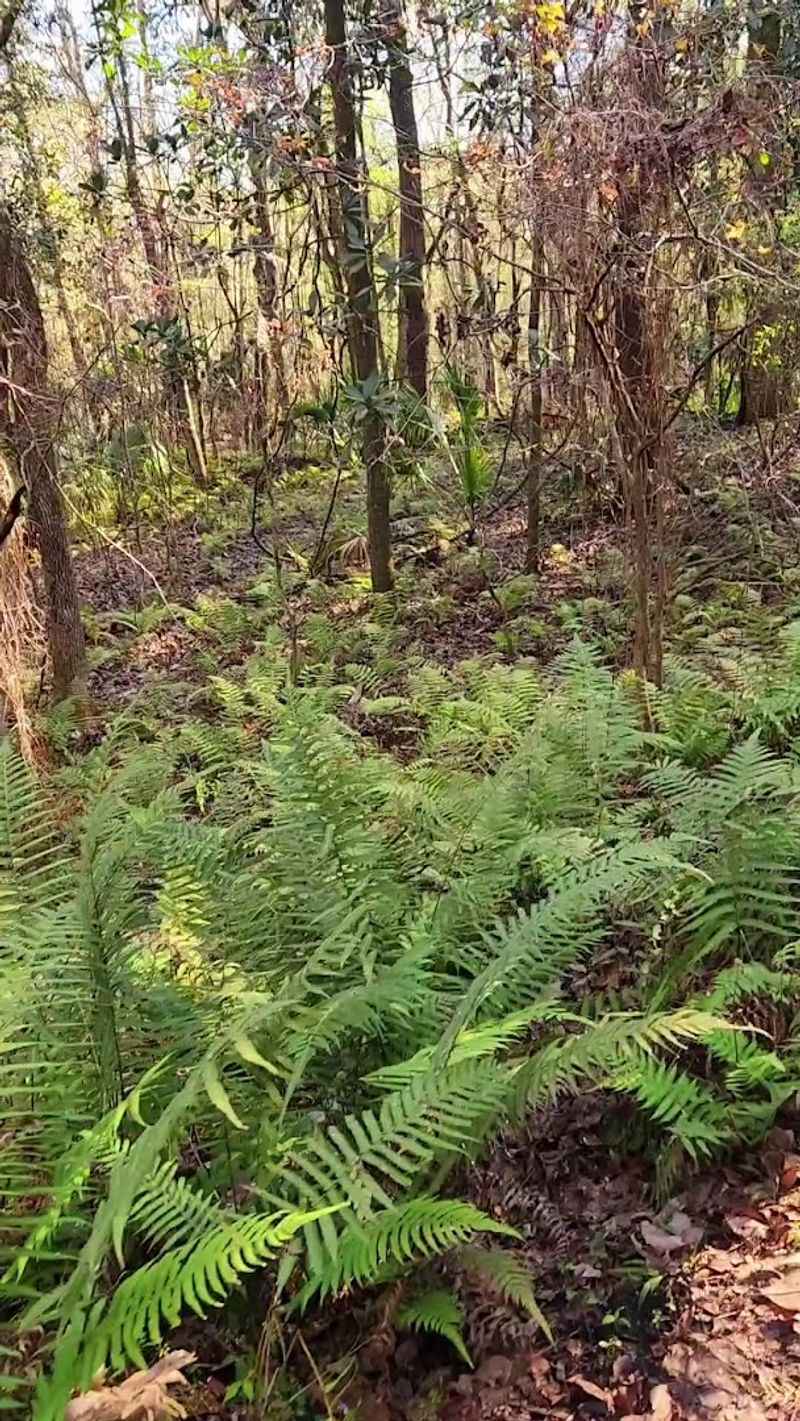
Fair warning — this trail is not a casual stroll. The section leading to Lizzie Hart Sink is described by multiple reviewers as “tricky” due to constant rock and root hazards underfoot.
One wrong step and you could easily twist an ankle, so footwear matters a lot here.
Sturdy, closed-toe hiking shoes or boots with ankle support are strongly recommended. Sandals and sneakers leave your feet vulnerable to the sharp limestone edges that jut up from the ground at unexpected angles.
Trekking poles are a smart addition for anyone who wants extra stability on the uneven terrain.
Slow and steady wins the race on this trail. Rather than rushing through, treat the rocky sections as a kind of natural obstacle course — each step requires a small decision.
Many hikers say this added challenge is actually part of what makes the hike so satisfying to complete.
Lizzie Hart Sink — The Star of the Show
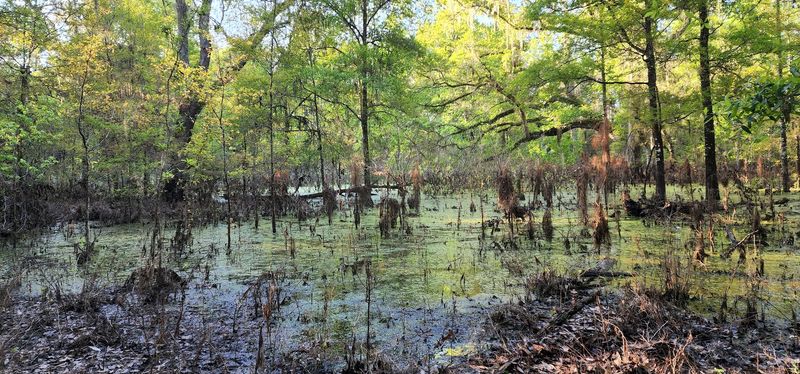
After navigating roots, rocks, and a tricky fork, arriving at Lizzie Hart Sink feels like a genuine reward. This natural sinkhole is carved into the Florida limestone bedrock and surrounded by a dramatic ring of trees and vegetation that frames it like something from a nature documentary.
Sinkholes form when underground limestone dissolves over time, causing the ground above to collapse. Florida sits on a massive limestone foundation, making sinkholes common across the state — but few are as scenic and accessible as this one.
The sink holds water during the rainy season, transforming into a still, reflective pool that draws wildlife from the surrounding forest.
During dry months, the water level drops significantly, and you can see more of the exposed rock walls. Either way, the geological drama of standing at the edge of a natural collapse is something most visitors don’t forget quickly.
The Caves Hiding Near the Trail
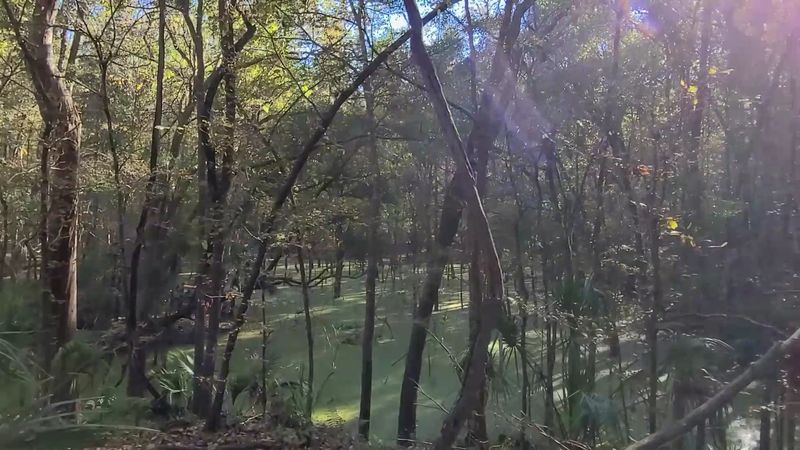
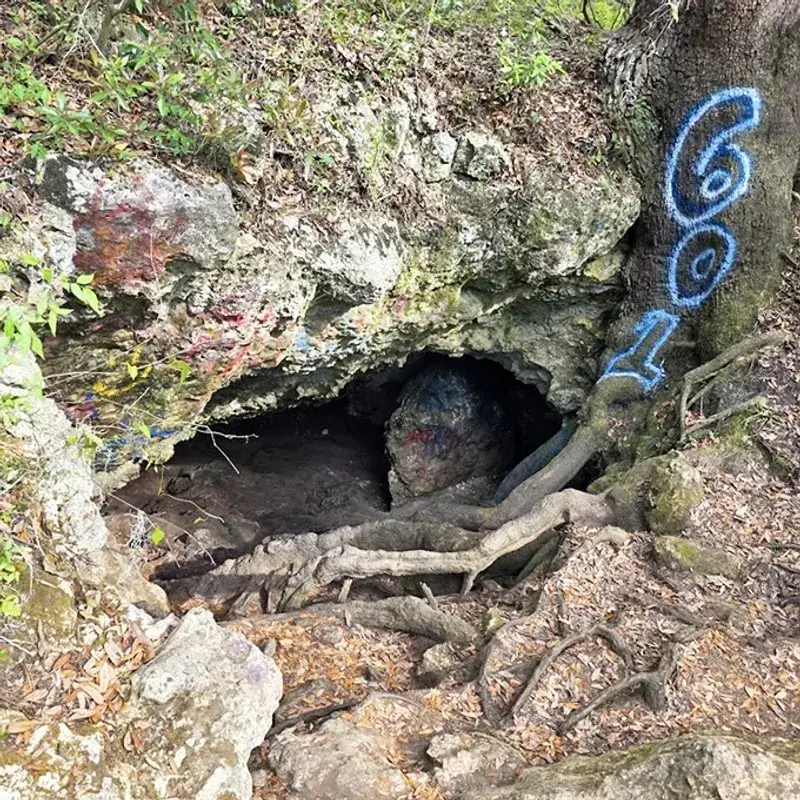
Florida might not be the first place you picture when someone says “cave,” but the karst geology around Inverness tells a different story. Near the Lizzie Hart Sink trail, small cave formations carved by thousands of years of water dissolving limestone are tucked into the landscape, waiting to be noticed.
These aren’t massive caverns requiring spelunking gear — they’re intimate, naturally formed recesses in the rock that offer a fascinating glimpse into Florida’s underground world. Peering into one feels surprisingly cool, both in temperature and in the sheer wow-factor of finding something so unexpected in a Florida forest.
Always observe caves from a safe distance without disturbing the interior. Bats and other wildlife often use these spaces as shelter, and the rock formations inside are fragile.
Respecting the caves ensures they remain intact for every hiker who discovers them after you.
Unique Rock Formations Along the Route
One of the most visually striking aspects of this trail is the variety of rock formations scattered throughout the forest. Florida’s karst landscape produces limestone shapes that look almost sculpted — rounded boulders, jagged outcroppings, and smooth slabs that emerge from the forest floor like natural art installations.
Geologically speaking, these formations are the result of millions of years of water erosion working on porous limestone. Rain absorbs carbon dioxide from the air, becomes slightly acidic, and slowly dissolves the rock over enormous spans of time.
The shapes left behind are endlessly varied and genuinely beautiful.
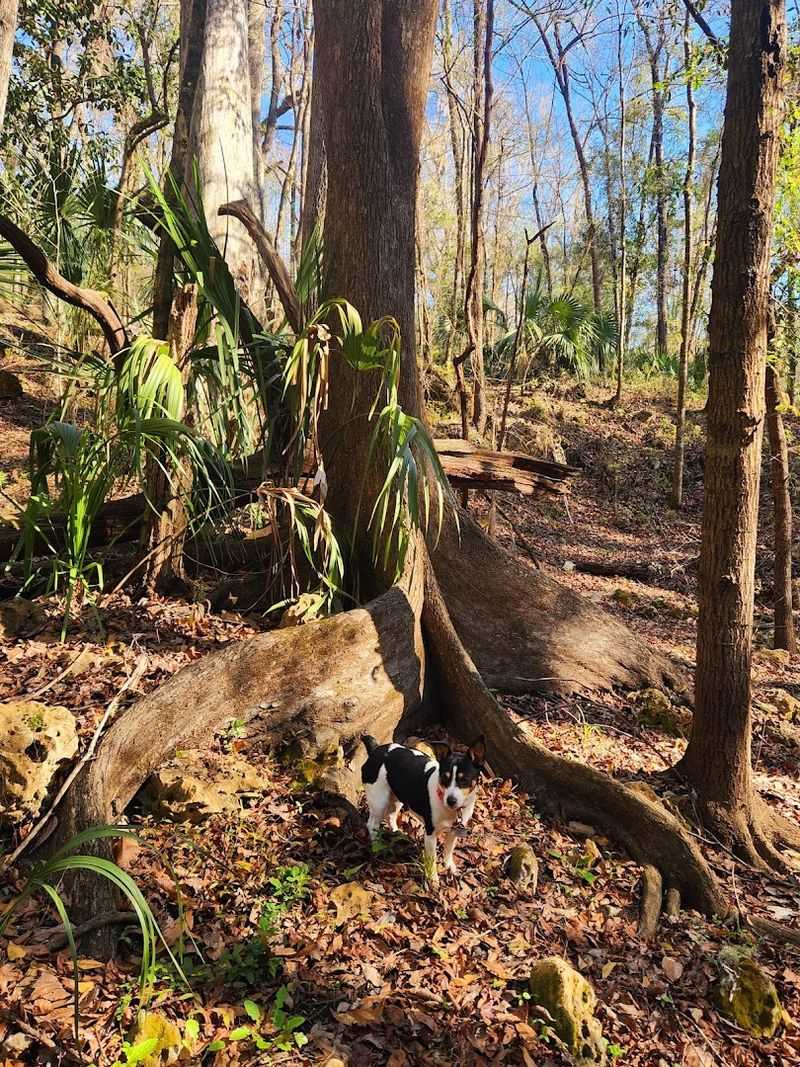
Photographers love this section of the trail for the textures and contrasts between stone and vegetation. Moss clings to shaded surfaces, ferns grow from rock crevices, and tree roots wrap around boulders in surprisingly artistic ways.
Even non-photographers tend to stop and admire the natural sculptures the landscape has created here.
Wildlife Watching Opportunities
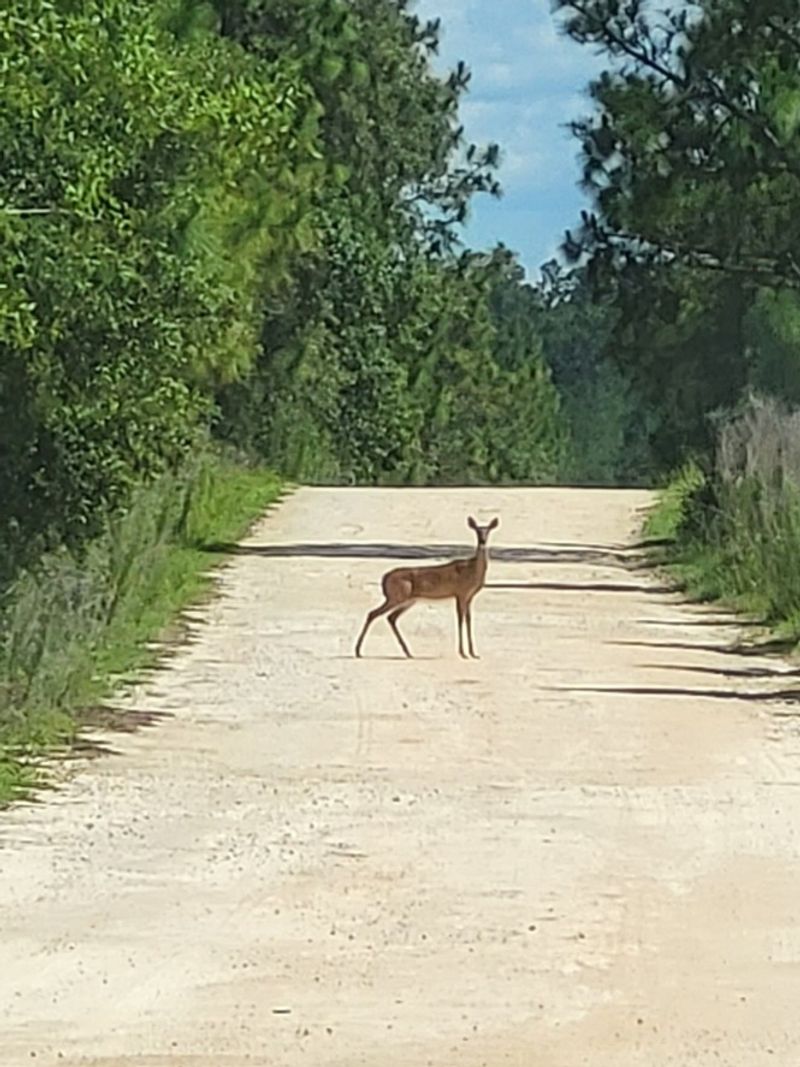
Few trails in Central Florida offer wildlife sightings as casually thrilling as this one. Hikers have reported seeing bobcats and white-tailed deer along the route — not in some wildlife sanctuary, but simply going about their day in the forest.
That kind of raw encounter is genuinely rare and memorable.
The low foot traffic on this trail is a big reason wildlife feels so comfortable here. Animals that would bolt at the sound of a crowded group often linger when only one or two quiet hikers pass through.
Moving slowly and speaking softly dramatically increases your chances of spotting something amazing.
Birds are also abundant in this area, with woodpeckers, hawks, and songbirds commonly heard and seen throughout the hike. Bring binoculars if you have them, and keep your phone camera ready.
The forest here feels genuinely alive in a way that makes every visit feel different from the last.
Seasonal Water Levels at the Sink
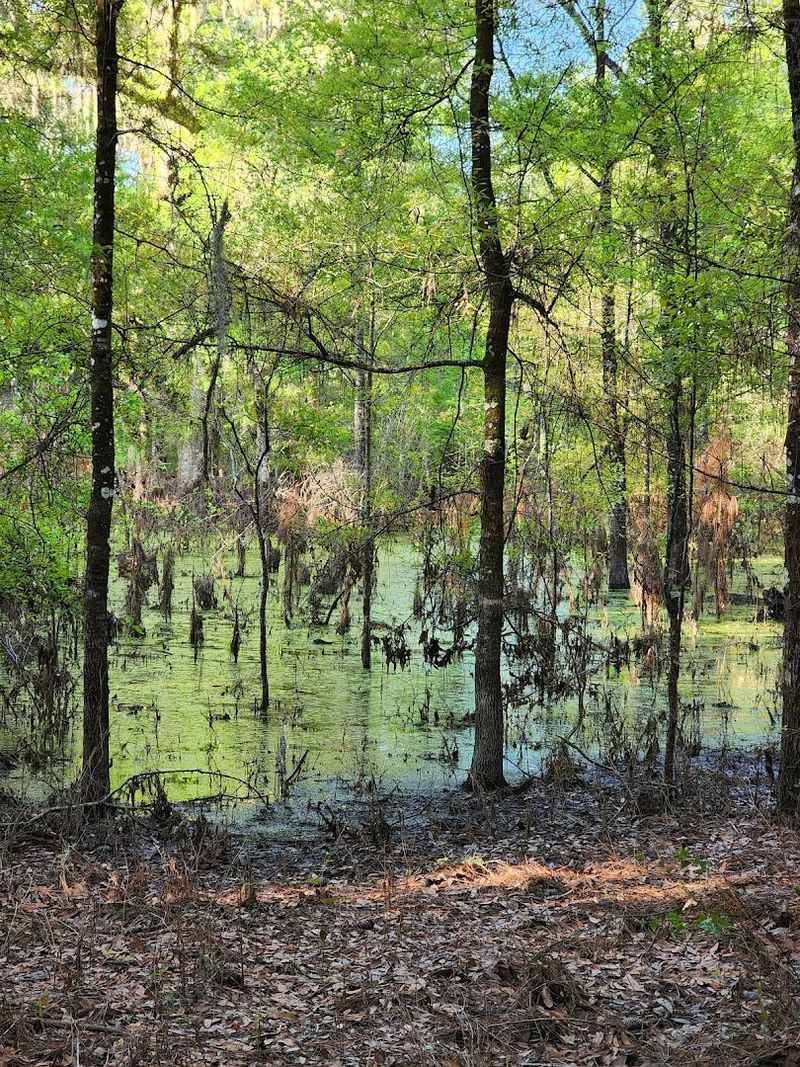
Lizzie Hart Sink behaves differently depending on the time of year, which makes it worth visiting in multiple seasons. During Florida’s rainy season — roughly June through September — the sink fills with water, creating a peaceful, mirror-like pool that reflects the surrounding trees and sky beautifully.
In drier months, the water recedes significantly, sometimes nearly disappearing. One hiker noted that during their visit, the water was “almost dried up.” Rather than being disappointing, the dry-season version of the sink reveals more of the dramatic limestone walls and geology that make the feature so fascinating.
Both versions of the sink have their own appeal. Rainy season visits feel lush and tropical, while dry season visits offer a clearer look at the geological structure.
If you want to plan your visit around water levels, aim for late summer or early fall when rainfall has had time to accumulate.
Brush Sink — The Alternative Destination
Taking the right fork at the trail junction leads to a completely different destination: Brush Sink. While Lizzie Hart Sink gets most of the attention, Brush Sink offers its own brand of quiet geological drama and makes for a rewarding alternative or add-on to your hike.
The path to Brush Sink eventually loops back to Stage Coach Trail, creating a natural circuit that lets you experience two distinct sinkhole formations in a single outing. Hikers who do both tend to come back with twice the stories and a much richer appreciation for Florida’s karst landscape.
Brush Sink sits in a more open section of forest, giving it a slightly different atmosphere than the shadier, more enclosed Lizzie Hart Sink. Comparing the two side by side makes for a genuinely educational experience about how sinkholes form and evolve differently depending on their surrounding environment and drainage patterns.
Tips for Hiking the Trail Successfully
A little preparation goes a long way on this trail. Sturdy hiking boots are non-negotiable given the rocky, root-covered terrain.
Bring at least one liter of water per person, since there are no water sources along the route and Florida heat can sneak up on you even in shaded forest.
Bug spray is highly recommended, especially from spring through fall when mosquitoes and biting flies are most active. A light long-sleeved shirt adds extra protection without causing overheating.
Starting early in the morning keeps temperatures manageable and wildlife sightings more likely.
Don’t rely solely on cell service for navigation — download an offline map before you go. The yellow blazes on trees are helpful, but having a backup never hurts.
Tell someone where you’re going before you head out, especially since the trail sees very little foot traffic. With the right prep, this hike delivers memories that last well beyond the drive home.
Enjoyed this story?
Add Fast Food Club as a preferred source to see more of our reporting on Google.