


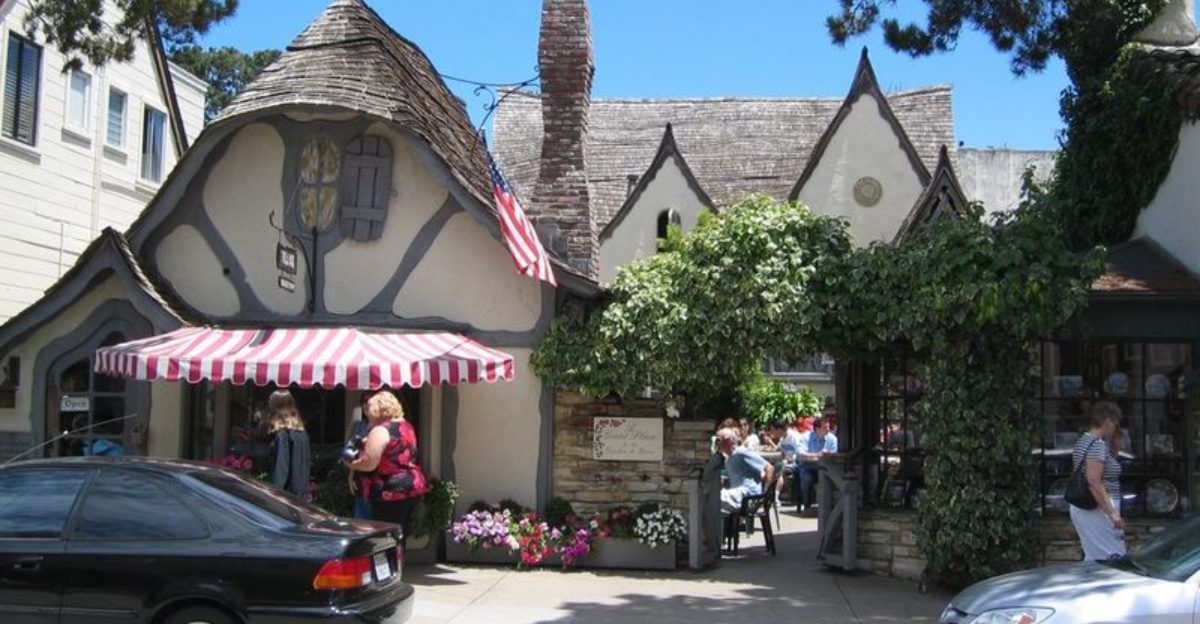
Tucked along the rugged coastline of California’s Monterey Peninsula, Carmel-by-the-Sea feels like someone plucked a storybook village straight out of a fairy tale and dropped it beside the Pacific Ocean. With its cobblestone paths, flower-draped cottages, world-class art galleries, and sweeping ocean views, this tiny town packs more personality into one square mile than most cities manage in dozens.
Every corner holds a surprise — from hidden garden courtyards to centuries-old missions and tide pools teeming with sea life. Whether you’re a first-time visitor or a longtime fan, Carmel has a way of making you feel like you’ve stepped into another world entirely.
Carmel Beach: Where the White Sand Meets Wild Pacific Waves
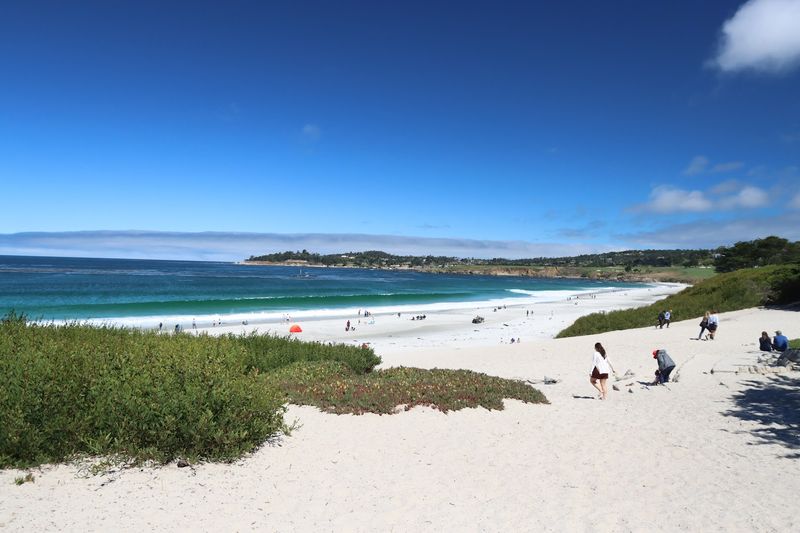
Few beaches in the world stop people in their tracks the way Carmel Beach does. The sand here is shockingly white and powdery, almost like sugar, which makes it stand out against the deep blue-green of the Pacific Ocean in a way that feels almost too cinematic to be real.
Dogs run free along the shoreline — Carmel Beach is one of the most dog-friendly beaches in California, so four-legged visitors are a common and joyful sight. Surfers paddle out into the rolling swells while families build sandcastles closer to shore.
Sunsets here are legendary. As the sky turns shades of orange, pink, and purple behind the cypress trees lining the bluff, you’ll understand why so many artists have called Carmel home for over a century.
Bring a blanket and stay until the stars come out.
Fairytale Cottages That Look Straight Out of a Storybook
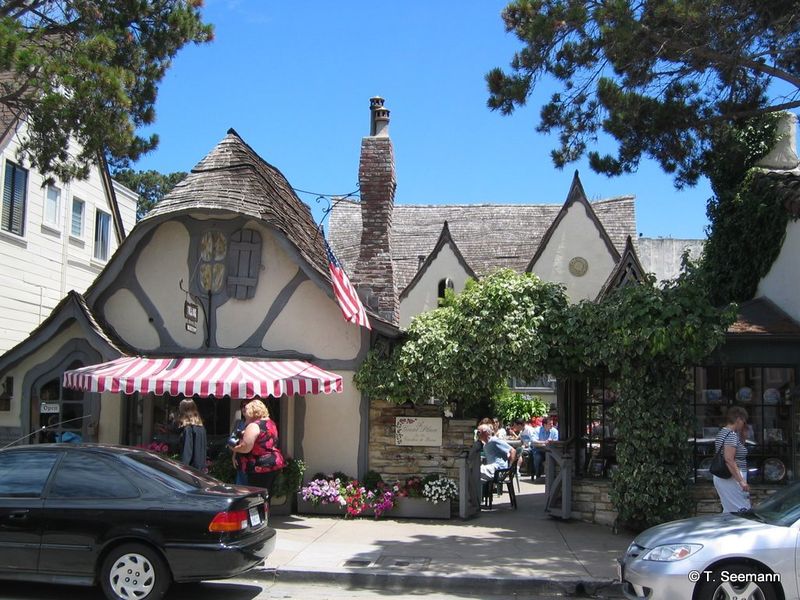
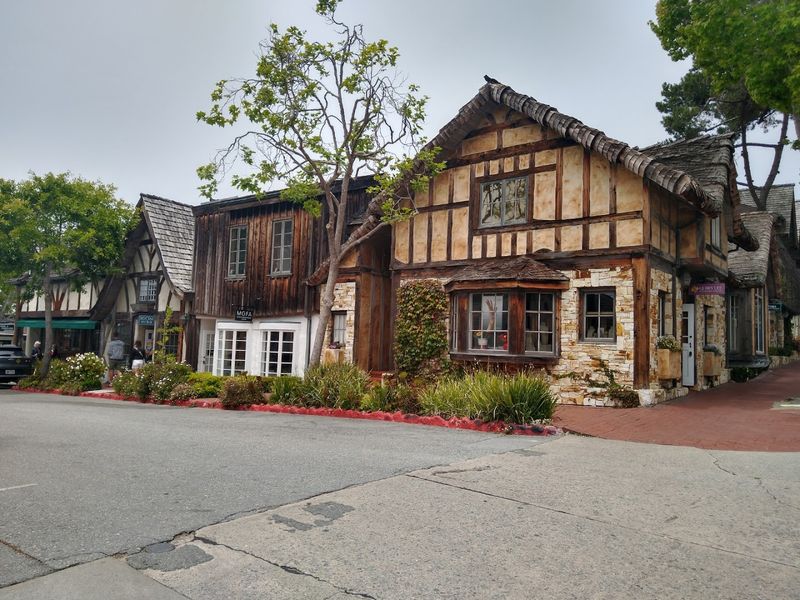
Back in the 1920s, a builder named Hugh Comstock started constructing tiny, whimsical homes for his wife’s doll collection business. Those original structures — nicknamed “Hansel and Gretel” cottages — sparked an architectural movement that gave Carmel its unmistakable storybook identity.
Wandering the residential streets feels like flipping through the pages of a children’s fairy tale. Rounded rooftops, hobbit-like doorways, hand-carved details, and gardens overflowing with roses and lavender make each home look more enchanting than the last.
Many of these cottages are privately owned, but walking tours let visitors admire them up close. Some have been turned into boutique shops or cozy bed-and-breakfasts, giving guests the rare chance to actually sleep inside a real-life fairy tale.
Honestly, once you’ve seen them, it’s hard to imagine Carmel looking any other way.
The Carmel Mission: A Living Piece of California History
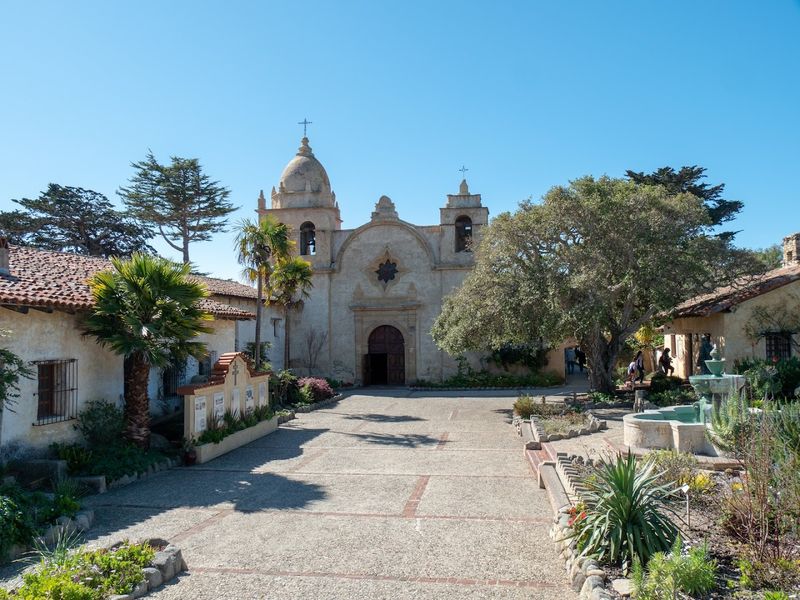
Founded in 1770 by Father Junipero Serra, the Carmel Mission — officially known as Mission San Carlos Borromeo del Rio Carmelo — is one of the most important historical sites in all of California. Serra himself is buried here, making it a place of deep spiritual and cultural significance.
The mission complex includes a stunning basilica with a star-shaped window, a peaceful garden courtyard, and a museum filled with artifacts that trace California’s colonial history. The architecture is beautiful, blending Spanish Colonial style with a quiet, almost meditative atmosphere.
Visiting feels like stepping back nearly 250 years in a single footstep. School groups, history buffs, and curious travelers all find something meaningful here.
Even if you’re not particularly into history, the sheer age and beauty of this place tends to leave a lasting impression on everyone who walks through its gates.
Art Galleries Around Every Corner — Seriously, Every Corner
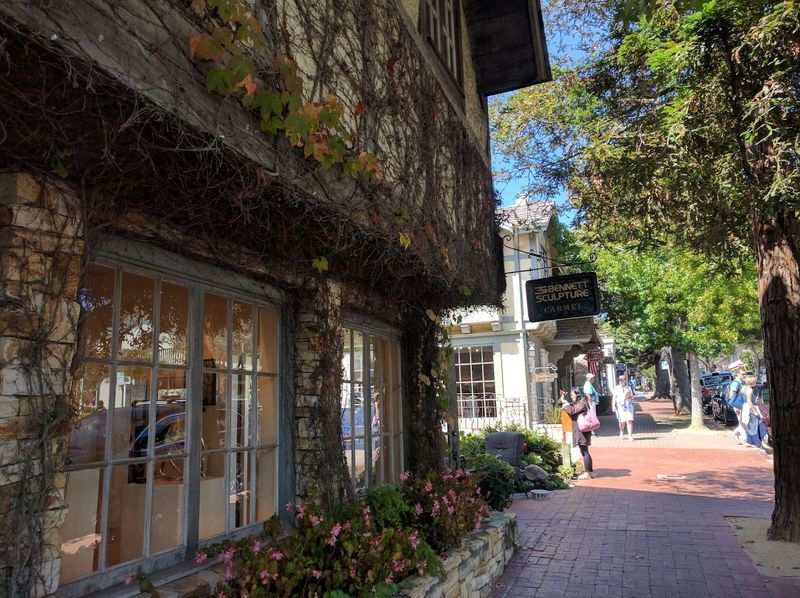
Carmel has more art galleries per capita than almost any other city in the United States. That’s not a boast — it’s just a fact that becomes very obvious the moment you start walking down Ocean Avenue.
Paintings, sculptures, photography, and mixed-media works spill out from storefronts in every direction.
The town’s artistic roots run deep. In the early 1900s, writers, painters, and poets flocked here seeking inspiration from the dramatic coastline and misty forests.
That creative energy never left — it just kept growing and diversifying over the decades.
Whether you’re a serious collector or someone who just enjoys beautiful things, browsing the galleries here is genuinely fun. Many artists are present in their studios, ready to chat about their work and process.
You might walk in just to look and walk out with a piece that speaks directly to your soul.
Ocean Avenue: The Heartbeat of the Village
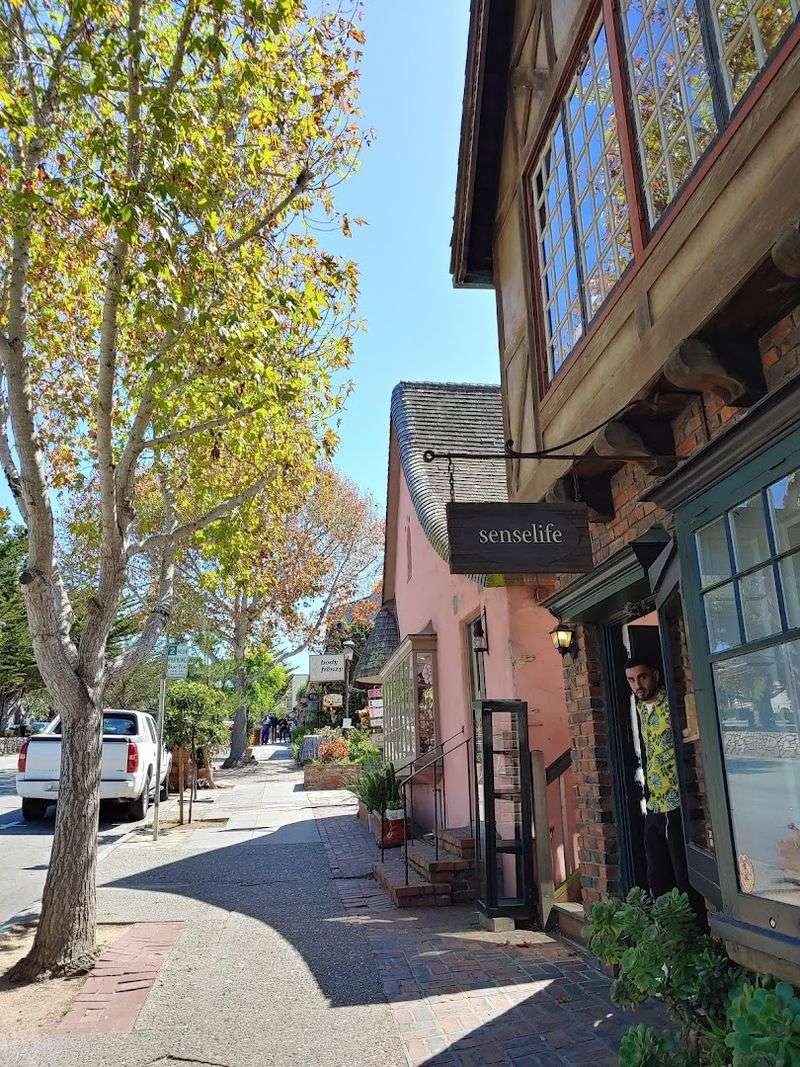
Ocean Avenue is the main street of Carmel, and walking it feels like exploring a perfectly curated small-town dream. Lined with boutique clothing stores, gourmet restaurants, wine-tasting rooms, bookshops, and yes — more art galleries — it manages to feel both lively and relaxed at the same time.
The street runs downhill straight toward the ocean, so every few steps you catch a glimpse of the blue Pacific waiting at the end. That view alone makes the walk feel special.
Flower baskets hang from lampposts, and the buildings are kept to a strict height limit so nothing blocks the sky.
Street musicians sometimes set up near the base of the avenue, adding a soundtrack to your stroll. On weekends, the energy picks up with locals grabbing coffee and tourists ducking in and out of shops.
It’s the kind of street you walk twice just to make sure you didn’t miss anything.
The Scenic Bluff Path: Views That Will Rearrange Your Brain
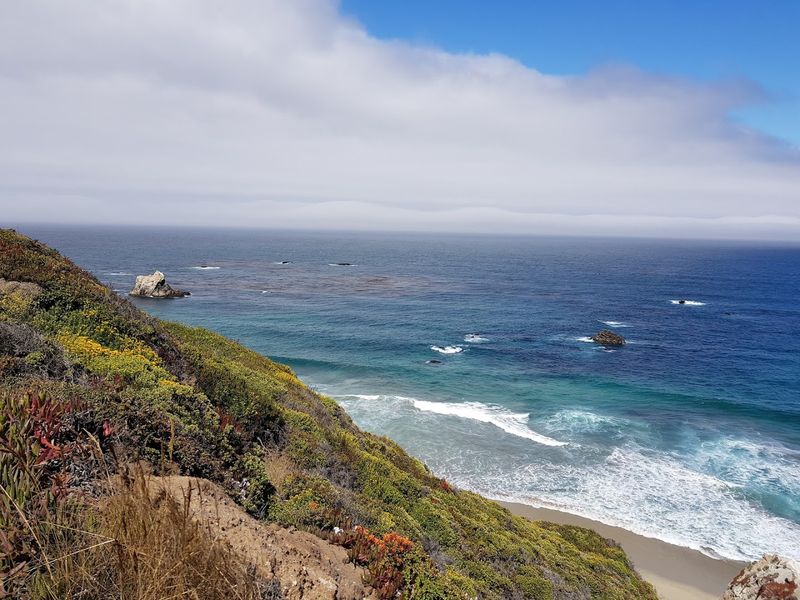
Running along the top of the coastal bluffs, the Scenic Bluff Path connects Carmel Beach to Carmel River State Beach in one of the most jaw-dropping walks you’ll ever take. The path is paved and easy to walk, making it accessible for all ages and fitness levels.
To one side, the Pacific stretches endlessly toward the horizon. To the other, the soft green hills of Carmel’s residential neighborhoods rise gently.
The combination of sea air, crashing waves below, and twisted cypress trees framing the view creates a sensory experience that’s hard to put into words.
Bird-watchers love this path too, since the wetlands near Carmel River State Beach attract dozens of species year-round. Bring binoculars if you have them.
Whether you’re power-walking or taking a slow, contemplative stroll, this path has a way of clearing your head and filling your heart at the same time.
Point Lobos State Natural Reserve: Nature at Its Most Dramatic
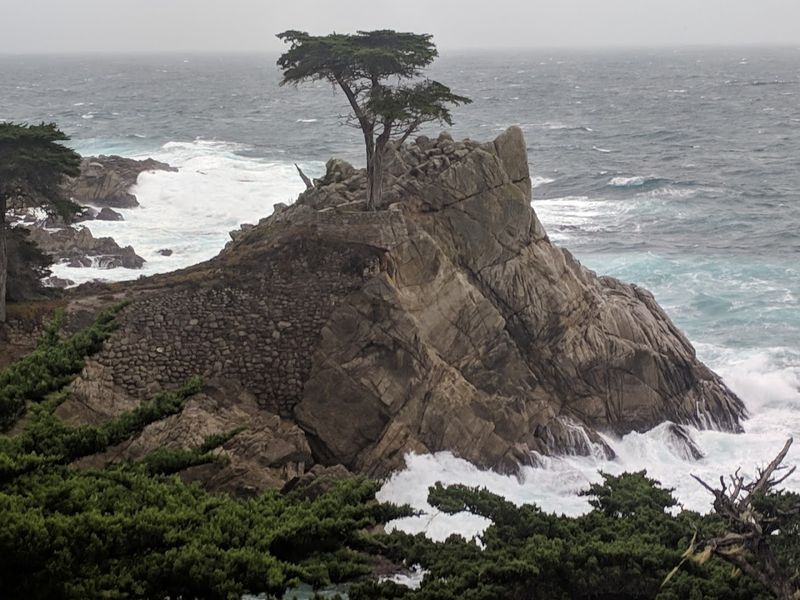
Just south of Carmel lies Point Lobos State Natural Reserve, often called the crown jewel of California’s state park system. The reserve packs an extraordinary amount of natural drama into a small stretch of coastline — sea lions barking on offshore rocks, sea otters floating lazily in kelp beds, harbor seals lounging on sun-warmed ledges.
The reserve also holds a fascinating piece of history: the old whaling station near China Cove once served as an active whaling operation in the 1800s, and the small museum on-site tells that story with surprising depth. Scuba divers consider the underwater coves here among the best diving spots on the entire West Coast.
Hiking trails wind through groves of ancient Monterey cypress — trees found naturally in only two places on Earth, and this is one of them. Plan to spend at least half a day here.
Rushing through Point Lobos would be a genuine shame.
World-Class Restaurants Hidden Inside Courtyard Gardens
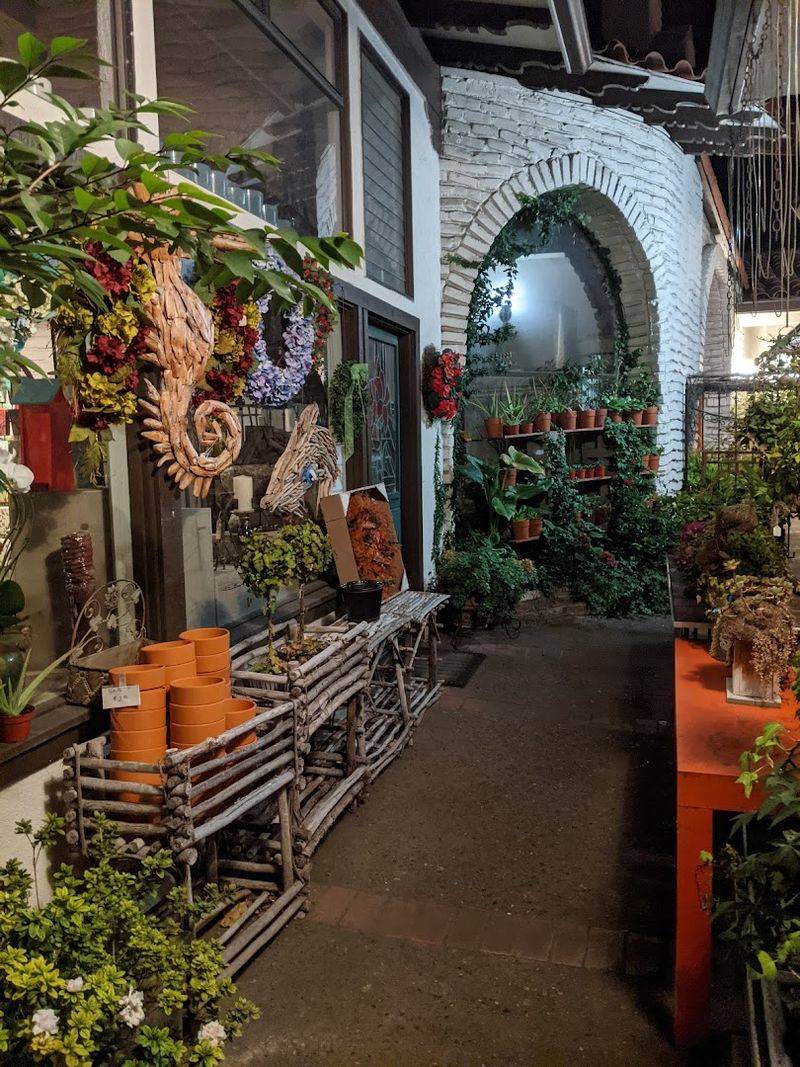
Carmel has a restaurant scene that punches well above its weight for such a tiny town. Tucked behind ivy-covered walls and down narrow alleyways, some of the best dining experiences here happen in secret garden courtyards you’d never find without a local tip or a willingness to wander.
Fresh Pacific seafood, locally grown produce, and world-class wine from nearby Carmel Valley and the Santa Lucia Highlands wine region all show up on menus throughout town. Farm-to-table isn’t a trend here — it’s just how things have always been done.
Budget options exist alongside splurge-worthy fine dining, so you don’t need a huge wallet to eat well in Carmel. Grab a clam chowder bread bowl near the beach, or book a table at one of the award-winning restaurants for a multi-course experience you’ll be talking about for years.
Either way, you won’t leave hungry.
Wine Tasting Rooms That Make Afternoons Disappear
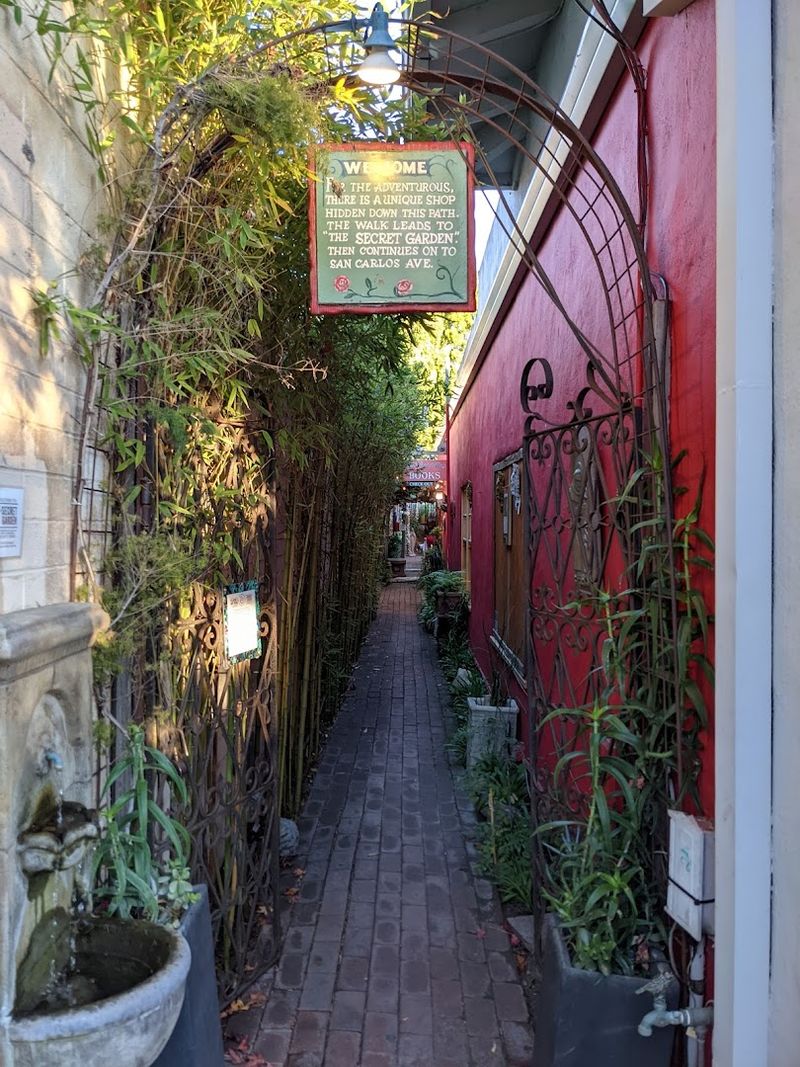
Carmel might be small, but its wine scene is seriously impressive. Over two dozen tasting rooms are spread throughout the village, many of them pouring wines from the nearby Carmel Valley AVA and Santa Lucia Highlands — regions producing some of California’s finest Pinot Noir and Chardonnay.
Unlike the crowded tasting rooms of Napa Valley, Carmel’s wine spots tend to feel intimate and unhurried. Pourers actually have time to talk with you about the wines, the vineyards, and the stories behind each bottle.
It turns a simple tasting into a genuine conversation.
Many rooms are tucked into historic buildings or courtyard spaces, adding to the overall atmosphere. Some offer cheese and charcuterie pairings that make the experience feel like a full evening out.
The Carmel Wine Walk passport program lets you hop between multiple tasting rooms in a single afternoon — a very popular way to explore the town with a glass in hand.
The Harrison Memorial Library: Books, Architecture, and Local Soul
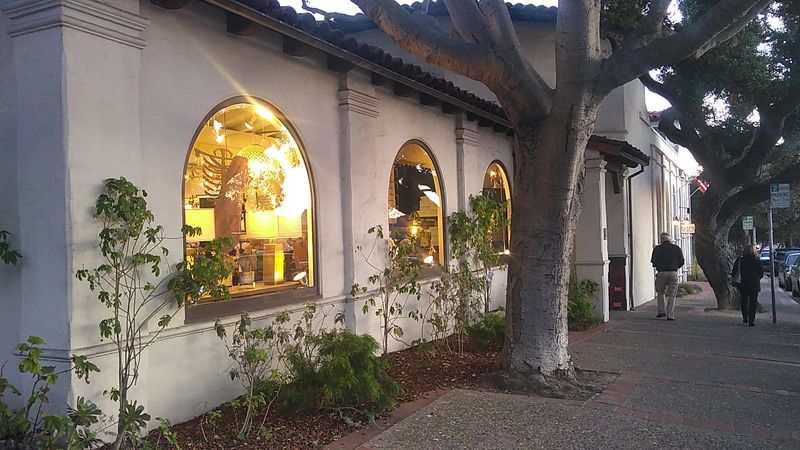
Not every town has a library this beautiful. The Harrison Memorial Library, built in 1928 in a Spanish Colonial Revival style, sits right in the heart of Carmel’s village and looks like it belongs in a European town square rather than a California beach city.
The building alone is worth a visit.
Inside, the library has served as a community gathering place for nearly a century. Local authors have read here, community debates have unfolded here, and generations of Carmel residents have grown up checking out books from these shelves.
There’s a warmth to the place that newer buildings simply can’t manufacture.
A branch building called the Park Branch adds even more space and programming for the community. For a town of just under 4,000 residents, the library system is remarkably well-stocked and active.
It’s a reminder that Carmel takes culture seriously — not just the kind you hang on walls, but the kind you read.
No Street Addresses — Carmel’s Wonderfully Quirky Navigation System
Here’s something that surprises almost every first-time visitor: Carmel-by-the-Sea has no street addresses. Seriously.
Homes and businesses are identified by their location relative to nearby cross streets, and mail is not delivered to residences — everyone picks it up from the post office.
This quirky system dates back to the town’s founding, when early residents — mostly artists and free spirits — deliberately kept things informal and community-oriented. The post office became a social hub as a result, a place where neighbors actually ran into each other every day.
That tradition continues today.
For visitors, navigating without addresses can feel slightly confusing at first, but it quickly becomes part of the charm. You slow down, pay more attention to your surroundings, and end up discovering things you never would have found otherwise.
Getting a little lost in Carmel, it turns out, is actually one of the best ways to experience it.
Tor House: The Stone Tower Where a Poet Found His Voice
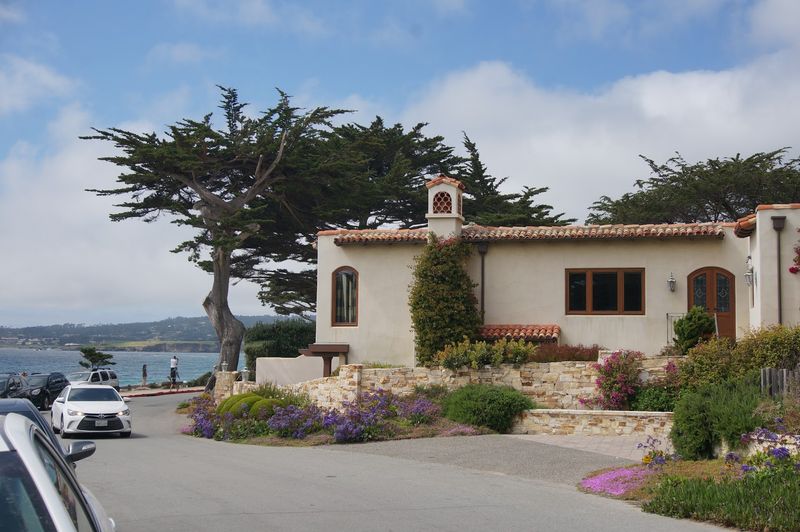
Robinson Jeffers was one of America’s most celebrated 20th-century poets, and he built his home — Tor House — by hand using stones he hauled up from the beach below. The result is a remarkable cottage and adjoining stone tower that sit right on the Carmel Point headlands, facing the sea that inspired so much of his work.
Jeffers spent decades here writing poetry that celebrated the raw power of nature and the California coast in particular. His words were dark, beautiful, and unlike anything else being written at the time.
Visiting Tor House feels like stepping directly into the landscape that shaped his imagination.
Guided tours run on weekends and offer an unusually personal glimpse into a poet’s life and creative process. The tower, which Jeffers built stone by stone over years, still stands exactly as he left it.
Standing at the top with the ocean spread out below is a genuinely moving experience.
Carmel River State Beach: Where the River Meets the Sea
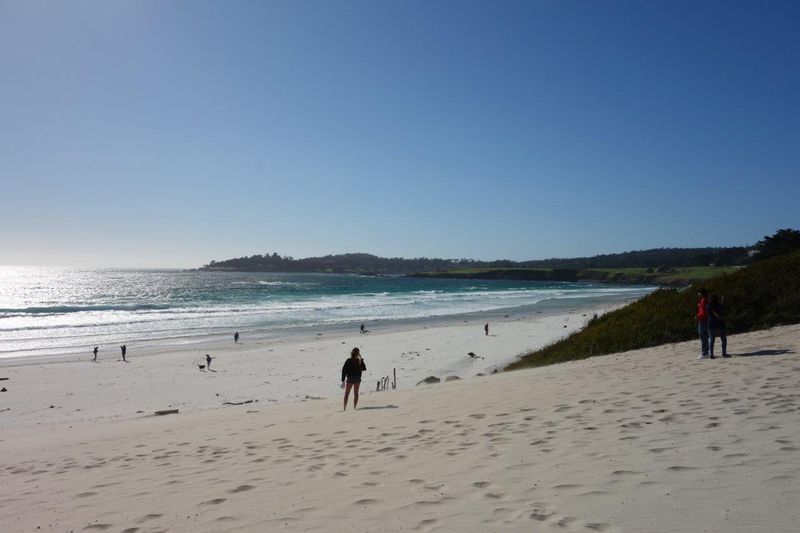
At the southern end of the Scenic Bluff Path, Carmel River State Beach offers a completely different vibe from the main beach in town. Here, the Carmel River empties into the Pacific through a seasonal lagoon that attracts an astonishing variety of shorebirds, making it a paradise for anyone who enjoys watching wildlife.
The beach itself is wilder and less groomed than Carmel Beach, with driftwood scattered along the shore and a more rugged, untouched feeling. Scuba divers enter the water here to explore the kelp forests just offshore, which are teeming with colorful marine life including garibaldi fish, rockfish, and the occasional harbor seal.
Birding enthusiasts bring their binoculars and field guides, hoping to spot egrets, herons, and migrating waterfowl resting in the lagoon. Even if you’re not a dedicated birder, watching the river quietly merge with the ocean while the sun drops toward the horizon is a moment of pure, uncomplicated peace.
Enjoyed this story?
Add Fast Food Club as a preferred source to see more of our reporting on Google.