


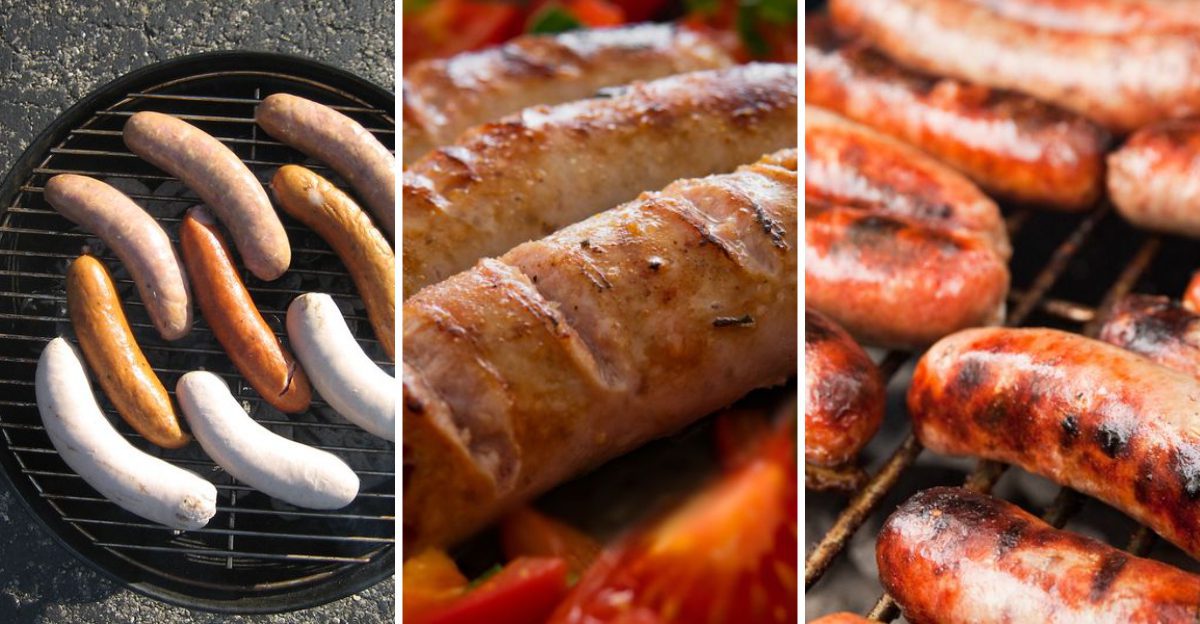
Sausages are one of the oldest and most beloved foods on the planet, enjoyed by people in nearly every country and culture. From smoky street food stalls to fancy restaurant plates, these packed links of seasoned meat have earned a special place at the table.
Whether grilled, boiled, fried, or cured, each sausage tells a story about the place it comes from. Get ready to explore some of the most delicious, iconic, and downright irresistible sausages the world has to offer.
Bratwurst – Germany
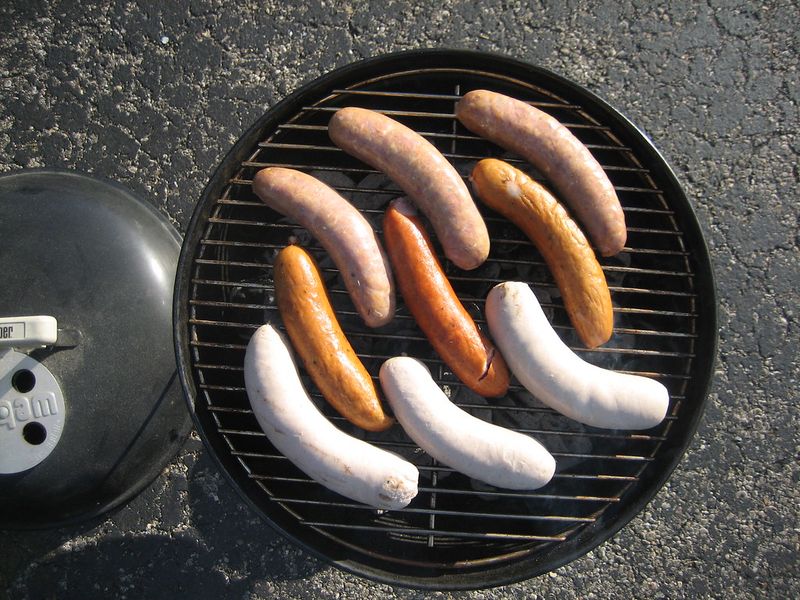
Few sausages on earth carry as much cultural weight as the German Bratwurst. Crispy on the outside, juicy on the inside, this pork-based link has been a staple of German cooking for over 600 years.
It is traditionally grilled and served in a crusty bread roll with mustard.
Street vendors across Germany sell thousands of these every day, especially at festivals like Oktoberfest. The aroma alone is enough to stop anyone in their tracks.
Weisswurst – Germany
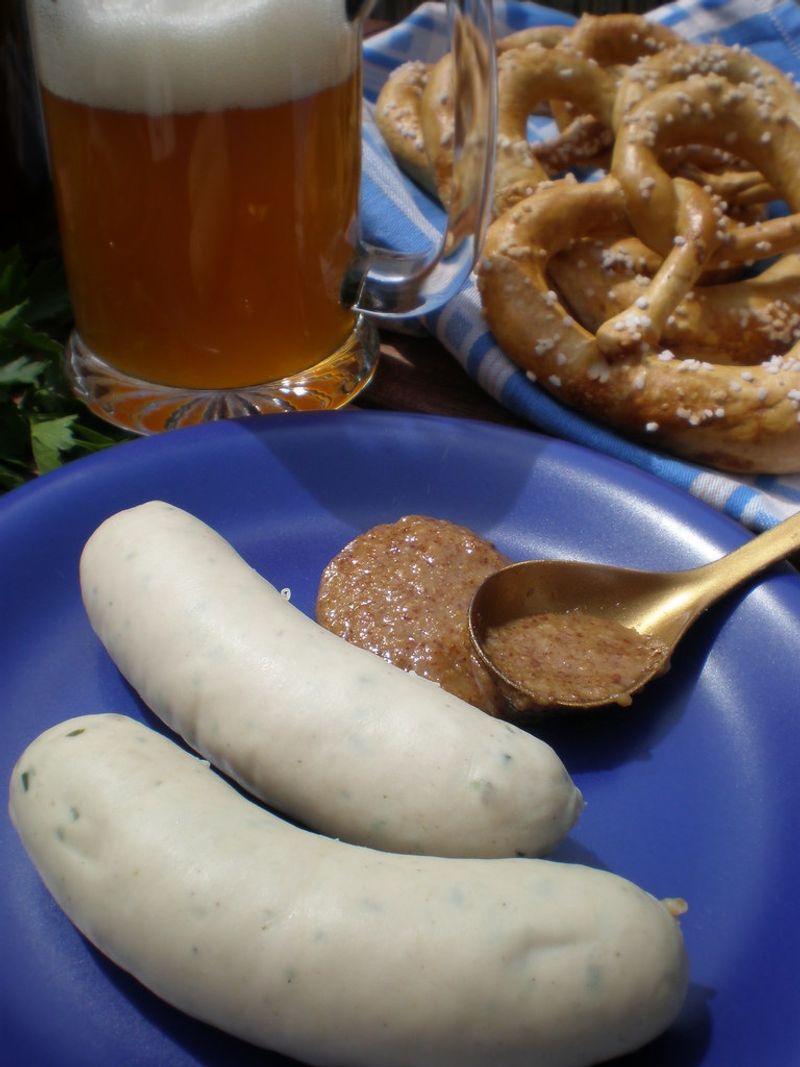
Weisswurst is a Bavarian classic that plays by its own rules. Made from veal and pork back bacon, this pale white sausage is gently poached rather than grilled, giving it a soft, delicate texture unlike anything else.
Locals in Munich traditionally eat it before noon, claiming it should never hear the church bells ring a second time.
You peel the casing off before eating and dip it in sweet mustard. Paired with a wheat beer, it is a true Bavarian breakfast experience.
Currywurst – Germany
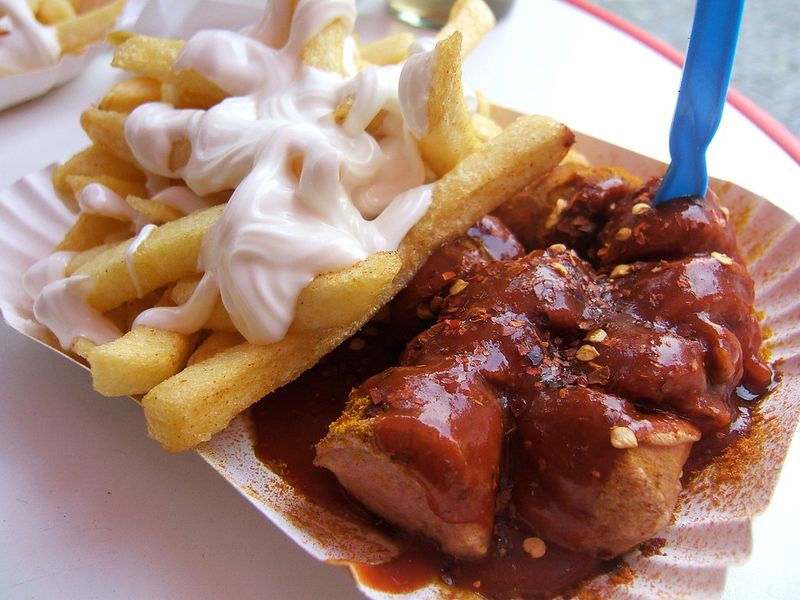
Berlin gave the world Currywurst in 1949, and the city has never looked back. This humble street food is simply a steamed or fried pork sausage sliced into rounds and smothered in a tangy tomato-curry sauce.
It sounds simple, but the combination is wildly addictive.
Germany reportedly consumes over 800 million Currywurst every year. There is even a dedicated Currywurst Museum in Berlin celebrating this beloved snack.
Grab a wooden fork and enjoy it straight from a paper tray.
Nürnberger Rostbratwurst – Germany
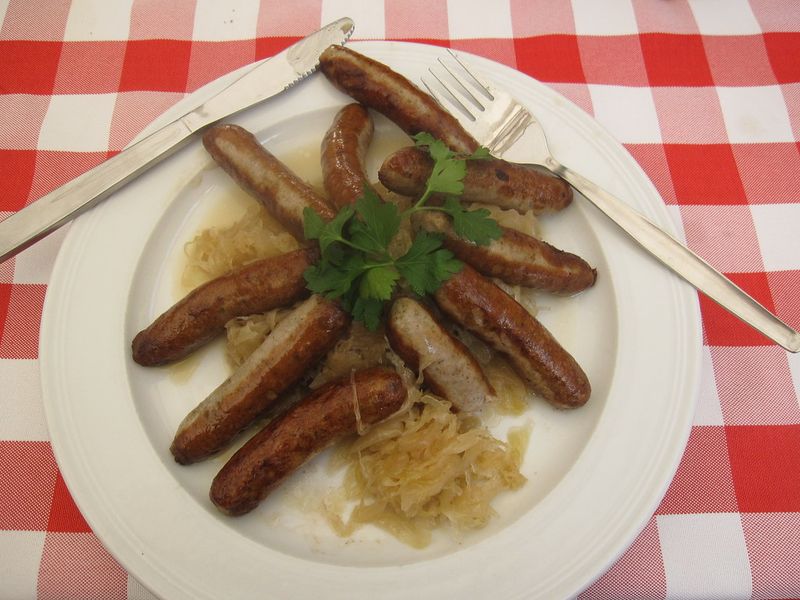
Small but mighty, the Nürnberger Rostbratwurst punches well above its weight. These thin, finger-sized sausages from Nuremberg are seasoned with marjoram and grilled over beechwood, giving them a wonderfully smoky, herby flavor.
They are typically served in groups of six, eight, or twelve alongside sauerkraut and a crusty bread roll.
Protected by European law, authentic Nürnberger must be made within the city limits of Nuremberg. That level of dedication to tradition makes every bite taste earned.
Chorizo – Spain
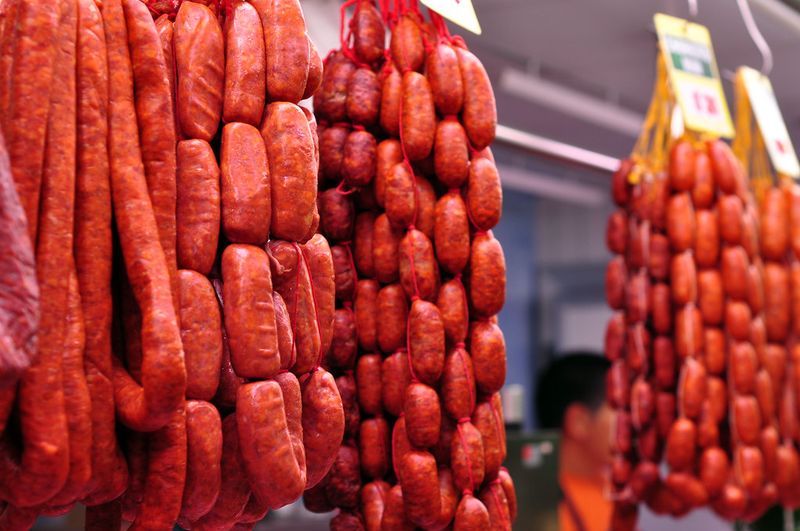
Spain’s Chorizo is one of the most recognizable sausages on the planet, and for good reason. Made with coarsely ground pork and flavored with smoked paprika, it carries a deep red color and a bold, smoky heat that lingers pleasantly on the tongue.
It can be eaten raw, cooked, or cured.
Chorizo shows up in everything from tapas plates to hearty stews. Regional varieties across Spain each bring their own personality, making it impossible to get bored with this vibrant sausage.
Morcilla – Spain
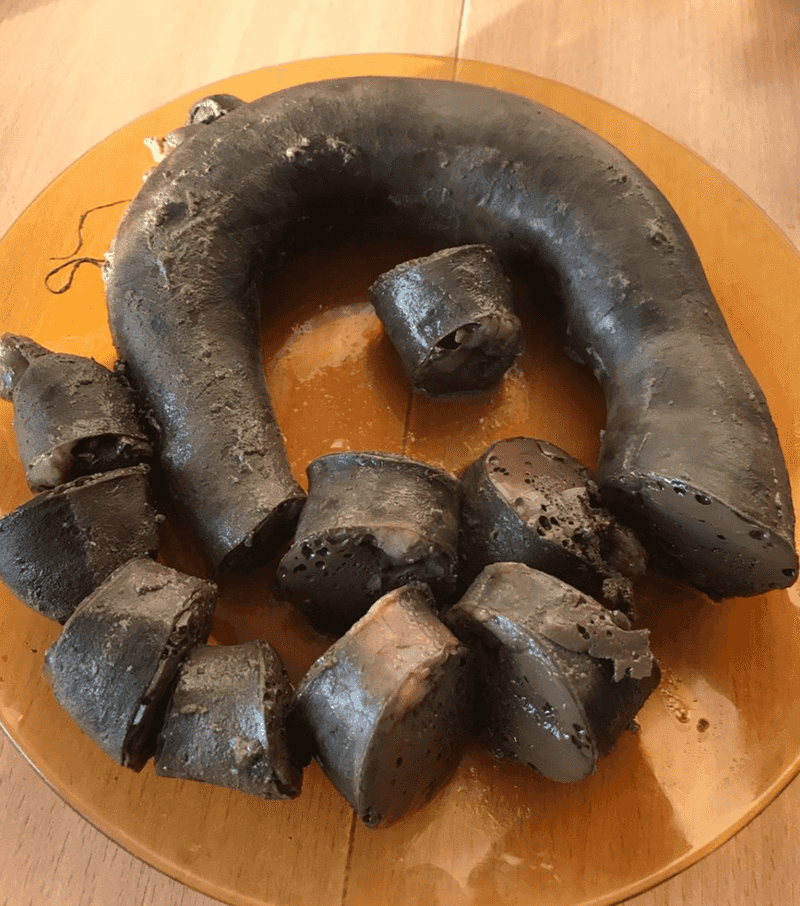
Morcilla is Spain’s answer to blood sausage, and it is far more complex than people expect. Packed with pork blood, onion, rice or breadcrumbs, and warm spices like cinnamon and clove, it has a rich, earthy depth of flavor that is genuinely unforgettable.
The version from Burgos is the most famous, loaded with rice and generously seasoned.
Spaniards fry it, grill it, or crumble it into beans and stews. Once you try it open-minded, there is a good chance you will be hooked.
Salsiccia – Italy
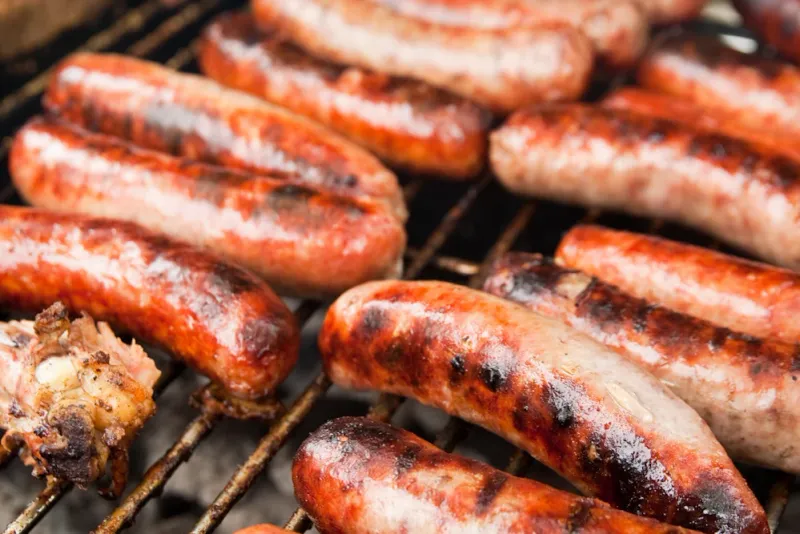
Italy’s Salsiccia is the everyday sausage that holds Italian cooking together. Found in every region of the country, this fresh pork sausage is seasoned with fennel seeds, garlic, and wine, giving it a fragrant, savory punch.
It is rarely eaten on its own but instead stars in pasta sauces, risottos, and braises.
Each Italian region puts its own spin on Salsiccia, so no two versions taste exactly alike. That regional variety is part of what makes exploring Italian food so exciting and rewarding.
‘Nduja – Italy
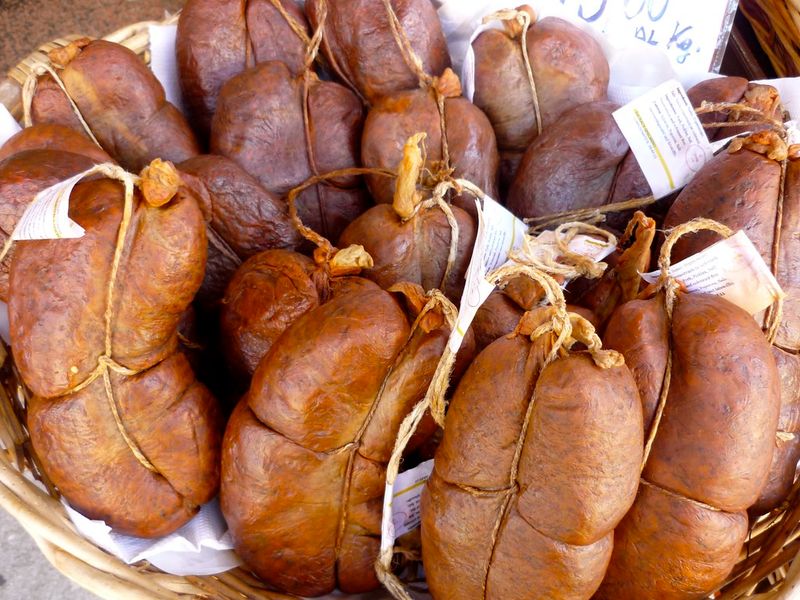
If you like bold heat and intense flavor, Calabria’s ‘Nduja will become your new obsession. This spreadable, fiery pork sausage is packed with Calabrian chili peppers that give it a vivid red color and a serious kick.
Unlike most sausages, you smear it on bread, melt it into pasta, or stir it into pizza sauce.
Chefs around the world have fallen for ‘Nduja in recent years, putting it on menus everywhere. Its unique texture and explosive flavor make it genuinely one of a kind.
Luganega – Italy
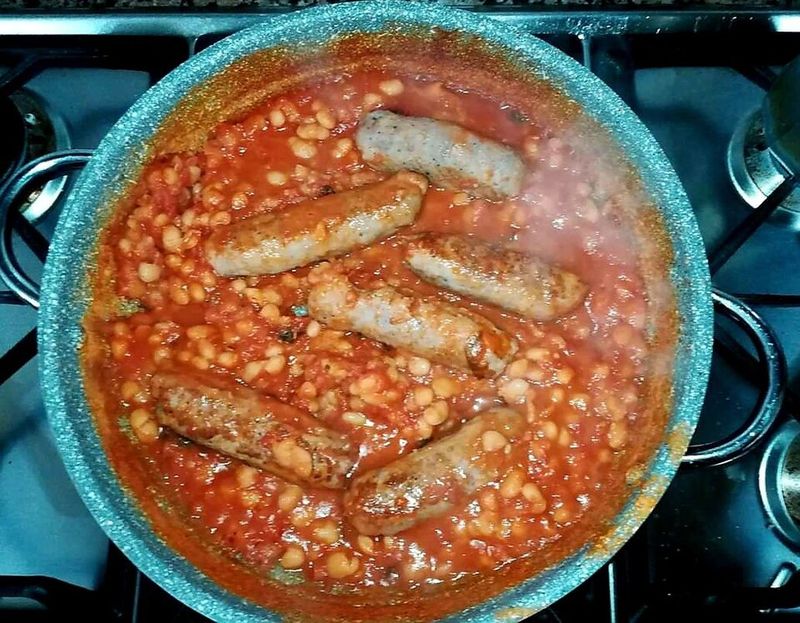
Luganega is one of Italy’s oldest sausages, with a history stretching back to ancient Rome. This long, continuous coiled sausage is made from finely ground pork and seasoned simply with salt, pepper, and cheese, letting the quality of the meat shine.
It is especially popular in Northern Italy, where it is cooked with white wine and risotto.
Luganega’s mild, clean flavor makes it incredibly versatile in the kitchen. It is the kind of sausage that quietly elevates every dish it touches.
Toulouse sausage – France
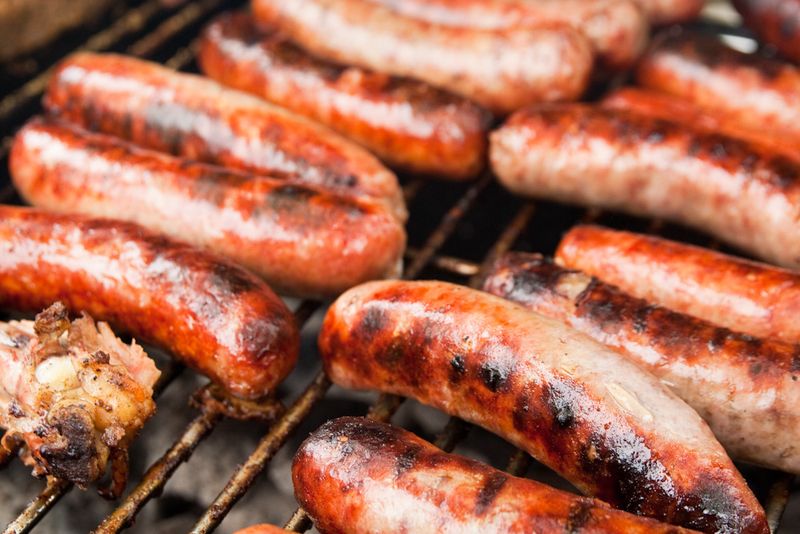
Toulouse sausage is the heart and soul of one of France’s most celebrated dishes: cassoulet. This coarse-ground pork sausage from the city of Toulouse is seasoned with garlic, wine, and nutmeg, producing a robust, meaty flavor that holds its own against rich bean stews.
Its chunky texture is intentional and deeply satisfying.
Beyond cassoulet, Toulouse sausage is fantastic simply grilled and served with Dijon mustard. It represents the hearty, unpretentious side of French cooking that often gets overlooked.
Andouille – France
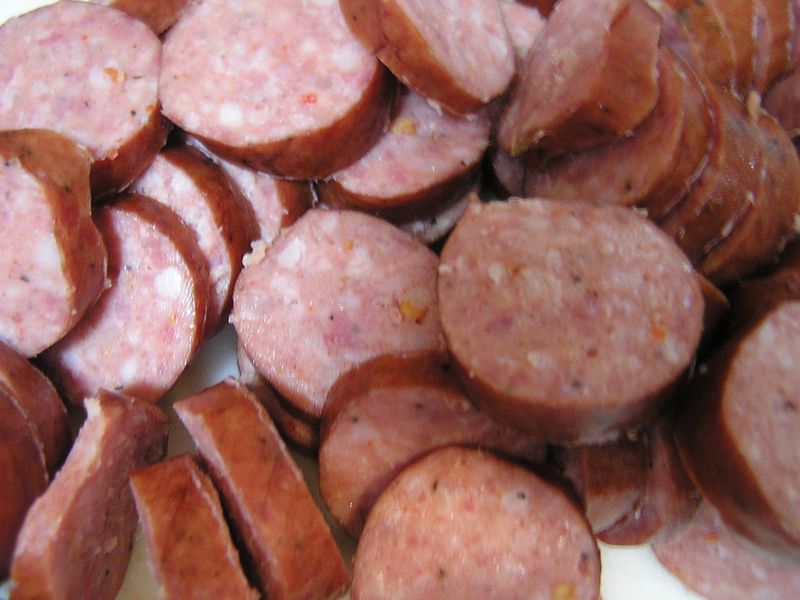
French Andouille is not for the faint of heart, and that is exactly why it earns respect. Made from pork intestines and stomach, heavily smoked and aged, it has a pungent, deeply savory aroma and a firm, chewy bite.
The most prized version comes from Guéméné-sur-Scorff in Brittany, where it has been crafted for centuries.
Sliced thin and served cold as a charcuterie item, it is a true expression of French nose-to-tail cooking. Adventurous eaters are always rewarded.
Merguez – North Africa / France
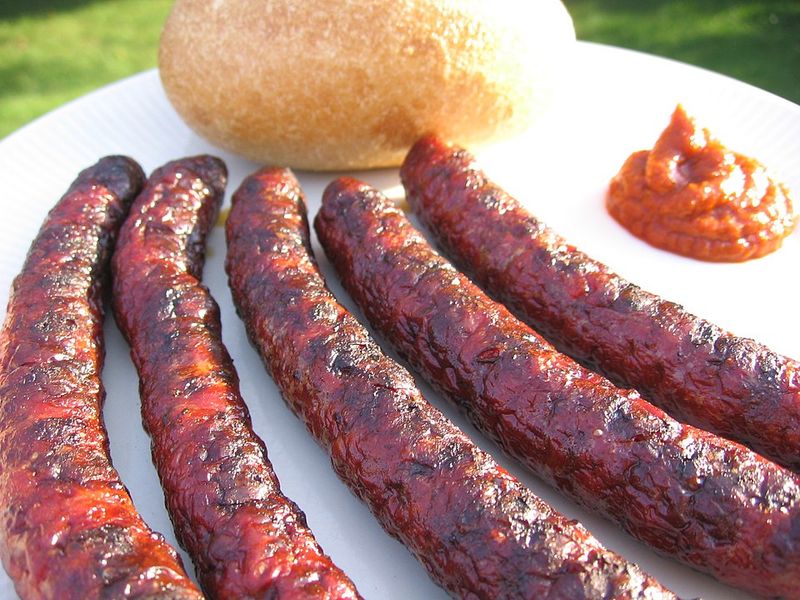
Merguez brings the fire. Originating in North Africa and embraced wholeheartedly by French cuisine, these slender lamb or beef sausages are loaded with harissa, cumin, and garlic, giving them a spicy, aromatic punch that is instantly recognizable.
Their vivid red color comes from the chili paste mixed right into the meat.
Merguez are fantastic grilled and tucked into a baguette or served over couscous. They have become a staple of French street food culture, beloved far beyond their North African roots.
Cumberland sausage – England
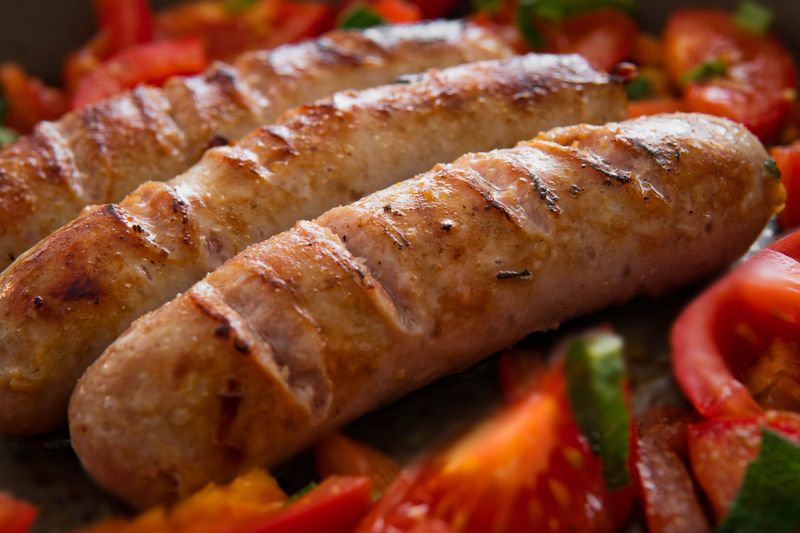
The Cumberland sausage is England’s most distinctive link, coiled rather than linked and packed with coarsely ground pork seasoned with black pepper and herbs. Made in the county of Cumbria, it has Protected Geographical Indication status in the UK, meaning only sausages made there can carry the name.
Its high meat content and bold peppery flavor set it apart from most British bangers. Served with mash and onion gravy, it is proper English comfort food at its most satisfying and unapologetic.
Lincolnshire sausage – England
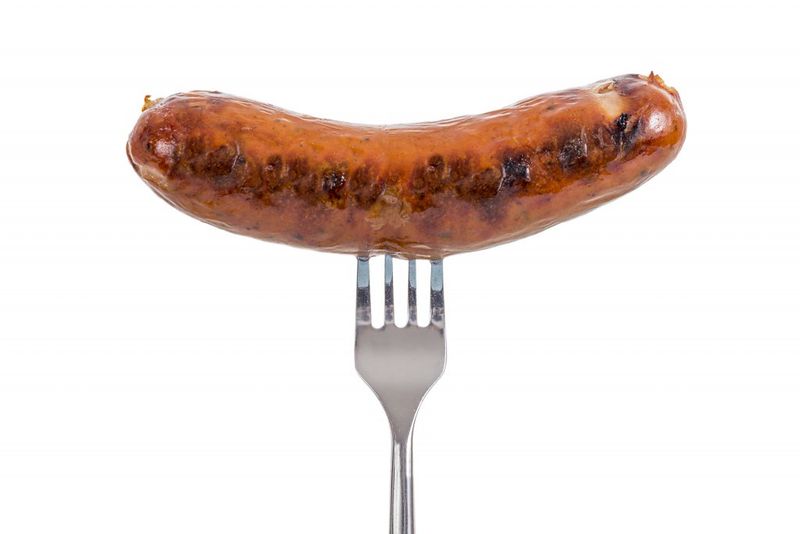
Lincolnshire sausage is the sage lover’s dream. Heavily seasoned with fresh or dried sage and made from coarsely ground pork, it has a herby, aromatic flavor profile that stands apart from other British sausages.
The texture is chunkier than most, with visible bits of meat that remind you these are handcrafted with care.
A staple of the English fry-up, Lincolnshire sausages hold their shape beautifully during cooking. Their distinctive sage-forward taste has earned them a fiercely loyal following across the country.
Black pudding – United Kingdom / Ireland
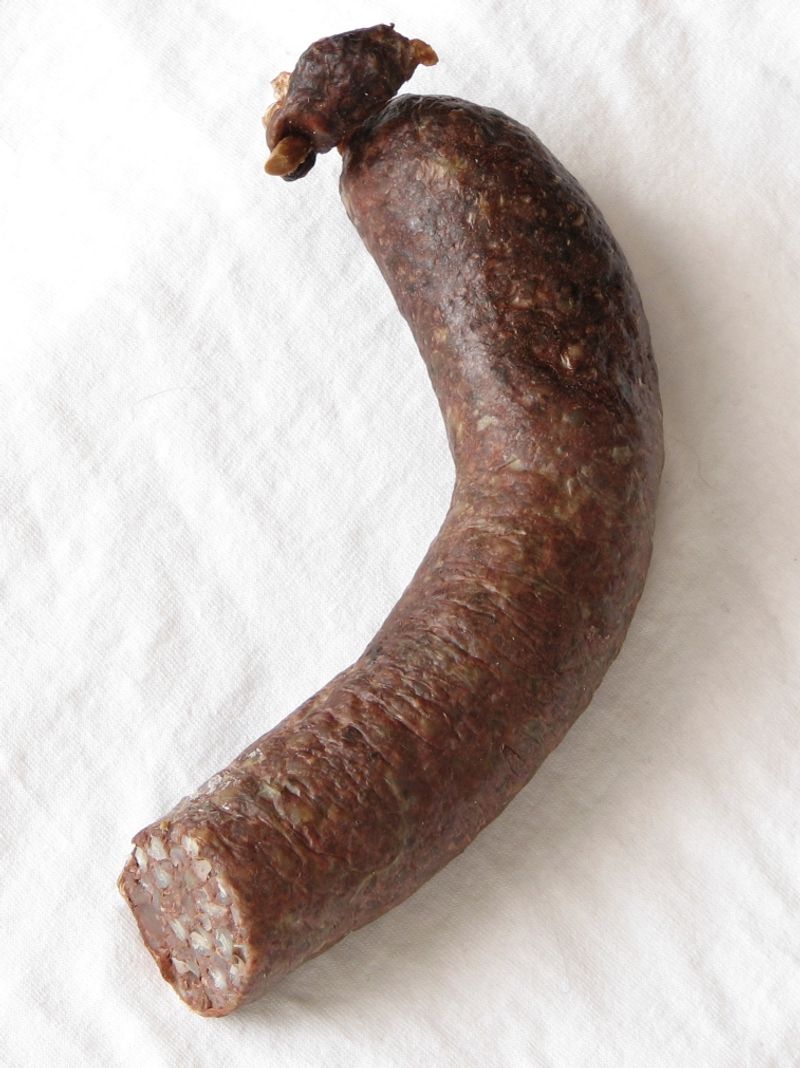
Black pudding might just be the most misunderstood sausage in the world. Made from pork blood, oatmeal or barley, and spices, it has a dense, crumbly texture and a rich, savory depth that converts skeptics into fans after just one bite.
It is a cornerstone of the full English and full Irish breakfast traditions.
Chefs have elevated black pudding into fine dining territory in recent years. Its earthy boldness pairs brilliantly with sweet apple, creamy scallops, and sharp cheddar.
Kielbasa (Polish sausage) – Poland
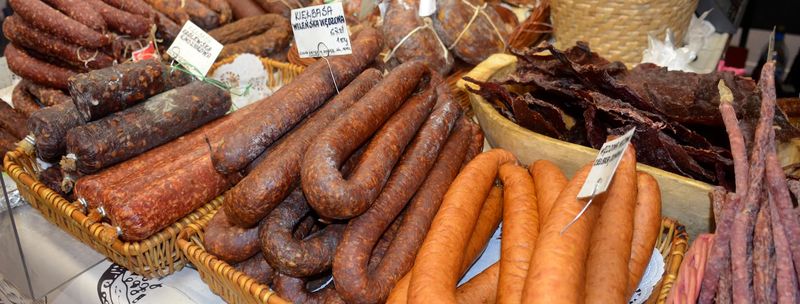
Kielbasa is Poland’s national sausage and one of the most versatile links in the world. The word simply means “sausage” in Polish, but it encompasses dozens of regional varieties ranging from fresh to smoked, thin to thick, mild to garlicky.
The most famous version abroad is the smoked, U-shaped Kielbasa Polska.
Boiled, grilled, or sliced into soups and stews, Kielbasa adapts to almost any cooking method. Its garlicky, smoky character makes it a crowd-pleaser at any gathering or dinner table.
Krakowska – Poland
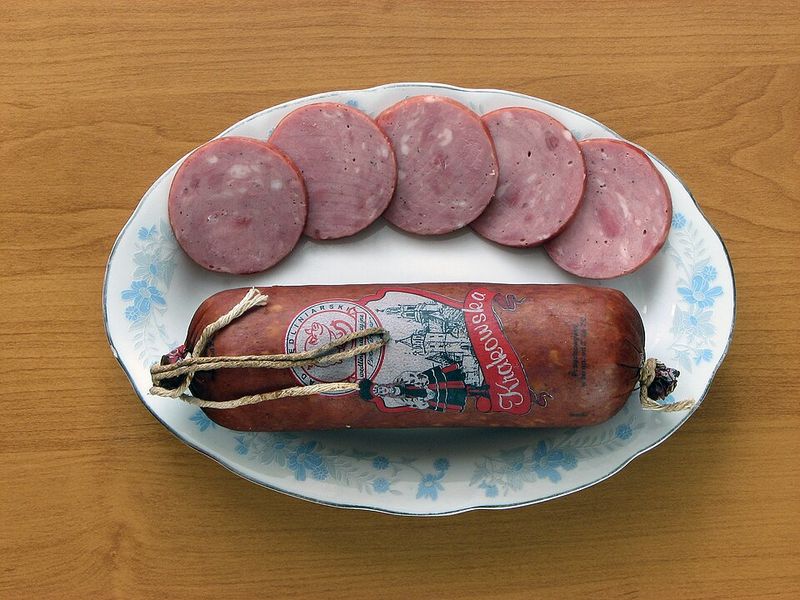
Named after the historic city of Krakow, Krakowska is Poland’s most refined deli sausage. Made from coarsely chopped pork, seasoned with garlic, pepper, and allspice, then smoked and cooked to perfection, it has a firm, sliceable texture and a clean, satisfying flavor.
Unlike many sausages, it is almost always eaten cold as a sandwich filling.
Krakowska has been a staple of Polish delis worldwide for generations. Its balanced seasoning and premium quality make it a go-to choice for everyday sandwiches and charcuterie boards alike.
Csabai sausage – Hungary
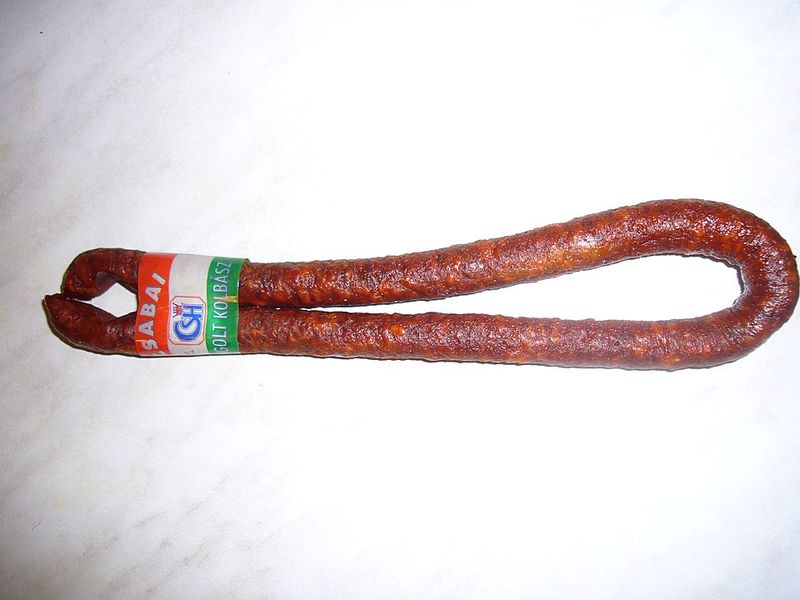
Hungary’s Csabai sausage comes from the town of Bekescsaba and carries a reputation for being one of Europe’s spiciest traditional sausages. Made from pork seasoned generously with hot Hungarian paprika, garlic, and caraway seeds, it has a fiery, complex flavor and a firm, dense texture from extensive smoking and air-drying.
Csabai holds a protected designation of origin in the European Union. Sliced thin on a charcuterie board or stirred into a hearty goulash, it delivers warmth and character in every bite.
Debreceni sausage – Hungary
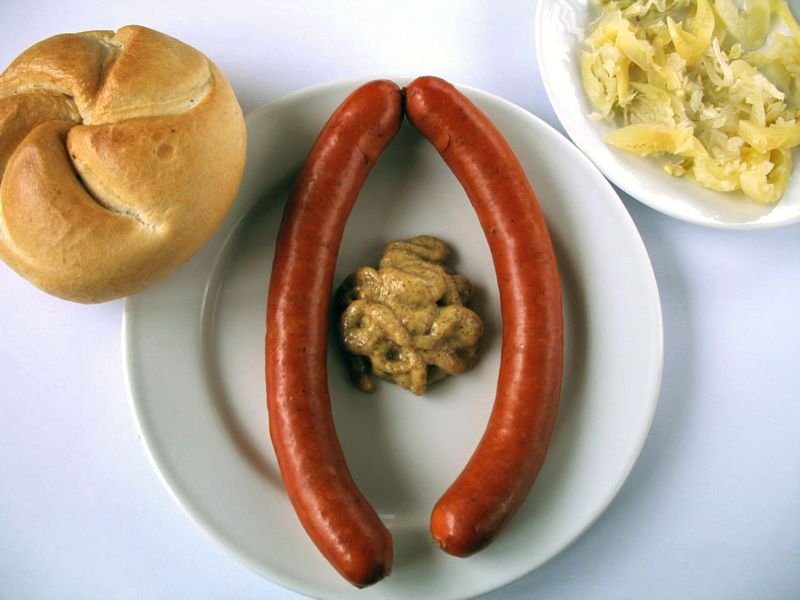
Debreceni sausage is Hungary’s most famous fresh sausage, named after the eastern city of Debrecen. Plumper and juicier than Csabai, it is made from pork seasoned with sweet Hungarian paprika and garlic, giving it a vibrant orange-red color and a milder, more approachable heat.
It is almost always grilled or pan-fried until the casing crackles.
Popular at Hungarian barbecues and street markets, Debreceni is the kind of sausage that brings people together. Pair it with mustard and pickled vegetables for the full experience.
Cevapi (Cevapi) – Balkans
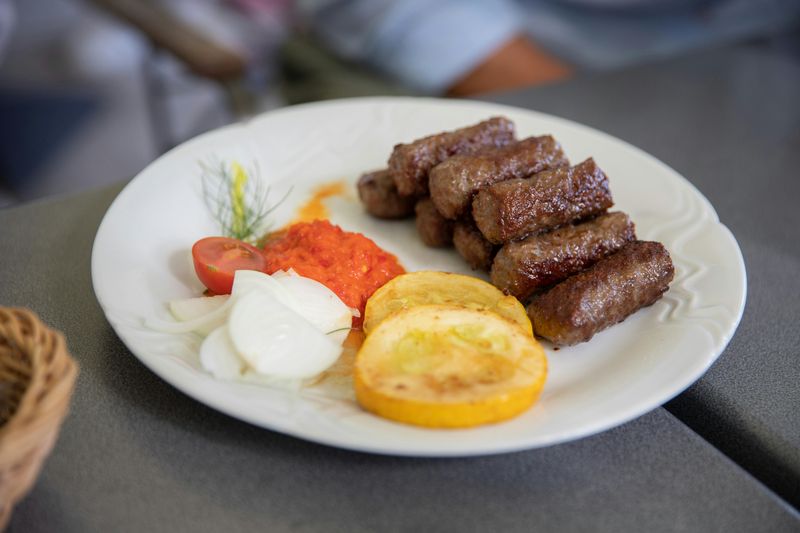
Cevapi might be the most addictive sausage in the Balkans. These small, skinless grilled sausages made from a mix of minced beef and lamb are seasoned simply with garlic and salt, letting the charcoal flavor do most of the talking.
Served tucked inside a warm flatbread called lepinja with raw onions and ajvar, they are street food perfection.
Cevapi are deeply woven into the cultural identity of Bosnia, Serbia, and Croatia. Every family has their own recipe, and every version sparks a friendly debate about who makes them best.
Sudjuk (Sucuk) – Turkey / Balkans / Middle East
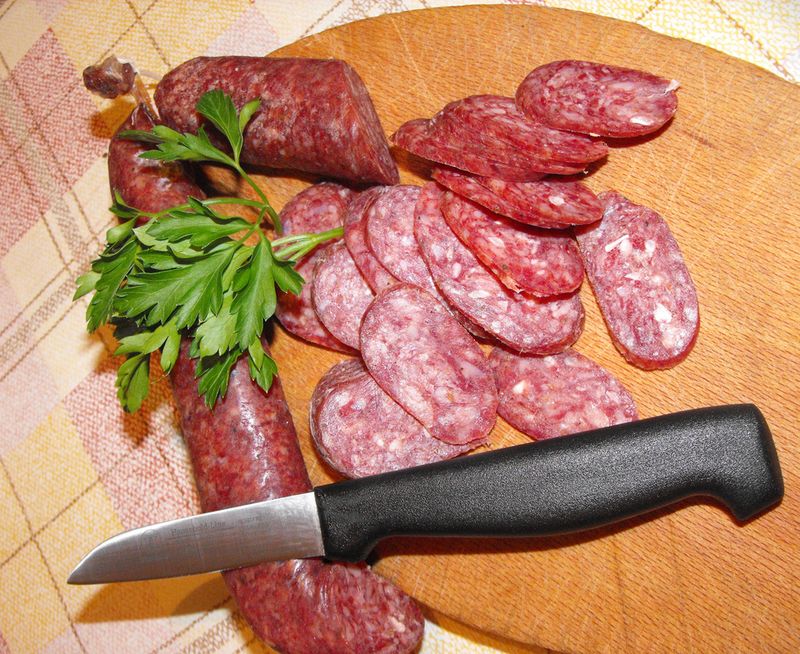
Sucuk is the sausage that wakes up Turkey every morning. This dry, fermented beef sausage is loaded with cumin, garlic, and red pepper flakes, giving it an intensely aromatic, slightly spicy flavor that perfumes the entire kitchen the moment it hits a hot pan.
The fat renders out as it cooks, crisping the edges beautifully.
A Turkish breakfast without sucuk and eggs feels incomplete to millions of people. Versions of this sausage are also cherished across the Balkans and the Middle East under different names, proving its universal appeal.
Boerewors – South Africa
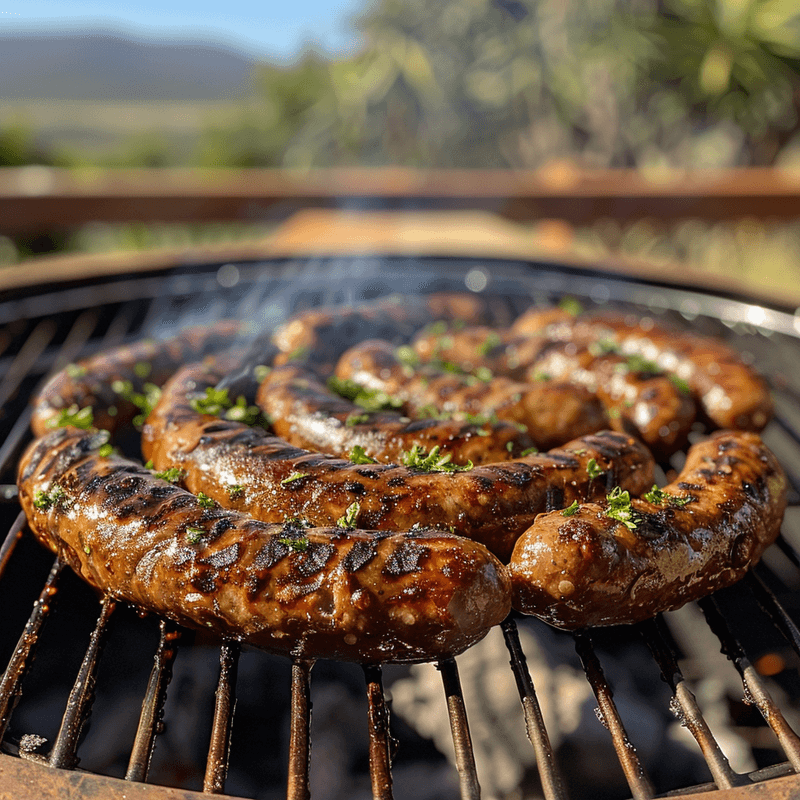
Boerewors is more than a sausage in South Africa. It is a cultural institution.
The name means “farmer’s sausage” in Afrikaans, and it is the undisputed star of the braai, South Africa’s beloved tradition of outdoor grilling. Made from beef with pork or lamb, seasoned with coriander, cloves, and nutmeg, it must contain at least 90% meat by law.
Coiled and cooked whole over open flames, Boerewors is juicy, fragrant, and deeply satisfying. Served in a hot dog roll with chakalaka relish, it captures the spirit of South African outdoor life.
Longganisa – Philippines
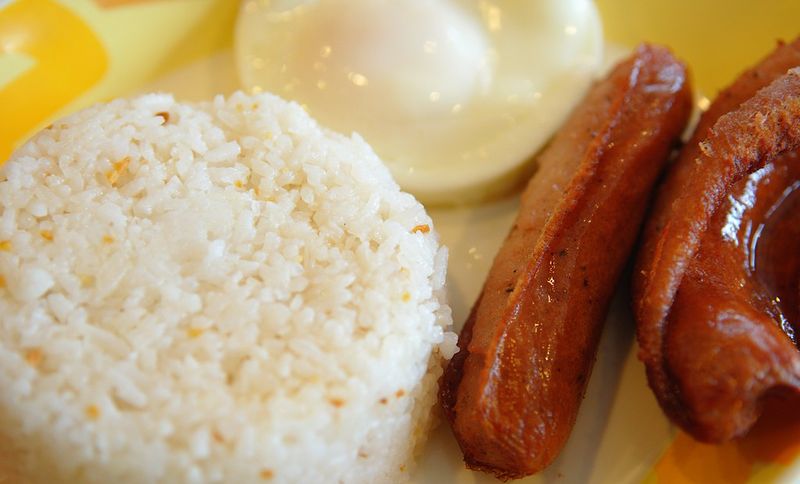
Longganisa is the Philippines’ answer to breakfast sausage, and it is gloriously sweet. Made from ground pork seasoned with garlic, sugar, and vinegar, it caramelizes beautifully in the pan, developing a sticky, lacquered crust that is almost candy-like.
Different provinces across the Philippines each have their own distinct recipe, from sweet to garlicky to tangy.
Served as part of the classic Filipino breakfast trio with garlic rice and eggs, Longganisa is pure morning joy. Once you taste the sweet-savory balance, ordinary breakfast sausage will never quite measure up again.
Sai Krok Isan – Thailand
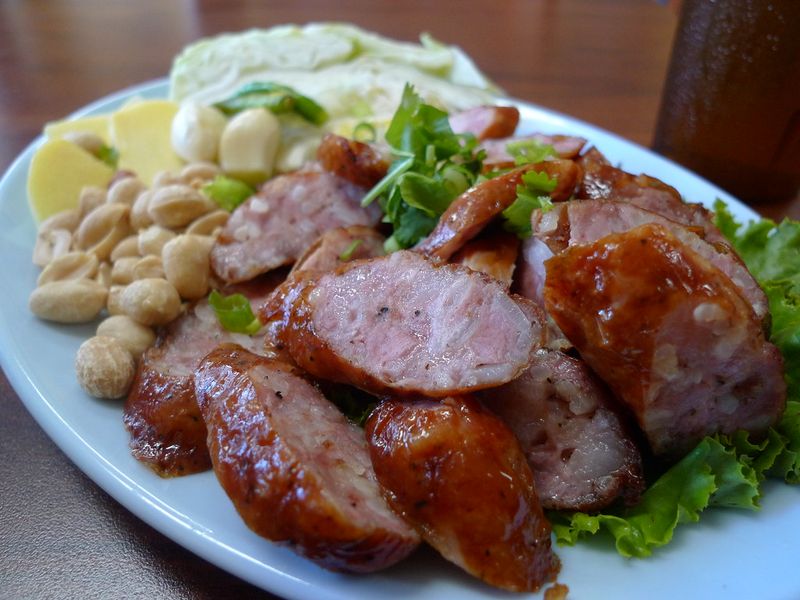
Sai Krok Isan is one of the most unique sausages in the world, and the sourness is the whole point. Originating from the Isan region of northeastern Thailand, these small pork sausages are fermented for several days before grilling, developing a tangy, pleasantly funky flavor unlike anything in Western sausage traditions.
Rice mixed into the filling adds a slightly chewy texture.
Vendors grill them on skewers over charcoal and serve them with raw ginger and cabbage to cut through the richness. They are a street food adventure well worth taking.
Lap Cheong (Chinese sausage) – China
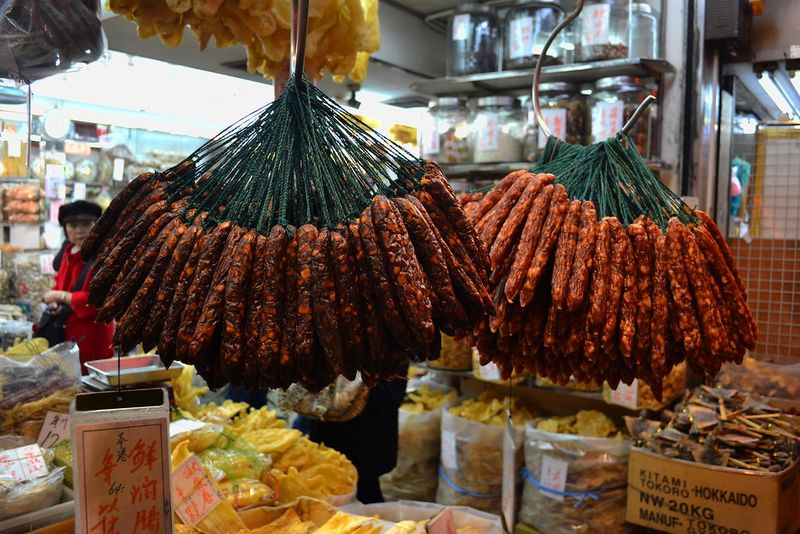
Lap Cheong has a flavor profile that surprises people who have never tried it. These dried, cured Chinese sausages made from pork and pork fat are sweetened with rose wine and soy sauce, giving them a distinctly sweet, slightly smoky taste that is unlike any European sausage.
They are firm, dense, and packed with concentrated flavor.
Lap Cheong is rarely eaten alone. Instead, it is sliced and steamed over rice, tossed into fried rice, or tucked inside sticky rice dumplings.
Its sweet-savory character adds depth to every dish it joins.
Hot dog (Frankfurter/Wiener) – United States
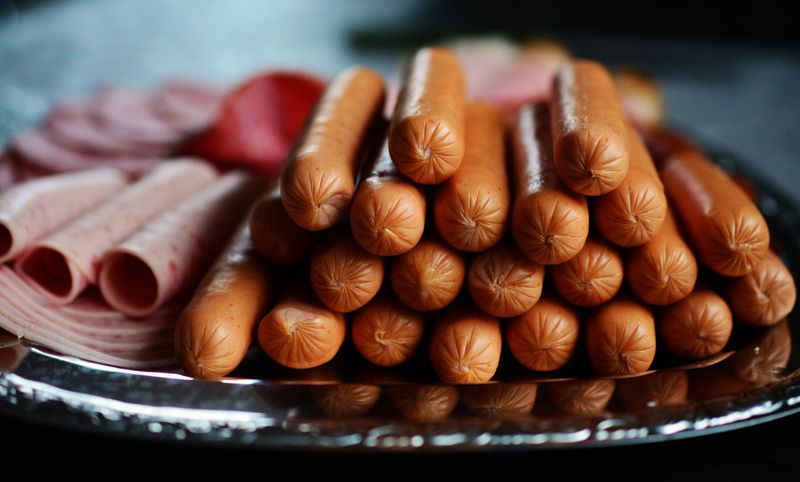
No sausage has conquered popular culture quite like the American hot dog. Originally brought to the United States by German immigrants from Frankfurt and Vienna, the humble Frankfurter found its true home at baseball stadiums, backyard barbecues, and street carts across America.
Smooth, mild, and endlessly customizable with toppings, it became a national icon.
Americans eat roughly 20 billion hot dogs every year. From Chicago’s loaded “dragged through the garden” style to New York’s simple mustard-and-kraut version, the hot dog proves that sometimes the simplest pleasures are the most enduring ones.
Enjoyed this story?
Add Fast Food Club as a preferred source to see more of our reporting on Google.