


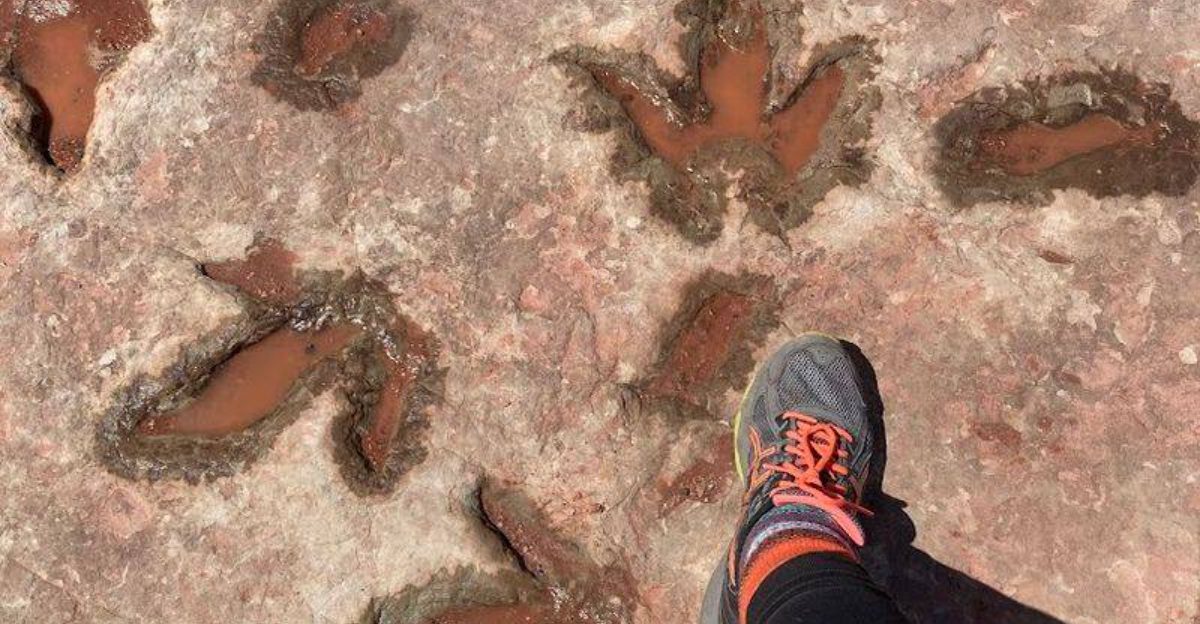
Hidden just off US-160 near Tuba City, Arizona, the Navajo Moenave Dinosaur Tracks site is one of the most jaw-dropping roadside stops in the entire Southwest. Around 200 million years ago, real dinosaurs walked across soft, muddy ground here, leaving behind footprints that hardened into rock over millions of years.
Today, visitors can walk right up to those ancient impressions, touch them, and even stand inside them. If you have ever dreamed of feeling like you stepped into Jurassic Park, this place will absolutely deliver.
Ancient Footprints Frozen in Time
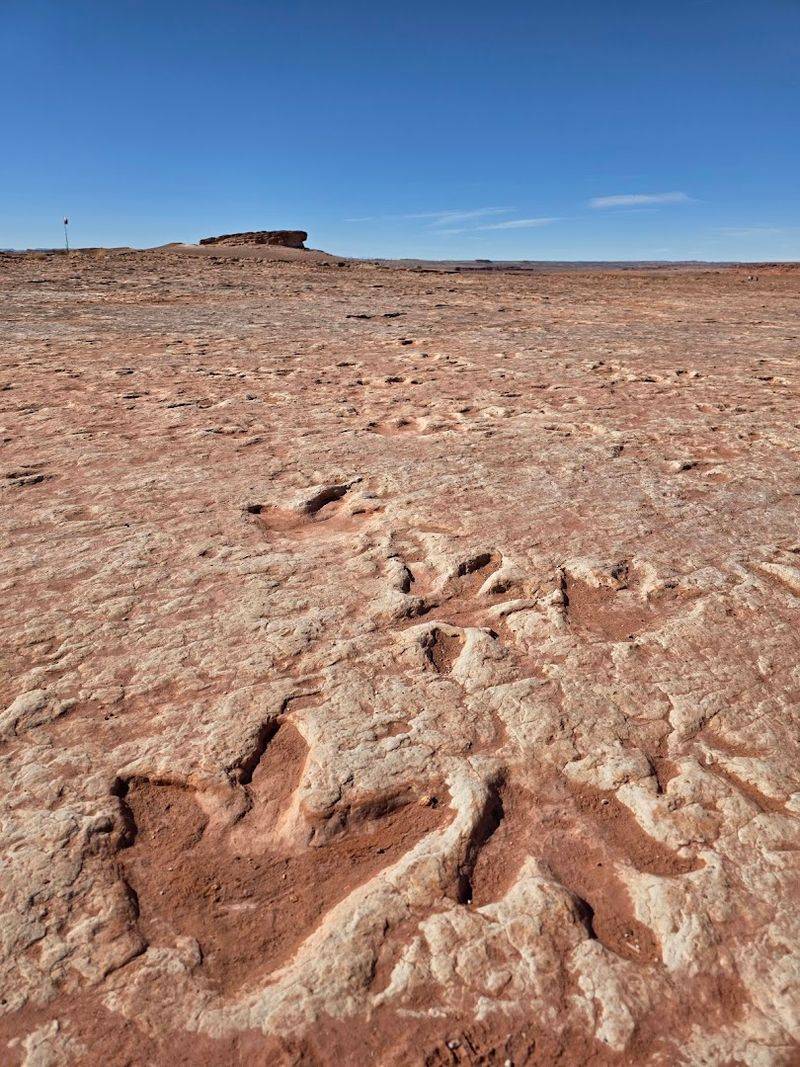
Roughly 200 million years ago, dinosaurs wandered across a marshy riverbed in what is now northern Arizona. Their feet pressed deep into soft mud, and over millions of years, that mud turned to stone, preserving every toe impression like a natural time capsule.
Walking up to these tracks for the first time genuinely stops you in your tracks, too.
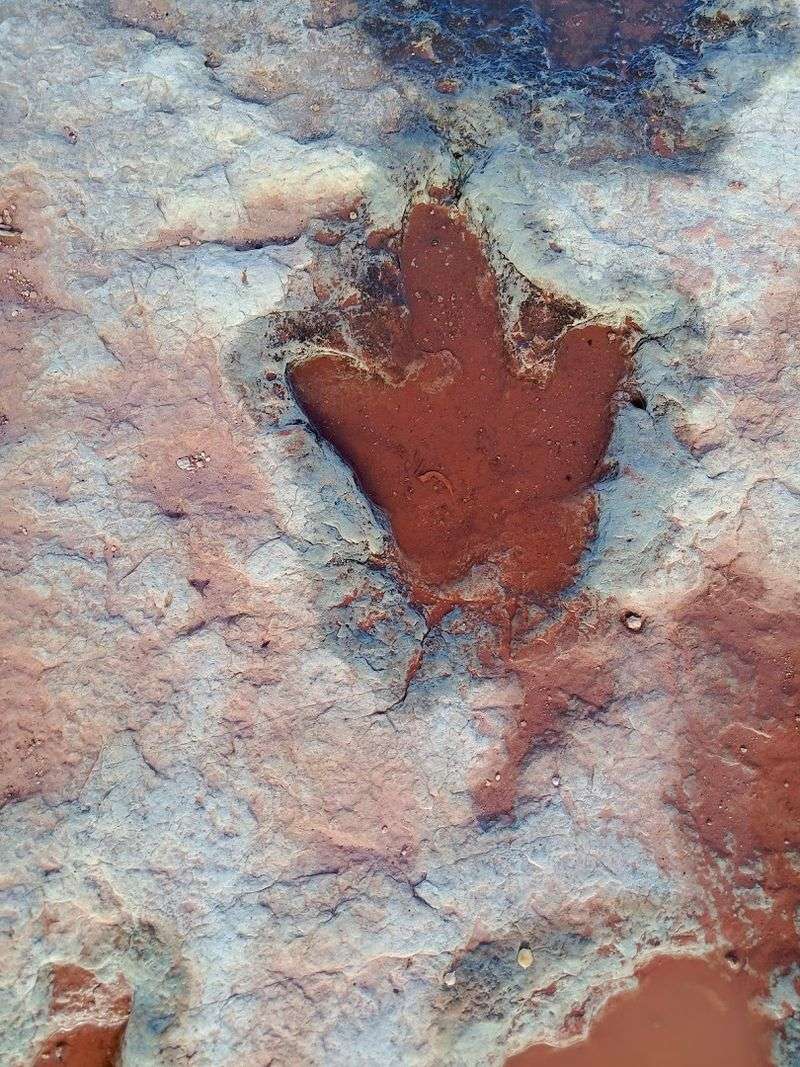
The most visible prints are large three-toed impressions, some stretching over a foot long. Scientists call these trace fossils, meaning they capture behavior rather than bones.
Paleontologists have identified prints likely belonging to early theropods such as Eubrontes and Grallator, both dating to the early Jurassic period.
What makes this site extraordinary is how raw and accessible it feels. No glass case separates you from history.
You can crouch down, run your fingers along the ridges, and genuinely feel connected to creatures that roamed Earth long before humans existed.
No Tickets, No Fences, No Barriers
Forget crowded ticket booths and velvet ropes. The Navajo Moenave Dinosaur Tracks site operates completely in the open, with no entrance fee and no fences blocking your view or your curiosity.
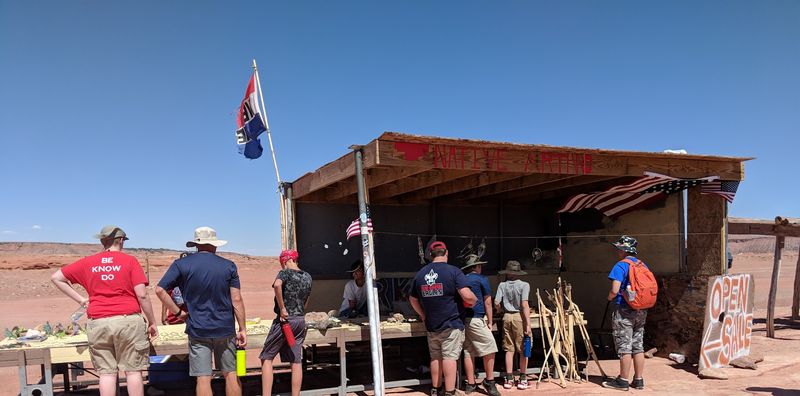
You simply pull off US-160, park near the vendor area, and start exploring at your own pace.
That freedom creates a remarkably different experience compared to polished tourist attractions. The raw, open-air setting makes every discovery feel personal, almost like you stumbled upon something secret.
Some prints sit just steps from the parking area, while others require a short walk deeper into the rocky landscape.
The site is open 24 hours a day, seven days a week, which means early risers can catch the tracks glowing in golden morning light. Late-afternoon visitors get dramatic shadows that actually make the impressions easier to see.
Whenever you arrive, the ancient footprints are waiting for you.
Local Navajo Guides Who Bring the Site to Life
One of the most memorable parts of visiting the Navajo Moenave Dinosaur Tracks site has nothing to do with dinosaurs. It is the local Navajo guides who volunteer their time to walk visitors through the area, sharing knowledge, stories, and genuine warmth that no museum audio tour could ever replicate.
Guides like Bertha, Sophia, Wanda, Orlando, and Jennifer have been praised repeatedly by visitors for their enthusiasm and helpfulness. They know exactly where the best-preserved prints are hiding, and they often carry water bottles to pour over the tracks, making the impressions dramatically more visible against the red rock.
Tours run entirely on tips, with most visitors recommending between ten and twenty dollars as a fair amount. Supporting these guides matters because they stand outside in desert heat all day, sharing their land and culture generously.
Their knowledge transforms a cool rock site into an unforgettable human connection.
Dilophosaurus Territory Right Beneath Your Feet
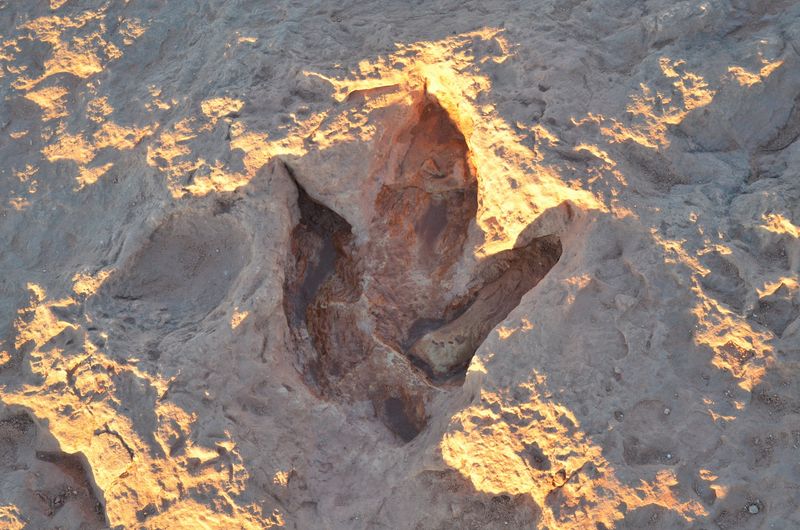
Most people associate Arizona with roadrunners and rattlesnakes, not massive carnivorous dinosaurs. But 190 million years ago, a predator called Dilophosaurus roamed this exact landscape.
Fossils of this early Jurassic theropod have been discovered nearby, and the three-toed tracks at Moenave are consistent with the kind of prints such a creature would have left behind.
Dilophosaurus stood about six feet tall, walked on two powerful legs, and was one of the largest predators of its era. Seeing a footprint that matches its stride is a genuinely spine-tingling moment, especially when you realize the rock you are standing on is the same age as the dinosaur itself.
A helpful tip from fellow visitors: take what guides say about specific species with a grain of salt, since some identifications get exaggerated for storytelling. The tracks are absolutely real, but verifying species details through a quick online search afterward keeps the experience both exciting and accurate.
Petrified Dino Dung and Marine Fossils
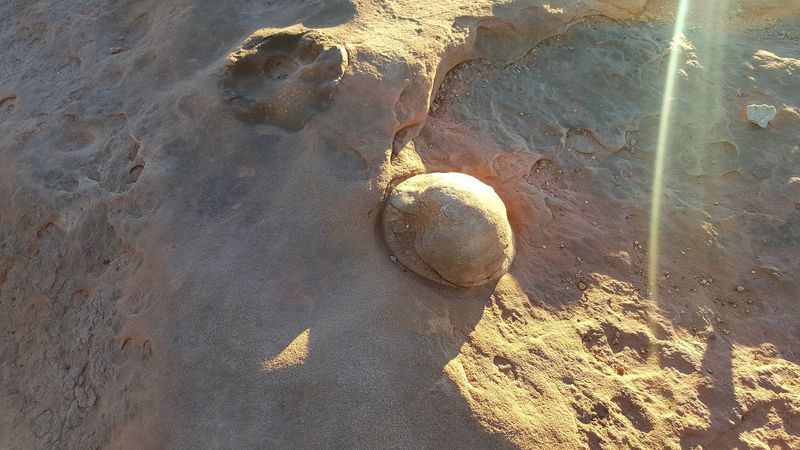
Here is a fun fact that will make kids absolutely lose their minds: the Navajo Moenave site does not just have footprints. Visitors have also spotted what appears to be petrified dinosaur dung, technically called coprolites, which look surprisingly like large, fossilized shells sitting right on the ground.
Even more mind-bending is the evidence of ancient marine life scattered across the site. One guide explained that the area was once covered by an ancient ocean, and traces of marine animals and plant material are still visible in the rock layers for those who know where to look.
Guides like Helen are especially good at pointing these out.
Stumbling across a petrified poop pile from a prehistoric creature is the kind of weird, wonderful moment that makes this site so uniquely entertaining. It is educational, slightly gross, and completely unforgettable, which honestly describes the best kind of field trip experience imaginable.
The Magic Trick of Adding Water to the Tracks
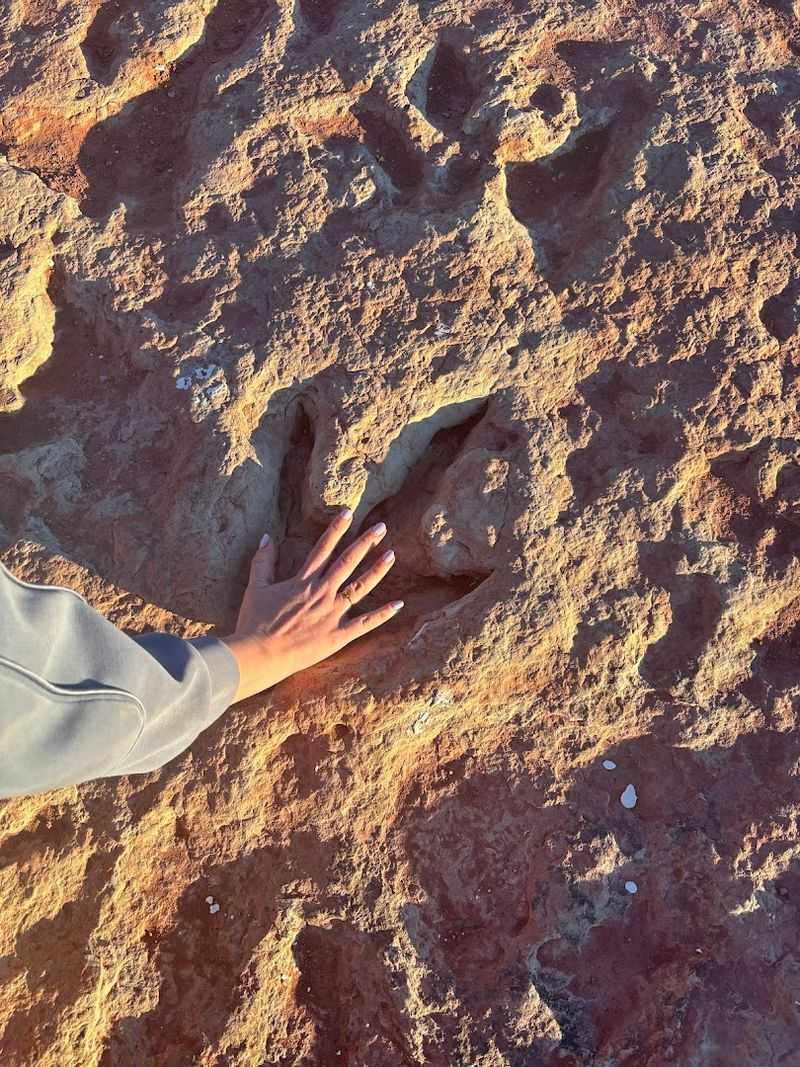
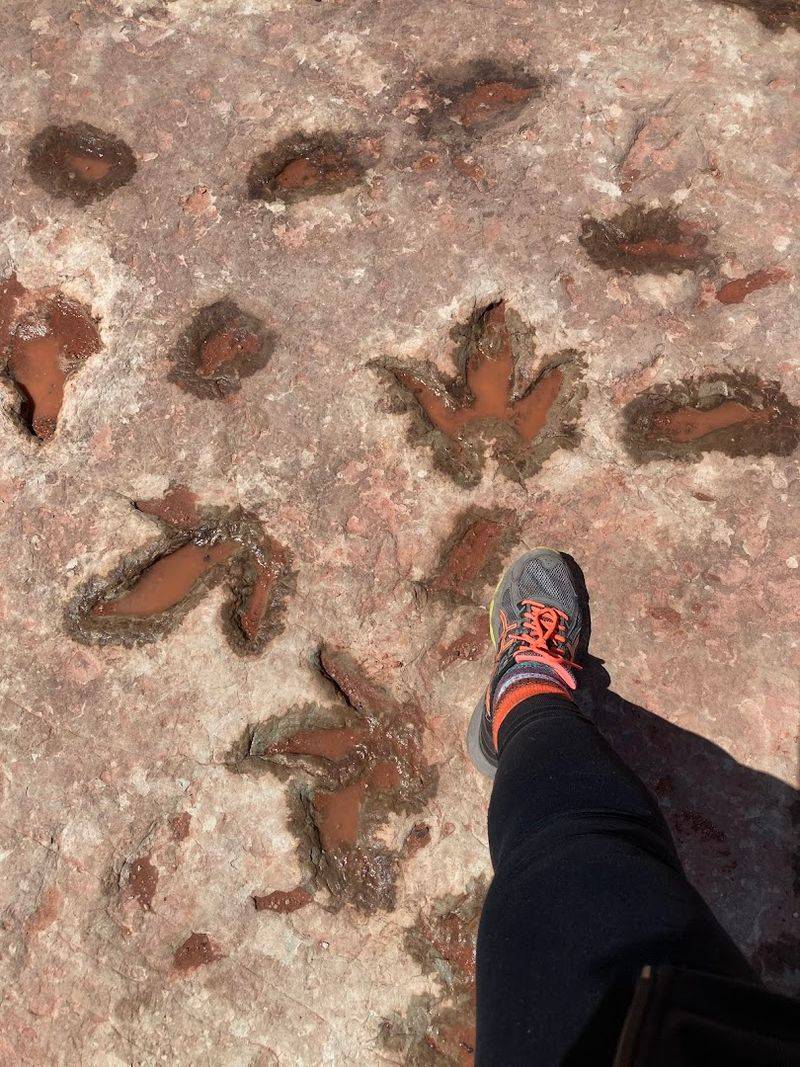
Veteran visitors and savvy guides share one trick that genuinely transforms the experience: pour water directly onto the dinosaur tracks. Dry desert rock can make the impressions blend into the surrounding surface, but a splash of water darkens the fossil and brings every toe ridge and heel mark into sharp, dramatic contrast.
Some guides carry water bottles specifically for this purpose, and watching a faint smudge in the rock suddenly reveal itself as a clear, unmistakable three-toed footprint is honestly a little magical. It feels like developing a photograph in real time, right there in the open desert.
If you plan to visit, especially during the hotter months, bring extra water for yourself and a little extra to share with the tracks. The impressions closest to the road are usually the most visited, but the ones further out often reward the extra walking with better preservation and fewer footsteps crowding the frame.
A Roadside Discovery That Surprises Every First-Timer
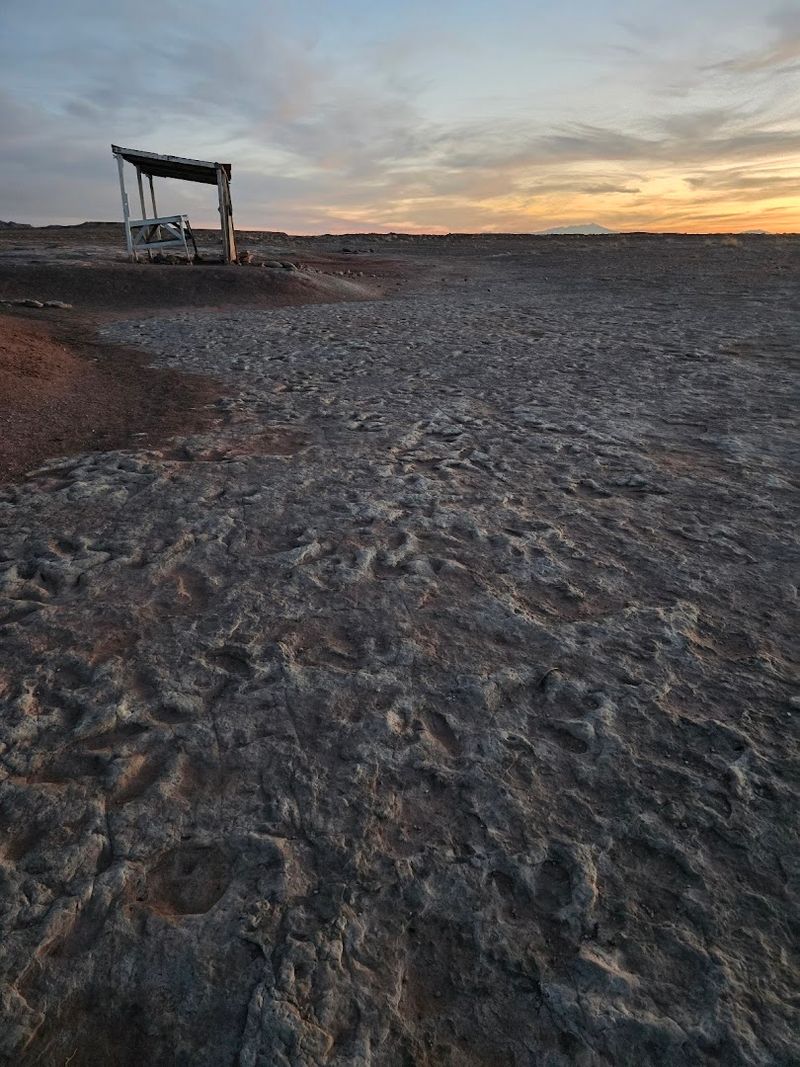
The first reaction most visitors describe is confusion. You are driving along US-160, passing wide-open desert, and then a small sign appears: Dinosaur Tracks.
You pull off, park near a cluster of small vendor stalls, and think, wait, is this really it? No grand entrance, no elaborate signage, just red earth and open sky.
Then you walk a few steps and spot the first print, then another, then another. The confusion melts into pure amazement surprisingly fast.
Multiple reviewers have described feeling like the site sneaks up on you, humble from the road but genuinely breathtaking once you are standing among the fossils.
That element of surprise is part of what makes the Navajo Moenave site so charming. It rewards curiosity without demanding it.
Whether you planned the stop for months or spotted the sign on a whim, the experience delivers something real and completely worth pulling over for.
Handmade Navajo Jewelry and Souvenirs On-Site
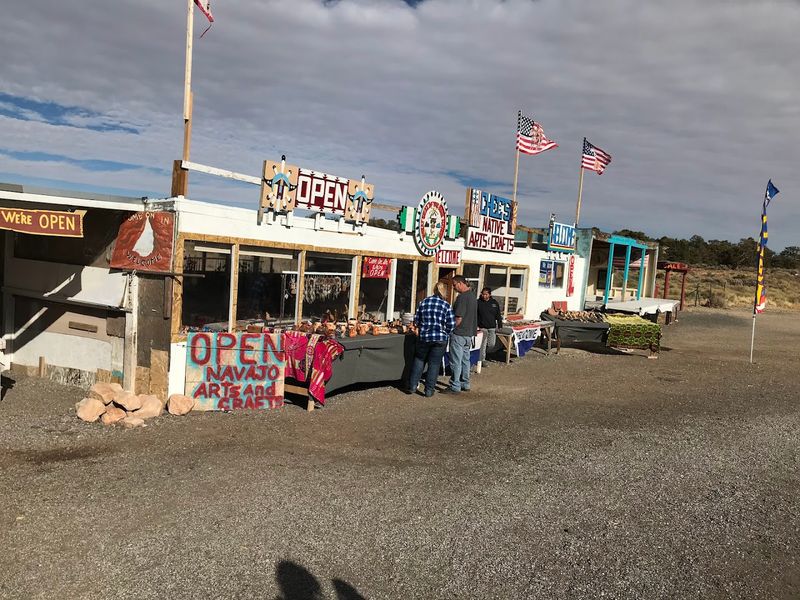
Shopping for souvenirs at the Navajo Moenave site is nothing like browsing a gift shop in a theme park. Local Navajo artisans set up small vendor stalls near the parking area, selling handmade jewelry, beaded bracelets, and genuine Navajo artifacts crafted by the same families who guide tours and share their history with visitors.
Multiple reviewers mentioned buying beautiful pieces directly from their guides, including matching bracelets from Wanda and lovely silver work from Sophia. Purchasing something here means your money goes directly to the people who call this land home, which feels meaningfully different from buying a plastic dinosaur keychain at a highway gas station.
Even if shopping is not your thing, pausing to look at the craftsmanship is worthwhile. The jewelry reflects real cultural tradition and artistic skill.
Guides have also been known to gift visitors small pieces of jasper or other local stones, adding a personal touch that makes the whole experience feel genuinely special.
Best Times to Visit and What to Expect
Planning your visit a little in advance can make a noticeable difference in what you experience. Weekends tend to bring more guides and vendors to the site, meaning you are more likely to get a personal tour and find the best-preserved prints without wandering around on your own.
Weekday visits, especially on Tuesday afternoons, have left some travelers exploring solo with no guide in sight.
Early morning is hands-down the best time of day to visit. The light is softer, the shadows are longer, and the tracks show up beautifully against the red rock.
Afternoon sun can wash out the impressions and, more practically, the desert heat becomes genuinely uncomfortable without shade anywhere nearby.
Wear sturdy shoes, bring sunscreen, and carry more water than you think you need. The terrain is uneven and rocky in spots.
A hat is not optional in summer months. Come prepared and you will have a much more comfortable and enjoyable time exploring the site.
Standing on the Same Ground as 200-Million-Year-Old Creatures
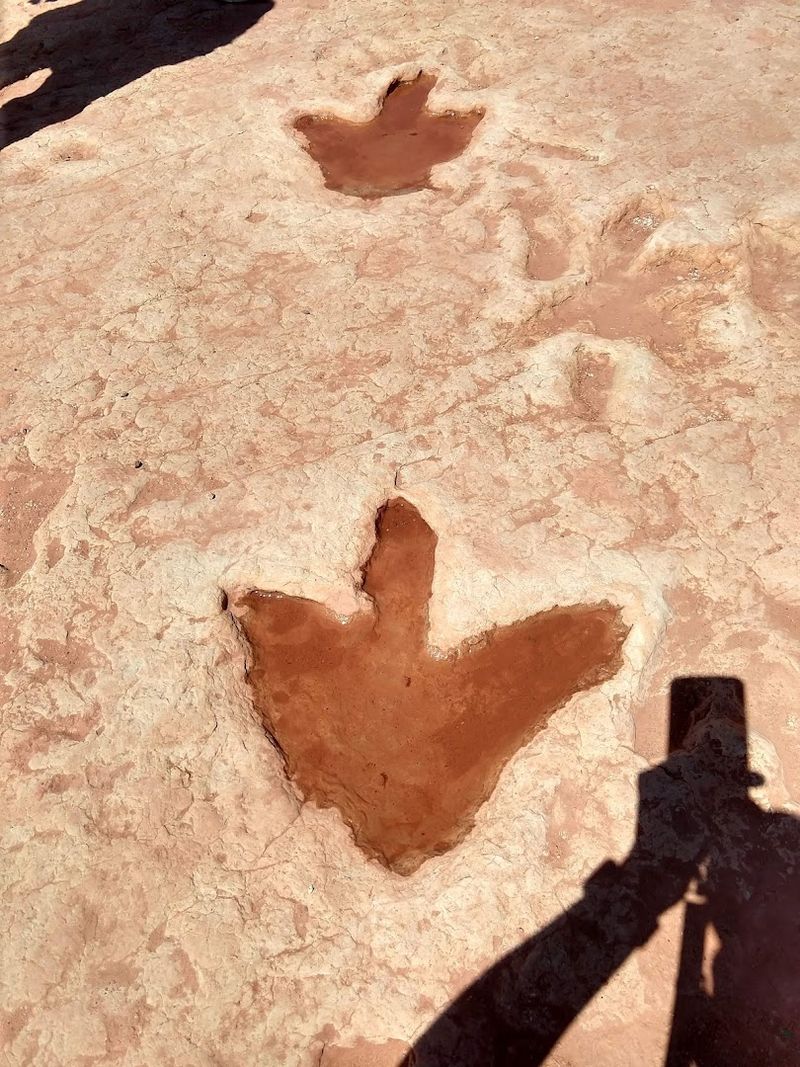
There is a moment that almost every visitor describes in some form: standing inside an actual dinosaur footprint and feeling something shift in your brain. The sheer scale of deep time becomes real in a way that textbooks simply cannot achieve.
You are not reading about 200 million years. You are physically occupying the same square foot of earth that a living dinosaur once touched.
Guides actively encourage visitors to step into the prints, place their hands inside the impressions, and take photos from every angle. Unlike museum exhibits where ropes and glass keep you at a respectful distance, this site invites direct, tactile contact with ancient history.
Kids especially go completely wide-eyed at the experience.
One reviewer described it as watching time collapse. That phrase captures it perfectly.
The desert wind, the silence, and the stone beneath your feet all work together to create a moment of genuine awe that stays with you long after you drive away.
How to Tip Your Guide and Why It Genuinely Matters
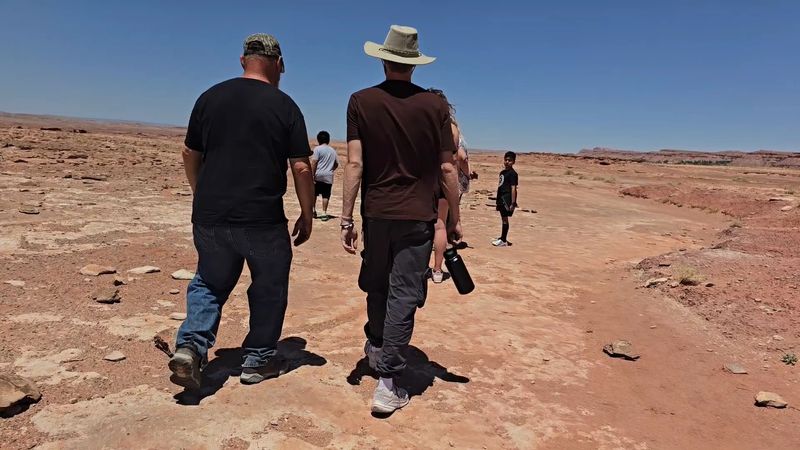
The guides at the Navajo Moenave Dinosaur Tracks site do not charge a fixed fee. They work entirely on voluntary tips and donations from grateful visitors.
Most experienced travelers recommend tipping between ten and twenty dollars per group, though any amount given with genuine appreciation is warmly received.
These are not professional tour operators with a company behind them. They are local Navajo community members who stand outside in intense desert heat, sharing their land, their knowledge, and their stories with strangers every single day.
That kind of generosity deserves real recognition and fair compensation when visitors are able to provide it.
If budget is tight, do not let that stop you from visiting. Multiple guides have specifically said that visitors who cannot afford to tip are still welcome.
The experience is meant to be shared. But if you can tip, tip well.
These guides are the heart of what makes this site so much more than just rocks with impressions in them.
What the Science Actually Says About These Tracks
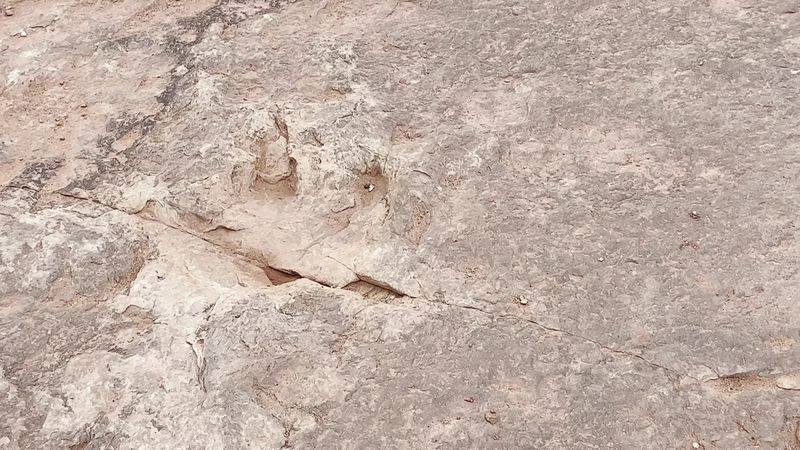
Paleontologists have confirmed that the tracks at the Navajo Moenave site are genuine trace fossils from the early Jurassic period, approximately 190 to 200 million years old. The impressions are consistent with theropod dinosaurs, including species like Eubrontes, Grallator, and Coelophysis, all of which lived in this region during that era.
Some guides mention T. rex and Velociraptor footprints, but those identifications are scientifically impossible at this location. Both dinosaurs lived in the Cretaceous period, over 100 million years after these rocks were formed.
Enjoying the storytelling is fine, but a quick fact-check afterward helps separate the legends from the real science.
What the science does support is genuinely impressive on its own. Three-toed prints, tail drag marks, and signs of movement through shallow water are all visible in the rock.
The authentic story of these tracks needs no exaggeration to be completely fascinating and worth every minute of your visit.
Why This Stop Belongs on Every Southwest Road Trip
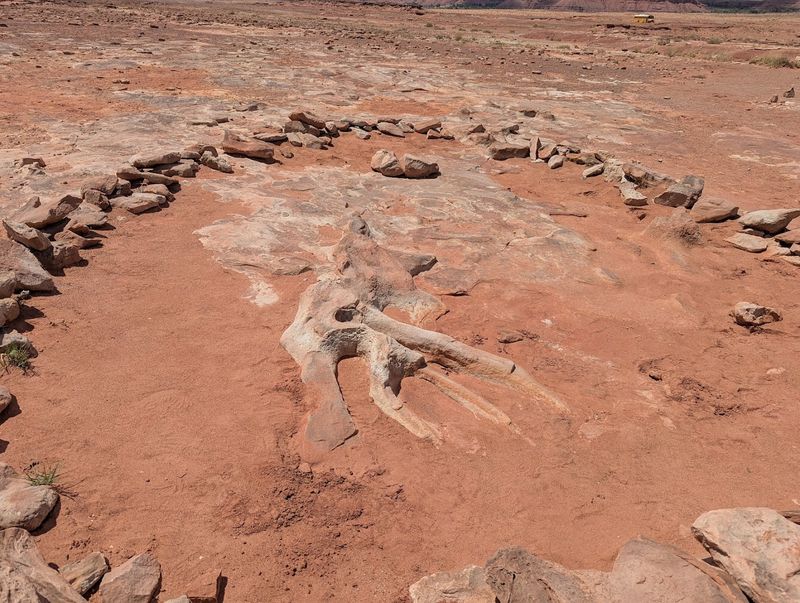
Road trips through the American Southwest are full of incredible stops, but few deliver the combination of history, culture, natural wonder, and sheer unexpected delight that the Navajo Moenave Dinosaur Tracks site manages to pack into a short visit. Most families spend between twenty minutes and an hour here, and nearly everyone leaves wishing they had more time.
The site sits conveniently along US-160, making it an effortless addition to any route heading toward the Grand Canyon, Monument Valley, or Page, Arizona. The short detour off the highway requires almost zero extra planning and delivers a payoff that rivals stops requiring hours of hiking or expensive tickets.
Beyond the dinosaurs themselves, visiting here means spending time on Navajo Nation land and connecting with a living culture that has called this desert home for generations. That layer of meaning elevates the experience from a cool roadside stop to something genuinely memorable and worth sharing with everyone you know.
Enjoyed this story?
Add Fast Food Club as a preferred source to see more of our reporting on Google.