


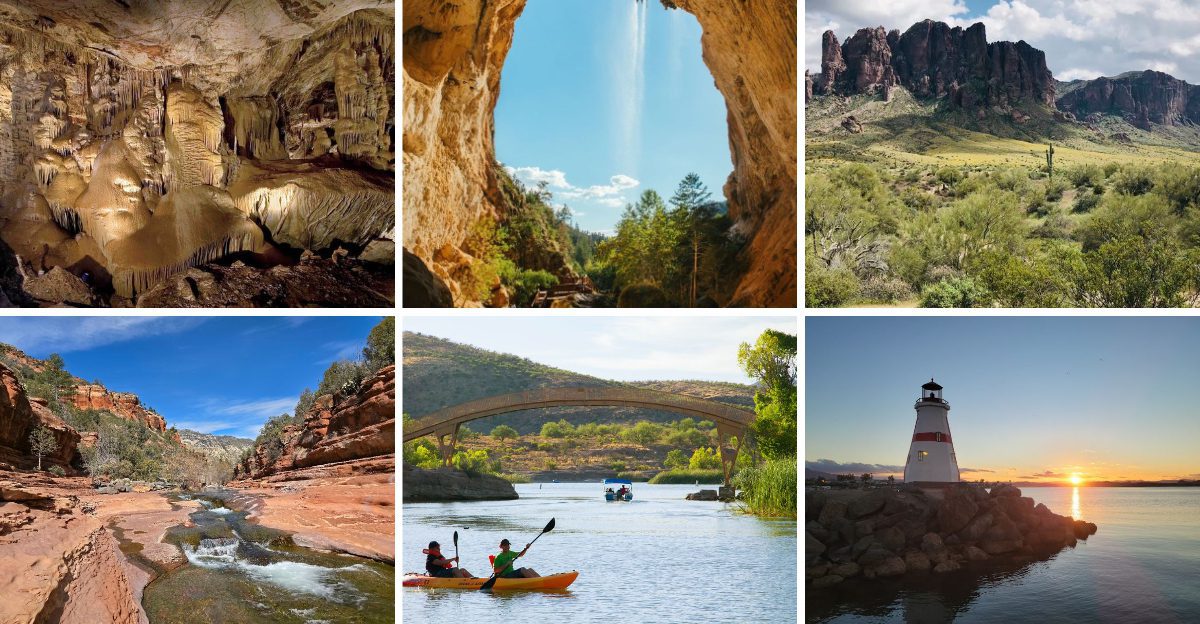
Arizona is packed with landscapes so stunning they seem pulled straight from a fantasy movie. From underground caves dripping with crystals to ancient cliff dwellings carved into canyon walls, the state never runs out of jaw-dropping surprises.
Whether you love hiking, history, or just soaking in incredible scenery, Arizona has something that will leave you speechless. Pack your bags and get ready to explore 15 places where nature and history collide in the most breathtaking ways.
Kartchner Caverns State Park – Benson, Arizona
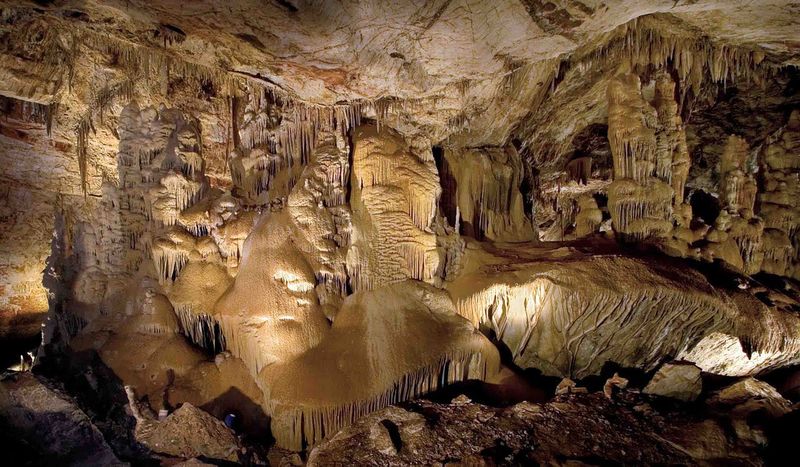
Hidden beneath a grassy hillside in Benson, Kartchner Caverns is one of the most well-preserved living caves in the world. Discovered in 1974 by two spelunkers who kept the secret for 14 years, these caverns are still actively growing.
Moisture drips from the ceiling, feeding giant stalactites and stalagmites that glow under soft lighting.
Tours are carefully managed to protect the fragile formations inside. Seeing towering columns and delicate cave bacon up close feels almost surreal.
Tonto Natural Bridge State Park – Pine, Arizona
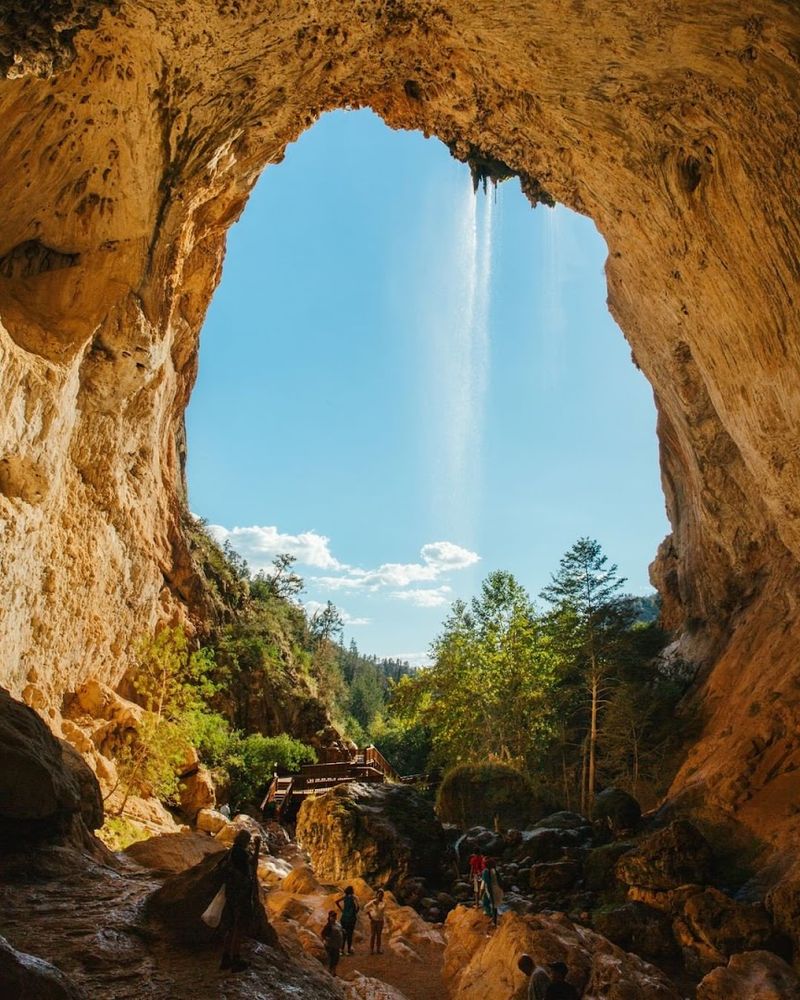
Tonto Natural Bridge holds the title of the largest natural travertine bridge in the world, and standing beneath it feels like stepping into a lost world. A rushing stream flows beneath the 183-foot arch, surrounded by ferns, moss, and towering canyon walls draped in green.
Hiking down to the bridge is a short but steep adventure that rewards you with cool mist and emerald pools. Locals say the sound of the waterfall echoes off the stone walls like natural music.
Lost Dutchman State Park – Apache Junction, Arizona
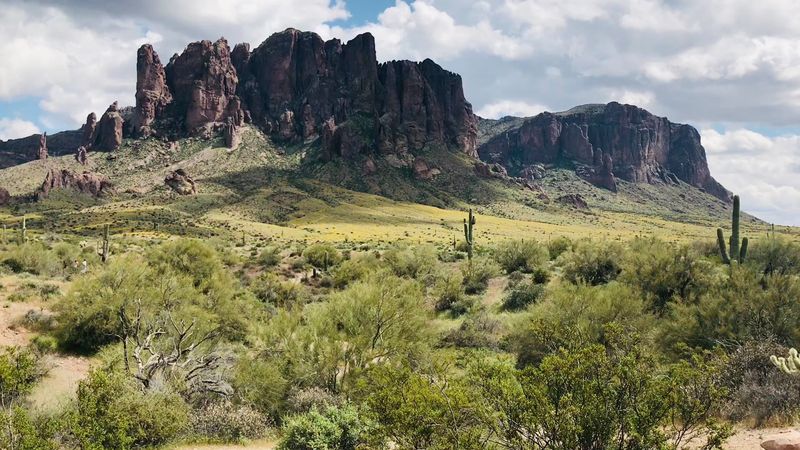
Named after a legendary hidden gold mine, Lost Dutchman State Park sits at the base of the rugged Superstition Mountains just outside Apache Junction. The jagged volcanic peaks catch fire at sunrise and sunset, turning shades of orange, red, and purple that look almost painted on.
Trails here wind through saguaro forests and rocky terrain, offering sweeping desert panoramas around every bend. Whether or not the gold mine is real, the scenery alone is pure treasure.
Slide Rock State Park – Sedona, Arizona
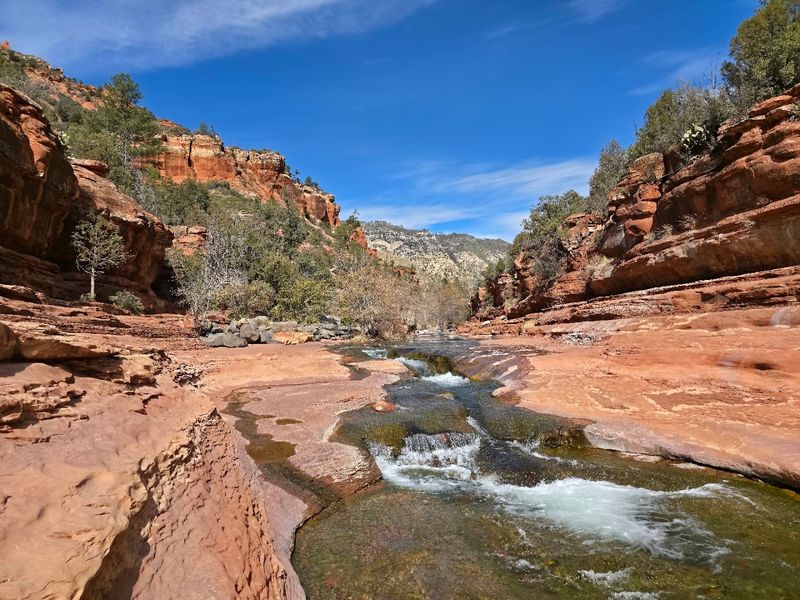
Slide Rock State Park in Sedona is basically nature’s water park, carved right into the red rocks of Oak Creek Canyon. Smooth sandstone chutes send swimmers gliding through crystal-clear creek water, with towering crimson cliffs framing the scene on both sides.
The park sits inside a historic apple orchard dating back to the early 1900s, which adds a quirky charm to the experience. On hot summer days, the combination of cool water and blazing red scenery is absolutely unforgettable.
Patagonia Lake State Park – Nogales, Arizona
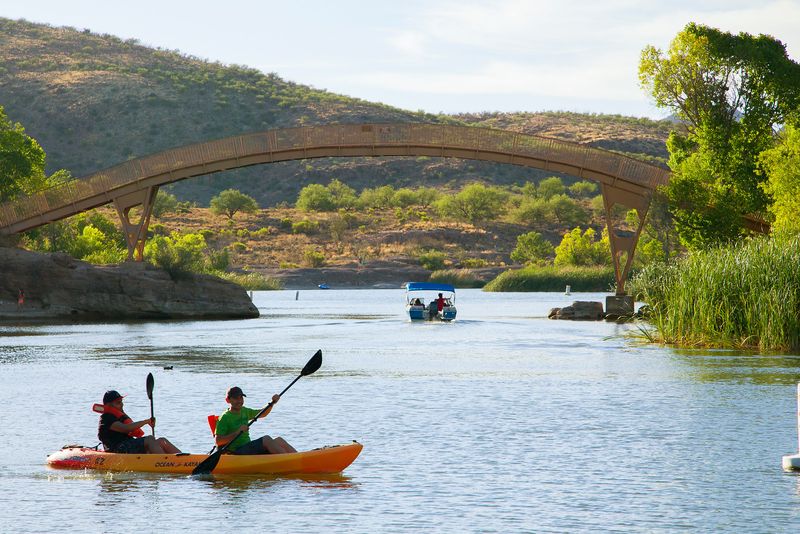
Tucked away near the Mexican border south of Nogales, Patagonia Lake State Park is a peaceful oasis that most travelers never discover. A sparkling 265-acre reservoir sits nestled among grassy hills and mesquite trees, creating a surprisingly lush scene in the middle of southern Arizona.
Birdwatchers go wild here since the area is famous for rare species not found anywhere else in the country. Kayaking across the glassy water while surrounded by rolling hills feels like a totally different Arizona.
Lake Havasu State Park – Lake Havasu City, Arizona
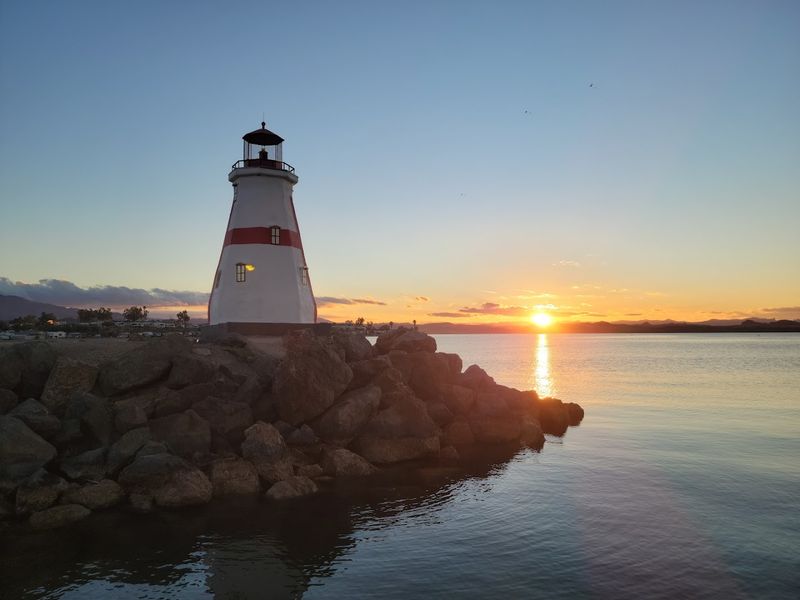
Lake Havasu State Park is home to one of Arizona’s most unexpected landmarks: the original London Bridge, shipped stone by stone from England in 1968. Stretched across a brilliant blue channel of Colorado River water with rugged desert mountains rising behind it, the view is genuinely surreal.
Beyond the famous bridge, the park offers sandy beaches, boating, and hiking trails with big lake views. Watching the sunset paint the water gold while the historic bridge glows is something straight out of a postcard.
Catalina State Park – Tucson, Arizona
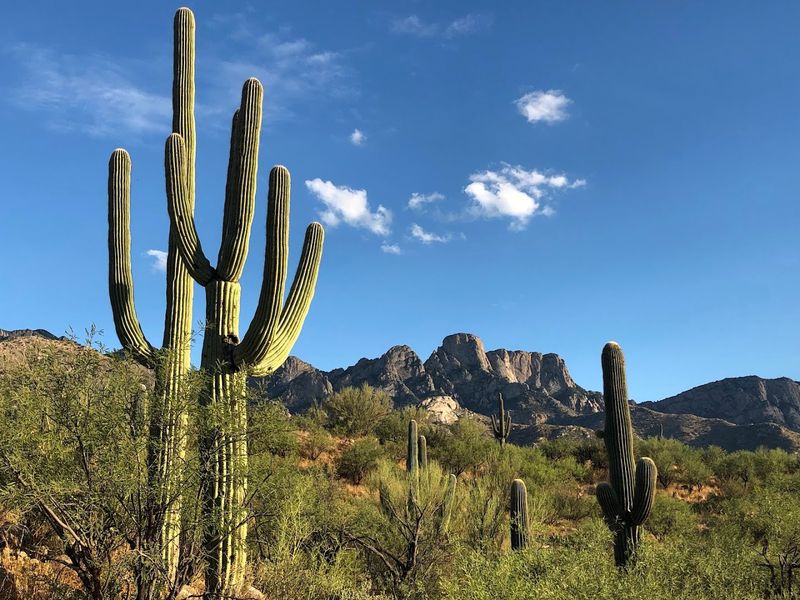
Catalina State Park wraps around the base of the Santa Catalina Mountains just north of Tucson, offering some of the most dramatic desert-meets-mountain scenery in the entire state. Giant saguaro cacti stand like sentinels across boulder-strewn hillsides, while the jagged peaks above often catch wispy clouds.
Ancient Hohokam ruins are tucked along certain trails, blending natural beauty with deep history. Spring wildflower blooms here are so vibrant they look like someone scattered paint across the desert floor.
Montezuma Castle National Monument – Camp Verde, Arizona
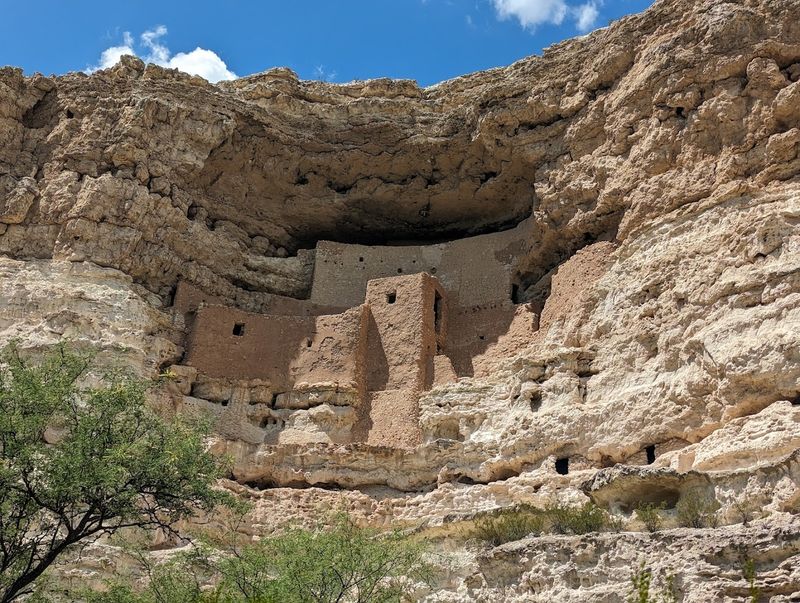
Perched nearly 100 feet up a sheer limestone cliff, Montezuma Castle is one of the best-preserved cliff dwellings in North America. Built by the Sinagua people over 600 years ago, the five-story structure looks like it was somehow glued into the rock face above a sparkling creek.
Despite its name, the castle has nothing to do with the Aztec emperor Montezuma. Early settlers just assumed it must have been built by someone famous because the craftsmanship was so impressive.
Walnut Canyon National Monument – Arizona
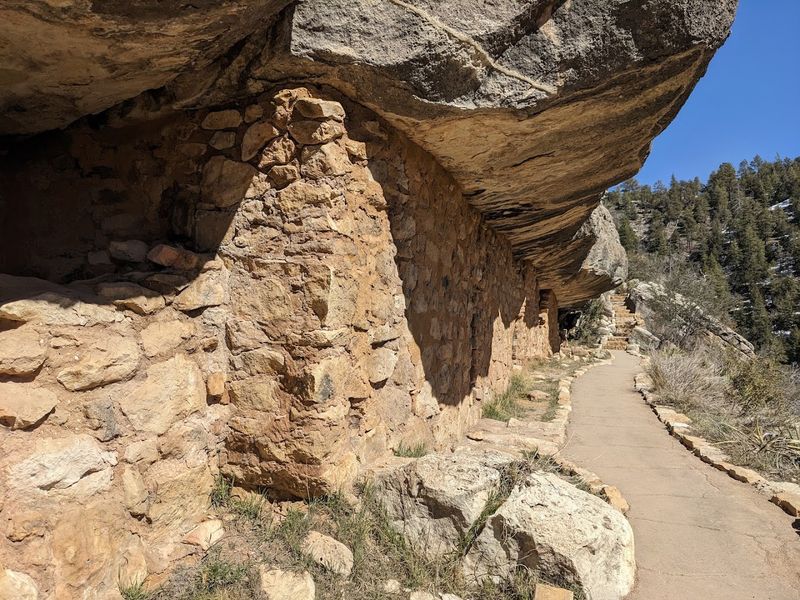
Walnut Canyon cuts through the Arizona plateau like a hidden world, with ancient Sinagua cliff dwellings tucked beneath rocky overhangs along its steep walls. The island trail drops 185 feet into the canyon, passing right beside rooms where people cooked, slept, and lived over 800 years ago.
The contrast between the dark stone ruins and the lush canyon greenery below makes every photo look professionally staged. Standing at the rim and looking down into the forested depths is a genuinely breathtaking moment.
Sunset Crater Volcano National Monument – Flagstaff, Arizona
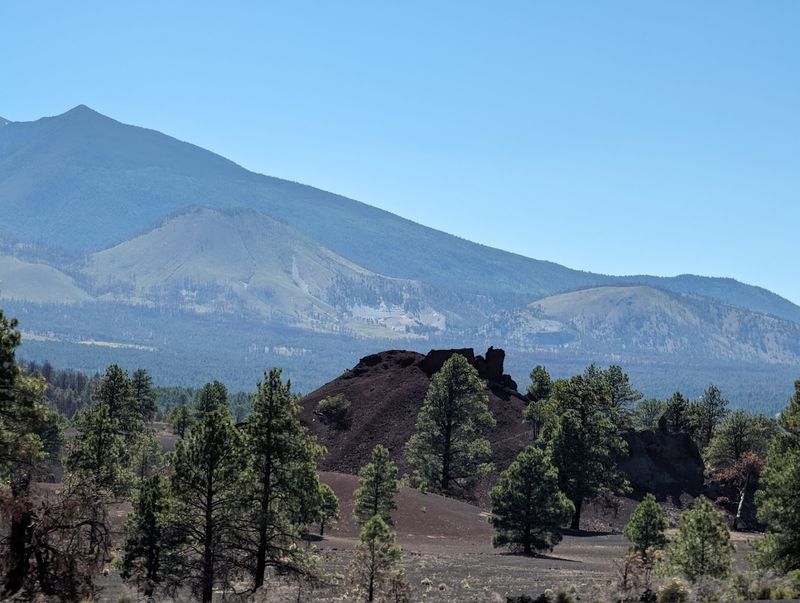
Sunset Crater is a nearly perfect cinder cone volcano that last erupted around 1085 AD, and the landscape around it still looks freshly forged. Black lava fields spread across the ground like frozen waves, dotted with brave pine trees pushing through the volcanic rock.
The crater gets its name from the red and orange mineral stains near its rim that glow brilliantly in afternoon light. Walking through a field of cooled lava with a towering volcano overhead makes you feel incredibly small in the best way.
Wupatki National Monument – Arizona
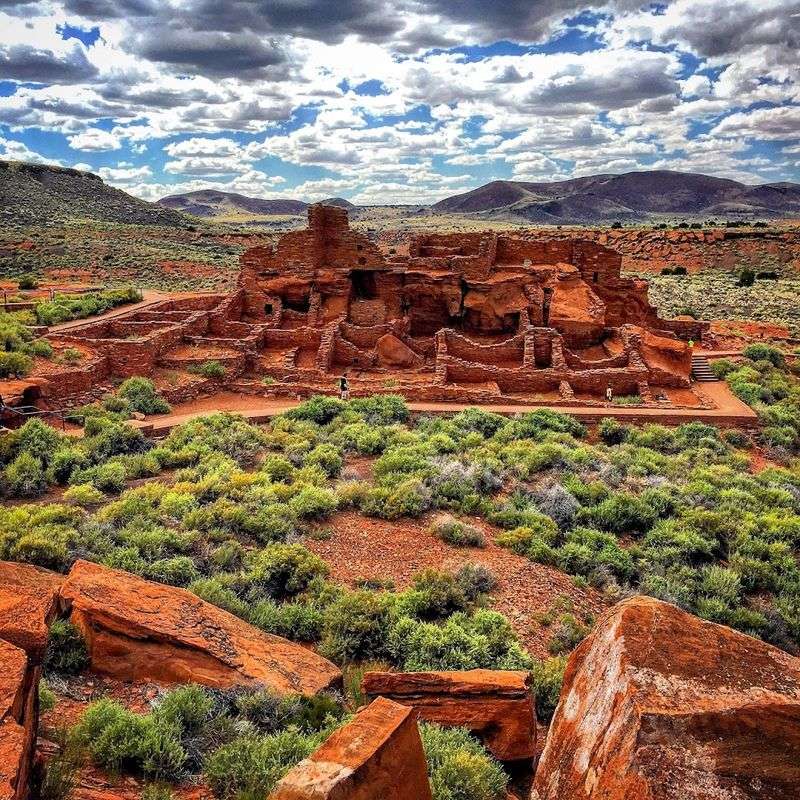
Rising from the high desert north of Flagstaff, Wupatki National Monument features the ruins of ancient pueblos built by several different Native American cultures who gathered here after the Sunset Crater eruption enriched the soil. The red sandstone walls blend so naturally into the landscape that the buildings seem to grow right out of the earth.
A natural blowhole near the main pueblo breathes air in and out depending on atmospheric pressure. That geological quirk alone makes Wupatki one of Arizona’s most fascinating stops.
Tuzigoot National Monument – Clarkdale, Arizona
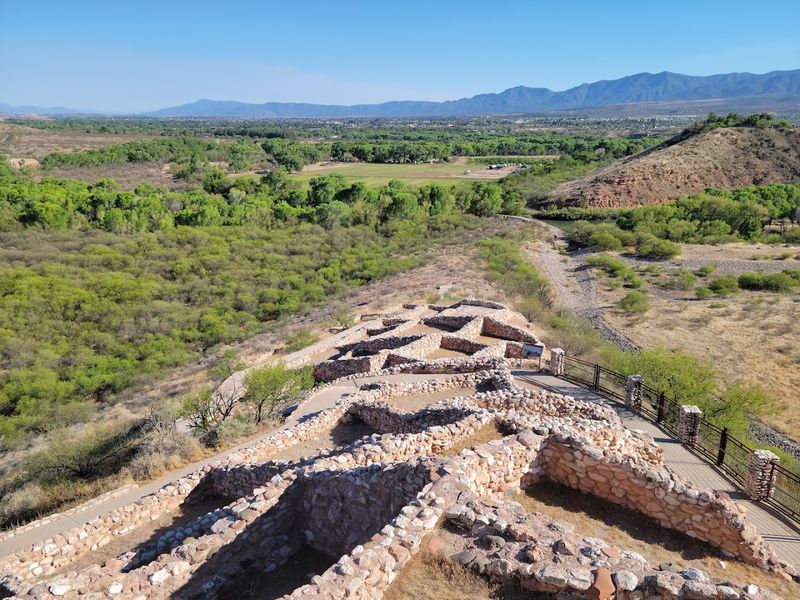
Tuzigoot sits on a long rocky ridge above the Verde River valley, commanding sweeping views that the Sinagua people clearly knew how to pick. The two-story pueblo was once home to over 200 people and covers the entire hilltop in a maze of stone rooms and passageways.
Looking out from the top of Tuzigoot, the Verde River shimmers through cottonwood trees far below, surrounded by red bluffs and distant mountains. It is the kind of view that makes you want to stay until the sun goes down.
Casa Grande Ruins National Monument – Coolidge, Arizona
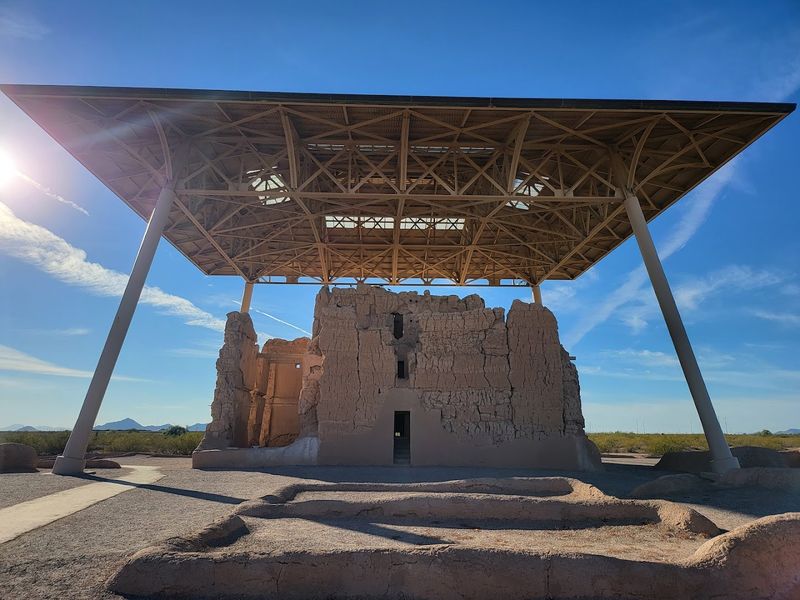
Casa Grande is one of the most mysterious structures in North America, a massive four-story building constructed by the Hohokam people around 700 years ago using caliche mud. Nobody is entirely sure what it was used for, though theories range from astronomical observatory to ceremonial center to storage facility.
A large metal roof built in 1932 now shields the fragile structure from rain, giving the whole scene an oddly futuristic look against the flat desert horizon. The mystery of its purpose only makes it more compelling to visit.
Chiricahua National Monument – Willcox, Arizona
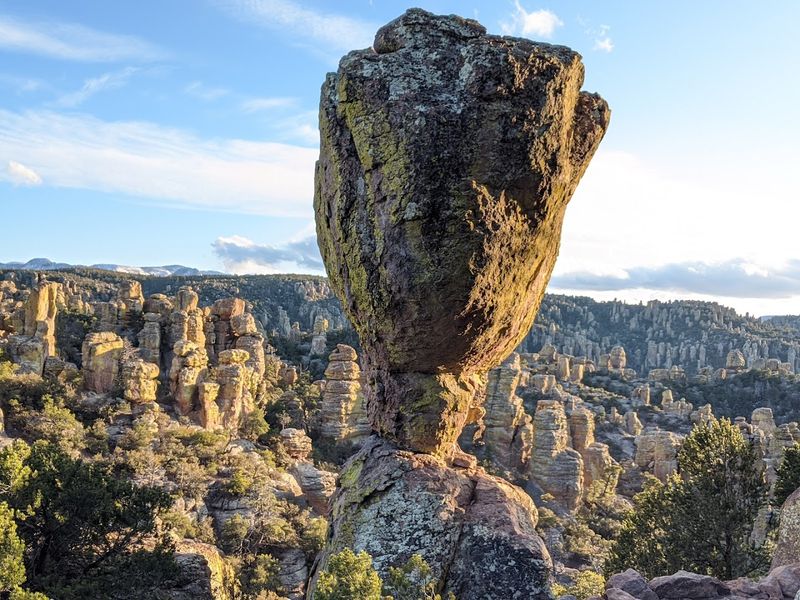
Chiricahua National Monument earns its nickname, the Wonderland of Rocks, with thousands of towering stone columns, balanced boulders, and spire formations rising from forested mountain slopes. Volcanic ash from a massive eruption 27 million years ago slowly eroded into these bizarre and beautiful shapes over time.
Trails weave between the columns at eye level, giving you the surreal feeling of walking through a giant sculpture garden. The remote location near Willcox means far fewer crowds, so the silence between the rocks feels almost sacred.
Canyon de Chelly National Monument – Arizona
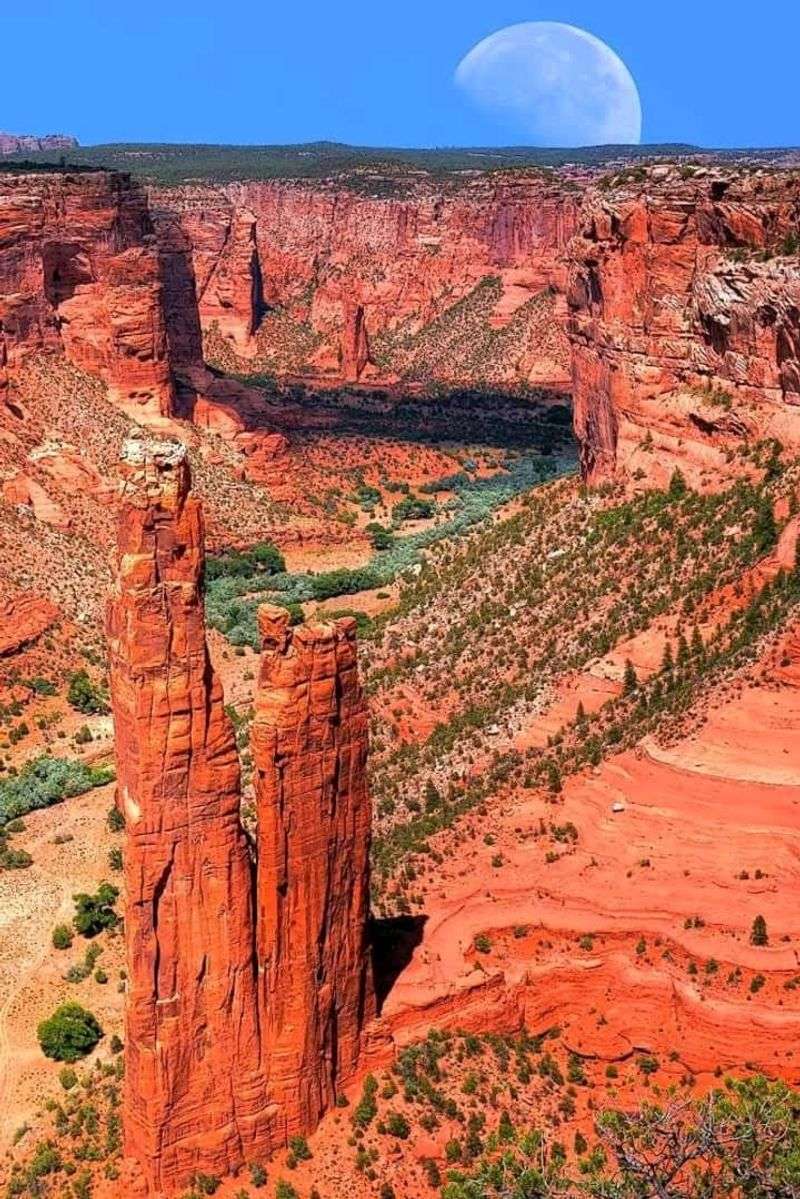
Canyon de Chelly is unlike any other national monument in the country because it is still an active home for Navajo families who farm the canyon floor and tend their sheep just as their ancestors did for centuries. The canyon walls rise up to 1,000 feet of deep red sandstone, with ancient cliff dwellings tucked into shadowy alcoves overhead.
Spider Rock, an 800-foot sandstone spire rising from the canyon floor, is the kind of sight that genuinely stops people in their tracks. The canyon belongs to the Navajo Nation, making every visit feel like a genuine privilege.
Enjoyed this story?
Add Fast Food Club as a preferred source to see more of our reporting on Google.