


Florida’s warm climate and sunshine make it one of the best places in the country to grow stunning tropical plants. Whether you have a big backyard or a small patio, the right plants can transform any outdoor space into a lush, resort-style paradise.
Many of these plants are surprisingly low-maintenance and thrive in Florida’s heat and humidity. Get ready to discover 22 beautiful plants that will make your yard look like a tropical getaway.
Bird of Paradise
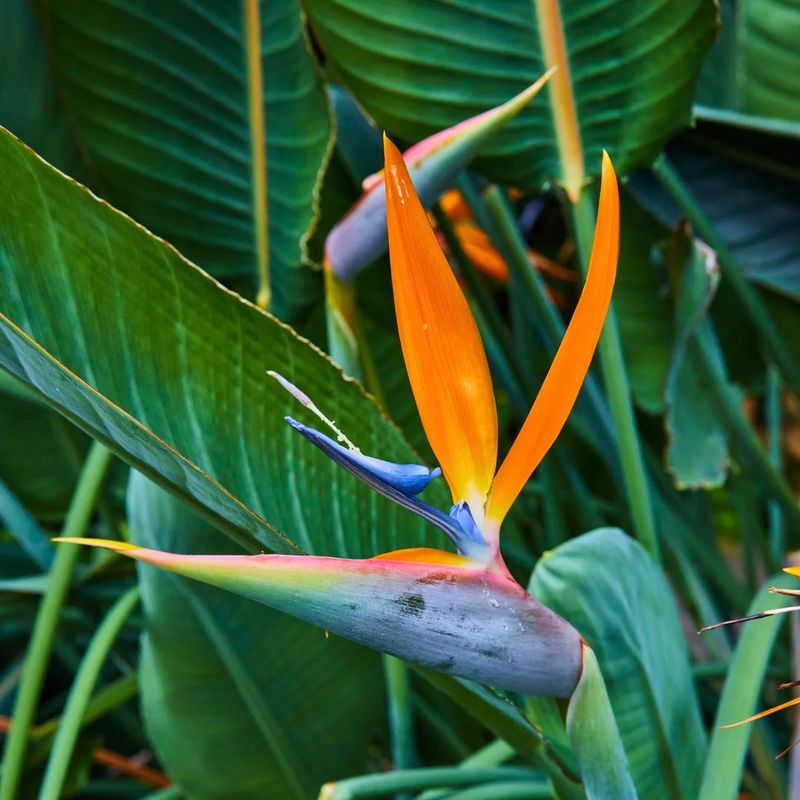
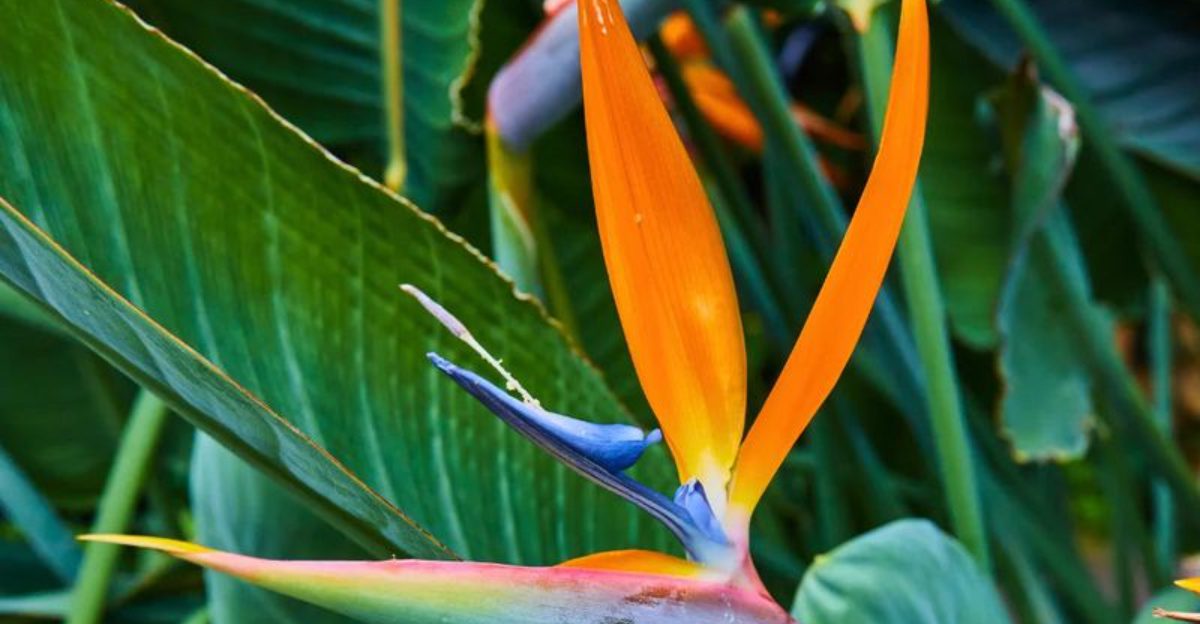
Few plants command attention quite like the bird of paradise. Its bold orange and blue blooms look like a tropical bird taking flight, which is exactly how it got its name.
Native to South Africa, this showstopper thrives in Florida’s full sun and well-drained soil.
Plant it where it gets plenty of sunlight and watch it reward you with dramatic flowers year after year. It grows up to six feet tall, making it a striking focal point in any yard.
Hibiscus
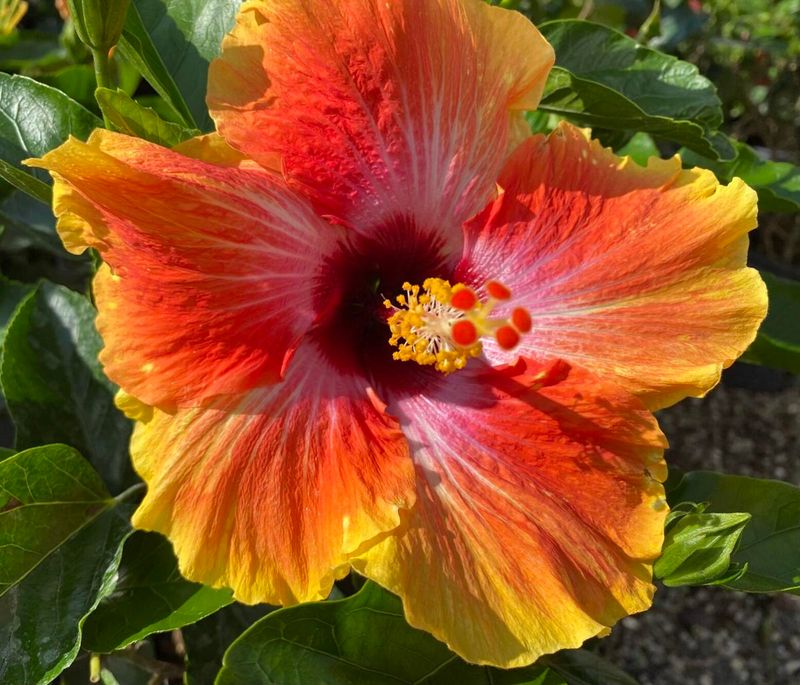
Nothing says “tropical” quite like a hibiscus flower. These eye-catching blooms come in shades of red, pink, yellow, orange, and white, often growing as wide as a dinner plate.
Florida gardeners love them because they bloom almost non-stop in warm weather.
Hibiscus plants do best in full sun with regular watering and occasional fertilizing. Hummingbirds and butterflies absolutely adore them, so planting hibiscus also invites amazing wildlife right into your yard.
Croton
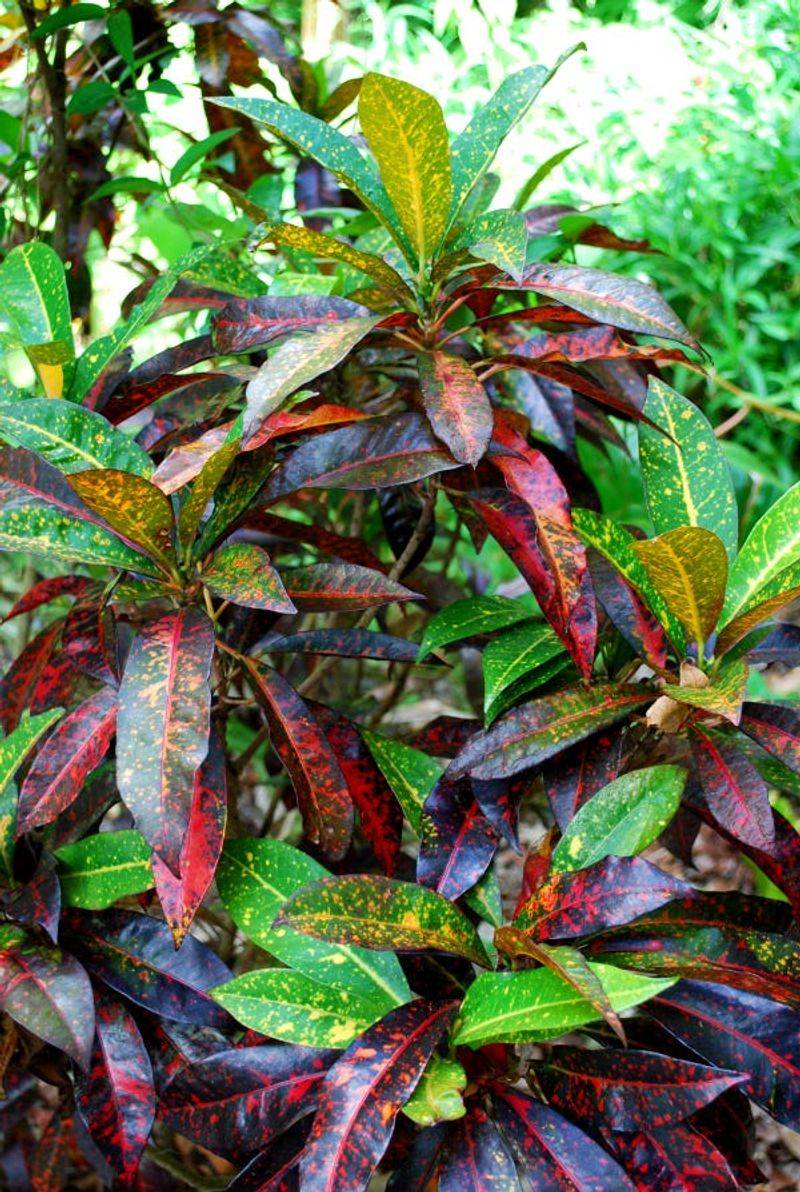
Crotons are basically nature’s paint palette. Their leaves burst with combinations of red, orange, yellow, green, and even purple, giving your yard a fiesta of color without a single flower needed.
They thrive in Florida’s heat and actually develop richer color with more sunlight.
Use crotons as border plants, container specimens, or privacy hedges. They are low-maintenance once established and grow well in both sandy and loamy Florida soils, making them a landscaper’s favorite across the state.
Ti Plant
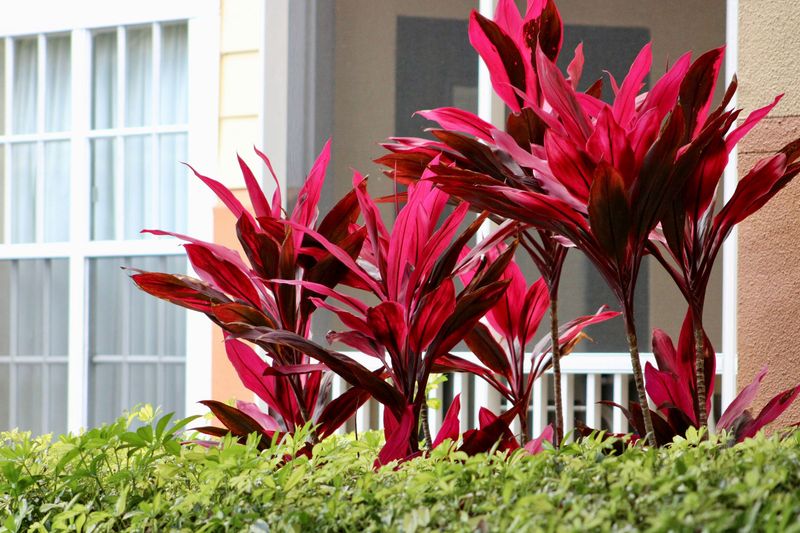
The ti plant has been considered sacred in Hawaiian and Polynesian cultures for centuries, believed to bring good luck to a home. Luckily for Florida gardeners, this gorgeous plant grows beautifully in the state’s climate.
Its long, sword-shaped leaves come in shades of deep red, green, pink, and purple.
Ti plants love humidity and partial to full sun, making Florida practically perfect for them. They work wonderfully as accent plants or natural privacy screens along fences and property lines.
Areca Palm
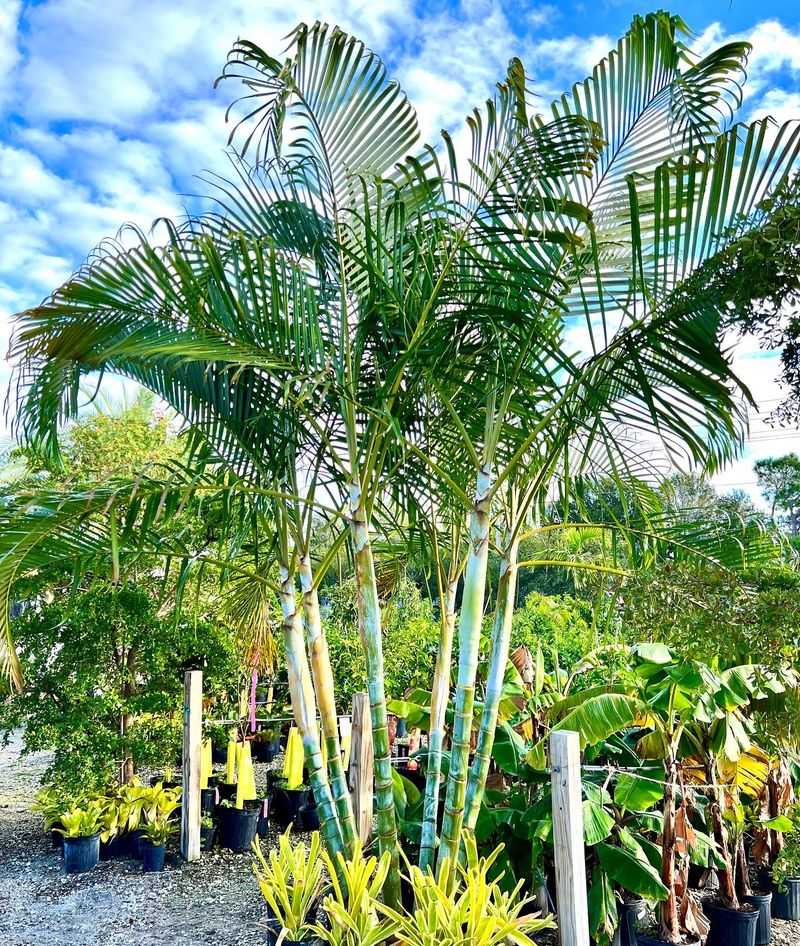
Want instant tropical vibes? Plant an areca palm.
Also called the butterfly palm, this graceful tree features feathery arching fronds that sway beautifully in the breeze. It is one of the most popular landscaping palms in Florida for good reason.
Areca palms grow in clusters and can reach up to 20 feet tall outdoors, creating a lush, resort-like screen. They prefer full sun to partial shade and well-drained soil, and they are relatively pest-resistant compared to other palms.
Lady Palm
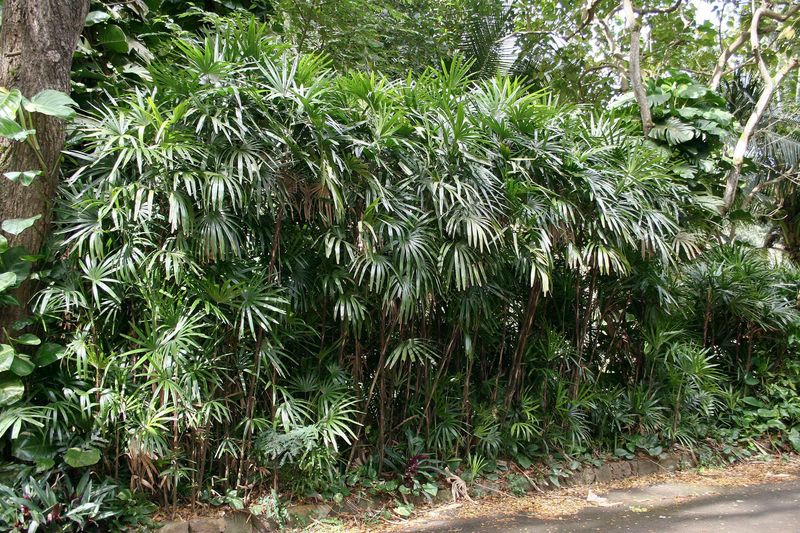
Elegant and adaptable, the lady palm is one of the most versatile palms you can grow in Florida. Unlike many palms that demand full sun, the lady palm actually prefers shaded or partially shaded spots, making it perfect for covered patios or under larger trees.
Its fan-shaped, glossy dark green fronds grow in a tidy, upright cluster that looks polished and tropical. Lady palms are also known for improving indoor and outdoor air quality, earning them a loyal following among Florida homeowners.
Coontie
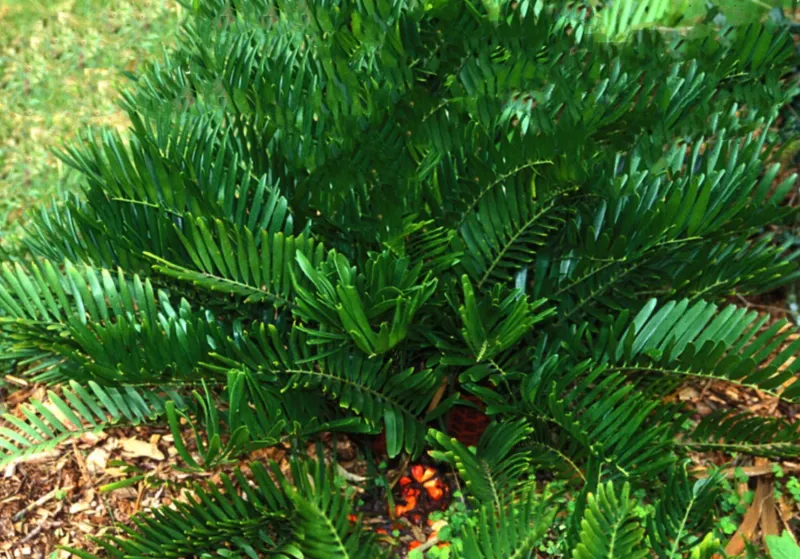
Here is a fun fact: the coontie is actually a cycad, not a palm, and it has been growing in Florida for millions of years. It is one of the state’s few native cycads, making it incredibly well-adapted to local soils and weather conditions.
Drought-tolerant once established, it barely needs any extra watering.
Coontie stays compact, usually reaching only two to three feet tall, making it ideal for ground cover or low borders. Bonus: it is the only host plant for the beautiful atala butterfly.
Philodendron
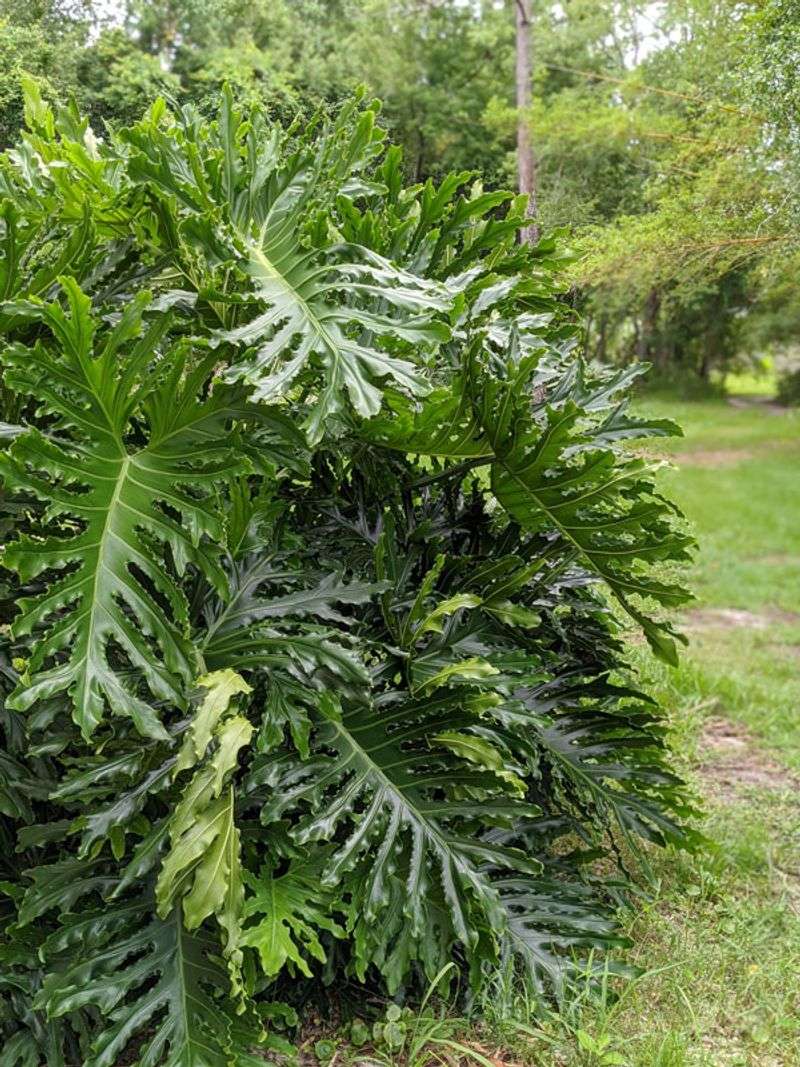
Philodendrons are the workhorses of tropical landscaping. They grow fast, look lush, and handle Florida’s heat like champions.
With dozens of varieties available, you can find a philodendron to fit almost any spot in your yard, from ground cover to climbing vine.
Their large, glossy leaves add a rich, jungle-like texture to garden beds and shaded areas. Most philodendrons prefer indirect light and moist, well-drained soil.
They spread quickly, so they are great for filling in empty patches under trees or along shaded fences.
Monstera
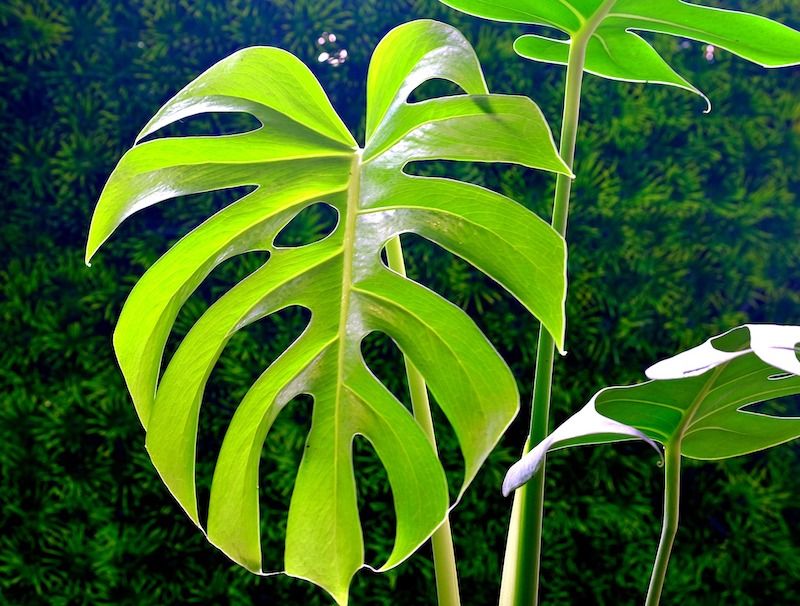
Monstera has become the darling of tropical garden design, and Florida’s climate is basically its dream home. Known for its dramatic split and hole-punched leaves, monstera creates an instant jungle atmosphere wherever it grows.
Outdoors in Florida, it can grow much larger than its potted indoor cousins.
Give it a shaded or partly sunny spot with rich, moist soil and it will reward you with enormous, statement-making foliage. It climbs naturally, so a trellis or large tree nearby gives it something to work with.
Shell Ginger
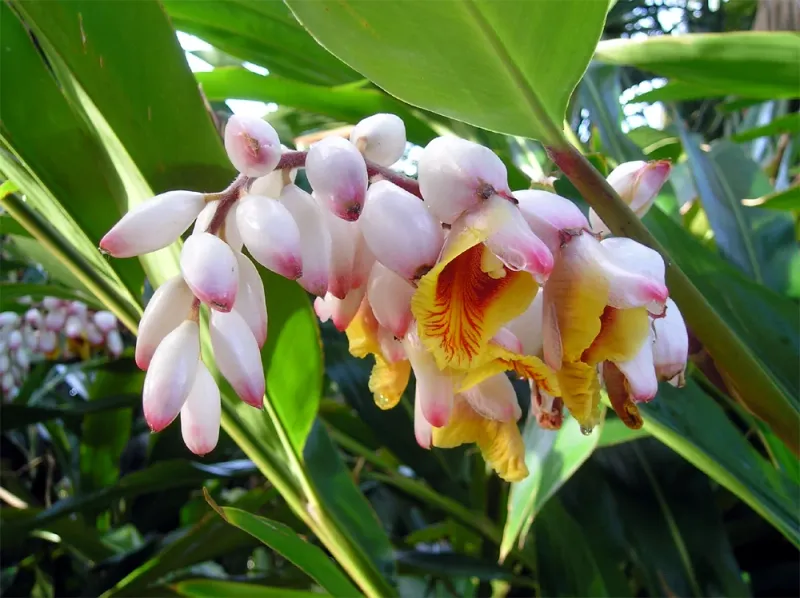
Shell ginger is one of those plants that makes people stop and ask, “What IS that?” Its pendulous clusters of waxy, shell-shaped white and pink blooms dangle from the tips of tall, cane-like stems in a way that looks almost too beautiful to be real. It blooms in spring and thrives in Florida’s humidity.
Reaching up to eight feet tall, shell ginger makes a bold statement in shaded garden corners. The leaves also release a pleasant spicy fragrance when brushed, adding a sensory bonus to your landscape.
Variegated Ginger
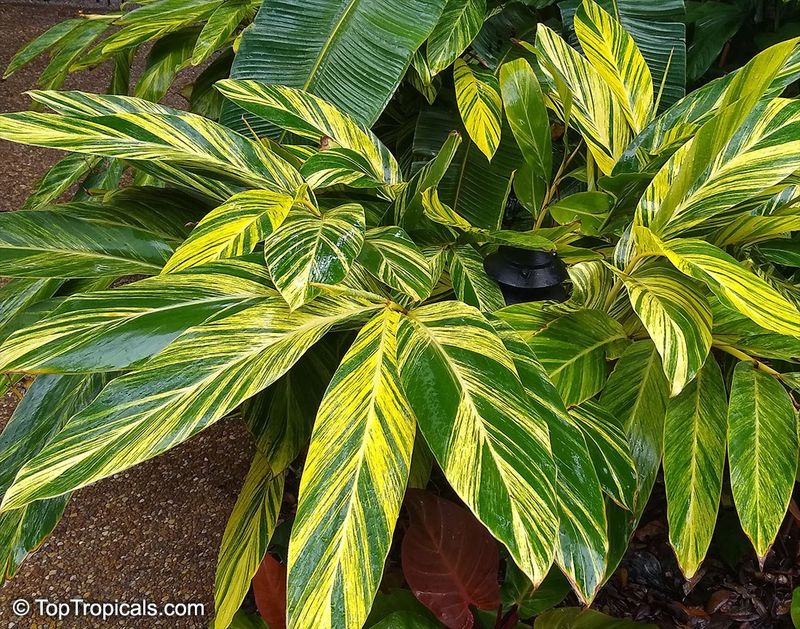
If you want texture and contrast without relying on flowers, variegated ginger delivers in a big way. Its wide, arching leaves are boldly striped in green and creamy white, creating a fresh, eye-catching pattern that stands out in any garden bed.
It grows in clumps and spreads steadily over time.
Variegated ginger loves Florida’s warmth and does well in partial shade, which makes it perfect for spots that are too shady for most colorful plants. It pairs beautifully with darker-leaved companions like ti plants or crotons.
Firespike
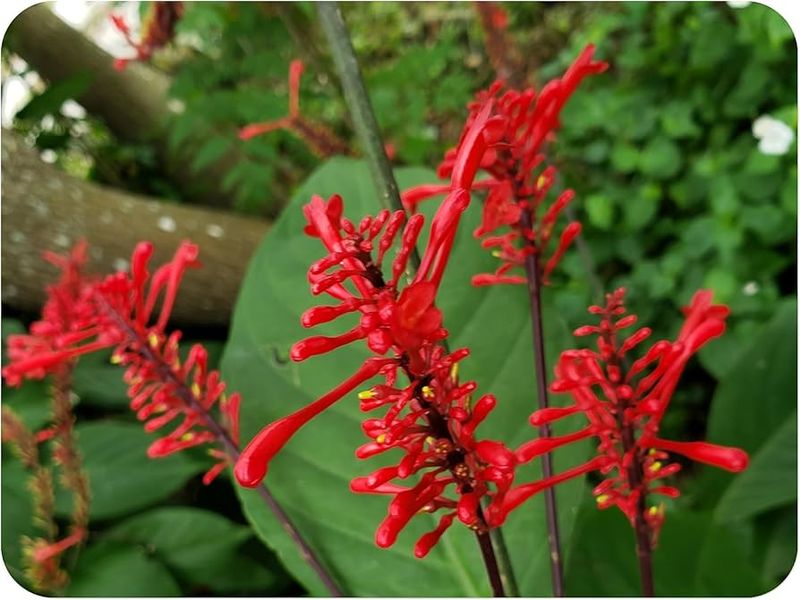
Firespike earns its dramatic name honestly. Tall spikes of brilliant scarlet flowers shoot upward from this shrubby plant, creating a fiery display that hummingbirds simply cannot resist.
It blooms in fall and winter when many other plants are taking a break, making it especially valuable in a Florida garden.
Growing four to six feet tall, firespike works well as a back-of-border plant or informal hedge. It tolerates partial shade and bounces back quickly after cold snaps, which is a major plus for Florida’s occasional chilly winters.
Ixora
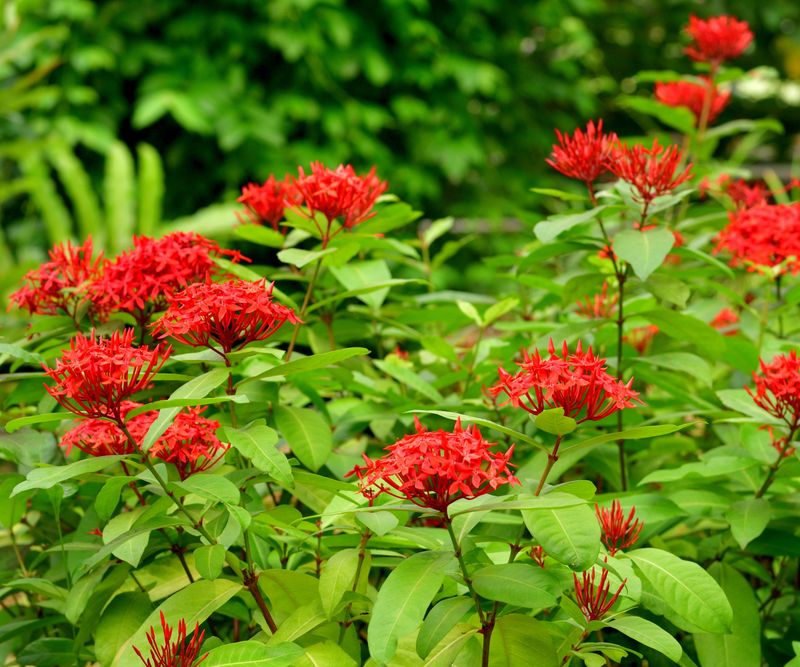
Walk through almost any Florida neighborhood and you will spot ixora. This cheerful shrub produces tight, rounded clusters of small flowers in shades of red, orange, yellow, and pink nearly year-round in South Florida’s climate.
It is a staple of tropical landscaping for very good reason.
Ixora grows best in full sun with acidic, well-drained soil. It makes a stunning low hedge, foundation planting, or container specimen.
Regular light pruning keeps it bushy and blooming, and it is a reliable favorite for butterflies and other pollinators.
Cordyline
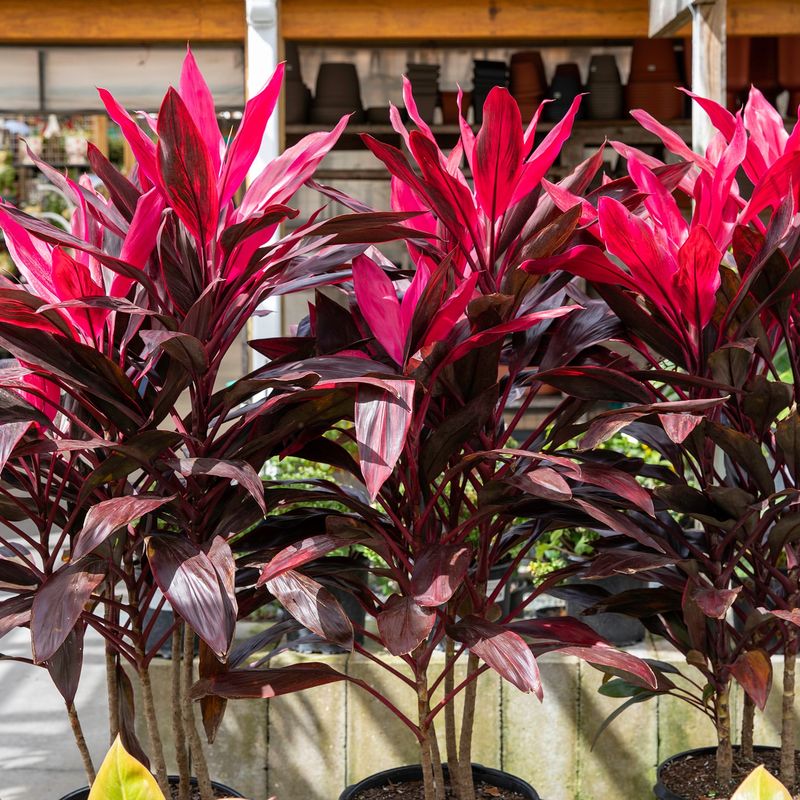
Sometimes called the Hawaiian ti plant, cordyline is a close relative that brings its own bold personality to the garden. Its long, sword-like leaves come in rich shades of red, bronze, green, pink, and purple, creating a dramatic vertical accent wherever it is planted.
It thrives in Florida’s warmth and humidity.
Cordyline grows well in full sun to partial shade and is surprisingly drought-tolerant once established. Plant it in groups for a tropical grove effect, or use a single specimen as a striking centerpiece in a garden bed.
Elephant Ear
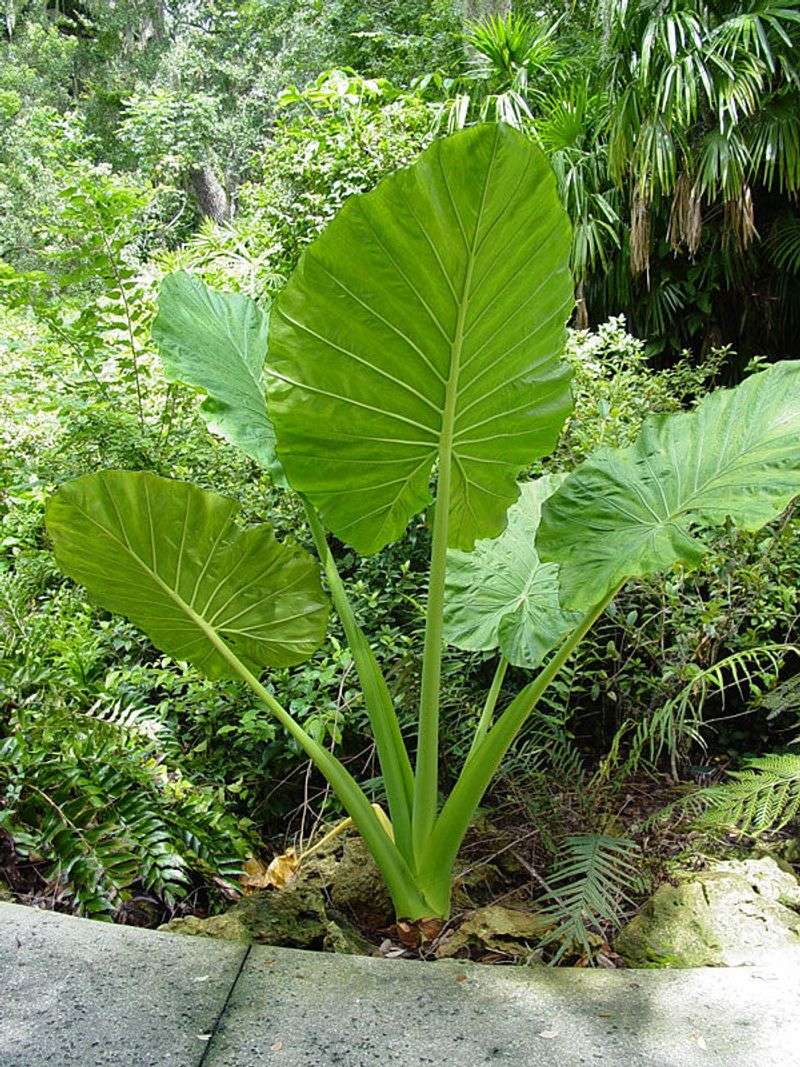
There is something wonderfully theatrical about elephant ears. Their leaves can grow to three feet wide or more, creating a bold, prehistoric-looking presence that instantly transforms any yard into a tropical jungle.
Several species grow brilliantly in Florida’s warm, moist conditions.
Elephant ears love water and do especially well near ponds, streams, or low-lying areas that stay moist. They grow fast, which means you get that lush, established look quickly.
Choose from green, black, or purple-leaved varieties to match your garden’s color scheme.
Cannas
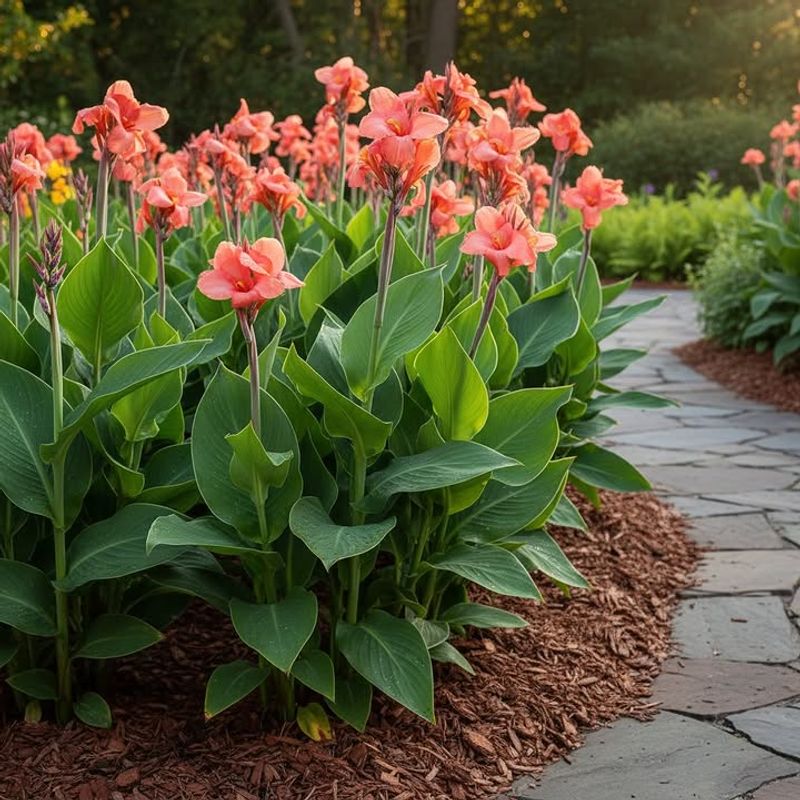
Cannas bring a cheerful, old-fashioned tropical energy that never goes out of style. Their broad, paddle-shaped leaves and tall flower spikes in red, orange, yellow, and pink make them impossible to overlook in a garden bed.
They bloom prolifically throughout Florida’s long warm season.
Plant cannas in full sun for the best flower production. They grow from rhizomes and multiply quickly, so one plant can become a full clump within a single season.
They also tolerate wet soil, making them great for rain gardens or low spots in the yard.
Selloum Philodendron
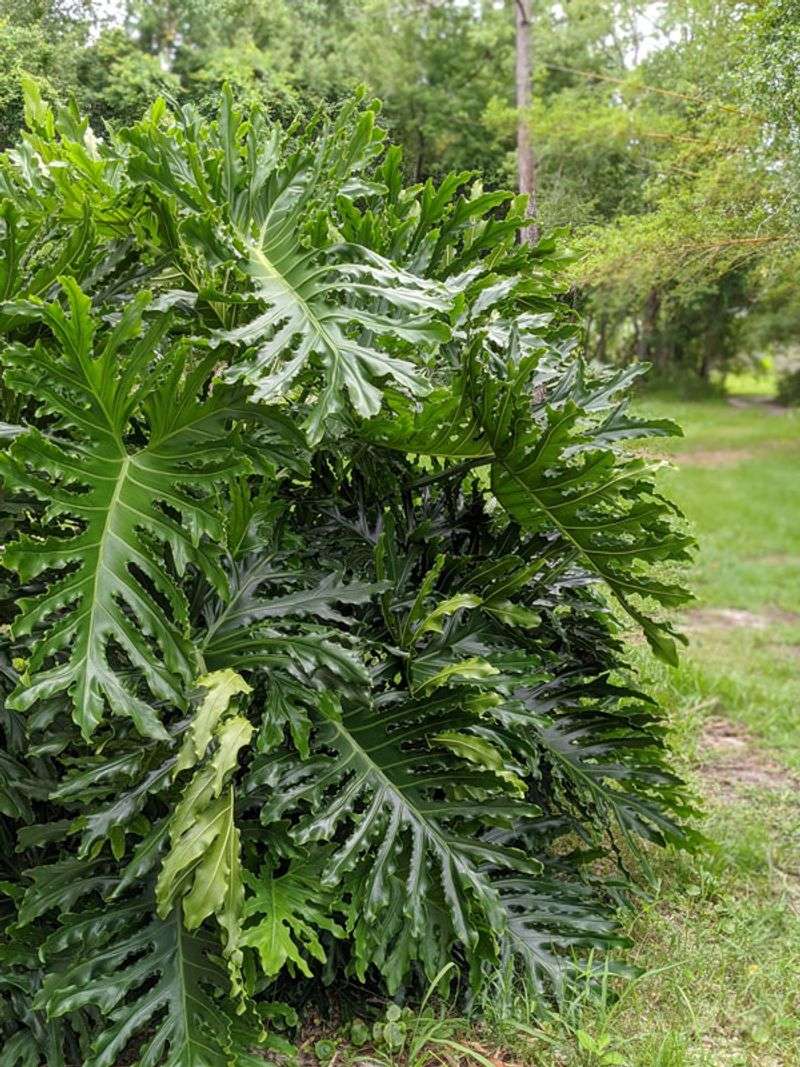
The selloum philodendron is what happens when a houseplant decides to go big. Outdoors in Florida, this plant becomes a true giant, with deeply lobed leaves that can stretch four feet across and a spreading canopy that creates dense, dramatic shade.
It is a landscape statement plant in every sense.
It grows best in partial shade with rich, moist soil and can reach six feet tall or more. Once established, it is remarkably tough and handles Florida’s summer storms and heat with ease.
It pairs perfectly with palms and bromeliads.
Bromeliads
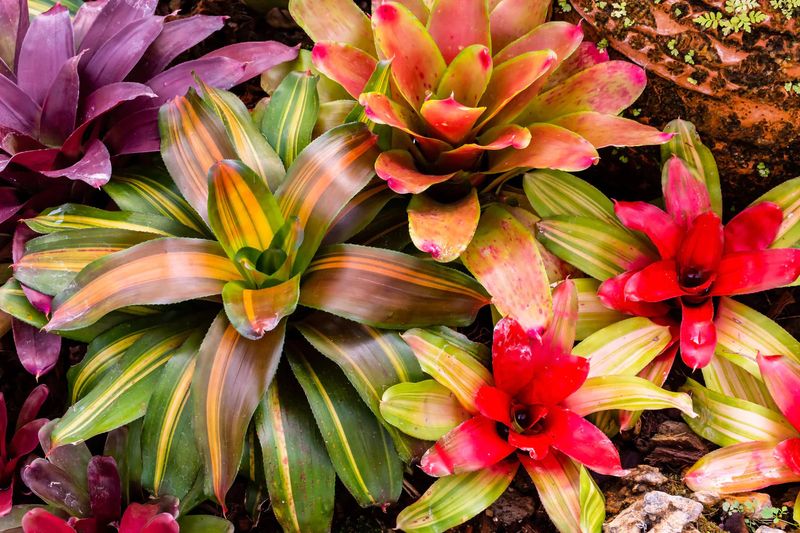
Bromeliads are the jewels of the Florida shade garden. These rosette-shaped plants come in an almost unbelievable range of colors, from fiery reds and pinks to cool purples and greens.
Many produce a central cup that holds water, which is actually an ecosystem for tiny frogs and insects in the wild.
They thrive under the canopy of trees, requiring very little soil or care once planted. Florida’s humidity suits them perfectly, and they reproduce by sending out offshoots called pups, so your collection naturally multiplies over time.
Jatropha
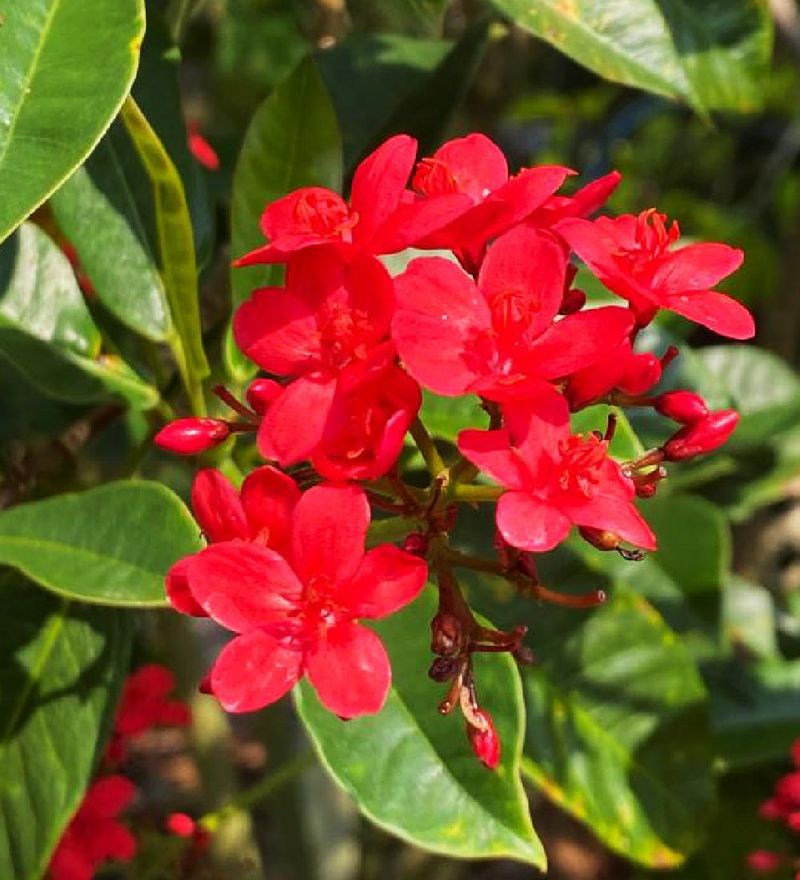
Jatropha is one of those plants that earns its place in a Florida garden by being both beautiful and tough. Its clusters of tiny, star-shaped red or coral flowers bloom almost continuously in warm weather, drawing in butterflies and hummingbirds with impressive regularity.
It handles drought surprisingly well once established.
Growing as a shrub or small tree up to 10 feet tall, jatropha works well as a specimen plant or informal hedge. It prefers full sun and well-drained soil, and it bounces back quickly after cold weather, which is a welcome trait in Florida.
Plumeria
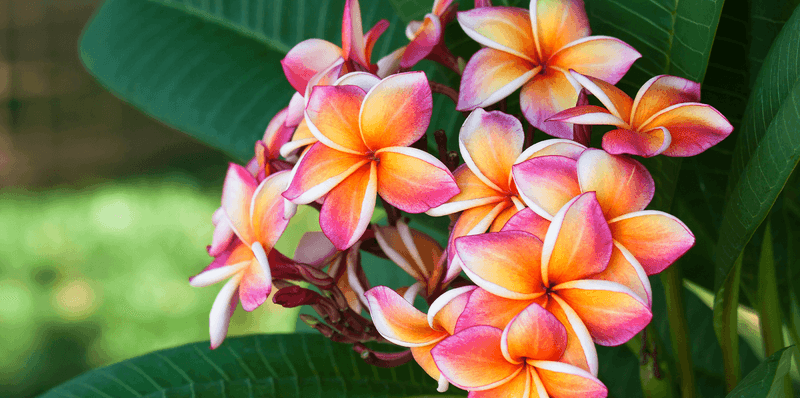
Close your eyes and imagine the scent of a Hawaiian lei. That sweet, intoxicating fragrance comes from plumeria, and the good news is that this gorgeous tropical tree grows beautifully throughout Florida.
Its waxy, five-petaled flowers come in white, yellow, pink, and red, often with a contrasting center.
Plumeria loves full sun and well-drained soil, and it is surprisingly drought-tolerant once established. It goes dormant and drops its leaves in winter, but returns vigorously in spring.
Many Florida gardeners grow them in containers that can be moved during cold snaps.
Heliconia
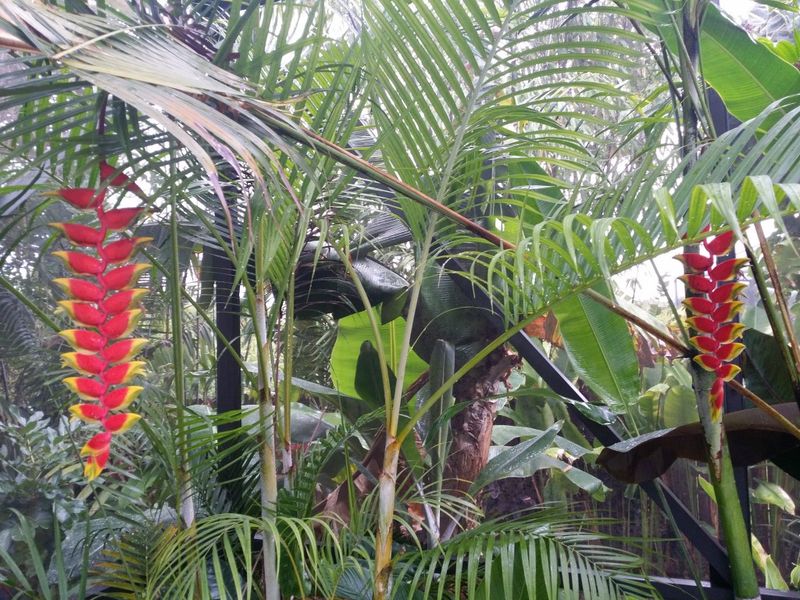
Heliconias look like something straight out of a rainforest, and that is exactly the vibe they bring to a Florida yard. Their bold, waxy bracts in red, orange, yellow, and pink hang or stand upright in shapes resembling lobster claws or parrots’ beaks.
They are truly unlike anything else in the plant world.
Growing best in warm, humid conditions with partial to full sun, heliconias are right at home in South and Central Florida. They spread by underground rhizomes and can form impressive tropical groves over several seasons.
Dwarf Palmetto
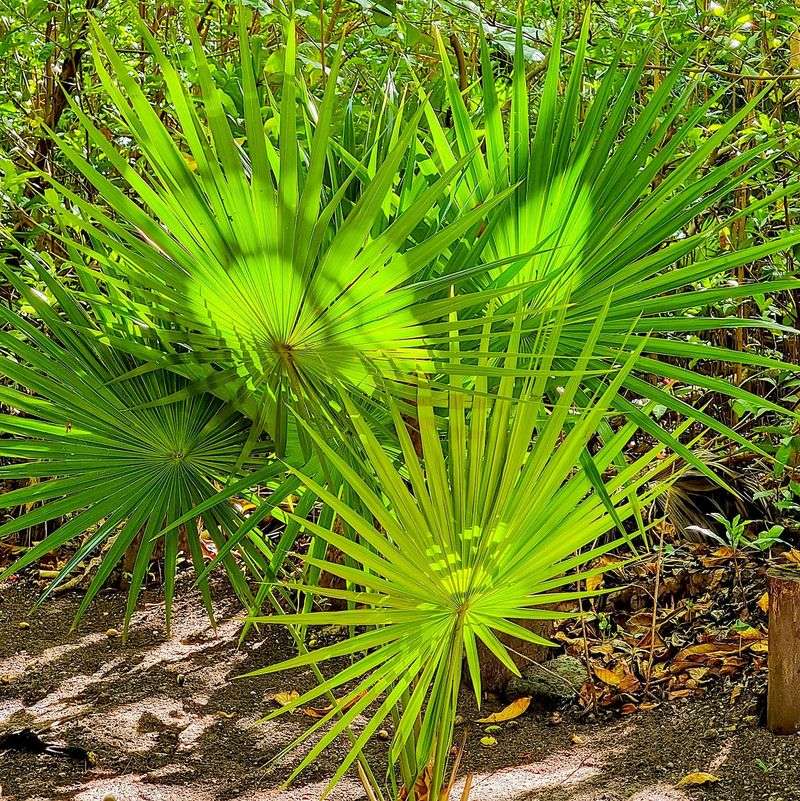
The dwarf palmetto is Florida through and through. This native palm grows naturally across the state’s coastal plains and pine flatwoods, which means it is perfectly adapted to local soils, rainfall, and heat.
Unlike tall palms, it stays low and shrubby, rarely exceeding five feet in height.
Its fan-shaped, blue-green fronds create a rugged, natural tropical look that pairs beautifully with other Florida native plants. It is extremely drought-tolerant and practically maintenance-free once established, making it one of the smartest choices for a low-effort Florida tropical landscape.
Enjoyed this story?
Add Fast Food Club as a preferred source to see more of our reporting on Google.