


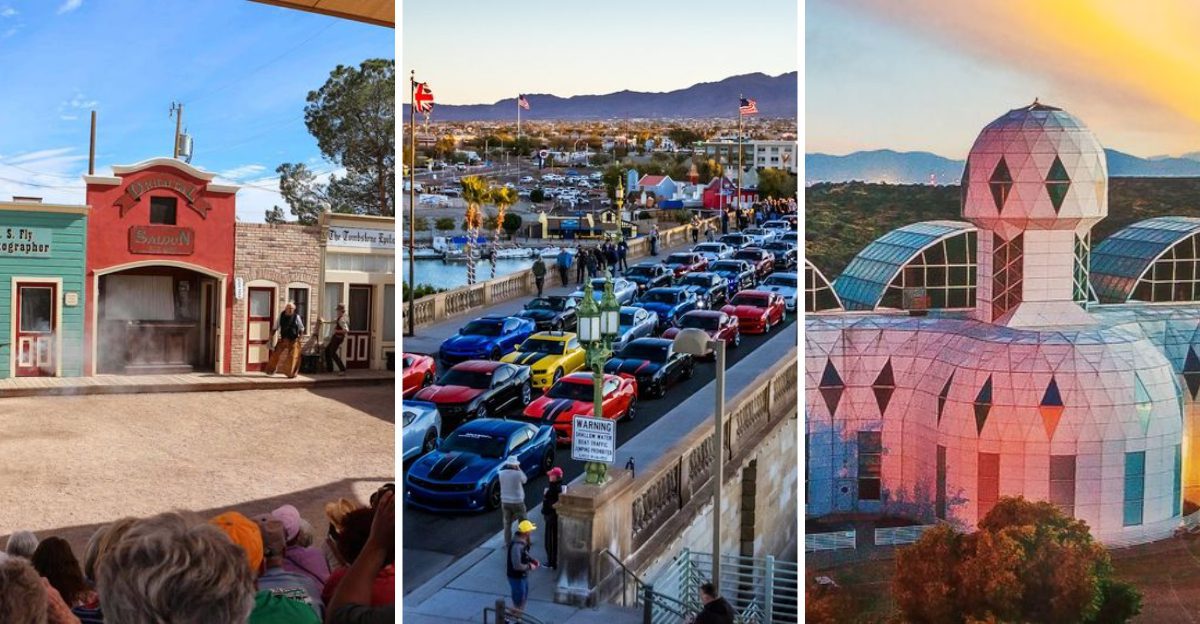
Arizona is packed with jaw-dropping landscapes, hidden history, and places that make you stop and say, “Wait, that’s actually here?” From ancient cliff dwellings to a real London bridge sitting in the desert, the state never runs out of surprises. Whether you’re road-tripping through small towns or planning a family adventure, these stops go way beyond the Grand Canyon.
Get ready to rethink everything you thought you knew about Arizona.
Kartchner Caverns State Park – Benson, Arizona
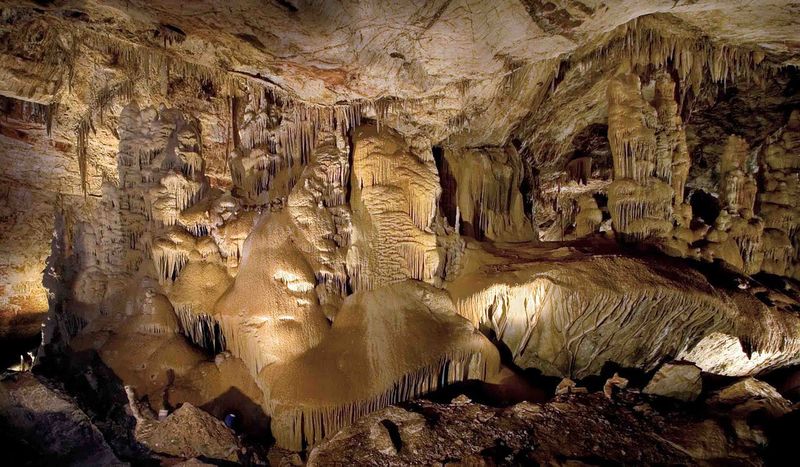
Hidden beneath a dusty Arizona hillside lies one of the most spectacular living cave systems in the entire country. Kartchner Caverns was kept secret for years after its discovery in 1974 to protect its fragile formations.
The caves are still actively growing, which makes them incredibly rare.
Guided tours take you past towering stalactites and delicate cave bacon formations. The humidity inside hovers near 99%, so expect to feel like you stepped into a warm cloud.
Book tickets ahead of time because they sell out fast.
London Bridge – Lake Havasu City, Arizona

Yes, that London Bridge. The one that once crossed the River Thames in England was actually purchased by an Arizona developer in 1968 and shipped stone by stone to the desert.
It now spans a channel in Lake Havasu City, and the whole thing feels wonderfully surreal.
Walking across it, you almost expect to hear Big Ben in the distance. The surrounding area has shops, restaurants, and waterfront views that make it a fun afternoon stop.
History fans and curious travelers both get a kick out of this one.
Biosphere 2 – Oracle, Arizona
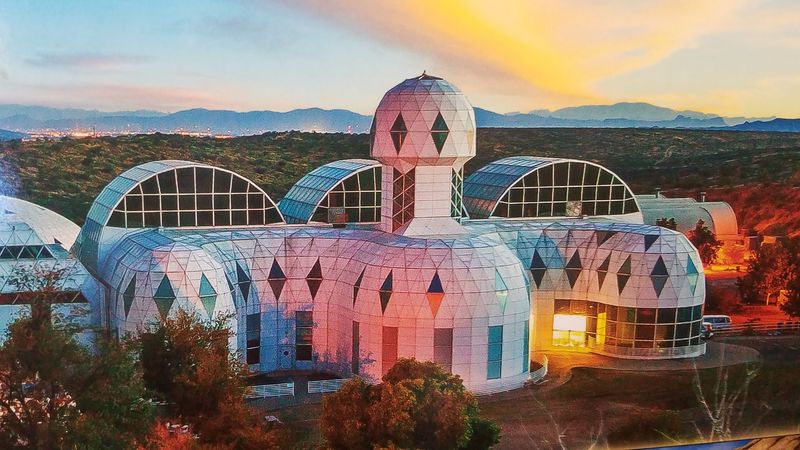
Biosphere 2 looks like something straight out of a science fiction movie, and its story is just as wild as its appearance. Back in 1991, eight scientists sealed themselves inside this giant glass structure for two years to study self-contained ecosystems.
The experiment had mixed results, but the science it produced was genuinely groundbreaking.
Today, the University of Arizona runs it as a research and education facility open to visitors. Tours walk you through ocean, rainforest, and desert biomes all under one roof.
It is one of the most thought-provoking stops in the entire state.
Desert Botanical Garden – Phoenix, Arizona
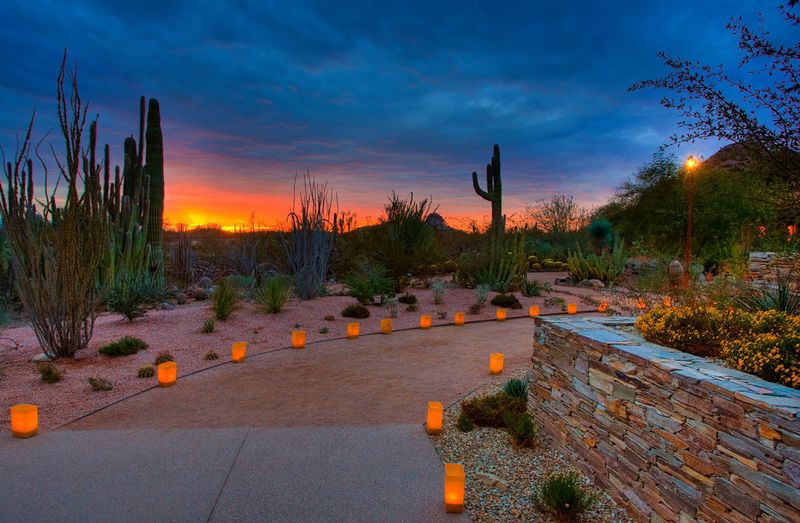
Most people think a garden full of cacti sounds a little dull, but the Desert Botanical Garden in Phoenix will completely change that opinion. Spread across 140 acres, the garden showcases thousands of plant species from deserts around the world.
The saguaro cacti alone are worth the trip.
Spring blooms turn the trails into a riot of color, and evening lantern walks during certain seasons feel almost magical. Kids tend to love spotting lizards and hummingbirds along the way.
Comfortable shoes and a water bottle are your two best friends here.
Heard Museum – Phoenix, Arizona
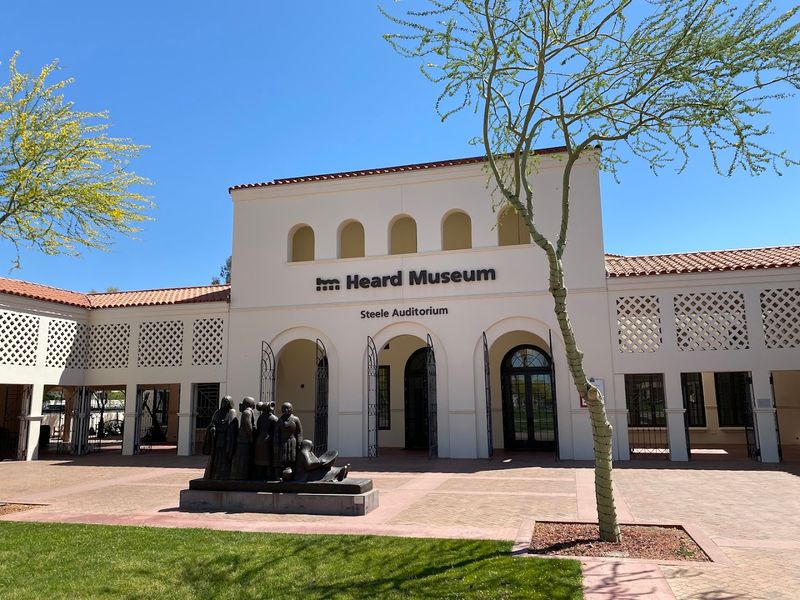
The Heard Museum stands as one of the most respected institutions in the country dedicated to Native American art and culture. Founded in 1929, it houses an extraordinary collection of jewelry, pottery, textiles, and contemporary artwork from dozens of Indigenous nations.
Every exhibit feels carefully curated and deeply respectful.
The Kachina doll collection alone could keep you occupied for an hour. Beyond the art, the museum tells honest and powerful stories about history, resilience, and identity.
Visiting here feels less like a museum trip and more like a meaningful conversation with the past.
O.K. Corral – Tombstone, Arizona
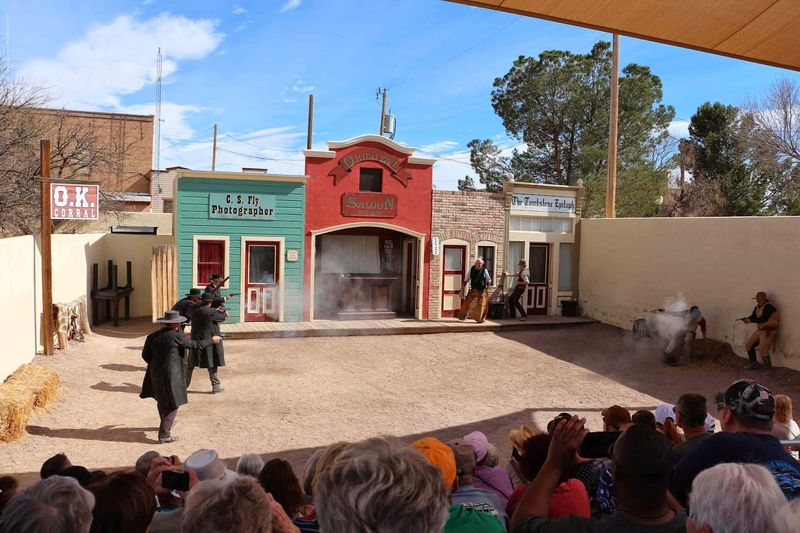
Few places in America carry as much legendary weight as Tombstone, and the O.K. Corral is the beating heart of it all.
The famous 1881 gunfight lasted only about 30 seconds, but it echoed through history for over a century. Walking the same ground where Wyatt Earp and Doc Holliday made their stand gives you genuine chills.
Daily reenactments bring the showdown to life in a theatrical but entertaining way. The surrounding town of Tombstone keeps the Wild West atmosphere alive with saloons, boardwalks, and period costumes.
It is delightfully over the top and absolutely worth it.
Canyon de Chelly National Monument – Arizona
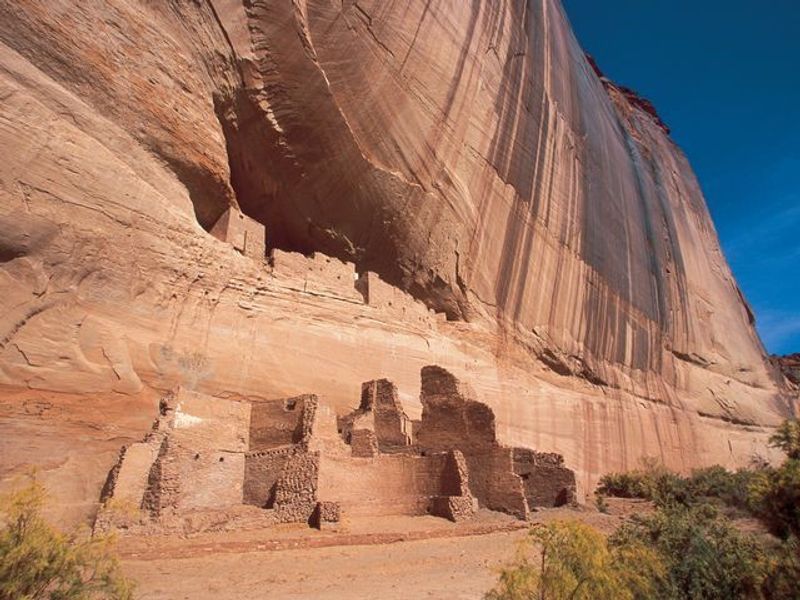
Canyon de Chelly is unlike any other national monument in the United States, partly because it is still home to Navajo families who farm and live within its walls. The canyon has been continuously inhabited for nearly 5,000 years, layering history upon history in ways that are genuinely humbling.
The White House Ruins trail is the only one visitors can hike without a Navajo guide, and it delivers stunning views of ancient cliff dwellings. Hiring a local guide for a jeep tour adds rich cultural storytelling to the experience.
Plan at least a full day here.
Petrified Forest National Park – Arizona
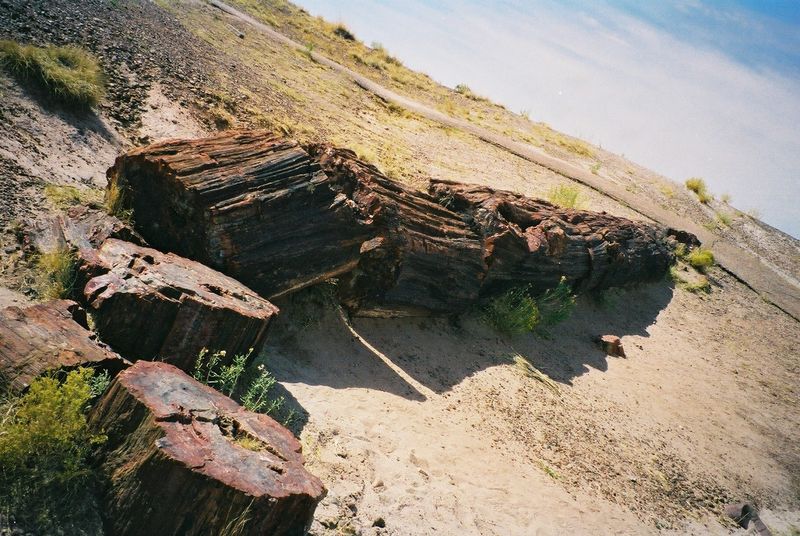
Two hundred and twenty million years ago, this part of Arizona was a lush tropical forest. Today, those ancient trees have turned to stone, and the results are breathtaking.
Chunks of petrified wood shimmer in shades of purple, red, yellow, and orange, scattered across a landscape that looks almost alien.
The park also overlaps with the Painted Desert, adding sweeping views of banded badlands to the experience. Roadside pull-offs make it easy to explore at your own pace.
Do not pick up any petrified wood as a souvenir because rangers take that rule very seriously.
Meteor Crater Natural Landmark – Winslow, Arizona
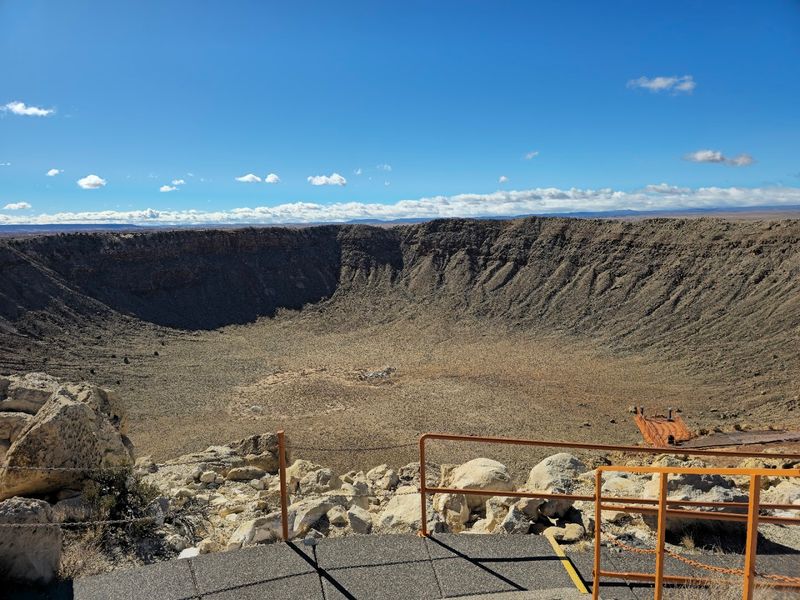
About 50,000 years ago, a nickel-iron meteorite slammed into the Arizona desert at roughly 26,000 miles per hour, leaving behind a crater nearly a mile wide and 550 feet deep. Standing at the rim and looking down into that massive bowl is a properly humbling experience.
The sheer scale of it is hard to wrap your head around.
The visitor center does a great job explaining the science and history of the impact. NASA actually used the site to train Apollo astronauts, which adds a cool layer to the visit.
Bring a jacket because the rim can get surprisingly windy.
Taliesin West – Scottsdale, Arizona
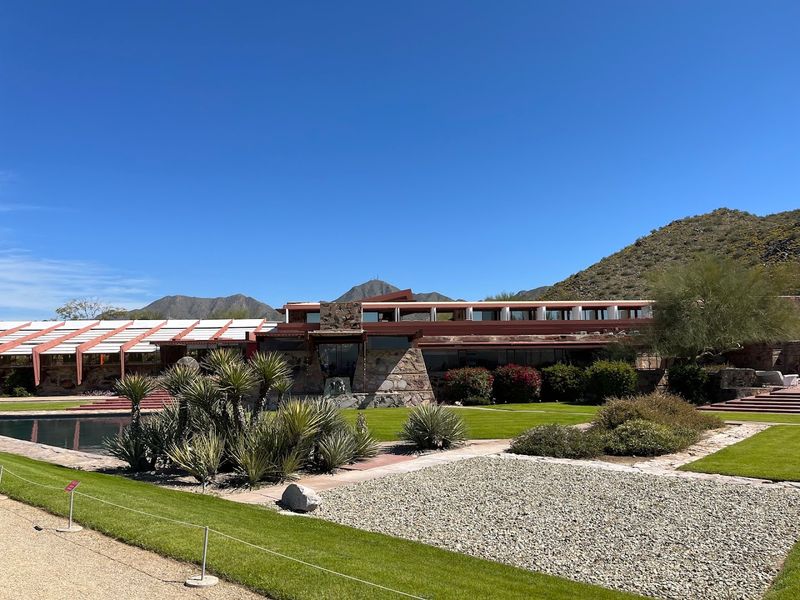
Frank Lloyd Wright called Taliesin West his winter home, design studio, and architectural school, and it shows in every careful angle and organic detail. Built starting in 1937, the complex hugs the desert landscape so naturally it almost seems to have grown there.
Wright believed buildings should belong to their environment, and this place proves his point beautifully.
Guided tours explore the drafting studios, living quarters, and outdoor terraces where some of the 20th century’s most iconic designs were born. Architecture lovers will feel like they have found a sacred site.
Even casual visitors leave genuinely inspired.
San Xavier del Bac Mission – Tucson, Arizona
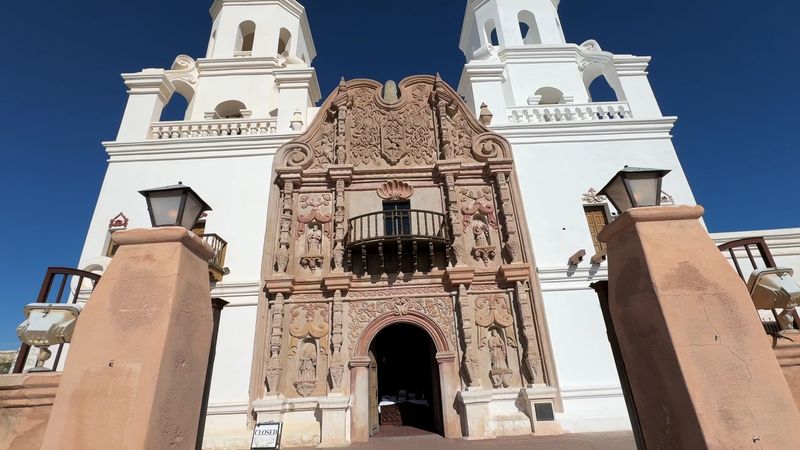
Known as the White Dove of the Desert, San Xavier del Bac Mission has been rising above the Sonoran Desert since the late 1700s. Its brilliant white baroque facade is genuinely stunning against the deep blue Arizona sky, and the interior is filled with centuries-old religious artwork and intricate painted decorations.
Few buildings in the Southwest carry this much visual power.
The mission is still an active parish serving the Tohono O’odham Nation, which adds a living, breathing quality to the visit. Admission is free, though donations are welcomed and well deserved.
Go in the morning when the light is at its best.
Tumacacori National Historical Park – Tumacacori, Arizona
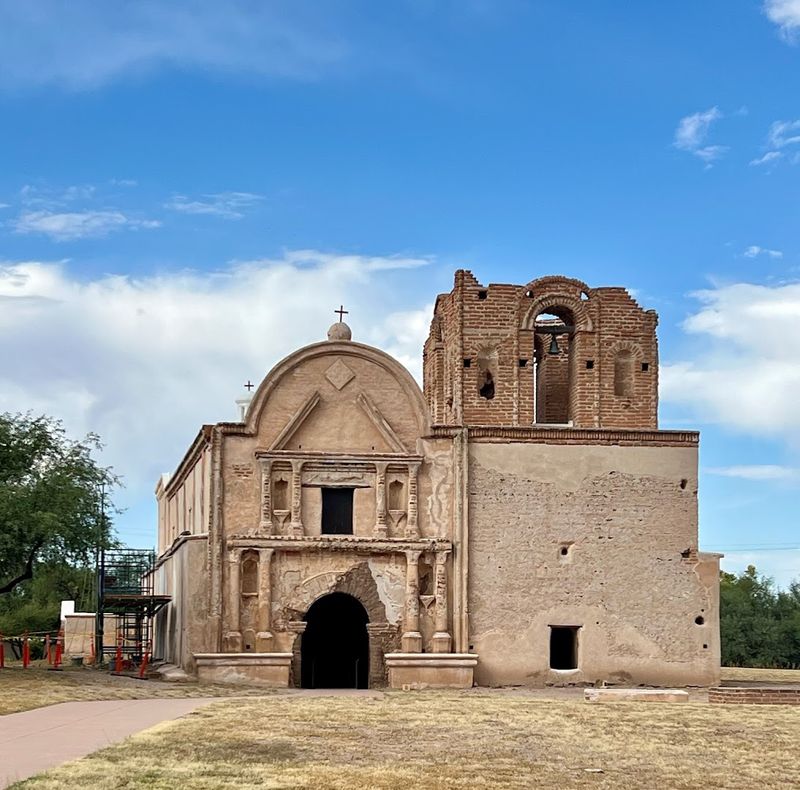
Tucked into the Santa Cruz River valley just north of the Mexican border, Tumacacori preserves the haunting ruins of three Spanish colonial missions. The largest, San Jose de Tumacacori, was built in the early 1800s and abandoned by 1848, leaving behind thick adobe walls that still stand as a powerful reminder of a complicated history.
The small museum on site gives excellent context about the O’odham people, Spanish missionaries, and the cultural clashes that shaped this region. The grounds are peaceful and easy to explore at a relaxed pace.
It pairs perfectly with a visit to nearby Tubac.
Montezuma Castle National Monument – Camp Verde, Arizona
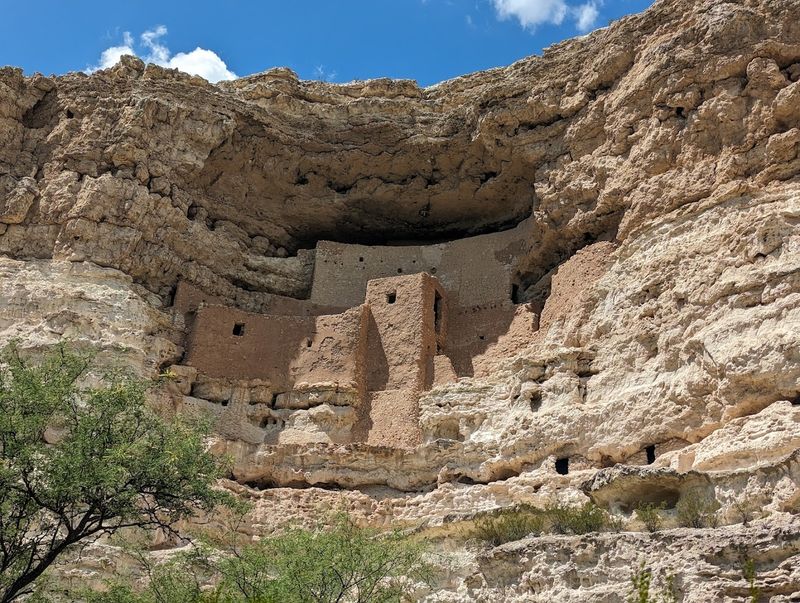
Perched 70 feet up in a limestone cliff, Montezuma Castle is one of the best-preserved cliff dwellings in all of North America. The Sinagua people built this five-story, 20-room structure around 700 years ago, and it still stands with remarkable dignity.
The name is a bit misleading since the Aztec emperor Montezuma had absolutely nothing to do with it.
A short, paved trail winds along the base of the cliff with great views of the dwelling from multiple angles. The nearby Montezuma Well is a bonus stop worth adding to the visit.
Both sites together make for a satisfying half-day outing.
Walnut Canyon National Monument – Arizona
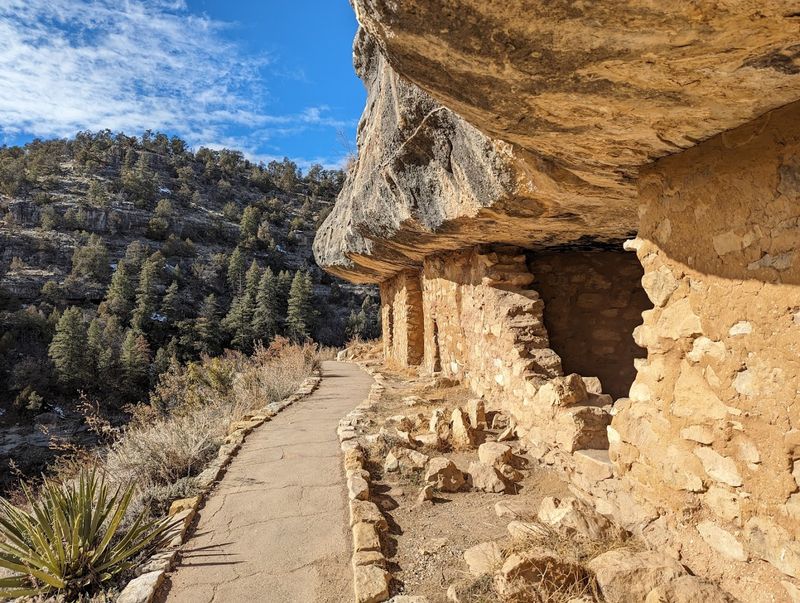
Walnut Canyon cuts a quiet, forested path through the Arizona landscape, hiding one of the Southwest’s most accessible ancient cliff dwelling sites within its walls. The Sinagua people built more than 80 rooms into the natural alcoves of the canyon walls around 800 years ago, and the Island Trail takes you right past many of them.
The hike involves about 240 steps down and back up, so comfortable footwear matters. What makes this spot feel special is how close you get to the actual dwellings without barriers.
Standing just a few feet from a 12th-century doorway is quietly extraordinary.
Lowell Observatory – Flagstaff, Arizona
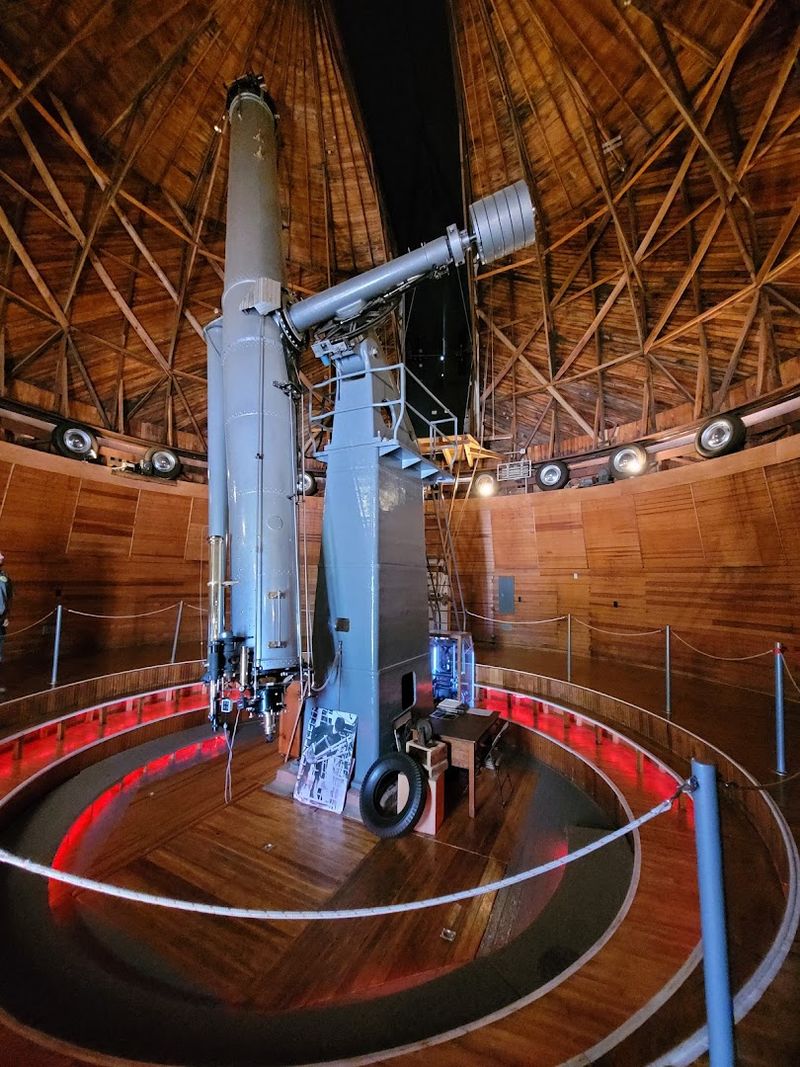
Pluto was discovered here in 1930, which alone earns Lowell Observatory a permanent spot on any Arizona road trip itinerary. Perched on Mars Hill above Flagstaff, the observatory has been studying the cosmos since 1894 and welcomes visitors with a mix of daytime tours and spectacular nighttime stargazing sessions.
Flagstaff is a designated Dark Sky City, so the views through the telescopes are genuinely impressive. The staff astronomers are enthusiastic and great at explaining complex ideas in ways that click for all ages.
Checking the schedule in advance helps you catch special viewing events.
Route 66 – Williams, Arizona
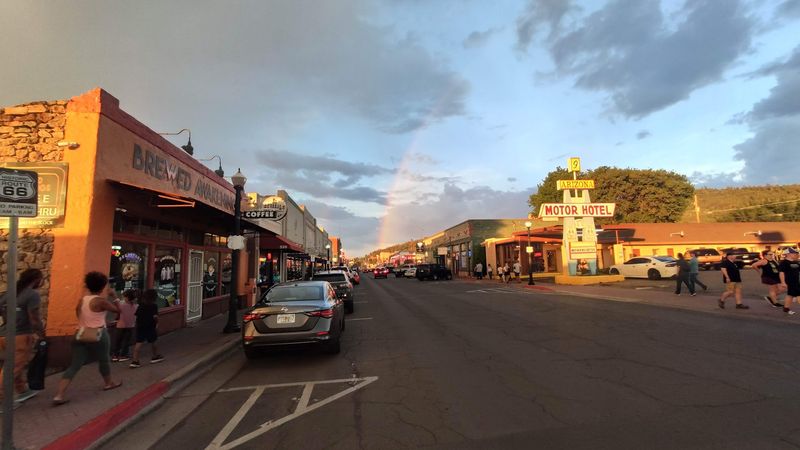
Williams proudly calls itself the last town on Route 66 to be bypassed by Interstate 40, and it wears that badge of honor with tremendous charm. The main street feels like a time capsule from the 1950s, complete with neon signs, diners, souvenir shops, and the kind of slow-paced energy that made the Mother Road legendary in the first place.
Beyond the nostalgia, Williams is also the southern gateway to the Grand Canyon Railway, adding real practical value to the stop. Grab a milkshake, browse the shops, and let the retro atmosphere work its magic.
Few places capture the romance of American road tripping this well.
Grand Canyon Depot – Grand Canyon Village, Arizona
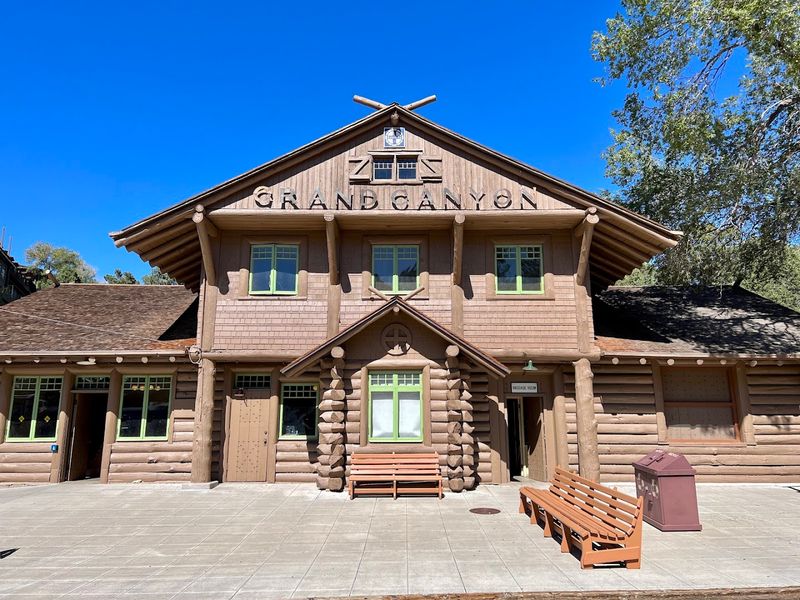
Arriving at the Grand Canyon by train is one of those travel experiences that makes the destination feel even more special before you have seen a single view. The Grand Canyon Depot, built in 1910, is one of the few remaining log-constructed train depots in the United States.
The Grand Canyon Railway runs here from Williams, making the journey part of the adventure.
Vintage steam and diesel locomotives pull historic passenger cars through ponderosa pine forests and open grasslands. Cowboys on horseback sometimes escort the train, and onboard entertainment adds to the fun.
It is a genuinely memorable way to arrive at one of the world’s great wonders.
Bearizona Wildlife Park – Williams, Arizona
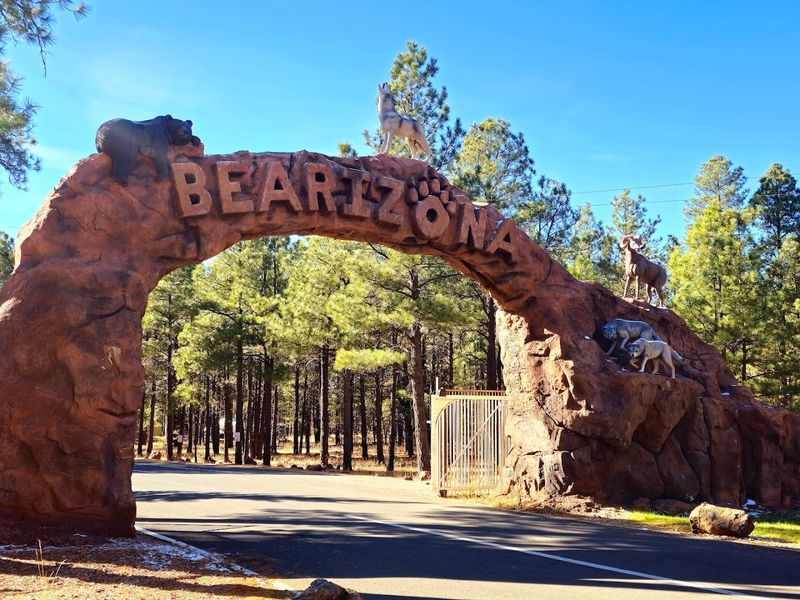
Bearizona is the kind of place where a bison might casually walk past your car window while a wolf pack trots through the trees ahead. This drive-through and walk-through wildlife park near Williams lets you get surprisingly close to North American animals in naturalistic habitats.
It is genuinely thrilling for kids and adults alike.
The walk-through section features baby animals, birds of prey shows, and up-close encounters that you simply cannot get at a traditional zoo. Animals here include bears, wolves, bighorn sheep, javelinas, and more.
Arriving early means more active animals and better photo opportunities.
Jerome Historic District – Jerome, Arizona
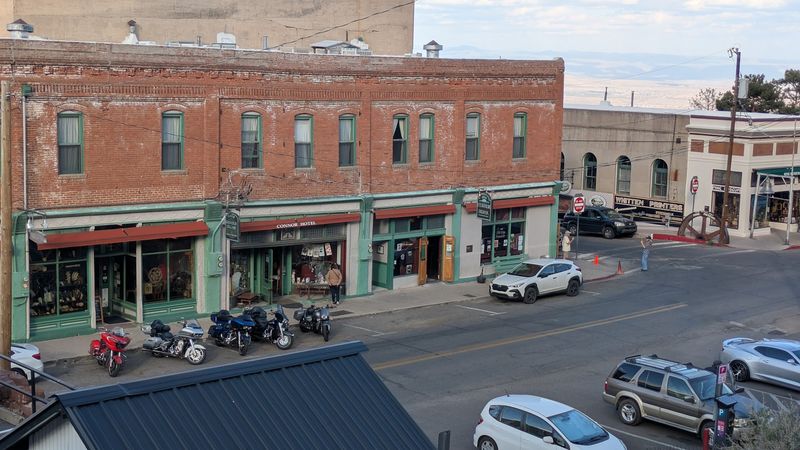
Jerome clings to the side of Cleopatra Hill like it refused to accept gravity as a rule. Once a booming copper mining town of nearly 15,000 people, it shrank to a ghost town before artists and eccentrics moved in and gave it a second life.
Today it is one of the most atmospheric small towns in Arizona, full of galleries, quirky shops, and jaw-dropping views.
The Jerome State Historic Park tells the mining story through artifacts and a preserved mine superintendent’s mansion. The steep, narrow streets make for a surprisingly fun walk.
Ghost tour enthusiasts will find plenty of local legends to keep them entertained after dark.
Chiricahua National Monument – Willcox, Arizona
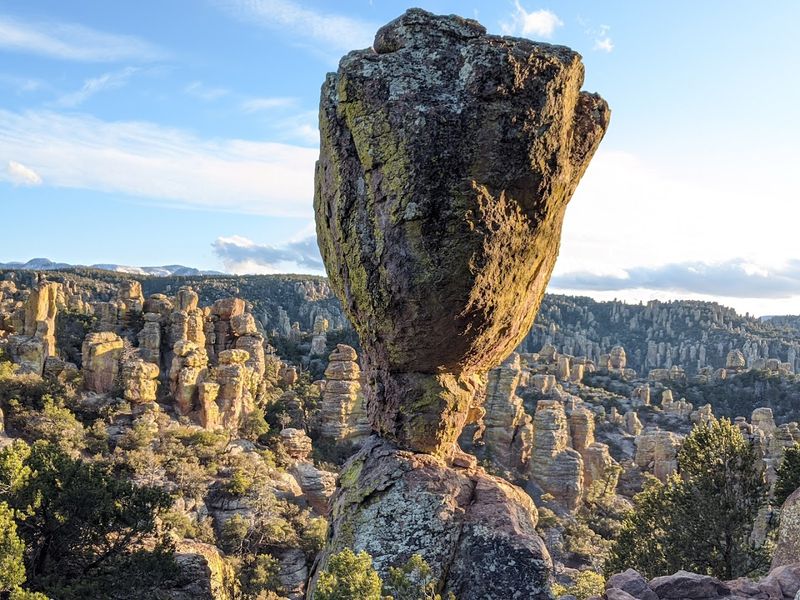
Chiricahua National Monument hides in the far southeastern corner of Arizona, and that remoteness is exactly what makes it so rewarding. Volcanic eruptions 27 million years ago created the bizarre, towering rock formations here, which the Chiricahua Apache called the Land of Standing-Up Rocks.
The name fits perfectly.
Trails wind through a maze of balanced boulders, narrow corridors, and stone columns that seem impossible until you are standing right next to them. Wildlife is abundant, including deer, coatimundis, and rare birds that draw serious birders from across the country.
The drive out there is part of the payoff.
Enjoyed this story?
Add Fast Food Club as a preferred source to see more of our reporting on Google.