


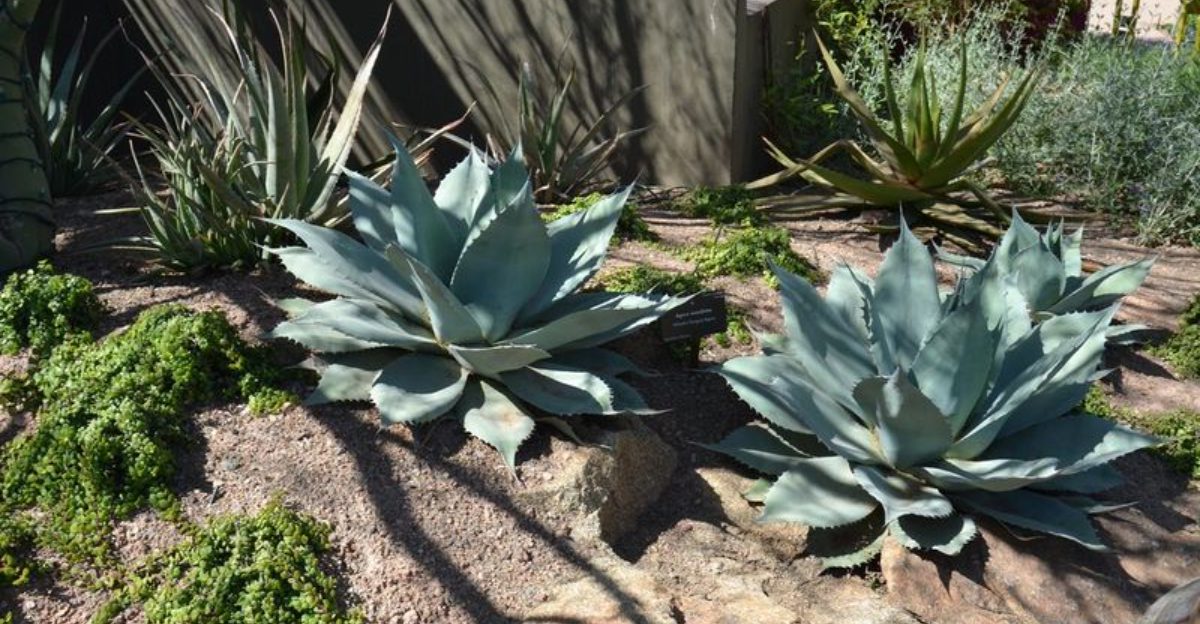
Florida’s hot sun and sandy soil can make gardening feel like a challenge, but the right plants change everything. Many beautiful plants thrive with very little water once they get established, saving you time, money, and effort.
Whether you have a small yard or a sprawling landscape, choosing drought-tolerant plants keeps things green without constant watering. These 22 picks prove that low-maintenance can still mean stunning.
Agave
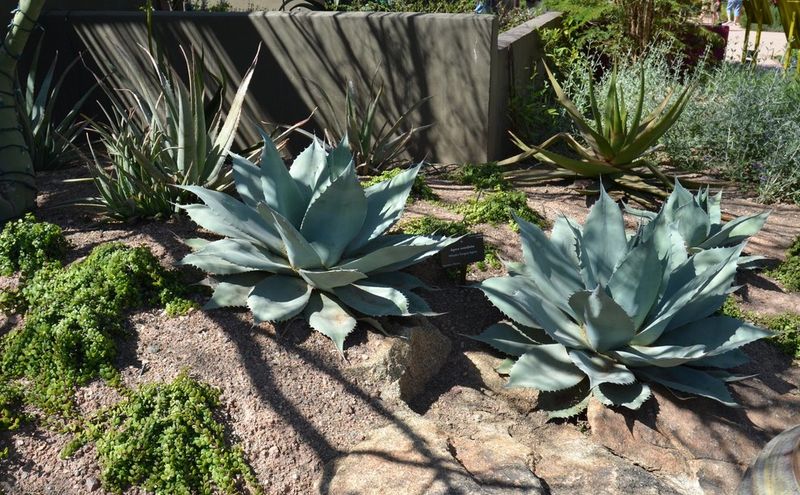
Bold, architectural, and almost impossible to kill — agave is the ultimate statement plant for Florida yards. Its thick, waxy leaves store water inside, meaning it can go weeks without rain and still look incredible.
Agave works beautifully as a focal point near driveways or garden borders.
Many varieties stay compact enough for smaller yards. Just watch out for the sharp leaf tips, and give it full sun for best results.
Yucca
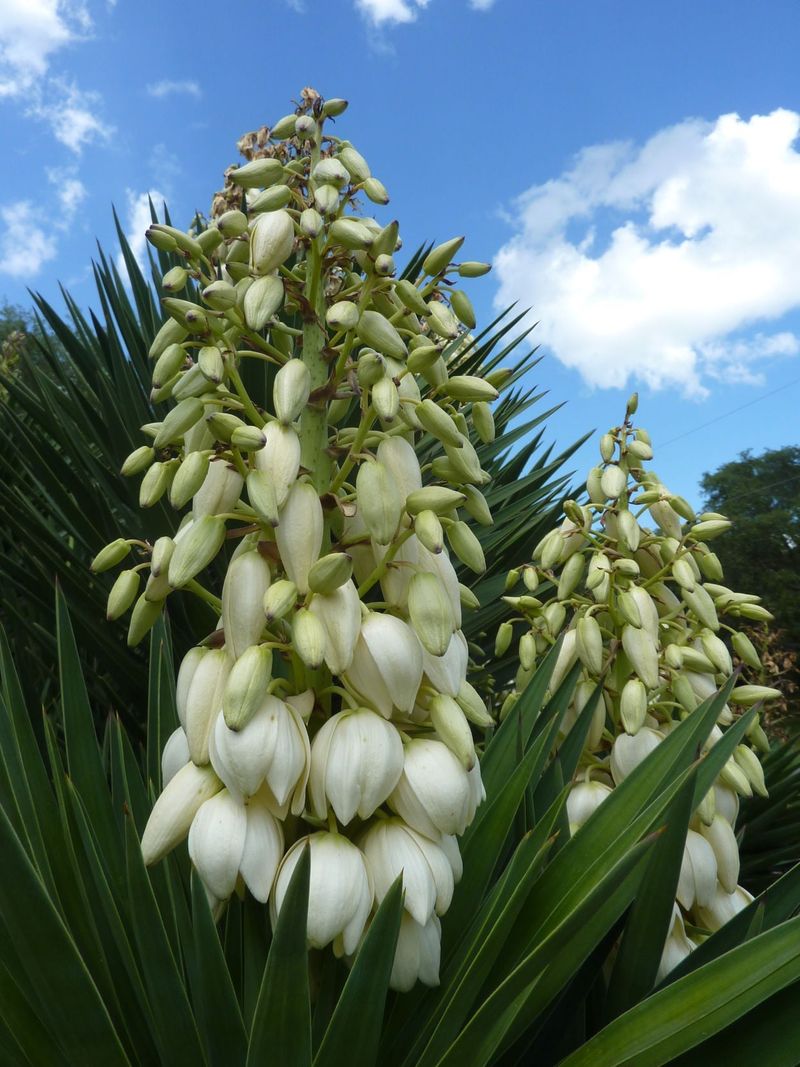
Yucca has been growing wild across Florida for centuries, and there is a good reason it keeps showing up in modern landscapes. Stiff, sword-shaped leaves fan out dramatically, and in spring, tall white flower spikes shoot up like fireworks.
It asks for almost nothing in return.
Plant yucca in sandy or well-drained soil and full sun. It handles drought, heat, and even coastal winds without skipping a beat.
Coontie
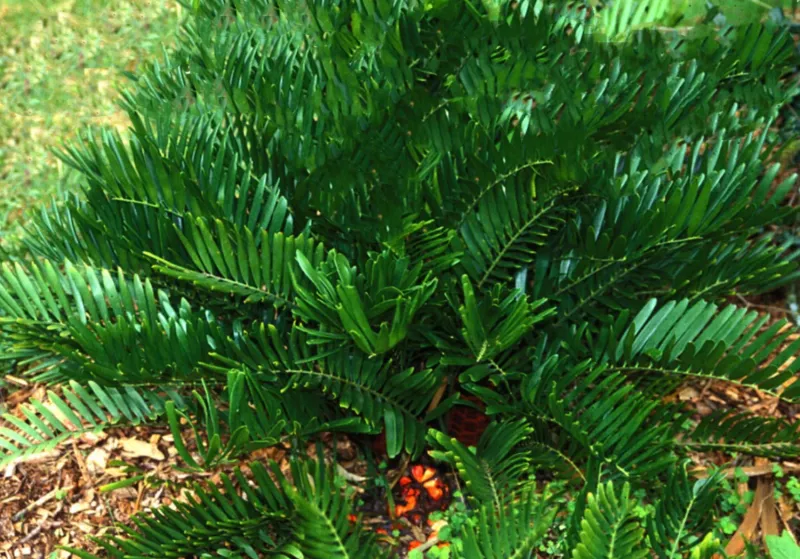
Coontie is Florida’s only native cycad, and it carries a history stretching back to the dinosaurs. Its dark, glossy fronds look tropical and lush, yet this tough plant handles drought, shade, and poor soil without complaint.
It also serves as the only food source for the beautiful atala butterfly.
Coontie grows slowly but rewards patience with a refined, polished look. Use it as a ground cover or low border plant in shaded spots.
Muhly grass
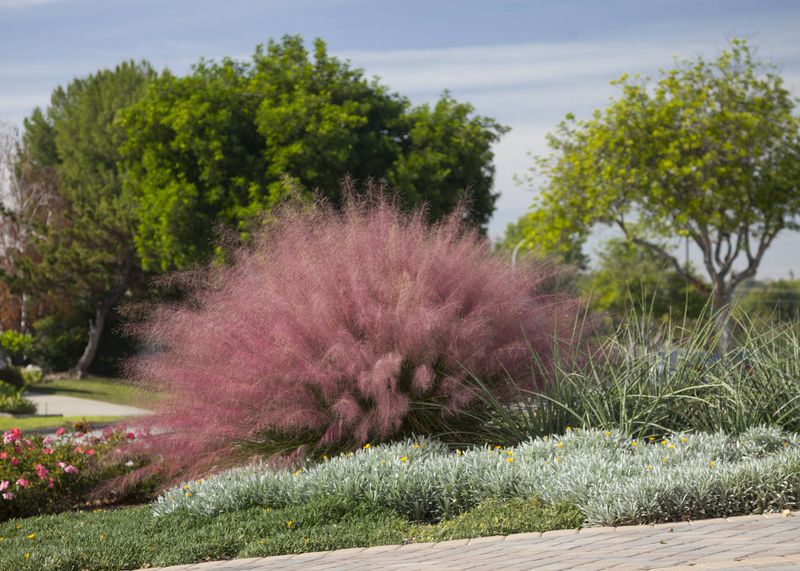
Every fall, muhly grass puts on one of the most breathtaking shows in the Florida garden world. Clouds of soft, rosy-pink plumes seem to float above the slender green blades, catching sunlight like a natural fireworks display.
Best of all, it thrives on neglect and minimal water.
Plant muhly grass in full sun and well-drained soil. Once established, it needs almost no irrigation and comes back reliably year after year.
Twinflower
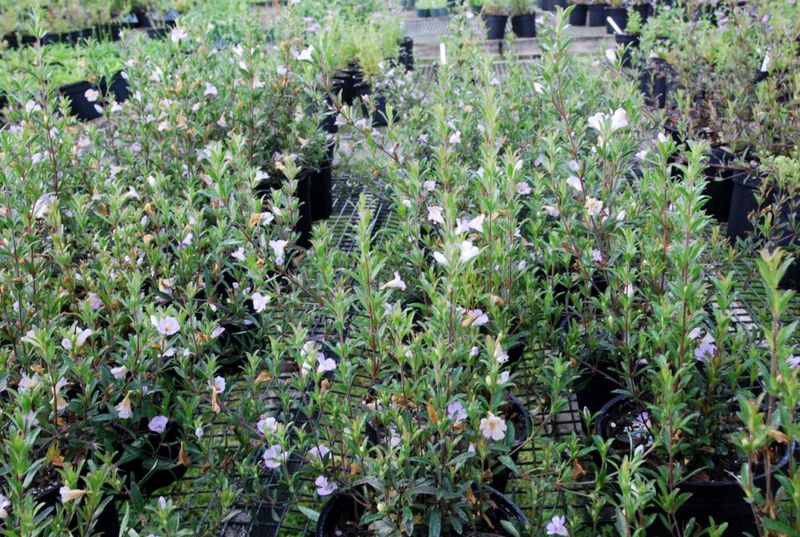
Tiny but mighty, twinflower is a native Florida ground cover that quietly earns its place in any low-water garden. Pairs of cheerful pink blooms pop up throughout the year, drawing in butterflies and bees without demanding much from the gardener.
It spreads gently, filling in bare spots with ease.
Twinflower does best in partial shade with well-drained soil. It is a reliable choice for naturalized areas or beneath larger shrubs and trees.
Blanket flower
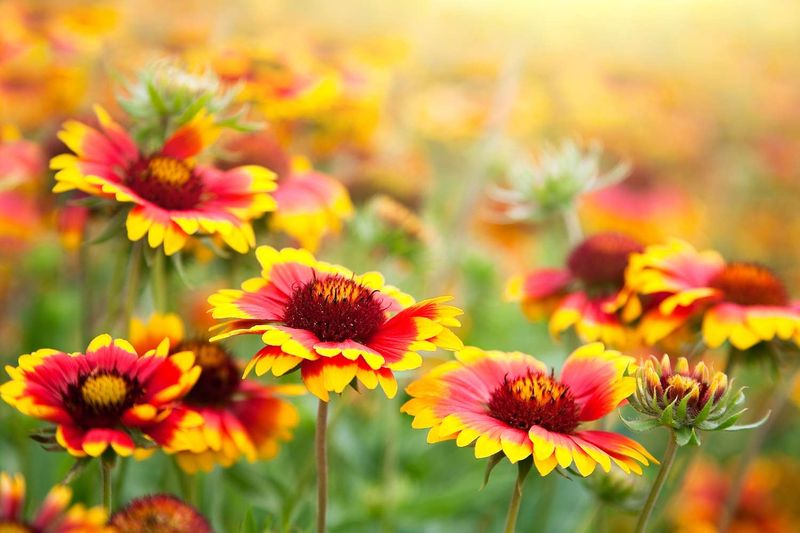
Few plants pack as much color into such a tough package as blanket flower. Its fiery red, orange, and yellow blooms look like they belong in a painting, yet this Florida native laughs at heat and drought.
Butterflies absolutely love it, making your yard feel alive all season long.
Blanket flower thrives in full sun and sandy soil — basically the conditions most other plants complain about. Deadhead spent blooms to encourage even more flowers throughout the growing season.
Coreopsis
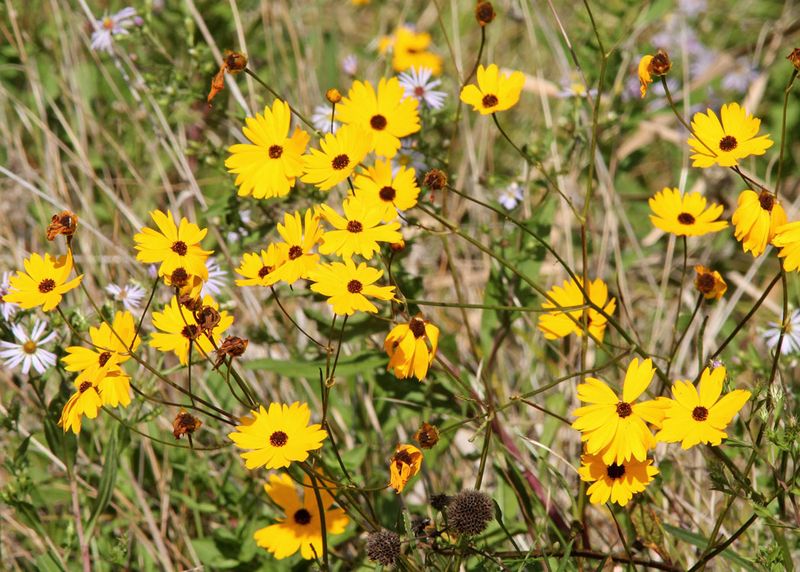
Coreopsis is Florida’s official state wildflower, and it wears that title proudly. Masses of cheerful yellow blooms cover the plant from spring through fall, creating a sunny, meadow-like look that costs almost nothing to maintain.
It reseeds itself naturally, so your display gets better every year.
Full sun and well-drained soil are all coreopsis needs to perform. Skip the fertilizer — too many nutrients actually reduce blooming and make this easygoing native less vigorous.
Beach sunflower
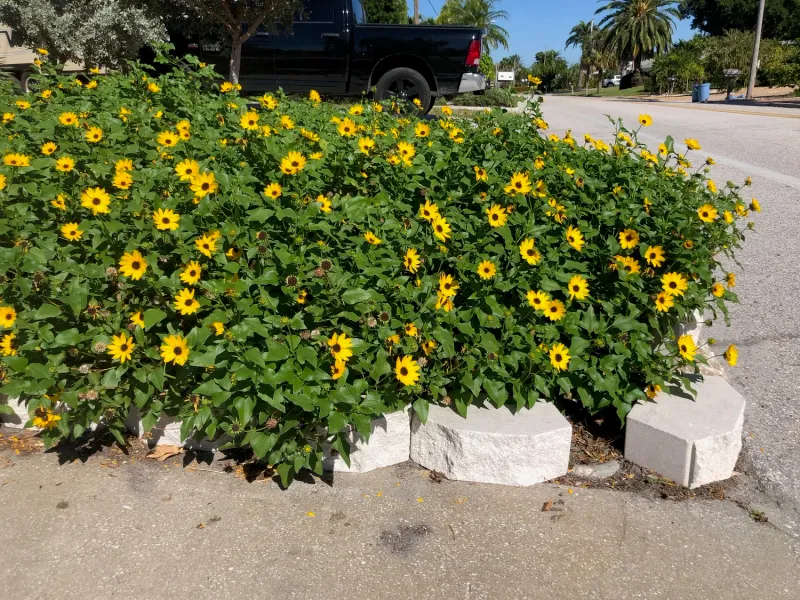
Beach sunflower was practically built for Florida. Native to coastal areas, it spreads quickly as a ground cover, smothering weeds with cheerful yellow flowers that bloom nearly year-round.
Sandy soil, salt air, and blazing sun are exactly what this plant enjoys most.
Use beach sunflower on slopes, along driveways, or in any open sunny area where you want fast, low-effort color. It roots wherever its stems touch the ground, filling spaces beautifully without any fuss.
Blue porterweed
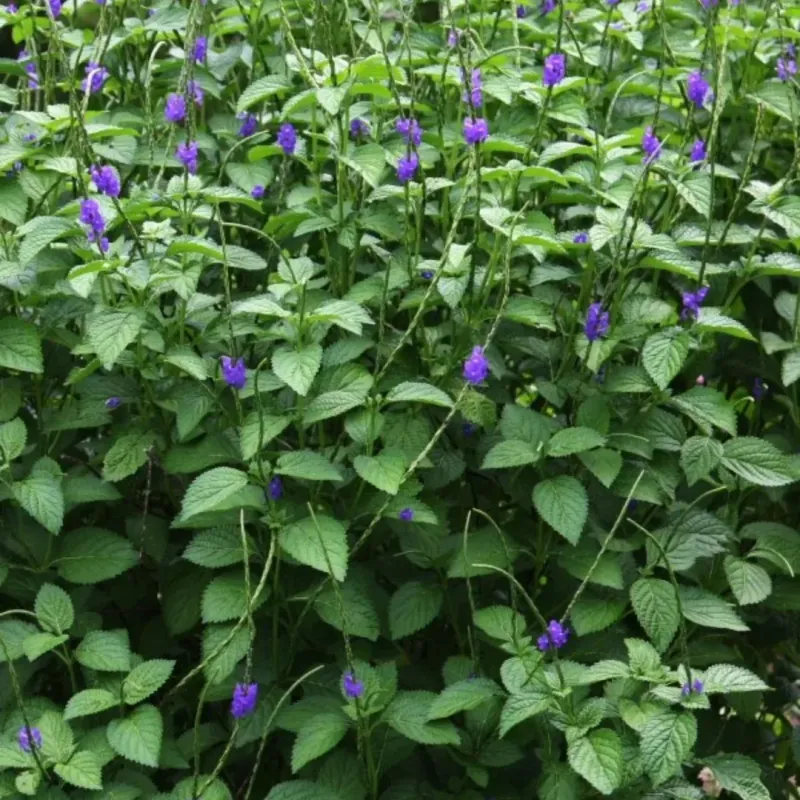
Hummingbirds and butterflies treat blue porterweed like their personal cafeteria, visiting constantly throughout the warm months. The tiny violet-blue flowers march up tall spikes in an almost magical progression, always keeping something in bloom.
It grows fast, handles heat like a champ, and asks for very little water.
Blue porterweed works wonderfully in pollinator gardens or as a filler between larger shrubs. Give it full sun and occasional trimming to keep it looking neat and bushy.
Firebush
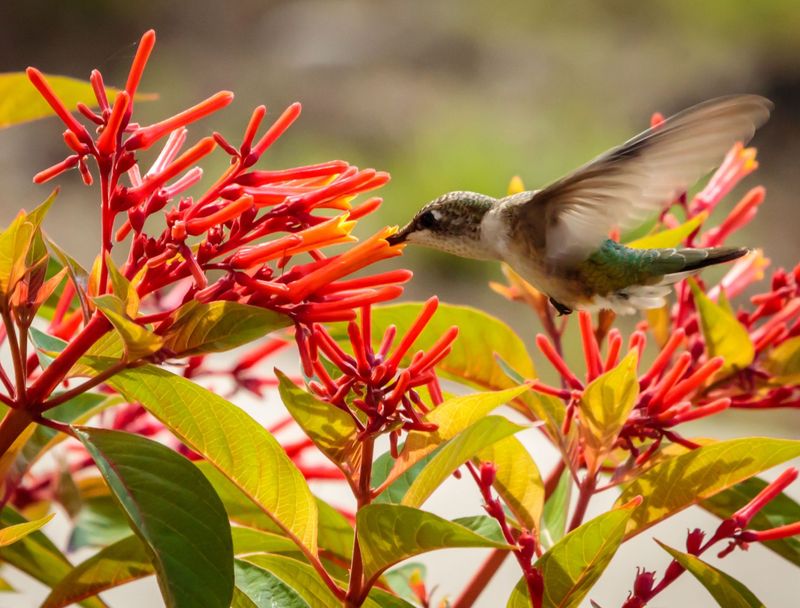
The name says it all — firebush lights up the landscape with clusters of brilliant red-orange tubular flowers that hummingbirds simply cannot resist. Native to Florida, it grows fast and handles drought, humidity, and heat without breaking a sweat.
In mild winters, it stays evergreen and keeps blooming.
Plant firebush in full sun to partial shade for best flowering. It works as a specimen shrub, a hedge, or a vibrant backdrop for smaller flowering plants in the garden.
Simpson’s stopper
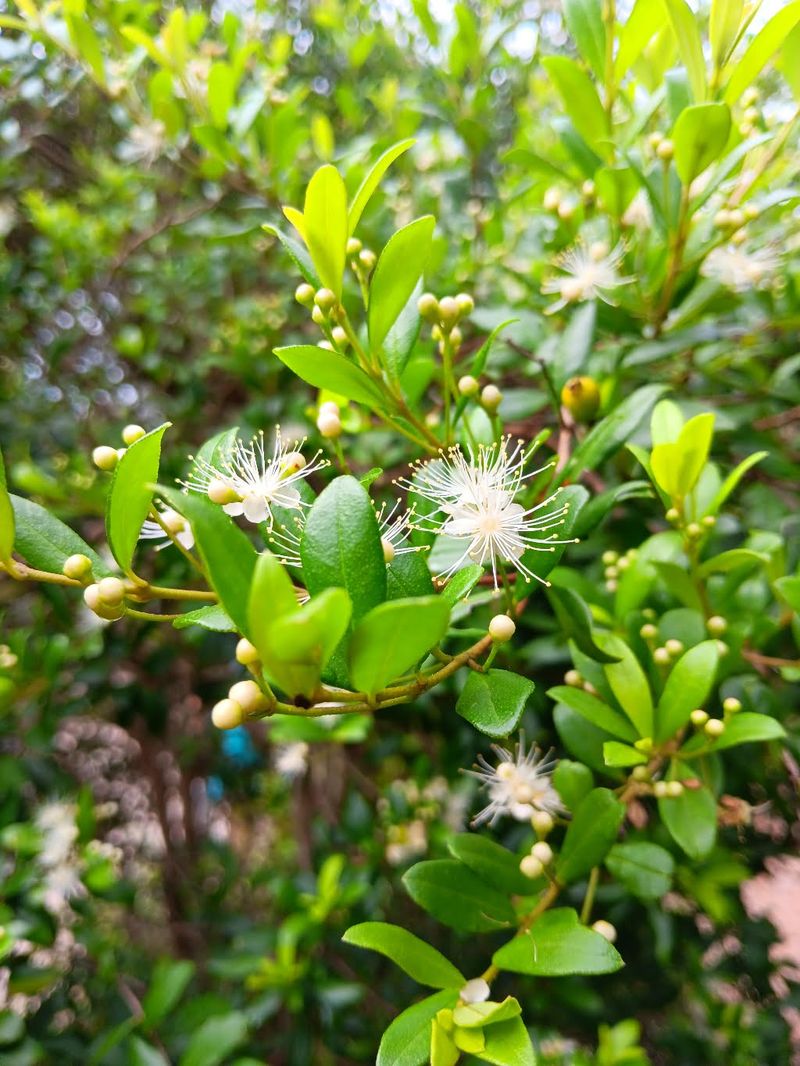
If you want a native Florida shrub that practically takes care of itself, Simpson’s stopper deserves a long look. Small, fragrant white flowers appear throughout the year, followed by orange-red berries that birds gobble up eagerly.
The dark, glossy leaves stay attractive even during dry spells.
Simpson’s stopper handles full sun to partial shade and tolerates drought once established. It works beautifully as a privacy hedge, a foundation planting, or a wildlife-friendly specimen in naturalized gardens.
Saw palmetto
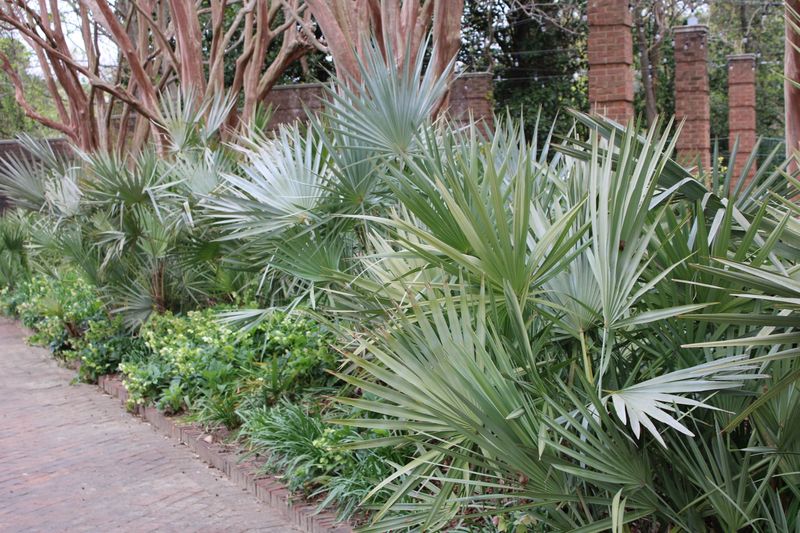
Saw palmetto is one of the toughest plants on the Florida peninsula, surviving hurricanes, wildfires, and months without rain. Its fan-shaped fronds range from deep green to stunning silvery-blue, adding a wild, tropical texture that no ornamental grass can match.
Wildlife depend on its berries and shelter heavily.
Once established, saw palmetto needs zero irrigation and minimal care. Use it in naturalized areas, as a mass planting, or as a bold textural contrast beside smoother-leafed plants.
Dwarf palmetto
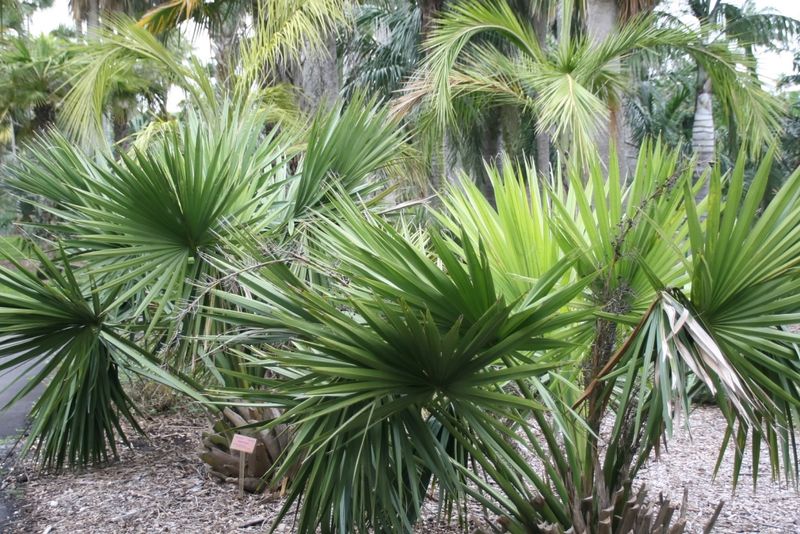
Dwarf palmetto brings genuine tropical drama to shaded spots where most palms would struggle. Unlike its taller relatives, it stays low and spreading, forming dense clusters of broad, fan-shaped fronds that look lush even during dry stretches.
It is also one of the most cold-hardy palms in Florida.
Shade tolerance makes dwarf palmetto especially useful under tree canopies or along the north side of buildings. Established plants need no supplemental watering and handle poor, sandy soils with ease.
Cocoplum
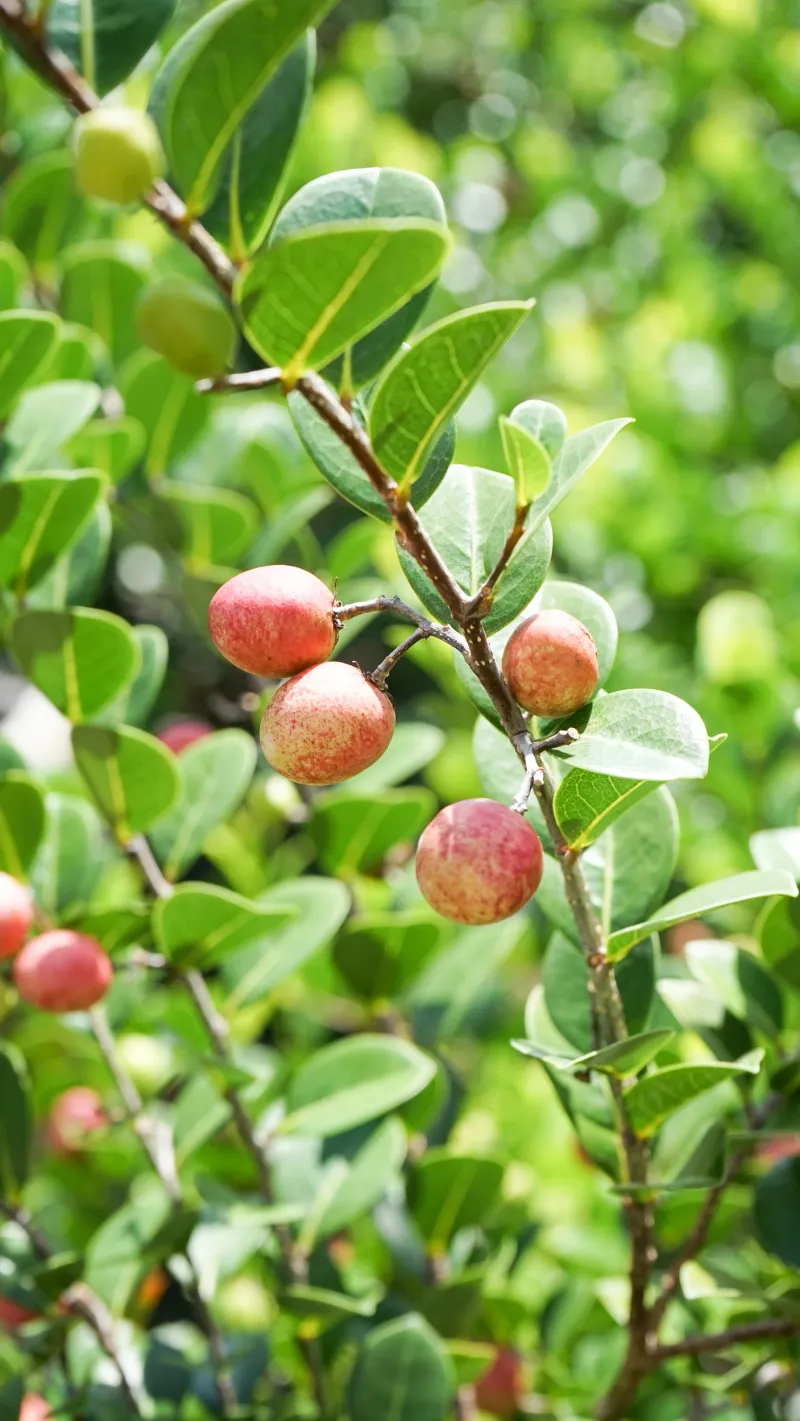
Cocoplum is the kind of plant that makes landscapers smile — it is attractive, adaptable, and remarkably unfussy. Glossy, rounded leaves stay beautiful year-round, and the small plum-like fruits attract birds while adding a pop of deep purple-red color.
It handles salt air, drought, and clay soils gracefully.
Use cocoplum as a formal hedge, a wildlife planting, or a coastal screen. It responds well to pruning and can be shaped into a tidy form or left to grow naturally.
Wax myrtle
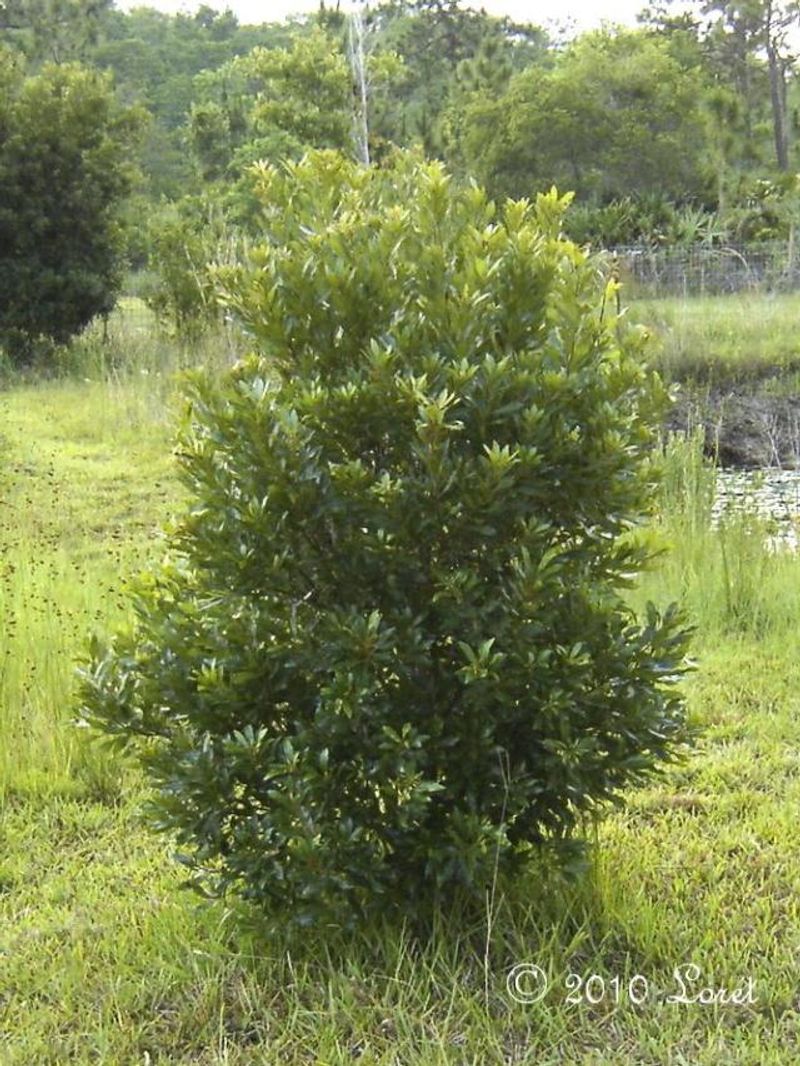
Wax myrtle grows fast, smells wonderful, and feeds entire flocks of migrating birds with its waxy blue-gray berries — not a bad resume for a drought-tolerant shrub. Native across Florida, it adapts to wet or dry soils and full sun or partial shade with impressive flexibility.
Colonists once boiled the berries to make fragrant candles.
Use wax myrtle as a privacy screen, a windbreak, or a naturalized mass planting. Occasional pruning keeps it tidy, though it looks beautiful left to grow freely.
Lantana
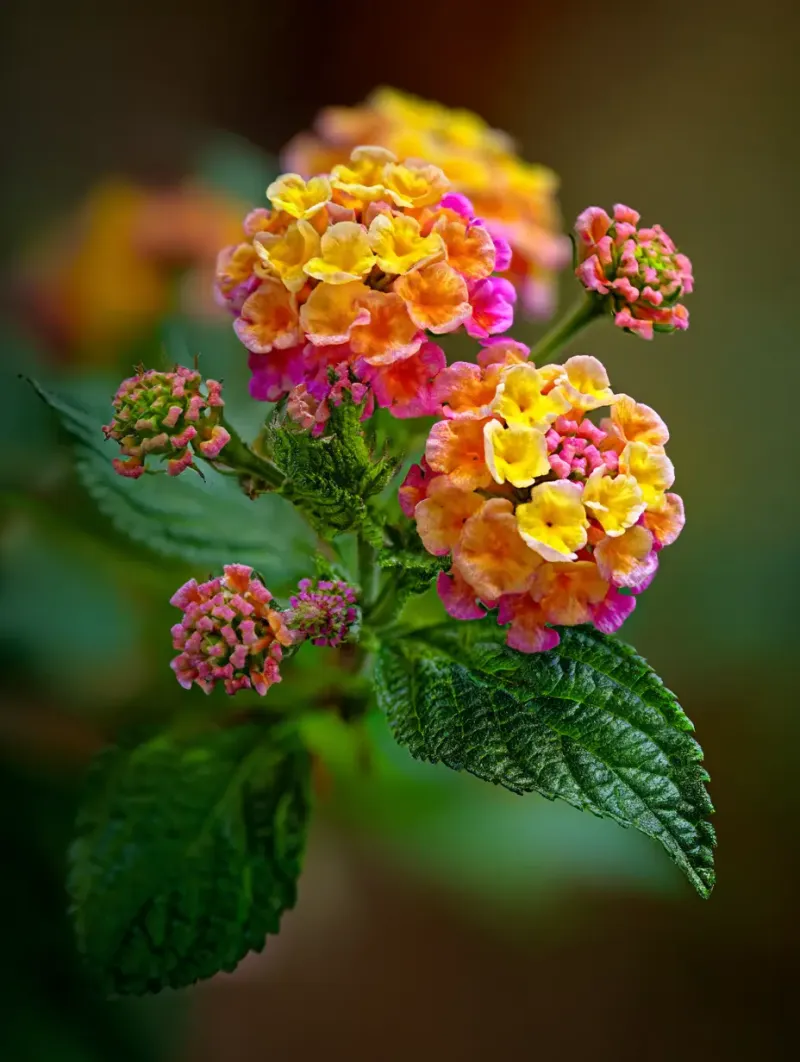
Walk past a blooming lantana on a warm Florida afternoon and you will likely count a dozen butterfly species without even trying. The clustered flower heads shift colors as they age, creating a multicolored patchwork of yellow, orange, pink, and red all on the same plant.
Drought? Lantana barely notices.
Full sun and well-drained soil bring out lantana’s best performance. Trim it back occasionally to prevent woody growth and encourage a constant flush of fresh, colorful blooms throughout the season.
Rosemary
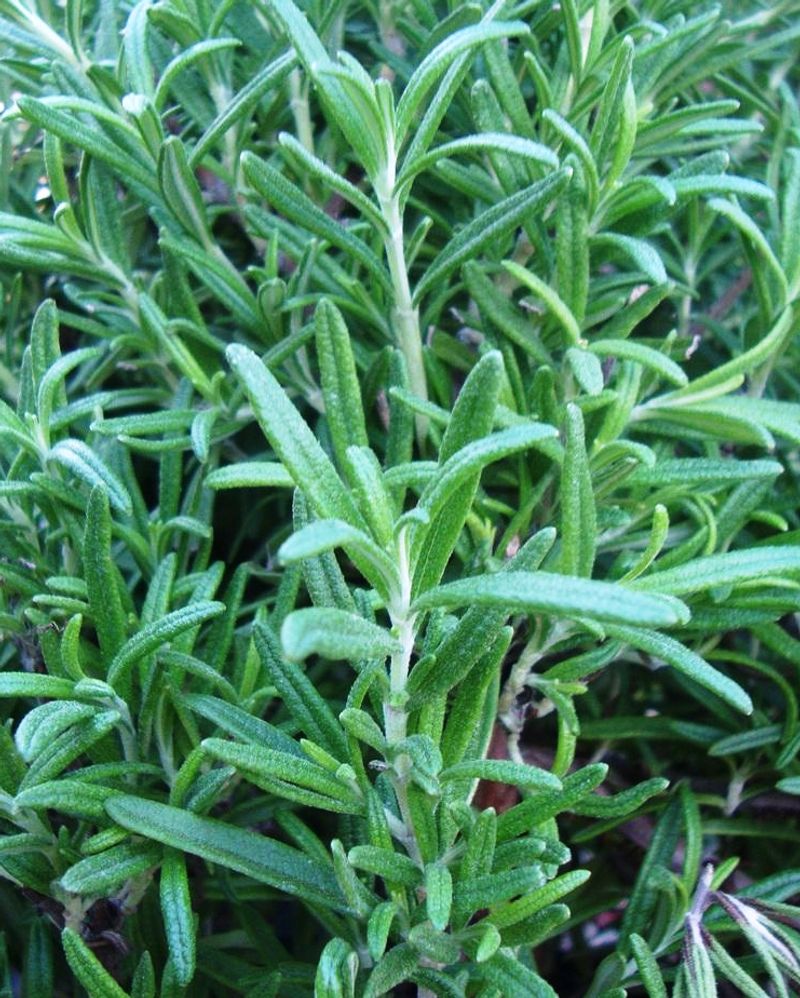
Rosemary does double duty in Florida landscapes — it looks great as an ornamental shrub and doubles as a fresh herb for the kitchen. Needle-like, silvery-green leaves release that familiar piney fragrance every time the breeze moves through the garden.
It thrives in the hot, dry conditions that Florida summers deliver routinely.
Plant rosemary in full sun with excellent drainage, and it will reward you for years. Avoid overwatering — this Mediterranean native genuinely prefers dry conditions over consistently moist soil.
Lavender
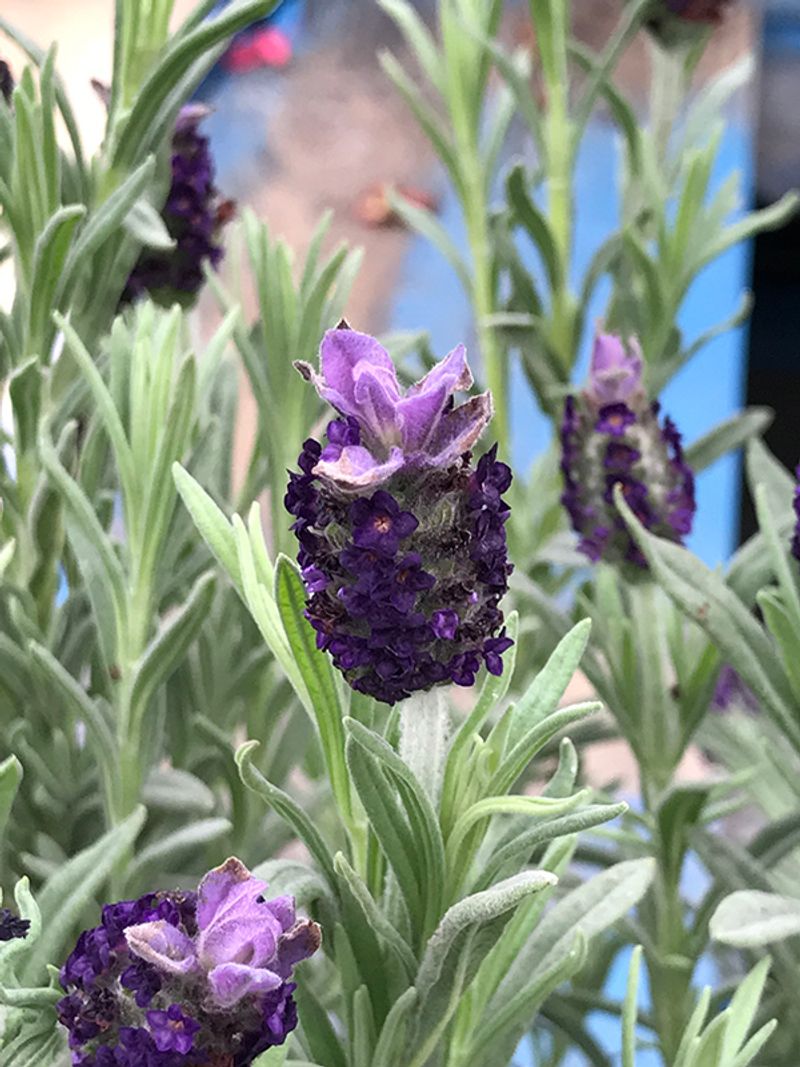
Lavender in Florida requires a bit more attention to placement than in cooler climates, but get it right and the payoff is spectacular. The soft purple flower spikes are fragrant, beautiful, and incredibly attractive to bees and butterflies.
Spanish lavender varieties tend to perform best in Florida’s heat and humidity.
Excellent drainage is the single most important factor for lavender success here. Raised beds or sandy, slightly alkaline soils give it the best chance to flourish through Florida’s steamy summers.
Society garlic
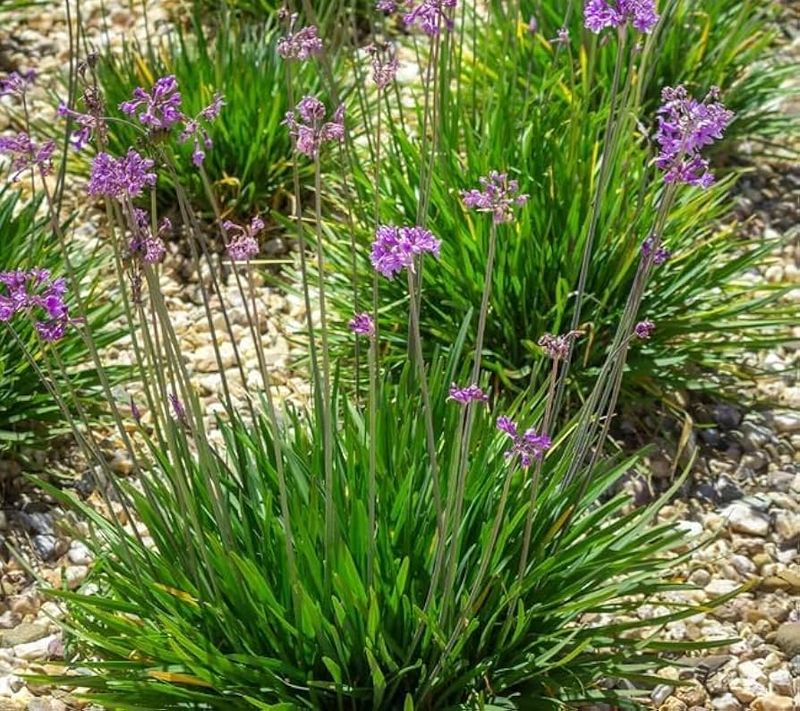
Society garlic earned its quirky name because, unlike true garlic, it will not leave you with embarrassing breath after brushing against it — though it does carry a mild garlic scent. Clusters of soft lavender-purple flowers bloom repeatedly throughout the year, making it one of Florida’s most reliable color plants.
Deer tend to leave it alone, which is a bonus.
Plant society garlic in full sun with well-drained soil. It forms attractive clumps that work beautifully as edging, mass plantings, or container specimens.
Bulbine
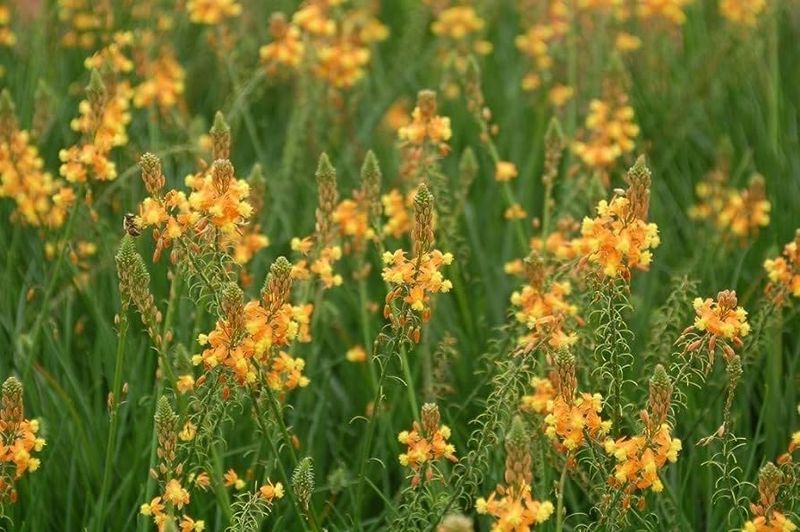
Bulbine is a succulent that moonlights as a flowering perennial, offering the best of both worlds for Florida gardeners. Slender, fleshy leaves form tidy clumps, and cheerful orange or yellow flower spikes bloom for months at a stretch.
Pollinators visit the blooms constantly, adding life and movement to the garden.
Full sun and sharp drainage are the keys to happy bulbine. It handles drought like a seasoned pro and looks especially striking when planted in sweeping drifts across sunny garden beds.
Ruellia
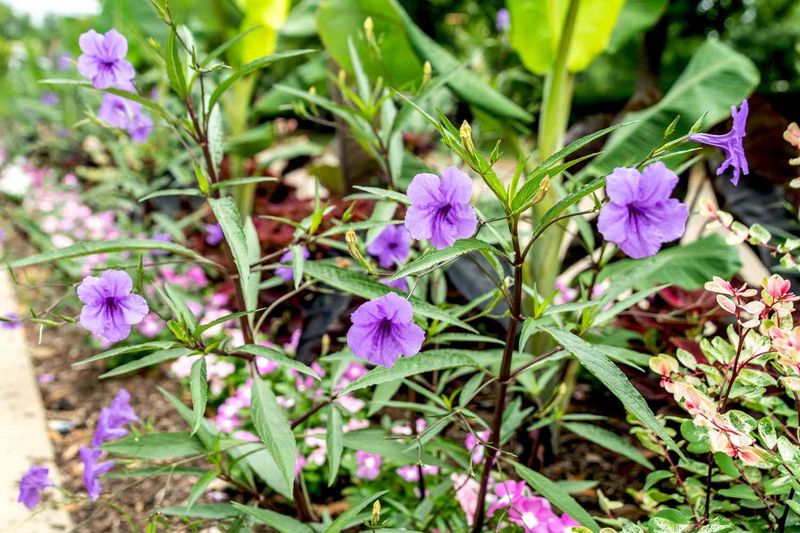
Ruellia, often called wild petunia, is a Florida native that blooms with surprising enthusiasm even when rainfall is scarce. The trumpet-shaped purple flowers open fresh each morning, attracting hummingbirds and sphinx moths that hover like tiny helicopters.
It spreads readily, filling gaps in the garden without any encouragement needed.
Choose native ruellia over non-native varieties, which can become invasive in Florida. Full sun to partial shade both work well, and established plants handle drought without any supplemental irrigation at all.
Salvia
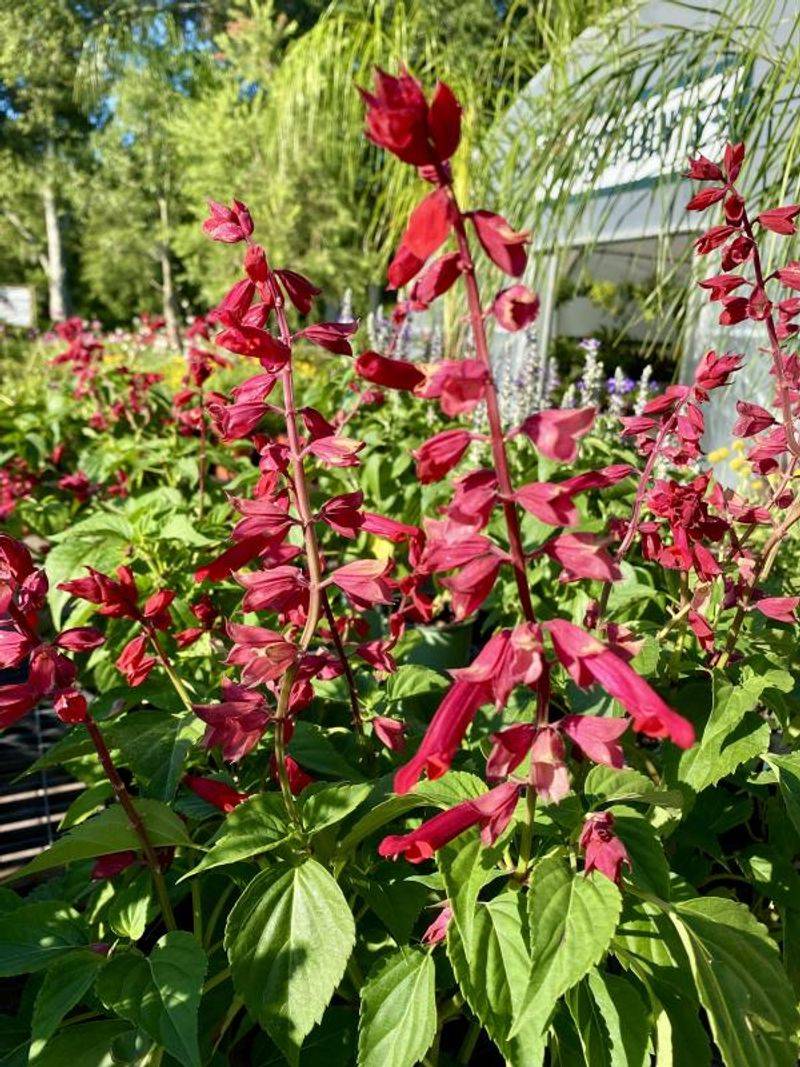
Salvia is practically the MVP of the Florida pollinator garden — hummingbirds, bees, and butterflies all compete for its nectar-rich flower spikes. Dozens of species and varieties thrive in Florida’s climate, ranging from compact bedding types to tall, shrubby specimens with electric blue or deep red blooms.
Most handle dry spells remarkably well once established.
Plant salvia in full sun with well-drained soil for the strongest performance. Regular deadheading or light shearing keeps the blooms coming from spring all the way through the first cool nights of fall.
Enjoyed this story?
Add Fast Food Club as a preferred source to see more of our reporting on Google.