


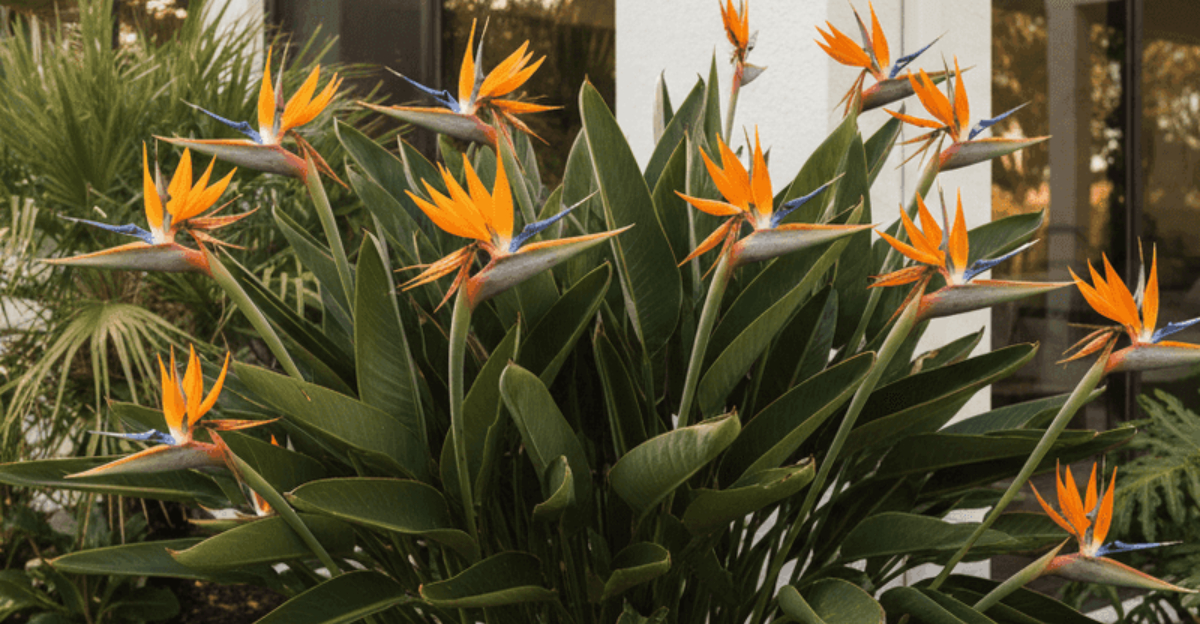
Florida’s warm climate and sunny skies make it one of the best places to grow a stunning backyard garden. Whether you have a small patio or a sprawling yard, the right plants can turn any outdoor space into a tropical paradise.
Choosing plants that thrive in Florida’s heat, humidity, and occasional drought means less work and more beauty. Get ready to discover 23 amazing plants that will transform your backyard into the lush retreat you have always dreamed of.
Bird of Paradise
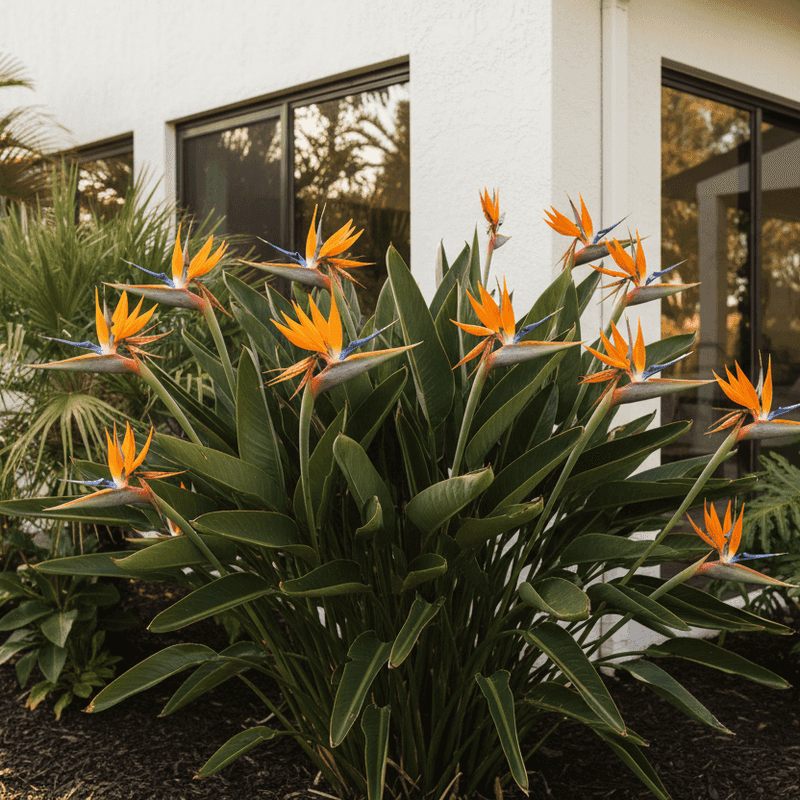
Few plants command attention quite like the bird of paradise. Its bold orange and blue blooms look like exotic tropical birds perched on tall green stems, making it an instant conversation starter in any yard.
Native to South Africa, this showstopper loves Florida’s full sun and well-drained soil. Water it regularly while it establishes, then enjoy how drought-tolerant it becomes.
Plant it as a bold focal point near a pool or patio for maximum wow factor.
Areca Palm
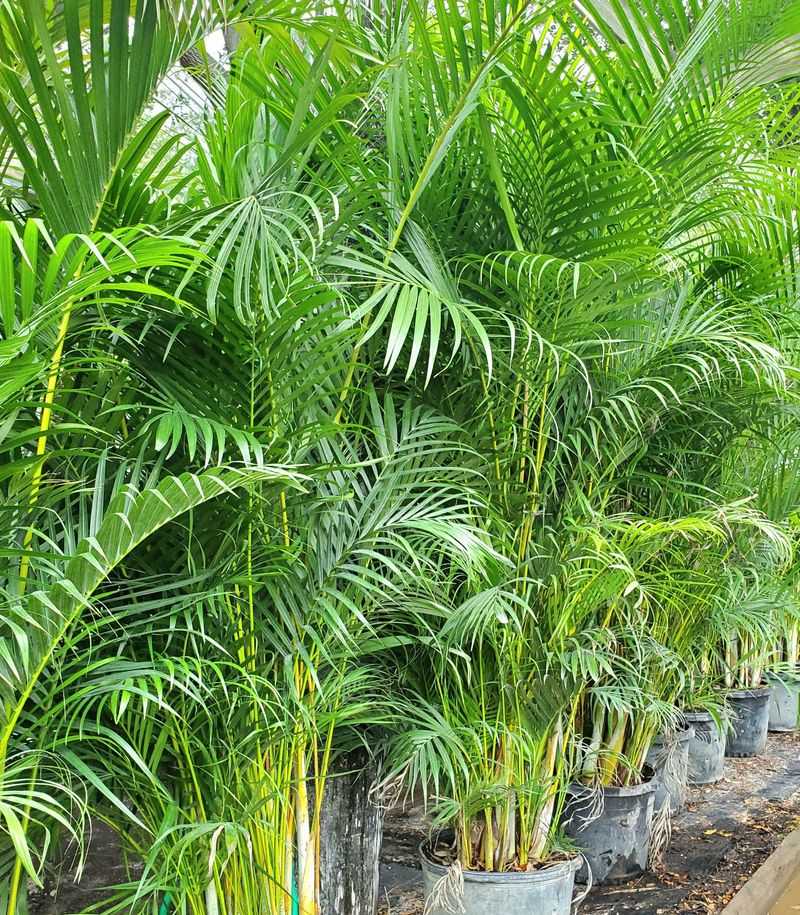
Want instant tropical vibes without a lot of fuss? The areca palm delivers lush, feathery fronds that sway gracefully in the breeze, giving your backyard that resort-style feel you crave.
This fast-growing palm thrives in Florida’s heat and handles both sun and partial shade beautifully. It works especially well as a privacy screen along fences or property lines.
Plant a row of areca palms and watch your yard transform into a secluded tropical escape within just a couple of seasons.
Lady Palm
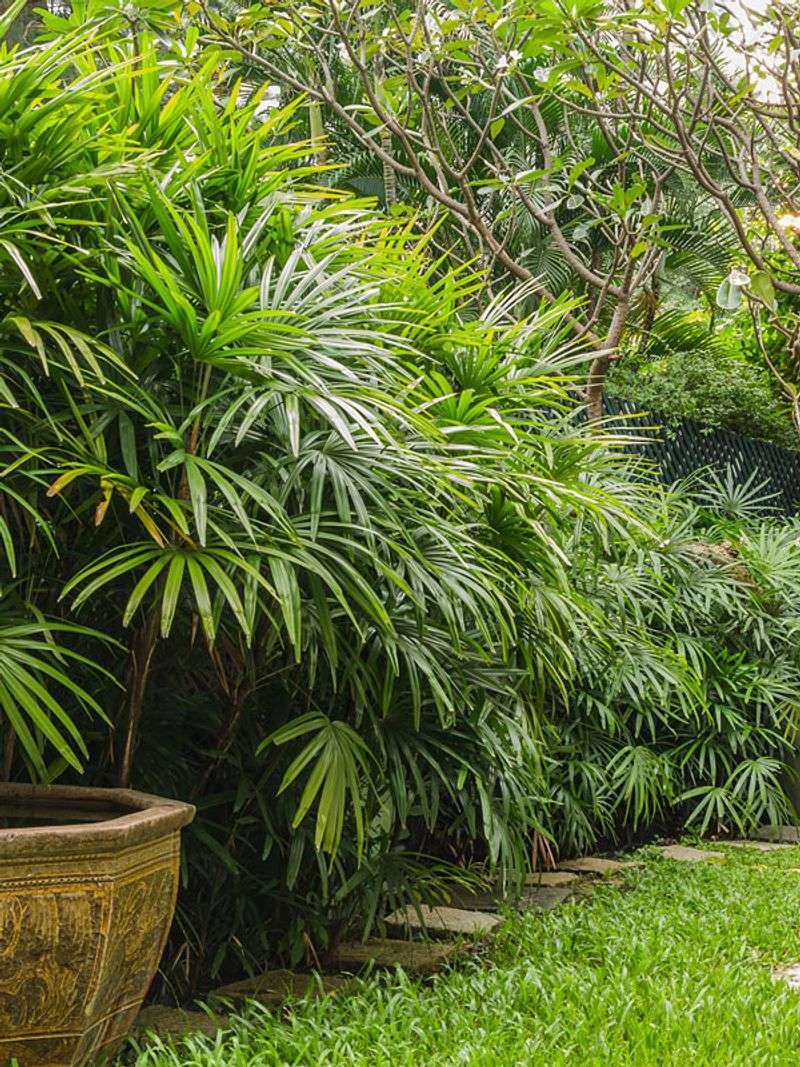
Shady corners of your yard do not have to look dull. The lady palm is a slow-growing, elegant plant that thrives in low-light conditions, making it perfect for spots under large trees or covered patios.
Its glossy, fan-shaped fronds bring a sophisticated tropical look without demanding much attention. Lady palms are also known for being excellent air purifiers, which is a nice bonus.
They stay relatively compact, so they work well in smaller Florida yards where space is a consideration.
Croton
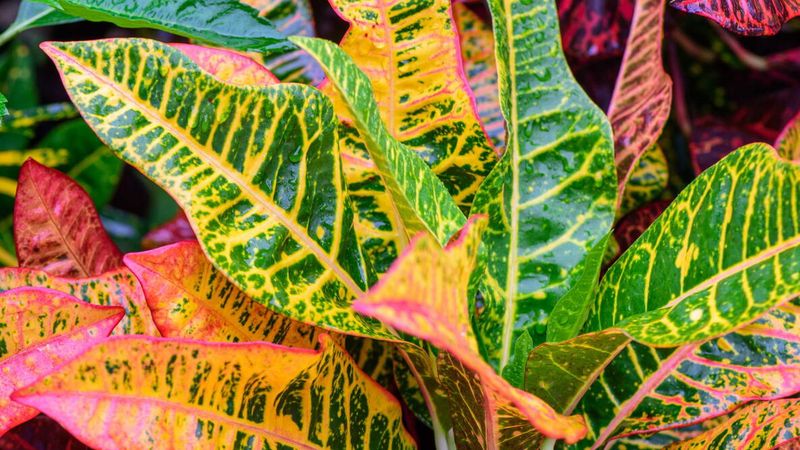
If your garden feels like it is missing some color, croton is here to fix that in the most spectacular way. Its leaves burst with shades of red, orange, yellow, and green all at once, creating a living work of art right in your yard.
Crotons love Florida’s sunshine and actually develop more vivid colors the more sun they receive. Use them as bold border plants or mix them into tropical container arrangements.
They are surprisingly low-maintenance once established in warm, humid conditions.
Ti Plant
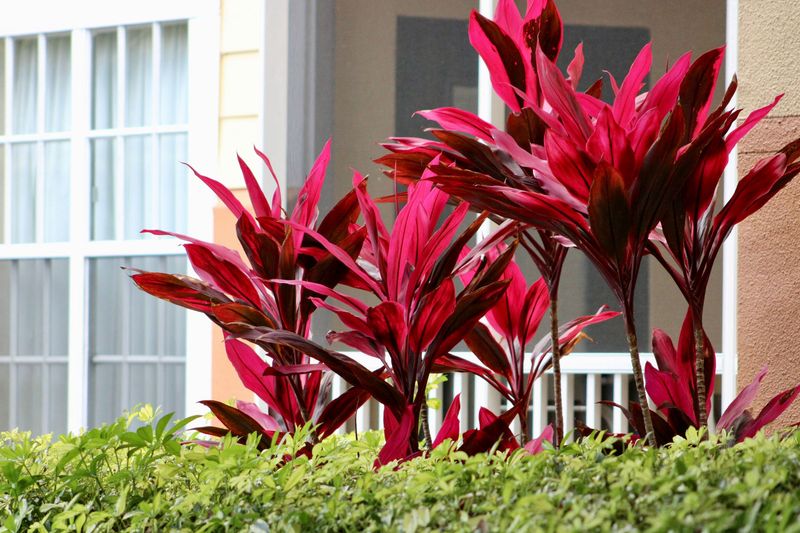
With sword-shaped leaves in shades of deep red, purple, and burgundy, the ti plant looks like something straight out of a fantasy garden. Polynesian cultures have long considered it a symbol of good luck, so planting one might bring more than just beauty to your backyard.
Ti plants thrive in Florida’s warm, humid climate and grow well in both sun and partial shade. They add dramatic vertical interest to garden beds and look stunning when paired with lighter-colored tropical plants nearby.
Philodendron
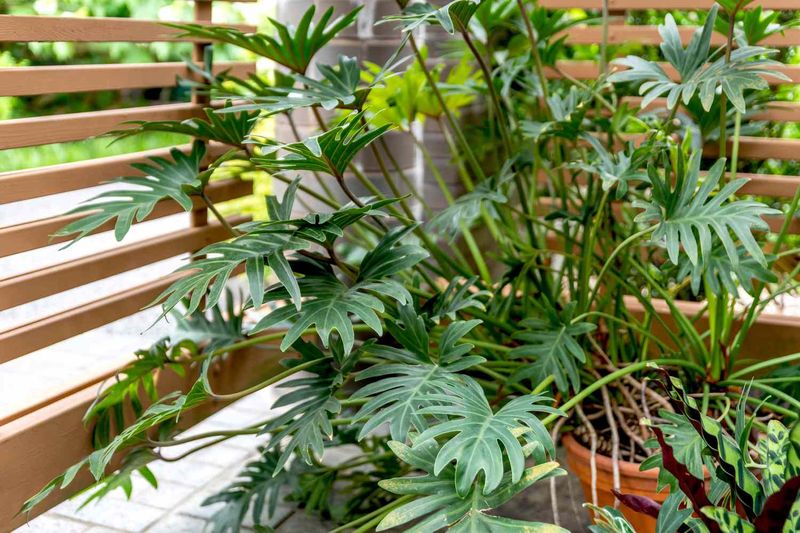
Philodendrons are the easygoing friends of the plant world. They adapt to almost any light condition, grow quickly, and fill garden spaces with lush, glossy greenery that instantly makes a yard feel more alive and tropical.
Florida’s warm temperatures allow philodendrons to grow outdoors year-round, which is a major advantage over cooler climates. Climbing varieties can be trained up trees or trellises for a dramatic jungle effect.
Ground varieties spread beautifully as dense, low-maintenance ground cover under taller palms or shade trees.
Monstera
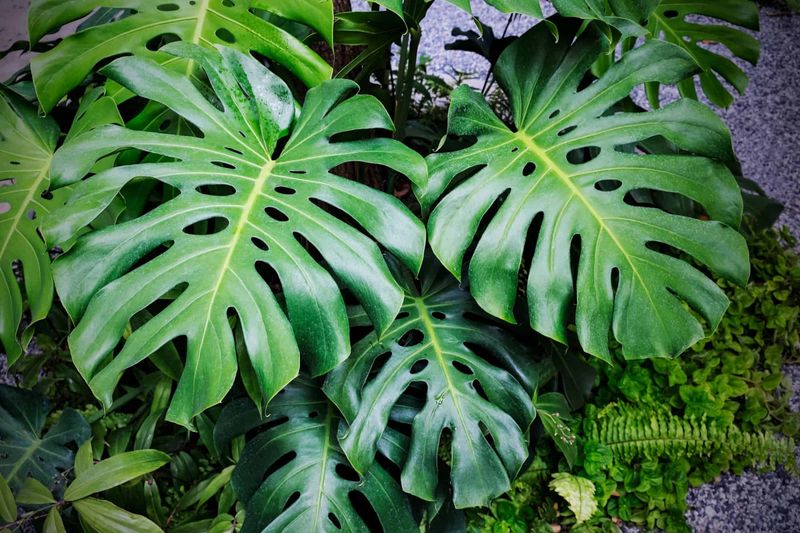
Monstera is practically the mascot of tropical plant lovers everywhere, and for good reason. Those iconic split leaves look bold and architectural, bringing serious jungle energy to patios, garden corners, and shaded beds throughout Florida yards.
Outdoors in Florida, monstera can grow to impressive sizes, with leaves reaching over a foot wide in ideal conditions. It prefers filtered light and moist, well-draining soil.
Give it something to climb, like a tree trunk or garden stake, and watch it become a jaw-dropping backyard centerpiece over time.
Shell Ginger
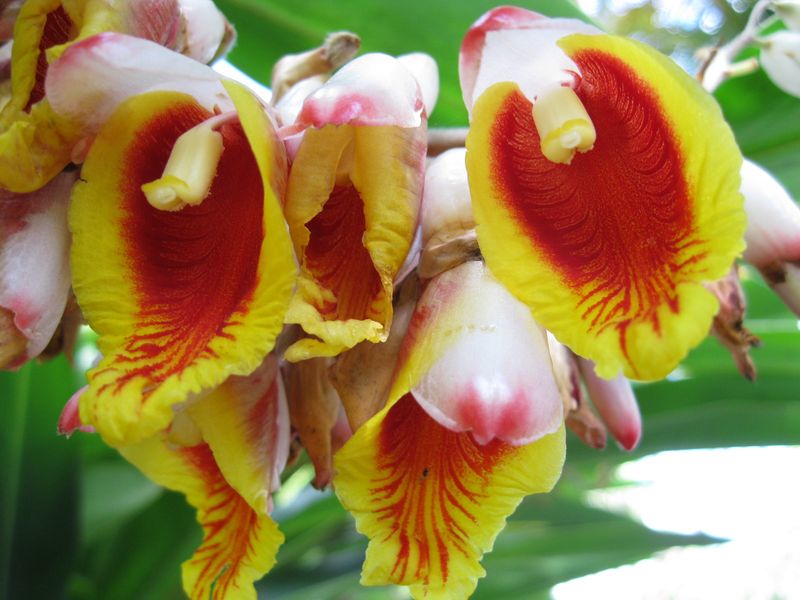
Shell ginger earns its name from the beautiful clusters of white and pink flowers that dangle like tiny seashells from arching stems. Beyond its blooms, this plant brings bold tropical texture with its large, lance-shaped leaves that look lush all year long.
It grows happily in Florida’s partial shade and humid conditions, making it ideal for woodland-style garden beds. Shell ginger also spreads gradually over time, filling empty spaces with minimal effort.
Butterflies and hummingbirds are drawn to its flowers, adding welcome wildlife to your retreat.
Variegated Ginger
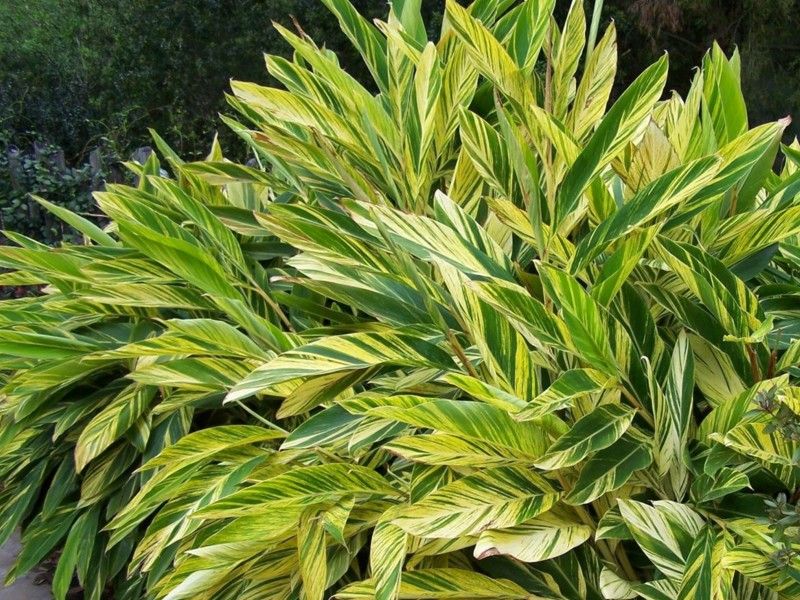
Striped green and white leaves make variegated ginger one of the most eye-catching foliage plants you can grow in a Florida backyard. Even without flowers, the bold leaf pattern alone creates a dramatic tropical statement in garden beds and borders.
This plant thrives in partial shade and moist soil, conditions that are easy to find in many Florida yards. It spreads gradually through underground rhizomes, slowly filling in spaces over time.
Pair it with darker-leaved plants like ti plant or philodendron for a striking color contrast that really pops.
Bromeliads
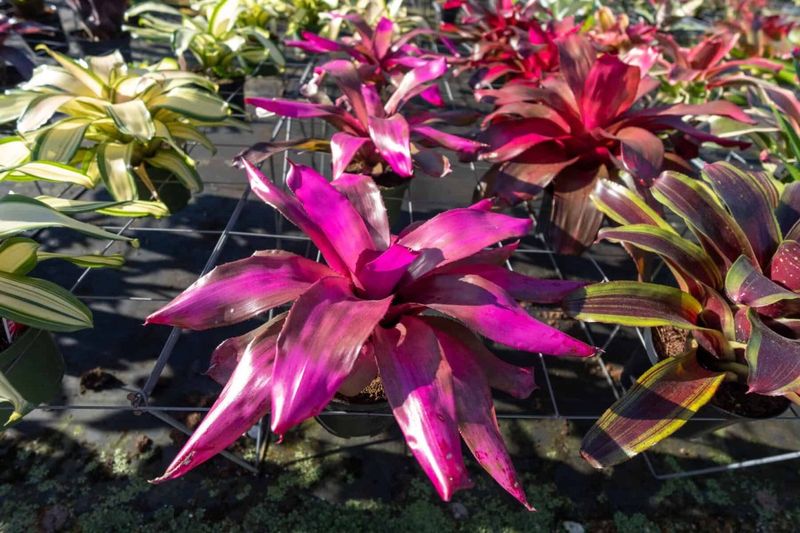
Bromeliads are basically the life of the garden party. They come in a rainbow of colors, from fiery reds and oranges to soft pinks and purples, and their unique rosette shapes add sculptural interest unlike almost any other plant.
Florida’s climate is ideal for bromeliads, which can grow as ground plants, in containers, or even mounted on trees. They require very little soil and minimal watering, making them one of the easiest tropical plants to maintain.
Many varieties also produce stunning flower spikes that last for months at a time.
Elephant Ear
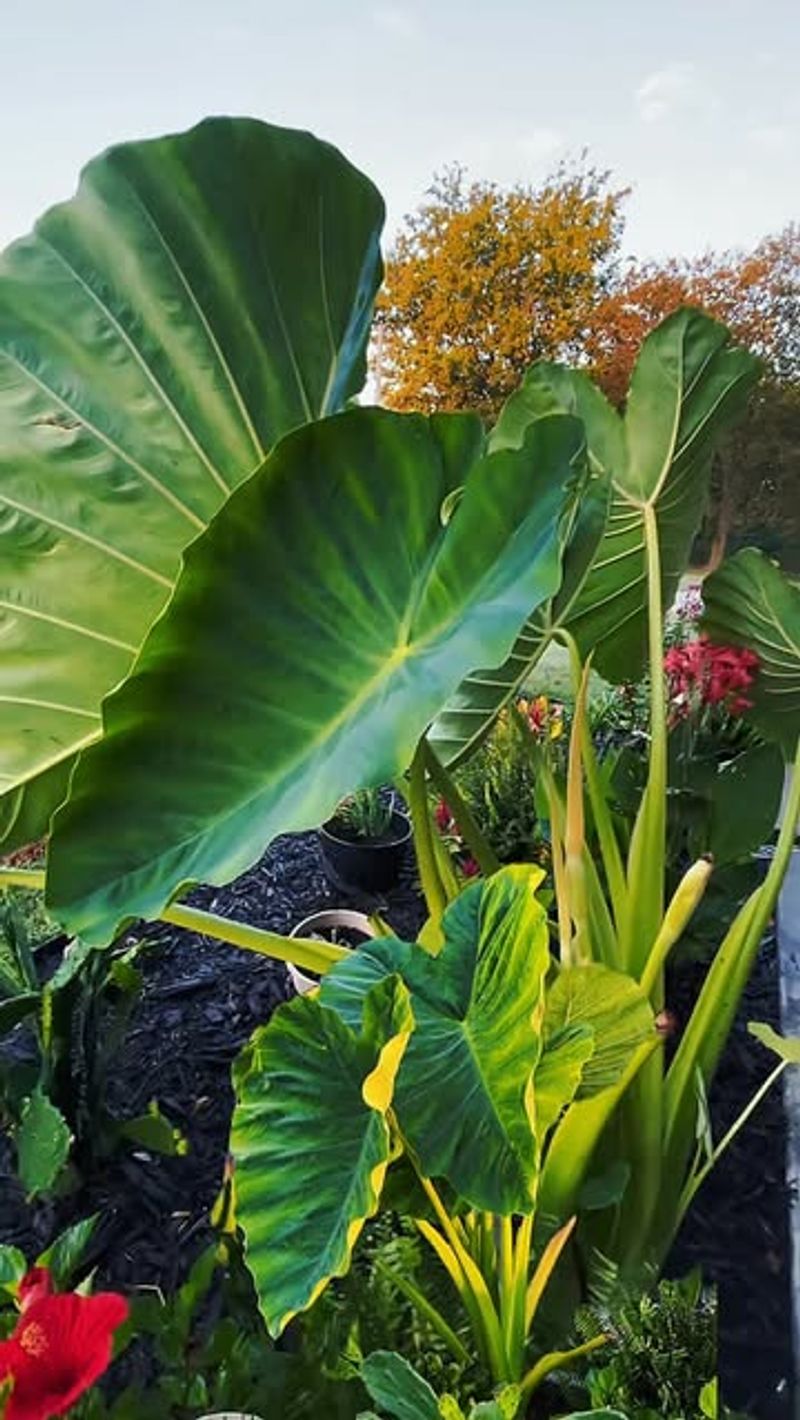
Nothing says dramatic tropical garden quite like elephant ear. These plants produce some of the largest leaves in the gardening world, sometimes growing over three feet wide, creating an instant jungle atmosphere in any Florida backyard space.
Elephant ears love moisture and thrive near ponds, rain gardens, or any spot that stays consistently damp. They grow fast, which means you will see results quickly after planting.
Use them as bold background plants behind shorter flowers or ground covers to create layered, lush garden scenes with real visual depth.
Hibiscus
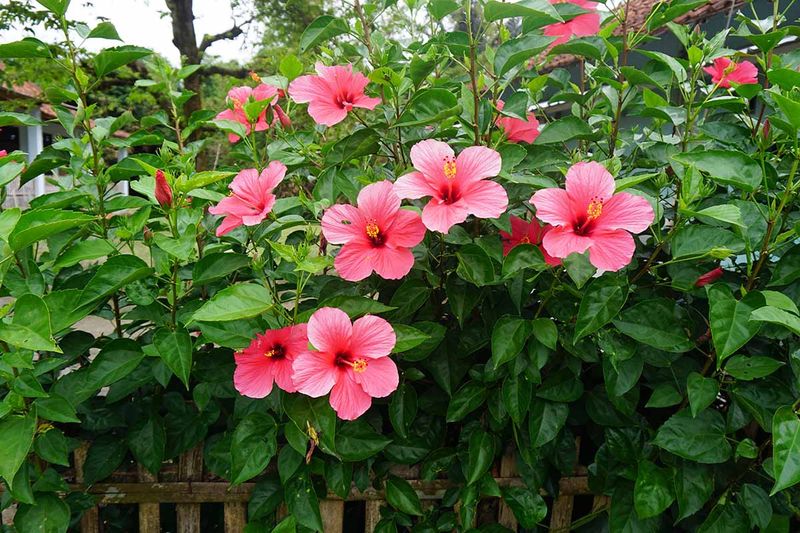
Hibiscus is practically the official flower of Florida’s tropical garden scene. Its enormous, showy blooms in shades of red, pink, yellow, and coral open fresh every morning, creating a cheerful burst of color that signals warm, sunny days ahead.
Tropical hibiscus varieties thrive in Florida’s heat and bloom almost continuously throughout the year. They attract hummingbirds and butterflies like a magnet, adding lively movement to your outdoor retreat.
Plant them in full sun with regular fertilizing and watch them reward you with an almost endless parade of gorgeous flowers.
Plumeria
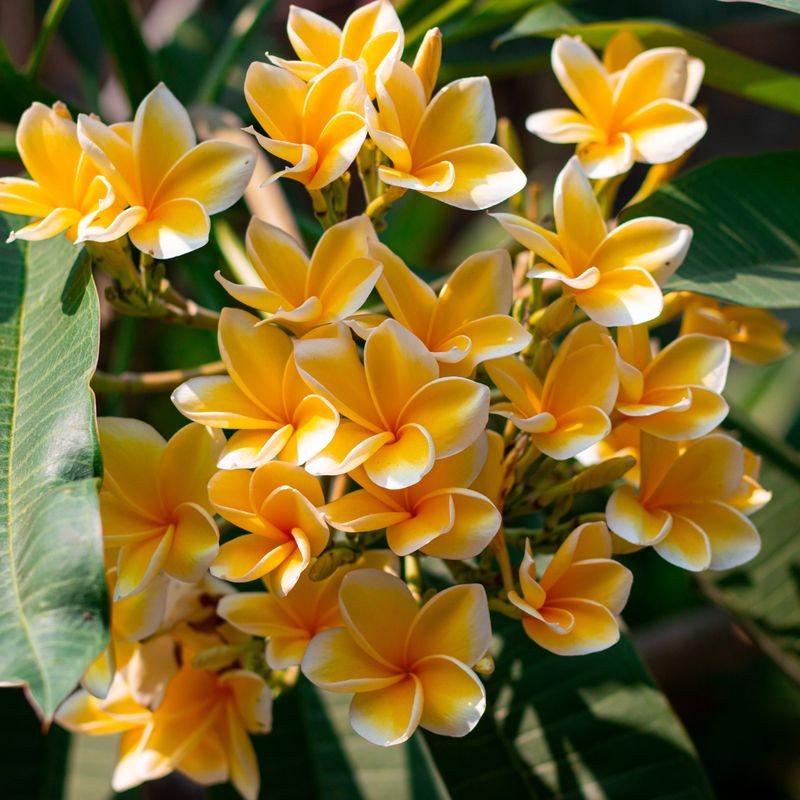
Close your eyes and imagine the scent of a Hawaiian lei. That sweet, intoxicating fragrance comes from plumeria, a tree that grows beautifully in Florida’s warm climate and brings serious island energy to any backyard garden.
Plumeria produces clusters of waxy flowers in white, yellow, pink, and red throughout the warm months. It is surprisingly drought-tolerant once established and prefers well-drained soil and full sun.
During winter, it drops its leaves and goes dormant, but it bounces back with enthusiasm every spring, ready to perfume your yard all over again.
Ixora
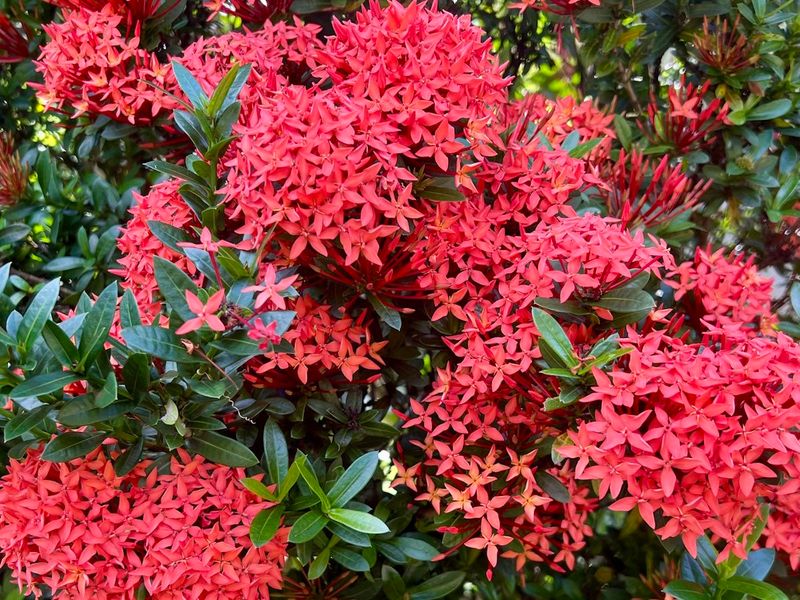
Ixora is one of those plants that just keeps on giving. Its tight clusters of tiny flowers bloom almost year-round in Florida, covering the shrub in a blanket of red, orange, pink, or yellow that brightens up any garden border or foundation planting.
This tropical shrub loves the heat and humidity that Florida delivers in abundance. It grows well in full sun to partial shade and responds beautifully to light pruning, which keeps it compact and encourages even more blooms.
Butterflies absolutely adore it, making your yard feel like a living nature sanctuary.
Coontie
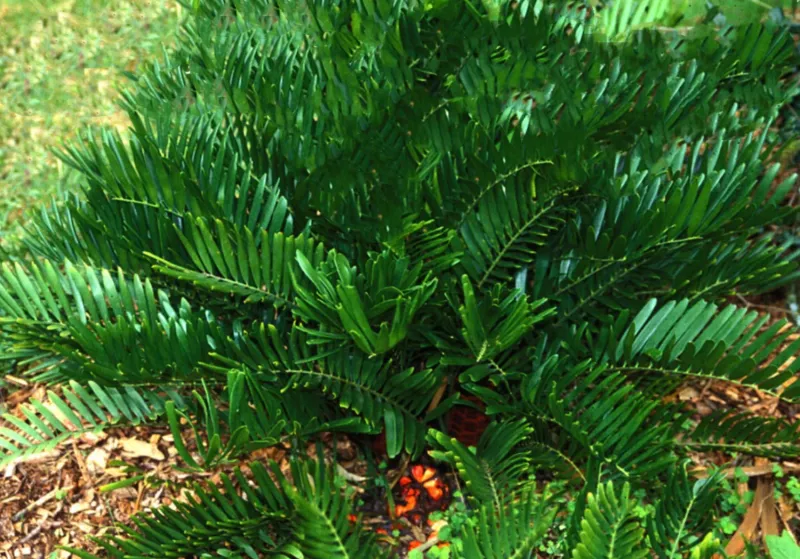
Meet Florida’s very own prehistoric plant. Coontie is a native cycad that has been growing in Florida for thousands of years, long before gardens even existed, and it brings a rugged, ancient beauty to modern backyard landscapes.
It is incredibly tough, handling drought, poor soil, and even some shade without complaint. Coontie is also the only host plant for the beautiful atala butterfly, making it an ecologically important addition to any yard.
Its dark green, feathery fronds stay attractive year-round, requiring almost zero maintenance from you.
Muhly Grass
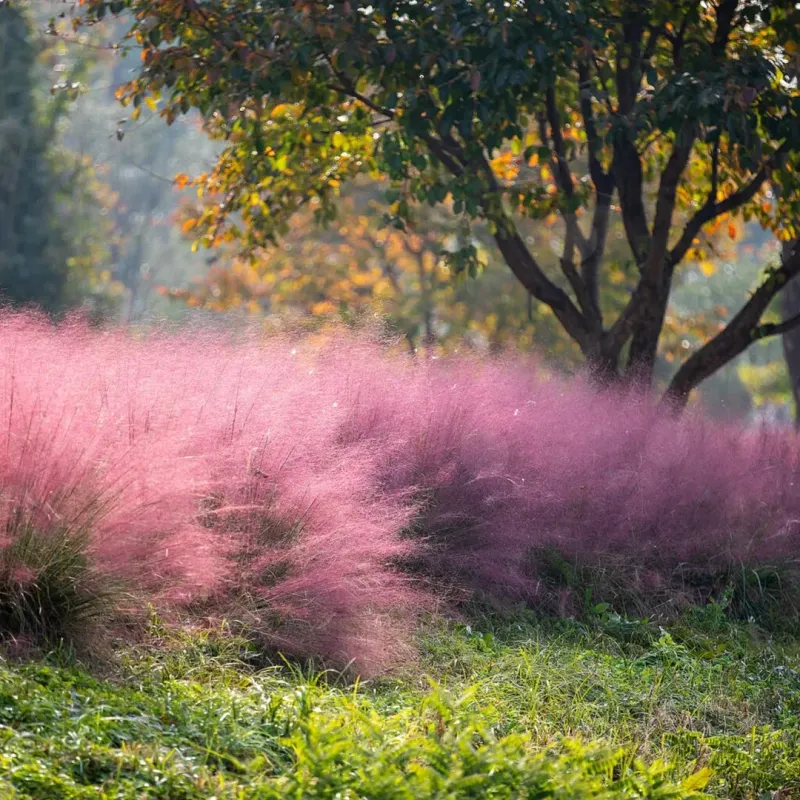
Every fall, muhly grass puts on one of Florida’s most breathtaking garden shows. Clouds of soft, rosy-pink plumes emerge from the grass clumps and sway in the breeze like something out of a fairy tale, catching the light in the most magical way.
Beyond its seasonal spectacle, muhly grass is a rock-solid Florida native that handles heat, drought, and sandy soil like a champion. It grows in neat clumps that stay attractive even when not in bloom.
Plant it in mass groupings for the biggest visual impact in your backyard retreat.
Simpson’s Stopper
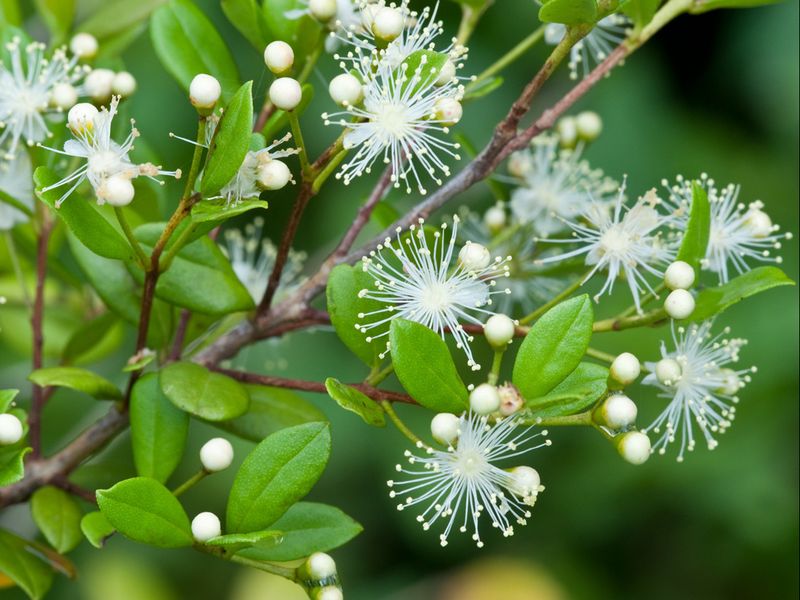
Simpson’s stopper might have an unusual name, but it is one of Florida’s most underrated native shrubs. Delicate white flowers appear throughout the year, followed by bright red berries that birds absolutely cannot resist, turning your yard into a popular wildlife dining spot.
This tough native handles drought, salt air, and partial shade, making it incredibly versatile in Florida landscapes. It can be grown as a specimen shrub, trimmed into a hedge, or left to grow naturally for a relaxed, wild look.
Its year-round interest makes it a reliable backbone plant for any Florida garden.
Walter’s Viburnum
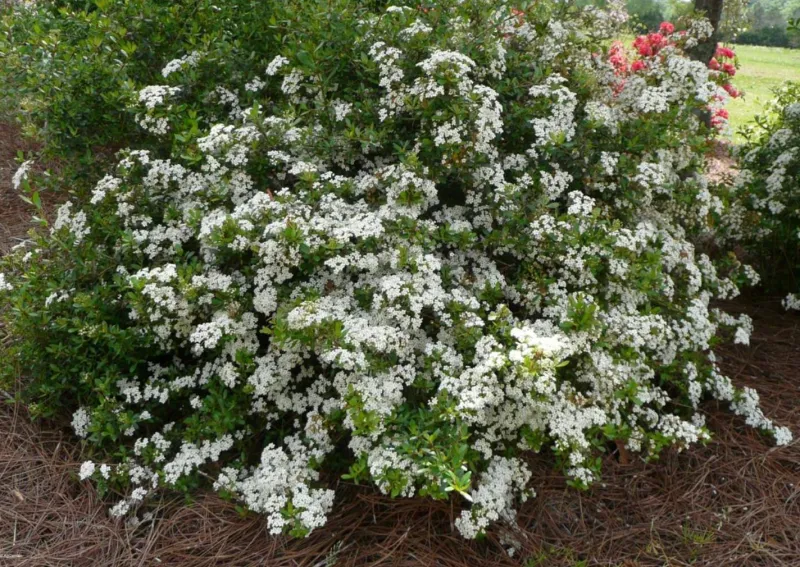
Walter’s viburnum is a Florida native that works overtime for your garden. In spring, it explodes with clusters of small white flowers that attract pollinators by the dozens.
Then, as the season progresses, those flowers give way to dark berries that songbirds eagerly devour.
Tough and adaptable, this shrub tolerates a range of soil types and light conditions, from full sun to partial shade. It grows fairly quickly into a dense, attractive screen or hedge.
Gardeners who want beauty, wildlife value, and low maintenance all in one plant will find Walter’s viburnum hard to beat.
Firespike
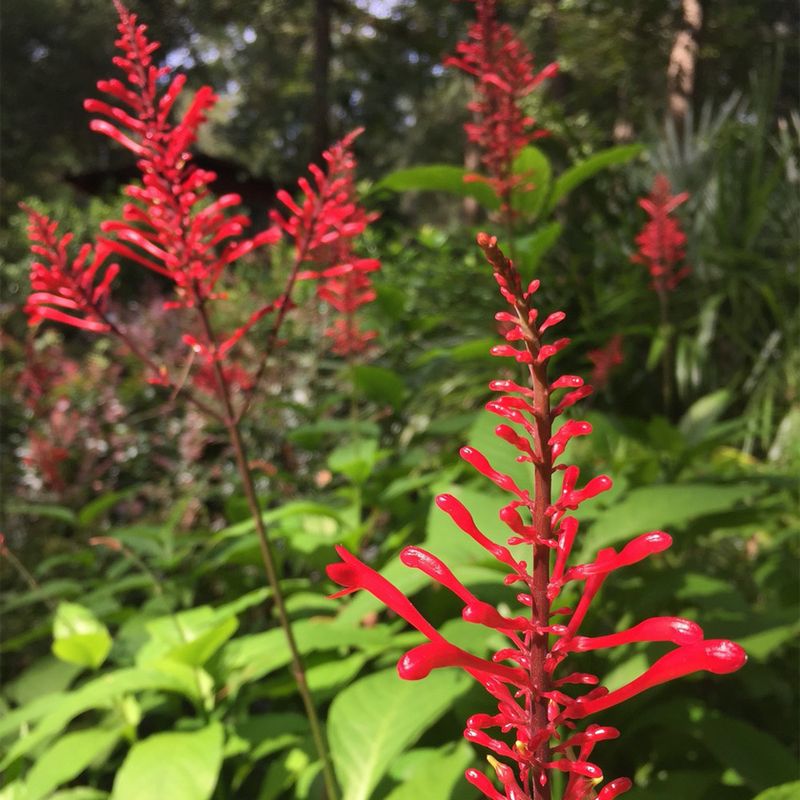
Hummingbirds will practically line up outside your yard once you plant firespike. This bold Florida-friendly perennial produces tall spikes of brilliant scarlet tubular flowers that hummingbirds and butterflies find completely irresistible throughout the warm season.
Firespike thrives in partial to full shade, which makes it a fantastic solution for those darker corners of the yard where other flowering plants tend to struggle. It grows quickly and spreads over time, filling shady beds with vivid color.
Cut it back occasionally to keep it tidy and encourage fresh, vibrant new growth.
Cordyline
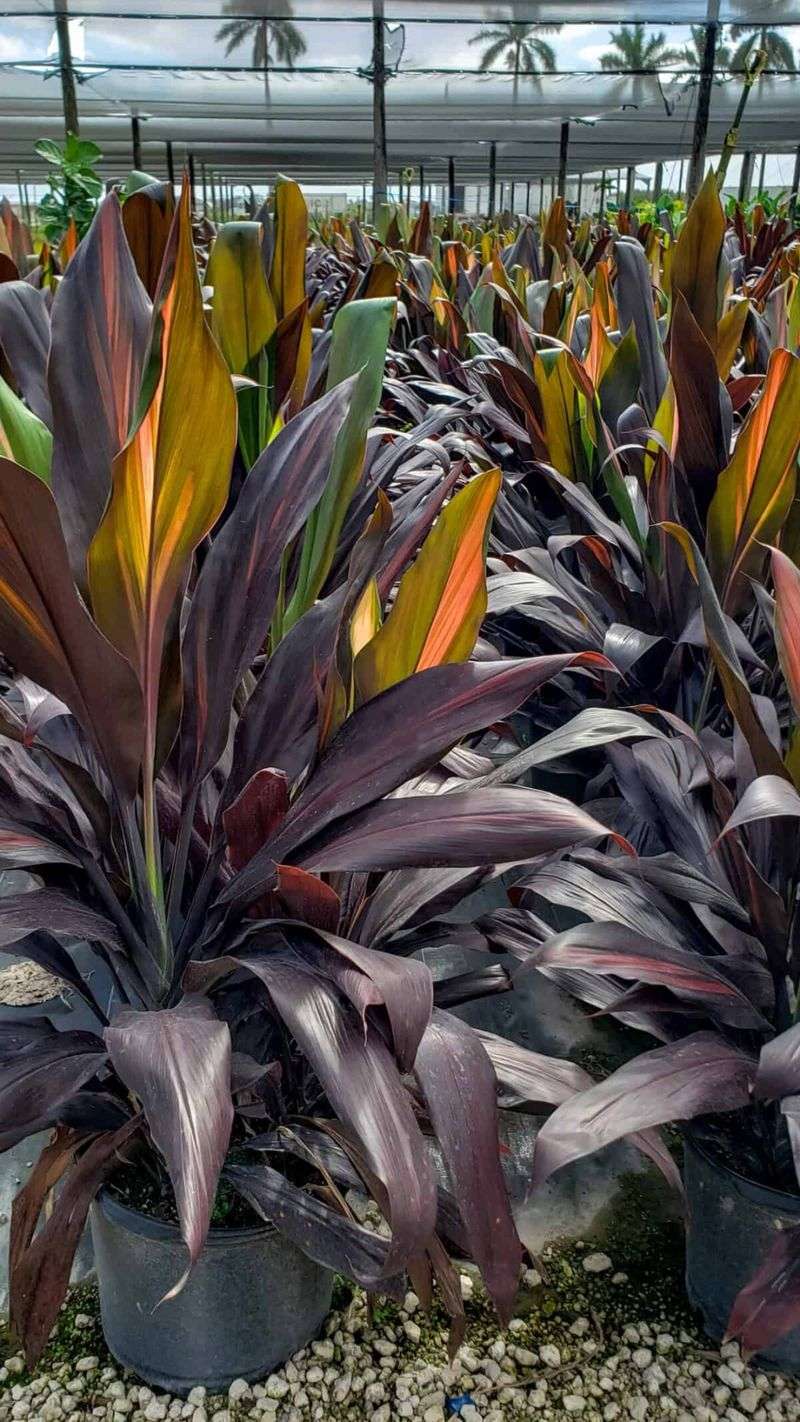
Cordyline brings a punky, architectural energy to tropical garden designs that few other plants can match. Its long, sword-shaped leaves come in shades of red, purple, green, and pink, creating bold vertical accents that draw the eye upward and add drama to any planting scheme.
Often confused with the ti plant, cordyline is its own distinct beauty with slightly different leaf textures and growth habits. It thrives in Florida’s warmth and handles both sun and partial shade comfortably.
Use it as a striking container plant on patios or as an accent among lower-growing tropical ground covers.
Jatropha
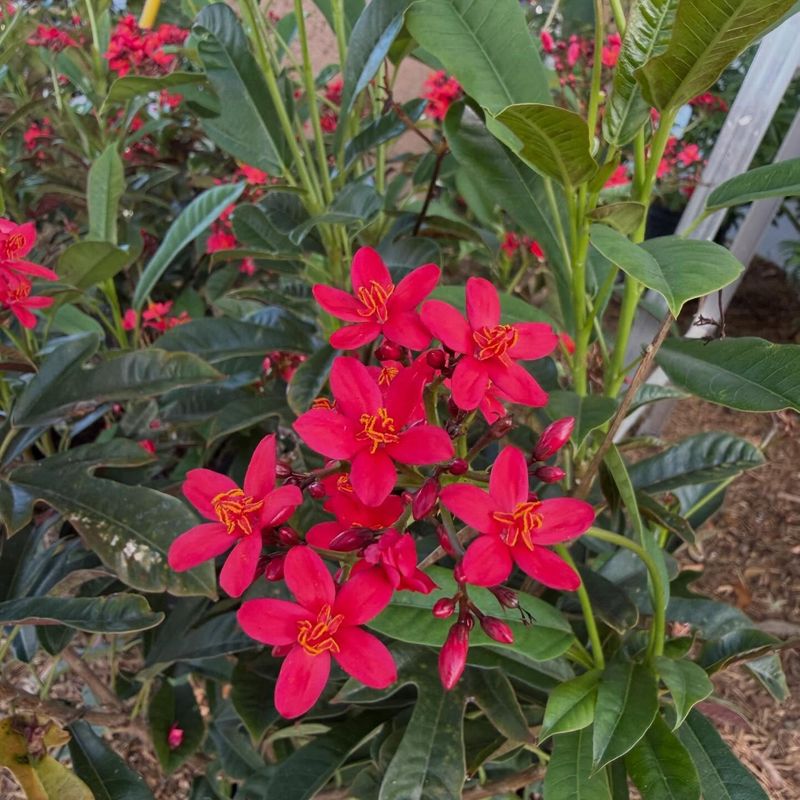
Jatropha is one of those rare plants that blooms almost non-stop in Florida, making it an incredibly rewarding addition to any backyard garden. Its clusters of small, bright red star-shaped flowers pop against lush green foliage and attract butterflies and hummingbirds throughout the year.
This tropical shrub loves full sun and well-drained soil, thriving in the same warm conditions that make Florida summers feel intense. It is also quite drought-tolerant once established, which is great news for gardeners who prefer plants that do not demand constant watering attention.
Dwarf Palmetto
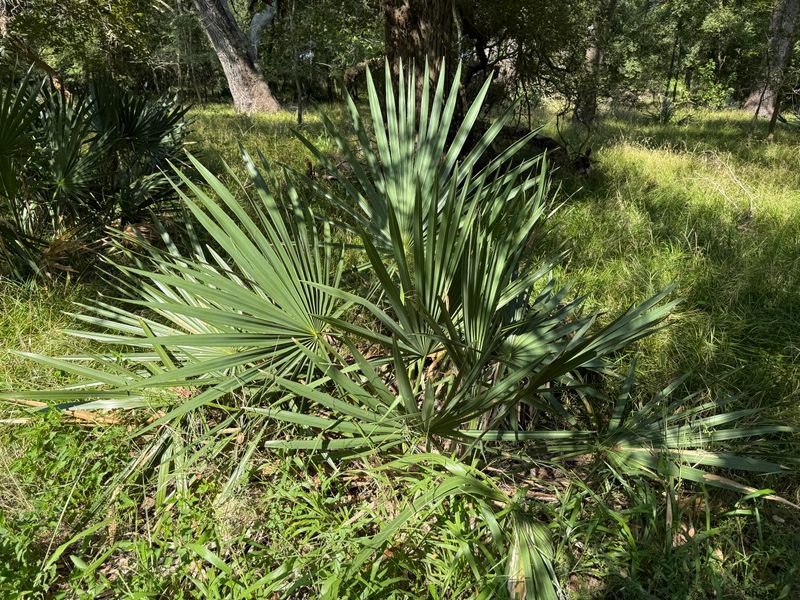
Florida has a deep relationship with palms, and the dwarf palmetto is one of the most charming members of that family. Unlike towering palms that dominate the skyline, this compact native stays low to the ground, forming beautiful clusters of fan-shaped blue-green fronds that look stunning in natural garden settings.
It is incredibly hardy, handling drought, flooding, salt spray, and even fire with remarkable resilience. Wildlife love it too, as birds and mammals rely on its fruits and sheltered fronds for food and cover.
For a truly Florida-authentic backyard, dwarf palmetto is an essential and rewarding choice.
Firebush
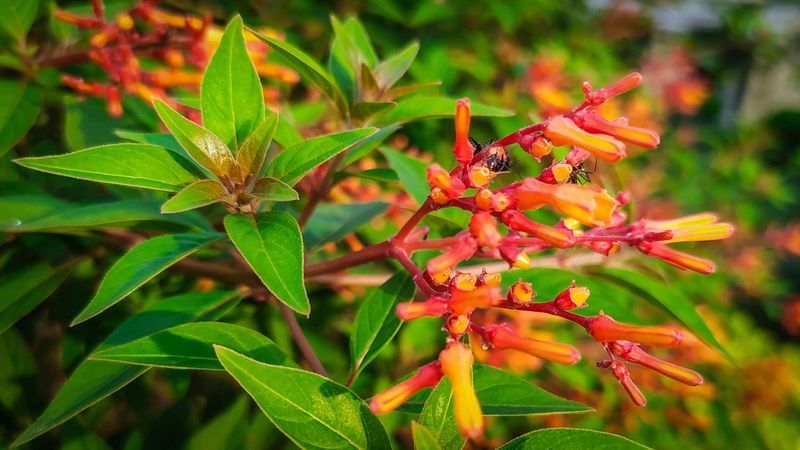
Firebush lives up to its blazing name with clusters of tubular orange-red flowers that light up the garden from summer through fall. It is one of the top butterfly and hummingbird magnets you can plant in a Florida backyard, drawing pollinators in remarkable numbers on warm sunny days.
As a Florida native, firebush is tough, fast-growing, and extremely heat-tolerant, asking very little in return for its spectacular performance. It works beautifully as a large shrub, informal hedge, or wildlife garden anchor plant.
Cut it back hard in late winter to keep it full, bushy, and ready to bloom again.
Enjoyed this story?
Add Fast Food Club as a preferred source to see more of our reporting on Google.