


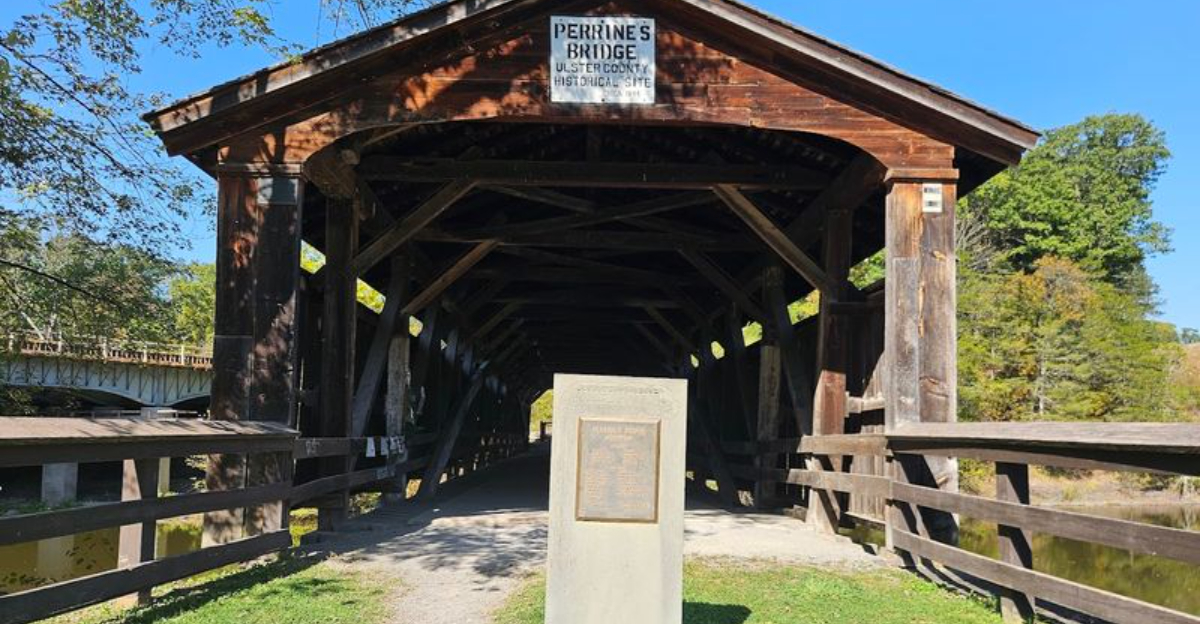
Tucked away along NY-213 in Ulster County, New York, sits one of the most charming and overlooked historical treasures in the entire state — Perrine’s Covered Bridge. Built over the Wallkill River, this stunning wooden structure has stood the test of time for more than 200 years.
Most people drive right past it on the nearby highway without ever realizing it exists. Once you know about it, though, a visit to this hidden gem is absolutely worth your time.
The Second Oldest Covered Bridge in New York State
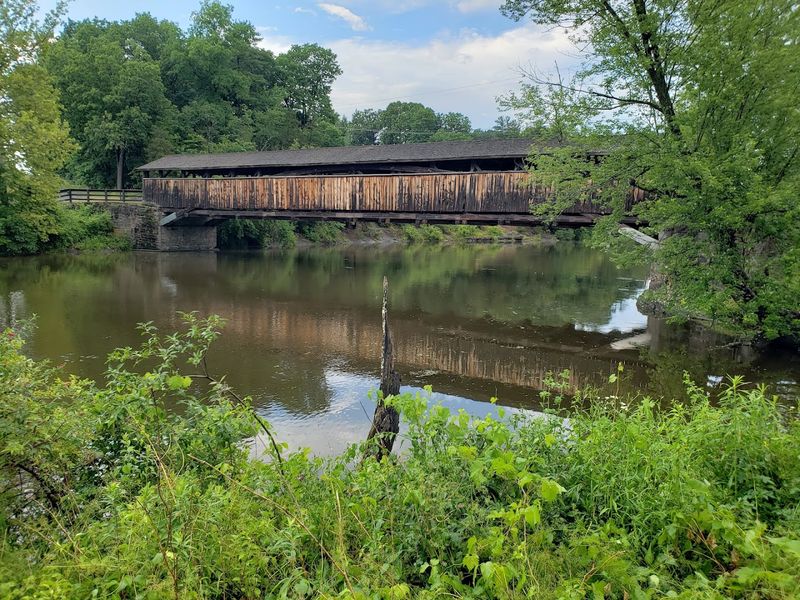
Few things carry the weight of history quite like a structure that has survived two centuries of storms, floods, and changing times. Perrine’s Covered Bridge holds the impressive title of being the second oldest covered bridge in all of New York State, making it a genuine piece of living history.
Built in the early 1800s, this bridge has watched generations of people pass through its wooden walls. That kind of age is rare and remarkable, especially for a wooden structure exposed to the elements year after year.
When you walk through it, you are literally stepping into a piece of New York’s past. History buffs, architecture lovers, and curious families alike will find something deeply satisfying about standing inside a bridge that has outlasted so much of the modern world around it.
Named After a Local Tavern Owner — James Perrine
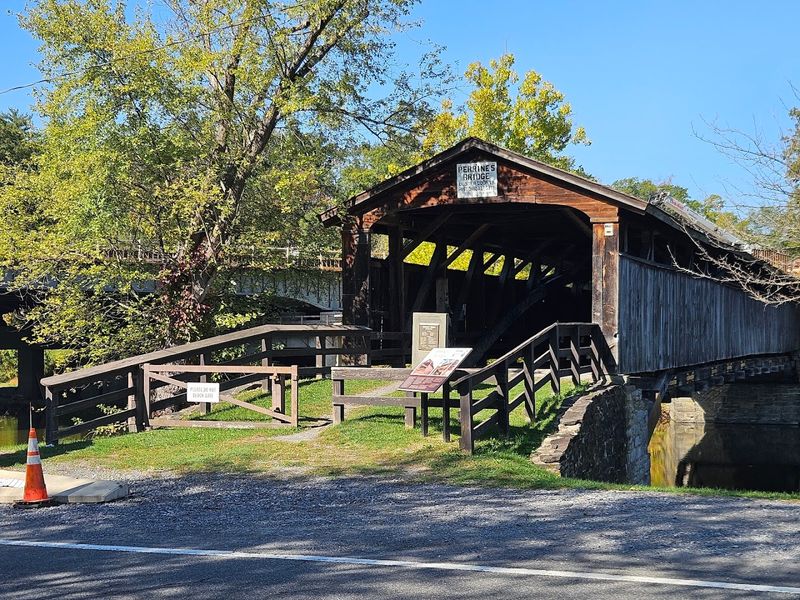
Every great landmark has a story behind its name, and Perrine’s Covered Bridge is no different. The bridge was named after James Perrine, a local man who owned a tavern and hotel near the bridge site back in the 1800s.
Back in those days, taverns were community hubs — places where travelers stopped to rest, eat, and swap stories. James Perrine’s establishment must have been a lively spot right along this well-traveled crossing.
It is a charming detail that adds a human element to the bridge’s history. Rather than being named after a politician or a war hero, this bridge honors an everyday businessman who served his community.
That connection to ordinary 19th-century life makes visiting the bridge feel even more personal and grounded in real local heritage.
A Stunning 154-Foot Single Span Over the Wallkill River
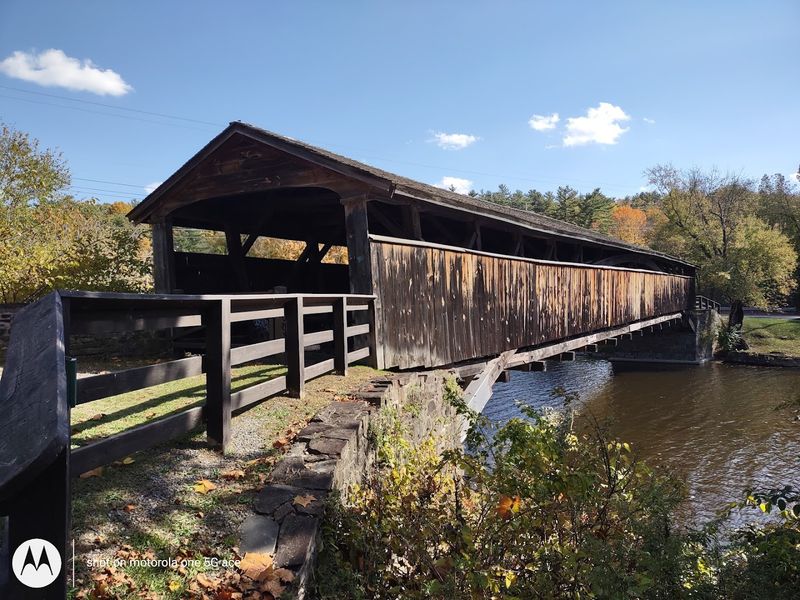
Stretching an impressive 154 feet across the Wallkill River, Perrine’s Covered Bridge is no small feat of engineering. For a wooden bridge built without modern machinery or materials, that single-span length is genuinely jaw-dropping.
A single-span design means the bridge crosses the river in one uninterrupted stretch, with no support pillars rising from the water below. This approach required careful planning and expert craftsmanship from the builders of that era.
Standing at either end and looking through the tunnel-like interior, you get a real sense of just how long and impressive this structure truly is. The Wallkill River flows peacefully beneath it, adding to the picturesque scene.
Whether you are crossing on foot or simply admiring it from the riverbank, the sheer scale of this bridge never fails to impress visitors.
The Brilliant Burr Arch Truss Design That Holds It All Together
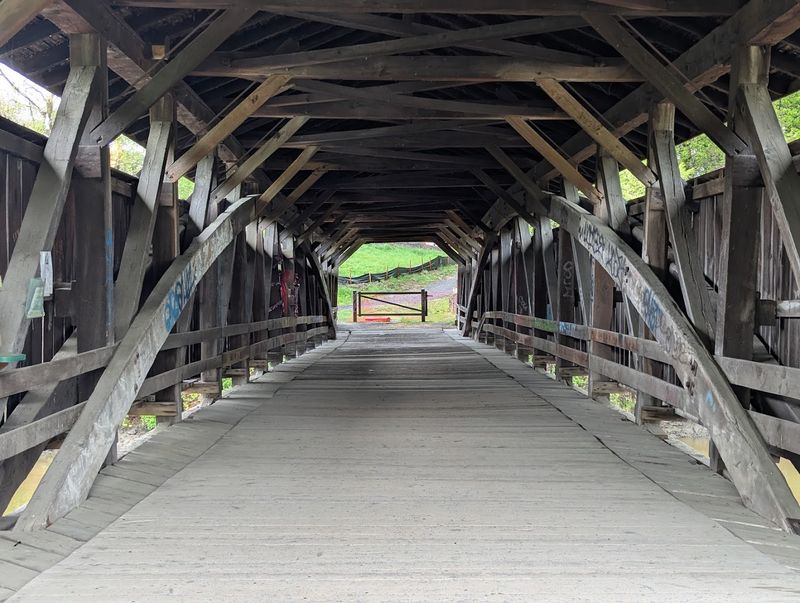
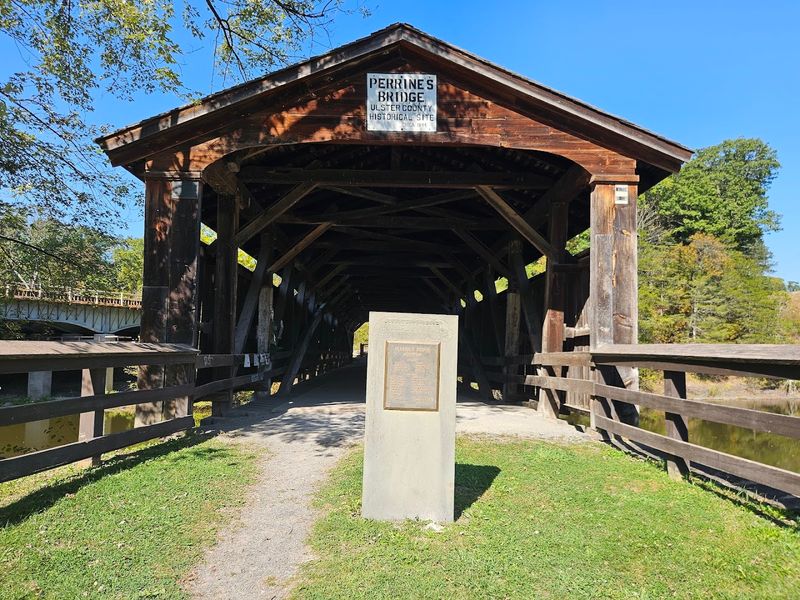
Look up and around when you walk inside Perrine’s Covered Bridge, and you will notice something architecturally fascinating — the Burr arch truss design. This clever combination of a multiple kingpost truss and a long wooden arch gives the bridge exceptional strength and stability.
Invented by Theodore Burr in the early 1800s, this design became popular across the northeastern United States because it distributed weight so effectively. It allowed builders to create long spans without the bridge sagging or collapsing over time.
The wooden beams crisscross in a beautifully functional pattern that feels almost artistic when you take a moment to study it. It is engineering from an era before computers or calculators, relying entirely on human ingenuity and hands-on craftsmanship.
Seeing it up close gives you a whole new appreciation for the brilliance of early American builders.
Carefully Restored in 1993 to Preserve Its Legacy
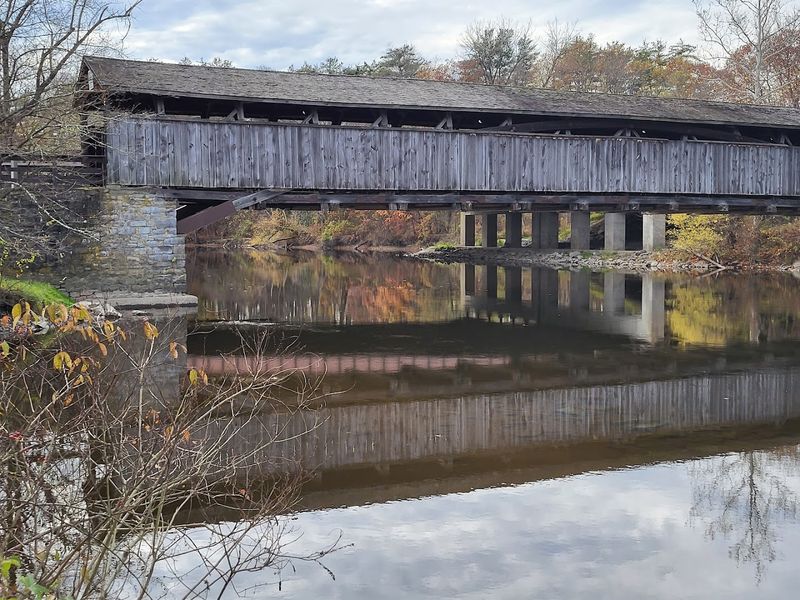
Old things need a little love to survive, and Perrine’s Covered Bridge got exactly that in 1993 when it underwent a significant rehabilitation project. Thanks to that careful restoration effort, the bridge you see today is structurally sound and well-preserved for future generations to enjoy.
Restoring a historic covered bridge is no simple task. Workers must balance preserving original materials with making necessary structural repairs, all while honoring the authentic design of the original builders.
Getting that balance right takes real skill and dedication.
The 1993 restoration is a big reason visitors today can actually walk across the bridge safely and experience it firsthand. Without that intervention, the bridge may have deteriorated beyond saving.
Communities and preservationists who fought to maintain this landmark deserve real credit for keeping this piece of New York history alive and accessible to everyone.
Open 24 Hours — A Rare Landmark You Can Visit Anytime
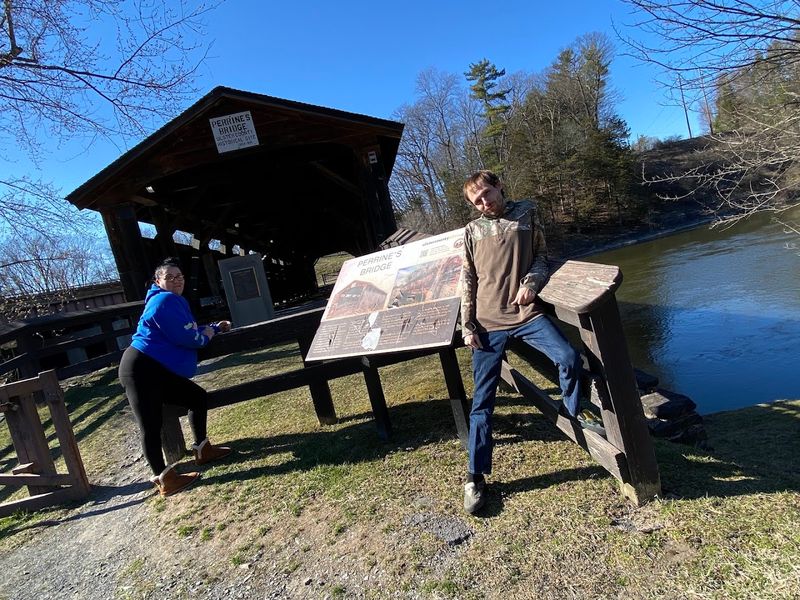
One of the most refreshing things about visiting Perrine’s Covered Bridge is that it welcomes you any time of day or night, every single day of the week. There are no admission fees, no closing times, and no crowds blocking your view during off-hours.
That kind of open access is increasingly rare for historical landmarks. Many sites have limited hours or charge entry fees that make spontaneous visits tricky.
Here, you can pull off the road at dawn, midday, or even after dinner and take it all in at your own pace.
Catching the bridge at sunrise or golden hour makes for absolutely stunning photographs. The warm light filtering through the wooden slats and reflecting off the Wallkill River below creates a magical atmosphere.
Early mornings especially tend to be quiet and peaceful, giving you the whole place practically to yourself.
A Peaceful Little Park Right Next to the Bridge
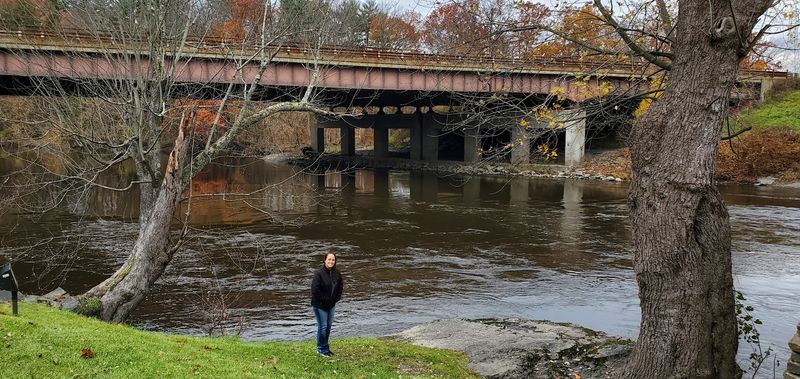
Visiting Perrine’s Covered Bridge is not just about the bridge itself — the surrounding area makes the whole experience even better. Right next to the bridge, there is a cute little park with benches and picnic tables overlooking the water, making it an ideal spot to relax and soak up the scenery.
Families can spread out a blanket, enjoy a packed lunch, and let the kids run around in the fresh air while taking in views of the Wallkill River. It feels like a genuine escape from the busyness of everyday life.
Fishing is also an option if you bring your gear along. Some visitors have mentioned casting a line right there by the water’s edge.
Whether you come for the history, the photo opportunities, or just a peaceful outdoor break, this little park makes the stop feel complete and deeply satisfying.
Easily Visible From the New York State Thruway
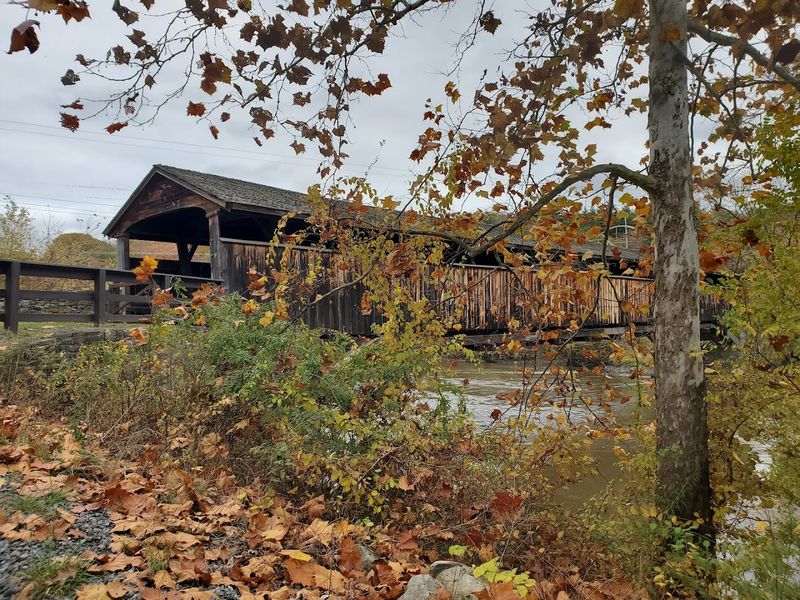
Here is a fun fact that surprises most people — you can actually spot Perrine’s Covered Bridge from the New York State Thruway as you drive past. It sits between mile markers 81 and 82, making it one of the very few historic landmarks you can glimpse at highway speed without even planning a detour.
Of course, a quick glance from a speeding car barely does it justice. But for travelers who have never heard of it before, that brief roadside sighting is often what sparks the curiosity to stop and explore on a future trip.
If you are already traveling through the Hudson Valley area, making the short detour off the Thruway to visit up close is absolutely worth it. Getting off at the right exit and following NY-32 north to NY-213 is simple, and the bridge is easy to find once you know where to look.
How to Get There — Simple Directions From New Paltz
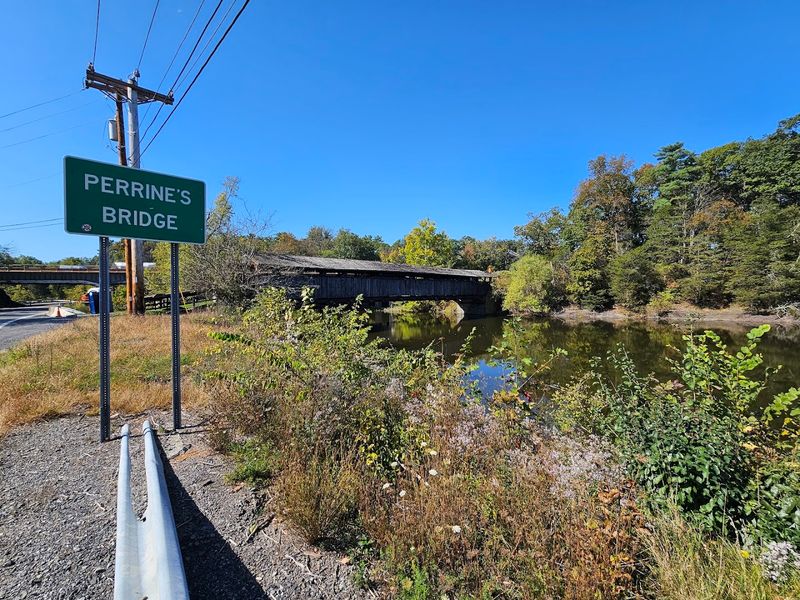
Getting to Perrine’s Covered Bridge is easier than you might expect, especially if you are already spending time in the New Paltz area. Head north out of New Paltz on NY-32, then turn right onto NY-213 and drive about 0.3 miles.
The bridge will appear on your left — you really cannot miss it.
GPS coordinates can also make finding it foolproof: N41 degrees 49.052 minutes, W074 degrees 03.306 minutes. Plugging those into your phone’s navigation app will guide you directly to the site without any confusion.
There are a handful of parking spots available nearby, so arriving by car is perfectly convenient. The walk from the parking area to the bridge is short and easy, suitable for visitors of all ages and fitness levels.
Plan for at least 20 to 30 minutes to explore the bridge and enjoy the surrounding scenery properly.
Walking Across the Bridge — What to Expect on Foot
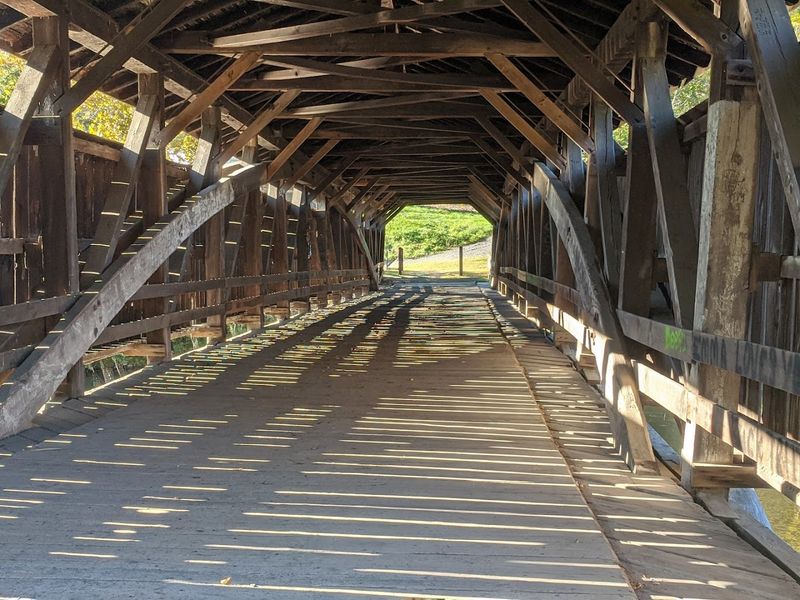
Stepping inside Perrine’s Covered Bridge for the first time is genuinely memorable. The wooden plank floor creaks slightly underfoot, the smell of aged timber fills the air, and the dim, filtered light creates an atmosphere unlike anything you find in everyday modern life.
Walking the full 154-foot length only takes a minute or two, but most visitors slow down naturally, taking in the details of the Burr arch construction overhead and peeking through the wooden slats at the river flowing below. It feels almost meditative.
Keep in mind that the bridge is closed to vehicle traffic, so pedestrians have it entirely to themselves. That makes the crossing feel even more special and unhurried.
Bring a camera or keep your phone handy because the interior light and wooden textures create genuinely beautiful photos that perfectly capture the old-world charm of this incredible structure.
The Graffiti Problem — A Challenge for This Historic Treasure
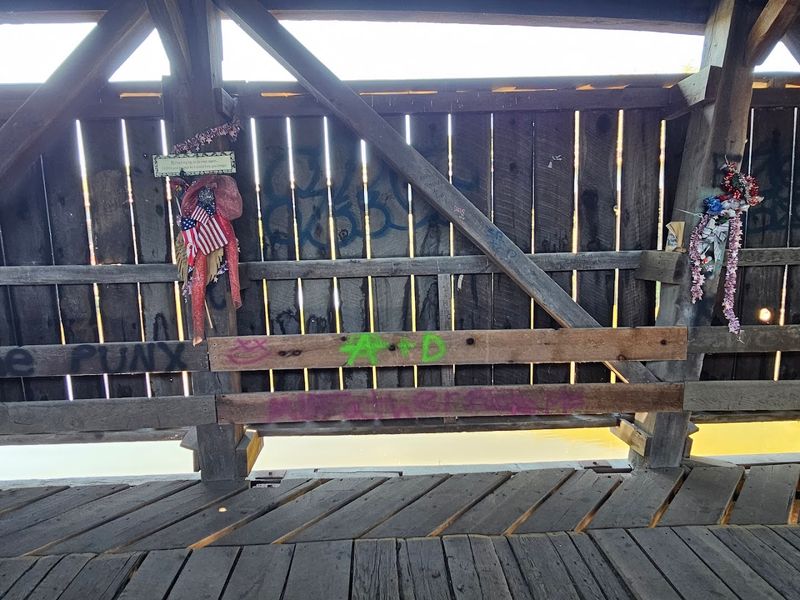
Honest reviews of Perrine’s Covered Bridge consistently mention one unfortunate issue — graffiti on the inside walls. Several visitors have expressed disappointment at seeing spray paint and markings on the historic wooden surfaces, which takes away from the otherwise beautiful and authentic atmosphere of the bridge.
It is a frustrating reality that many open, unguarded historical sites face across the country. Without constant supervision, some visitors make poor decisions that leave lasting damage on irreplaceable structures.
That said, the graffiti does not ruin the experience entirely. The bridge’s architectural beauty, its age, and its peaceful riverside setting still shine through.
Many visitors hope that future restoration efforts or increased community awareness will help address the problem. If you visit and feel strongly about preserving this landmark, consider reaching out to local preservation groups or sharing the issue on community platforms to help raise awareness and encourage action.
A Nearby Waterfall Worth Adding to Your Visit
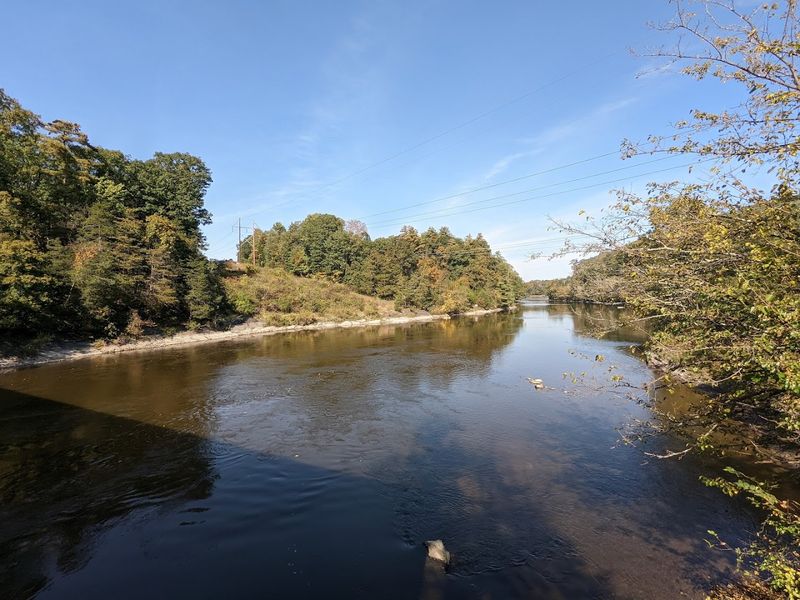
Perrine’s Covered Bridge is wonderful on its own, but the surrounding area has even more to offer adventurous visitors. A short drive further down the road near Esopus leads to a power plant area where a gorgeous waterfall tumbles over a dramatic rock formation — a sight that has wowed many visitors who stumbled upon it by happy accident.
One reviewer described it as breathtaking, noting that the waterfall alone made the drive from Yonkers completely worthwhile. Combining the bridge visit with a stop at the waterfall turns a quick historical detour into a full half-day outdoor adventure.
The Hudson Valley region is packed with natural beauty, and this little corner of Ulster County delivers more than most people expect. Packing a lunch, exploring the bridge, then hiking over to the waterfall makes for an unforgettable day trip that both kids and adults will genuinely love.
Why Perrine’s Covered Bridge Deserves a Spot on Your New York Bucket List
Some places earn their reputation through flashy marketing and massive crowds. Perrine’s Covered Bridge earns its place in people’s hearts through something far more genuine — quiet beauty, rich history, and the rare feeling of discovering something most people have overlooked.
With a 4.6-star rating from over 100 visitors, the bridge consistently earns praise from everyone who makes the trip. Families, photographers, history enthusiasts, and casual road-trippers all leave with smiles on their faces and cameras full of incredible shots.
New York has no shortage of famous landmarks, but the ones that feel truly special are often the hidden gems tucked away on quiet country roads. Perrine’s Covered Bridge is exactly that kind of place.
Whether you visit alone, with friends, or with the whole family, this 200-year-old wooden wonder promises a genuinely meaningful and memorable experience you will not soon forget.
Enjoyed this story?
Add Fast Food Club as a preferred source to see more of our reporting on Google.