


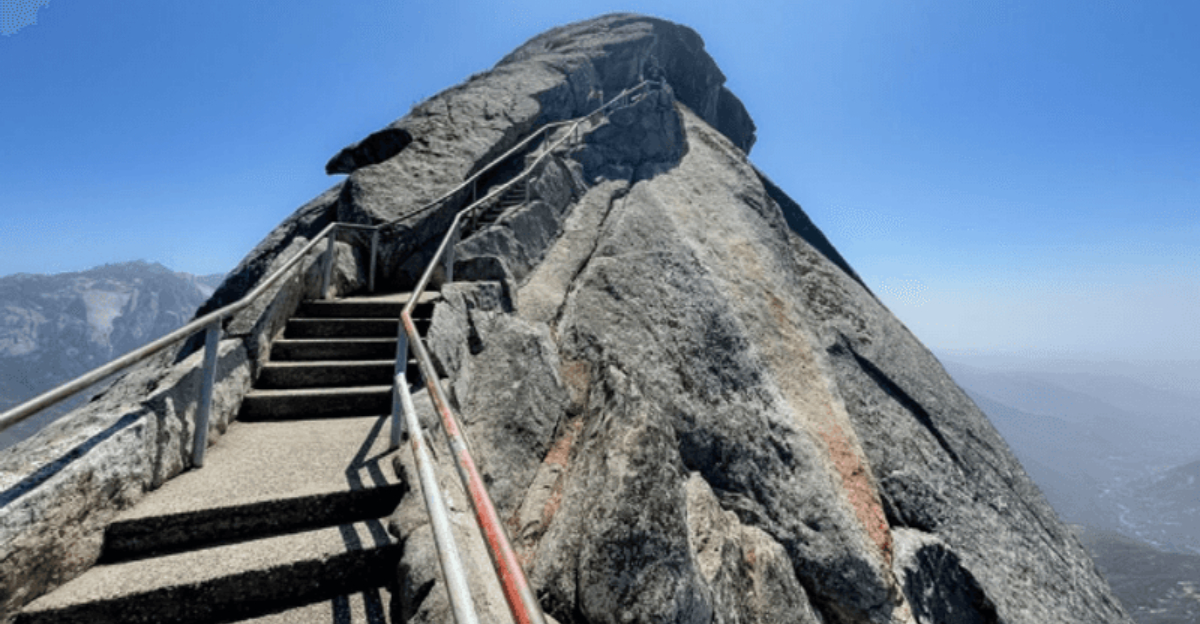
Hidden inside Sequoia National Park in California, Moro Rock Trail leads you up a granite dome using more than 350 carved stone steps — and the reward at the top is jaw-dropping. The trail is short but mighty, offering sweeping 360-degree views of mountain ranges, ancient forests, and valleys that stretch as far as the eye can see.
Whether you are a seasoned hiker or just looking for an unforgettable adventure, this stairway in the sky delivers one of the most stunning natural experiences in the entire country.
The Granite Dome That Started It All
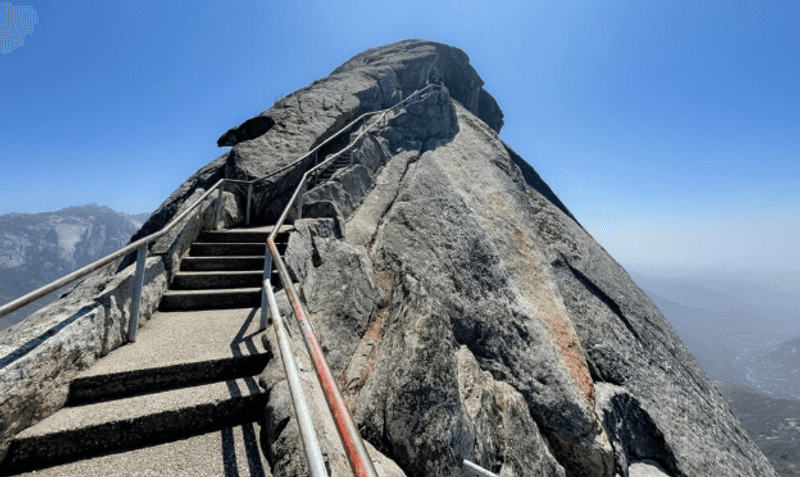
Long before the steps were carved, Moro Rock was already turning heads. This massive, isolated granite dome has been a landmark in Sequoia National Park for generations, drawing curious visitors who spotted it towering above the trees and simply had to get closer.
Standing at 6,725 feet above sea level, it is one of the most recognizable natural formations in California.
Granite domes like Moro Rock form over millions of years as underground rock slowly pushes upward and is exposed by erosion. The result is a smooth, rounded summit that feels almost otherworldly.
First-time visitors often stop in their tracks when they catch their first glimpse of it through the trees. The sheer size of the dome is humbling, and that feeling only grows stronger the closer you get.
350 Steps Carved Right Into the Rock
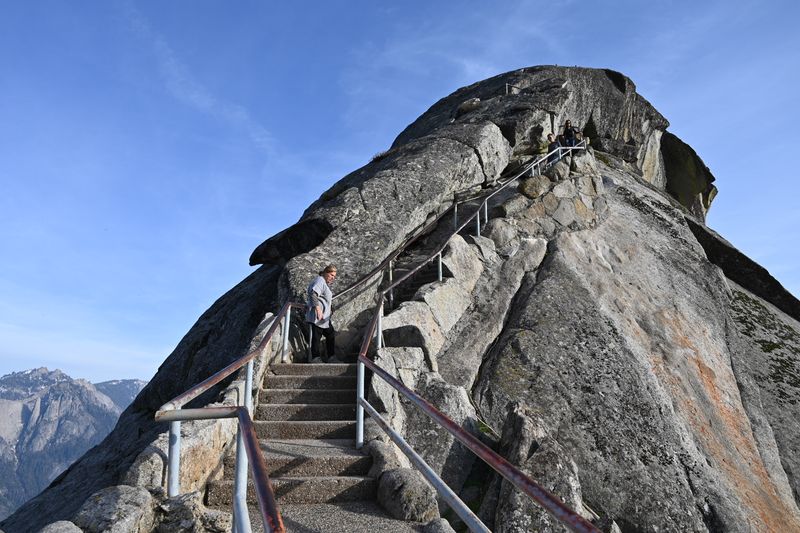
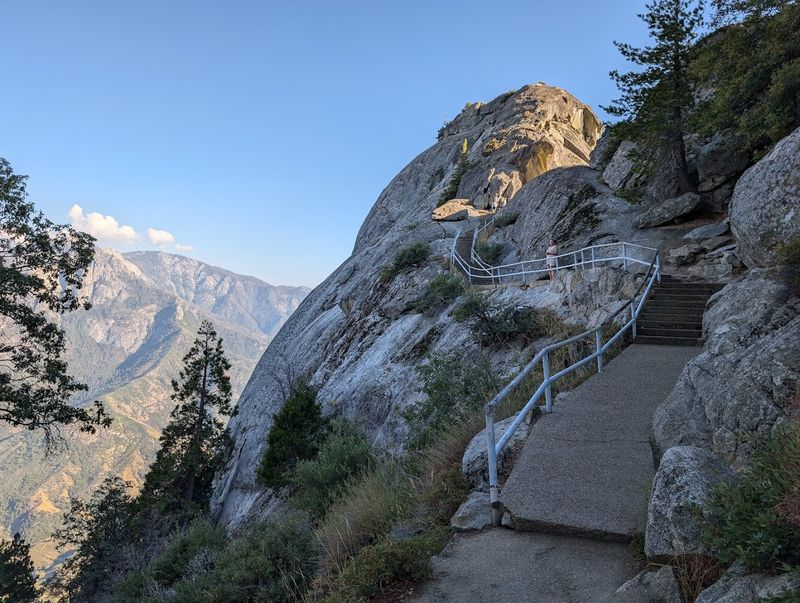
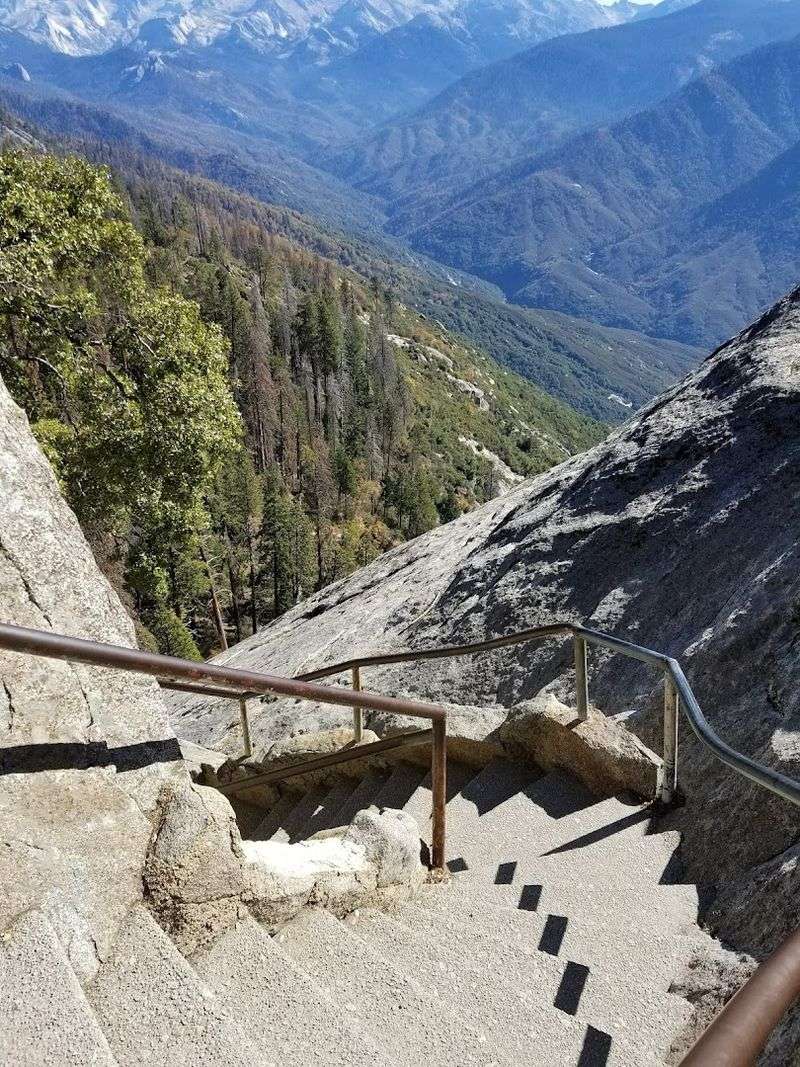
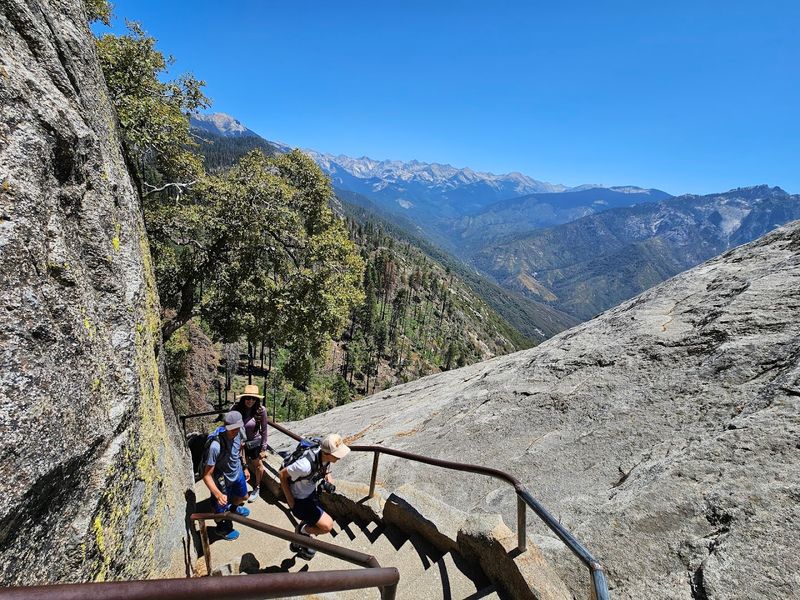
Somebody had the brilliant — and ambitious — idea to carve a stairway directly into the granite face of Moro Rock, and honestly, it changed everything. Around 350 concrete and stone steps zigzag up the dome in a series of switchbacks, making the climb manageable even for people who are not regular hikers.
The steps are well-maintained and sturdy, so you can focus on the views rather than worrying about your footing.
The path is narrow in certain sections, which means you will occasionally need to pause and let other hikers pass in the opposite direction. Think of it as a built-in excuse to catch your breath and soak in the scenery.
Handrails line the route almost the entire way, giving you something to grip when the exposure starts to feel intense. The craftsmanship of this stairway is genuinely impressive.
A Workout That Feels Worth Every Gasp
Fair warning — your legs will know they worked. The elevation gain of roughly 250 to 300 feet packed into less than half a kilometer means your heart rate will climb almost as fast as you do.
Add in the high altitude of the park, where the air is thinner than most people are used to, and even fit hikers find themselves stopping to catch their breath more often than expected.
That said, the climb is absolutely doable for most people. Visitors of all ages — young kids, older adults, and everyone in between — make it to the top every single day.
The trick is to pace yourself and not rush. Take breaks at the viewing platforms along the way, hydrate well before you start, and wear comfortable shoes with good grip.
The burn in your legs will feel like a badge of honor once you reach the summit.
Panoramic Views That Genuinely Steal Your Breath
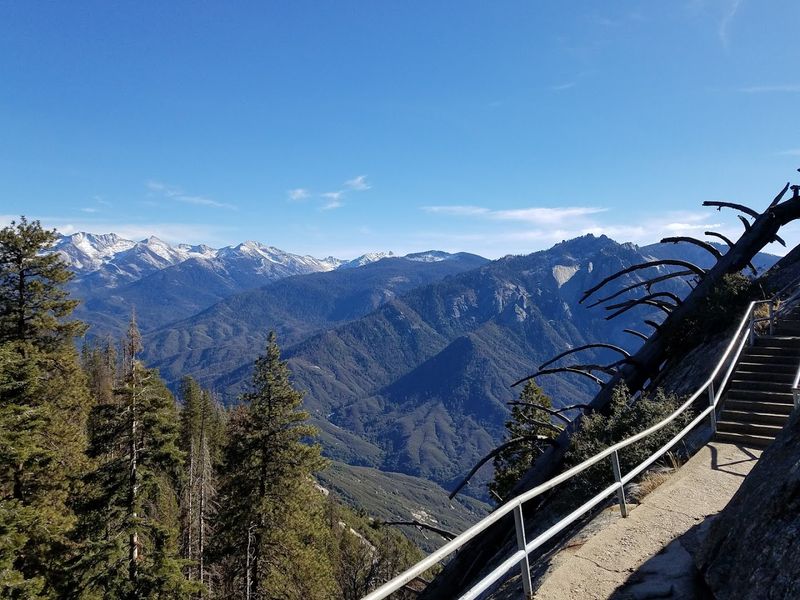
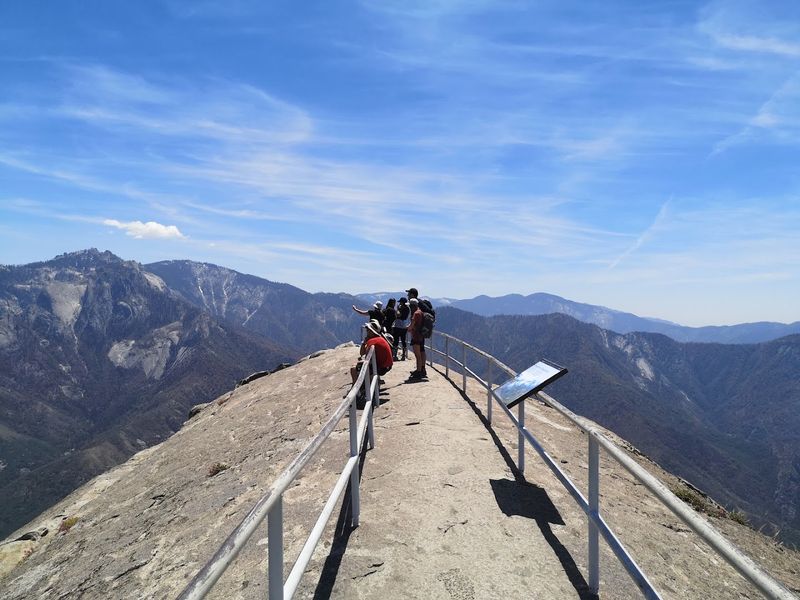
Nothing quite prepares you for the moment the view opens up at the top. From the summit of Moro Rock, you can see in every direction — mountain range after mountain range stretching to the horizon, deep green valleys far below, and on a clear day, even the distant peak of Mount Whitney.
The Great Western Divide dominates the eastern view, and the San Joaquin Valley spreads out to the west like a giant painting.
Visitors consistently describe the panorama as one of the most stunning they have ever seen anywhere. The scale is difficult to put into words.
You feel genuinely small standing up there, surrounded by so much wild, untouched landscape. Photographers will want to budget extra time at the top because no matter which direction you point your camera, the shot is incredible.
Come prepared to simply stand and stare for a while.
Sunset From the Summit — A Sky on Fire
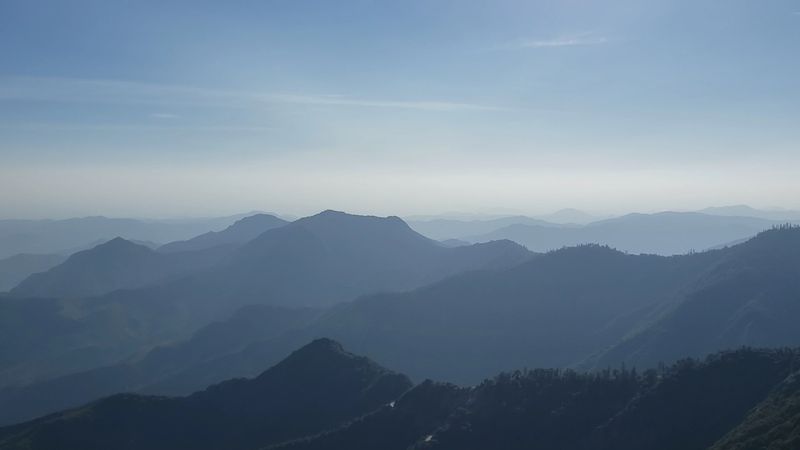
Catching the sunset from the top of Moro Rock is the kind of experience people talk about for years. As the sun drops toward the horizon, it casts golden and amber light across the valleys and mountain ridges, turning the entire landscape into something that looks more like a painting than reality.
The cool breeze at the summit makes the moment feel cinematic and peaceful all at once.
Hikers who have made the climb at various times of day consistently agree that late afternoon is the most magical. The colors in the sky shift from gold to pink to deep purple, and the shadows across the mountains create dramatic contrasts that are stunning to watch.
Just be aware that the parking area fills up quickly before sunset, so arriving early is smart. The experience is absolutely worth the extra planning and the potential crowd at the top.
Sunrise Visits — The Best-Kept Secret
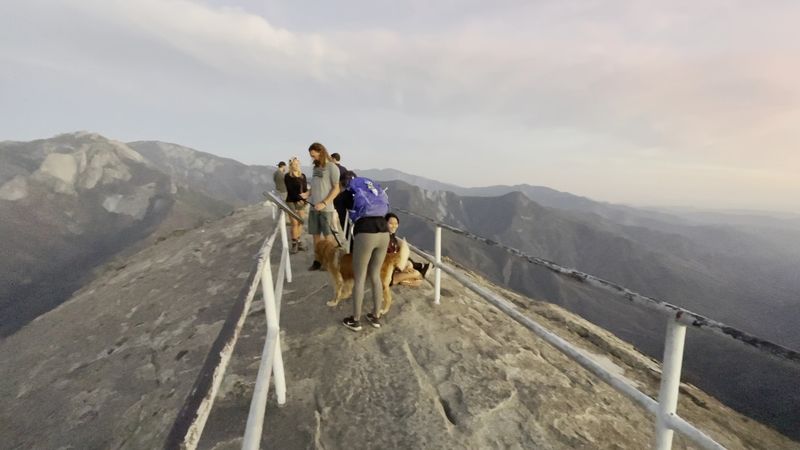
Sunset gets most of the attention, but sunrise on Moro Rock might actually be the better-kept secret. Early morning visitors enjoy one major advantage that afternoon crowds never get — the stairway traffic flows mostly in one direction.
Since few people are heading down at dawn, the narrow path feels much more relaxed and easy to navigate without the constant stopping to let others pass.
The light at sunrise paints the granite dome in warm, rosy tones that photographers dream about. The valleys below are often filled with mist in the early hours, adding an almost mystical quality to the view.
Temperatures are cooler in the morning too, which makes the climb feel less demanding. If you are staying nearby and can manage an early wake-up call, the sunrise experience at Moro Rock is genuinely unforgettable and far less crowded than any other time of day.
Viewing Platforms Along the Way Up
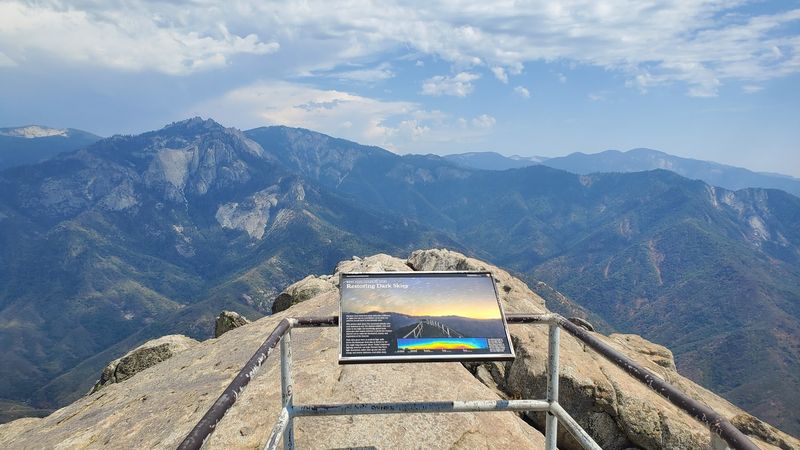
One of the smartest features of the Moro Rock stairway is that the views do not wait until the very top. Scattered along the route are several viewing platforms and wider sections of the path where you can step aside, rest, and take in the scenery as you climb.
Each stop offers a slightly different angle on the surrounding landscape, and the views get more expansive with every platform you reach.
These rest spots are especially helpful when the trail gets busy. Instead of feeling frustrated about having to pause for passing hikers, you can treat each stop as a planned scenic break.
Informational signs and fun facts about Sequoia National Park are posted along the route too, so there is plenty to read and learn while you catch your breath. The whole experience is designed to reward curiosity, not just speed.
Giant Sequoias Visible From Every Angle
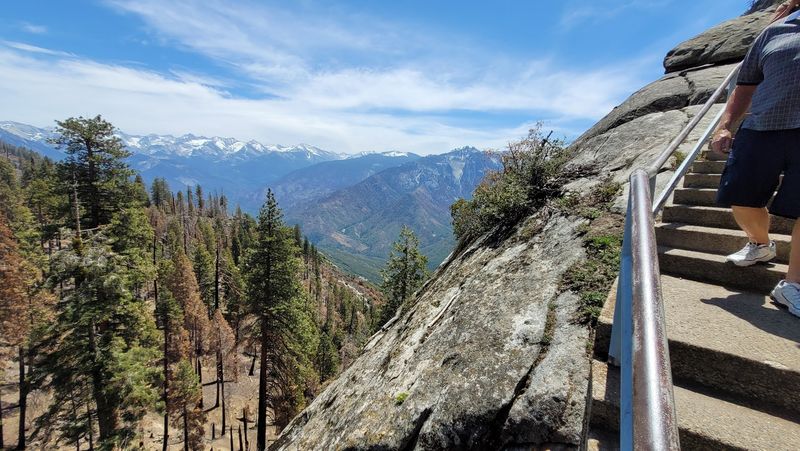
Standing on the steps of Moro Rock and looking down into the forest below, you can spot the tops of giant sequoias rising above the surrounding trees like gentle giants. These are some of the largest living things on Earth, and seeing them from above gives you a completely different perspective than standing at their base.
The scale of both the trees and the landscape hits differently from up high.
The Giant Forest, one of the most significant groves of sequoias in the world, sits nearby and is visible from various points along the trail. Some of these trees have been alive for thousands of years, and knowing that adds a layer of wonder to every view.
Visitors who have already walked among the sequoias on the ground often say that seeing them from Moro Rock makes the experience feel complete. Both perspectives together are truly something special.
Heights, Exposure, and Handrails — What to Expect
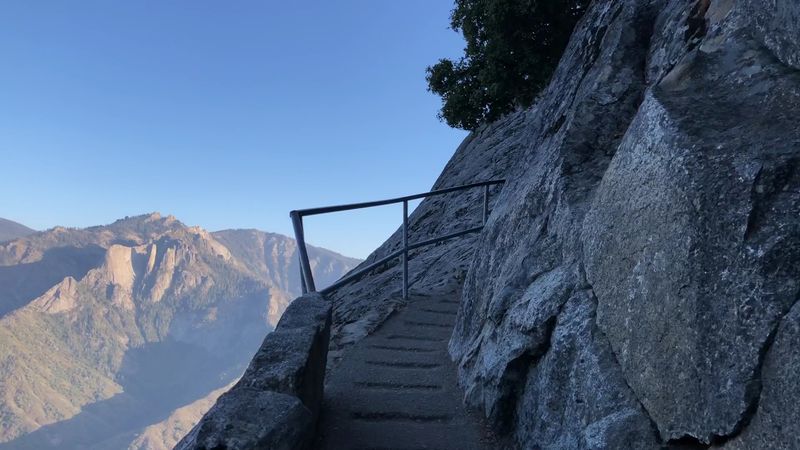
For those who get a little wobbly around heights, Moro Rock is worth thinking about before you commit. The trail is genuinely exposed in several sections, with steep drop-offs on either side of the narrow stairway.
Handrails are present along most of the route, and rock walls border other sections, but the openness of the dome means you are fully aware of how high up you are at almost every step.
Most visitors find the exposure manageable, especially if they keep moving and focus on the path ahead rather than looking straight down. A few reviewers with mild fear of heights have still made it to the top and loved it.
However, if heights cause serious anxiety, it is completely okay to stop at one of the lower viewing platforms and enjoy the scenery from there. The views partway up are already spectacular and absolutely worth the partial climb.
Wildlife You Might Spot Along the Trail
The area around Moro Rock is surprisingly rich with wildlife, and keeping your eyes open during the climb can lead to some memorable encounters. Peregrine falcons are known to nest on the granite dome itself, and spotting one of these powerful birds soaring alongside the rock is an experience hikers rarely forget.
Hawks and eagles also ride the thermal currents above the dome, making the sky above the summit worth watching.
Down in the forest below, the park is home to black bears, gray foxes, bobcats, and a variety of smaller mammals. While wildlife sightings on the stairway itself are less common, the overlooks give you a bird’s-eye view of the forest where animals move through the trees.
Early morning visitors tend to have the best luck spotting wildlife before the crowds arrive. Always observe animals from a safe distance and never feed them — this protects both you and the wildlife.
Practical Tips for Your Visit
A little preparation goes a long way when visiting Moro Rock. The trail is open daily from 9 AM to 5 PM, so plan your arrival accordingly.
During peak summer weekends, the road to Moro Rock closes to private vehicles, and visitors must take a free shuttle from the Giant Forest Museum — which is actually a pleasant and stress-free way to arrive. Parking at the trailhead fills up fast on busy days, so arriving early or using the shuttle is the smart move.
Wear shoes with solid grip because the steps can get slippery, especially in wet conditions. Bring water and drink plenty before you start, since the altitude makes dehydration happen faster than you might expect.
The entrance fee is $35 per vehicle and is valid for about a week, covering access to both Sequoia and Kings Canyon National Parks. Restrooms are available near the trailhead, though reviewers suggest having backup plans.
Winter Visits — Snow, Ice, and Closed Gates
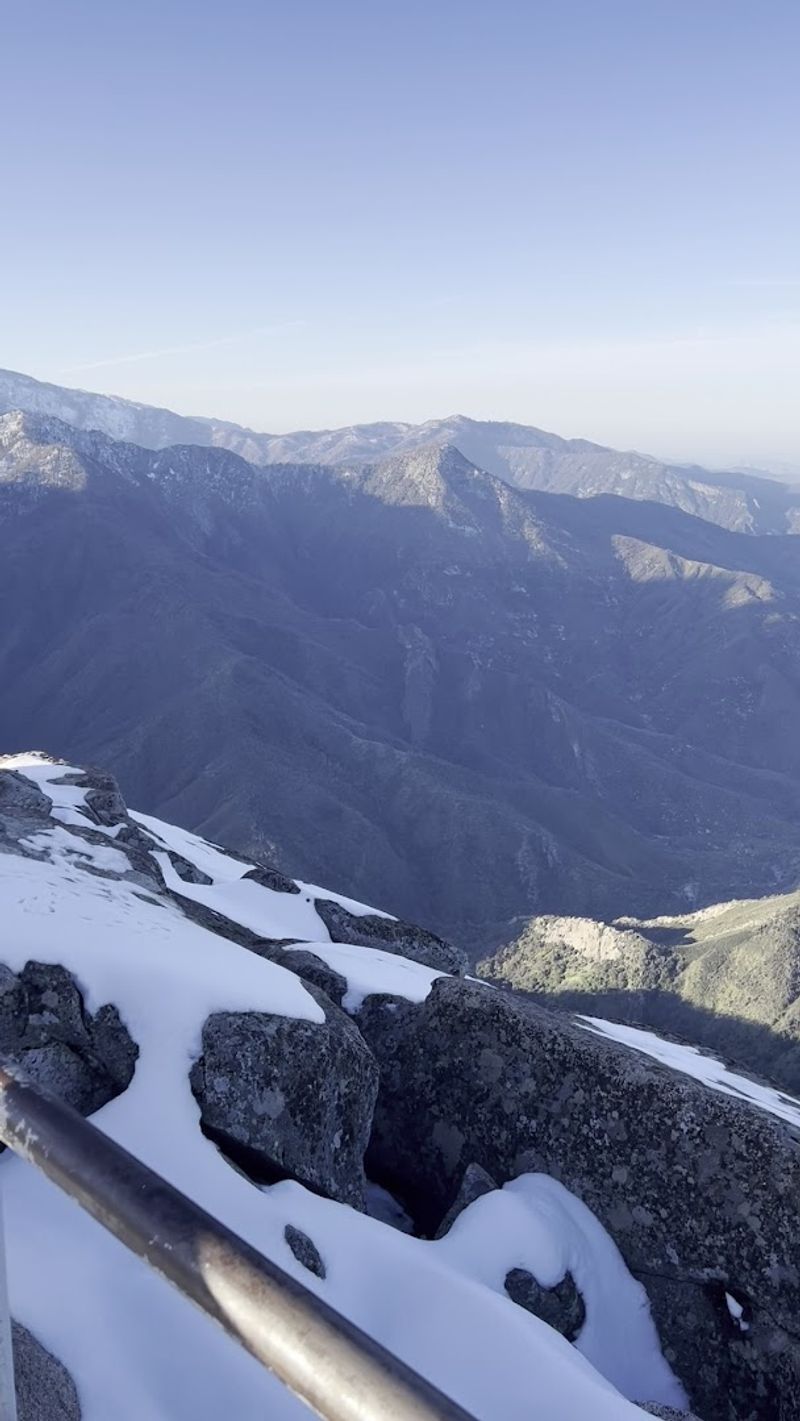
Winter transforms Moro Rock into a completely different world — and not always an accessible one. The trail officially closes during winter months when snow and ice make the stone steps dangerously slippery.
Even during shoulder seasons like November and early spring, unexpected snowfall can catch visitors off guard. Anyone planning a winter trip to Sequoia National Park should check trail conditions ahead of time and call the park at the number listed on the NPS website before heading out.
If the trail happens to be open during a winter visit, the scenery is absolutely stunning. Snow-dusted granite and frost-covered trees create a landscape that feels completely different from the summer experience.
One reviewer who visited in mid-January hiked up through Moro Rock Trail when the road was blocked and described it as a beautiful and memorable alternative route. Snow chains or traction devices for your vehicle are strongly recommended for any winter visit to the park.
Why This Trail Earns a 4.9-Star Rating
With 3,332 reviews and a 4.9-star rating on Google, Moro Rock Trail is not just popular — it is beloved. Visitors from all walks of life, ranging from families with young kids to solo adventurers and senior hikers, consistently describe the experience as one of the highlights of their entire trip to California.
The combination of an achievable challenge, breathtaking scenery, and a genuine sense of accomplishment at the top is a recipe that works for almost everyone.
What makes the trail so special is that it rewards effort at every level. You do not have to reach the very top to feel the magic — the views build beautifully with every flight of steps.
Whether you are chasing a bucket-list moment, looking for the perfect photo, or simply wanting to breathe fresh mountain air, Moro Rock delivers every single time. Pack your water, lace up your shoes, and go.
Enjoyed this story?
Add Fast Food Club as a preferred source to see more of our reporting on Google.