


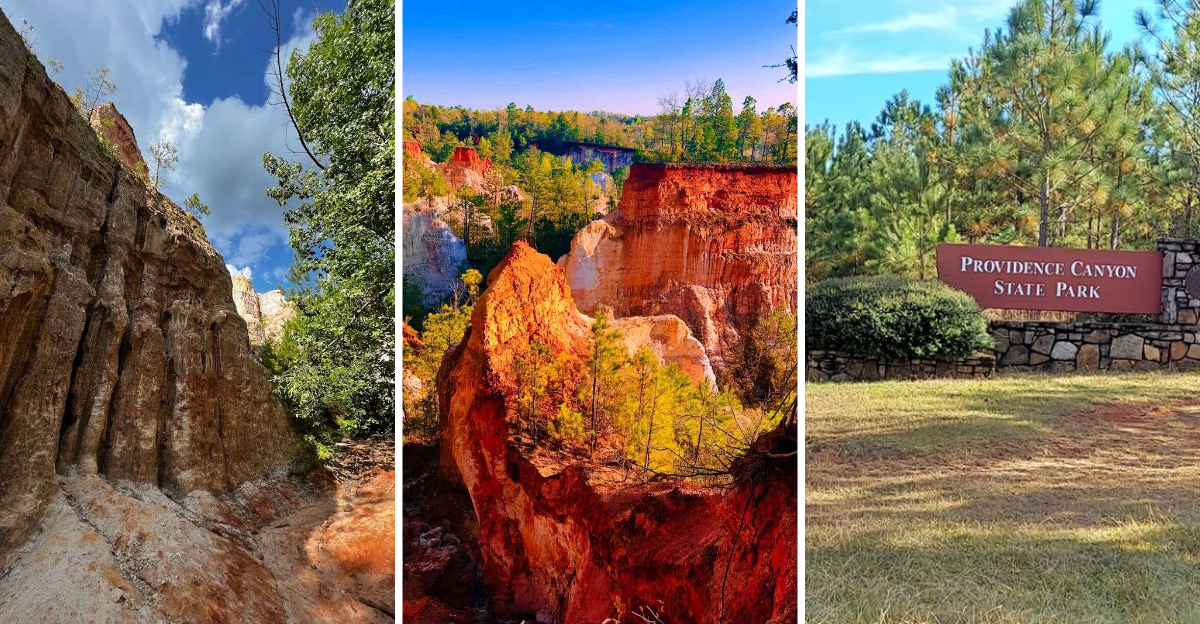
Tucked away in rural southwest Georgia, Providence Canyon State Park is one of those places that stops you in your tracks the moment you see it. Stretching across 1,003 acres near Lumpkin, GA, this park features dramatic canyon walls striped in shades of pink, purple, red, orange, and white that look more like the American Southwest than the Deep South.
Often called Georgia’s Little Grand Canyon, it draws hikers, photographers, and nature lovers from all over the country. Whether you are planning your first visit or looking for reasons to go back, here are 13 things that make this park feel like it belongs on another planet.
The Jaw-Dropping Canyon Colors That Look Painted On
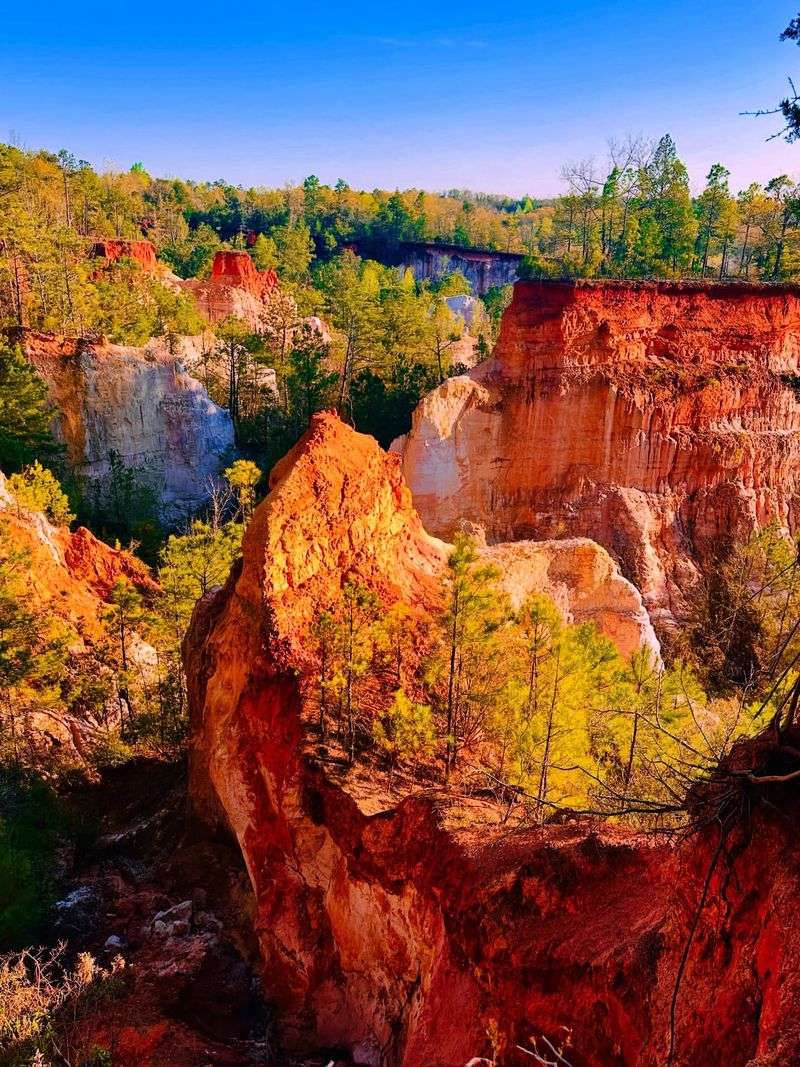
Standing at the canyon rim for the first time, most visitors say the same thing: “This cannot be real.” The walls of Providence Canyon display an almost unbelievable range of colors, from deep crimson and burnt orange to soft lavender and creamy white. These hues come from different mineral deposits in the soil, and they shift dramatically depending on the time of day.
Morning light gives the walls a warm golden glow, while overcast days bring out cooler purples and pinks. Sunset is especially popular with photographers because the colors seem to catch fire.
Unlike most natural wonders shaped over millions of years, these canyons formed in just about 150 years due to erosion from poor 19th-century farming practices.
That backstory makes the beauty even more surprising. Bring a camera, because no filter can fully capture what your eyes will see standing at the edge.
A History Rooted in an Agricultural Mistake
Not every natural wonder has a human origin story, but Providence Canyon does. Back in the early 1800s, settlers in this part of Georgia cleared land for farming without understanding how to protect the soil from erosion.
Small ditches formed, rainwater carved them deeper, and within a few generations, the land had collapsed into canyon systems stretching up to 150 feet deep.
What started as an agricultural accident became one of Georgia’s most visited state parks. The visitor center does a great job explaining this history with displays that put the whole story in perspective.
It is a fascinating reminder that nature can turn human mistakes into something breathtaking over time.
Kids especially enjoy learning that something so dramatic was caused not by a volcano or earthquake, but by simple farming errors. History and geology come together here in a way that genuinely surprises most visitors.
The White Blaze Canyon Loop Trail Everyone Talks About
Ask any regular visitor which trail to do first, and the answer is almost always the White Blaze Canyon Loop. Covering about 2.5 miles, this trail is rated easy to moderate and takes most people between two and three hours to complete.
It winds down to the canyon floor, passes through nine separate canyon fingers, and loops back up to the rim.
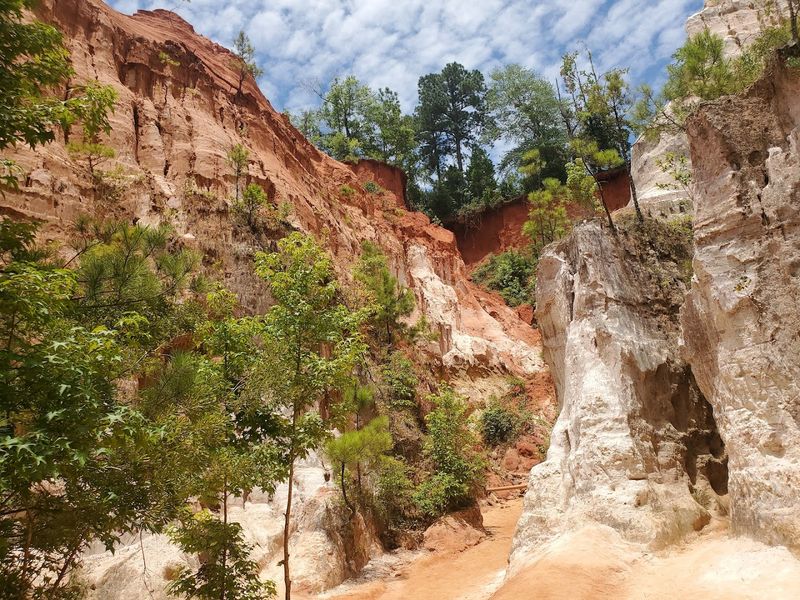
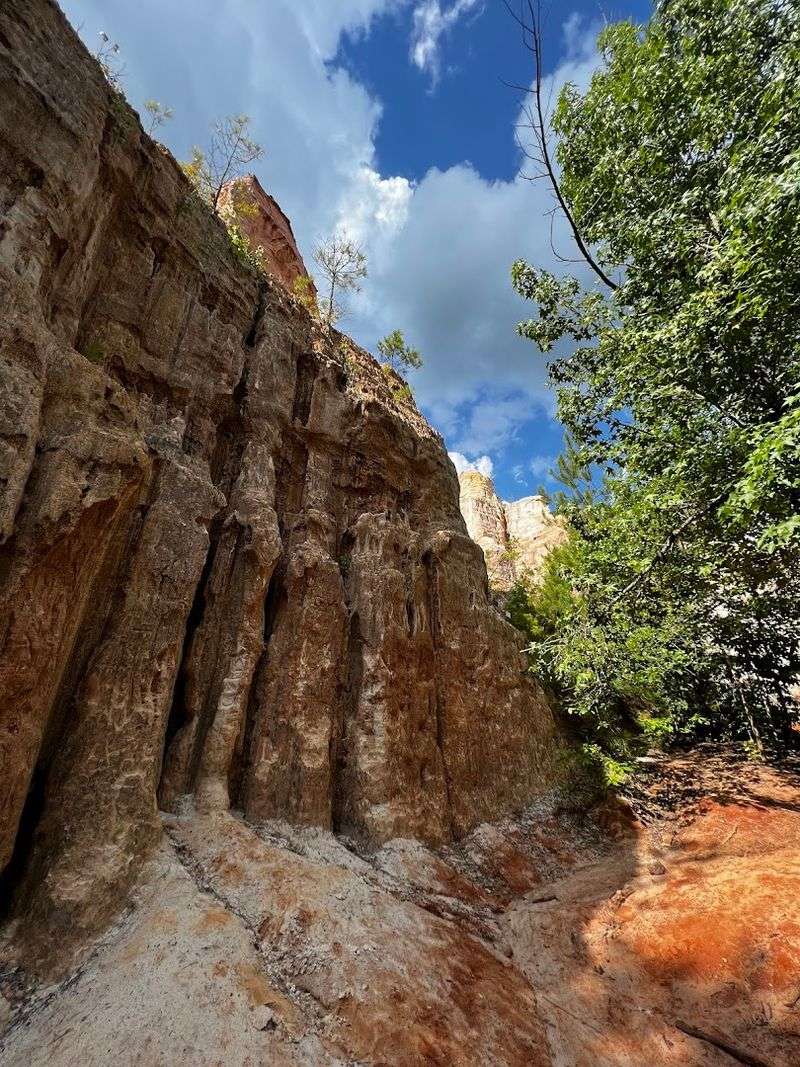
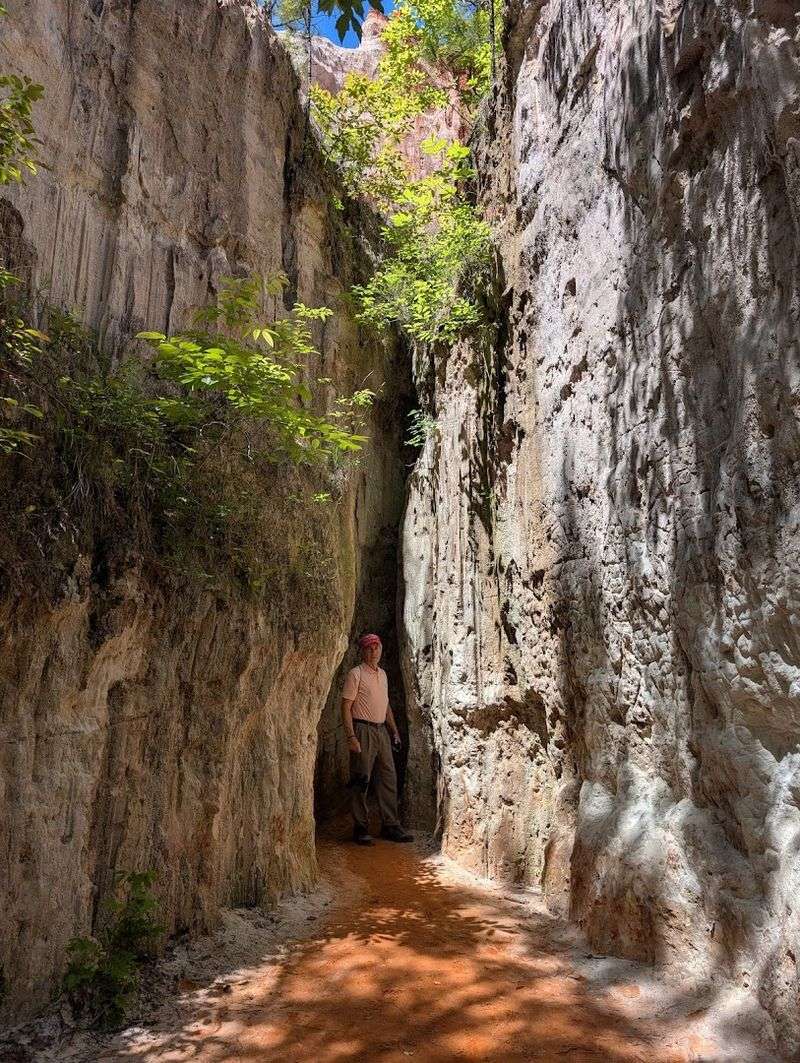
Once you reach the bottom, the trail flattens into sandy creek beds that wind between towering canyon walls. Looking straight up from the floor is one of the most dramatic views in the entire park.
Canyons 3 through 5 are consistently praised as the most scenic spots for photos, with wider walls and richer color layers.
The path does involve some wet and muddy sections, so waterproof shoes or hiking boots are strongly recommended. Sneakers work in a pinch, but your feet will likely get soaked on the canyon floor.
Rim Trail Overlooks That Reward Every Step
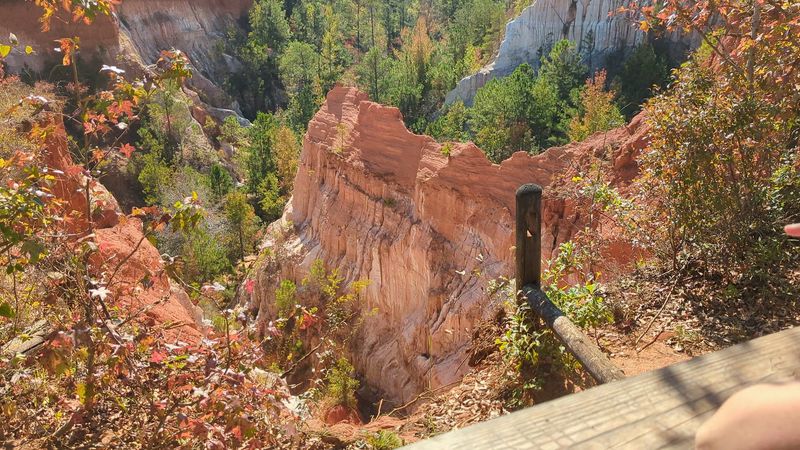
Not everyone wants to hike down to the canyon floor, and that is completely fine. The Rim Trail at Providence Canyon offers a series of elevated overlooks that deliver spectacular views without requiring a steep descent.
Several of these viewpoints are located just a short walk from the main parking area and visitor center, making them accessible for nearly all fitness levels.
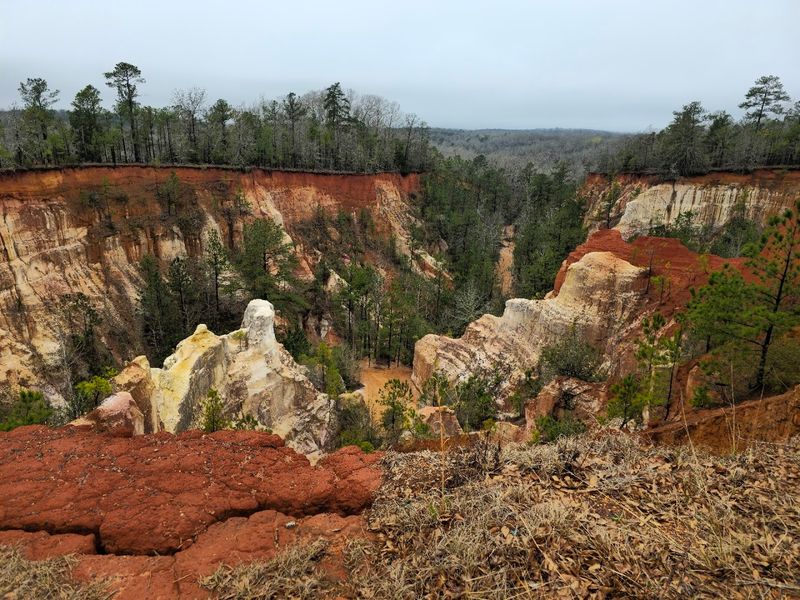
From the rim, you get a bird’s-eye perspective of the canyon system that is impossible to fully appreciate from the floor. The scale of the canyons becomes clear when you can see multiple colored walls stretching out in every direction.
Some overlook platforms are also more accessible for visitors with limited mobility, which is a thoughtful touch.
One tip from frequent visitors: walk the full rim trail before deciding whether to descend. Seeing the big picture from above helps you choose which canyon fingers are worth exploring up close at ground level.
The Backcountry Trail for Serious Adventurers
For visitors who want more than a two-mile stroll, the Backcountry Trail delivers a serious outdoor challenge. Stretching about seven miles in a rugged loop, this trail winds through dense pine forests along the canyon rim and offers a more solitary, wilderness-style experience.
Most hikers report it taking five to seven hours to complete, so an early start is essential.
Unlike the main canyon loop, this trail is rated difficult and requires solid footwear, plenty of water, and a good sense of direction since cell service is basically nonexistent in this area. The payoff is a quieter, more immersive experience with secluded views and almost no crowds, especially on weekdays.
Overnight backcountry camping is available with a permit, making it a great option for those who want a full wilderness night under Georgia stars. Always check trail conditions with park staff before heading out on this longer route.
Wild Clay and Unique Geology That Fascinates Artists and Scientists
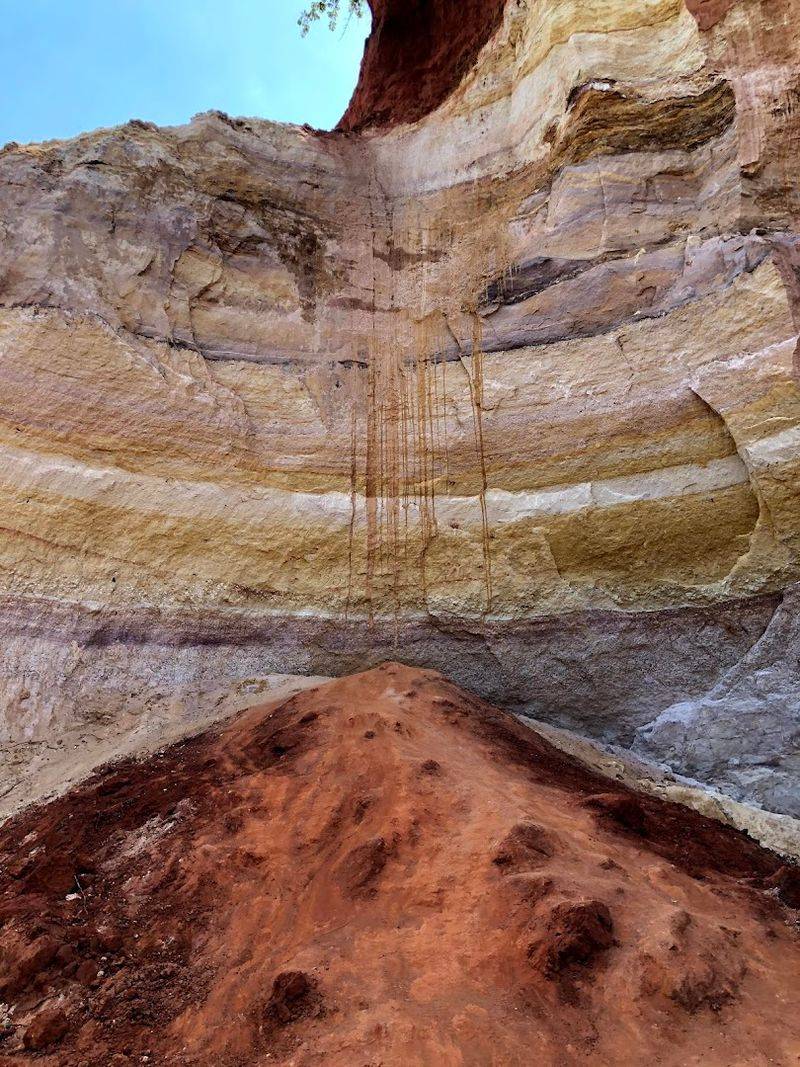
One of the quirkiest things about hiking the canyon floor at Providence Canyon is what you might find along the way. Bits of wild clay in vivid colors are scattered throughout the trail, left exposed by centuries of erosion.
For potters, ceramic artists, and geology enthusiasts, this is basically a treasure hunt wrapped inside a hike.
The clay comes in shades matching the canyon walls, from deep red iron-rich earth to pale white kaolin deposits. Visitors are welcome to look and touch, though collecting materials is not permitted inside the park.
The tactile experience of feeling the canyon walls and picking up the sandy soil adds a whole new layer to the visit.
Science teachers, homeschool families, and curious minds will find this park doubles as an outdoor classroom. The exposed geology tells a story about soil composition, water erosion, and mineral deposits that no textbook can replicate quite as vividly.
Family-Friendly Fun for All Ages and Fitness Levels
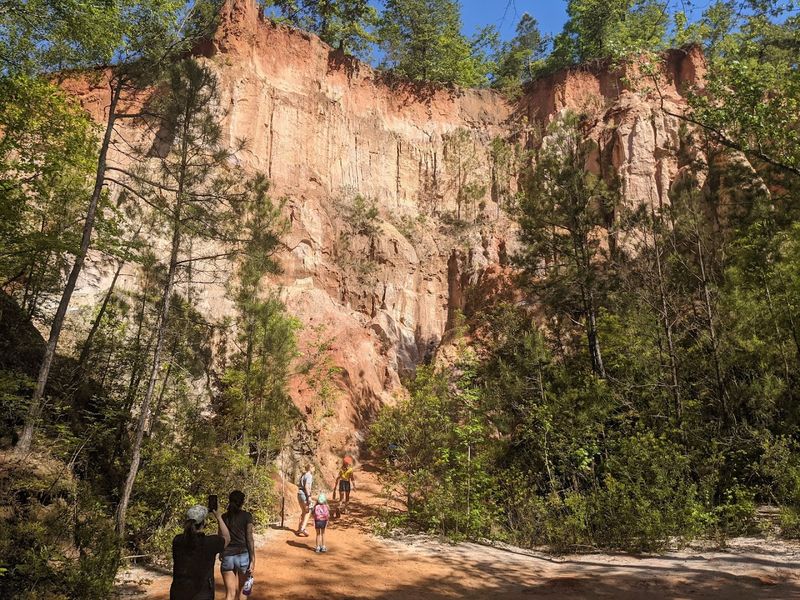
Bringing the whole family to Providence Canyon is a genuinely great idea. The park has something for every age group, from toddlers enjoying the picnic areas and playground to teenagers tackling the canyon floor trails.
Canyons 1 through 5 are widely considered the best options for families with young children, offering manageable terrain and incredible scenery without overwhelming difficulty.
Parents should pack extra socks and a change of shoes for kids, because the canyon floor is often wet and muddy. Waterproof shoes or rubber boots are ideal for little ones who will inevitably want to splash through the shallow streams running along the trail.
The park also has clean restrooms, a small visitor center, and a gift shop stocked with snacks and souvenirs. There is even a playground area near the picnic tables, giving younger kids a place to burn energy before or after the hike.
Most families call it one of their favorite day trips in Georgia.
Photography Opportunities That Go Beyond the Canyon
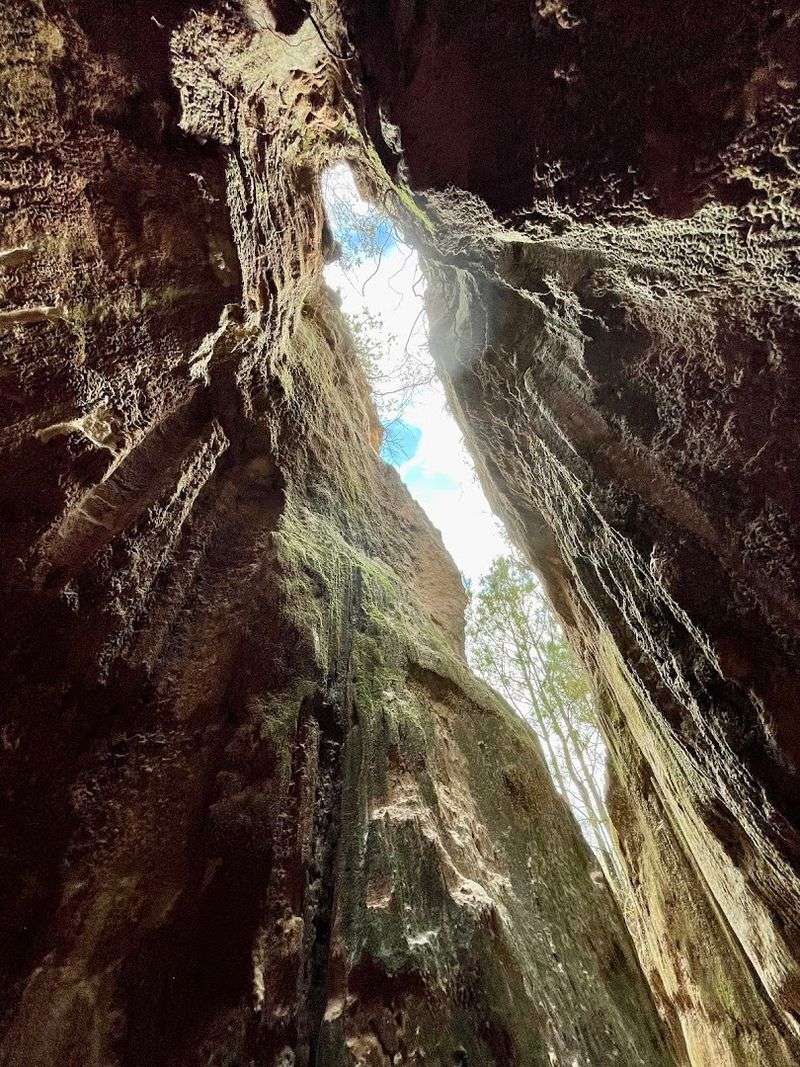
Photographers absolutely love this park, and for good reason. The canyon walls provide a constantly changing canvas depending on the season, weather, and time of day.
Sunrise and sunset are peak times for capturing the most saturated colors, with the low-angle light turning the canyon walls into something that looks digitally enhanced even in real life.
Beyond the canyons themselves, the surrounding forest offers its own rewards. Colorful autumn leaves frame canyon views in fall, while spring brings fresh green growth that contrasts beautifully with the red and orange walls.
Unique mushrooms, wild berries, and interesting tree formations can be found along nearly every trail.
Even the drive into the park is worth a few shots, with rolling hills and lush Georgia pines lining the road. Wide-angle lenses work best for capturing the full scale of the canyon, but even a smartphone camera produces stunning results when the light cooperates.
Every direction you point your lens, something interesting appears.
Camping Options That Let You Stay Overnight in Paradise
Spending the night at Providence Canyon turns a great day trip into an unforgettable experience. The park offers both traditional campsites and camping wagons, giving visitors a range of overnight options depending on their comfort preferences.
Waking up inside a state park this beautiful, before the day-trippers arrive, is something most campers describe as genuinely special.
Morning hours at the canyon are particularly magical. Mist sometimes settles along the canyon floor just after sunrise, and the colors on the walls look completely different in early light compared to midday.
Backcountry campers with permits can set up even deeper in the forest for a more remote experience.
Booking ahead is strongly recommended, especially during spring and fall when the park sees its heaviest visitor traffic. The park website at gastateparks.org/ProvidenceCanyon has current availability and pricing.
Camping fees are separate from the park entrance fee, so plan your budget accordingly before your trip.
Entrance Fees and Practical Visitor Information
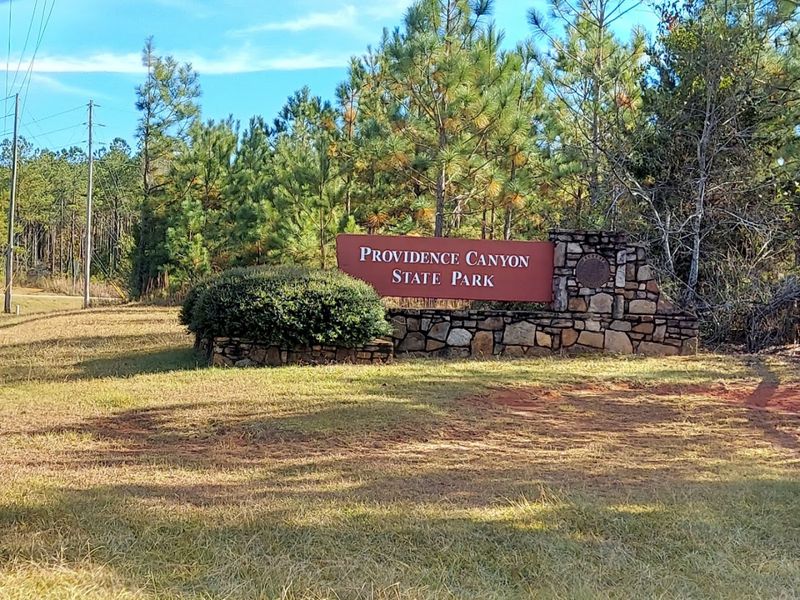
Planning ahead makes any park visit smoother, and Providence Canyon has a few practical details worth knowing before you go. As of January 2026, the entrance fee is $10 per car.
The park is open daily from 7 AM to 9 PM, giving visitors plenty of daylight hours to explore without feeling rushed. Parking is available at several locations throughout the park.
Cell service is spotty near the park and essentially nonexistent inside the canyon itself, so download trail maps before you arrive. The visitor center staff is known for being friendly and knowledgeable, and they can point you toward the best trails based on your group’s fitness level and available time.
Gas stations and restaurants are sparse in this rural area, so fuel up and grab food before making the drive. From Atlanta, plan for roughly two to two-and-a-half hours of travel time.
The park address is 8930 Canyon Rd, Lumpkin, GA 31815, and the phone number is 229-838-6202.
The Gift Shop and Visitor Center Worth Checking Out
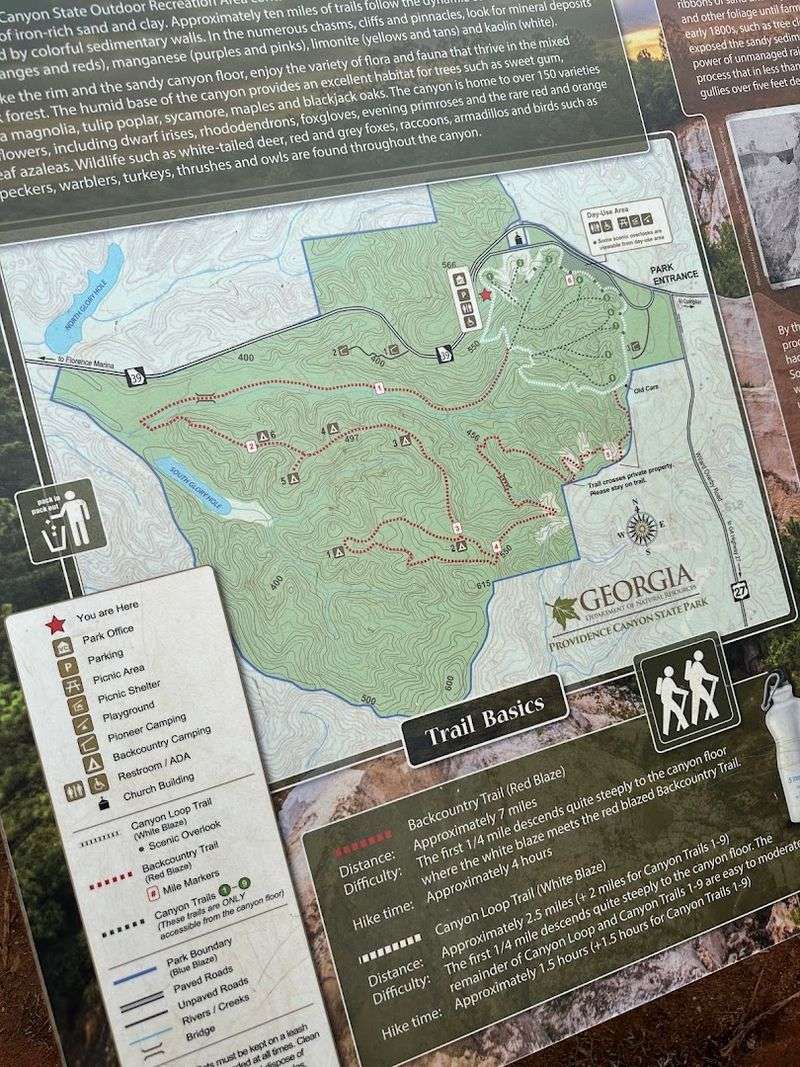
Stopping by the visitor center before hitting the trails is one of the smartest moves a first-time visitor can make. The staff there can give you a current trail conditions update, hand you a printed map, and answer any questions about what to expect on the canyon floor.
The center also features informative displays about the park’s geological and agricultural history.
The attached gift shop is genuinely worth browsing. Locally made ceramic mugs are a fan favorite, and reviewers frequently mention them as a unique souvenir that feels connected to the park’s clay-rich geology.
Snacks, cold drinks, and standard park merchandise are also available for purchase.
After a long hike, grabbing a cold drink from the shop and sitting at one of the nearby picnic tables is a perfect way to wind down. Staff members consistently receive high marks for being welcoming and informative, which adds to the overall positive visitor experience at this park.
Seasonal Highlights That Make Every Visit Feel Different
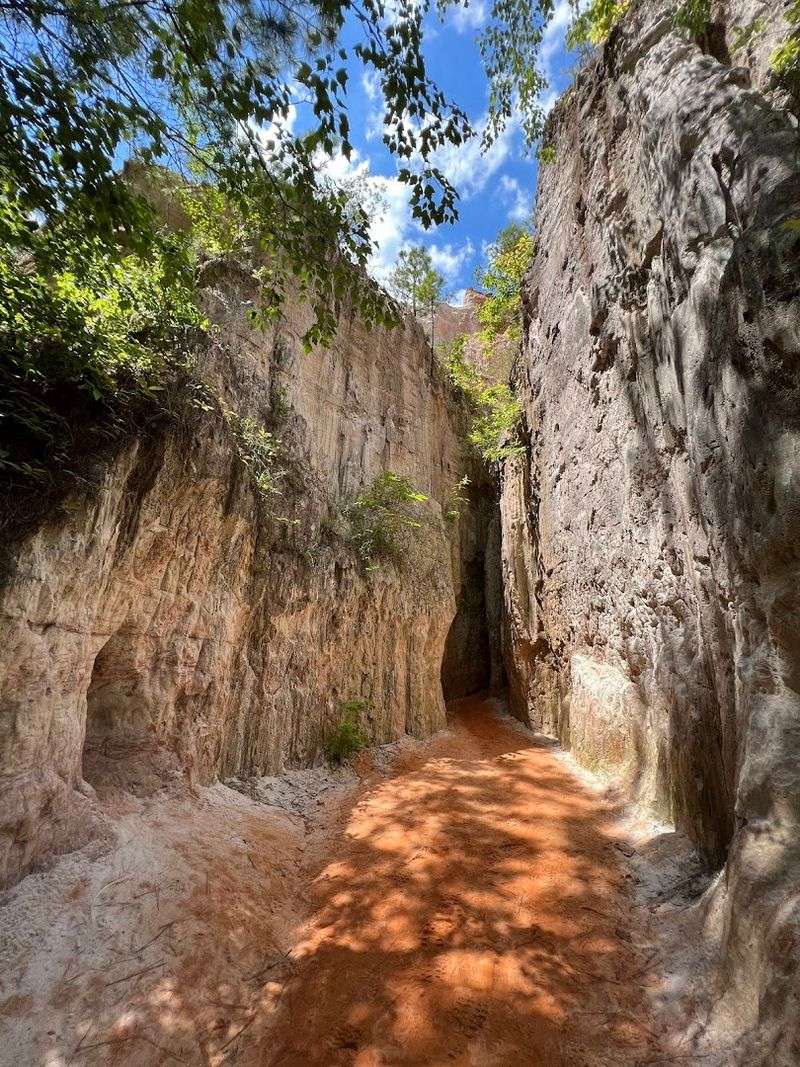
One of the most underrated things about Providence Canyon is how dramatically it changes with the seasons. Spring brings wildflowers and fresh green growth along the rim trails, making the contrast between living forest and bare canyon walls especially striking.
Fall is arguably the most stunning season, when autumn leaves in gold, orange, and red frame the already colorful canyon walls in a layered visual feast.
Winter visits tend to be quieter and less crowded, which appeals to hikers who prefer having the trails mostly to themselves. The canyon floor can be particularly wet in winter and early spring due to seasonal streams, but that also means the colors in the soil look more saturated and vivid after rain.
Summer is warm and humid, so early morning visits are strongly recommended to beat the heat. No matter which season you choose, the park rewards repeat visitors with a noticeably fresh perspective every single time.
Why This Park Earns Its Nickname, Georgia’s Little Grand Canyon
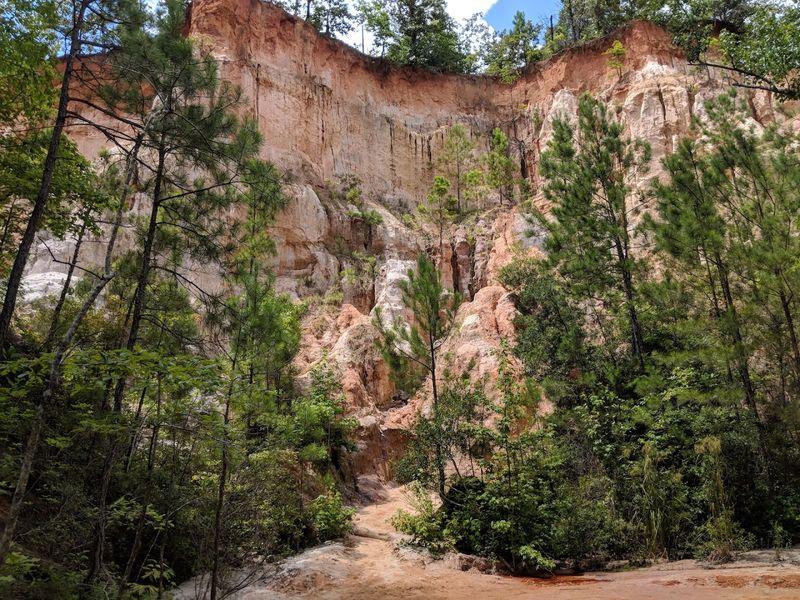
The nickname Georgia’s Little Grand Canyon is not just a marketing tagline. Visitors who have been to both places consistently describe a genuine visual similarity, with layered multicolored walls, deep gullies, and a sense of scale that feels completely out of place for rural southwest Georgia.
Canyon walls reach up to 150 feet deep in some sections, which is hard to fully appreciate until you are standing at the bottom looking up.
What makes Providence Canyon stand out from its famous western counterpart is its accessibility and intimacy. You can walk right through the canyon, touch the walls, and explore it in a single afternoon.
There is no overwhelming crowds or long shuttle rides, just you and the canyon.
With a 4.8-star rating from over 4,000 reviews, the park speaks for itself. If you have ever wanted to feel like you stepped onto another planet without leaving Georgia, this is exactly the place to make that happen.
Enjoyed this story?
Add Fast Food Club as a preferred source to see more of our reporting on Google.