


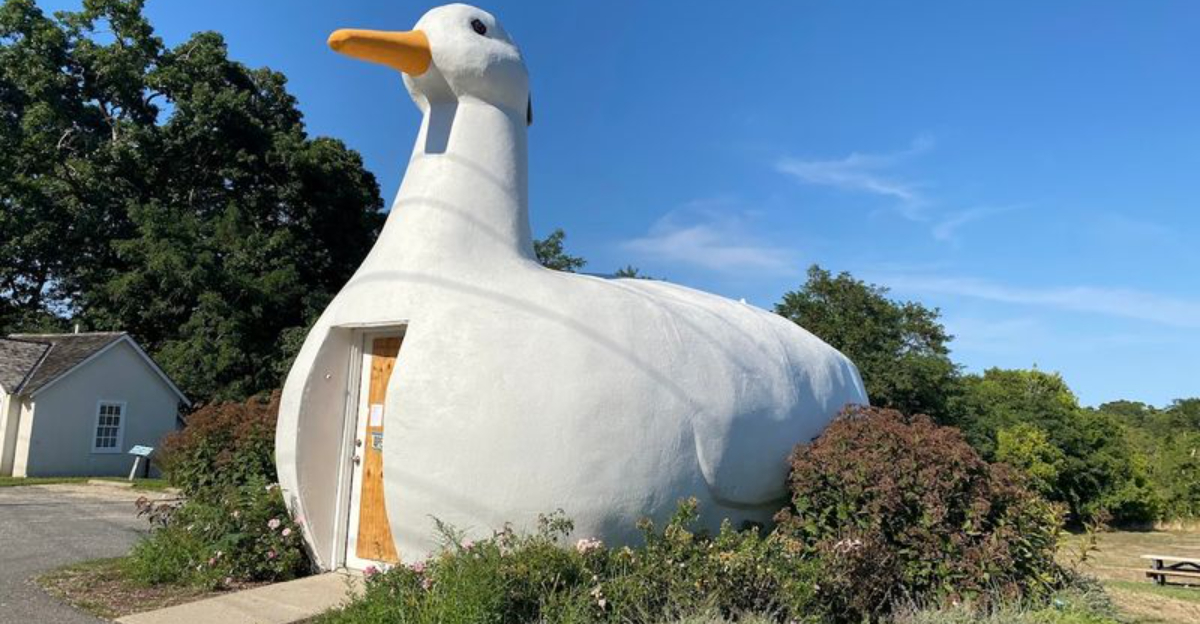
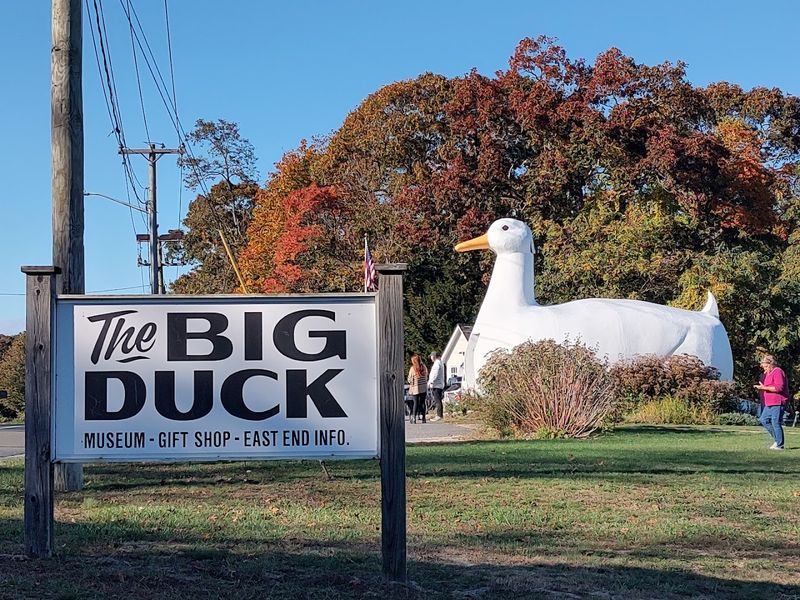
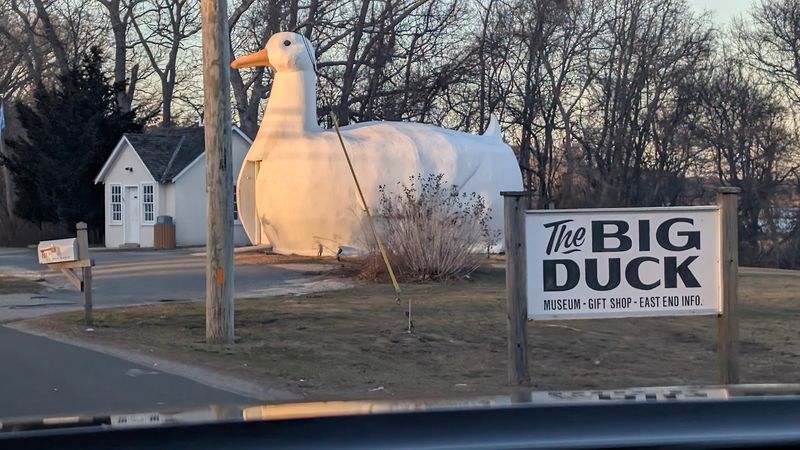
Somewhere along Route 24 in Flanders, New York, a giant white duck sits proudly by the roadside, turning heads and sparking smiles from everyone who passes by. The Big Duck is one of America’s most beloved roadside landmarks, and it has been doing its job since the 1930s.
Built to sell ducks and eggs, this quirky structure grew into a symbol of Long Island history and culture. Whether you are a local or just passing through, the Big Duck is the kind of place that sticks with you long after you leave.
The Fascinating Origin Story of the Big Duck
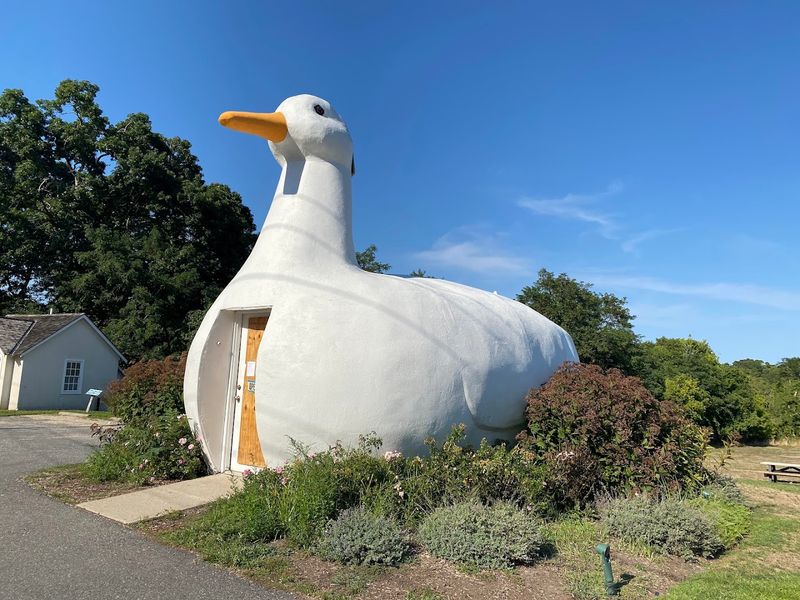
Back in 1931, a duck farmer named Martin Maurer had a bold idea: build a store shaped like a duck so people driving by could not miss it. He hired a set designer from a traveling circus to bring the vision to life, and the result was a 20-foot-tall concrete duck sitting right along the roadside.
The building was originally constructed in Riverhead, New York, and was later moved to its current spot in Flanders. Maurer used the structure to sell Long Island ducks and eggs directly to passing customers.
It was a clever marketing move that worked beautifully.
What started as a simple sales trick became a beloved piece of American architecture history. Architects even coined the term “duck” to describe any building shaped like the product it sells, all because of this one quirky structure on Long Island.
Why the Architecture Is Considered Iconic
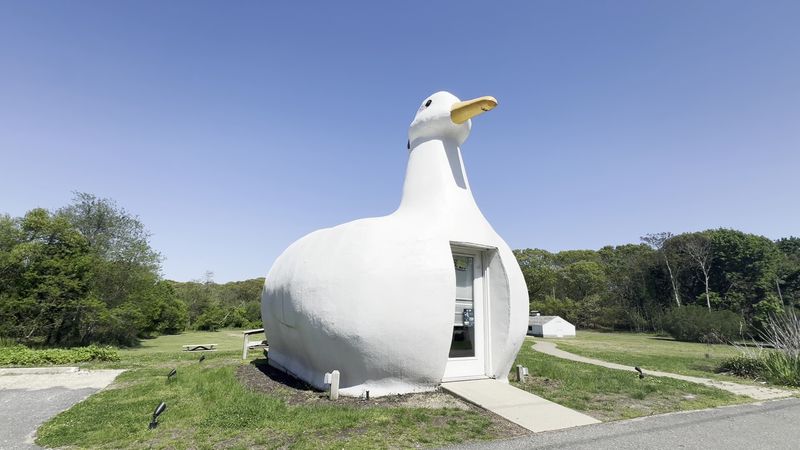
Architecture fans around the world recognize the Big Duck as a landmark example of what is called “novelty architecture” or “mimetic architecture.” That is just a fancy way of saying the building looks like the thing it represents. The structure stands about 20 feet tall and 30 feet long, making it hard to miss from the road.
The duck’s eyes are actually made from Ford Model T tail lights, which gives them a striking red glow. Its white concrete exterior is carefully maintained to keep that classic look fresh and inviting.
Every detail, from the rounded body to the wide orange beak, was designed to grab attention.
Architects Robert Venturi and Denise Scott Brown famously referenced the Big Duck in their influential 1972 book, cementing its place in architectural history. Few roadside buildings have ever earned that kind of academic recognition.
A Journey Through Its Many Moves and Homes
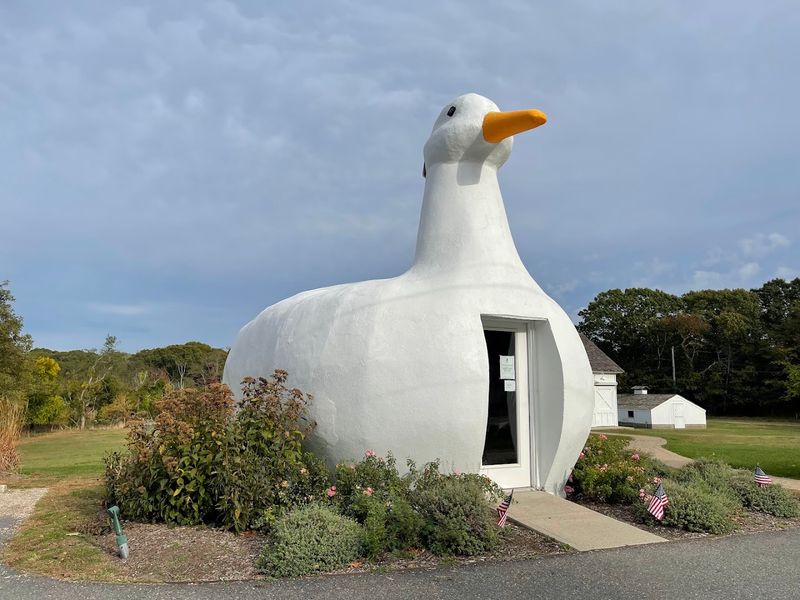
Not many buildings can say they have moved around the neighborhood, but the Big Duck has had quite the travel history. Originally built in Riverhead in 1931, it was relocated to Flanders not long after.
Then, in the 1980s, it faced the threat of demolition as the property changed hands.
Thankfully, Suffolk County stepped in and saved the duck from being torn down. It was moved to Sears Bellows County Park for preservation while plans were made for its future.
Visitors could still see it there, but it felt a bit out of place in the woods.
In 2007, the Big Duck finally came home. It was moved back to its original Flanders location on Route 24, right where the story began.
Coming full circle, the duck now sits proudly on the land where Martin Maurer first dreamed it up.
Inside the Gift Shop: Duck-Themed Treasures Await
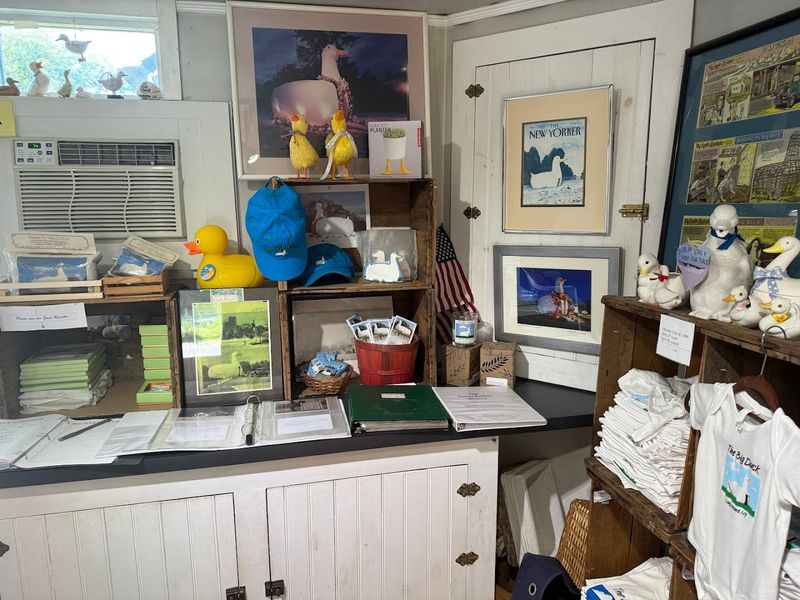
Step inside the Big Duck and you will find a cheerful little gift shop packed with all things duck-themed. From postcards and keychains to t-shirts and frisbees, there is something for every kind of visitor.
The shop feels like a treasure hunt where every shelf holds a fun surprise.
Cookie cutters, ornaments, and small ceramic duck figurines are among the most popular picks. Visitors love grabbing a postcard to send to friends back home, proving that some old-school traditions never get old.
The walls are decorated with newspaper clippings and memorabilia that tell the duck’s long history.
One tip worth knowing: it is handy to bring some cash, as the card system has occasionally had hiccups. The staff inside are famously friendly and knowledgeable, making the shopping experience feel warm and personal rather than like a typical tourist stop.
The Mini Museum Hidden Inside the Duck
Many visitors are surprised to discover that the Big Duck is more than just a photo opportunity. Hidden inside is a small but fascinating mini museum filled with binders of newspaper clippings, old photographs, and artifacts that trace the duck’s long and winding history.
History buffs absolutely love this part.
The displays cover everything from the original duck farm days to the preservation battles and eventual homecoming. Friendly staff members are always on hand to explain the stories behind the displays, making the experience feel personal and engaging rather than just reading dusty old labels.
There is even a skylight near the entrance that lets you peek up into the attic space, giving a rare glimpse at the building’s interior structure. It is a small but memorable detail that reminds you just how unique and handcrafted this building truly is.
Come curious and leave inspired.
Long Island Duck Farming: The History Behind the Honk
Long Island was once the duck capital of the United States. In the early 1900s, the region produced millions of Pekin ducks each year, supplying restaurants and markets across the country.
The flat farmland and access to waterways made it a perfect environment for large-scale duck farming.
Martin Maurer was one of many farmers who made his living raising ducks in this region. The Big Duck was essentially his roadside advertisement, helping him stand out in a crowded market.
At its peak, Long Island’s duck industry was a major part of the local economy.
Today, large-scale duck farming has largely disappeared from Long Island, but the Big Duck keeps that heritage alive. Visiting it feels like stepping back into a time when this part of New York was defined by open farms and the sound of quacking.
It is a living piece of agricultural history.
The Famous Red Eyes and Fun Structural Details
Look closely at the Big Duck’s eyes and you will spot something unexpected: they are made from Ford Model T automobile tail lights. That creative recycling was a practical choice back in the 1930s when building materials had to be sourced cleverly.
Today, those glowing red eyes have become one of the duck’s most talked-about features.
The entire structure is made from wire mesh covered with concrete, a building technique that was common for novelty structures of that era. The smooth white surface gives the duck a clean, cartoon-like appearance that photographs beautifully in any lighting.
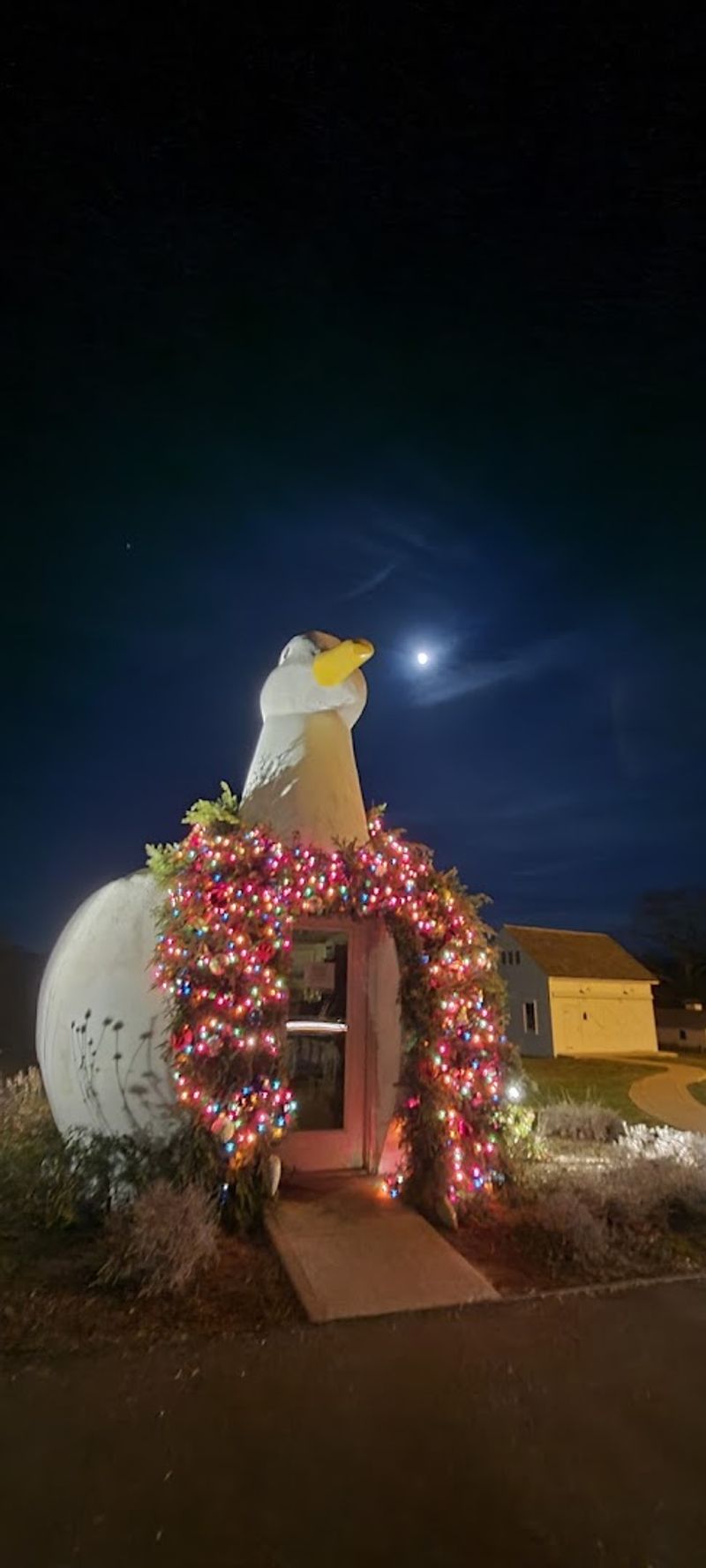
At night, those red eyes take on an almost magical quality.
Even the proportions were carefully thought out. The duck’s rounded body, stubby wings, and wide stance give it a friendly, approachable look that feels welcoming rather than strange.
Every detail was designed to make passing drivers slow down and smile.
Visiting Hours, Location, and What to Expect
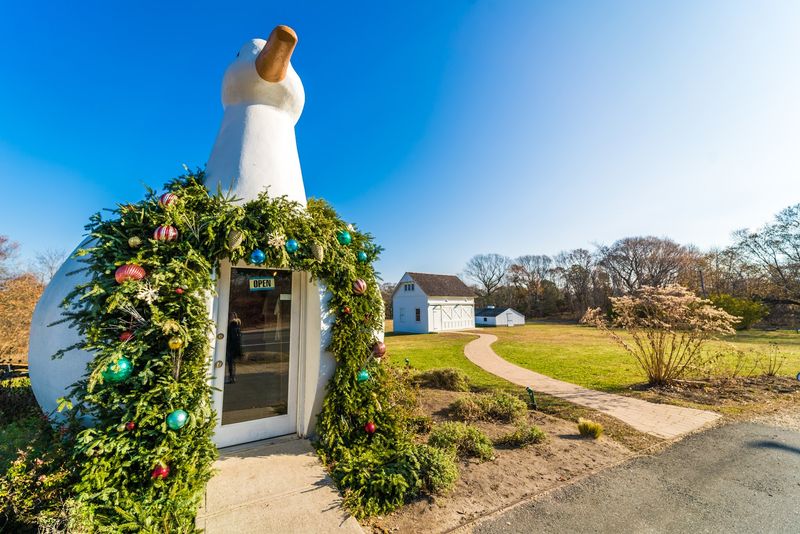
Planning a visit to the Big Duck is pretty straightforward. The landmark is located at 1012 NY-24 in Flanders, New York, right along the main road where it is impossible to miss.
It is open every day of the week from 10 AM to 5 PM, which makes it easy to work into a Long Island road trip.
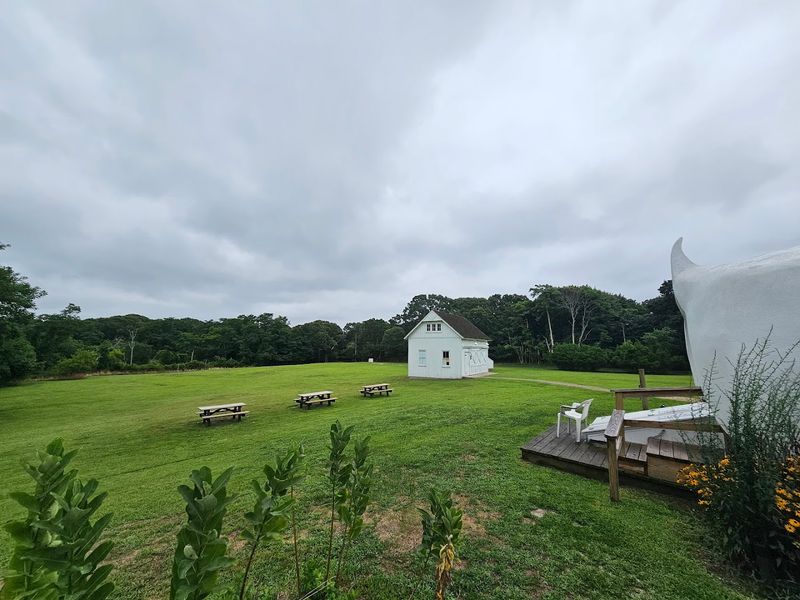
Parking is limited to just a few spots right next to the duck, so arriving early on busy days is a smart move. Behind the building, there are picnic tables set among flowers and plants, making it a lovely spot to sit, relax, and soak in the surroundings after browsing the gift shop.
The phone number for the Big Duck is +1 631-852-3377 if you want to confirm hours before heading out. More details can also be found at the Suffolk County Parks website.
The experience is free to visit, though the gift shop is hard to resist.
Special Events: The Duck Lighting Celebration
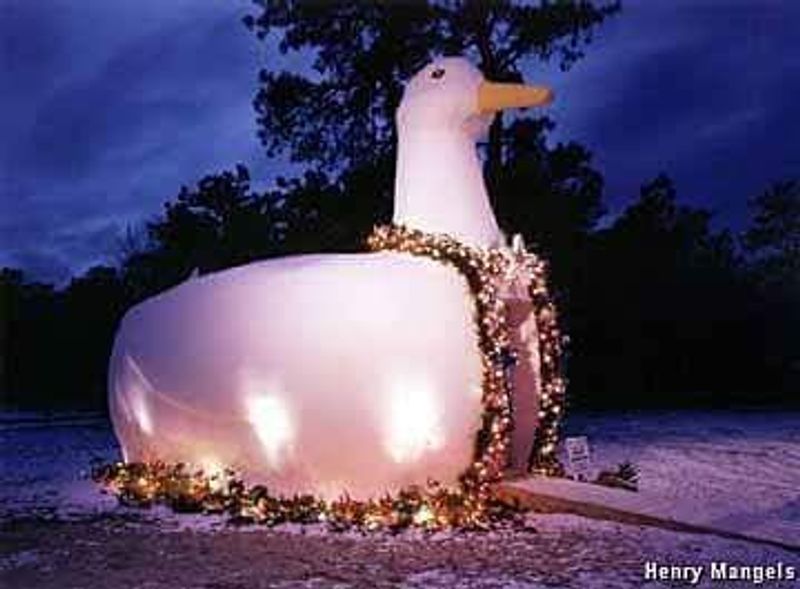
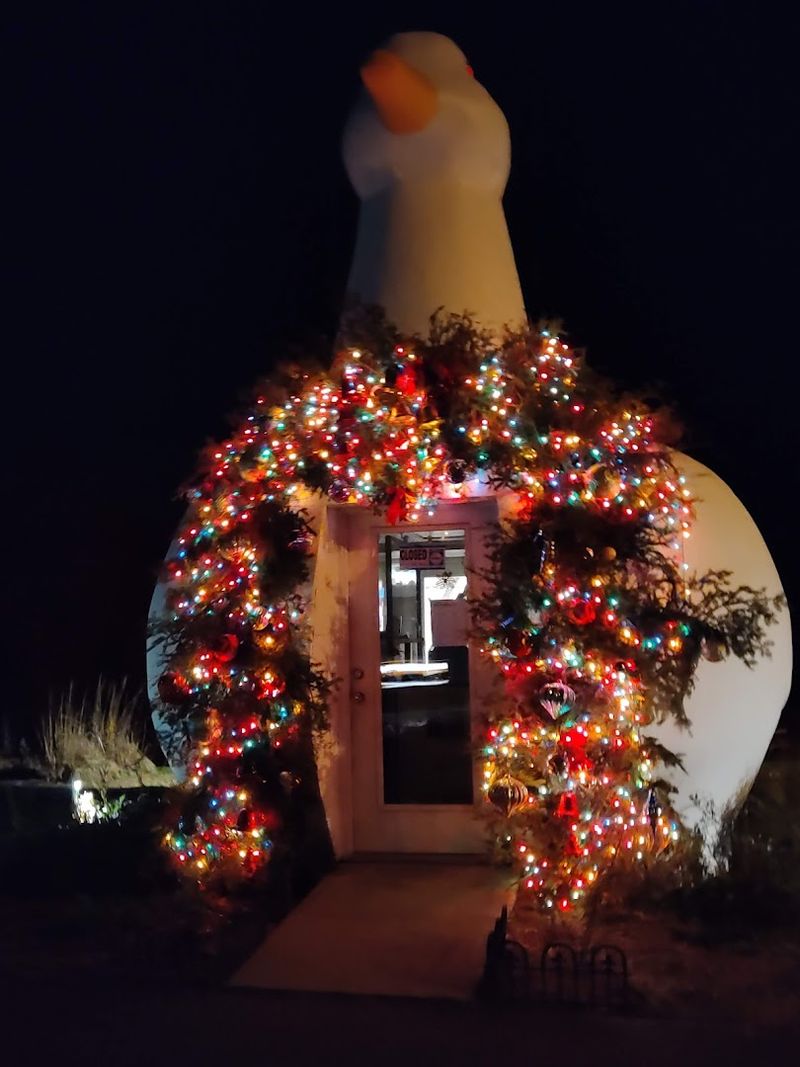
One of the most charming events at the Big Duck is the annual duck lighting ceremony, which draws families and locals from across Long Island. Much like a tree lighting at the holidays, the duck lighting is a community celebration that fills the surrounding area with warmth and excitement.
Attendees have described it as genuinely lovely.
For this special event, the parking situation changes slightly. Organizers set up additional parking in the back of the property to handle the bigger crowd, making the event feel well-organized and welcoming.
It is a great reminder that the Big Duck is not just a tourist stop but a true community gathering place.
If you happen to be visiting Long Island during the holiday season, checking the Suffolk County Parks website or calling ahead to find out when the duck lighting is scheduled is absolutely worth it. It turns a fun visit into a truly memorable evening.
What Real Visitors Say About the Experience
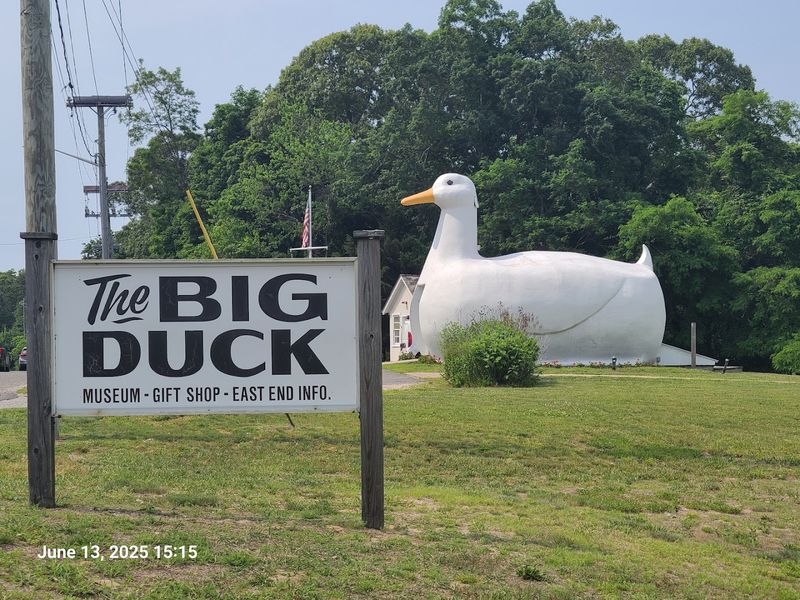
With a 4.6-star rating from over 1,000 reviews, the Big Duck has clearly won the hearts of a lot of people. Visitors from across the country and even from places as far as California make the trip out to Flanders just to see this quirky landmark in person.
Most walk away smiling.
Reviewers consistently praise the knowledgeable and friendly staff who make every visit feel personal. One visitor described staff member Kristen as “super knowledgeable and oh so helpful,” while others have raved about the warm welcome they received at the gift shop counter.
That human touch makes a real difference.
Even visitors who arrived after closing hours gave the Big Duck five stars, saying the experience of seeing the structure from the outside was worth it on its own. That kind of enthusiasm says everything about just how special this little roadside wonder truly is.
How the Big Duck Inspired an Architecture Term
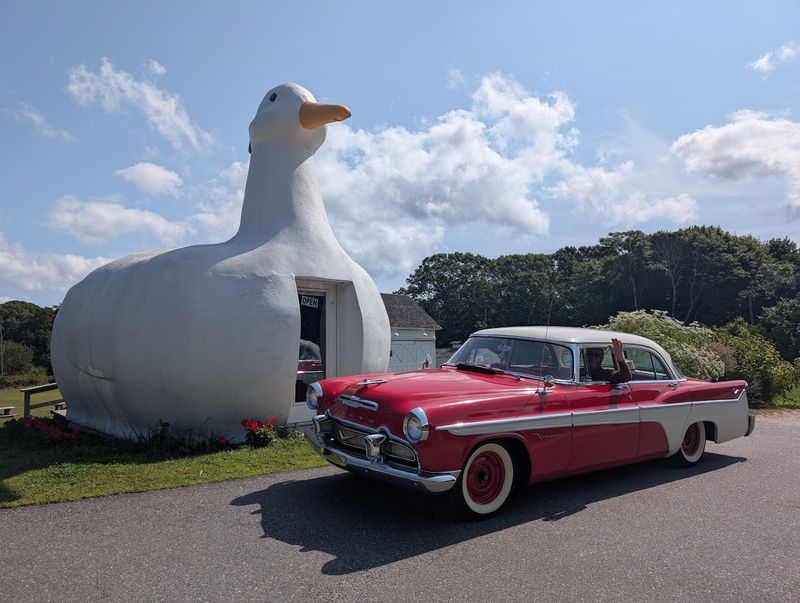
Here is a fun fact that might surprise you: the Big Duck did not just inspire smiles, it inspired an entire architectural vocabulary. Architects Robert Venturi, Denise Scott Brown, and Steven Izenour used the Big Duck as a defining example in their landmark 1972 book, “Learning from Las Vegas.”
In that book, they coined the term “duck” to describe any building whose shape communicates its purpose, like a donut shop shaped like a donut or a hot dog stand shaped like a hot dog. The concept became a cornerstone of postmodern architecture theory taught in universities around the world.
So the next time you spot a building shaped like a coffee cup or a shoe, you can thank a Long Island duck farmer for the vocabulary to describe it. Martin Maurer had no idea his roadside sales trick would end up in architecture textbooks for generations to come.
Tips for Making the Most of Your Visit
Getting the most out of your Big Duck visit comes down to a few simple tips. First, arrive close to opening time at 10 AM if you want to browse the gift shop without a crowd.
Weekends can get busier, especially during summer when Long Island tourism peaks along the East End.
Bring some cash just in case the card reader is having a slow day, as a couple of reviewers have mentioned occasional technical glitches. It is also worth wearing comfortable shoes since there are picnic tables and a nice outdoor area to explore after you finish inside.
Do not rush the experience. Take time to read the newspaper clippings on the walls, chat with the staff, and look up through the skylight for that quirky attic peek.
One visitor famously grabbed duck donuts from a nearby shop and ate them in front of the duck, which honestly sounds like the perfect plan.
Why the Big Duck Still Matters Today
In a world of giant screens and cookie-cutter strip malls, the Big Duck stands as a joyful reminder that creativity and personality still matter. It has survived nearly a century of change, economic shifts, and even the threat of demolition, and it is still here making people laugh and wonder.
That kind of staying power means something.
Suffolk County Parks now manages and preserves the site, ensuring that future generations will be able to experience this piece of American roadside culture. The fact that a government agency stepped in to save a giant concrete duck speaks volumes about how much the community values it.
More than a quirky photo stop, the Big Duck represents the spirit of Long Island: hardworking, creative, and a little wonderfully weird. Stopping by feels like a small act of appreciation for the people and places that refuse to be ordinary.
Long live the Big Duck.
Enjoyed this story?
Add Fast Food Club as a preferred source to see more of our reporting on Google.