


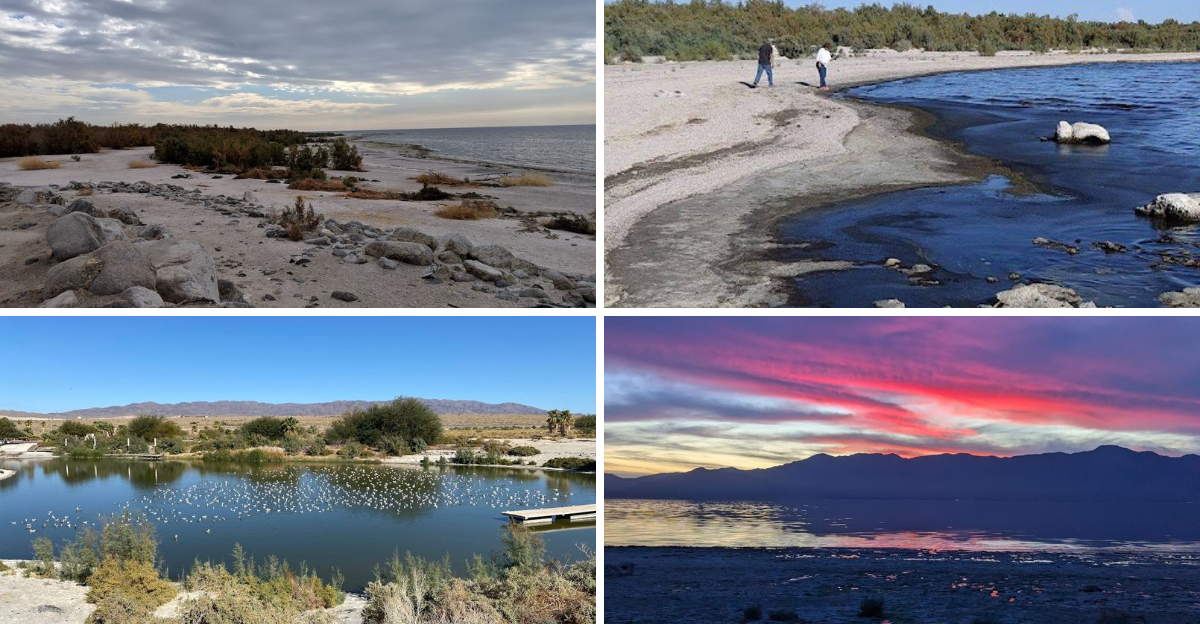
Tucked away in the scorching California desert near Mecca, CA, the Salton Sea State Recreation Area is one of the strangest and most fascinating places you can visit in the entire state. Its shoreline is blanketed with the tiny bones and scales of millions of fish, creating a crunchy, pale beach unlike anything you’ve ever seen or felt beneath your feet.
This eerie yet beautiful landscape sits below sea level, surrounded by mountains, desert heat, and an almost otherworldly silence. If you’re looking for an adventure that feels like stepping onto a different planet, this is the place.
The Bone-Covered Shoreline That Stops You in Your Tracks
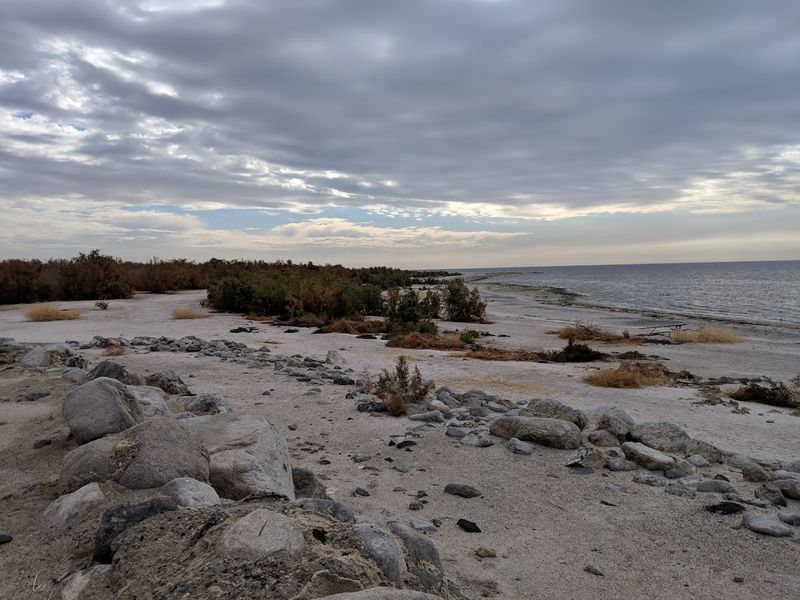
Crunch. That’s the sound your shoes make the moment you step onto the Salton Sea’s famous shoreline.
Instead of sand, the beach is blanketed in millions of tiny fish bones, scales, and barnacle fragments — all bleached white by the relentless desert sun.
Over decades, fish populations in the lake collapsed due to rising salinity levels, leaving behind this hauntingly pale layer of remains. Walking along it feels surreal, almost like something out of a science fiction movie.
Despite how strange it sounds, many visitors find the shoreline oddly beautiful. The contrast between the pale, crunchy ground and the dark blue-green water stretching into the distance is genuinely striking.
Wear closed-toe shoes for comfort, and take your time soaking in the strangeness. It’s not every day you walk on a beach made entirely of bones.
A Man-Made Sea With a Wild, Unexpected History
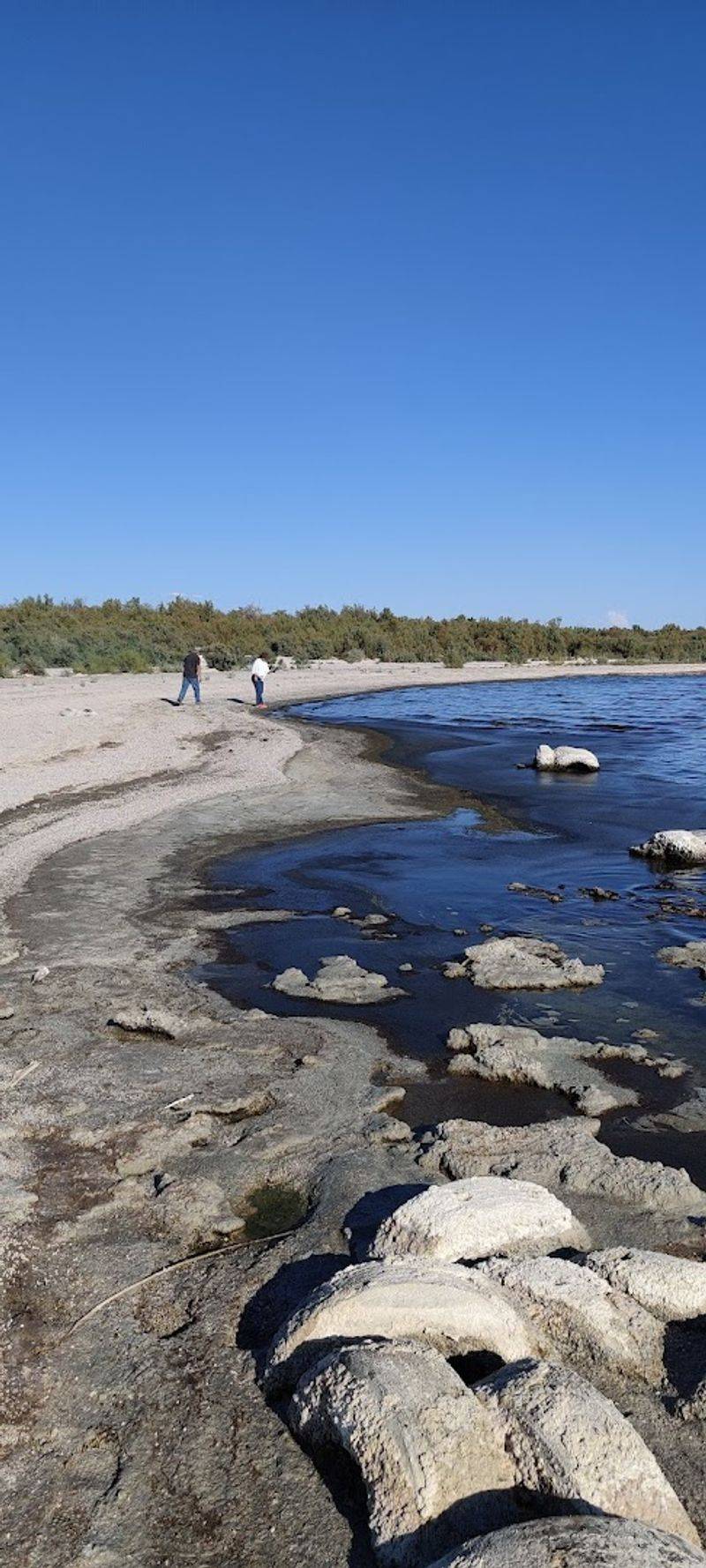
Believe it or not, the Salton Sea wasn’t supposed to exist. Back in 1905, an irrigation canal broke, and water from the Colorado River flooded a dry desert basin for nearly two full years before engineers could stop it.
The result was California’s largest lake by surface area.
For a while, the Salton Sea was actually a glamorous resort destination. Celebrities visited, boats raced across its waters, and fishing was booming.
Then the water grew saltier and more polluted, and the crowds disappeared.
What’s left today is a place frozen in time — a ghost of its glamorous past surrounded by desert silence. Learning this history makes every visit feel more meaningful.
You’re not just looking at a lake; you’re witnessing the rise and fall of a place that humans accidentally created and then slowly forgot.
Birding Paradise Hidden in Plain Sight
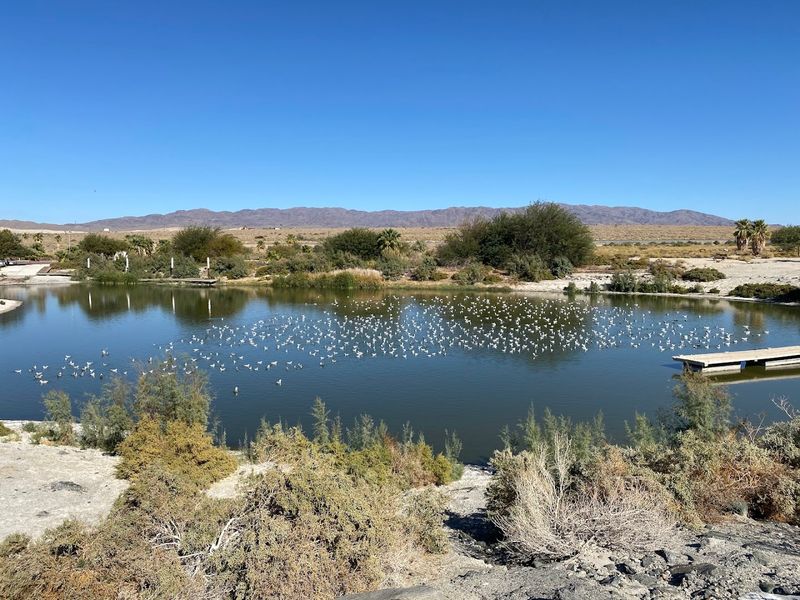
You might not expect a dying lake in the middle of the desert to be a world-class birding destination, but the Salton Sea pulls off exactly that surprise. Over 400 species of birds have been recorded here, making it one of the most important stopover points on the Pacific Flyway migration route.
During winter months, the shoreline comes alive with pelicans, herons, egrets, stilts, and dozens of shorebird species. Burrowing owls can be spotted along nearby Merkley Road, and a freshwater lagoon near the tip of the sea attracts nesting birds year-round.
Park rangers are incredibly knowledgeable and happy to point you toward the best viewing spots. Bring binoculars, a field guide, and a camera with a good zoom lens.
Early mornings offer the most active bird behavior, so set that alarm and come ready to be amazed.
Sunsets That Look Like They Were Painted by Hand
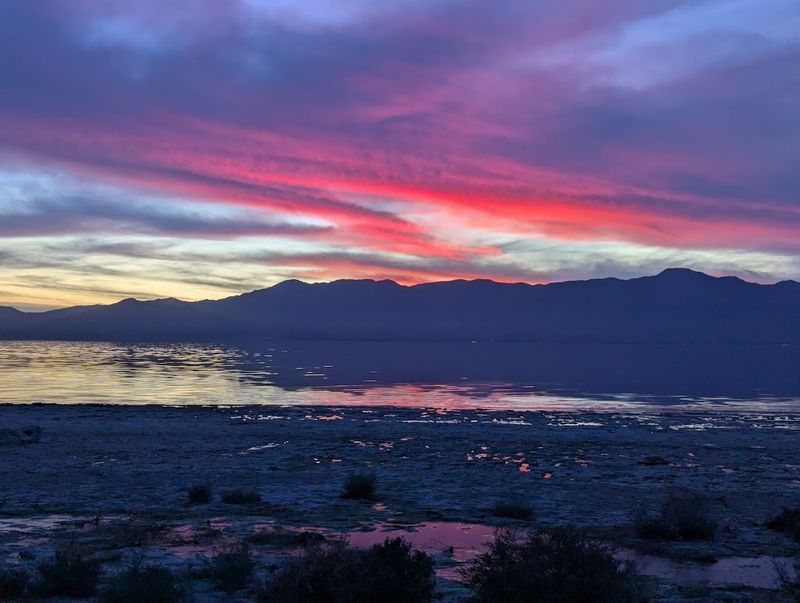
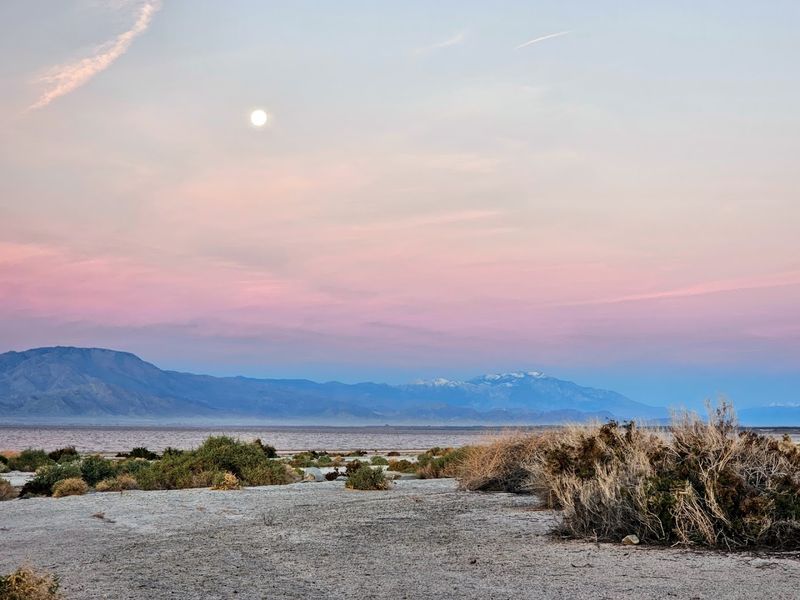
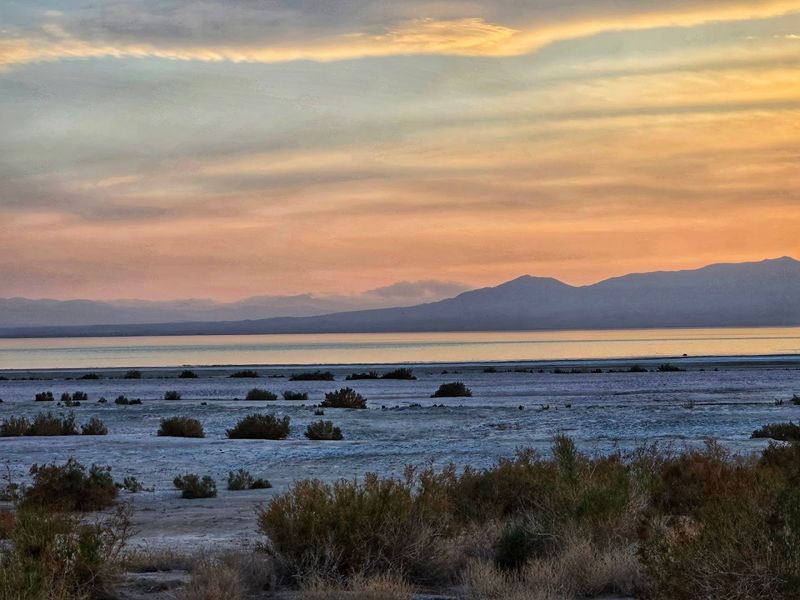
Ask anyone who has watched the sun go down at the Salton Sea, and they’ll tell you the same thing — it’s unforgettable. The mountains surrounding the lake catch the fading light in shades of deep orange, rose pink, and violet that reflect perfectly off the still, glassy water below.
Because the air in the desert is so dry and clear, there’s very little haze to block the colors. The result is a sunset that feels almost too vivid to be real.
One visitor described it as looking like a painting, and honestly, that’s not an exaggeration.
Get to the shoreline at least 30 minutes before sunset to find a good spot and settle in. Bring a blanket, snacks, and your phone fully charged.
Whether you’re visiting solo or with friends, this is a moment that will stick with you long after you leave.
Stargazing So Good It’ll Ruin City Skies for You
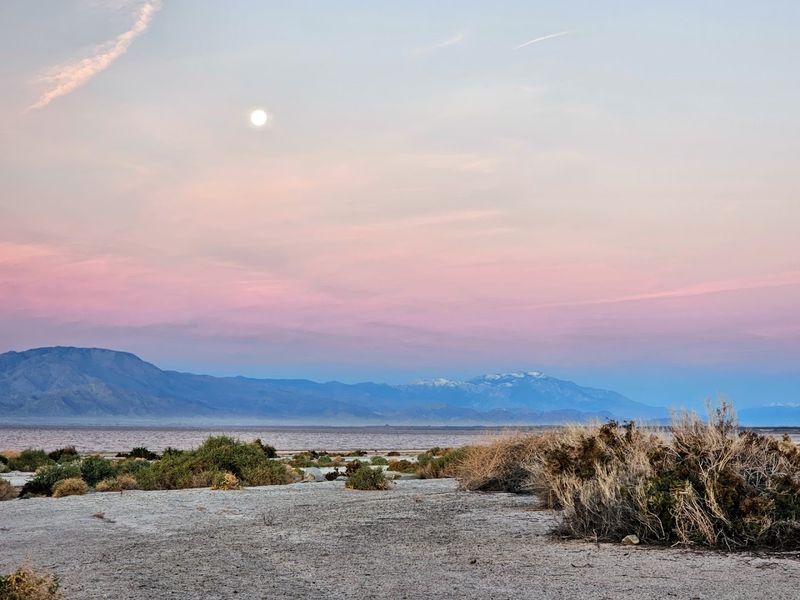
Far from city lights, the Salton Sea area offers some of the darkest skies in Southern California. On a clear night, the Milky Way stretches across the sky like a glowing river, and shooting stars are almost guaranteed if you watch long enough.
The campground at Salton Sea State Recreation Area is perfectly positioned for stargazing. With wide open views in every direction and almost no light pollution, the experience is genuinely jaw-dropping.
Campers regularly report lying awake just staring upward, unable to sleep because the sky is too beautiful to ignore.
A star chart app on your phone can help you identify constellations and planets. Bring a red-light flashlight so you don’t ruin your night vision.
Winter nights are especially spectacular here because the air is cool, the crowds are thin, and the sky seems impossibly clear and deep.
Camping With a View That Costs Almost Nothing
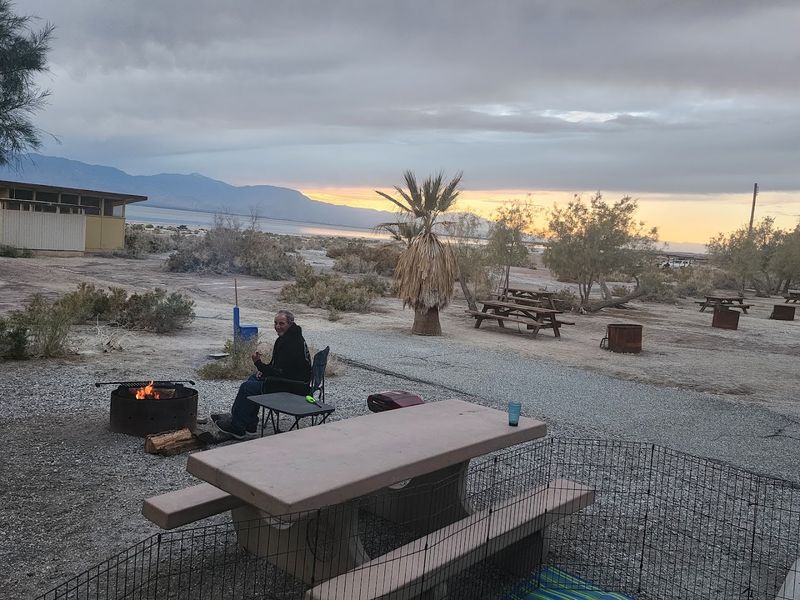
Camping at the Salton Sea State Recreation Area is surprisingly comfortable for a place this remote. Sites come with large firepits, bear-proof trash cans, and access to clean restrooms with showers nearby.
Some sites even offer 30-amp electrical hookups for RV campers.
Visitors consistently rave about how clean and well-maintained the campground is. One reviewer called it one of the cleanest campground bathrooms they had ever seen — high praise for any outdoor facility.
The sites are spacious, and the view of the lake from your campfire is something you simply can’t put a price on.
One thing to prepare for: a train track runs nearby, and trains pass through at night. Most campers sleep right through the rumbling, but light sleepers might want earplugs.
Book your site in advance during winter weekends, because word is getting out about just how special this hidden gem really is.
Wildflowers Blooming Against All Odds
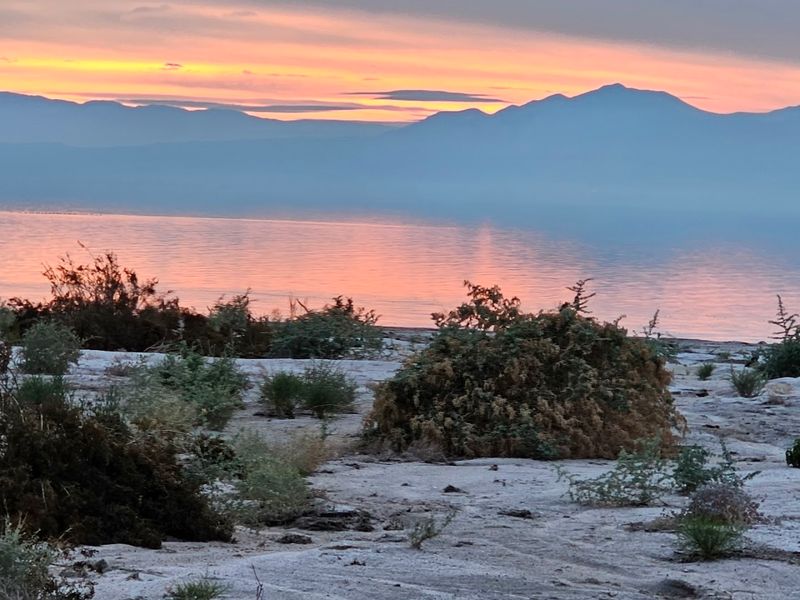
Every February, something magical happens along the eastern shore of the Salton Sea. Wildflowers burst into bloom across the desert landscape, painting the ground in yellows, purples, and whites that seem impossibly cheerful against the pale, bone-covered shore nearby.
These plants are tough as nails. They’ve adapted to survive in salty, dry, and nutrient-poor soil where most other vegetation simply gives up.
Seeing them thrive in such a harsh environment feels like a quiet act of defiance against the odds, and it’s genuinely moving to witness.
Mid-February is peak bloom season, so plan your visit accordingly if you want the full effect. Early morning light makes the flowers glow warmly and is ideal for photography.
Pair a wildflower walk with some birdwatching along the shoreline, and you’ve got yourself a perfect winter morning in one of California’s most underrated natural spots.
The Apocalyptic Atmosphere of Bombay Beach Nearby
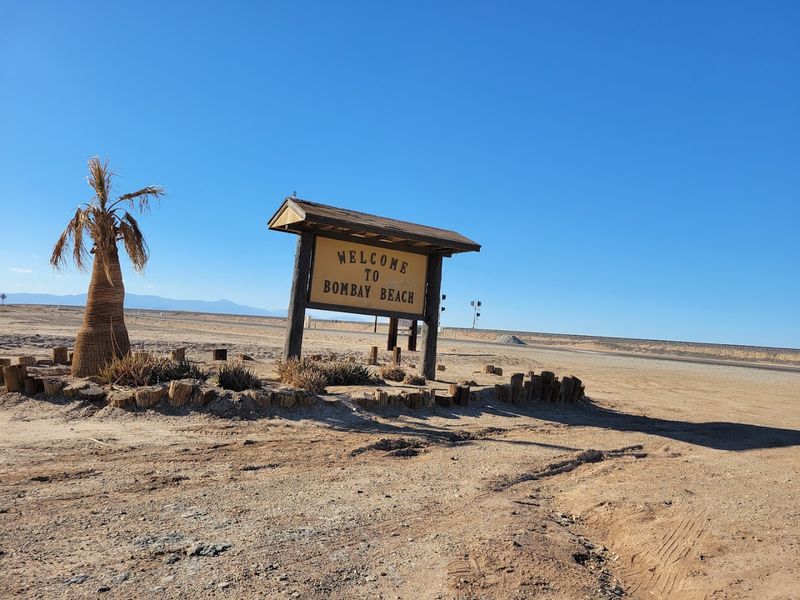
Just down the road from the state recreation area lies Bombay Beach, and calling it unusual would be a serious understatement. Former vacation homes sit half-submerged at the waterline, rusted car frames dot the landscape, and colorful graffiti murals cover nearly every remaining wall.
One visitor perfectly described it as looking like something straight out of Mad Max. The whole area has an apocalyptic energy that’s hard to explain until you see it for yourself.
Yet somehow, a small community of people still calls this place home, which adds another layer of fascinating complexity to the experience.
Bombay Beach is worth an afternoon of exploration, but go with awareness. Stay on public roads, respect private property, and keep an eye on your surroundings.
The beauty here has grown from real hardship, and approaching the area with curiosity and respect makes for a far more meaningful visit.
The Smell, the Salt, and What You Should Know Before You Go
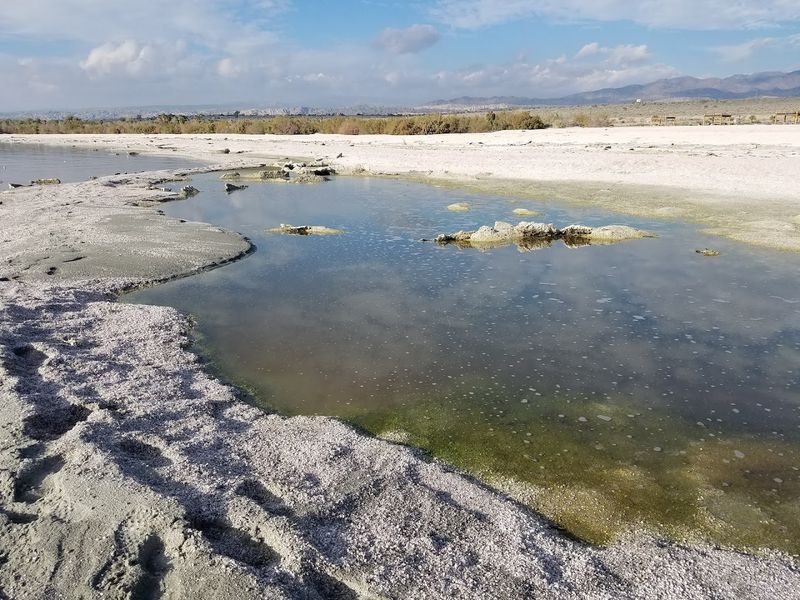
Honesty matters when you’re helping someone plan a trip, so here it is: the Salton Sea has a smell. The combination of algae, salt, and decomposing organic matter creates an odor that can range from mildly funky to genuinely strong depending on the season, wind direction, and how close you get to the water.
The water itself is not safe for swimming or boating in many areas due to algae blooms and contamination. Signs around the park make this clear, but always double-check current conditions before you visit.
Pets should be kept away from the water’s edge as well.
Despite all of this, thousands of visitors come every year and leave genuinely glad they made the trip. Going in with realistic expectations makes all the difference.
Pack water, wear sunscreen, bring bug spray for warmer months, and embrace the weirdness. The Salton Sea rewards curious, open-minded visitors in ways few other places can.
Mud Pots, Geology, and Earth Doing Wild Things
Not far from the Salton Sea, the ground itself starts doing something strange. Mud pots — pools of hot, bubbling mud created by geothermal activity beneath the surface — dot the landscape and offer a genuinely wild geological experience that most people never expect to find in the California desert.
Kids absolutely love them, but there’s an important warning: the fresh mud is extremely hot. Keep a safe distance and supervise young visitors closely.
Watching the thick, gray mud slowly bubble and pop is mesmerizing, almost like watching the Earth breathe.
The area around the Salton Sea sits on a geologically active zone, which helps explain why such unusual features exist here. A knowledgeable park ranger or visitor center staff member can point you toward the best viewing spots safely.
Add this to your itinerary alongside the shoreline walk for a full-day experience that covers geology, biology, and sheer wonder.
Park Rangers Who Actually Make Your Visit Better
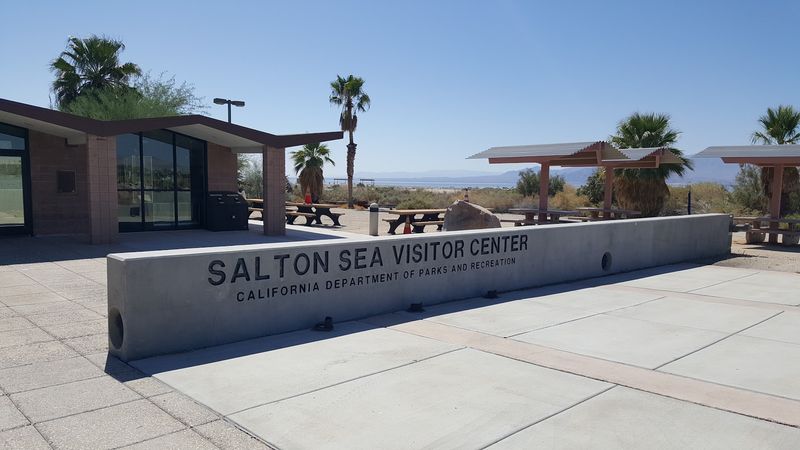
Good park rangers can transform an ordinary visit into something genuinely special, and the staff at Salton Sea State Recreation Area consistently earns high praise from visitors. Multiple reviews describe rangers as enthusiastic, kind, and overflowing with practical knowledge about the park’s history, wildlife, and best hidden spots.
One memorable story from a visitor involved a ranger named Byron who literally pulled a child out of the soft, salty mud near the water’s edge — twice. That kind of above-and-beyond dedication says a lot about the people who work here and how seriously they take visitor safety and enjoyment.
Stop by the visitor center when you arrive and spend a few minutes chatting with whoever is on duty. Ask about burrowing owls, current bird activity, trail conditions, and local tips.
You’ll leave with a much richer understanding of what you’re looking at — and probably a few insider recommendations you won’t find anywhere online.
Hiking Trails That Lead Into True Wilderness
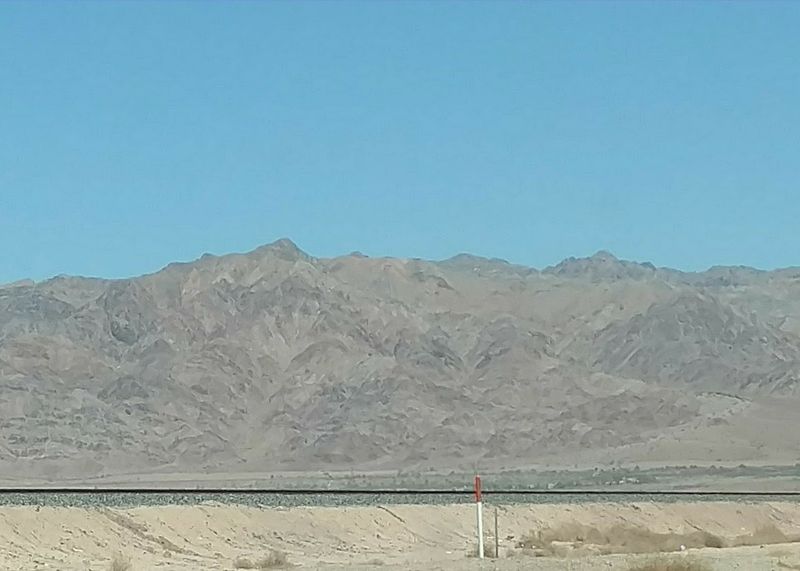
North of the railway tracks, the Salton Sea area opens up into real, raw wilderness. Hiking trails here are not manicured or perfectly marked — this is open desert exploration, and it rewards those willing to pay attention to their surroundings.
Visitors have reported finding embedded marine fossils in the hillsides, remnants of an ancient sea that existed long before the current Salton Sea was accidentally created. The geological layers visible in the terrain tell a story that stretches back thousands of years, and every hike feels like a small act of discovery.
Always carry more water than you think you’ll need, wear sturdy boots, and tell someone where you’re going. Rattlesnakes live in this area — give them space and they’ll give you space.
Bring a map or download an offline GPS route, because cell service can be unreliable. The freedom out here is real, and so is the responsibility that comes with it.
Why Winter Is Absolutely the Best Time to Visit
Summer at the Salton Sea is brutal — temperatures regularly soar past 110 degrees Fahrenheit, bugs multiply, and the smell intensifies with the heat. Winter, on the other hand, transforms the place into something genuinely wonderful.
Mild temperatures make outdoor activities comfortable, and the park feels calm and uncrowded.
January through early March is peak season for migratory birds, wildflower blooms, and pleasant camping weather. Sunsets are especially vivid in winter, and the cool nights make stargazing far more enjoyable than sweating through a summer evening ever could be.
If you can only visit once, make it December through February. Pack layers for the chilly mornings, comfortable walking shoes, and a good pair of binoculars.
Before you head home, swing by a local shop and grab a date shake — a regional specialty made from the desert-grown dates that thrive in the Coachella Valley nearby. You won’t regret it.
Enjoyed this story?
Add Fast Food Club as a preferred source to see more of our reporting on Google.