


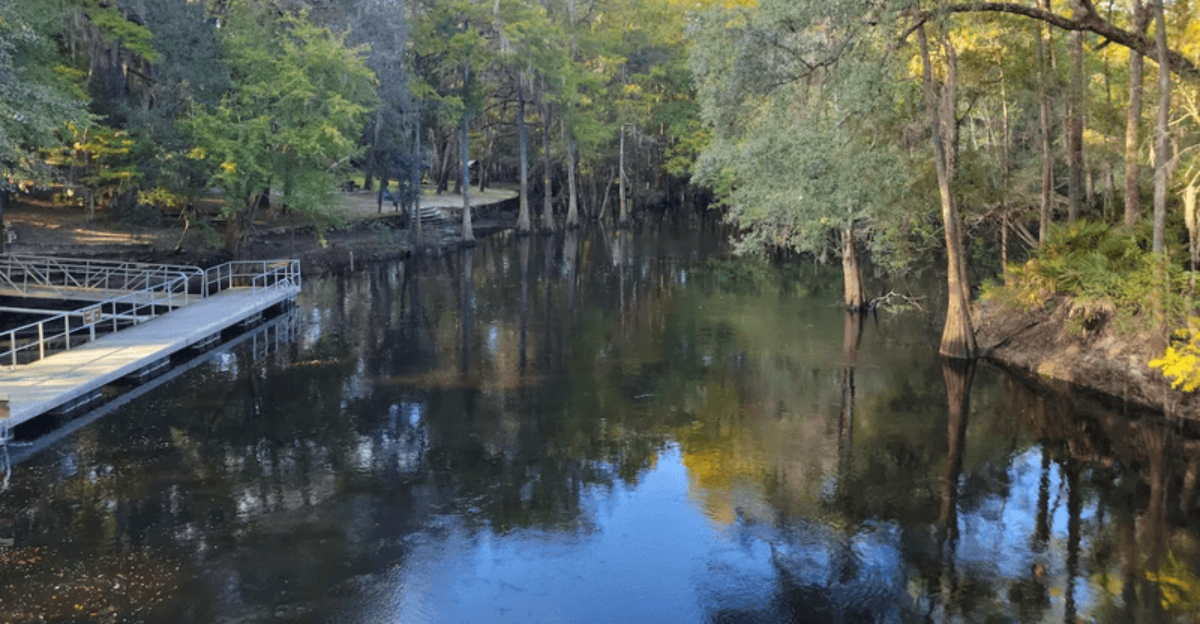
Tucked away in the small town of High Springs, Florida, O’Leno State Park is one of the state’s best-kept secrets. Most people drive right past it without ever knowing what they’re missing, and honestly, that works out great for those who do stop.
From a historic suspension bridge to a river that literally disappears underground, this park is packed with surprises. Whether you’re into hiking, camping, or just soaking up nature, O’Leno delivers an experience that feels completely off the beaten path.
The Santa Fe River: Where the Water Pulls a Disappearing Act
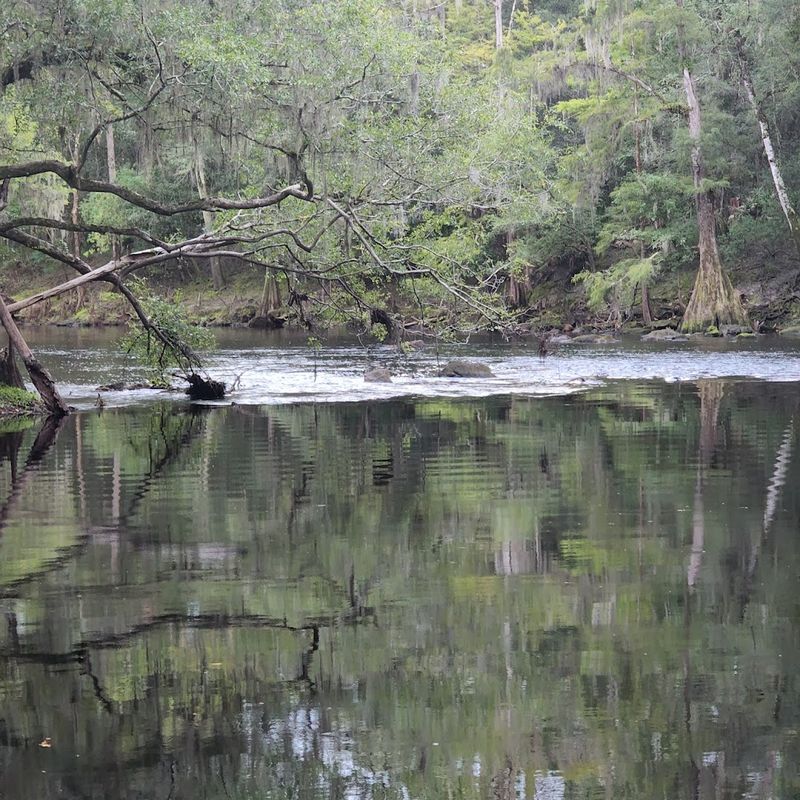
Somewhere along the trail at O’Leno State Park, the river just vanishes. The Santa Fe River sinks into the Florida aquifer and travels underground for roughly three miles before bubbling back up at River Rise Preserve next door.
It’s one of the most fascinating natural phenomena in the entire state, and most Floridians have never even heard of it.
Standing at the sink point, you can watch the current slow and then simply disappear beneath the earth. It feels almost magical, like the land swallowed the river whole.
The surrounding area is lush and quiet, making it a perfect spot to pause and take it all in.
Nature lovers and curious minds will find this feature alone worth the trip. Bring a camera, because the scenery around the sink is genuinely stunning and unlike anything you’ll find at a typical Florida park.
Historic Suspension Bridge That Spans More Than Just a River
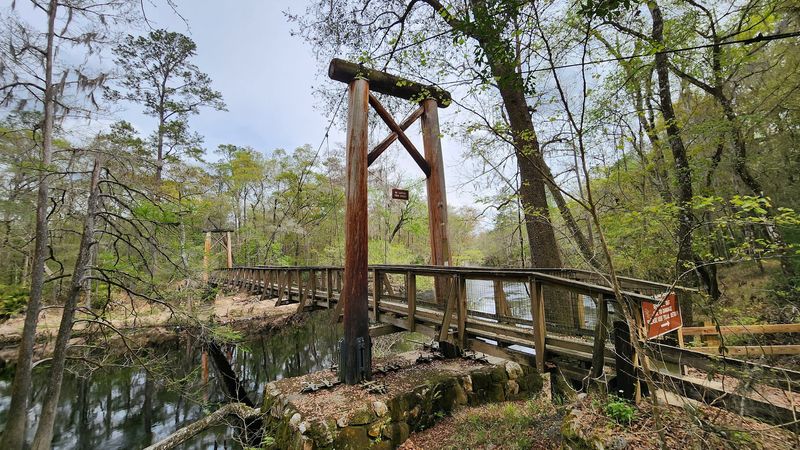
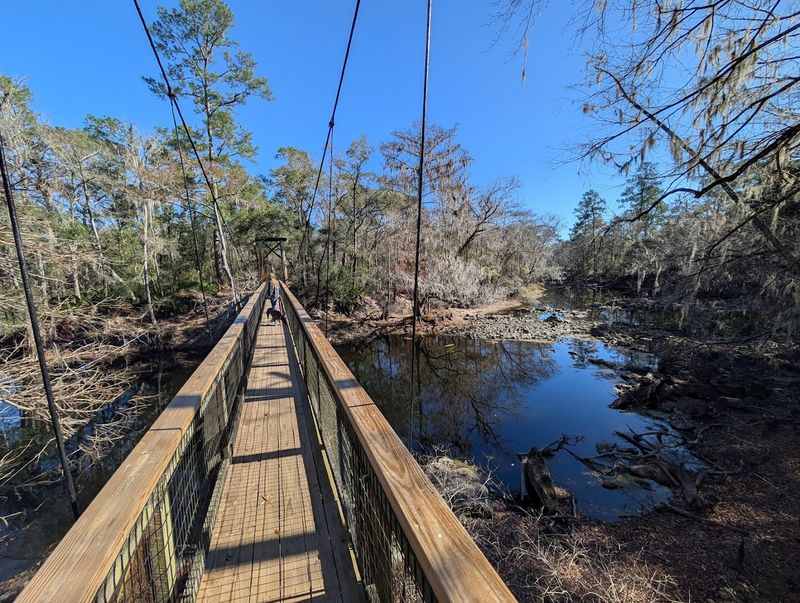
Back in the 1930s, the Civilian Conservation Corps built a suspension bridge over the Santa Fe River at what was then a small logging and farming community. That bridge still stands today, and crossing it feels like stepping back in time.
The CCC was a Depression-era work program, and their craftsmanship here has clearly stood the test of decades.
The bridge sways just slightly as you walk across, giving you that classic suspension-bridge thrill without being scary. Below, the dark tannin-stained river moves slowly through a canopy of cypress and oak.
It’s easily one of the most photogenic spots in North Florida.
Visitors consistently call it a highlight of the park. Just check current conditions before your visit, as the bridge has undergone repairs over the years.
When it’s open, crossing it is an absolute must-do moment during your time at O’Leno.
Hiking Trails That Wind Through Old Florida Wilderness
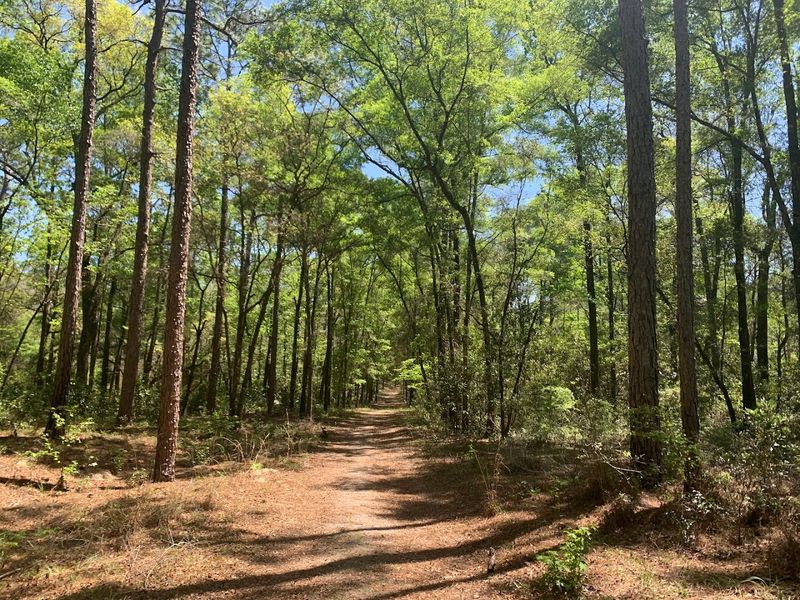
O’Leno State Park sits on over 6,000 acres, and a solid network of trails winds through nearly all of it. You can choose short, easy walks or longer routes that connect all the way to River Rise Preserve, giving hikers access to miles of continuous wilderness.
Each trail offers something a little different, from river views to deep forest stretches.
The river trail is the most popular, hugging the Santa Fe and offering glimpses of wildlife around every bend. Sturdy shoes are a smart call here, especially after rain when some sections get muddy.
Bug spray is equally important, particularly during warmer months when mosquitoes and ticks are more active.
First-time hikers and seasoned trail veterans both report loving the experience. Fellow visitors are known for being friendly and helpful, which makes the whole outing feel welcoming even if you’ve never hiked a natural Florida trail before.
Camping Under a Canopy of Ancient Oaks
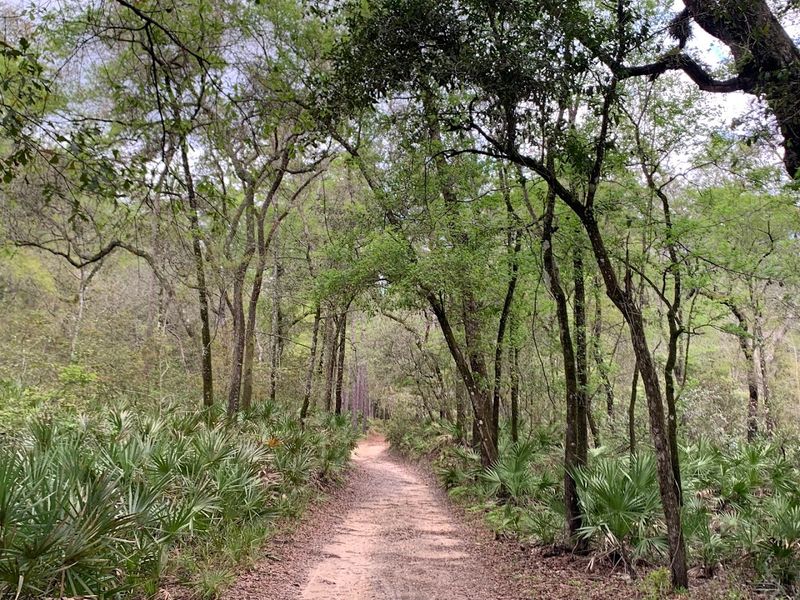
Spending the night at O’Leno is a completely different experience from day-tripping. The campground offers sites with water and electric hookups at around $24 per night, and the Magnolia Loop sites are especially popular for their privacy.
Waking up to birdsong under a cathedral of old oaks is the kind of morning that makes you forget about your phone entirely.
The bathhouses have earned consistent praise from campers for being clean and well-maintained, which is always a welcome surprise at a state park. Designated fire pits are set up throughout the grounds, making evening campfires easy and safe.
Rangers occasionally host informal programs that add an educational layer to the stay.
Families, couples, and solo adventurers all find something to love here. Booking in advance is wise for holiday weekends, but on regular weekdays you might just find you have the whole campground nearly to yourself.
The CCC Museum: A Tiny Building With a Big Story
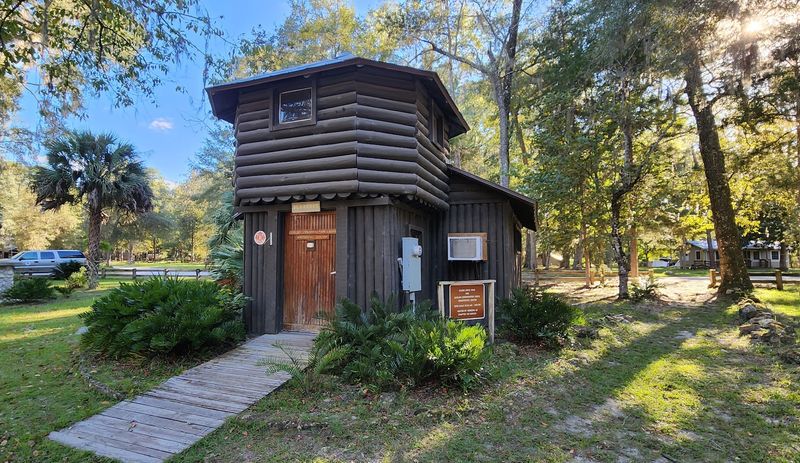
Tucked inside the park is a small museum dedicated to the Civilian Conservation Corps, the government program that essentially built O’Leno during the 1930s. It might look unassuming from the outside, but step inside and you’ll find a genuinely interesting collection of artifacts and historical information.
One visitor mentioned stumbling in just for the air conditioning and ending up fascinated by a wartime rationing book on display.
The CCC transformed thousands of acres of Florida wilderness into accessible, beautiful public spaces during the Great Depression. O’Leno was one of their projects, and the museum does a solid job of honoring that legacy.
Historic photographs and tools help paint a picture of what the work actually looked like.
Even if history isn’t your usual thing, the stories here are compelling. The museum is free with park admission and only takes about 20 minutes to explore, making it an easy and rewarding addition to any visit.
Swimming in the Santa Fe River’s Natural Swimming Area
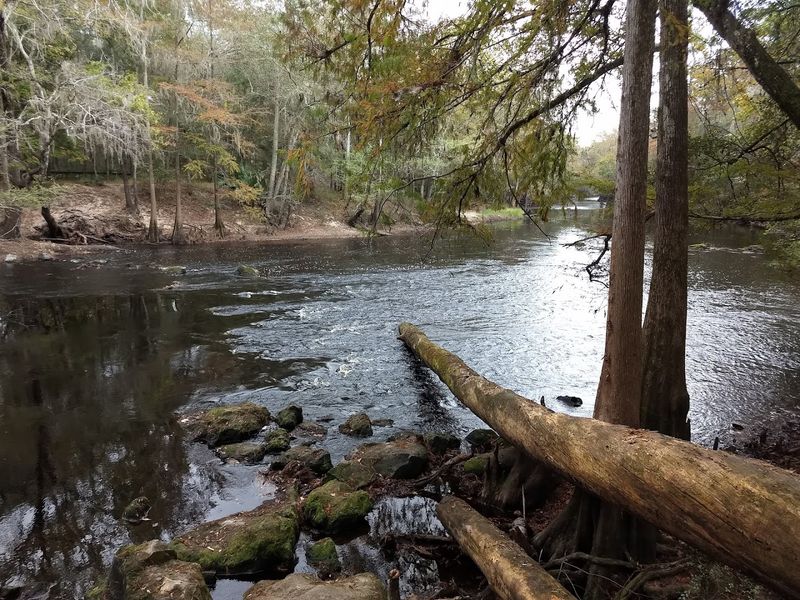
Cooling off in the Santa Fe River is one of summer’s simple pleasures at O’Leno. The park has a designated swimming area where the water is refreshingly cool even on the hottest Florida days.
The tannin-stained water gives it a tea-colored appearance, which is completely natural and harmless, caused by decaying leaves and organic matter upstream.
Water levels can vary significantly depending on rainfall and seasonal drought conditions, so it’s smart to check ahead if swimming is your main goal. During drought periods, the water can drop quite low, but the riverbank area is still a lovely spot to sit and relax even when swimming isn’t ideal.
Younger visitors especially love splashing around in the shallower sections near the bank. The surrounding tree canopy keeps the area shaded and cool, and the overall atmosphere feels more like a private swimming hole than a public park facility.
Wildlife Watching That Rewards the Patient Observer
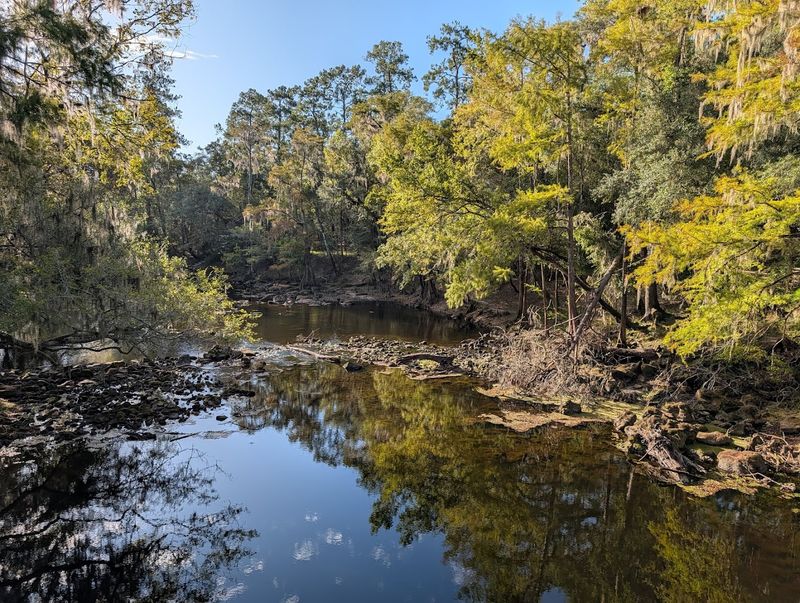
O’Leno is quietly teeming with wildlife, and the low visitor numbers mean animals here are often less spooked than at more crowded parks. Deer are frequently spotted along the trails, especially in the early morning or near dusk.
Turtles sun themselves on logs along the river, and gators, while less commonly seen, are definitely present in the area.
Birdwatchers will find plenty to keep their binoculars busy. The forest mix of longleaf pine, hardwood hammock, and river swamp creates diverse habitat that attracts a wide variety of species throughout the year.
Squirrels are practically everywhere, adding a lively energy to any walk through the campground.
Patience is the only gear you really need for wildlife watching here. Moving quietly along the river trail increases your chances of spotting something memorable.
Visitors who take their time consistently report richer, more rewarding experiences than those who rush through.
Connection to River Rise Preserve: Double the Adventure
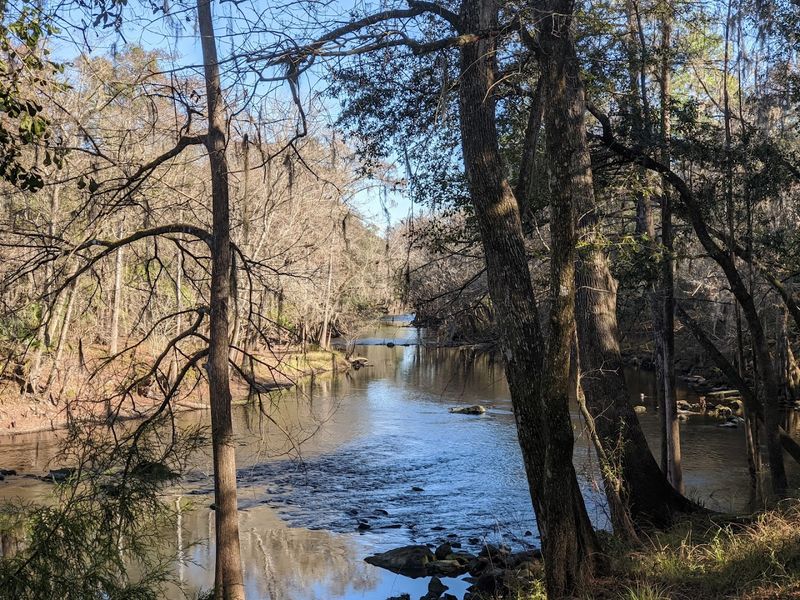
One of O’Leno’s lesser-known advantages is its direct trail connection to River Rise Preserve next door. The two parks share a network of hiking, biking, and equestrian trails, giving outdoor enthusiasts a much larger playground than either park could offer alone.
Together, they cover a massive stretch of North Florida wilderness that feels genuinely remote.
River Rise is where the Santa Fe River re-emerges after its underground journey from O’Leno, making the two parks scientifically linked as well as physically connected. Hiking from one to the other gives you the rare experience of following a river that disappears and then watching it come back to life miles away.
Cyclists and horseback riders also use the connecting trails regularly. The terrain is mostly flat, which is typical of North Florida, making it accessible for a wide range of fitness levels.
Pack enough water for the full route if you plan to make the round trip.
A Peaceful Escape That Rarely Feels Crowded
Ask almost anyone who has visited O’Leno and they’ll mention the same thing: it’s refreshingly quiet. Unlike Florida’s more famous state parks, which can feel like theme parks on busy weekends, O’Leno moves at a different pace entirely.
Multiple visitors have noted that they practically had the whole place to themselves, even during peak seasons.
That kind of solitude is increasingly rare in Florida, where population growth has made true quiet hard to find. At O’Leno, you can hike for an hour without seeing another soul, sit by the river without hearing anyone else, and camp without neighboring sites crowding your space.
It’s the kind of peace that recharges you in ways a busy park simply can’t.
The low-key atmosphere also makes it ideal for families with young children who might feel overwhelmed in more hectic environments. Relaxed and unhurried, this park invites you to actually slow down and notice what’s around you.
Ghost Town History Hidden Beneath the Forest Floor
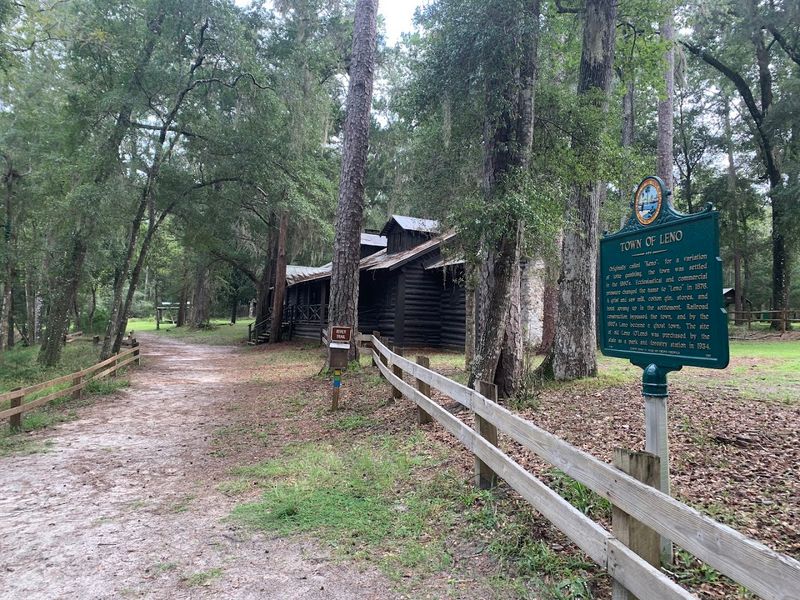
Before it was a state park, this land was a small but lively community called Leno, a logging and trading town that once had a post office, a hotel, and a ferry crossing. When the railroad bypassed the town in the late 1800s, Leno slowly faded and was eventually abandoned, leaving the forest to reclaim what people had built.
The state acquired the land years later and turned it into the park visitors enjoy today.
Walking through the grounds, it’s easy to forget that people once lived and worked here. The trees have grown tall and thick over the old town footprint, and the CCC structures from the 1930s are now the oldest visible remnants of human activity on the land.
That layered history gives O’Leno a depth that many nature parks lack. You’re not just hiking through trees; you’re walking through time, passing over the quiet memory of a place that used to hum with everyday life.
Family-Friendly Amenities That Make the Trip Easy
O’Leno doesn’t just cater to hardcore outdoor enthusiasts. The main area includes a large playground that keeps younger kids entertained between trail walks and river time.
Clean restrooms, well-marked paths, and helpful park rangers all contribute to an experience that families can actually pull off without stress.
The park entry fee is just $5 per vehicle, which is an absolute bargain for everything you get access to. Parking is plentiful, so you won’t spend your arrival circling for a spot.
Rangers are consistently described in reviews as friendly, knowledgeable, and genuinely happy to help visitors make the most of their time.
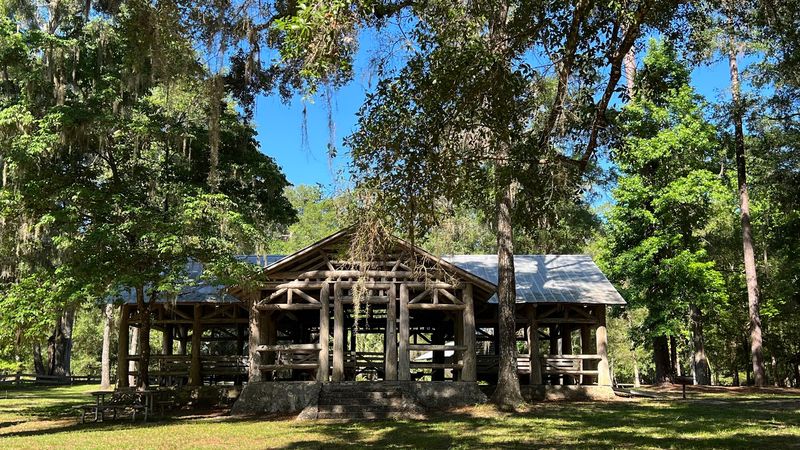
Picnic areas tucked under the trees offer a shady lunch spot, and the overall layout of the park is easy to navigate even for first-timers. Bringing the whole family here for a day trip or a long weekend is the kind of decision you won’t second-guess once you arrive.
Tick and Bug Awareness: How to Stay Comfortable on the Trails
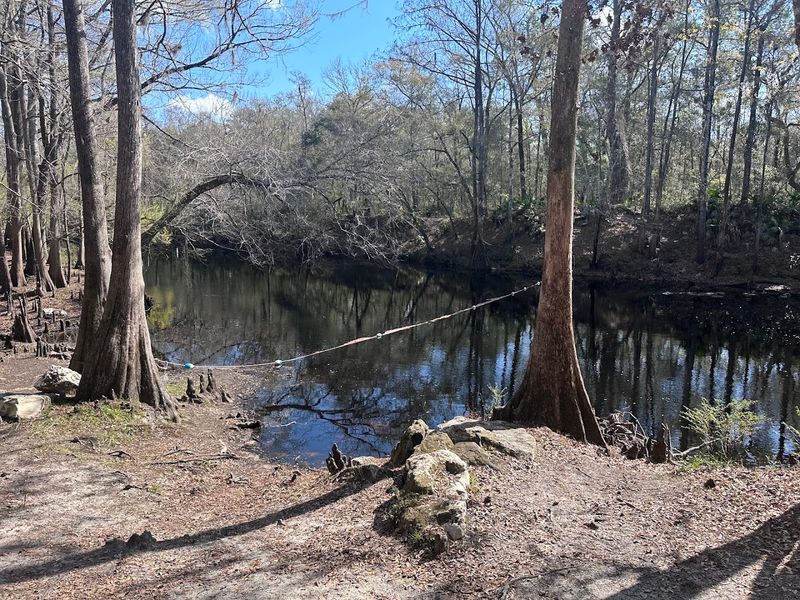
Let’s be real: O’Leno is wild Florida, and wild Florida comes with bugs. Ticks are the most commonly mentioned concern among visitors, particularly along the river trail and in areas with dense ground cover.
Several reviewers discovered ticks on themselves after their visit, so taking precautions before hitting the trails is genuinely important here.
Spraying bug repellent on your ankles, shoes, and lower legs makes a noticeable difference. Light-colored clothing helps you spot ticks more easily before they attach.
Doing a thorough body check when you return to your car is a smart habit that takes only a few minutes and can save you a lot of trouble later.
Mosquitoes are also more active during warmer months, especially near the river and swampy sections of the trail. None of this should discourage a visit, but going in prepared means you’ll spend your time enjoying the park instead of itching and complaining all the way home.
Best Times to Visit and What to Expect Each Season
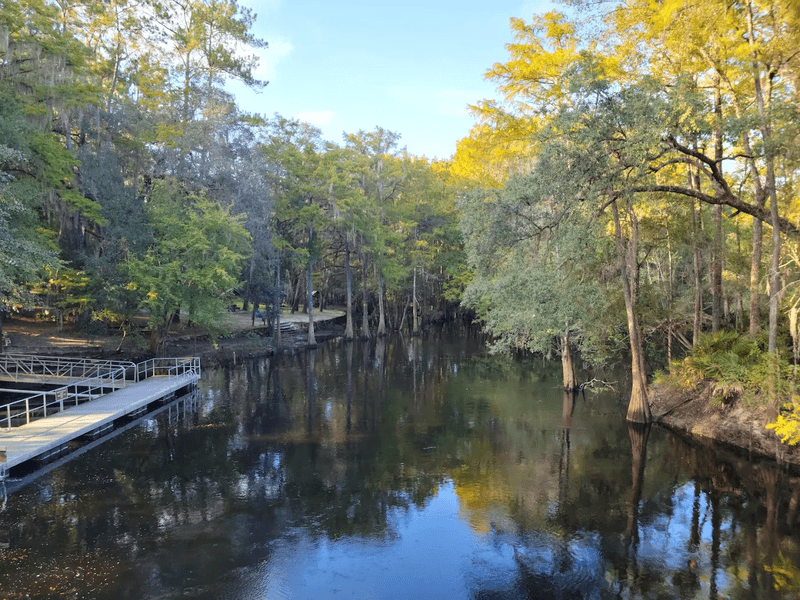
Fall and winter are widely considered the sweet spot for visiting O’Leno. Temperatures drop to comfortable hiking range, bugs thin out considerably, and the lower humidity makes the whole experience more pleasant.
January through March tends to bring the clearest air and the most comfortable trail conditions, though drought years can lower the river significantly.
Spring brings wildflowers and rising water levels, making the swimming area more usable and the river more photogenic. Summer is manageable if you start early in the morning before the heat peaks, though bug activity ramps up significantly after May.
Rain is also more frequent in summer, which can make some trail sections slippery and muddy.
The park is open every day from 8 AM to 7:30 PM year-round, with the entry fee staying at a very reasonable $5 per vehicle. No matter when you go, arriving early almost always means a quieter, more rewarding experience.
Enjoyed this story?
Add Fast Food Club as a preferred source to see more of our reporting on Google.