


Tucked inside Rocky Mountain National Park, Bear Lake Trail is one of Colorado’s most beloved short hikes. This easy 0.8-mile loop circles a stunning alpine lake surrounded by towering peaks and dense forests.
Whether you’re a first-time hiker or a seasoned explorer, this trail delivers jaw-dropping scenery without demanding much effort. Once you visit, the views will stick with you long after you’ve driven home.
The Trailhead at Bear Lake: Where the Magic Begins
Stepping out of the car at the Bear Lake trailhead feels like entering a different world. The crisp mountain air hits you immediately, and the sound of rustling pines sets the mood before you even take your first step.
Located at 9,475 feet above sea level, the elevation alone tells you this place is special.
The parking area fills up fast, especially during summer weekends, so arriving early is a smart move. A free shuttle bus runs from the Glacier Basin Campground, making access easy even when parking is tight.
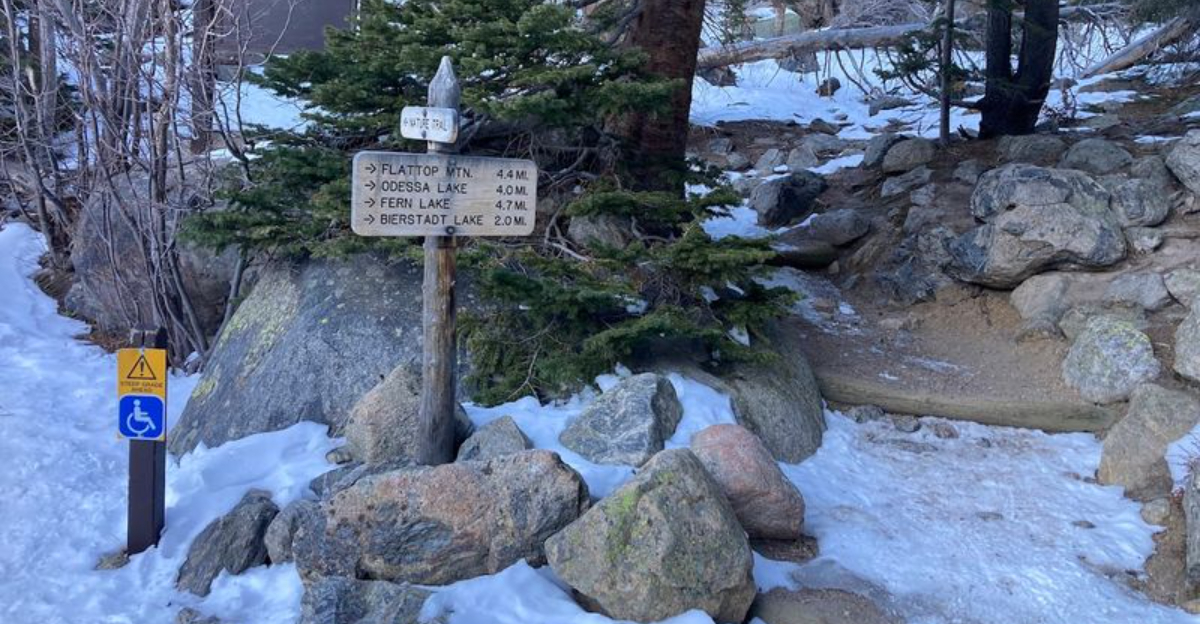
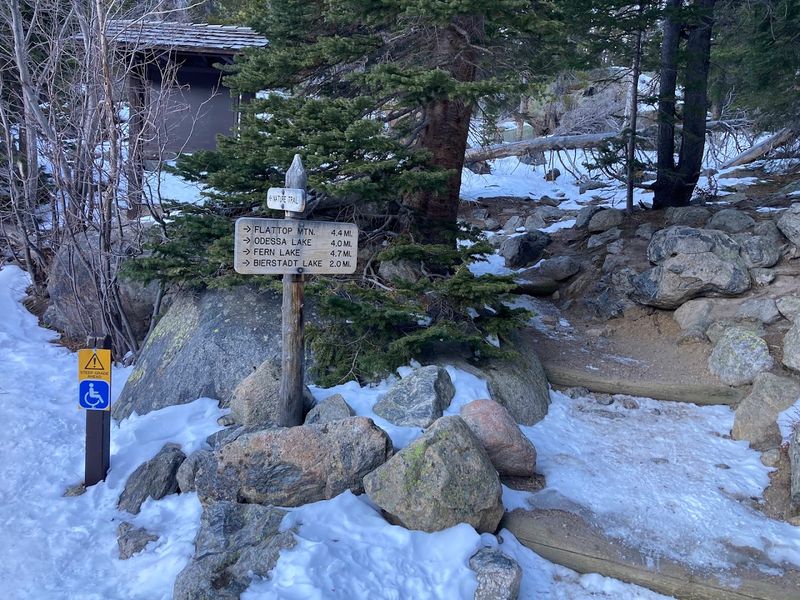
The trailhead is well-marked and easy to find.
Thirty interpretive markers line the route, offering fun facts about the ecosystem, wildlife, and geology. Families with kids will love reading each one together.
Starting here sets an exciting tone for everything the loop has to offer.
Elevation Awareness: Hiking at Nearly 9,500 Feet
Most people don’t realize how much altitude affects the body until they’re already feeling it. At 9,475 feet, the air holds less oxygen than what most visitors are used to at lower elevations.
Even a short stroll can feel surprisingly tiring if you’re not acclimatized.
Headaches, dizziness, and shortness of breath are common signs of altitude sickness. Drinking plenty of water before and during the hike helps your body adjust.
Taking slow, steady steps instead of rushing through the trail makes a real difference in how you feel.
Spending a day or two in Colorado at lower elevations before heading to RMNP gives your body time to prepare. Don’t let altitude catch you off guard — respect it, and the hike becomes a whole lot more enjoyable.
Your lungs will thank you for the patience.
Seasonal Snow: What to Expect on the Trail Year-Round
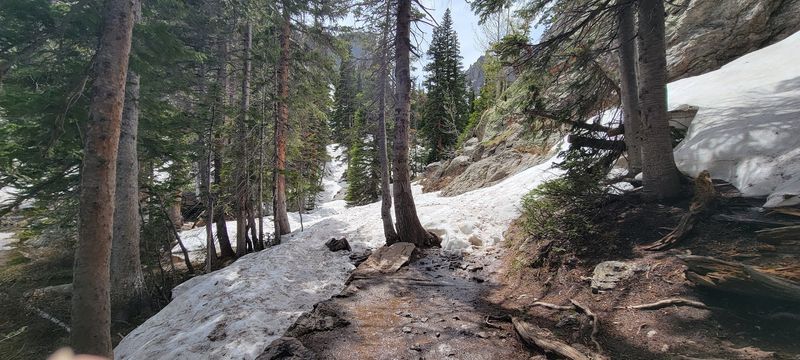
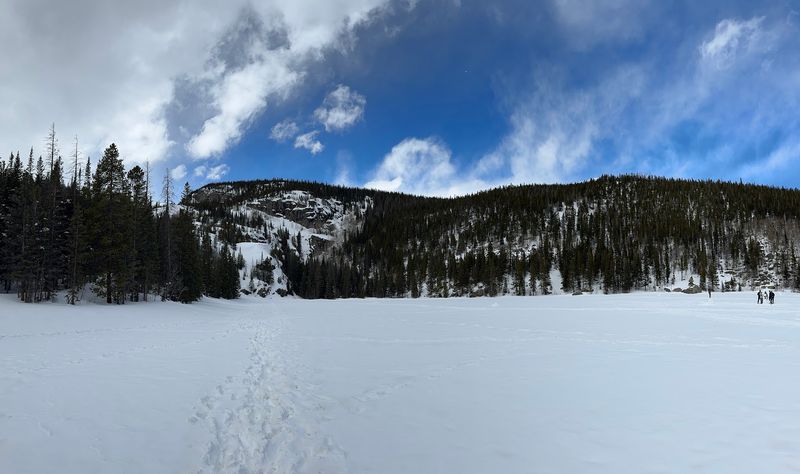
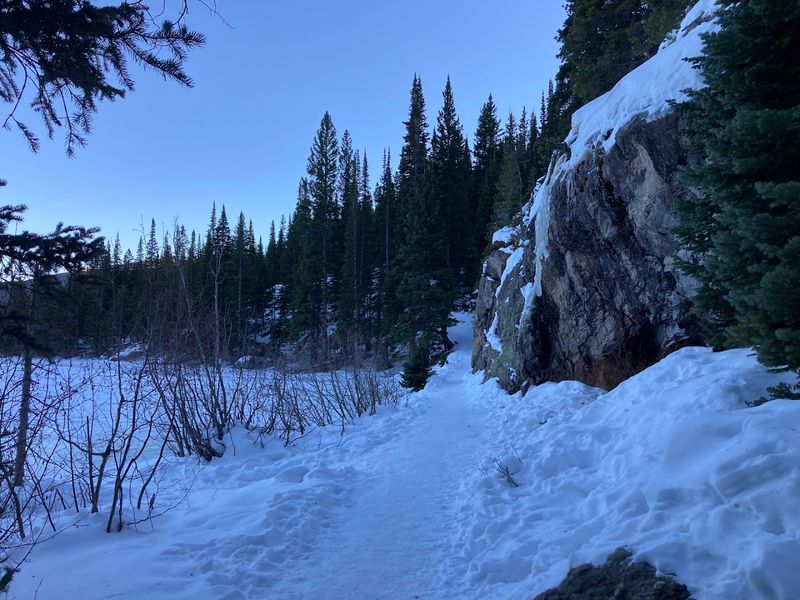
One of the most surprising things about Bear Lake Trail is how long snow sticks around. Even in early June, sections of the loop can be packed with ice and snow, making parts of the path slippery and tricky to navigate.
Visitors in late spring should always check trail conditions before heading out.
Microspikes or traction devices are a lifesaver during snowy conditions. They strap onto regular hiking boots and provide grip on icy surfaces.
Picking up a pair before your visit is a smart investment, especially for trips between October and June.
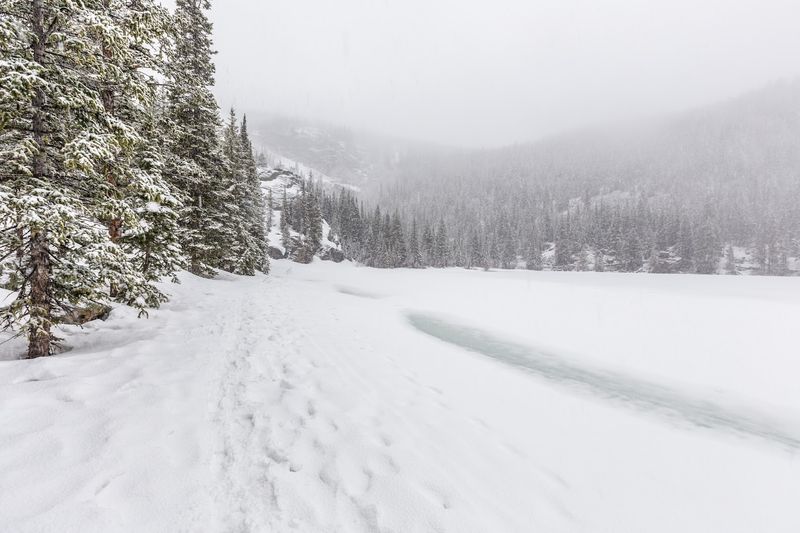
Winter visitors are often rewarded with a completely different kind of beauty — snow-dusted pine trees, a frozen lake surface, and peaceful quiet that summer crowds can’t offer. The trail transforms with each season, giving repeat visitors a fresh reason to return again and again.
The Loop Itself: A Scenic 0.8-Mile Walk Around the Lake
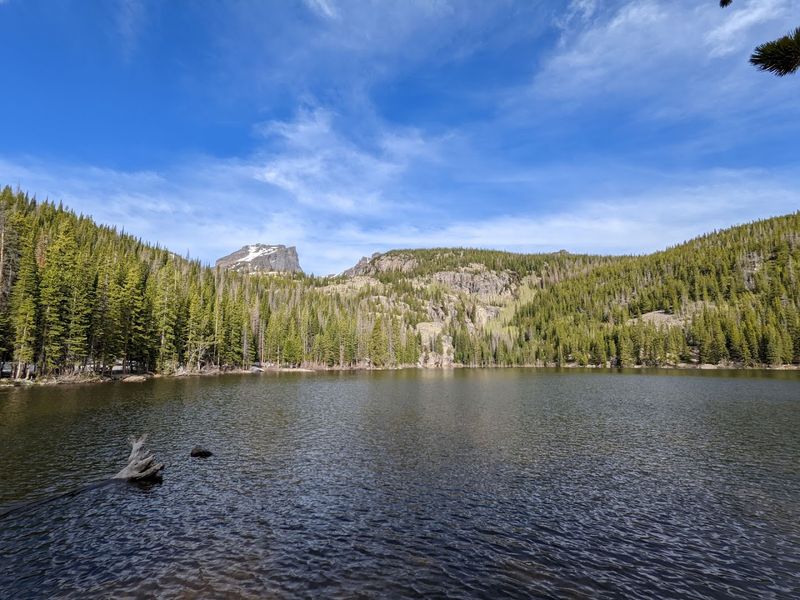
Circling Bear Lake feels like walking through a painting. The 0.8-mile loop is mostly flat with gentle, well-maintained terrain that makes it accessible to almost anyone, including young children and older adults.
Every step offers a slightly different angle of the lake’s brilliant blue-green water.
Rocky peaks like Hallett Peak and Flattop Mountain frame the background with dramatic flair. On calm mornings, the lake surface becomes a perfect mirror, reflecting the mountains in stunning detail.
Photographers and casual visitors alike stop constantly to soak it all in.
The trail is paved in sections and clearly marked throughout, so getting lost is nearly impossible. Benches along the route give tired legs a rest without missing the views.
Completing the full loop takes most people between 30 and 45 minutes, making it an easy fit into any schedule.
Wildlife Spotting Along the Trail
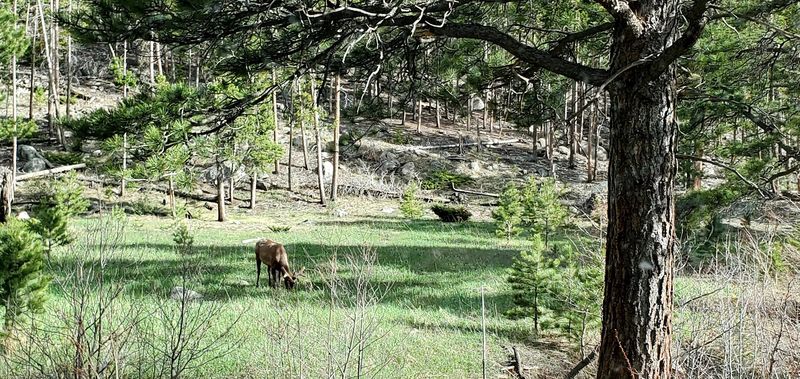
Wildlife sightings at Bear Lake Trail are surprisingly common, and every visit feels like a nature documentary waiting to happen. Mule deer often graze near the lake’s edge in the early morning, completely unbothered by passing hikers.
Keeping your eyes open and your voice low increases your chances of a memorable encounter.
Steller’s jays, Clark’s nutcrackers, and American dippers are frequently spotted by birdwatchers along the route. Chipmunks and golden-mantled ground squirrels dart across the path with entertaining energy.
Black bears occasionally roam the area, so understanding basic bear safety is always worth your time.
Never feed wild animals, no matter how cute or curious they appear. Feeding wildlife disrupts their natural behavior and can actually harm them over time.
Observing from a respectful distance keeps both you and the animals safe while preserving the wild spirit of this incredible place.
Timed Entry Reservations: Plan Ahead or Miss Out
Rocky Mountain National Park introduced a timed entry permit system that affects access to the Bear Lake corridor, which includes the Bear Lake trailhead. Without a reservation during peak season, you simply won’t get in.
Permits can be reserved up to 30 days in advance, and they go fast — sometimes within minutes of opening.
The reservation window typically opens early in the morning, so setting an alarm and being ready to book the moment slots open is the strategy most successful visitors use. The official recreation.gov website is where all permits are managed.
Avoid third-party sellers, as only official reservations are valid.
Planning a weekday visit instead of a weekend dramatically improves your chances of snagging a permit. Shoulder seasons like late September and early October often require fewer reservations and reward visitors with fall foliage and fewer crowds on the trail.
Connecting Trails: Extending Your Adventure Beyond the Loop
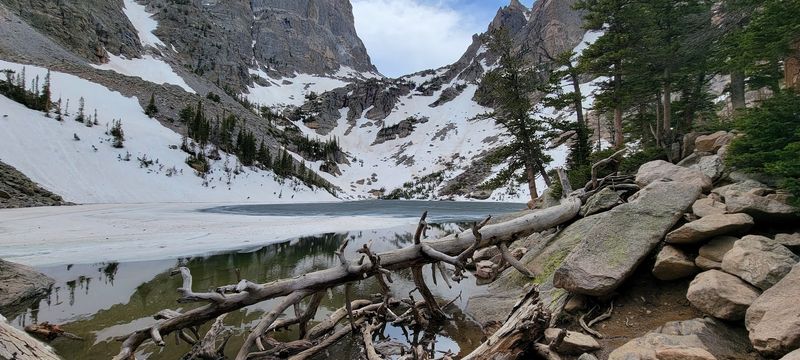
Bear Lake isn’t just a destination — it’s a launching pad. From the main trailhead, hikers can branch off toward Nymph Lake, Dream Lake, and Emerald Lake, creating a longer and even more rewarding outing.
The trail to Nymph Lake adds just 0.5 miles and leads to a serene pond covered in yellow pond lilies during summer.
Pushing further to Dream Lake adds another half mile and delivers one of the most photographed views in all of Colorado. Emerald Lake, the final stop on the chain, sits in a dramatic rocky bowl and rewards those who make the full 3.6-mile round trip.
Each lake along the way feels like unlocking a new level in an adventure game.
Trail conditions vary depending on the season, so checking with park rangers before extending your hike is always a good idea. Water and snacks are essential for longer outings.
What to Wear and Pack for the Hike
Dressing in layers is the golden rule for any Colorado mountain hike. Mornings near Bear Lake can be chilly even in July, but temperatures rise quickly once the sun climbs.
A moisture-wicking base layer, a light fleece, and a windproof jacket cover most weather scenarios you’ll encounter throughout the day.
Sturdy hiking shoes with ankle support make the rocky sections much more comfortable. Sandals and flip-flops are a recipe for sore feet and twisted ankles, especially when snow or wet rocks are involved.
Trekking poles are optional but genuinely helpful for older hikers or those with knee concerns.
Inside your pack, always carry water, sunscreen, snacks, and a small first aid kit. At high altitude, sunburn happens faster than most people expect, so SPF 50 or higher is recommended.
A reusable water bottle keeps you hydrated while reducing waste on the trail.
Interpretive Markers: Learning While You Walk
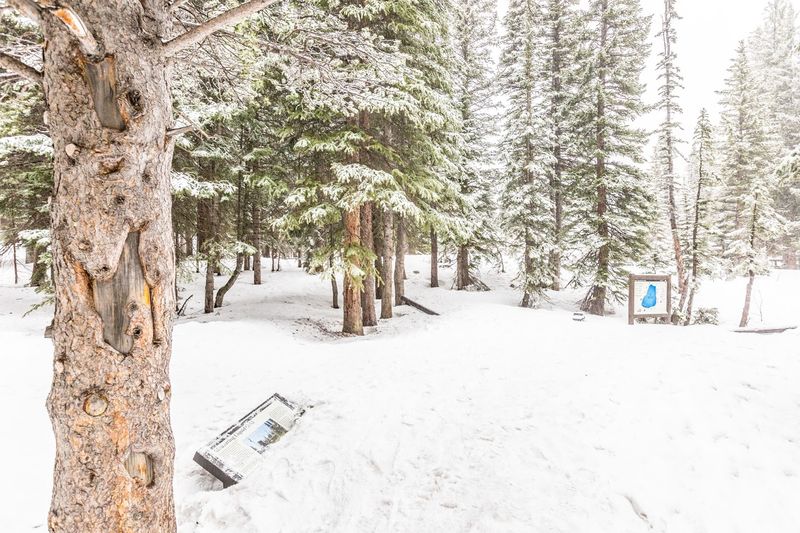
One thing that sets Bear Lake Trail apart from other short hikes is its 30 interpretive markers placed strategically around the loop. Each sign shares a fascinating piece of information about the surrounding ecosystem, from the geology of the Rocky Mountains to the life cycles of alpine plants.
Walking the trail feels educational without ever feeling like a lecture.
Kids especially enjoy stopping at each marker and reading the signs aloud. Some markers discuss how glaciers carved out the lake basin thousands of years ago, while others explain how specific trees and shrubs survive brutal mountain winters.
It’s a hands-on science lesson disguised as a leisurely walk.
Trail guides available at the trailhead correspond to the numbered markers, giving even more detail for curious minds. Picking up one of these guides before starting the loop adds a whole new layer of depth to the experience.
Photography Tips for Capturing Bear Lake’s Beauty
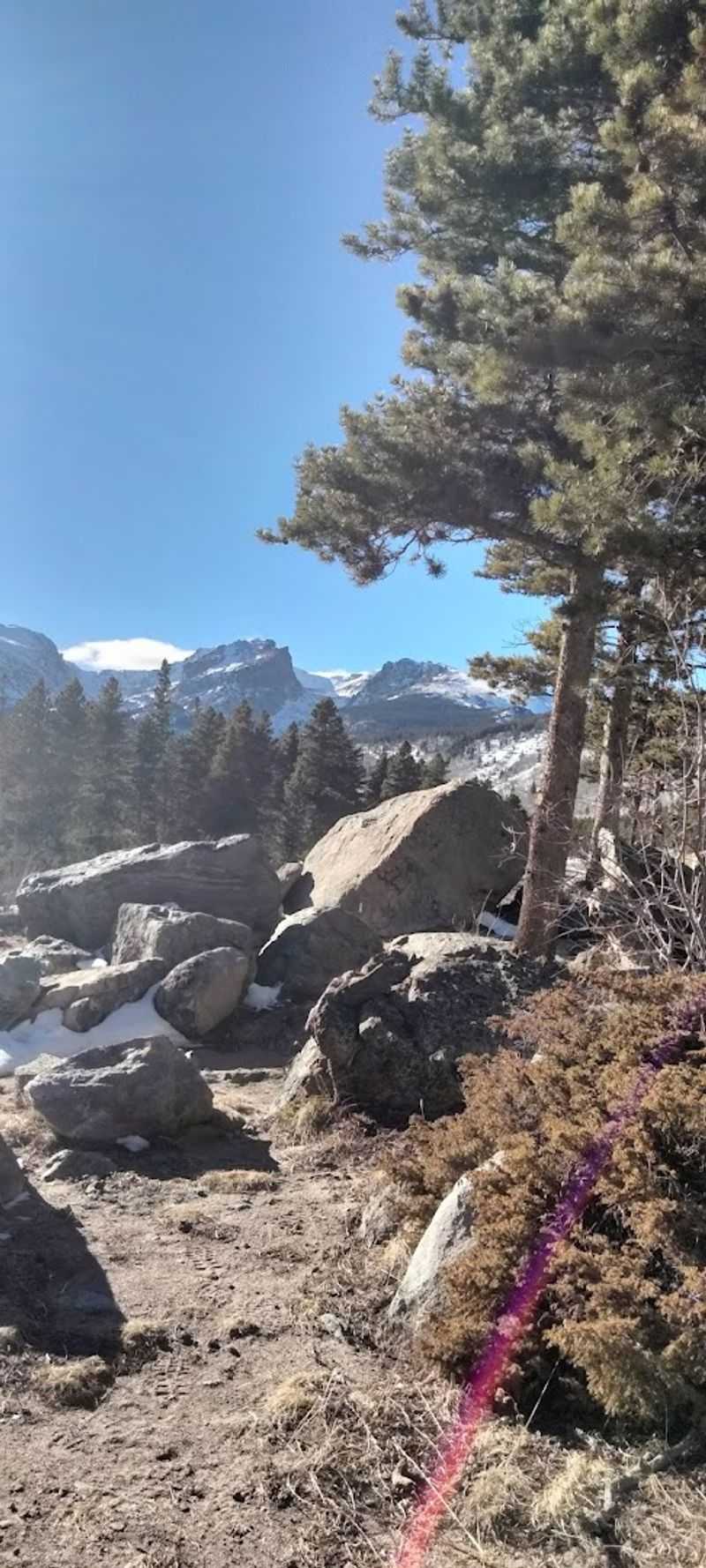
Golden hour at Bear Lake is something photographers dream about. The soft morning light that filters through the pine trees and dances across the water creates a warmth that no filter can replicate.
Arriving at the trailhead right after sunrise gives you the best light and the fewest people in your shots.
Shooting from the western shore of the lake puts Hallett Peak and Flattop Mountain directly in your frame. On windless mornings, the lake surface acts as a flawless mirror, doubling the mountain scenery in a reflection shot that looks almost unreal.
A wide-angle lens captures the full drama of the scene beautifully.
Smartphones take surprisingly excellent photos here too — the scenery does most of the heavy lifting. Experiment with different angles, including low ground-level shots that place wildflowers or pine needles in the foreground for added depth and visual interest.
Accessibility: A Trail That Welcomes Everyone
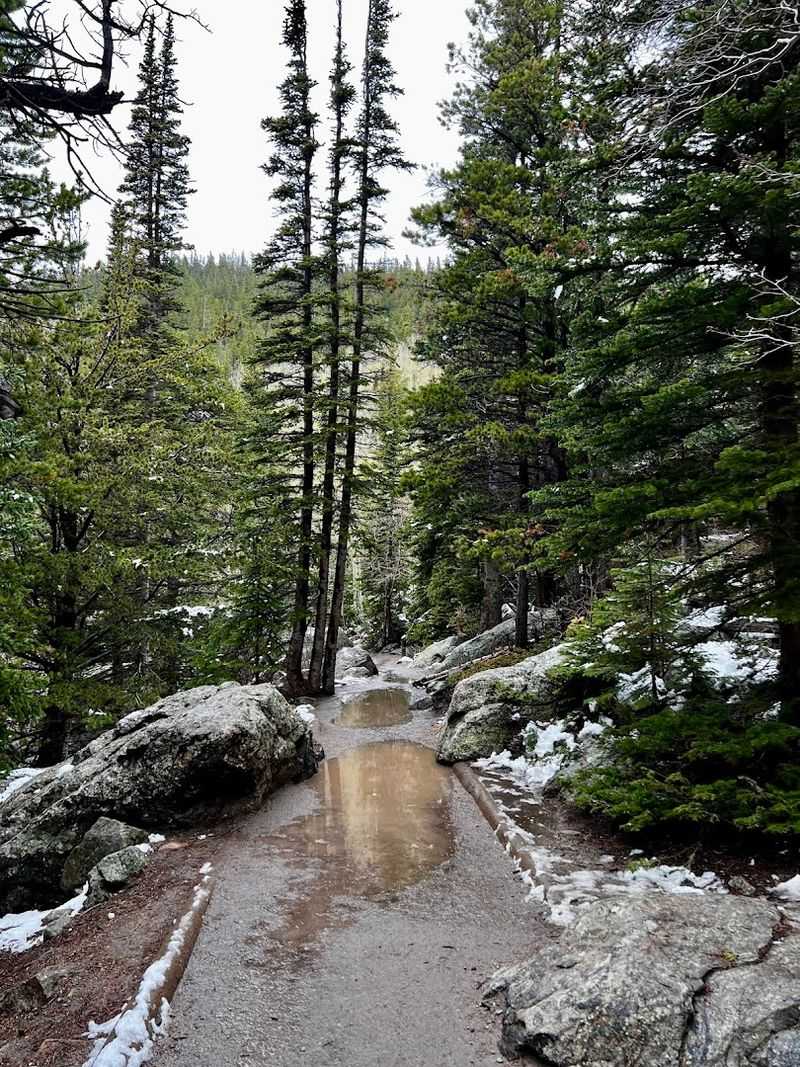
Not every great hike requires peak physical fitness, and Bear Lake Trail proves that beautifully. A significant portion of the loop is paved and relatively flat, making it one of the more accessible trails in Rocky Mountain National Park.
Families with strollers, visitors using mobility aids, and older adults can all enjoy meaningful portions of the route.
The National Park Service has worked to make the trail as inclusive as possible, with accessible parking spaces near the trailhead and rest areas along the path. Calling ahead or checking the RMNP website for the latest accessibility updates ensures you arrive prepared for current conditions.
Snow and ice during winter months can temporarily reduce accessibility, so timing your visit matters. Summer and early fall offer the most reliable conditions for visitors with mobility needs.
Every person deserves to experience a view this spectacular, and Bear Lake makes that possible.
The Shuttle Bus System: Skip the Parking Stress
Parking at Bear Lake fills up by 6 a.m. on busy summer days — that’s not an exaggeration. The National Park Service runs a free shuttle bus system that takes the stress out of the whole situation.
Buses depart regularly from the Park and Ride lot near the Beaver Meadows entrance, dropping passengers off right at the Bear Lake trailhead.
The shuttle runs from late May through mid-October, with frequent departures that keep wait times short. Riding the shuttle is honestly one of the best parts of the Bear Lake experience — it lets you relax, enjoy the scenery along Bear Lake Road, and arrive at the trailhead feeling calm and ready to hike.
Pets are allowed on the shuttle as long as they’re leashed and well-behaved. Bikes can be loaded onto the front racks of most buses, making multi-modal adventures very easy to pull off.
Why Bear Lake Trail Stays in Your Memory Long After You Leave
Some places leave a mark on you that no photo can fully capture. Bear Lake Trail is one of those places.
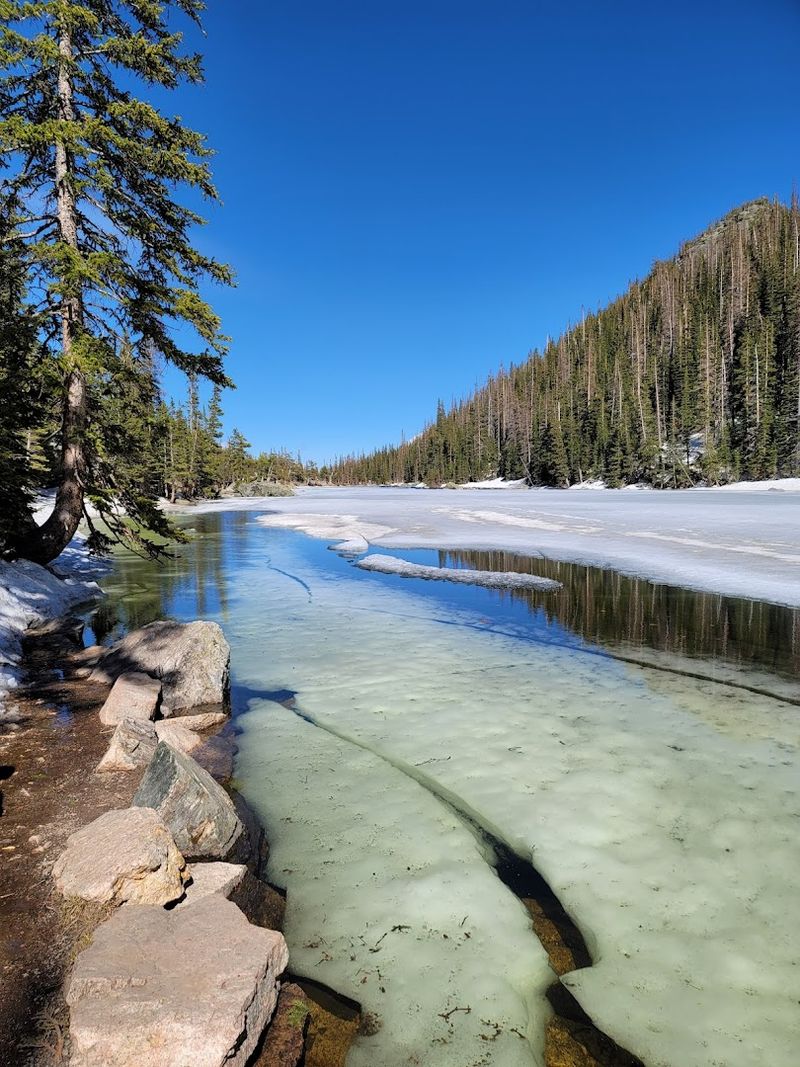
The combination of crystal-clear water, jagged mountain peaks, whispering pine forests, and fresh alpine air creates a sensory experience that stays tucked in the back of your mind for days, weeks, and sometimes years afterward.
Visitors who come once almost always return. The trail looks completely different in summer versus winter, in morning light versus afternoon, in a drought year versus a wet one.
Each visit reveals something new, which is rare for a route that takes less than an hour to complete.
With a 4.8-star rating and glowing reviews from hikers of all backgrounds, Bear Lake Trail has earned its reputation as one of Colorado’s most rewarding easy hikes. Pack your layers, grab your camera, and let this magical little loop remind you why nature is worth protecting.
Enjoyed this story?
Add Fast Food Club as a preferred source to see more of our reporting on Google.