


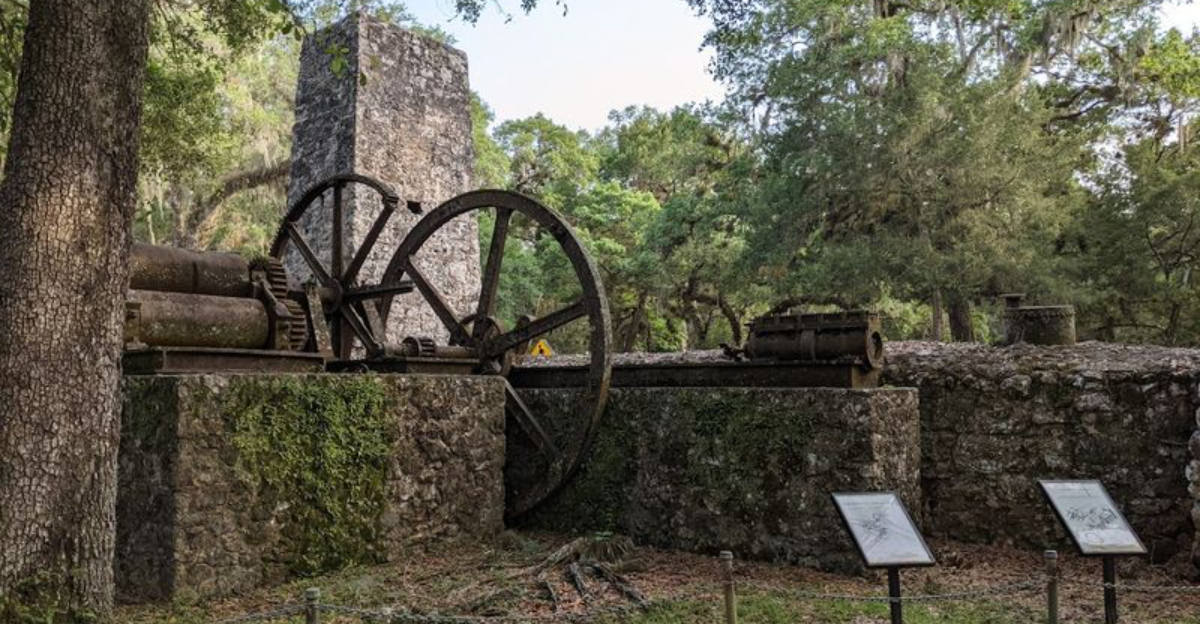
Tucked along a quiet stretch of road in Homosassa, Florida, the Yulee Sugar Mill Ruins Historic State Park holds a haunting piece of American history. These crumbling limestone walls and rusted iron gears once powered a massive 5,100-acre sugar plantation in the 1800s.
Whether you love history, enjoy outdoor adventures, or simply want to explore something truly unique, this park delivers a one-of-a-kind experience that is hard to forget.
The Fascinating History Behind the Yulee Sugar Mill
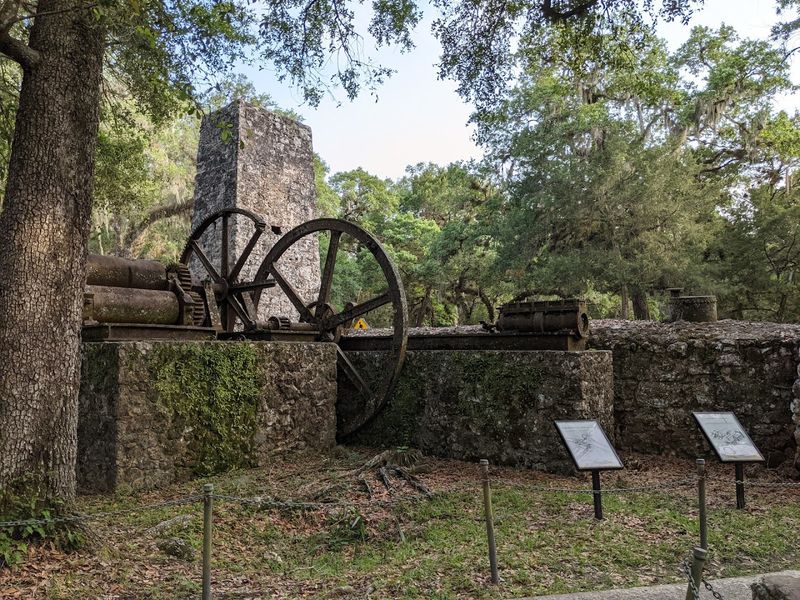
Back in 1851, a powerful Florida senator named David Levy Yulee built one of the most productive sugar plantations in the state right here in Homosassa. The mill operated using steam power, which was cutting-edge technology for its time.
It sprawled across an incredible 5,100 acres and kept hundreds of workers busy.
During the Civil War, the mill became a critical supplier of sugar products for Confederate troops. That wartime role made it a significant target, and by 1864, Union soldiers had raided and destroyed much of the operation.
What remained were the stone walls, iron gears, and a towering chimney that still stand today.
Visiting this site feels like flipping open a history book and stepping right inside it. Interpretive signs around the ruins share key facts that make the story come alive for visitors of all ages.
A Towering 40-Foot Limestone Chimney Still Standing Strong
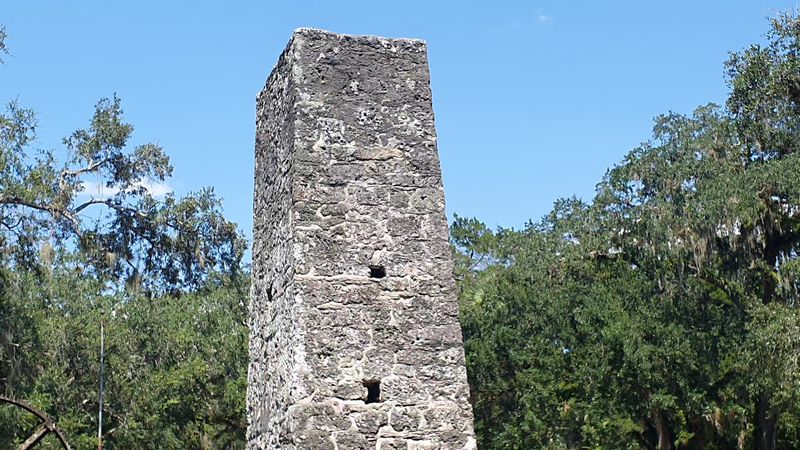
One of the most jaw-dropping features at the park is the 40-foot limestone chimney that has somehow survived more than 160 years of Florida weather, hurricanes, and time itself. Standing at its base and looking up gives you an instant sense of just how massive this operation once was.
It is hard not to feel a little awe standing next to something so old.
The chimney was part of the steam-powered system that drove the sugar mill machinery. Limestone was a common building material in 19th-century Florida because it was locally available and incredibly durable.
Builders back then knew exactly what they were doing.
Recent storms have caused some damage to the site, and restoration efforts are underway. A protective shelter structure has been added over parts of the ruins to help preserve what remains for future generations to enjoy and learn from.
Iron Gears and Cane Press That Powered an Empire
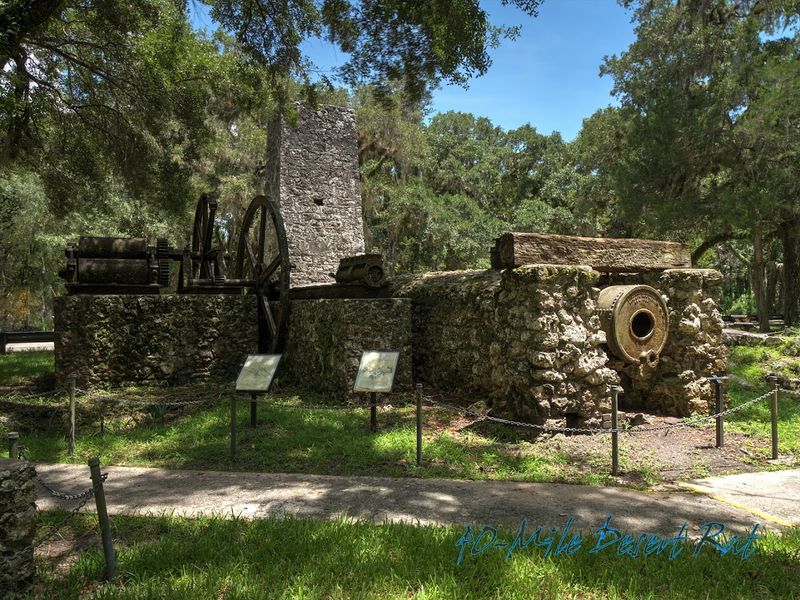
Scattered among the limestone walls are massive iron gears and an old cane press that once ground sugarcane into juice. These heavy metal pieces are surprisingly well-preserved, giving visitors a real look at 19th-century industrial machinery.
Running your eyes over those rusted teeth, you can almost hear the grinding and clanking of a mill in full production.
The process was intense. Workers would feed freshly cut sugarcane stalks into the press, which squeezed out the liquid.
That liquid was then collected and boiled down in large kettles to create syrup, sugar, and other products. It was hard, dangerous work done mostly by enslaved people.
Seeing the physical machinery up close makes that history feel very real and very human. Several informational plaques near the gears explain the process in detail, though visitors note that some signs have gone missing over the years.
Open 24 Hours Every Day With Free Admission
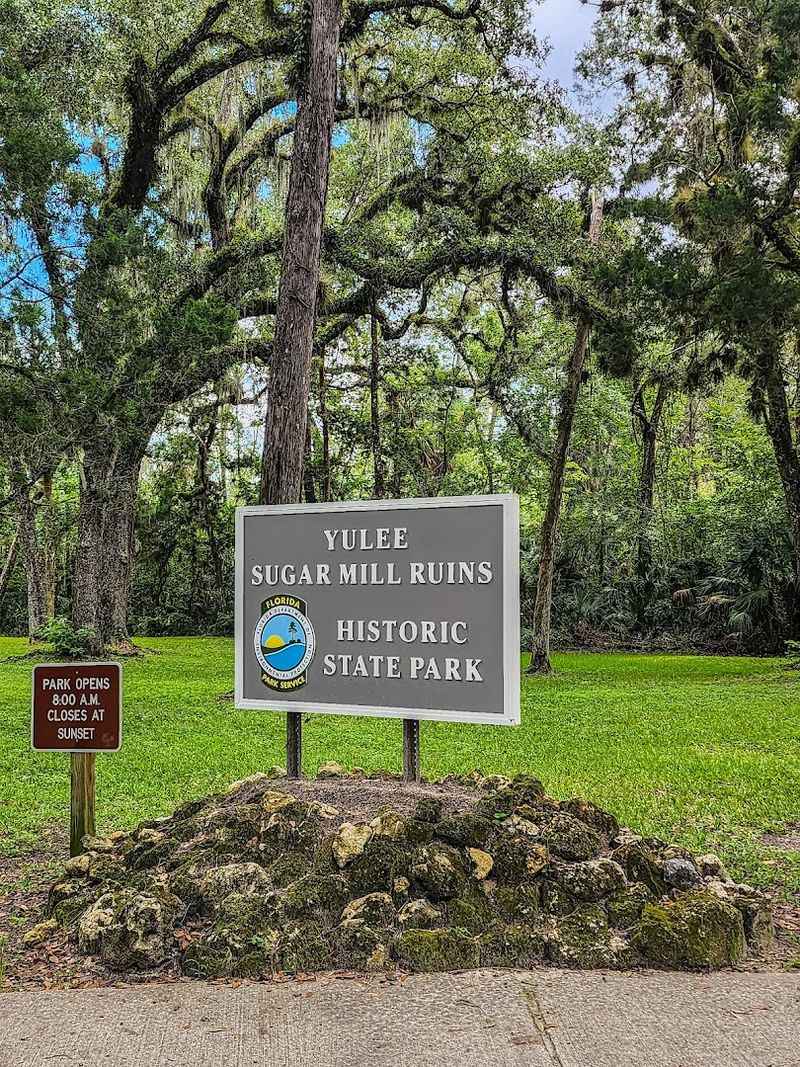
Here is something that makes this park stand out from many other Florida state parks: it is completely free to visit, and it never closes. Open 24 hours a day, seven days a week, the park welcomes early birds, night owls, and everyone in between without charging a single cent at the gate.
That kind of accessibility is a rare treat, especially for families traveling on a budget or road-trippers looking for a spontaneous stop. Several visitors mention pulling over after spotting the roadside sign and being glad they did.
Sometimes the best adventures are the unplanned ones.
Because there is no admission fee, there is also no pressure to rush. Stroll the paved walking path, read the history signs, and soak in the atmosphere at your own pace.
The park sits right off County Road 490, making it easy to find and even easier to enjoy.
Crossing the Road Safely to Reach the Ruins
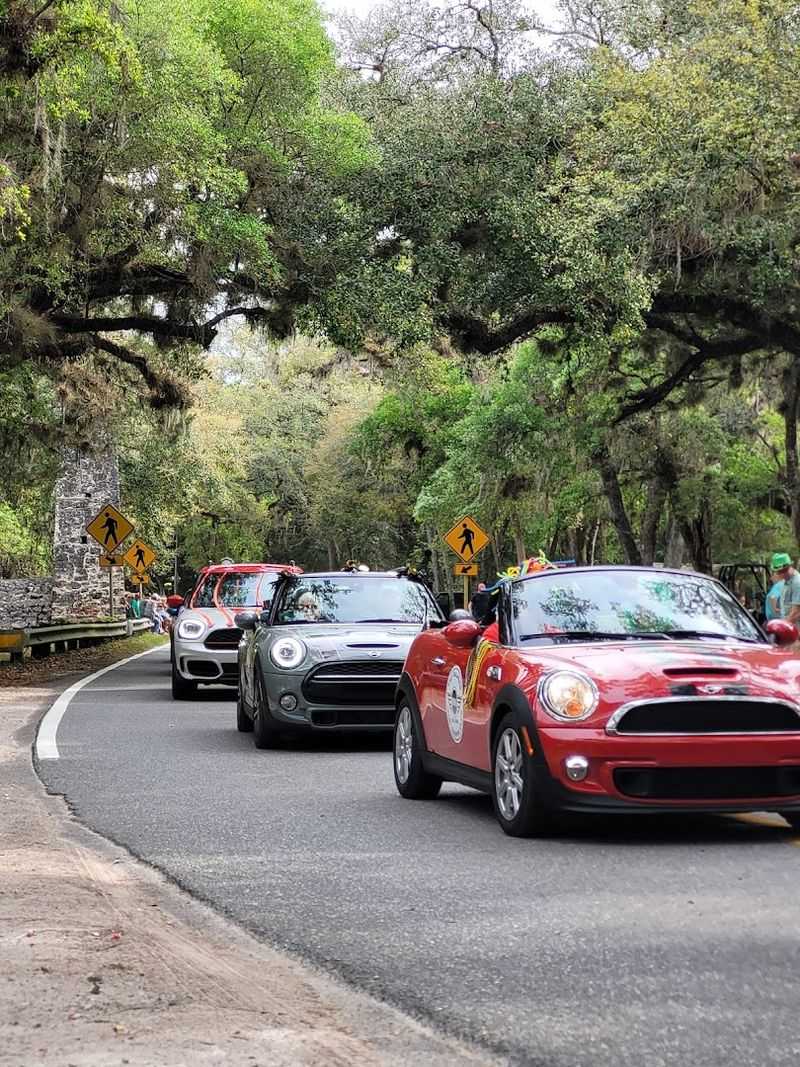
One quirky detail about visiting this park is that the ruins and the parking area are on opposite sides of the road. Visitors park in a small lot across County Road 490, then cross the street to access the actual ruins.
It sounds simple, but multiple reviewers warn that traffic on this road can be surprisingly steady and fast-moving.
Always look both ways carefully before crossing, especially if you have kids or pets with you. The best approach is to wait for a clear gap in traffic rather than assuming drivers will slow down for you.
A little patience goes a long way here.
Once you make it across, a paved walking path guides you right through the ruins and past the interpretive signs. The path is smooth and easy to navigate, making the ruins accessible for most visitors including those with strollers or mobility concerns.
A Peaceful Pavilion and Picnic Area to Relax In
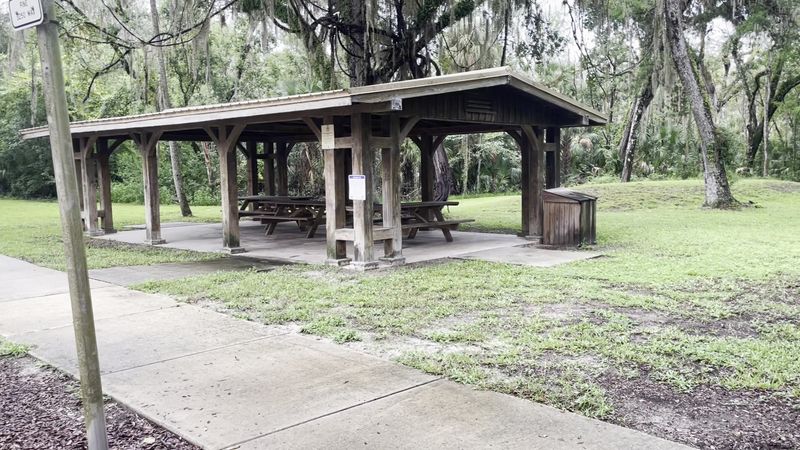
Across the street from the ruins, the park side offers a genuinely charming little retreat. A covered pavilion with picnic tables sits beneath tall oak and cypress trees, creating a shaded and breezy spot that feels miles away from the summer heat.
One reviewer described enjoying a peaceful picnic lunch there while gazing over at the historic mill.
Whether you pack a full spread or just grab a quick snack, the pavilion makes a lovely resting point during your visit. The atmosphere is quiet and relaxed, with a cool breeze rolling through on most days.
Families with young children especially appreciate having a safe, shaded space to settle into.
BBQ grills are also available for those who want to fire up some food before or after exploring the ruins. Combining a little history with a little outdoor cooking makes for a pretty perfect Florida afternoon.
The Giant Wild Grapevine That Looks Like a Tree
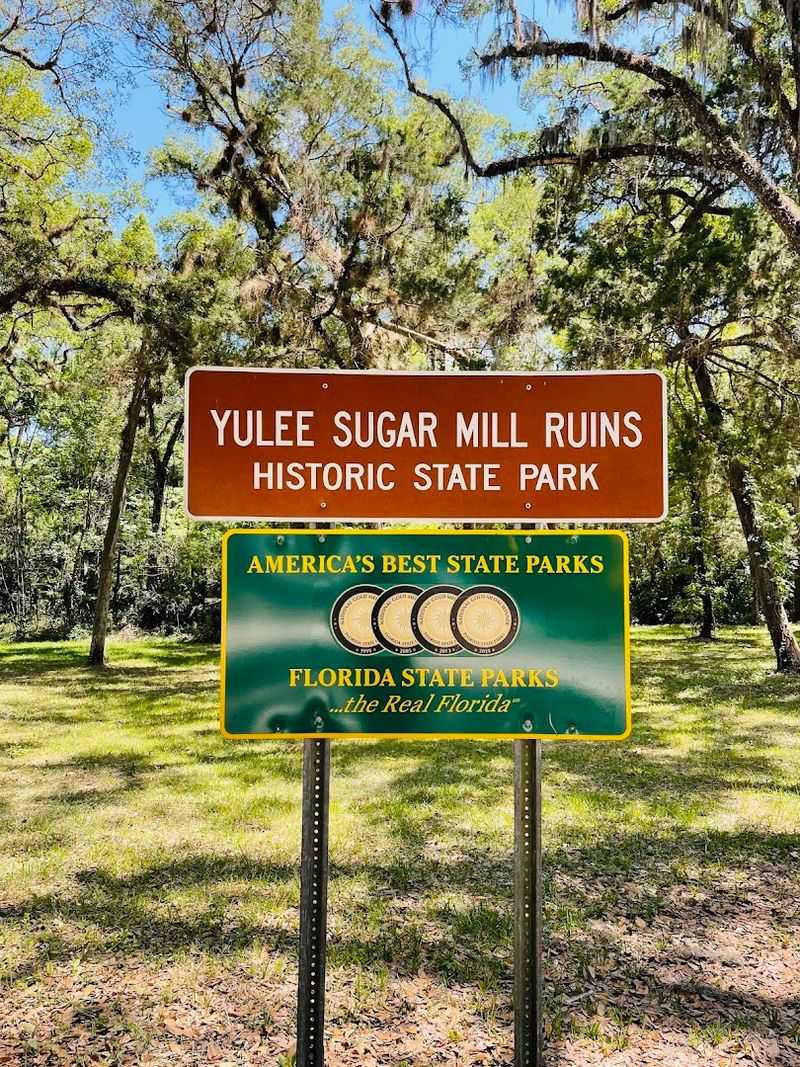
Not everything remarkable at this park is made of stone and iron. Near the parking lot, visitors are often stopped in their tracks by what appears to be a massive, twisted tree.
Look closer and you will realize it is actually a wild grapevine of extraordinary size, with thick, winding tendrils climbing in every direction.
One five-star reviewer admitted they thought it was a tree at first glance. The vine has grown so large and so dense that it creates its own canopy of sorts, shading the ground beneath it.
It is one of those natural surprises that makes you stop and genuinely appreciate the world around you.
Florida is full of wild and wonderful plant life, but this particular grapevine is something special even by local standards. Snap a photo next to it for scale and share it with friends who will almost certainly not believe what they are seeing.
Pet-Friendly Grounds for Four-Legged Explorers
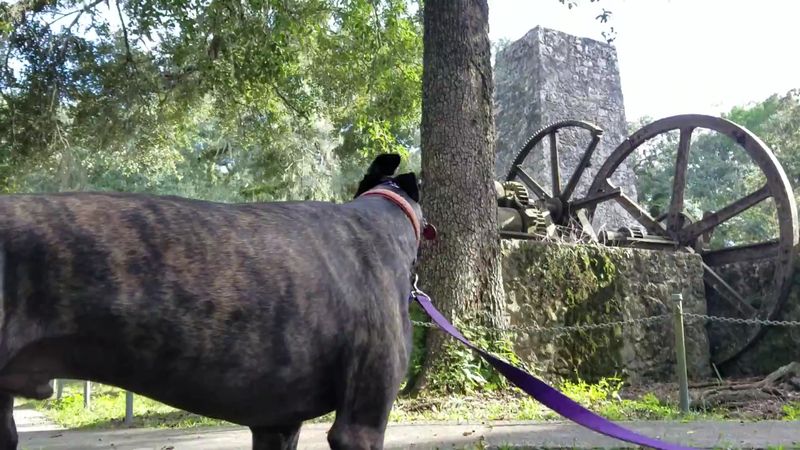
Good news for dog owners: the Yulee Sugar Mill Ruins Historic State Park is pet-friendly, and your furry companions are welcome to join the adventure. Several visitors have mentioned bringing their dogs along for a walk through the ruins, and the paved path makes it easy and comfortable for pets of most sizes and breeds.
The area around the park and pavilion offers enough open space for a dog to stretch its legs and sniff around without feeling cramped. Just remember to keep pets on a leash at all times, both for their safety and out of respect for other visitors sharing the space.
One reviewer specifically stopped to let their dogs walk around and snap some photos alongside the historic site. Bringing your pet along for a history lesson is honestly a pretty fun way to spend a Florida afternoon, and the ruins make for a great photo backdrop.
What the Sugar-Making Process Actually Looked Like
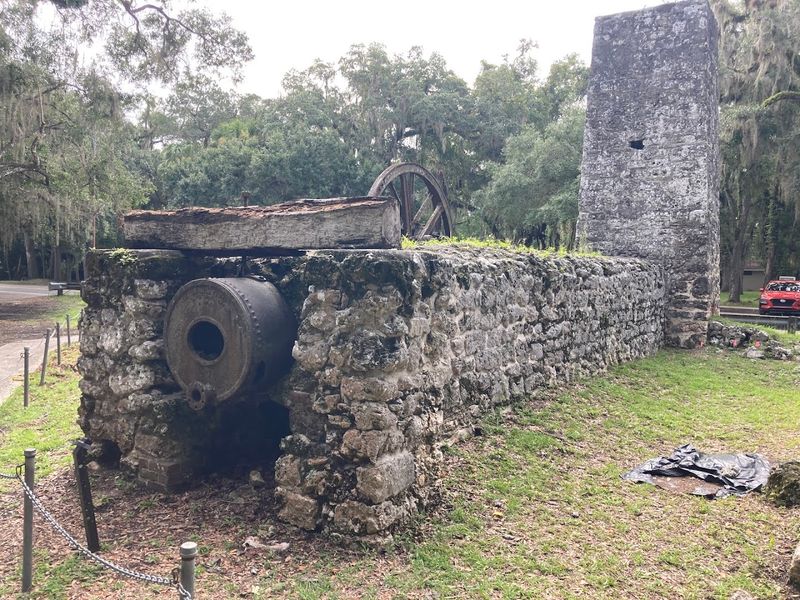
Standing among the ruins, it is easy to wonder exactly how this place worked back in its heyday. The sugarcane was harvested by hand from the surrounding fields, then fed through the iron cane press to squeeze out the sweet juice inside.
That raw liquid was then transferred to large iron kettles called sugar kettles, where it was boiled down over intense heat.
As the liquid evaporated and thickened, workers carefully stirred and monitored the mixture until it transformed into syrup, molasses, or crystallized sugar. The process required constant attention and serious physical labor.
Enslaved workers performed most of this grueling work under extremely difficult conditions.
The ruins still hold several of those original kettles, though some have deteriorated significantly over time. Seeing these objects in person makes the historical process feel tangible and real in a way that reading about it in a textbook simply cannot replicate.
How Recent Hurricanes Have Affected the Ruins
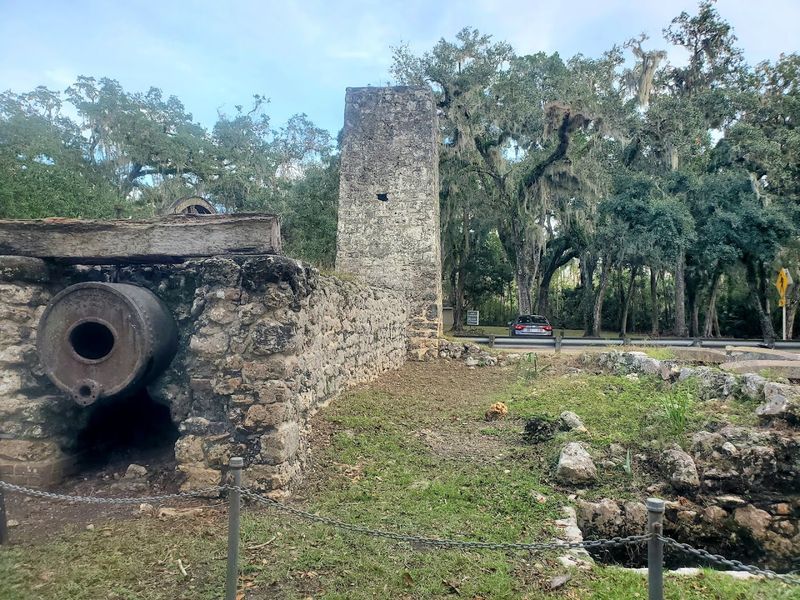
Florida hurricanes are no joke, and the Yulee Sugar Mill Ruins have not been spared from their wrath. Recent major storms caused noticeable damage to the site, and visitors who have returned after a few years can see the changes.
Some original structural features, including the tall chimney stack, are reportedly no longer standing in their previous form.
A protective shelter structure has been erected over parts of the ruins to shield what remains from further weather damage. While some visitors find the shelter changes the atmosphere a bit, most agree that preservation is more important than aesthetics.
Keeping these ruins intact for the next generation is worth the trade-off.
Restoration and improvement plans are in motion, with future updates promising new informational displays about the people who lived and worked on the plantation. The park is actively evolving, so each visit might reveal something new about its ongoing transformation.
Tips for Making the Most of Your Visit
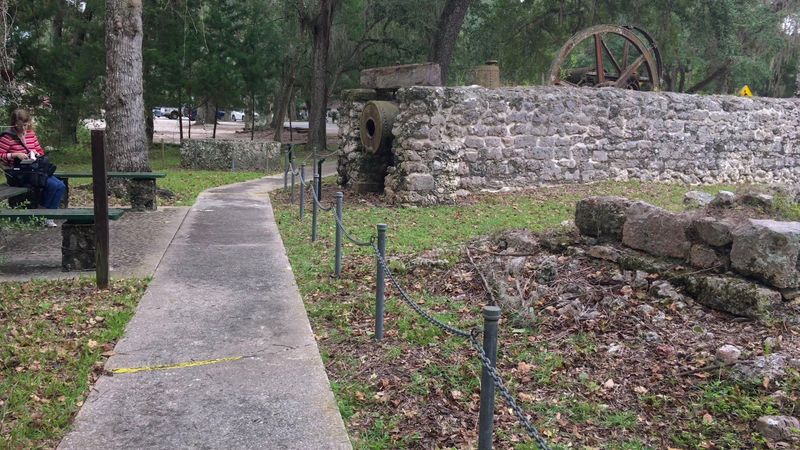
Planning ahead can turn a quick 10-minute stop into a genuinely memorable experience. Arrive in the morning or late afternoon when temperatures are cooler and the light is beautiful for photography.
Wear comfortable walking shoes since the paved path is easy to navigate but the surrounding ground can be uneven in spots.
Bring water, especially during Florida summers when the heat hits hard even in shaded areas. Pack a snack or a full picnic lunch to enjoy at the pavilion tables after you explore the ruins.
The Old Mill Tavern shares the parking lot and reportedly serves pretty good food if you prefer eating out.
Take time to read every informational sign you can find along the path. Some signs are missing, but the ones that remain offer genuinely interesting details about the mill and the people connected to it.
A little curiosity goes a long way at this historic gem.
Nearby Attractions to Pair With Your Visit
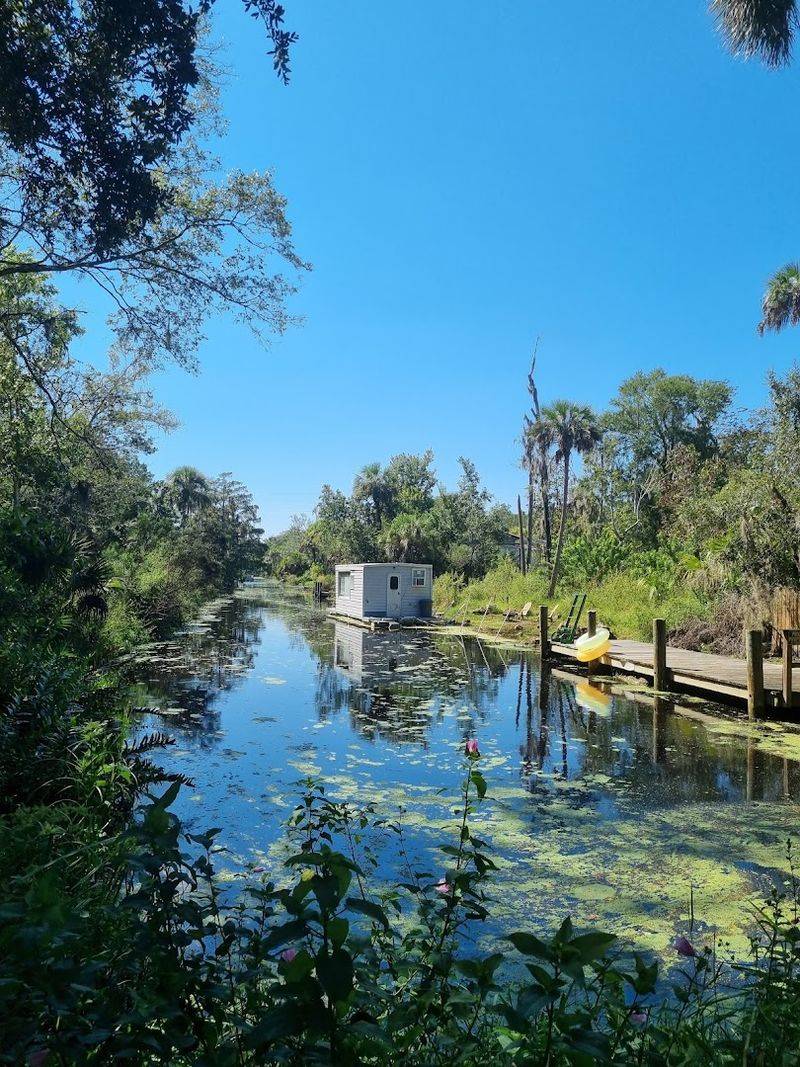
The Yulee Sugar Mill Ruins are a fantastic anchor for a full day of exploring the Homosassa area. Just a short drive away, the Salt Marsh Wildlife Management Area offers nature trails, a scenic overlook, and even a rough kayak launch for paddlers looking for an adventure.
The natural scenery there is completely different from the ruins but equally rewarding.
Homosassa Springs Wildlife State Park is another nearby favorite, famous for its manatee encounters and native Florida wildlife exhibits. Combining a history stop at the sugar mill with a wildlife experience at the springs makes for an incredibly well-rounded Florida day trip.
Several local restaurants and bars are within close proximity to the ruins as well. After your walk through history, grabbing a meal or a cold drink nearby is an easy and satisfying way to wrap up the outing before heading home or continuing your road trip.
Why This Small Park Packs a Big Historical Punch
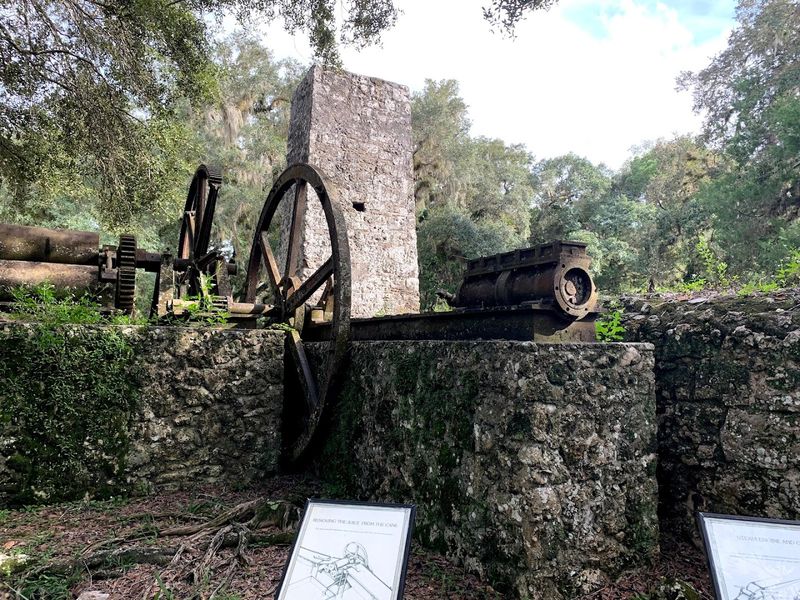
Do not let the small size of this park fool you into thinking there is nothing worth seeing. Within just a few hundred feet of walking path, visitors encounter genuine 19th-century industrial ruins, a piece of Civil War history, and a story about one of Florida’s most influential early political figures.
That is a lot packed into a compact space.
David Levy Yulee was not just a plantation owner. He was Florida’s very first United States Senator, and his story is woven into the fabric of this state’s earliest days of statehood.
Standing among his mill’s ruins connects you to a larger, complex chapter of American history.
Visitors consistently rate the park at 4.3 stars despite its small footprint, praising its accessibility, free admission, and genuine historical value. Sometimes the most powerful places are not the biggest ones.
They are the ones that make you stop, think, and feel something real.
Enjoyed this story?
Add Fast Food Club as a preferred source to see more of our reporting on Google.