


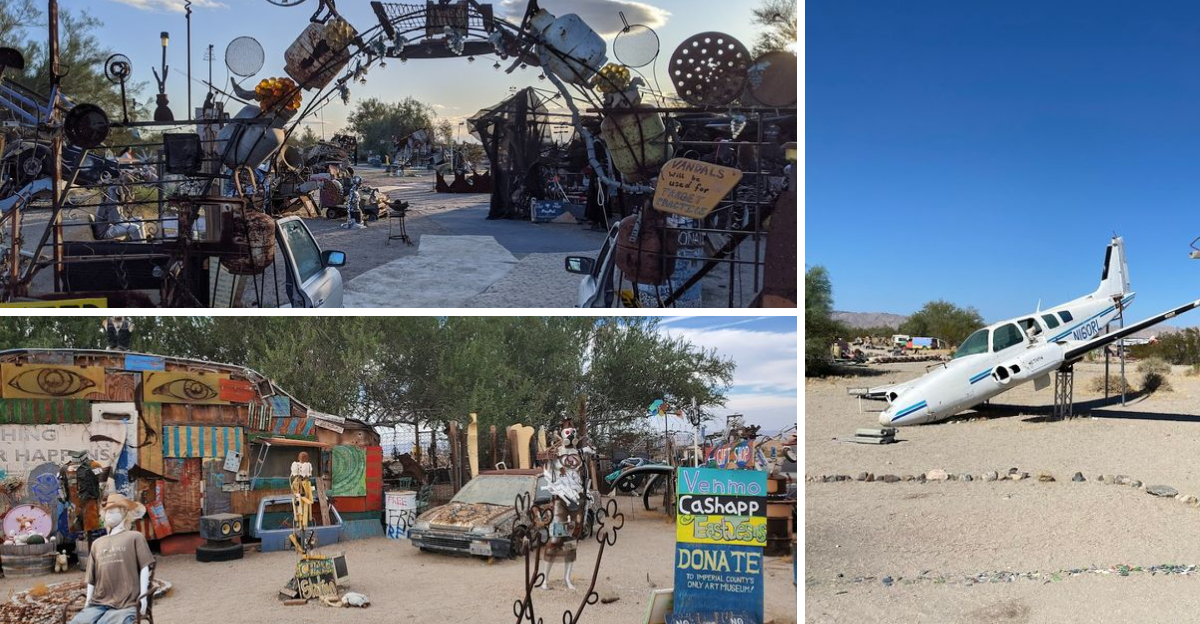
Tucked deep in the California desert near Niland, East Jesus is one of the most jaw-dropping outdoor art experiences you never knew existed. Built from junk, scrap metal, broken electronics, and cast-off objects, this sprawling sculpture garden turns trash into thought-provoking art.
Located on the edge of Slab City, a legendary off-grid community, East Jesus pulls in curious visitors from all over the world. If you love art that challenges, surprises, and makes you think, this hidden gem is absolutely worth the trip.
What Exactly Is East Jesus?
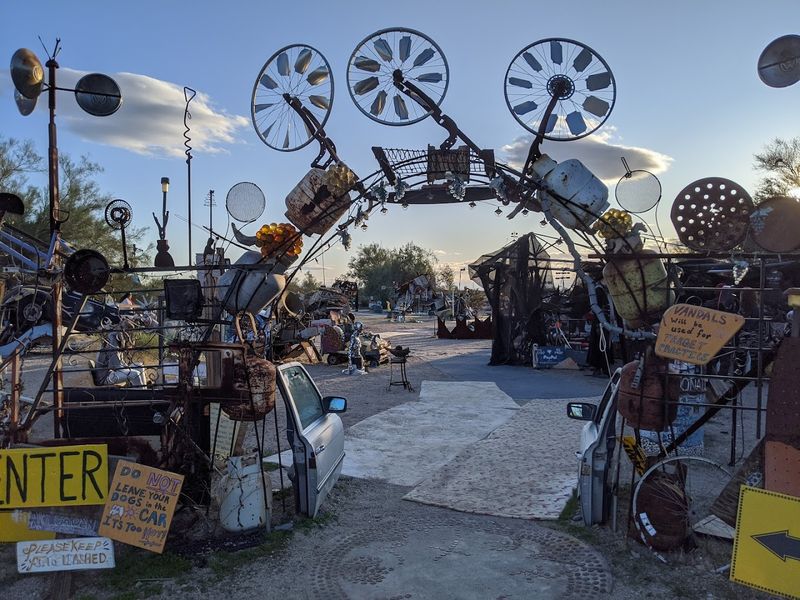
Forget everything you think you know about art museums. East Jesus is nothing like a white-walled gallery with velvet ropes and hushed voices.
Sitting in the Sonoran Desert near Niland, California, it is a living, breathing outdoor art installation built entirely from society’s discarded objects.
Founded around 2007 by artist Charles Russell and a rotating cast of creative collaborators, the space has grown into a sprawling eco-themed sculpture garden unlike anything else in the state. Rusted appliances, smashed televisions, doll parts, and broken furniture are transformed into powerful statements about consumerism, waste, and human nature.
Visitors rate it 4.6 stars on Google, with over 1,300 reviews calling it thought-provoking and unforgettable. East Jesus is now a registered 501(c) nonprofit, ensuring the art is preserved for future generations.
Admission is free, though donations are warmly encouraged to keep the magic alive.
Getting There: The Road Less Traveled
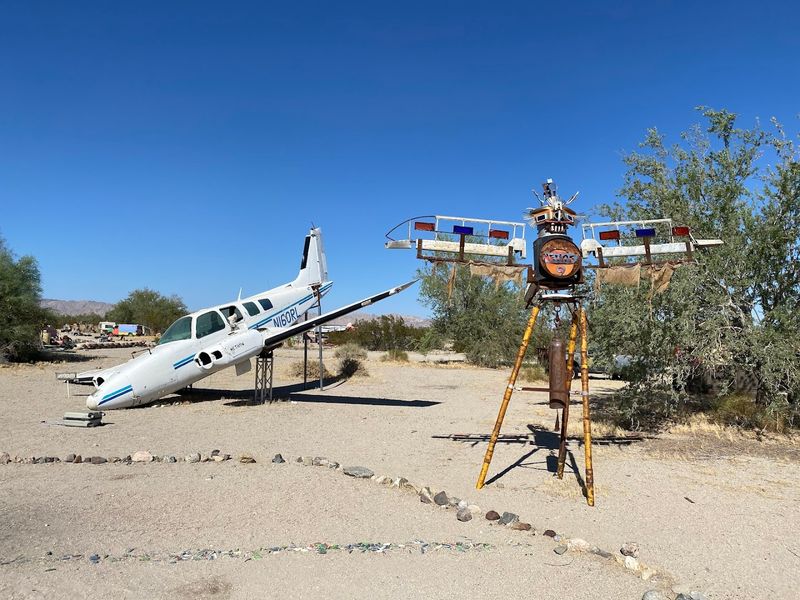
Finding East Jesus is half the adventure. Located at E Jesus Rd, Niland, CA 92257, the destination sits on the far edge of Slab City, deep in Imperial County.
Many visitors describe the drive as roughly 1.5 hours off the beaten path from Palm Springs, making it a solid day-trip commitment.
The roads leading into Slab City are notoriously rough, and multiple reviewers warn that your vehicle will feel every bump. A car with decent ground clearance is a smart choice.
GPS can get spotty in this remote stretch of desert, so downloading offline maps beforehand is a solid idea.
Once you turn onto the sandy tracks leading to East Jesus, the landscape shifts dramatically. Dust, open sky, and the faint outline of sculptures on the horizon greet you.
That slow approach actually builds the perfect sense of anticipation before the experience unfolds.
The Sculpture Garden That Grows Every Year
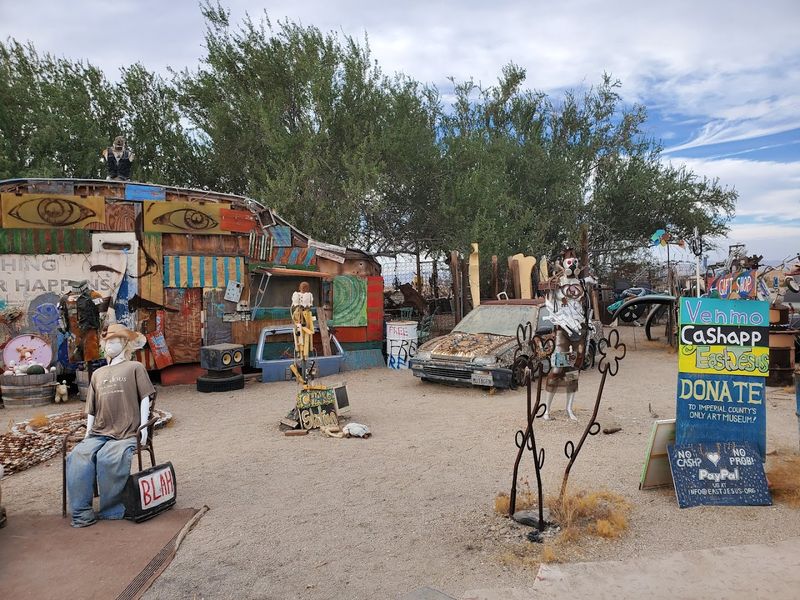
One of the coolest things longtime visitors mention is that East Jesus never stays the same. Every year, new installations appear, old ones evolve, and the whole property seems to breathe and expand.
One reviewer who visits annually noted with delight that there are always fresh surprises waiting.
The sculpture garden covers a wide stretch of desert property, packed with large-scale works that demand your full attention. Some pieces tower overhead, while others crouch close to the sand, forcing you to slow down and look carefully.
The closer you examine each work, the more hidden details reveal themselves.
Artists from the resident community and visiting creators both contribute, giving the garden a wonderfully layered personality. No single curator controls the vision here, which means the collection feels gloriously unpredictable.
Plan to spend at least two to three hours wandering if you truly want to soak it all in.
Art Made Entirely From Junk and Waste
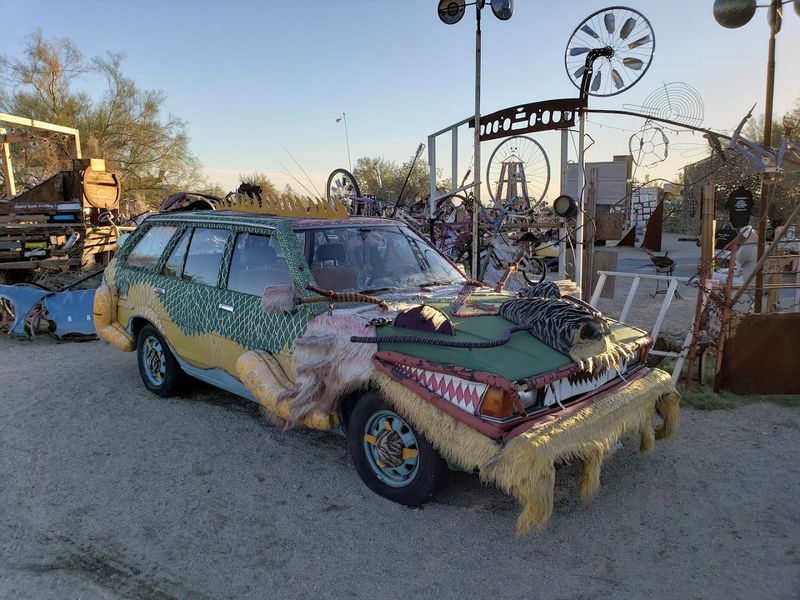
Every single piece at East Jesus starts its life as something someone threw away. Scrap metal, shattered glass, old computers, car parts, broken toys, and worn-out furniture are the primary building materials here.
The results are strangely beautiful and deeply unsettling all at once.
There is something almost poetic about watching a rusted satellite dish become a canvas for social commentary, or seeing hundreds of Barbie dolls fused onto a car body in a way that makes you genuinely uncomfortable. The artists are not just recycling materials; they are recycling meaning.
This eco-themed approach to art-making gives East Jesus a powerful environmental message without ever feeling preachy. The work speaks for itself.
Visitors consistently describe individual pieces as profound, each carrying a message about what modern society discards and what that discarding says about who we really are as a culture.
The Television Will Not Be Revolutionized Installation
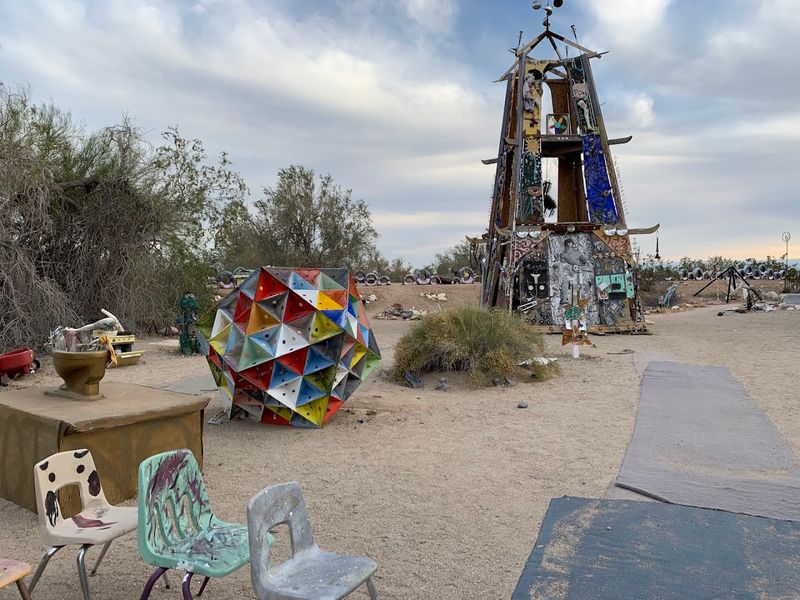
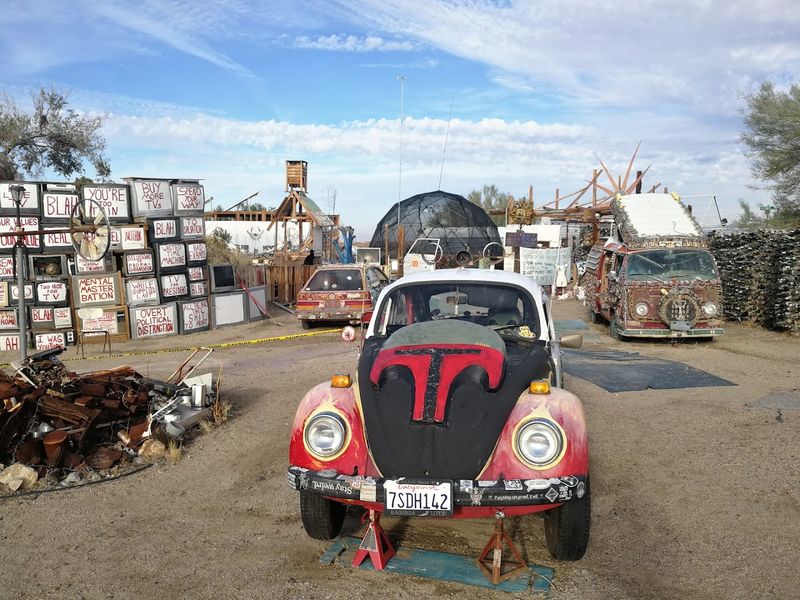
Among the many jaw-dropping displays at East Jesus, the television sets stand out as a true crowd favorite. One reviewer specifically called out the installation nicknamed “The Television Will Not Be Revolutionized” as their personal highlight of the entire visit.
It is easy to understand why.
Dozens of old CRT televisions, some smashed, some stacked, some painted and rewired, form a monument to media culture that hits you right in the gut. The piece plays with the famous phrase “the revolution will not be televised” and flips it into something sharp and funny and sad all at the same time.
Standing in front of this installation in the middle of a silent desert makes the message land even harder. There are no distractions, no background noise, just you and a pile of obsolete screens asking uncomfortable questions about what we watch and why we keep watching it.
Touch Everything: The Rules Are Different Here
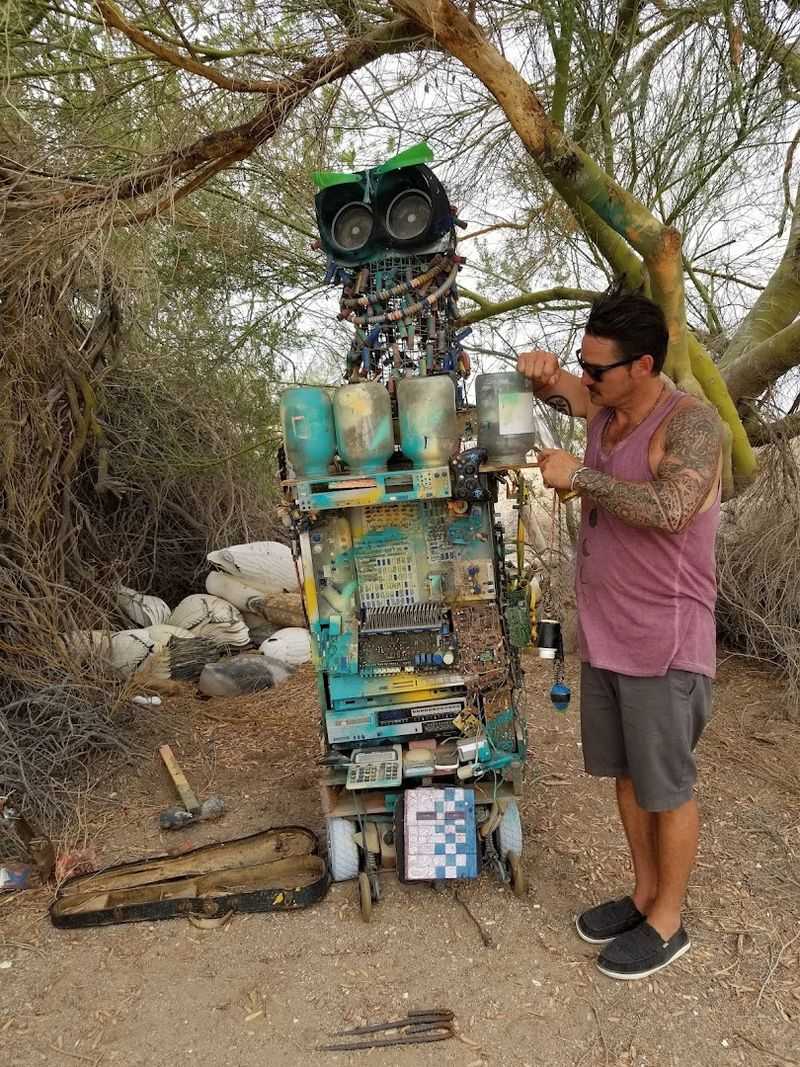
Most art museums post signs that read “Do Not Touch.” East Jesus has exactly the opposite philosophy. One of only two rules posted at the entrance is simple and glorious: play and touch as much as you want.
If something breaks, you just blame the artist.
This hands-on invitation completely changes how you experience the art. Running your fingers along a welded metal figure or spinning a kinetic sculpture gives you a physical connection that looking alone never could.
Kids especially love this freedom, and parents report that even family members who normally find art boring become completely absorbed here.
That permission to interact makes East Jesus feel more like a playground than a museum, which is probably exactly the point. Art should not be locked behind glass or treated as untouchable.
Here, the boundary between viewer and artwork dissolves completely, and that dissolution is quietly revolutionary in its own right.
The Slab City Connection
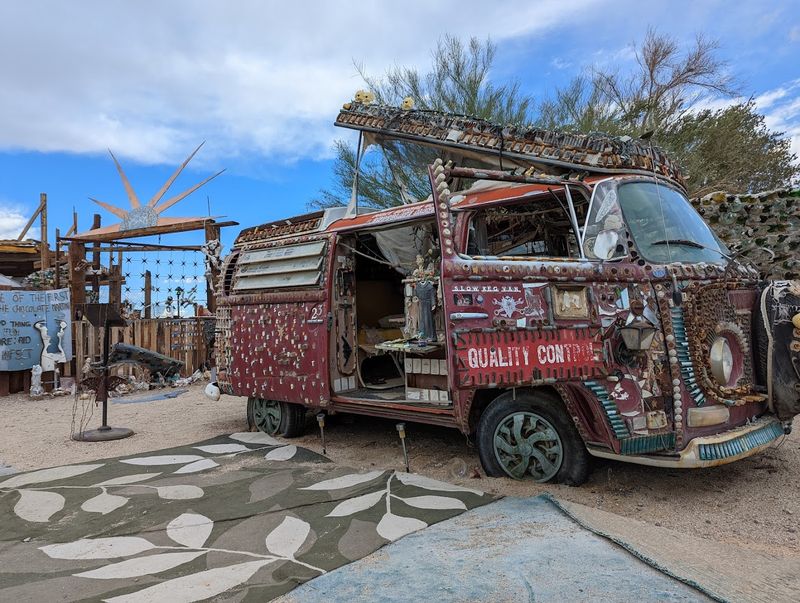
East Jesus does not exist in isolation. It grows from the soil of Slab City, one of America’s most legendary off-grid communities.
Built on the foundations of a decommissioned World War II military base, Slab City has attracted free spirits, artists, veterans, and wanderers for decades. East Jesus emerged naturally from that same rebellious energy.
Though East Jesus officially became its own nonprofit and is now legally separate from Slab City, the two remain spiritually connected. Visiting one without the other feels like reading half a book.
Nearby landmarks like Salvation Mountain and Dot’s Place round out the experience into a full day of counter-culture exploration.
The community spirit here is real and tangible. Several visitors mention meeting actual resident artists during their tours, having genuine conversations about life, creativity, and intention.
That human connection elevates East Jesus far beyond a simple tourist attraction into something genuinely memorable and moving.
Free to Visit, But Please Donate
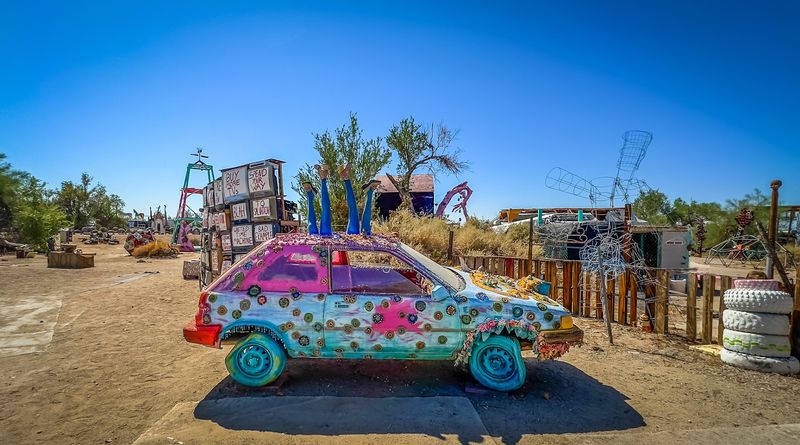
Walking through East Jesus costs absolutely nothing, which makes it one of the most generous cultural experiences in all of California. The artists and caretakers who maintain this extraordinary space ask only that visitors leave a small donation to help keep the installations alive and growing.
Donations can be left in physical boxes on-site or sent digitally through the community’s Venmo handle, which volunteers often share directly with visiting guests. Multiple reviewers mention meeting artists in person and handing over a few dollars face to face, which adds a wonderfully personal touch to the whole exchange.
Given the scale and ambition of what exists here, the suggested donation feels almost laughably small for what you receive in return. Think of it as paying for one of the most unique art experiences in the American Southwest.
Even a few dollars genuinely helps preserve something irreplaceable for the next visitor who stumbles this way.
Best Time to Visit East Jesus
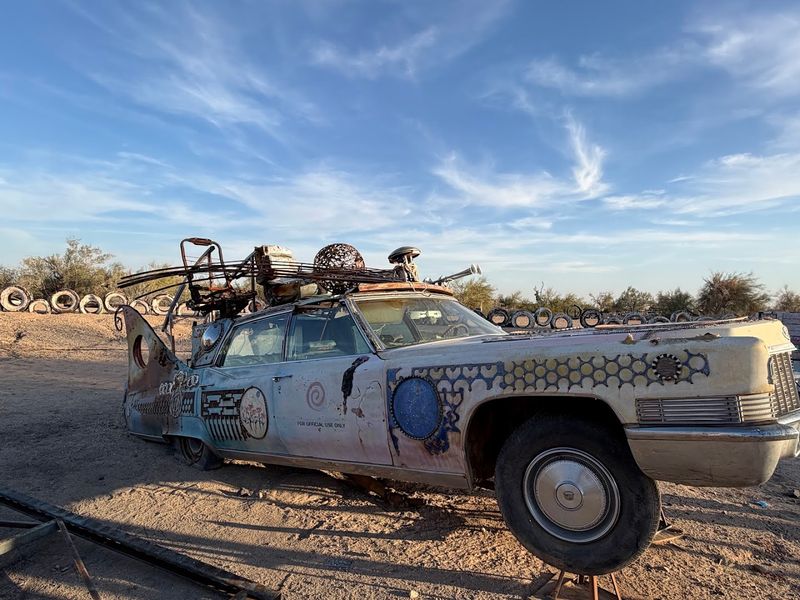
Timing your visit to East Jesus can make a massive difference in how enjoyable the experience feels. The desert around Niland gets brutally hot during summer months, with temperatures regularly exceeding 110 degrees Fahrenheit.
One reviewer who visited right before sunset described the atmosphere as beautiful, relaxing, and truly memorable, and that timing advice is worth taking seriously.
Fall through early spring offers the most comfortable conditions for exploring the open-air property. East Jesus is open every day from 6:30 AM to 6:30 PM, giving early risers and late-afternoon wanderers both a chance to enjoy the space in cooler temperatures and gorgeous desert light.
Whatever season you choose, always bring more water than you think you need. The site offers no shade structures over most of the property, and the desert sun is unforgiving even on mild days.
Sunscreen, a hat, and sturdy walking shoes round out the essential packing list perfectly.
Themes That Run Through the Art
Wandering through East Jesus without paying attention to its recurring themes would be like watching a great film with the sound off. Politics, religion, consumerism, death, and rebirth appear again and again across different installations, each piece adding a new layer to an ongoing conversation.
What makes the thematic depth so impressive is that none of it feels forced or lecture-y. A stack of discarded religious icons here, a corroded American flag sculpture there, and suddenly you are thinking about things you never expected to consider while standing in a California desert.
The installations speak to each other across the property like voices in a strange, communal dream, as one reviewer beautifully described it. Spending time noticing how different pieces rhyme and respond to one another turns the whole visit into something closer to reading a novel than browsing a typical art show.
That layered experience is genuinely rare.
What Visitors Are Saying About East Jesus
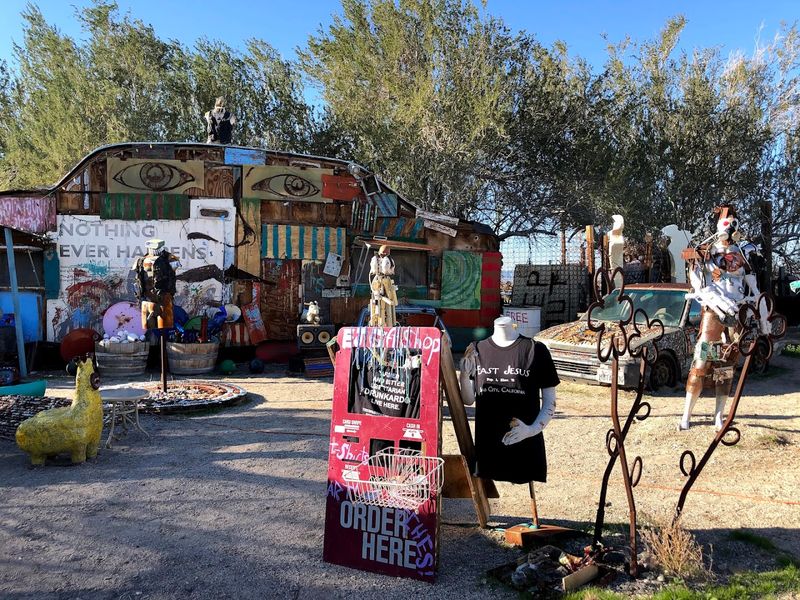
With a 4.6-star rating across more than 1,300 Google reviews, East Jesus has earned its reputation as one of the most unforgettable stops in Southern California. Visitors consistently use words like thought-provoking, humbling, and one-of-a-kind to describe their experience.
Even the one- and two-star reviews acknowledge that interesting pieces exist within the chaos.
Families, solo travelers, couples, and road-trippers all find something meaningful here. One reviewer brought their father, who had never shown much interest in art before, and found it genuinely difficult to drag him away once he started exploring.
That kind of cross-generational magic is hard to manufacture.
Critics sometimes note that the space feels overwhelming or disorganized, and that is a fair observation. But for most visitors, that raw, unfiltered energy is exactly the point.
East Jesus was never meant to be tidy. It was meant to be honest, and that honesty clearly resonates with thousands of people every year.
Nearby Attractions Worth Combining With Your Visit
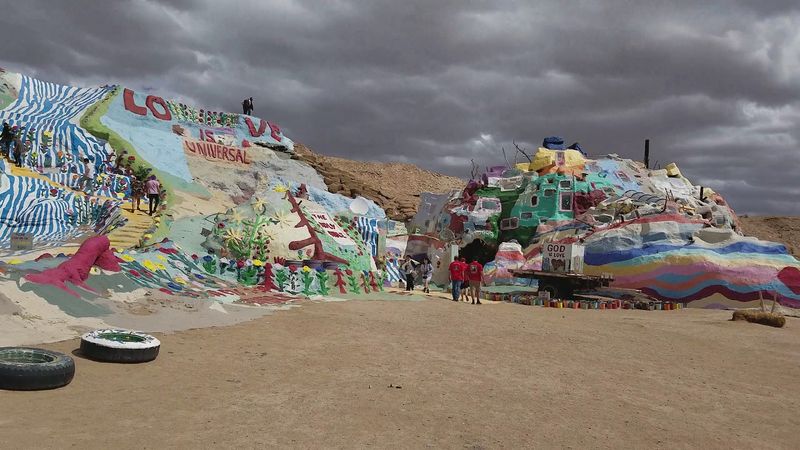
Pairing East Jesus with nearby attractions turns a single stop into a full and truly epic desert day trip. Just ten minutes away, Salvation Mountain stands as one of California’s most colorful and beloved folk art landmarks, a hand-painted hillside covered in religious messages and bright acrylic paint that has drawn visitors for decades.
Dot’s Place, a quirky gathering spot inside Slab City, adds another flavor of counter-culture personality to the itinerary. The Salton Sea, California’s famous and hauntingly beautiful inland lake, is also within easy driving distance and offers a surreal landscape that feels almost alien in its strange, salty beauty.
Combining all three stops into one road trip gives you a full picture of this unique corner of Imperial County. Start early, pack a cooler with plenty of water and snacks, and give yourself the whole day.
This stretch of desert rewards curious travelers who slow down and pay attention.
Why East Jesus Matters Beyond the Art
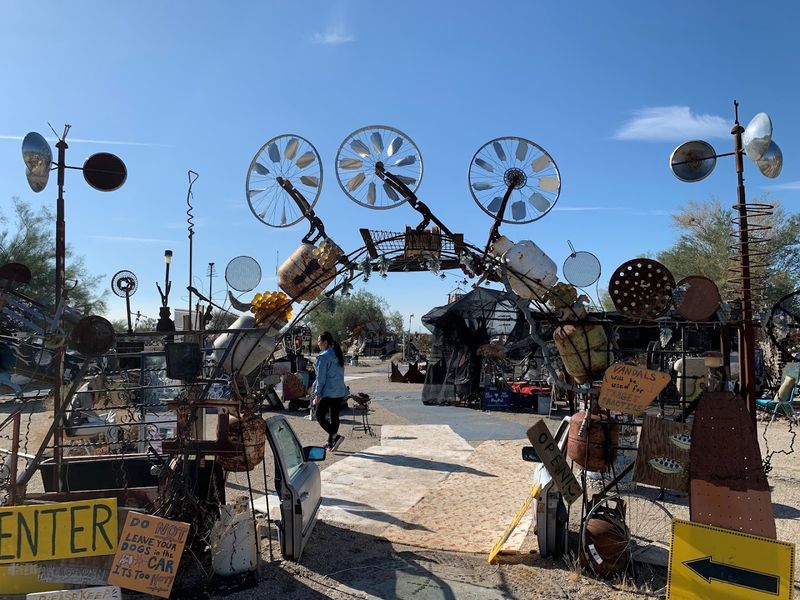
At its core, East Jesus is asking a question that most polished institutions are too cautious to ask out loud: what does a society reveal about itself through what it throws away? Every broken appliance and discarded toy that ends up in these sculptures was once considered valuable enough to manufacture, buy, and own.
The artists here are doing something quietly radical. They are insisting that even the most overlooked and worthless objects deserve a second life and a second look.
That philosophy extends beyond recycling into something closer to a full worldview about dignity, waste, and what it means to make something meaningful from almost nothing.
Visitors who leave East Jesus often report feeling changed in small but real ways. Not because the art told them what to think, but because it created space for questions they had never thought to ask.
That is what the best art always does, and East Jesus delivers it freely, in the middle of the desert, for anyone willing to make the drive.
Enjoyed this story?
Add Fast Food Club as a preferred source to see more of our reporting on Google.