


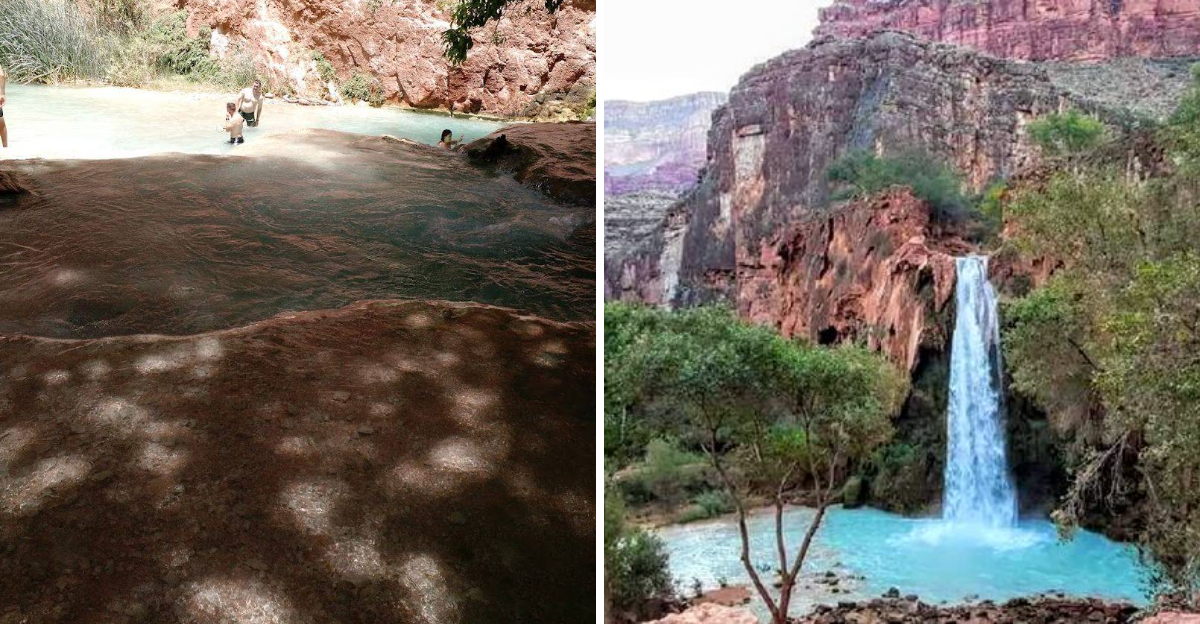
Tucked deep inside the Havasupai Indian Reservation in Arizona, the Havasu Falls Trail is one of the most breathtaking hikes in the entire country. This 19-mile round-trip adventure winds through dramatic canyon landscapes before rewarding hikers with three jaw-dropping waterfalls.
Getting here takes real effort, including a permit, some planning, and plenty of stamina, but every step is worth it. If you love nature and crave an unforgettable outdoor experience, this trail belongs at the top of your bucket list.
The Trailhead at Hualapai Hilltop
Standing at the edge of Hualapai Hilltop feels like peering into another world. The trailhead sits at about 5,200 feet elevation, and from here, the canyon drops sharply below you in a series of steep switchbacks.
Most hikers arrive before sunrise to beat the scorching Arizona heat.
The parking area fills up fast, especially on weekends, so arriving early is a smart move. There are no stores or water sources at the trailhead, so pack everything you need before you leave your car.
Snacks, sunscreen, and a full water supply are non-negotiables here.
The first mile is the toughest, with tight zigzag trails carved into the canyon wall. After that, the terrain flattens into a sandy wash that guides you the rest of the way toward Supai Village.
Starting strong sets the tone for an incredible journey ahead.
The 19-Mile Round-Trip Distance
Nineteen miles might sound intimidating, but the Havasu Falls Trail breaks down into manageable sections that keep the experience exciting rather than exhausting. The hike in covers roughly 9.5 miles one way, with most of the elevation change happening in that first steep descent from Hualapai Hilltop.
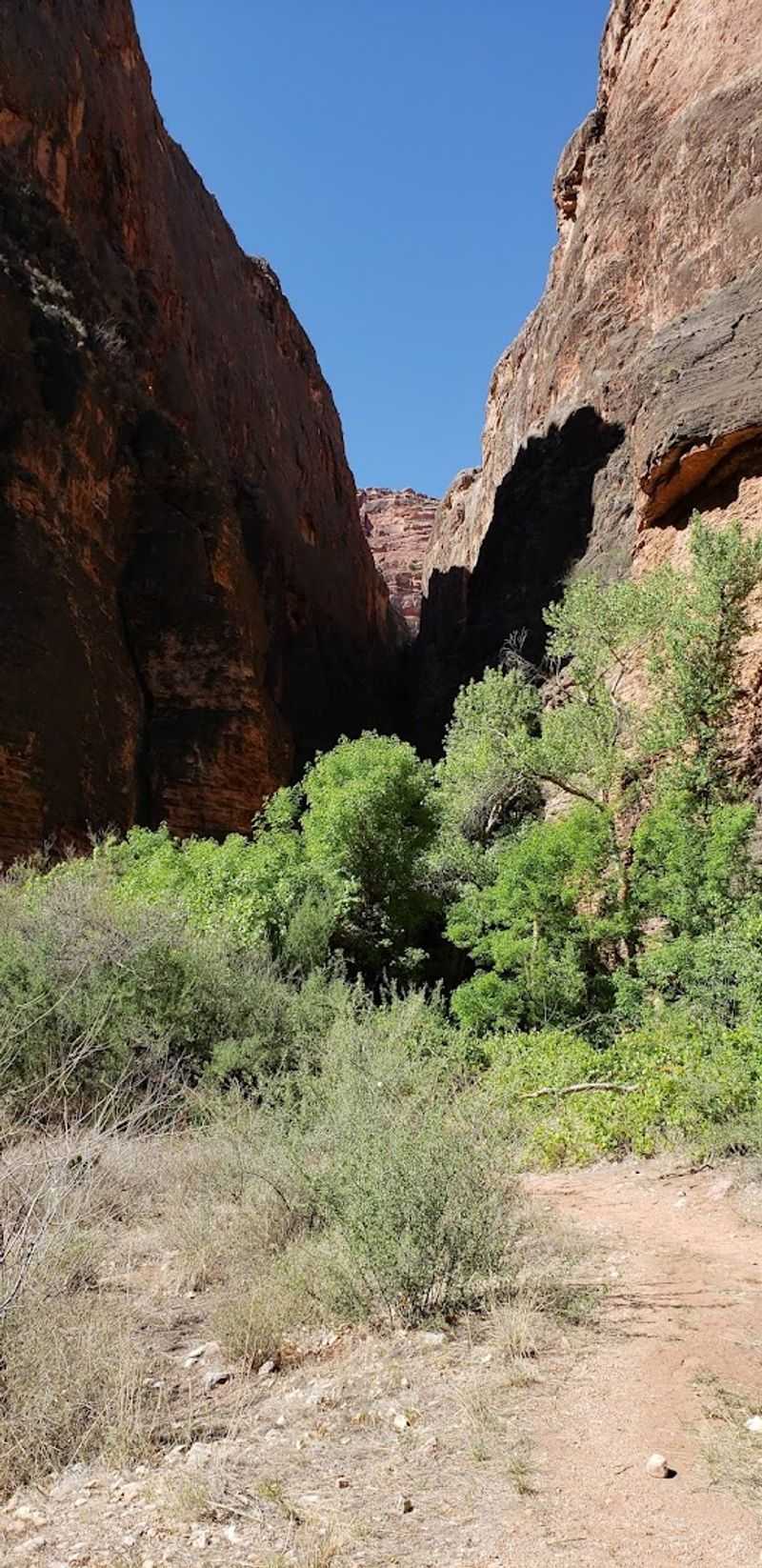
Once you reach the canyon floor, the trail follows Havasu Creek through a stunning red-walled canyon. The flat, sandy terrain makes the middle miles surprisingly easy on the legs.
Many hikers describe this stretch as almost meditative, with towering canyon walls rising on both sides.
Planning your pace matters a lot on this trail. Most people spread the hike across two or three days, camping overnight to fully enjoy the waterfalls without rushing.
Rushing through 19 miles in a single day is possible but leaves little time to soak in the magic waiting at every turn.
Securing Your Permit
Getting a permit to hike Havasu Falls Trail is honestly half the battle. The Havasupai Tribe controls access to this land, and permits sell out within minutes each year when the reservation opens the booking window, usually in February for the upcoming season.
Setting a calendar reminder and having your payment information ready is absolutely essential. The tribe uses an online lottery-style system, and thousands of eager hikers compete for a limited number of spots.
Missing the window often means waiting an entire year to try again.
Permits cover camping fees and an environmental care fee, so expect to pay a few hundred dollars per person for a multi-night stay. Children under a certain age may have reduced fees.
Always check the official Havasupai Tribe website for the most current pricing and rules before booking. Fake permit sites do exist, so stay alert.
Havasu Falls: The Crown Jewel
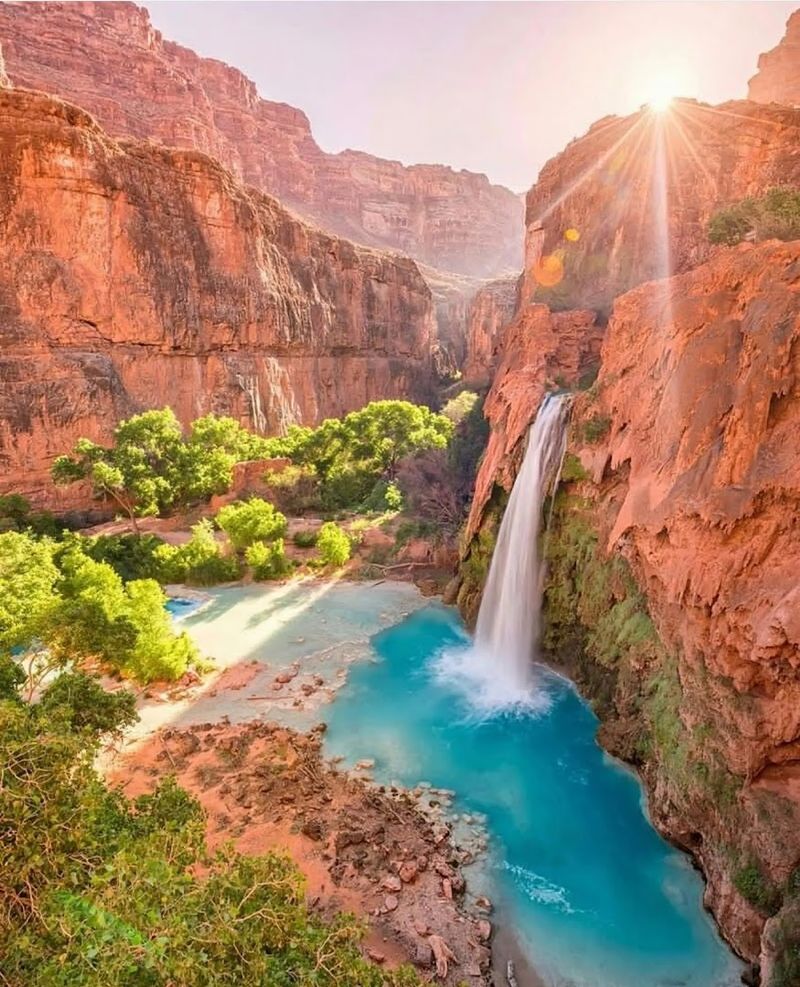
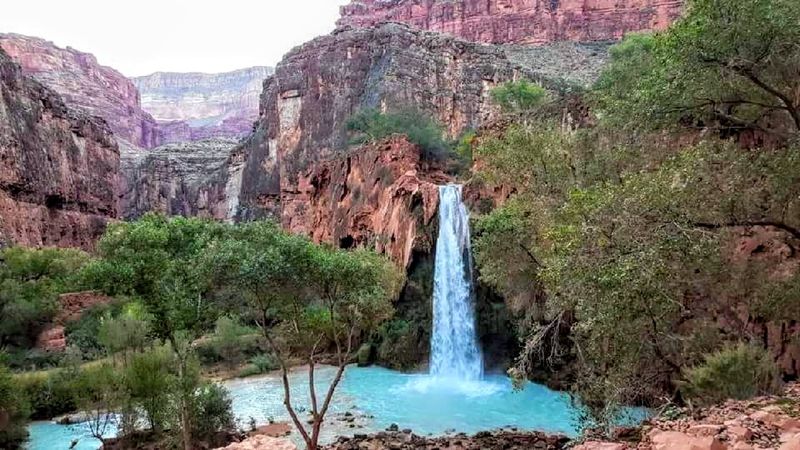
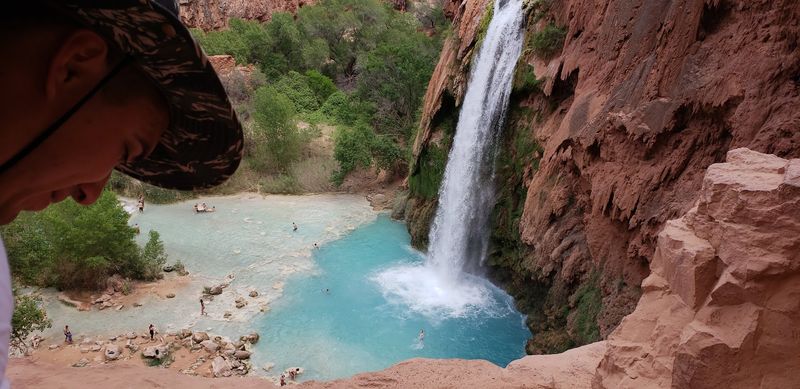
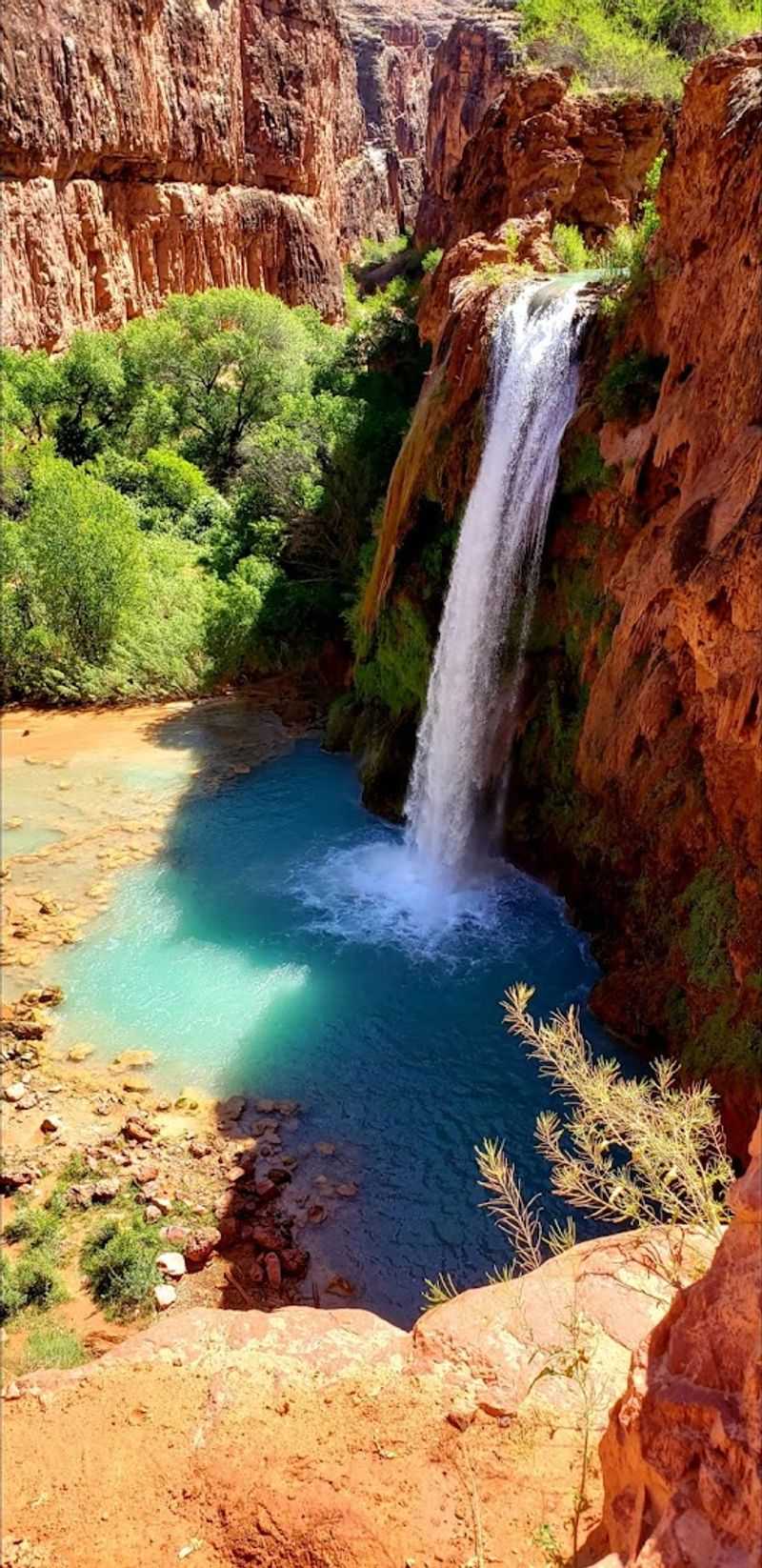
Nothing can fully prepare you for the first glimpse of Havasu Falls. The waterfall drops about 100 feet into a pool of the most electric turquoise-blue water you will ever see outside of a dream.
The color comes from high concentrations of calcium carbonate and magnesium in the water, which reflect light in an almost unreal way.
Swimming in the pool below Havasu Falls is the highlight of the trip for most visitors. The water stays refreshingly cool even in the heat of summer, making it a perfect reward after miles of hiking.
Jumping from rocks near the base is popular, though always check conditions before attempting any jumps.
Photographers absolutely love the late afternoon light here, when the canyon walls glow orange and the waterfall shimmers in contrast. Bring a waterproof camera or a dry bag for your phone, because you will definitely want to get close to the falls.
Mooney Falls: The Tallest of the Three
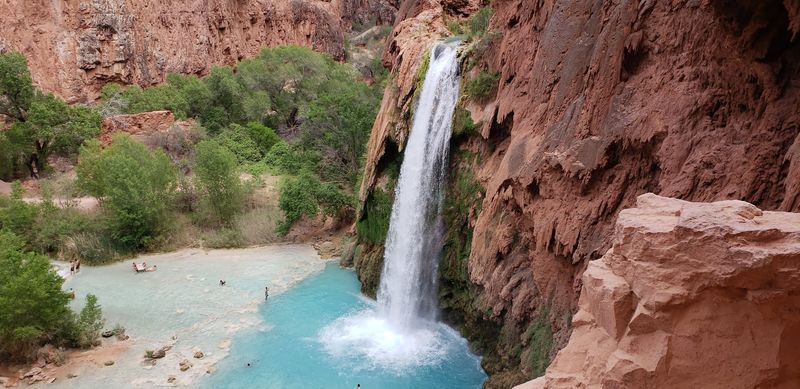
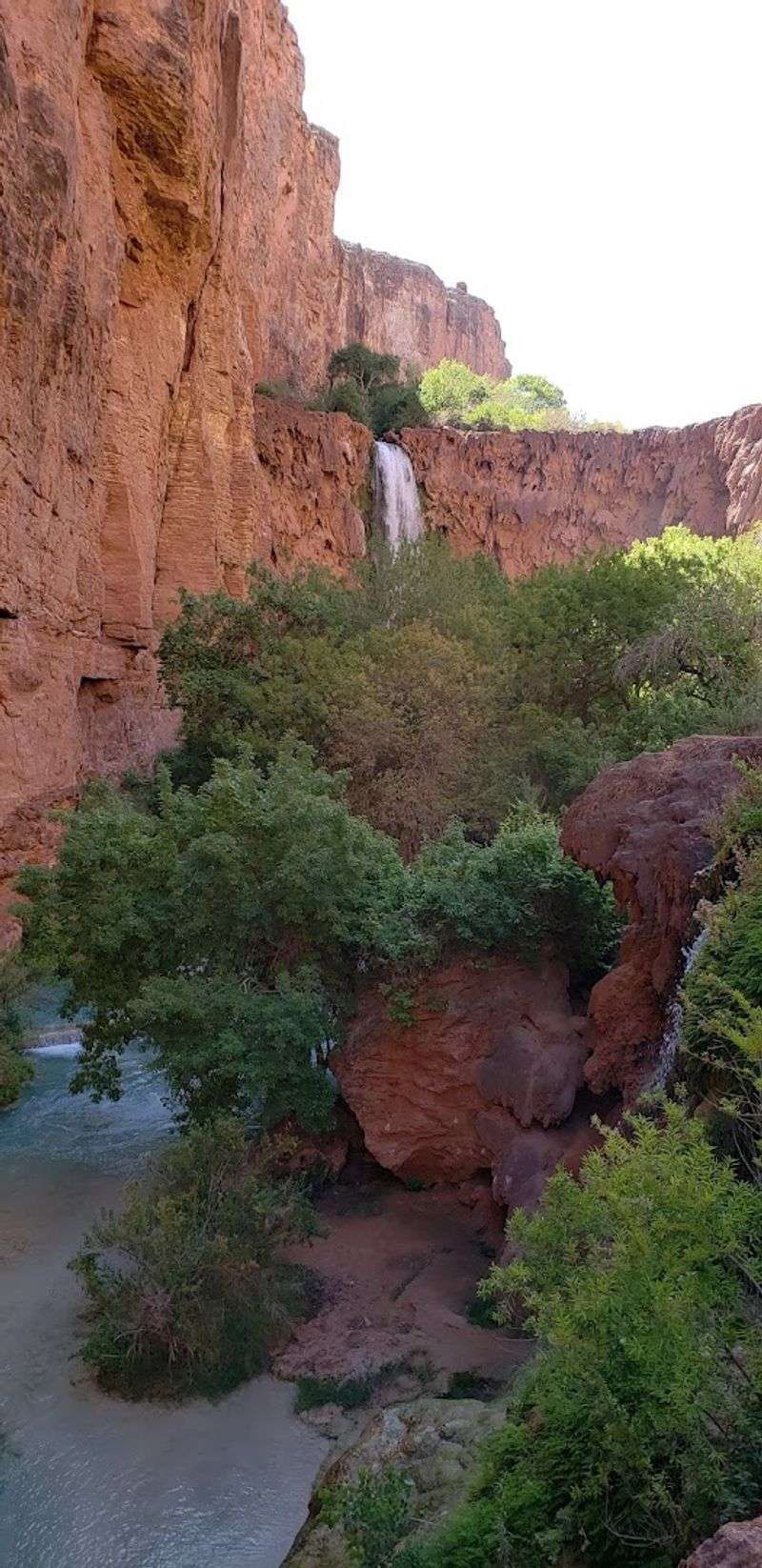
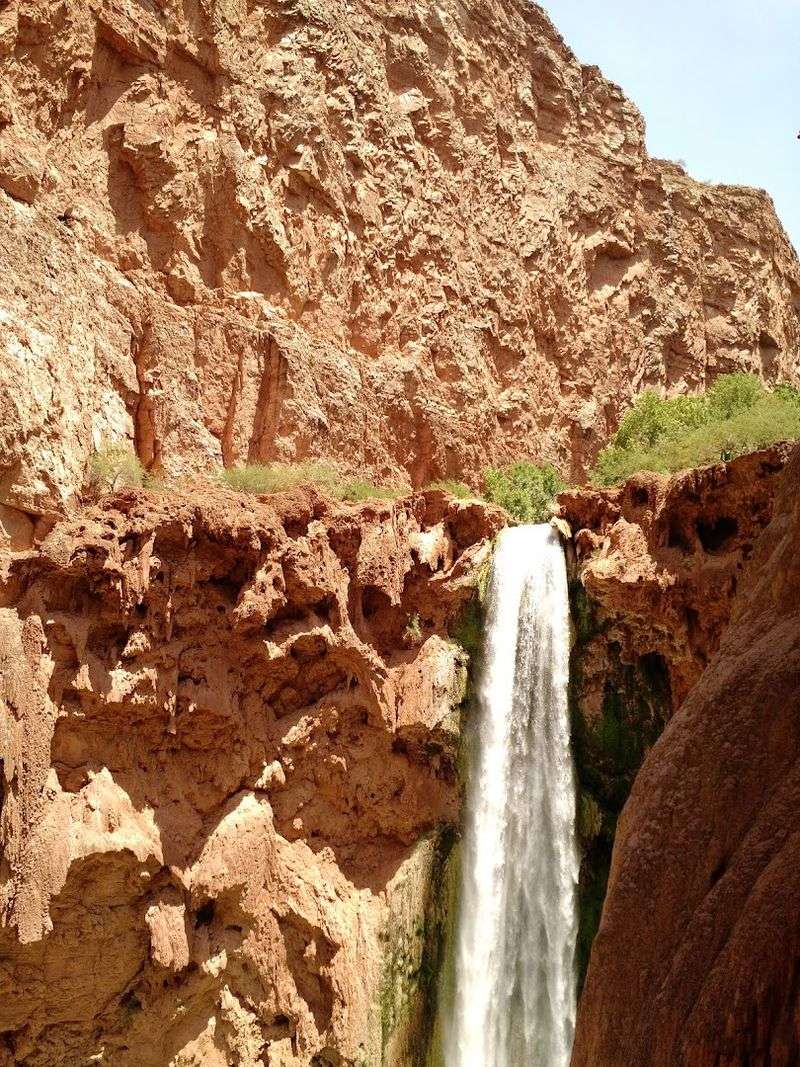
Mooney Falls stands at an impressive 200 feet, making it the tallest waterfall on the trail and one of the most dramatic natural features in all of Arizona. Named after a prospector who tragically fell here in the 1880s, this waterfall carries both beauty and a haunting piece of history.
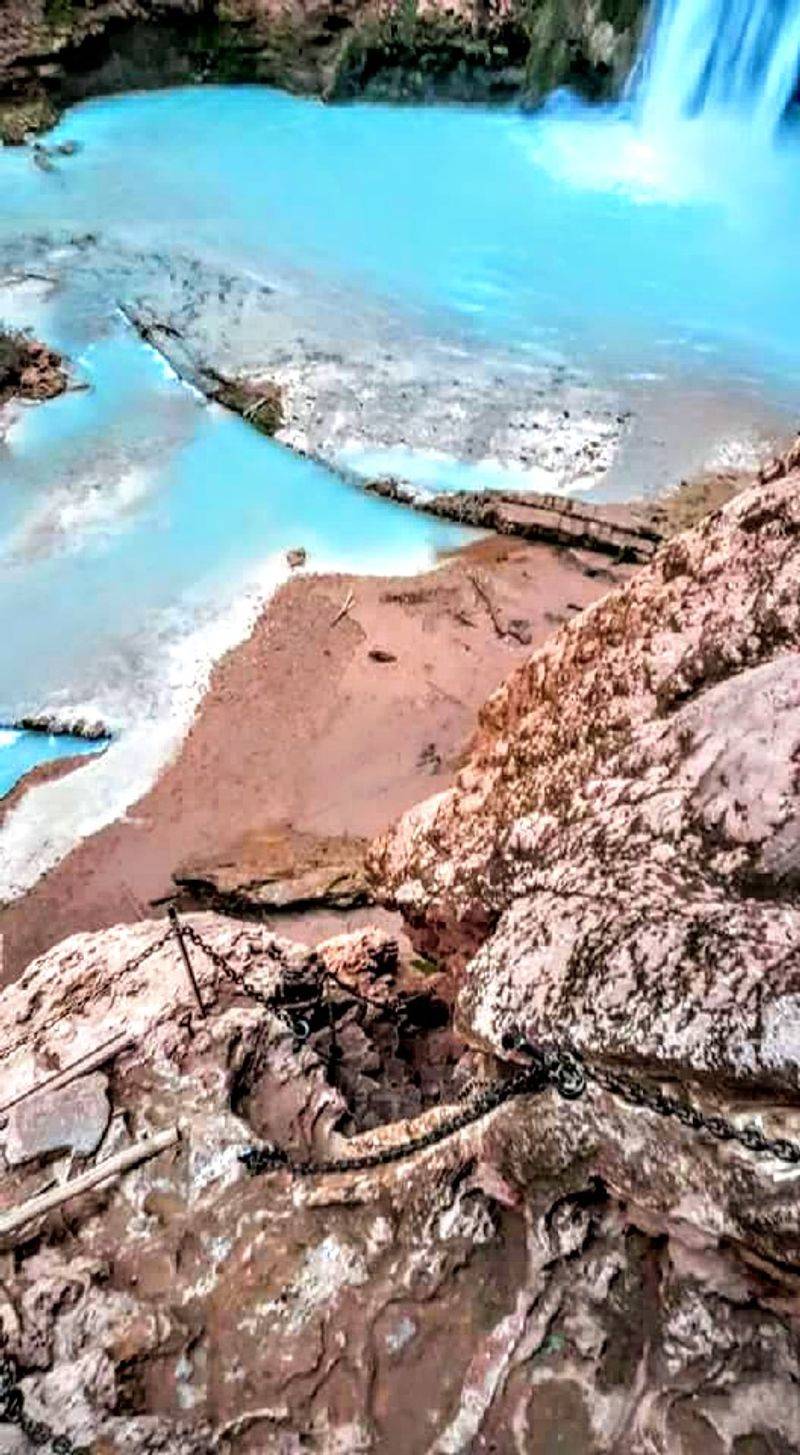
Reaching the base of Mooney Falls requires nerves of steel. Hikers must descend a slippery cliff face using hand-drilled iron stakes and chains bolted into the rock.
The path passes through narrow tunnels carved into the canyon wall, adding an adventurous caving element to the descent.
Once you make it down, the reward is extraordinary. Standing at the base with mist spraying your face as 200 feet of rushing water crashes beside you is a moment that stays with you forever.
The pool here is also excellent for swimming, with fewer crowds than Havasu Falls just upstream.
Beaver Falls: The Hidden Reward
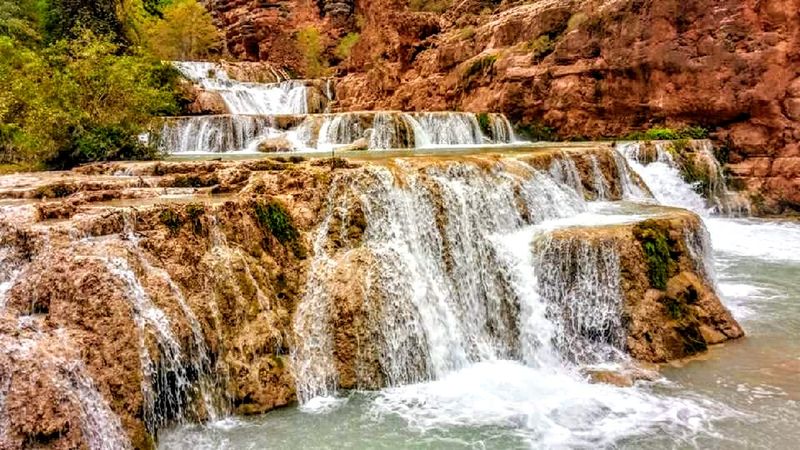
Beaver Falls sits about three miles past Mooney Falls, and most hikers who make it this far agree it was absolutely worth the extra effort. Unlike the dramatic single-drop waterfalls upstream, Beaver Falls is a series of tiered cascades and turquoise pools that feel like a hidden paradise tucked away from the crowds.
The trail between Mooney and Beaver Falls involves multiple creek crossings, some scrambling over rocks, and navigating through dense canyon vegetation. Wearing water shoes or quick-dry sandals for this section makes a huge difference.
The route is not always clearly marked, so paying attention to trail markers is important.
Beaver Falls is also closer to the Colorado River, so adventurous hikers sometimes continue past the falls to reach the mighty river itself. Watching the crystal-clear Havasu Creek meet the muddy Colorado is a striking natural contrast that feels almost surreal in the best possible way.
Supai Village: Life Inside the Canyon
About eight miles into the hike, you reach Supai Village, the only place in the United States where mail is still delivered by mule. Home to the Havasupai people, this small community sits entirely within the canyon and has no road access.
Everything that arrives here comes by trail, helicopter, or those famously hardworking mules.
Hikers must check in at the tourist office in Supai Village before continuing to the campground and waterfalls. The village has a small cafe, a lodge, and a general store where you can buy snacks and basic supplies.
Prices are higher than normal due to the remote location, so bringing enough food from outside is wise.
Spending a few minutes in Supai Village gives the hike a cultural depth that most trails simply cannot offer. The Havasupai people have lived in this canyon for centuries, and their connection to this land is woven into every part of the landscape around you.
Camping at Havasupai Campground
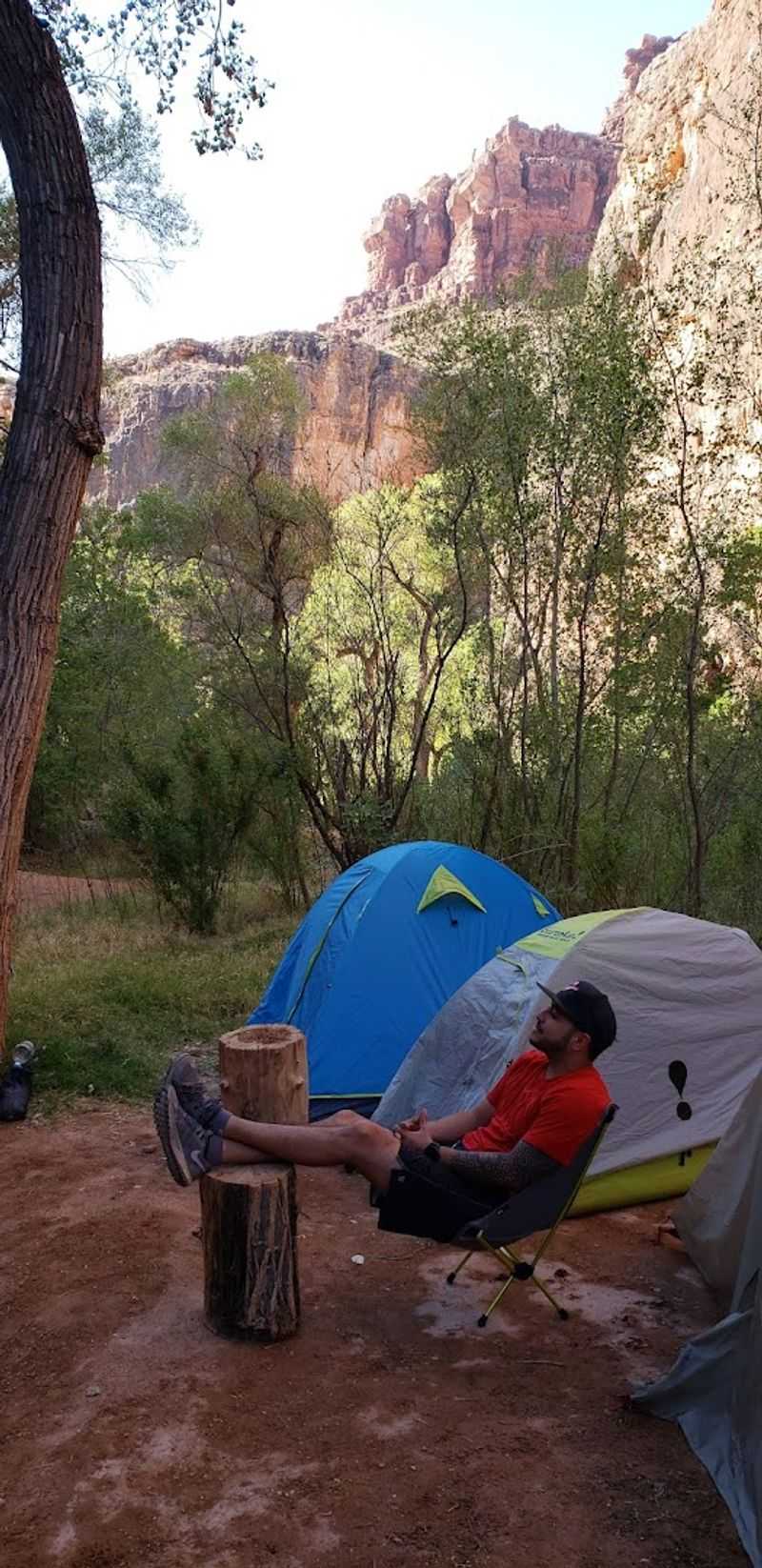
Camping at Havasupai Campground is one of those experiences that makes you forget the outside world exists. The campground stretches along Havasu Creek between Havasu Falls and Mooney Falls, putting you within easy walking distance of both stunning waterfalls.
Falling asleep to the sound of rushing water under a sky full of stars is genuinely magical.
The campground has basic amenities including pit toilets and some shaded areas, but there are no showers or electrical hookups. Campers must pack out all their trash, and the tribe enforces Leave No Trace principles strictly.
Respecting these rules helps preserve the canyon for future generations of visitors.
Most permits allow stays of two to three nights, which gives you plenty of time to explore all three waterfalls without feeling rushed. Waking up early on your second morning to hike to Beaver Falls while the canyon is still cool and quiet is an experience hikers rarely forget.
The Famous Turquoise Water
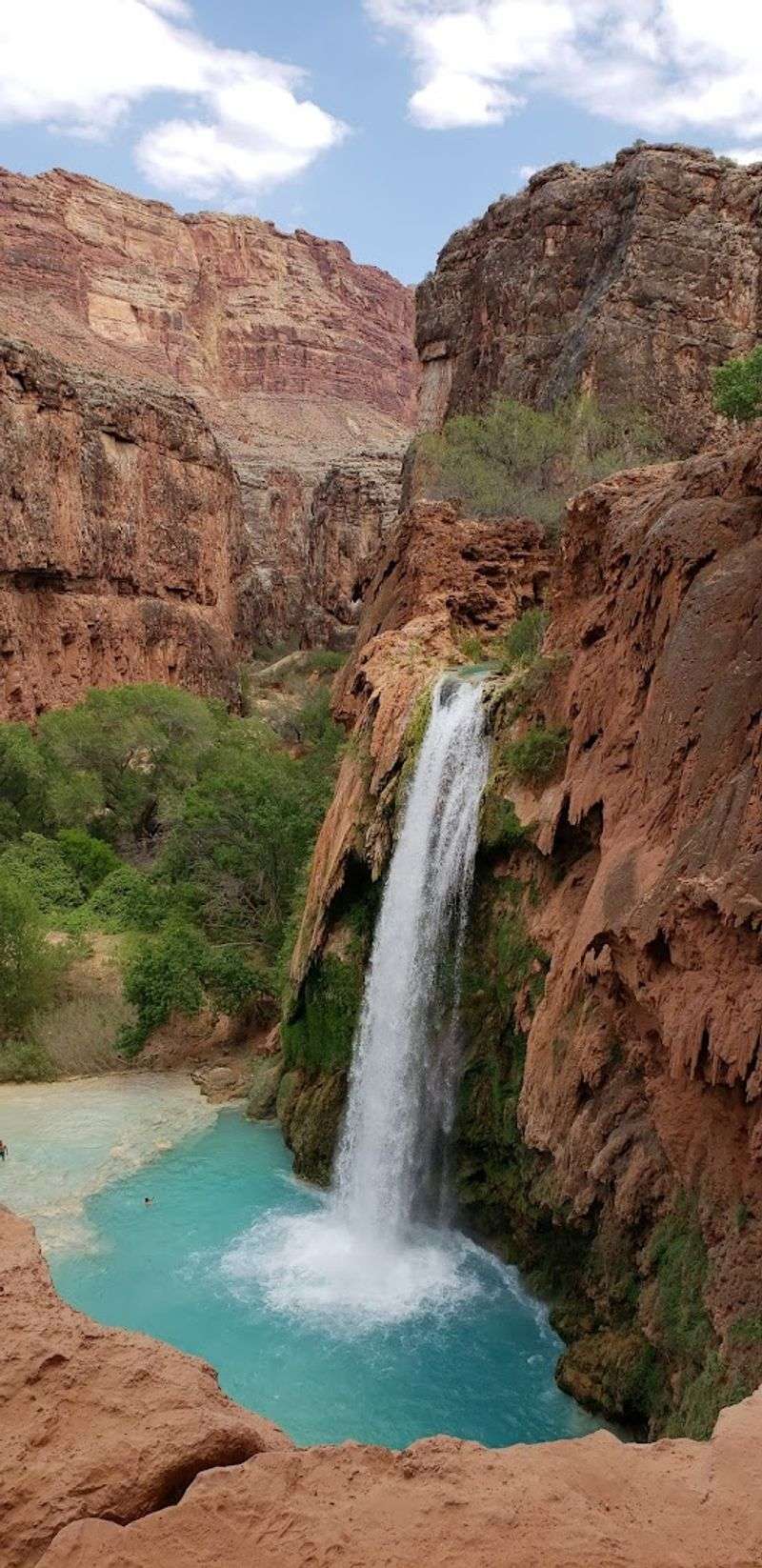
The water in Havasu Creek is so blue it almost looks digitally enhanced in photographs, but it is completely real. The vivid turquoise color is caused by minerals dissolved in the water, particularly calcium carbonate, which coats the creek bed and surrounding rocks in a pale limestone layer called travertine.
Travertine is constantly being deposited by the flowing water, which means the landscape here is always slowly changing. Over time, these mineral deposits build up into natural dams that create new pools and alter the shape of existing waterfalls.
Scientists and geologists find Havasu Creek fascinating for exactly this reason.
The water temperature stays around 70 degrees Fahrenheit year-round, which feels perfect after hiking through Arizona heat. Swimming in the creek between waterfalls is allowed and encouraged.
Many hikers spend entire afternoons floating in the pools, letting the current carry them gently from one stunning spot to the next.
What to Pack for the Hike
Packing smart for the Havasu Falls Trail can make the difference between a dream trip and a miserable one. Water is the most critical item to get right.
Each hiker should carry at least three to four liters, and bringing a water filter or purification tablets lets you refill from Havasu Creek along the way.
Trekking poles are highly recommended, especially for the steep descent at Hualapai Hilltop and the chain descent at Mooney Falls. A comfortable, well-fitted backpack that distributes weight evenly across your hips saves your shoulders over long miles.
Blister-resistant hiking socks are small but mighty additions to any pack.
Sun protection is non-negotiable in the Arizona desert. A wide-brimmed hat, UV-blocking sunglasses, and a high-SPF sunscreen applied frequently keep you safe from intense sun exposure.
Packing a lightweight rain jacket is also smart, since flash floods can occur in the canyon with little warning during monsoon season.
Best Time of Year to Visit
Spring, particularly March through May, is widely considered the sweet spot for visiting Havasu Falls Trail. Temperatures during this time sit in a comfortable range, usually between 70 and 85 degrees Fahrenheit in the canyon, making the long hike far more enjoyable than during the brutal summer months.
Fall, from September through November, is another excellent window. The canyon cools down noticeably, crowds thin out compared to summer, and the golden light of autumn makes every photograph look stunning.
Cottonwood trees along the creek turn brilliant yellow in October, adding an unexpected burst of color to the red canyon scenery.
Summer visits are possible but come with serious heat, often exceeding 100 degrees Fahrenheit inside the canyon. The tribe closes the trail entirely during parts of winter due to dangerous conditions.
Flash flood risk peaks during the July and August monsoon season, so checking weather forecasts before any summer visit is absolutely critical.
Flash Flood Safety in the Canyon
Flash floods are one of the most serious hazards on the Havasu Falls Trail, and every hiker needs to understand the risk before entering the canyon. Storms many miles away can send walls of water rushing through the canyon without warning, even when the sky above you looks perfectly clear.
This is not a scare tactic but a real and documented danger.
The Havasupai Tribe monitors weather conditions and has an emergency alert system in place for campers. Always pay attention to any announcements from tribal staff, and never camp directly in the creek bed or in low-lying areas.
Moving to higher ground immediately if you hear a rumbling sound or notice the creek rising rapidly could save your life.
Checking weather forecasts for the entire region, not just the trailhead, is essential planning. Many experienced hikers avoid the trail entirely during July and August to sidestep monsoon season.
Staying informed and staying alert are the two most important safety habits you can develop for this hike.
Why This Hike Is Truly Worth It
Ask anyone who has completed the Havasu Falls Trail and the answer is almost always the same: it changed them. There is something about earning a view through miles of effort that makes it hit differently than any overlook you can drive to.
The combination of dramatic canyon scenery, vibrant blue water, and three distinct waterfalls creates an experience that feels layered and endlessly rewarding.
Beyond the physical beauty, the trail offers a genuine connection to the land and culture of the Havasupai people. Every permit purchase directly supports the tribe, helping fund services and preservation efforts for one of the most isolated communities in North America.
Hiking here is not just recreation but a form of respectful cultural engagement.
Planning carefully, respecting the rules, and arriving with a spirit of adventure transforms this hike from a physical challenge into a life-defining memory. Very few places on Earth pack this much wonder into a single trail, and Havasu Falls Trail is one of them.
Enjoyed this story?
Add Fast Food Club as a preferred source to see more of our reporting on Google.