


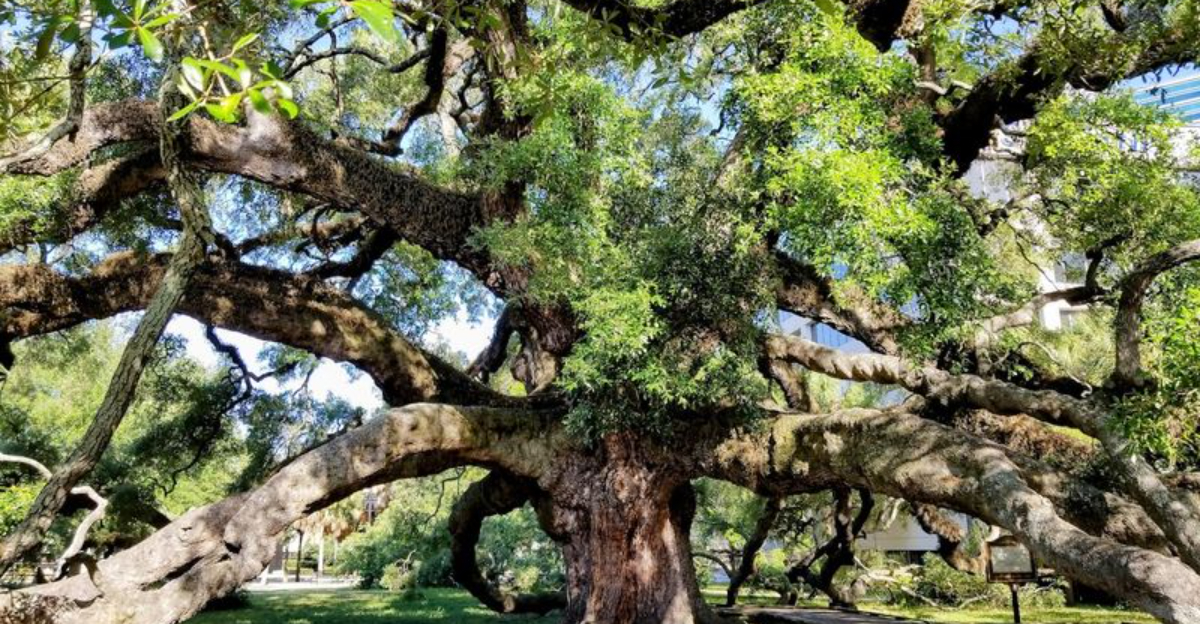
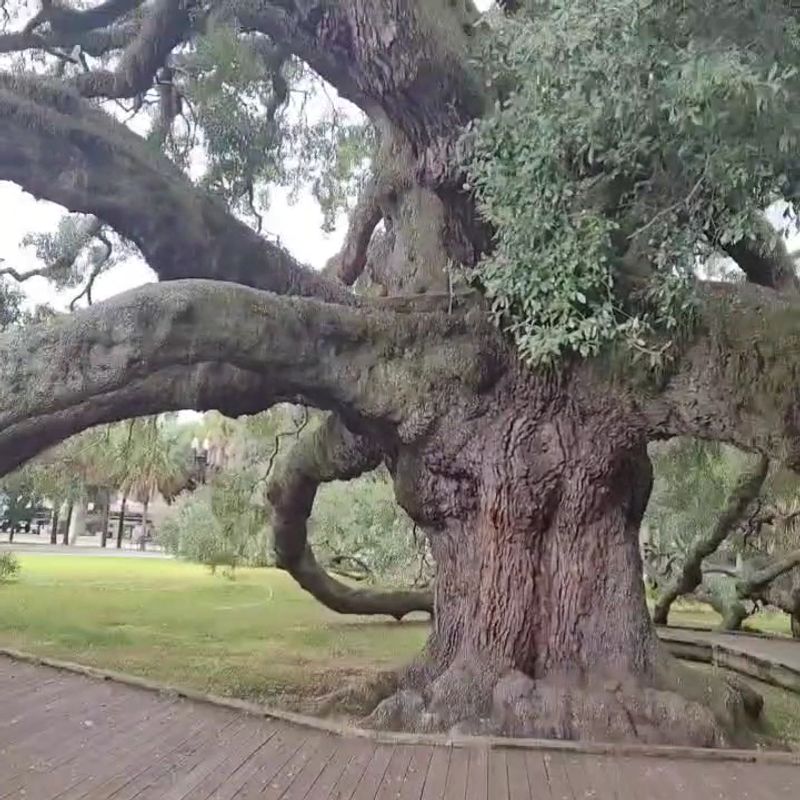
Tucked alongside a busy highway in Jacksonville, Florida, stands one of the most breathtaking living landmarks in the entire Southeast — the Treaty Oak. This massive live oak tree is over 200 years old, with a trunk stretching nearly 25 feet around and branches that seem to reach out in every direction like giant arms welcoming visitors.
People from all over the city and beyond come to sit beneath its enormous canopy, snapping photos, sharing picnics, and soaking in the peaceful atmosphere. Whether you know Jacksonville well or are just passing through, the Treaty Oak is a must-see piece of living history that connects the past to the present in the most beautiful way.
A Tree That Predates Modern Jacksonville
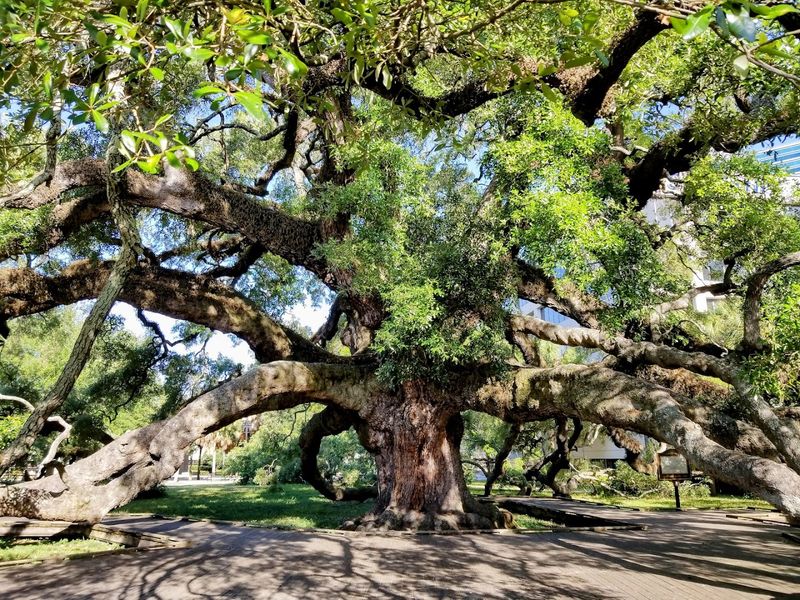
Long before Jacksonville had highways, skyscrapers, or parking garages, the Treaty Oak was already growing strong. This remarkable tree is estimated to be over two centuries old, meaning it was alive during the early 1800s when Florida was still being shaped as a territory.
That kind of age is almost impossible to wrap your head around.
Standing near the St. Johns River on Prudential Drive, the tree has outlasted wars, storms, and decades of city development. While buildings have risen and fallen around it, the oak has remained a constant, rooted presence in the landscape.
Its survival alone tells a story worth paying attention to.
Visitors who learn about its age often pause and reflect on just how much history this tree has silently witnessed. It’s one of those rare places where time feels different — slower, deeper, and more meaningful.
Massive Trunk and Wild, Twisting Branches
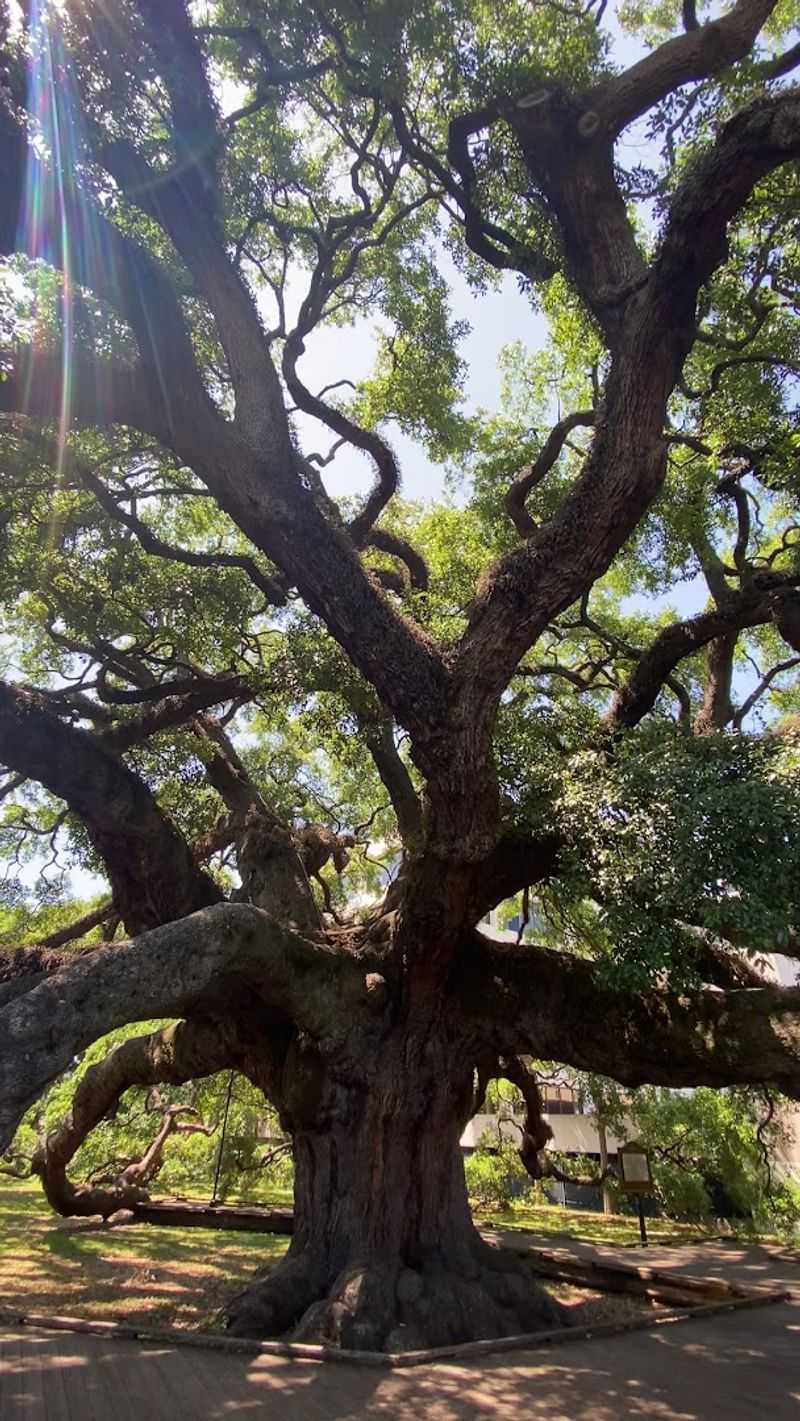
Few trees in Florida can match the sheer physical presence of the Treaty Oak. Its trunk measures an astonishing 25 feet in circumference, which means it would take several adults holding hands to fully wrap around it.
The bark is deeply grooved and textured, telling the story of centuries of growth through its rugged surface.
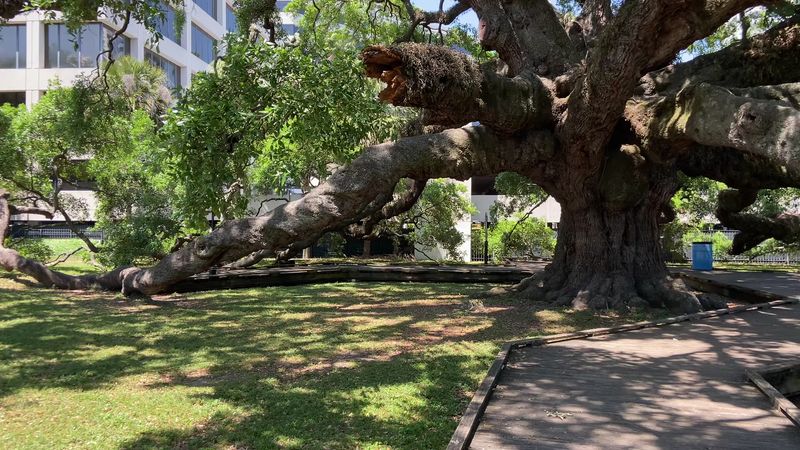
What really grabs people’s attention, though, are the branches. They twist and curl outward in wild, dramatic directions, stretching so far that some nearly touch the ground before curving back upward.
Metal support structures have been installed beneath some of the heaviest limbs to help carry their weight.
Kids love climbing the lower branches, which hang close enough to the ground to make it feel like a natural playground. Reviewers have noted that some branches let climbers reach what feels like 30 feet in the air — all from a single tree.
Jessie Ball duPont Park: The Green Space Around the Legend
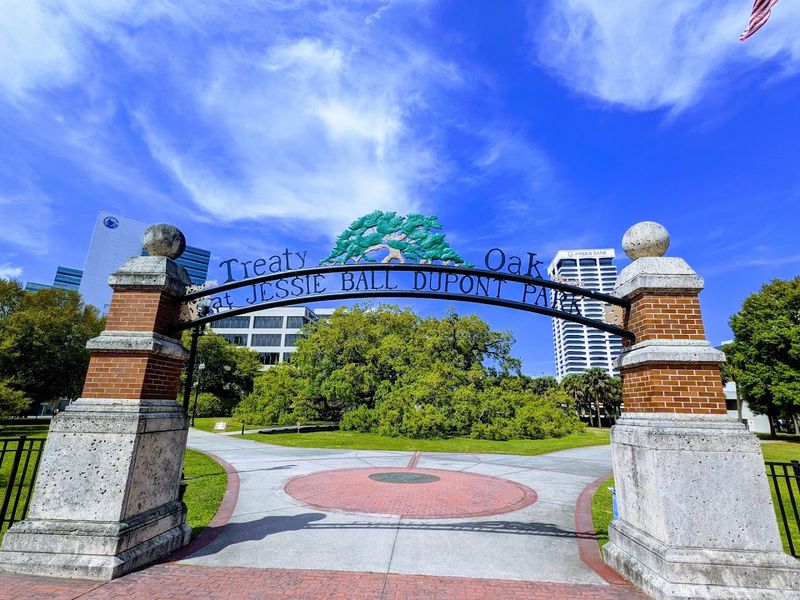
The Treaty Oak doesn’t stand alone — it anchors a charming green space called Jessie Ball duPont Park, managed by the City of Jacksonville’s Parks and Recreation Department. The park provides a calm, open area where visitors can walk, relax, and enjoy the outdoors without feeling rushed or crowded.
Maintained and well-kept, the park offers enough open lawn space for picnics, small gatherings, and quiet reflection. A fountain nearby adds a pleasant visual touch, and the proximity to the St. Johns River gives the whole area a refreshing, breezy feel that makes it extra enjoyable on warm Florida afternoons.
The park is open daily from 7 AM to 7 PM, giving visitors plenty of daylight hours to explore. Whether you’re a local looking for a lunch spot or a tourist passing through the San Marco neighborhood, the park is a welcoming green escape in the middle of the city.
Why Locals Call It a Hidden Gem
More than a few people have stumbled onto the Treaty Oak completely by accident — and ended up spending way more time there than they planned. One visitor wrote that they wandered away from their nearby hotel and were completely blown away by what they found tucked next to a highway and a parking garage.
That surprise factor is a huge part of its charm.
Despite having over 1,200 reviews and a 4.7-star rating on Google, the Treaty Oak still manages to feel like a secret. On most visits, the park is quiet, uncrowded, and wonderfully peaceful — rare qualities for a spot located in the heart of a busy city.
That combination of accessibility and tranquility is what makes locals so protective of it.
If you ask a Jacksonville resident for an underrated gem in the city, there’s a good chance the Treaty Oak comes up near the top of the list every single time.
A Perfect Picnic Spot in the Heart of the City
Grab a blanket, pack a lunch, and bring a good book — because the Treaty Oak might just be one of the best picnic spots in all of Jacksonville. The wide, sweeping canopy provides generous shade, which is a serious bonus in Florida’s intense summer heat.
Sitting beneath those ancient branches feels like being sheltered by nature itself.
The flat platform area near the base of the main tree is especially popular for sitting and relaxing. It’s level, spacious, and perfectly positioned to let you enjoy the tree from below while staying comfortable.
Several reviewers specifically mention making it a go-to lunch destination on weekday afternoons.
Nearby restaurants in the San Marco neighborhood mean you can easily grab food before heading over. Whether you’re planning a casual solo lunch or a relaxed outing with friends, the Treaty Oak’s natural setting creates an atmosphere that makes even simple moments feel special.
Photography Heaven Under Ancient Branches
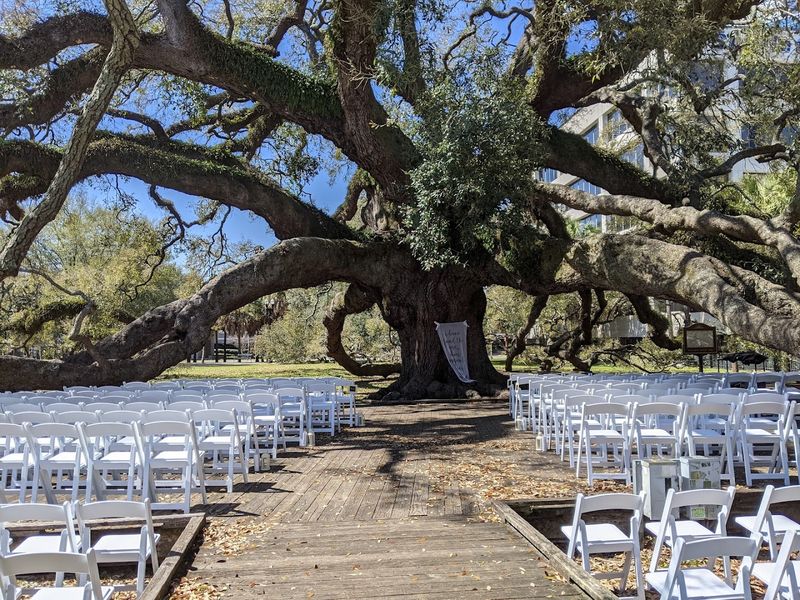
Ask any Jacksonville photographer — amateur or professional — and they’ll tell you the Treaty Oak is one of the most photogenic spots in the entire city. The way the branches arc dramatically outward creates natural frames that make every shot look intentional and artistic.
Early morning and late afternoon light filtering through the canopy produces an almost magical glow.
One reviewer mentioned bringing a whole group for Spring Formal dance photos and being thrilled by how many unique backdrops the tree offered in one location. From wide-angle shots showing the full canopy to tight close-ups of the deeply textured bark, the tree gives photographers endless creative options.
Even casual smartphone users walk away with stunning images. The tree’s scale and drama do most of the work for you.
If you’re planning a photo session in Jacksonville, the Treaty Oak should be at the very top of your location list without question.
The Cultural Gatherings That Have Shaped This Space
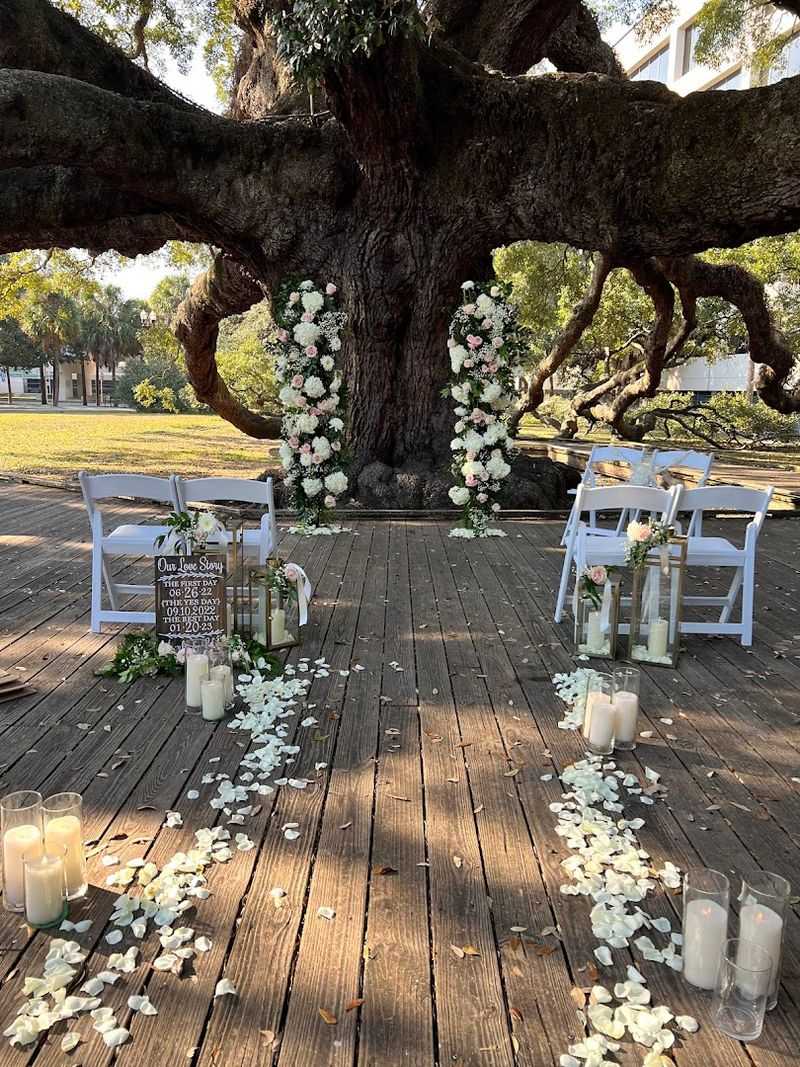
Over the decades, the Treaty Oak has served as a backdrop for countless community events and cultural celebrations. From casual neighborhood meetups to organized holiday gatherings, the space around this ancient tree has long been a natural meeting point for Jacksonville residents across different generations and backgrounds.
One reviewer mentioned attending a Christmas event there with a group of Jacksonville women, describing it as a cute and festive setting perfect for smaller gatherings. The tree’s dramatic presence gives any event an added sense of occasion, turning even a simple get-together into something that feels memorable and grounded in place.
There’s something powerful about communities continuing to gather in the same spot where people gathered long before them. The Treaty Oak carries that layered history quietly, providing a living connection between past celebrations and present ones in a way that few landmarks can genuinely offer.
Bird Life and Wildlife in the Canopy
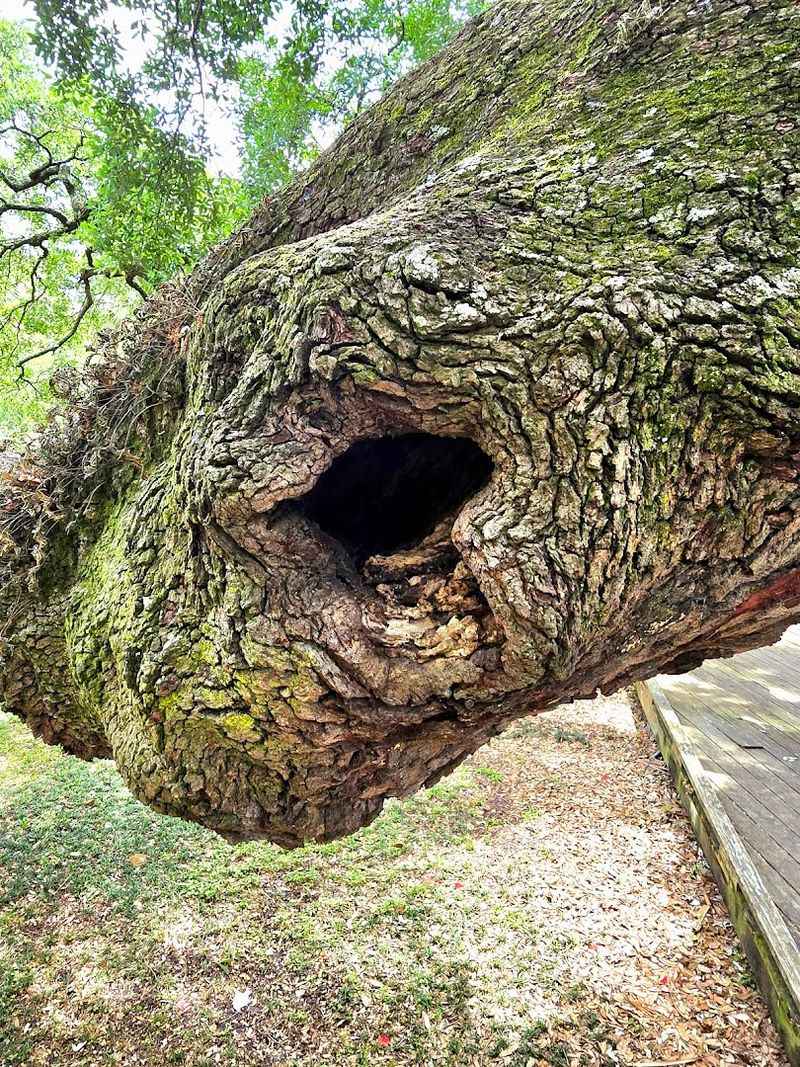
Here’s a fun heads-up for first-time visitors: the Treaty Oak is home to a seriously impressive population of birds. The massive canopy provides shelter for large flocks, and on any given visit you’re likely to hear them before you even see the tree.
One reviewer humorously warned about “a zillion birds” overhead — and suggested keeping that in mind before standing directly underneath.
Despite the avian abundance, most visitors find the wildlife adds to the charm rather than detracting from it. Watching birds move through branches that stretch in every direction is genuinely entertaining, especially for younger visitors who may not have experienced a tree ecosystem quite this alive and active.
The natural habitat created by the oak’s canopy also supports insects, squirrels, and other small wildlife. Being in the middle of an urban environment makes this kind of biodiversity even more surprising and delightful.
Nature has clearly claimed this space just as much as humans have.
Parking Tips and Getting There Without the Headache
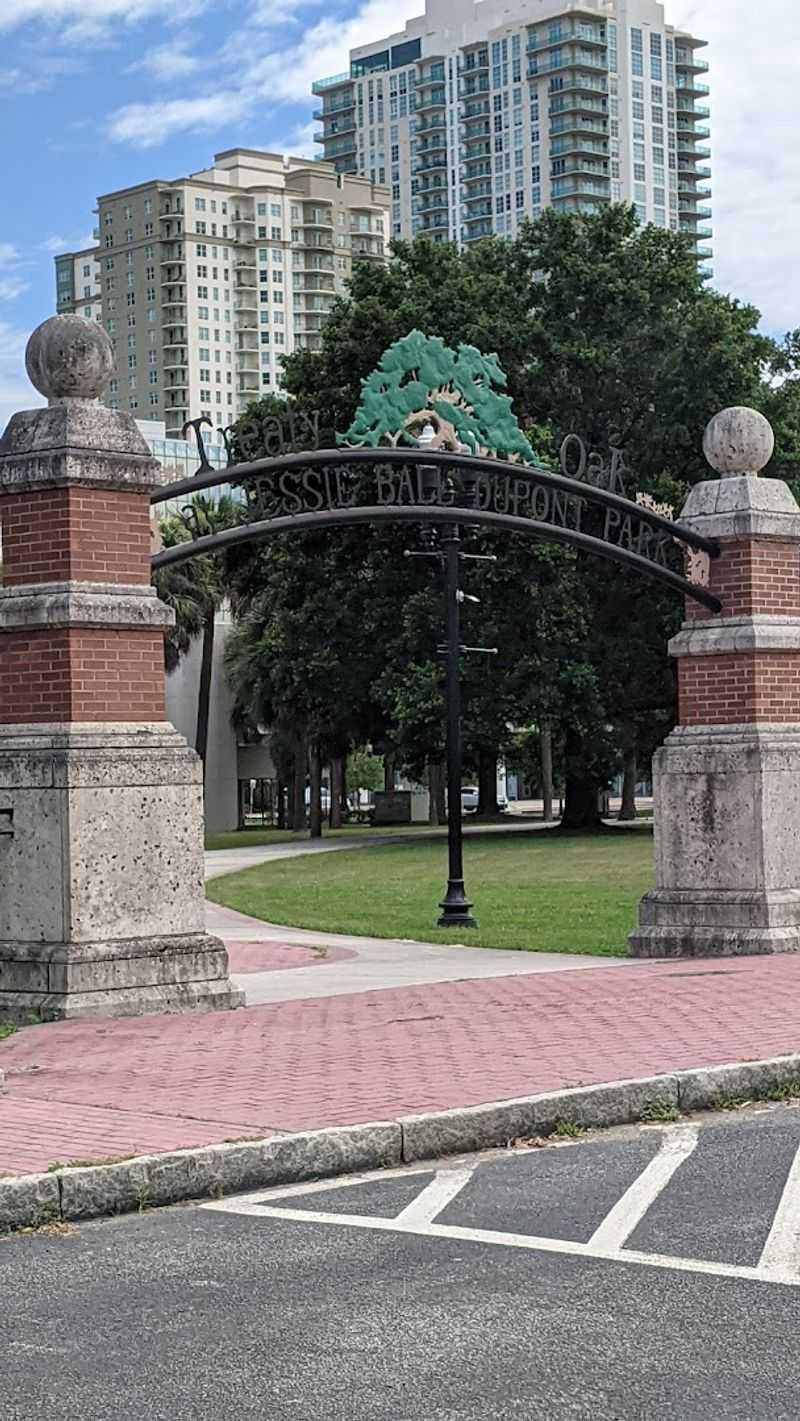
Almost every visitor review of the Treaty Oak mentions the same challenge: parking. Street parking along Prudential Drive is limited and can be tough to snag, especially on weekday afternoons when the surrounding area is busy with office workers and residents.
Planning ahead makes the experience much smoother.
There is a paid parking structure located behind the park, which offers a reliable option even if it costs a few dollars. The good news is that weekend visitors tend to have better luck, since many of the nearby permit-required and pay spots open up for free on Saturdays and Sundays.
Arriving earlier in the day also helps beat the competition for street spots.
The park’s address is 1207 Prudential Dr, Jacksonville, FL 32207, and it’s easily searchable on any navigation app. For questions or more information, you can also call the parks department at +1 904-630-2489 before your visit.
Spiritual and Reflective Energy That Visitors Feel
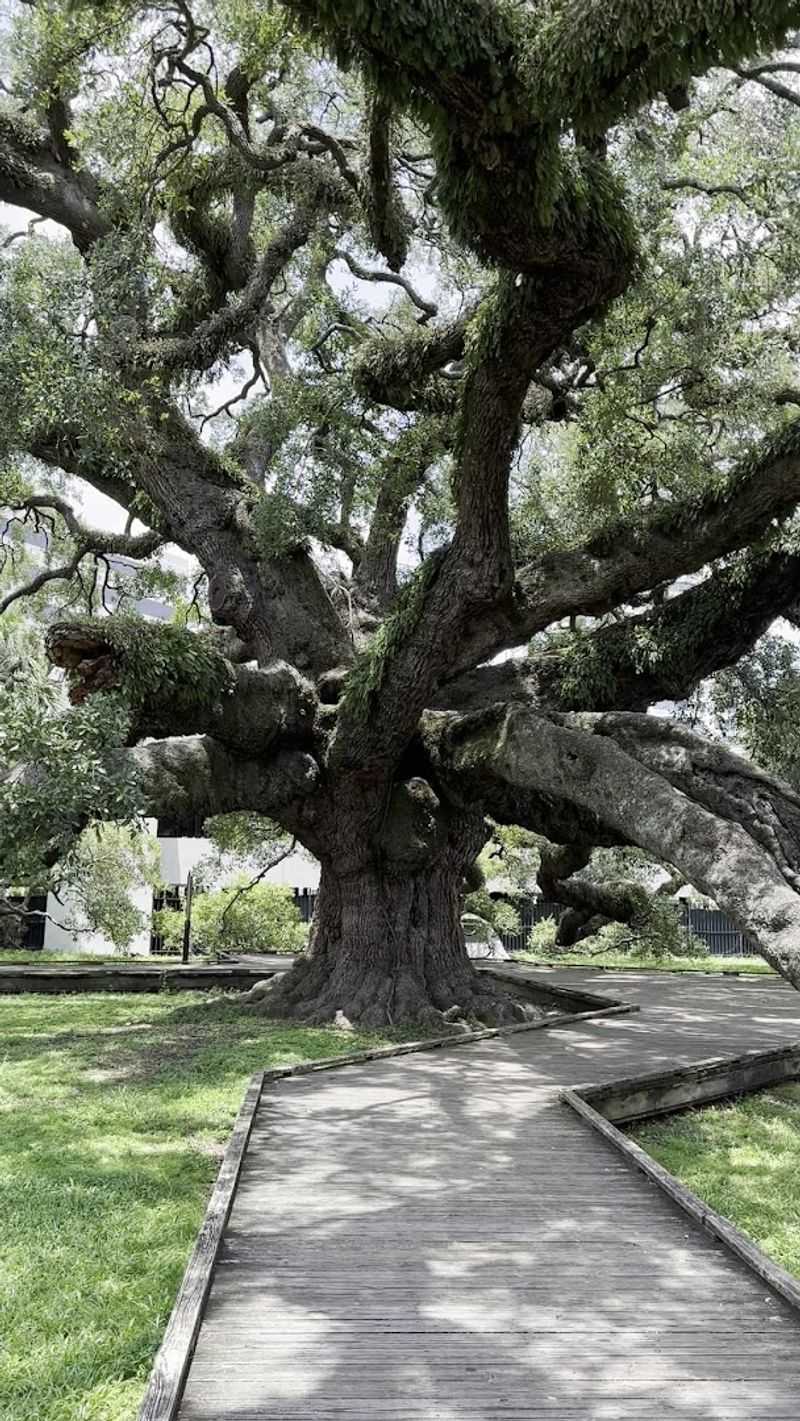
Some places carry a feeling that’s hard to put into words, and the Treaty Oak is one of them. Multiple visitors have used words like “spiritual,” “peaceful,” and “meditative” to describe their experience beneath the tree’s canopy.
There’s something about standing next to something that has been alive for over 200 years that naturally shifts your perspective.
One reviewer wrote that the visit felt “amazing and spiritual,” expressing genuine gratitude for the opportunity to experience such a place. Another mentioned using the spot for meditation and reading, finding the energy under the tree uniquely calming compared to anywhere else in downtown Jacksonville.
Whether or not you think of yourself as a spiritual person, the Treaty Oak has a way of slowing things down. The rustling leaves, the filtered light, the deep roots — it all adds up to an atmosphere that invites stillness and quiet reflection in a world that rarely stops moving.
How the City Has Worked to Protect This Living Landmark
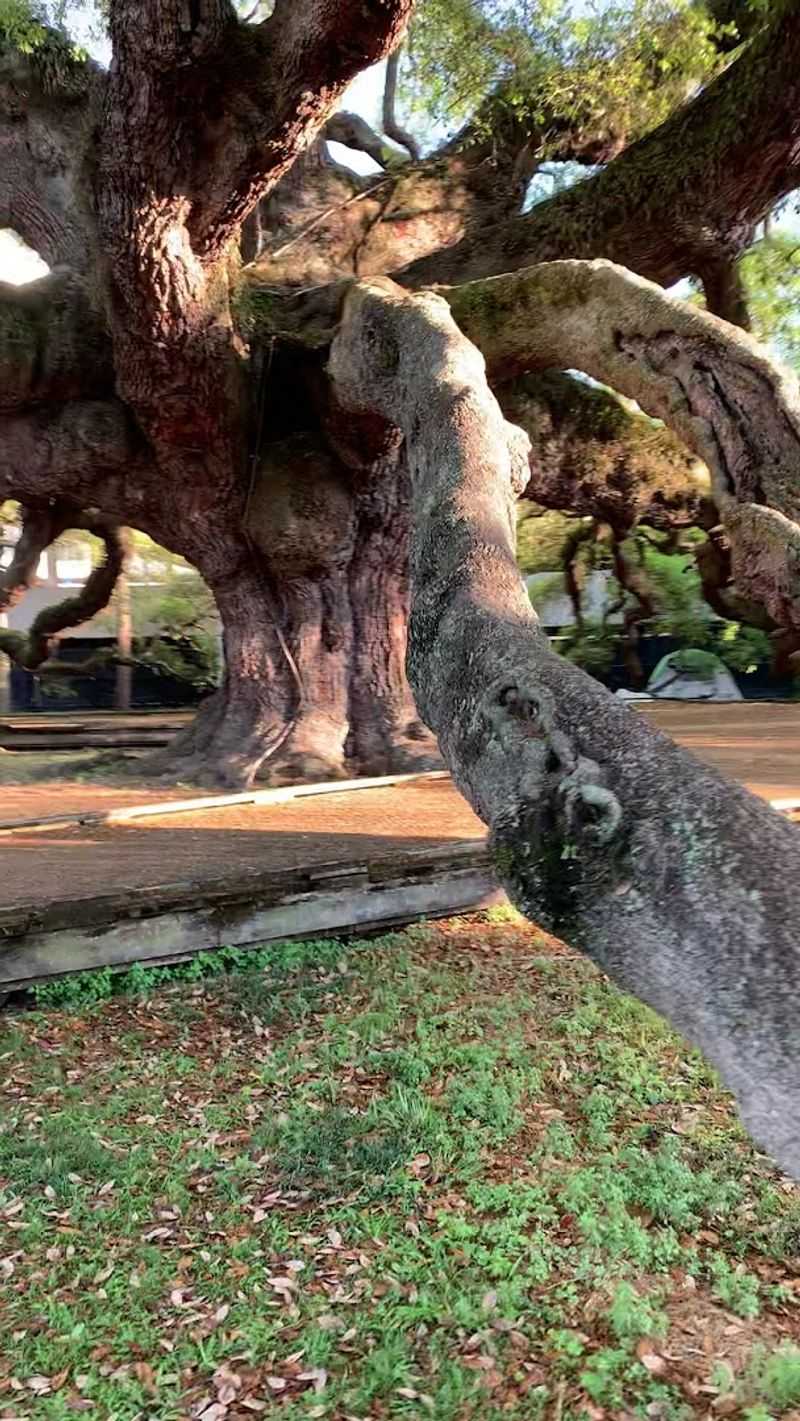
Keeping a 200-year-old tree healthy in the middle of a growing city takes real effort, and Jacksonville has made that commitment. The city installed support structures — sometimes described as small raised pallets — beneath some of the heaviest branches to prevent them from breaking under their own enormous weight.
It’s a practical act of care that visitors often notice and appreciate.
One reviewer expressed heartfelt gratitude that people have worked so hard to protect and nurture the tree, calling it a source of genuine comfort. Another noted that the tree appeared very healthy and well-maintained during their visit, expressing hope for its long future.
Those observations reflect years of intentional stewardship by the city’s parks department.
Conservation efforts like these ensure that future generations will also have the chance to stand beneath those legendary branches. The Treaty Oak isn’t just being preserved — it’s being actively cared for as the irreplaceable community treasure that it truly is.
What Makes This One of the Southeast’s Greatest Live Oaks
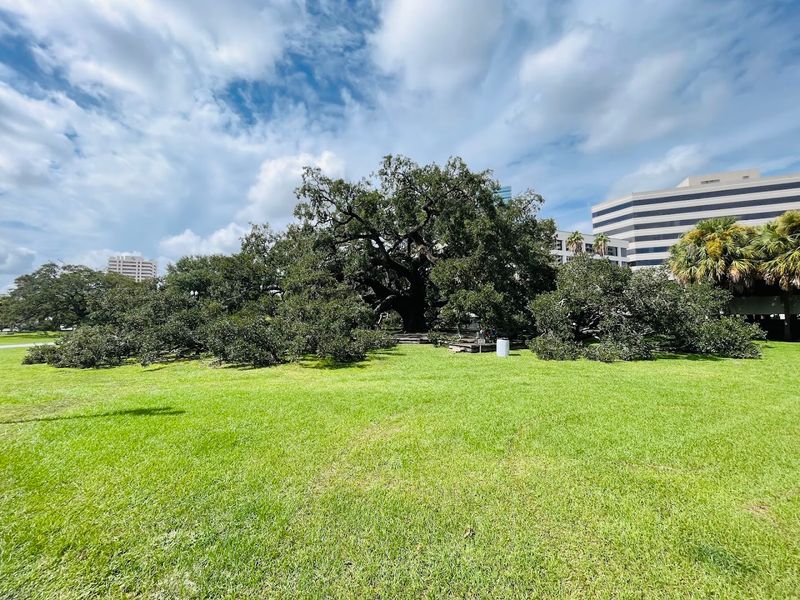
Live oak trees are common throughout the American South, but the Treaty Oak stands apart even among its own species. One knowledgeable reviewer called it “one of, if not the best specimen live oaks in the Southeast” — a bold claim that the tree’s sheer size and condition easily backs up.
Its combination of age, trunk diameter, and branch spread is genuinely extraordinary.
Most live oaks you encounter in Florida are impressive in their own right, but they rarely match the Treaty Oak’s scale or dramatic character. The way the branches extend outward and then curve and twist gives it a sculptural quality that feels almost intentional, like nature designed it specifically to be admired.
Botanists and tree enthusiasts who visit often spend considerable time just walking around the perimeter, studying the branch structure and marveling at the root system. For anyone with even a passing interest in natural history, this tree is an absolute must-see destination in Florida.
Planning Your Visit: What to Bring and What to Expect
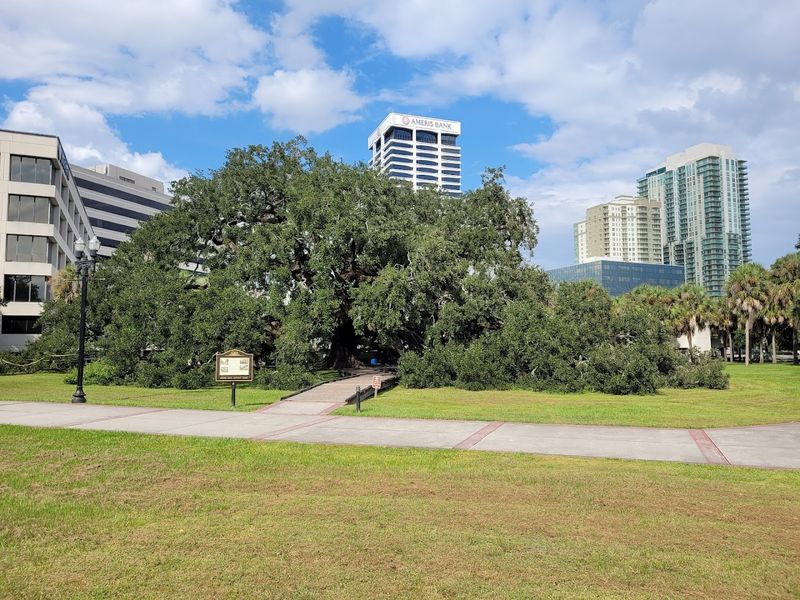
Ready to visit the Treaty Oak? A little preparation goes a long way toward making the experience as enjoyable as possible.
The park is open every day of the week from 7 AM to 7 PM, giving you a solid window of time to plan around your schedule. Mornings tend to be quieter and cooler, which is a real advantage during Florida’s warmer months.
Bring a blanket or portable chair, sunscreen, and plenty of water. While the tree’s canopy provides impressive shade, the surrounding park area is open to the sun.
Packing a picnic lunch makes the outing feel complete, and there are also restaurants in the nearby San Marco neighborhood if you prefer to grab food on the way.
Don’t forget your camera — you’ll want it. And please remember to take your trash with you when you leave, as some reviewers have noted that keeping the park clean is something the whole community cares deeply about.
Enjoyed this story?
Add Fast Food Club as a preferred source to see more of our reporting on Google.