


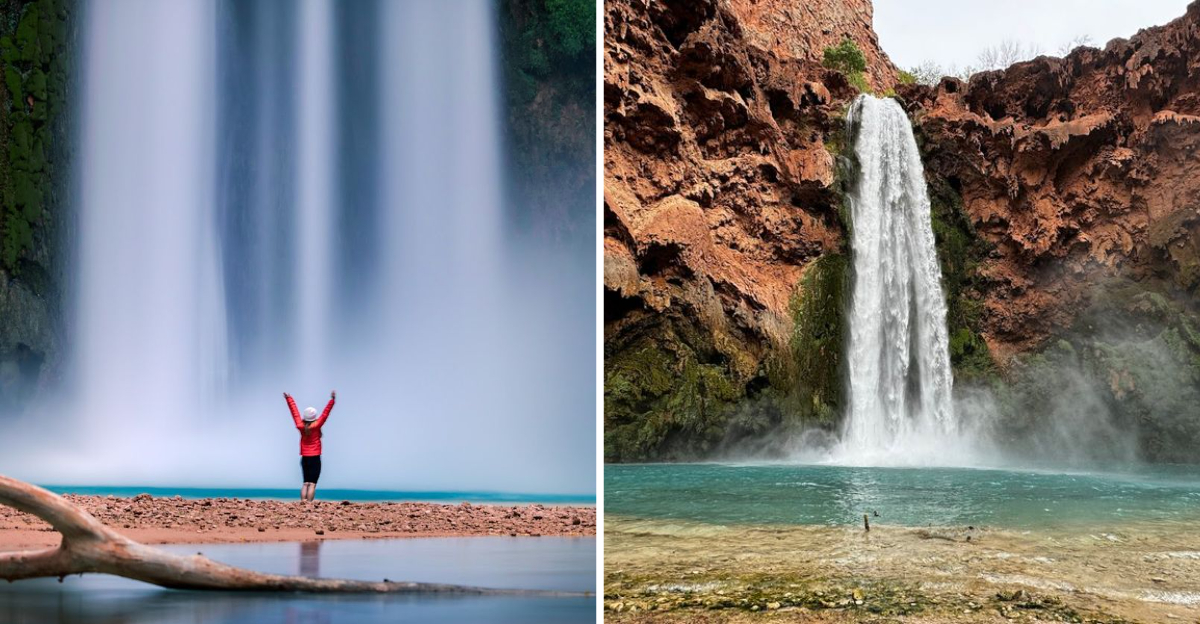
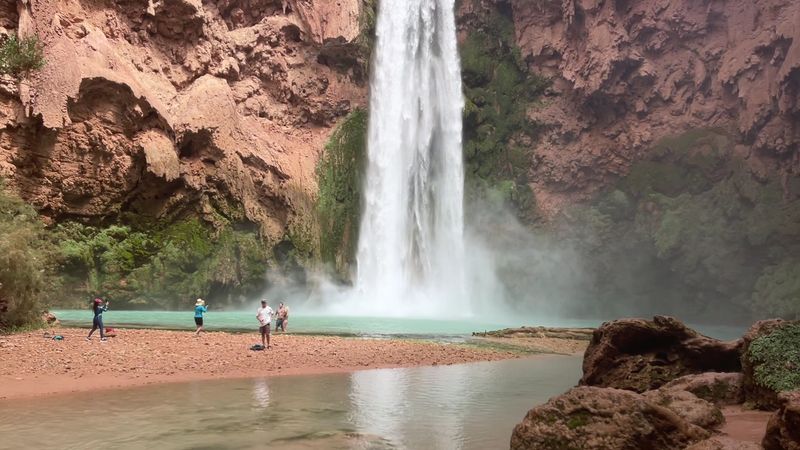
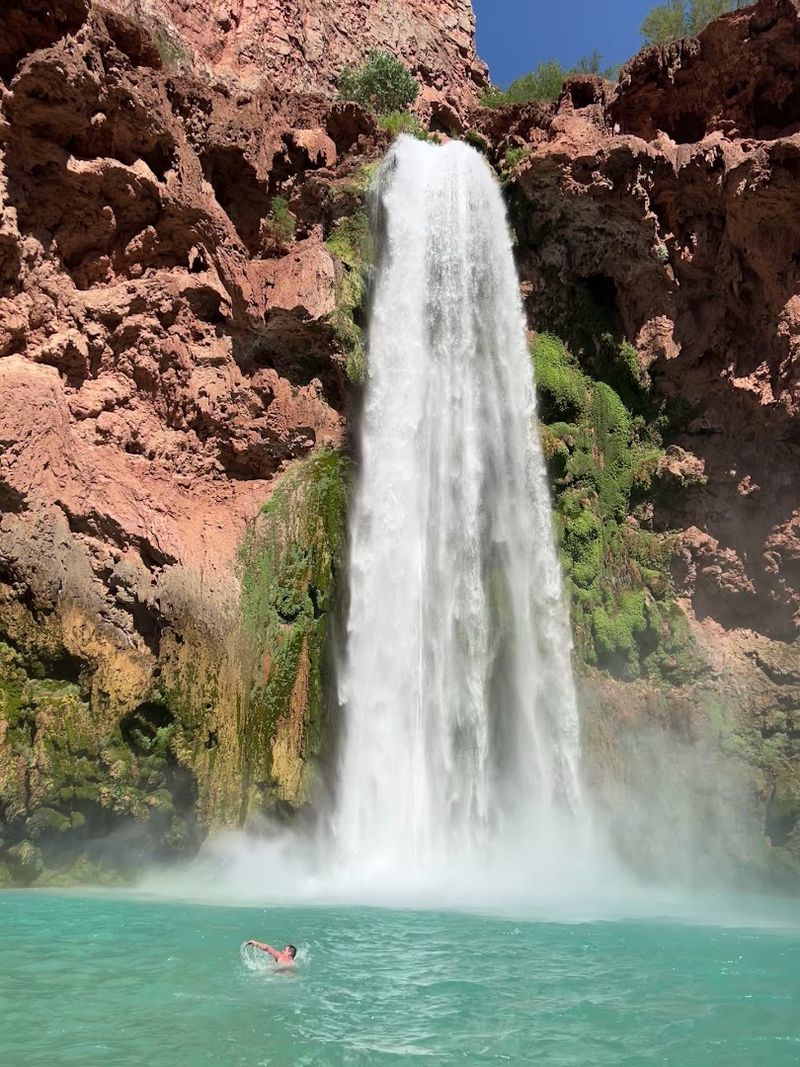
Tucked deep inside the Grand Canyon on the sacred lands of the Havasupai Tribe, Mooney Falls stands as one of the most jaw-dropping natural wonders in all of Arizona. At nearly 200 feet tall, this thundering waterfall crashes into pools of brilliant blue-green water that look almost too beautiful to be real.
Getting there is a serious adventure that requires a permit, a long hike, and a heart brave enough to tackle chains and ladders bolted into wet canyon walls. If you are ready for the experience of a lifetime, here is everything you need to know before you go.
The Sheer Size of Mooney Falls Will Stop You in Your Tracks
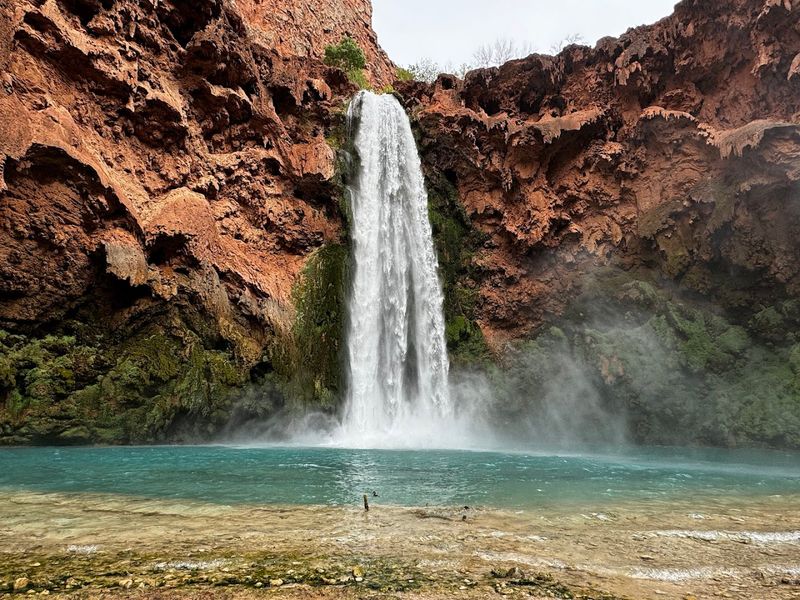
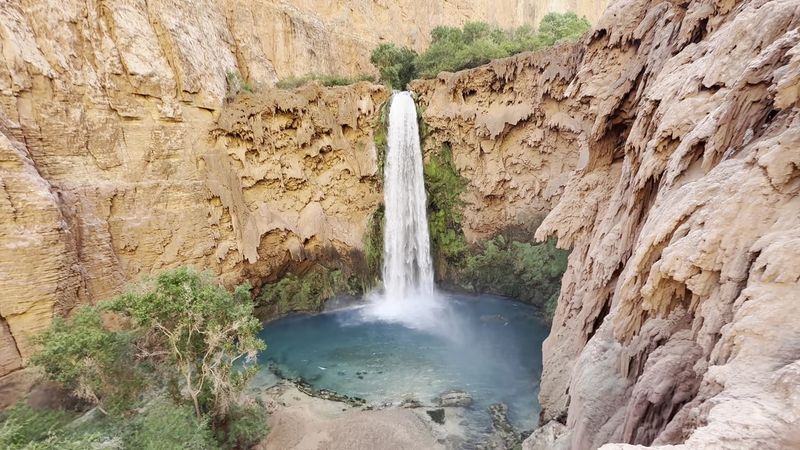
Standing nearly 200 feet tall, Mooney Falls is the tallest waterfall in the Havasupai region — almost 100 feet taller than the more famous Havasu Falls nearby. That difference becomes very real the moment you stand at the base and feel the ground shake beneath you.
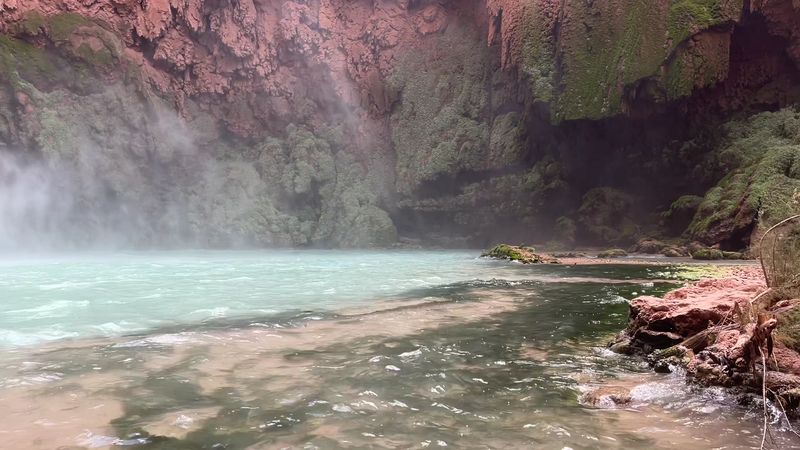
The sheer volume of water pouring over the edge creates a roaring sound that fills the entire canyon. Mist floats through the air like a cool, constant breeze, keeping everything around the base soaking wet at all times.
Visitors consistently describe the moment they first see it as speechless and surreal, like stumbling onto a movie set. The scale of the falls against the deep red canyon walls makes it look almost painted.
No photograph truly captures what your eyes experience when you are standing right there in front of it.
Turquoise Water That Looks Straight Out of a Dream
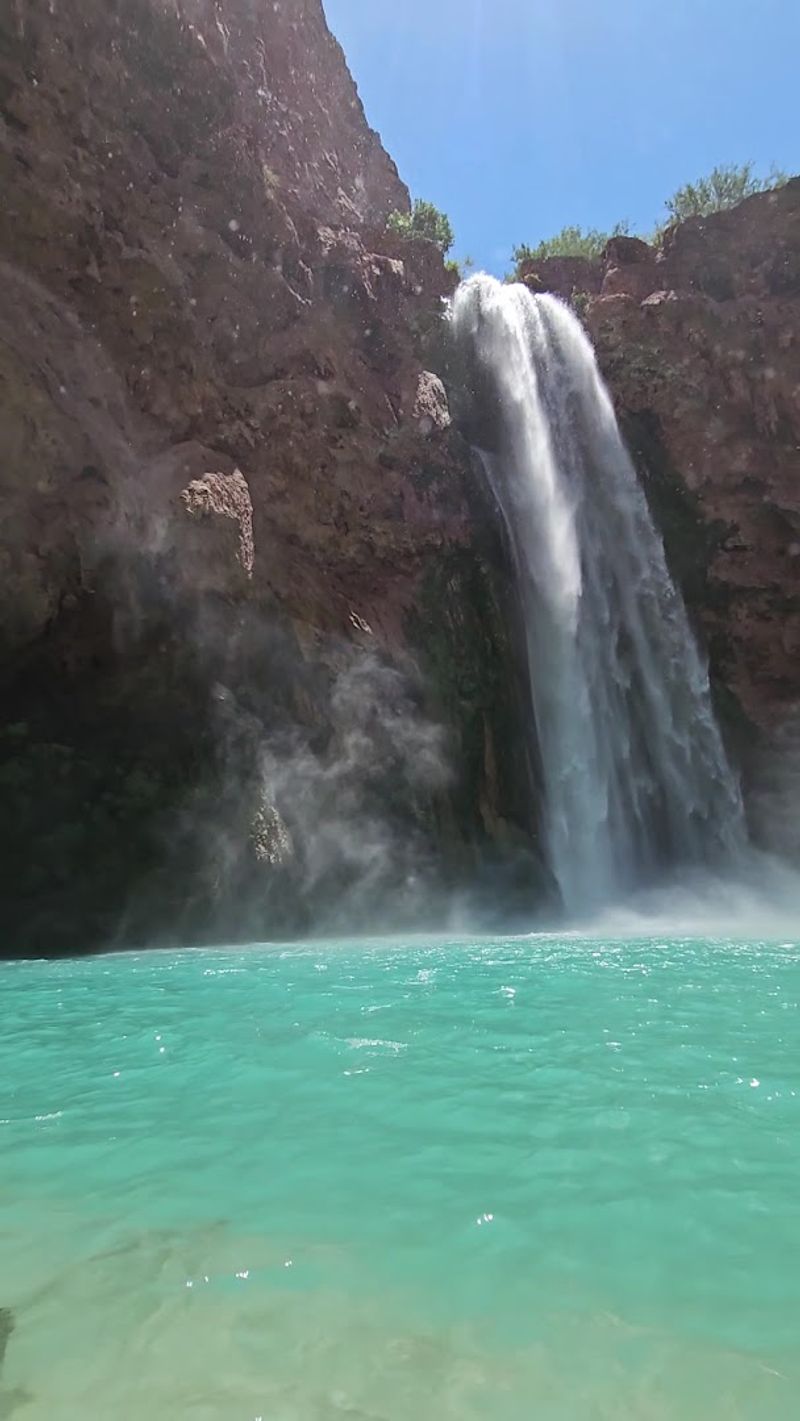
Few things in nature are as visually striking as the electric blue-green color of the water at Mooney Falls. The color comes from high concentrations of calcium carbonate and magnesium in the water, which gives the pools that unreal, almost tropical shade of turquoise.
Swimmers who have visited from all over the world say it looks nothing like any waterfall they have ever seen in the American Southwest. The color stays vivid year-round, though the exact shade can shift slightly depending on the season and water flow.
Wading into those pools after a long, hot hike feels like stepping into a reward you truly earned. The water temperature is surprisingly comfortable, especially in warmer months.
Shallow areas near the edges make it easy to soak your feet, while deeper sections invite a full swim beneath the thundering falls above.
Securing a Permit Is Step One — and It Is Not Easy
Before you pack a single bag, you need to lock down a permit from the Havasupai Tribe. The tribe manages all access to Havasu Canyon, and permits sell out within minutes of going on sale each year — sometimes in under an hour.
Permits cover camping at the Havasupai Campground, which is your base for visiting Mooney Falls. Day hikes are not allowed, meaning every visitor must stay overnight at minimum.
The permit system exists to protect both the land and the tribal community that has called this canyon home for centuries.
Set an alarm, have your payment information ready, and refresh the Havasupai Tribe website the moment permits open. Many experienced hikers recommend creating an account ahead of time to speed up the checkout process.
Missing the window means waiting an entire year, so treat the permit hunt like the adventure begins before you even leave home.
The 11-Mile Hike In Is a Journey Worth Every Step
The adventure to Mooney Falls begins at Hualapai Hilltop, where the trailhead drops you straight into a winding canyon descent. From there, it is roughly 11 miles to the Havasupai Campground, with Supai Village appearing around mile eight like a welcome oasis.
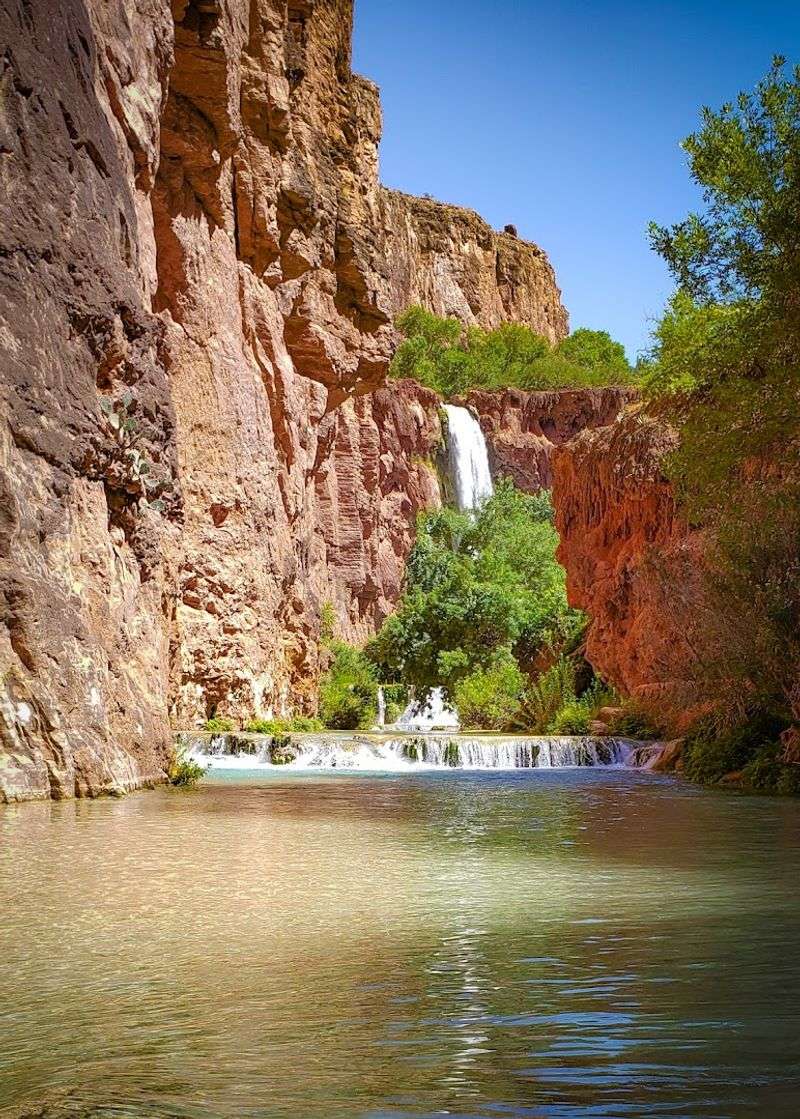
The terrain shifts from open desert to a shaded canyon floor as you move deeper in. Red and orange rock walls tower above the trail, offering incredible scenery that makes the miles feel shorter than they are.
Temperatures inside the canyon can vary a lot, so layering your clothing is a smart move.
Stopping at the small market or cafe in Supai Village is a beloved tradition among repeat visitors. Stock up on snacks, rest your legs, and soak in the quiet energy of one of the most remote communities in the United States.
The campground is just three more miles beyond the village.
The Descent to the Base — Chains, Ladders, and Raw Courage
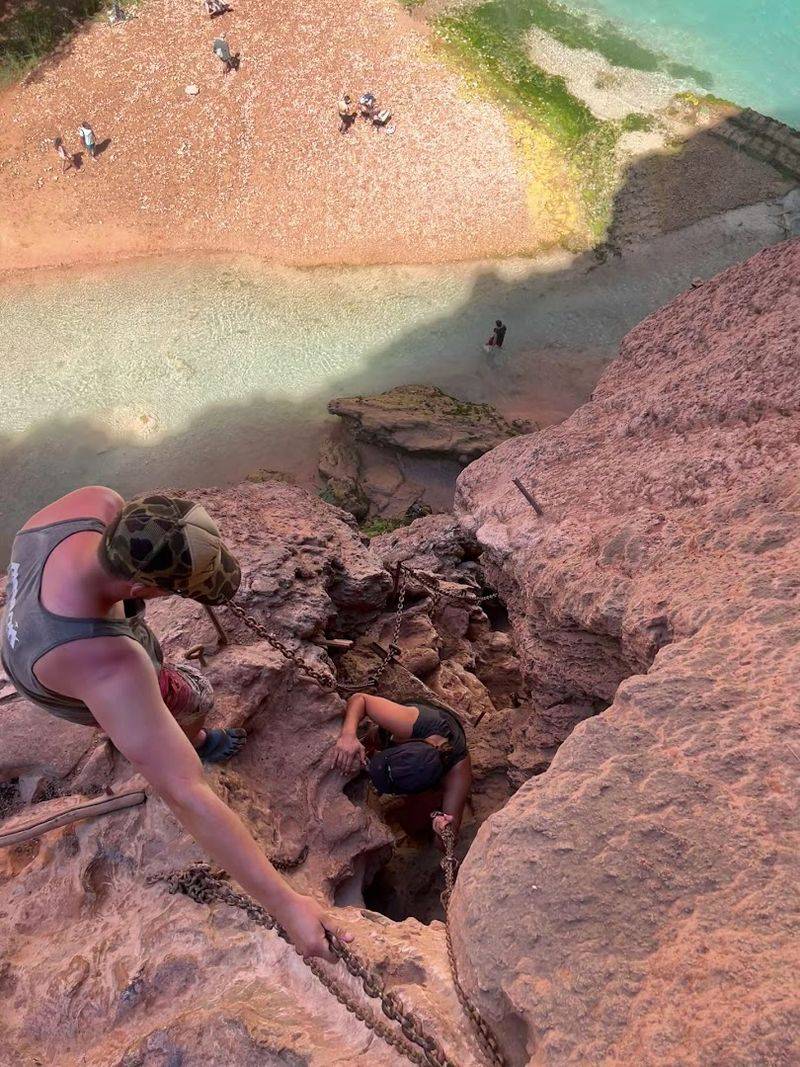
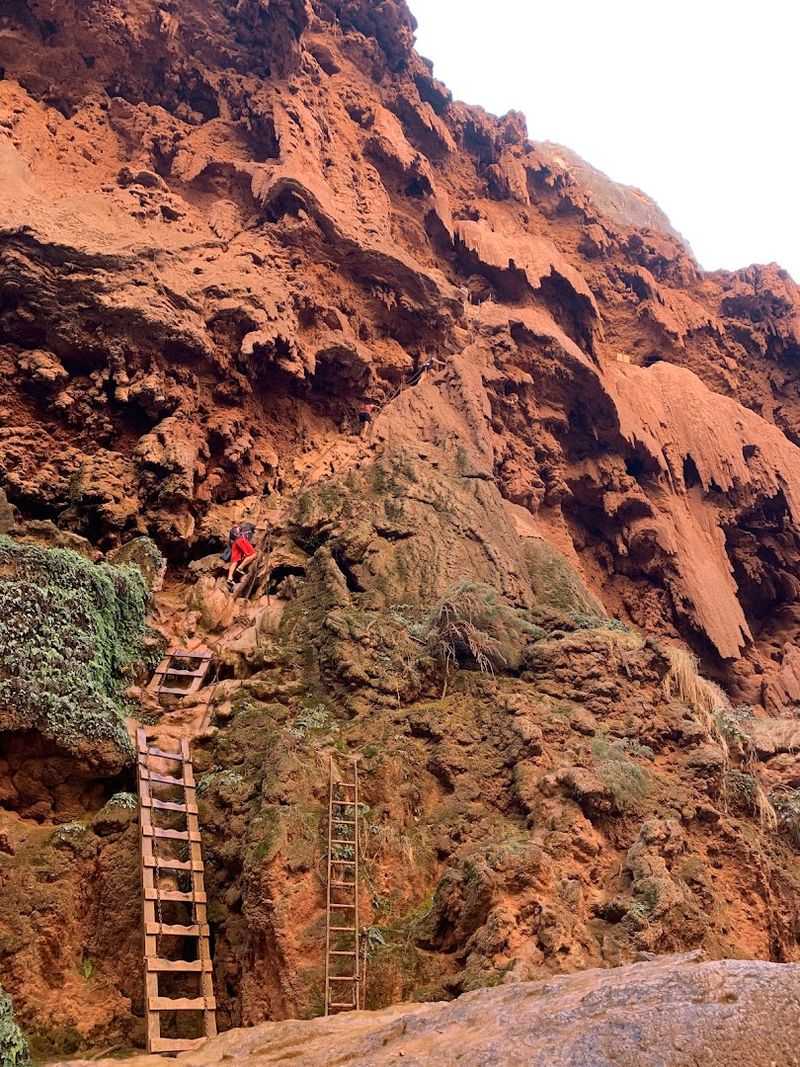
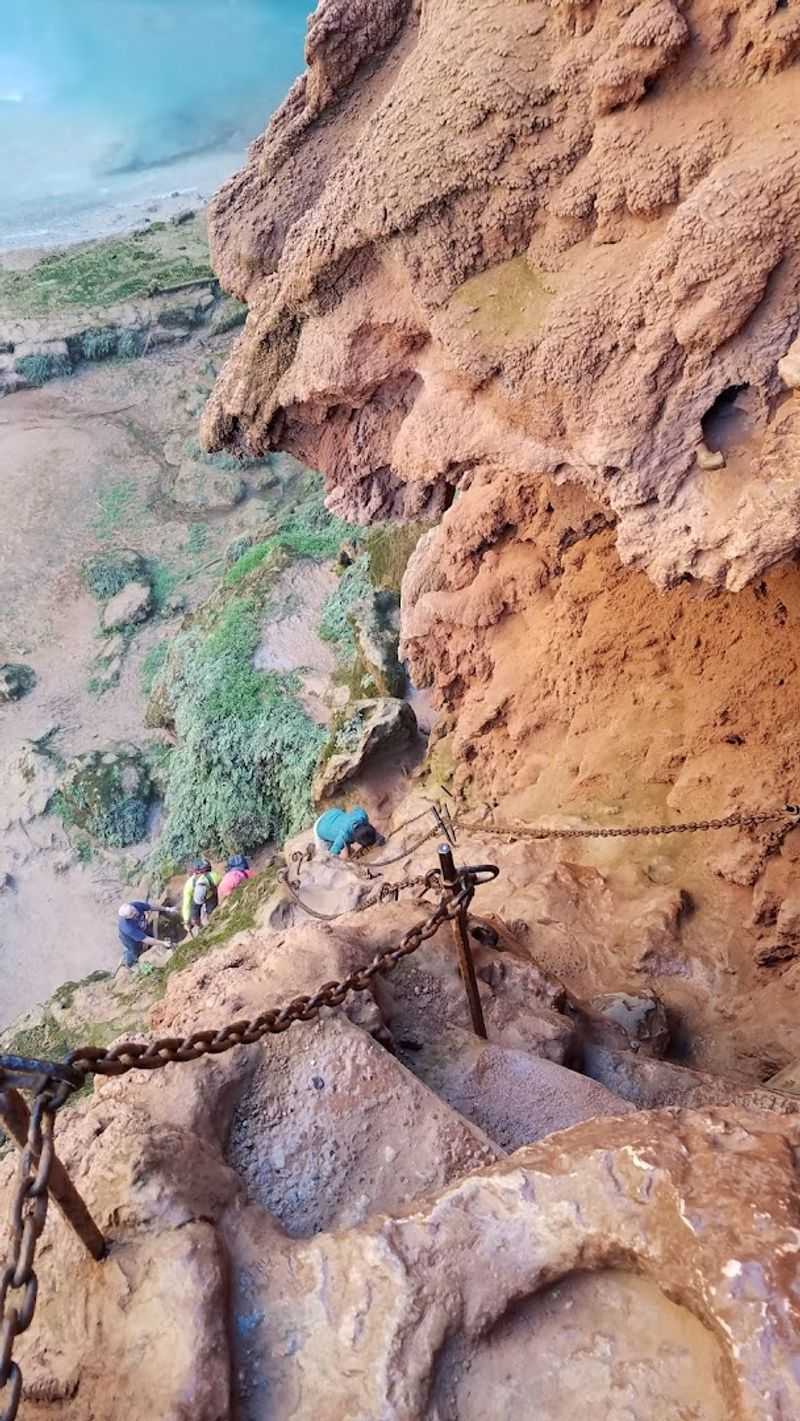
Getting to the base of Mooney Falls is not a casual stroll. The descent involves navigating a narrow, mist-soaked path carved into the canyon wall, complete with iron chains anchored into the rock, wooden ladders with wide-spaced rungs, and sections where your hands and feet do most of the work.
The constant spray from the falls keeps everything slick, so every step demands your full attention. Hikers who have conquered it say the key is to go slow, maintain three points of contact at all times, and never rush because of the people behind you.
A sign at the top reads “Descend at Your Own Risk,” and the tribe takes that seriously. Most physically fit adults handle it without major issues, but anyone with a fear of heights or confined spaces will feel that fear tested.
The reward waiting at the bottom, however, makes every nervous moment completely worthwhile.
Gear Up Right — What to Wear and Bring for This Hike
Footwear can make or break your Mooney Falls experience. Grippy hiking shoes or trail runners with solid traction are absolutely essential, especially for the wet, slippery descent to the base.
Flip-flops and sandals are a recipe for a very bad day on those canyon walls.
Climbing gloves are highly recommended by nearly every experienced visitor. The chains you grab during the descent are cold, wet, and covered in mineral deposits that will shred your palms without protection.
Many hikers also bring a second pair of water shoes for exploring the pools after the climb.
Hydration is non-negotiable on a hike this long and physically demanding. Carry more water than you think you need, and pack high-energy snacks like trail mix, protein bars, and dried fruit.
A light daypack works well for the short hike from camp to the falls once you have already set up your campsite.
The History Behind the Name Is Both Dark and Fascinating
Mooney Falls carries the name of James Mooney, an Irish prospector who met a tragic end at this very location in the late 1800s. While attempting to descend the falls using a makeshift rope, the rope snapped and Mooney fell to his death at the base of the canyon.
His companions were stranded above for days, unable to reach his body below. Eventually, a path was carved into the canyon wall — the same basic route visitors use today — to retrieve him and allow passage to the base of the falls.
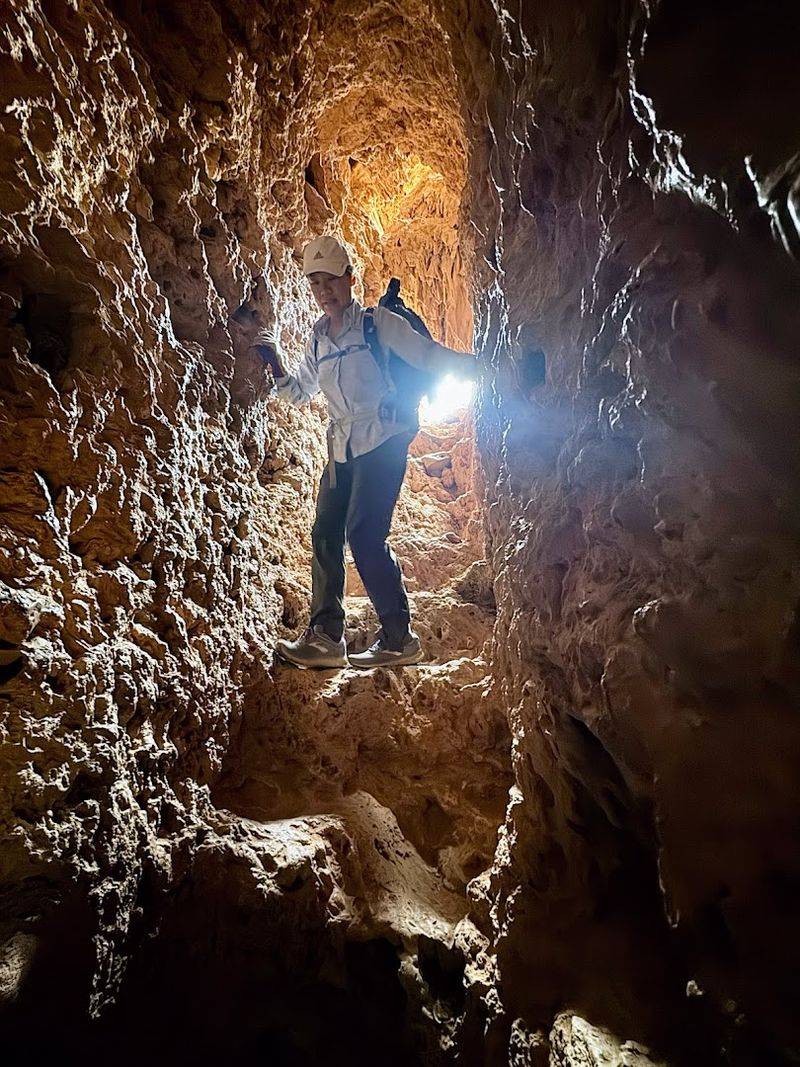
That original mining route, with its hand-cut tunnels through solid rock, still forms part of the descent path used by modern hikers. Knowing this history adds a layer of weight to every step you take on those chains.
The falls that bear his name have gone from a site of tragedy to one of the most beloved destinations in Arizona.
Camping at Havasupai Campground Puts You Steps Away From the Falls
Waking up inside Havasu Canyon with the sound of rushing water nearby is an experience that stays with you long after you leave. The Havasupai Campground sits right along Havasu Creek, just a short walk from Mooney Falls, making it the perfect home base for your adventure.
The campground is well-maintained and kept clean thanks to both tribal management and the strong culture of respect that most visitors bring with them. Shade trees line the creek, and the turquoise water flows right through the campsite area, giving you easy access to cool off anytime.
Pack-in and pack-out rules are strictly enforced, so bring a trash bag and leave no trace behind. Mules and horses are available to carry gear in and out for those who prefer not to haul a heavy pack.
Spending two or three nights gives you enough time to explore all the major waterfalls without feeling rushed.
Mooney Falls Is Just One Stop on a Waterfall-Packed Canyon
Mooney Falls earns the spotlight, but the canyon surrounding it holds a whole collection of stunning waterfalls. Havasu Falls, perhaps the most photographed of the group, sits about a mile above the campground and greets hikers with its iconic wide curtain of turquoise water.
Beyond Mooney, the trail continues downstream toward Beaver Falls, located roughly 4.5 miles further into the canyon. Beaver Falls is a series of cascading tiers that many hikers consider a hidden gem, partly because fewer people make the extra effort to reach it.
Together, Havasu Falls, Mooney Falls, and Beaver Falls form what regulars call the “big three” of Havasu Canyon. Planning your trip to visit all three gives you a fuller picture of just how extraordinary this pocket of Arizona truly is.
Each waterfall has its own personality, its own energy, and its own unforgettable stretch of blue-green water.
The Best Time of Year to Visit Mooney Falls
Spring and early fall are widely considered the sweet spots for visiting Mooney Falls. Temperatures during these seasons sit in a comfortable range for hiking — warm enough to swim but cool enough to handle the 11-mile trail without overheating.
Summer visits are possible but come with real heat. Temperatures inside the canyon can climb well above 100 degrees Fahrenheit, and the hike in and out becomes significantly more draining.
If summer is your only option, start hiking before sunrise and carry extra water beyond what you think you will need.
Winter visits happen but are far less common. The canyon can get surprisingly cold after dark, and some sections of the trail become muddy or icy depending on conditions.
Flash flooding is also a risk during monsoon season in late summer, and the tribe occasionally closes the canyon for safety. Always check conditions before your trip.
Respecting the Havasupai Tribe and Their Sacred Land
Havasu Canyon is not just a tourist destination — it is home. The Havasupai Tribe has lived in and around this canyon for more than 800 years, and every visitor enters as a guest on their ancestral land.
That relationship deserves genuine respect, not just a checkbox on a permit form.
The village of Supai is a quiet, tight-knit community where residents value their privacy. Visitors are welcome to stop at the market or cafe, but photographing community members without permission is considered disrespectful.
Keep voices low, stay on designated paths, and follow all posted rules throughout your stay.
Pack out every piece of trash you bring in. Littering is one of the most damaging things a visitor can do to this fragile ecosystem.
Many repeat visitors say that treating the land with the same care you would give your own home transforms the entire experience into something far more meaningful and memorable.
Safety Tips Every Hiker Must Know Before Attempting the Descent
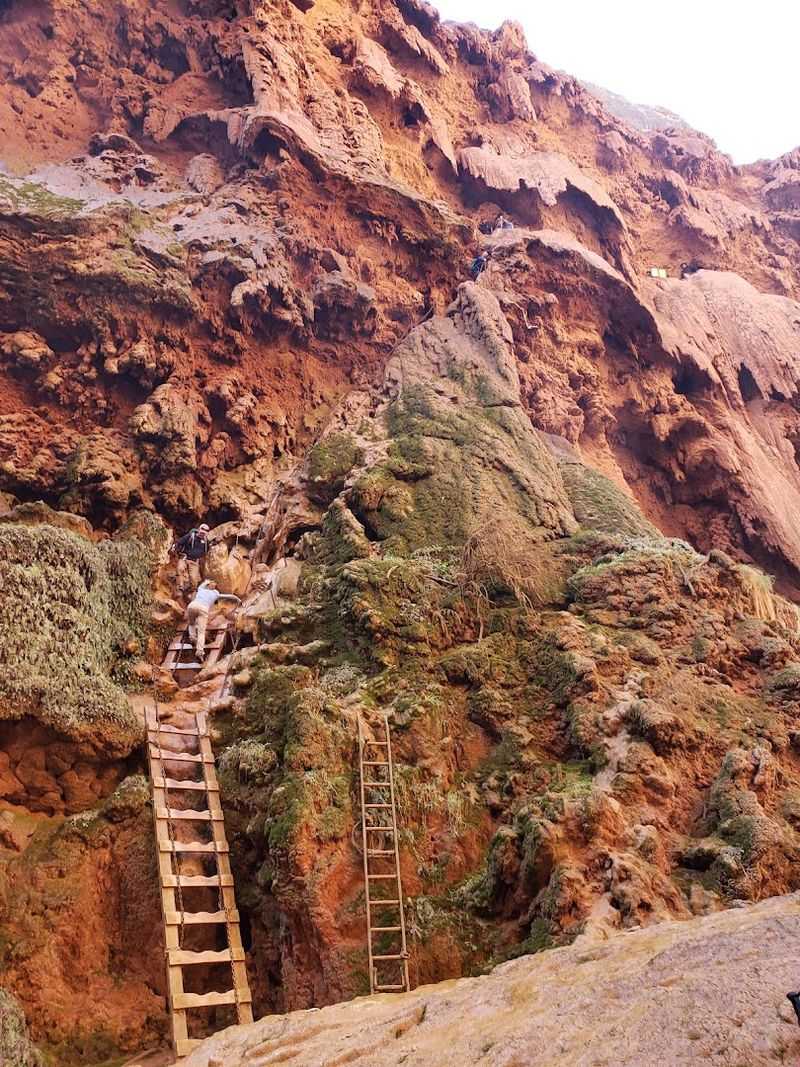
Confidence is good, but overconfidence on the Mooney Falls descent has turned exciting trips into scary ones. The path is genuinely dangerous — wet rock, limited visibility inside the tunnel sections, and a long drop if you lose your footing.
Preparation is everything.
Always maintain three points of contact while on the chains and ladders, meaning two hands and one foot, or two feet and one hand, touching a secure surface at all times. Never let go of the chain to wave at someone or adjust your pack mid-descent.
Wait until you reach a stable platform to make any adjustments.
Children require extra supervision on this section. The ladder rungs are spaced wider than standard ladders, which makes them difficult for smaller legs to navigate safely.
Turning back once you have started descending on a busy day is extremely difficult, so assess your comfort level honestly before you commit to going down.
Why Mooney Falls Leaves Every Visitor Completely Speechless
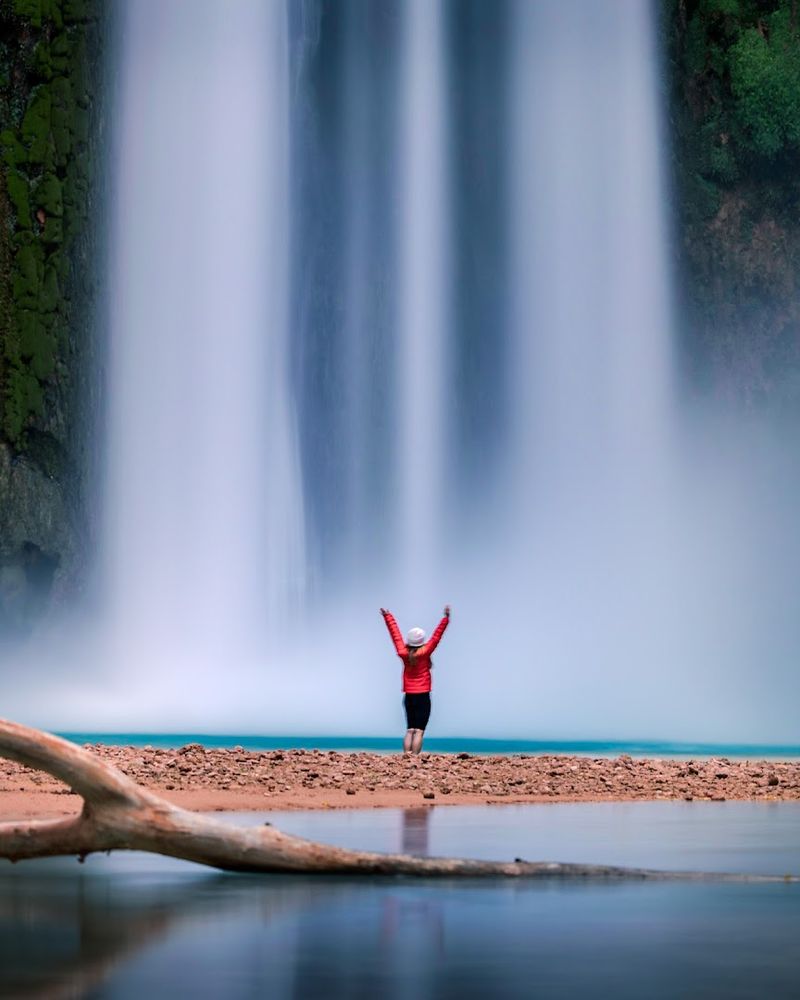
Some places exist in a category all their own, and Mooney Falls is firmly in that category. Visitors who have traveled the world consistently rank it among the most beautiful natural places they have ever stood in — not just in Arizona, but anywhere on Earth.
The combination of scale, color, sound, and raw wilderness creates a sensory experience that photographs simply cannot replicate. Standing at the base while mist covers your face and the roar of falling water fills your ears is the kind of moment that rewires how you think about what is possible in the natural world.
People who make the trip once almost always start planning a return visit before they even leave the canyon. The physical challenge of getting there makes the reward feel deeply personal.
Whatever brought you to this corner of Arizona, Mooney Falls has a way of making every hard step feel like exactly the right decision.
Enjoyed this story?
Add Fast Food Club as a preferred source to see more of our reporting on Google.