


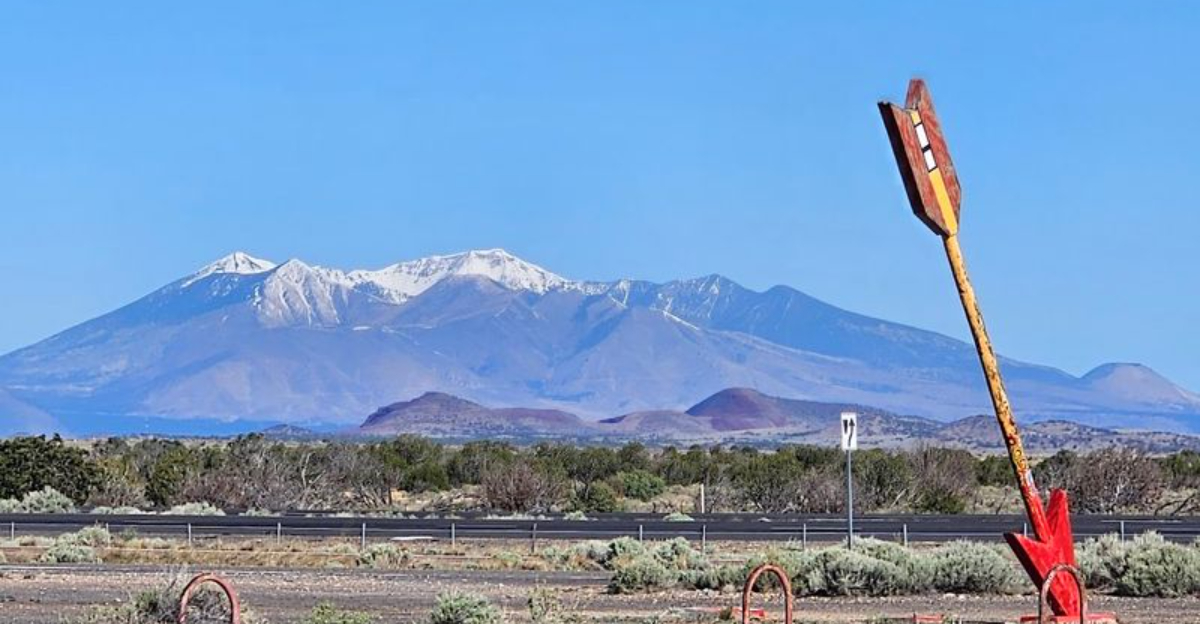
Somewhere along the sun-baked stretch of old Route 66 near Flagstaff, Arizona, a crumbling trading post stands as a ghostly reminder of America’s most legendary highway. Twin Arrows Trading Post was once a buzzing roadside stop where travelers fueled up, grabbed snacks, and marveled at two giant arrows planted in the ground out front.
Today, only one arrow remains, and the buildings have collapsed into a graffiti-covered shell of their former glory. The story of how this quirky landmark went from roadside icon to desert ruin is stranger and more fascinating than you might expect.
The Origin Story of Twin Arrows Trading Post
Back in the 1950s, a small gas station and trading post opened along Route 66 in the Arizona high desert, roughly 30 miles east of Flagstaff. The location was strategic — travelers crossing the country needed fuel, food, and a reason to stop.
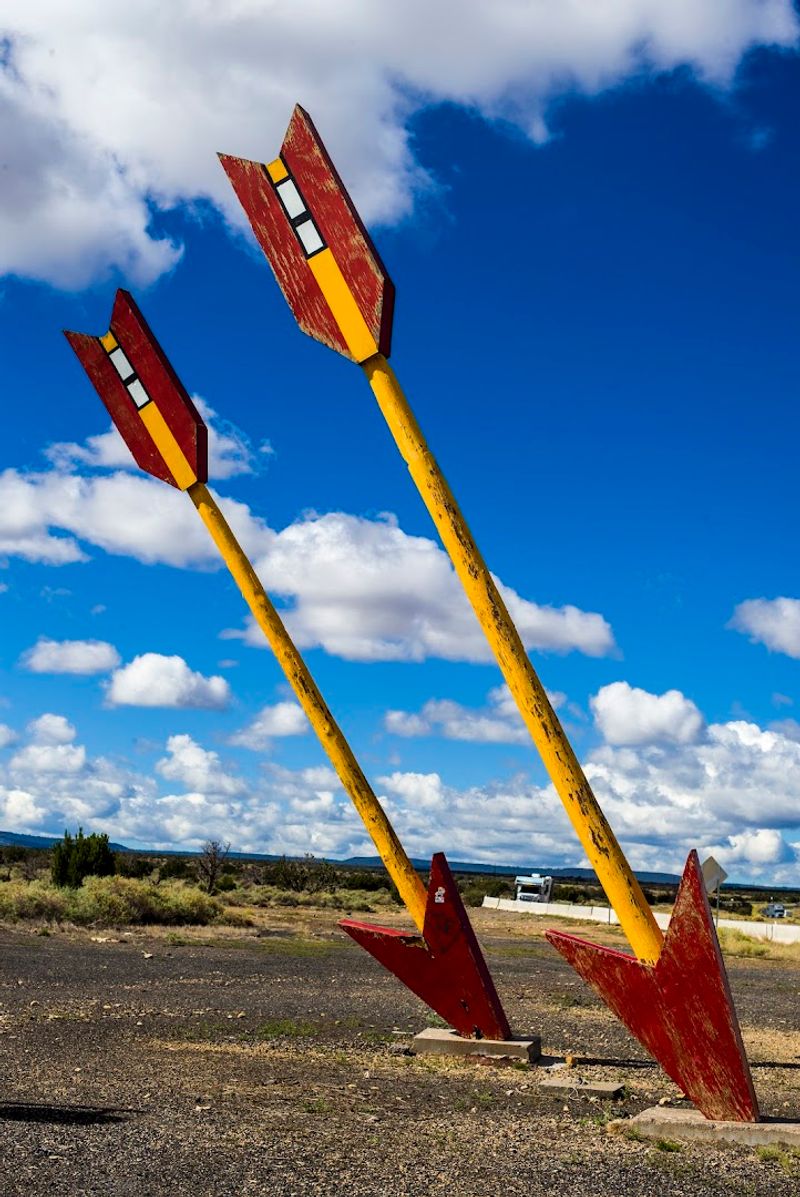
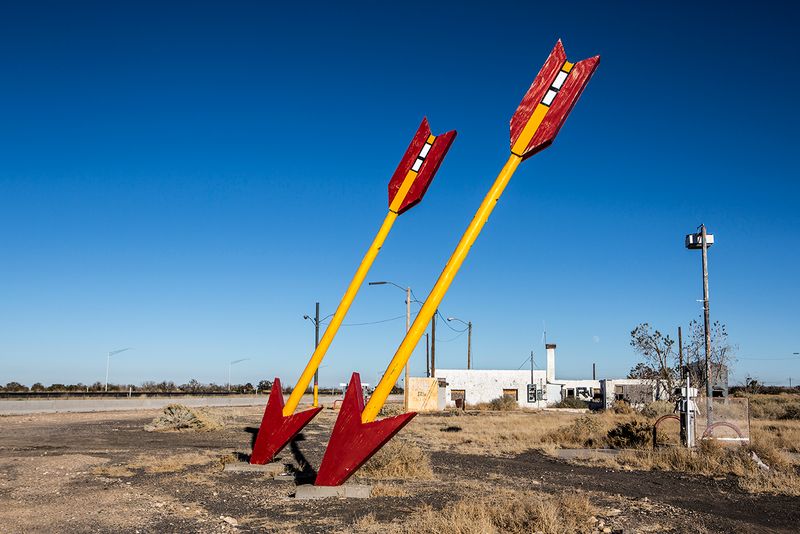
Owners planted two enormous wooden arrows into the ground at an angle, making the spot impossible to miss from the highway.
Those arrows became the landmark’s identity. The trading post sold souvenirs, turquoise jewelry, and Native American crafts alongside everyday road trip essentials.
For decades, families pulled off the highway just to snap a photo beside the giant arrows.
What started as a clever marketing gimmick turned into a beloved piece of American roadside culture. Few people expected this quirky desert stop to outlast the golden age of Route 66 travel — and in many ways, it barely did.
What Route 66 Actually Meant to America
Route 66 was not just a road — it was a symbol of freedom, adventure, and the open American West. Stretching from Chicago to Santa Monica, California, the highway carried millions of travelers across eight states starting in 1926.
It became the main artery for westward migration during the Dust Bowl and a vacation route for postwar families.
Arizona claimed one of the most dramatic stretches of the highway, cutting through red rock country, pine forests, and wide-open desert. Small businesses like Twin Arrows popped up every few miles, catering to road-weary drivers who needed a break from the long, lonely miles.
Route 66 was more than commerce — it was community. Roadside stops became gathering places where strangers shared stories over coffee and kids pressed their noses against souvenir shop windows.
That spirit of connection is exactly what places like Twin Arrows represented.
The Giant Arrows That Made the Place Famous
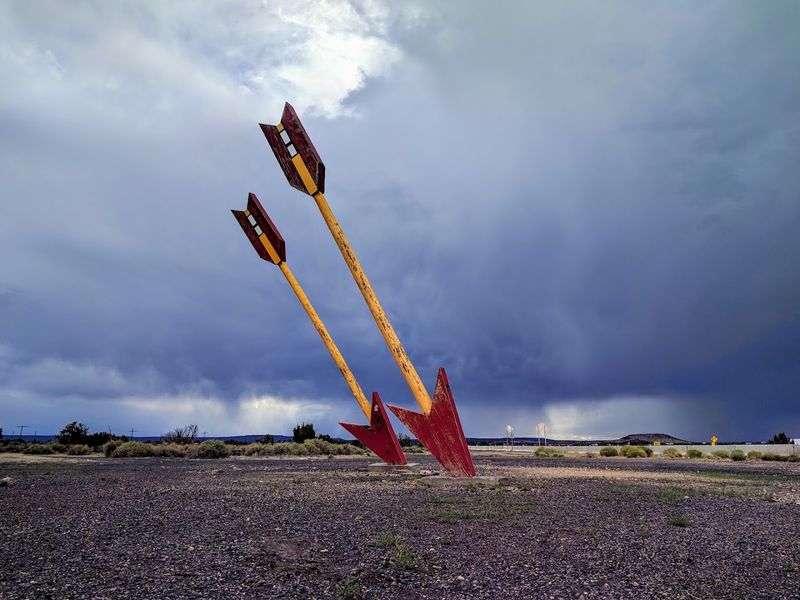
Two massive wooden arrows, each standing around 30 feet tall and planted at sharp angles into the desert ground, made Twin Arrows one of the most photographed stops on all of Route 66. They were painted bright yellow and red, designed to catch the eye of anyone zooming past at highway speed.
Drivers who blinked might miss them — but most did not.
The arrows were not just decoration. They were an invitation, a signal that something worth stopping for was right here.
Roadside novelty was serious business in mid-century America, and the Twin Arrows were masterclass-level attention-grabbing.
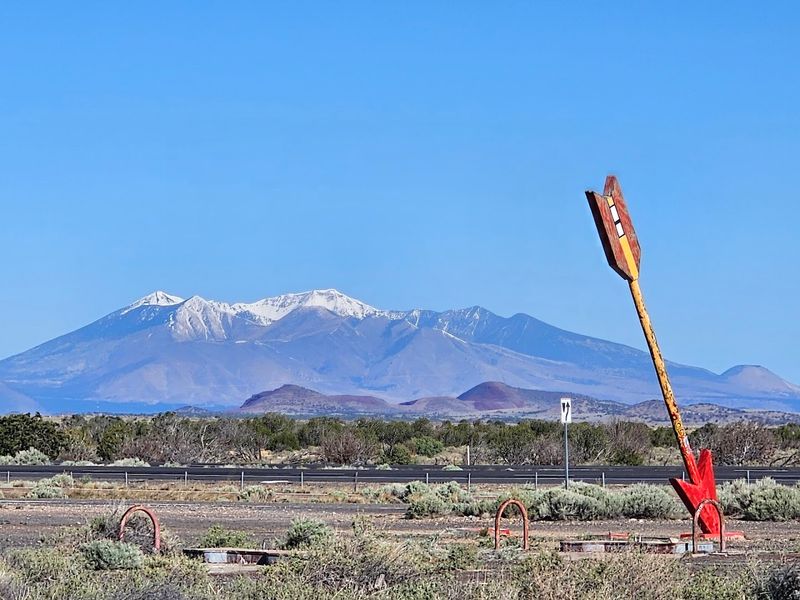
Sadly, one arrow has since fallen and is gone. The remaining arrow still leans defiantly against the Arizona sky, a little weathered and graffiti-tagged, but unmistakably iconic.
Visitors today still make the trip just to stand beside it and imagine what the full pair must have looked like.
How Interstate 40 Killed the Trading Post
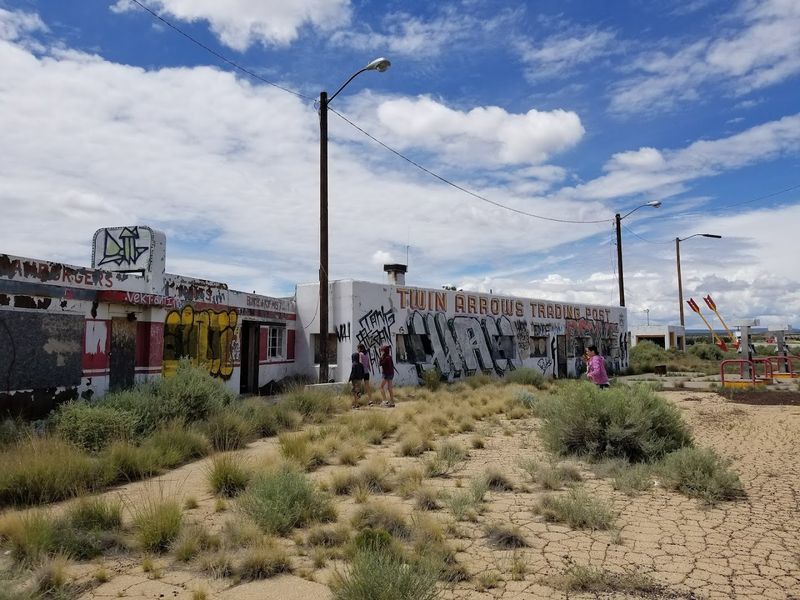
When Interstate 40 was built through Arizona in the 1970s and 1980s, it bypassed most of the original Route 66 alignment. Overnight, businesses that had thrived for decades found themselves stranded on a road that almost nobody drove anymore.
Twin Arrows Trading Post was one of the casualties.
Traffic dried up almost completely once the interstate opened. Tourists who once detoured along the old highway now blasted past at 75 miles per hour on the new freeway, never knowing the trading post existed.
Without customers, the business could not survive.
The trading post closed its doors, and nature — along with vandals and time — began reclaiming the property. Roofs caved in, windows shattered, and weeds crept through cracked concrete.
What was once a lively stop on America’s most famous road became a forgotten relic baking quietly in the Arizona sun.
The Ruins You See Today Up Close
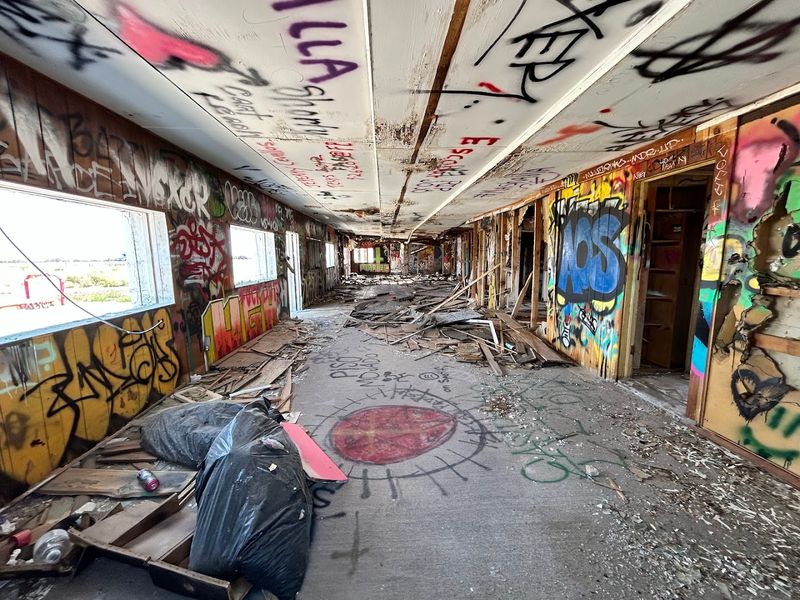
Walking through the Twin Arrows ruins today feels like stepping into a time capsule that got left in a blender. The main building’s roof has collapsed, leaving the walls standing open to the Arizona sky.
Broken glass crunches underfoot, twisted metal juts out at odd angles, and every surface is layered with colorful graffiti.
Despite the decay, the bones of the old trading post are still visible. You can make out where the gas pumps once stood, trace the outline of the shop floor, and imagine the shelves that once held turquoise rings and Route 66 keychains.
It takes a little imagination, but the ghost of the place is very much alive.
Visitors are welcome to walk through the ruins, though caution is absolutely necessary. Nails, broken glass, and unstable walls make careful footing essential.
Wear sturdy shoes and watch where you step — this is adventure, not a museum tour.
The Unexpected Street Art Gallery Inside
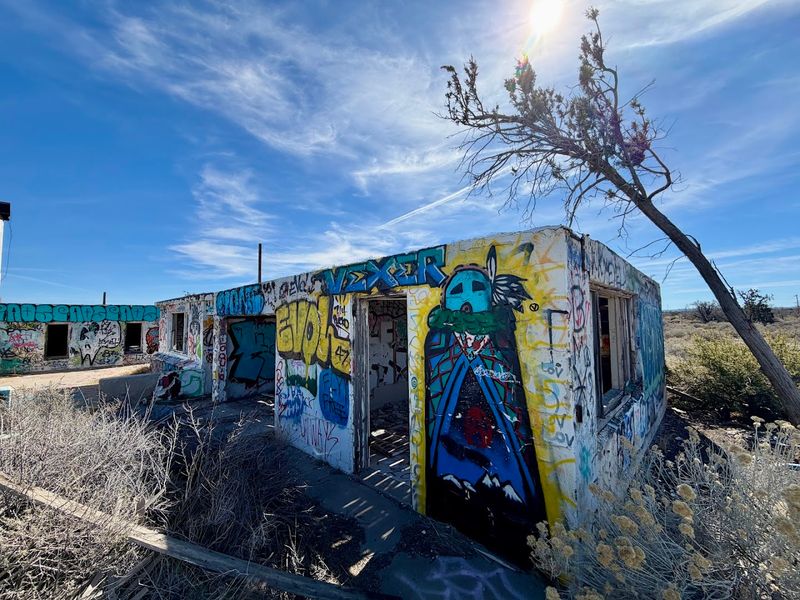
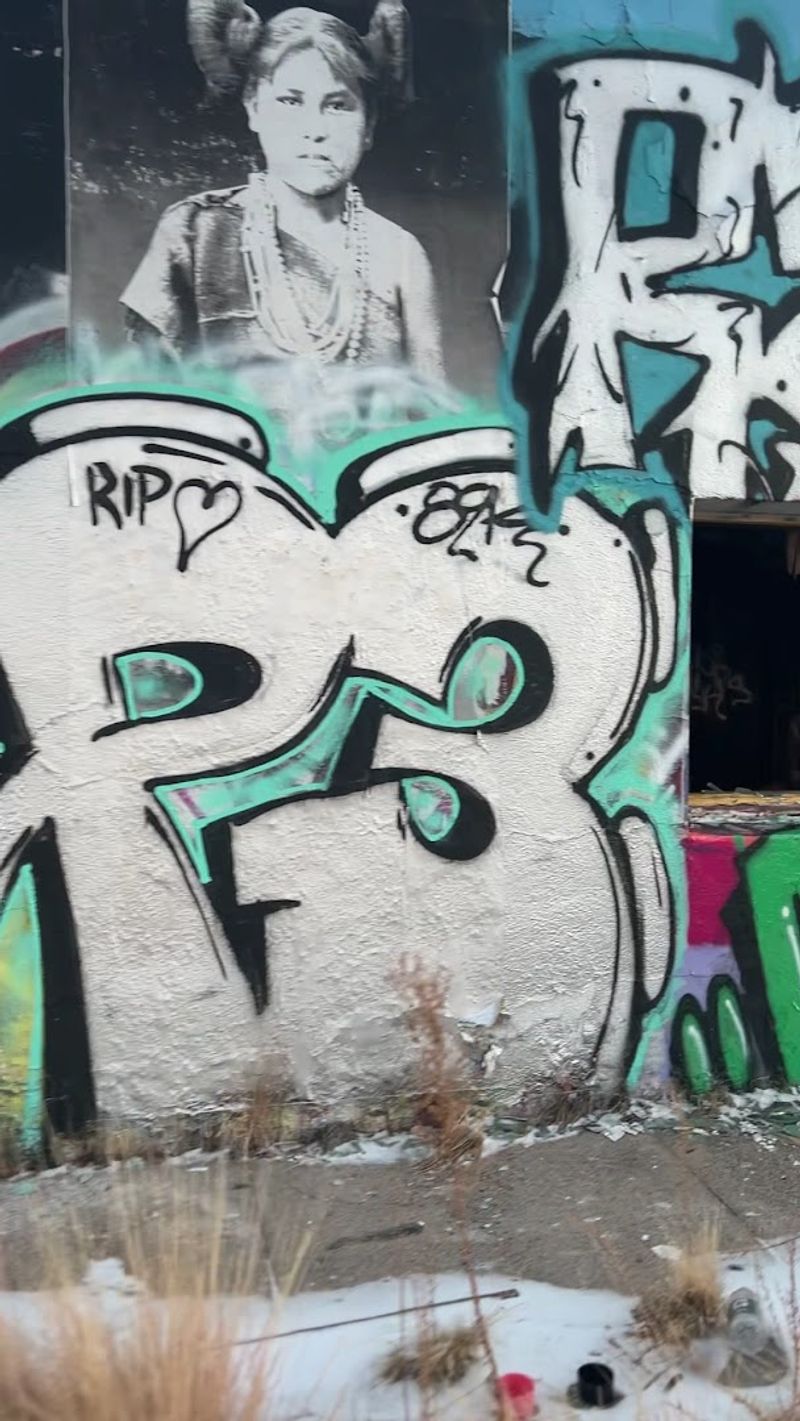
One of the biggest surprises waiting inside the Twin Arrows ruins is the quality of the street art covering nearly every surface. What might look like random spray paint from the road is actually a rotating gallery of thoughtful, politically charged, and visually stunning murals.
Artists have been using these crumbling walls as their canvas for years.
Themes range from commentary on indigenous rights and colonization to references to pop art legends like Andy Warhol. One reviewer described it as one of the best galleries they had visited in a long time — high praise for a roofless ruin in the Arizona desert.
The art changes over time as new layers are added on top of old ones. No two visits look exactly the same.
For urban art enthusiasts and photographers, this alone makes the stop worthwhile. Bring a camera with good detail settings and prepare to be genuinely surprised.
The Mysterious Andy Warhol Soup Can Connection
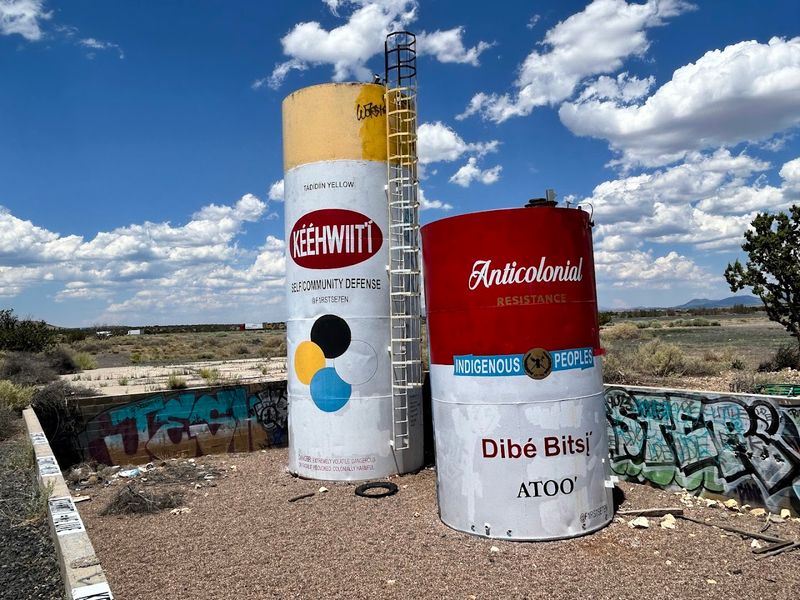
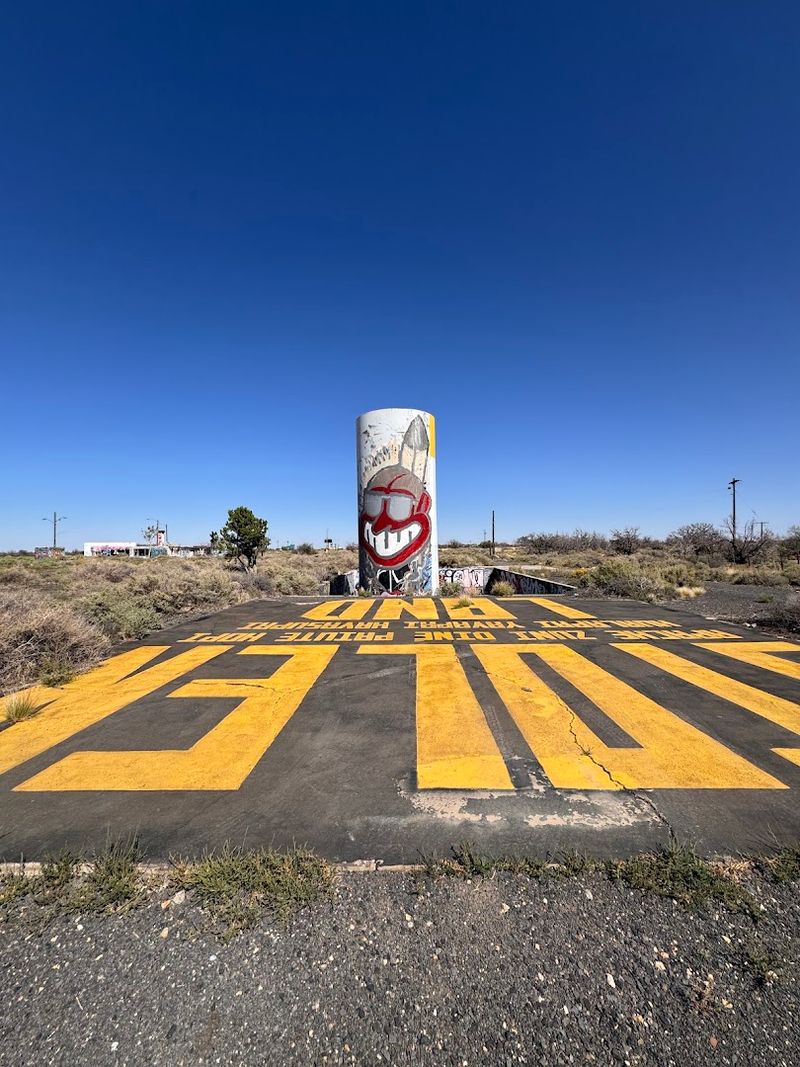
Among the strangest sights at the Twin Arrows ruins are large standing tanks painted to resemble Andy Warhol’s famous Campbell’s Soup Can artwork. The pop art reference feels wildly out of place in the middle of the Arizona desert — and that is exactly what makes it unforgettable.
Someone with serious artistic ambition decided this forgotten ruin deserved a touch of gallery-level creativity.
The tanks sit in what reviewers describe as a holding pool with steep sides, so getting too close can be risky. One visitor specifically warned others to stay careful around the tank area because there is no easy way to climb out if you fall in.
Whether the Warhol reference was intentional commentary on consumerism, a playful art joke, or simply a bold creative choice, it adds a layer of mystery to the site. Twin Arrows keeps revealing surprises the longer you look around its crumbling corners.
Why Photographers Keep Coming Back Here
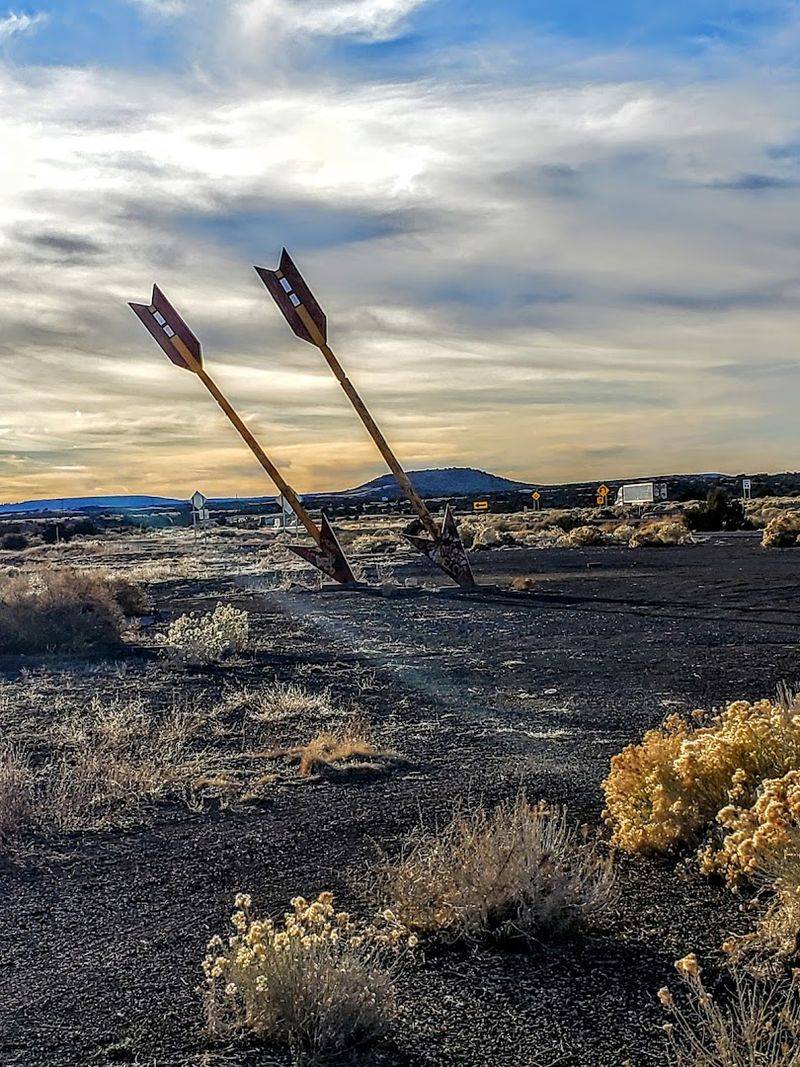
Ask any urban explorer or road trip photographer about Twin Arrows and you will likely get an enthusiastic response. The combination of crumbling architecture, bold street art, the lone surviving arrow, and the vast Arizona desert backdrop creates photographic conditions that are genuinely hard to replicate anywhere else along Route 66.
Early morning light is the sweet spot. Reviewers consistently recommend arriving at sunrise when warm golden tones wash over the ruins and harsh midday shadows have not yet flattened everything out.
The textures of peeling paint, cracked concrete, and weathered wood practically glow in that early light.
One regular visitor mentioned stopping two to three times per year on cross-country trips just to document how the site changes with each visit. The ruins shift, the art evolves, and the light is always different.
For photographers chasing something raw and real, Twin Arrows delivers every single time.
Safety Tips Every Visitor Should Know Before Stopping
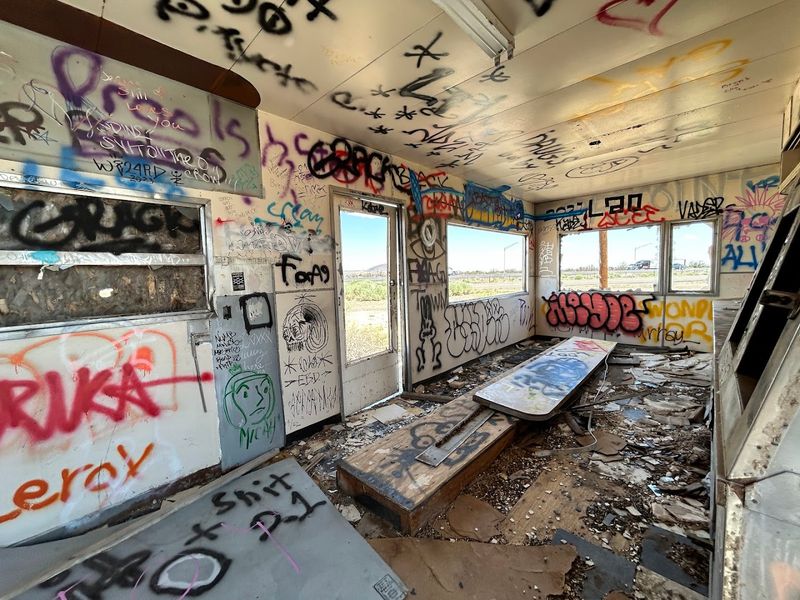
Twin Arrows is open 24 hours and free to visit, but that accessibility comes with real responsibilities. The site is genuinely hazardous in ways that a well-maintained attraction would not be.
Broken glass is everywhere — on floors, around doorways, and scattered across the parking area. Rusty nails poke out of collapsed wood, and walls that look stable may not be.
Sturdy closed-toe shoes are non-negotiable here. Sandals and flip-flops are a bad idea.
Children should stay close to adults and avoid entering any of the partially collapsed structures. Some reviewers have also noted encountering other people on the property, so visiting in groups and staying alert is smart practice.
Snakes are another real consideration, especially in warmer months. The Arizona desert is home to rattlesnakes, and rubble-filled ruins make perfect hiding spots.
Watch where you put your hands and feet, and always scan the ground before stepping anywhere new.
The Forrest Gump Connection Most Visitors Miss
Here is a fun detail that surprises many visitors: the area around Twin Arrows reportedly allows you to recreate the famous Forrest Gump running scene, where Tom Hanks jogs down an endless straight road through open desert. The flat, wide road near the ruins apparently matches the cinematic vibe closely enough that fans of the film make a point of stopping for the photo opportunity.
One reviewer specifically mentioned this as a highlight of their visit, encouraging others to channel their inner Forrest and snap the shot. It is a lighthearted bonus on top of everything else the site offers.
Whether you are a film buff or just someone who appreciates a good roadside quirk, this adds another reason to slow down and explore. Twin Arrows has a way of rewarding people who pay attention to the small, unexpected details hiding in plain sight along the old highway.
What Happened to the Second Arrow
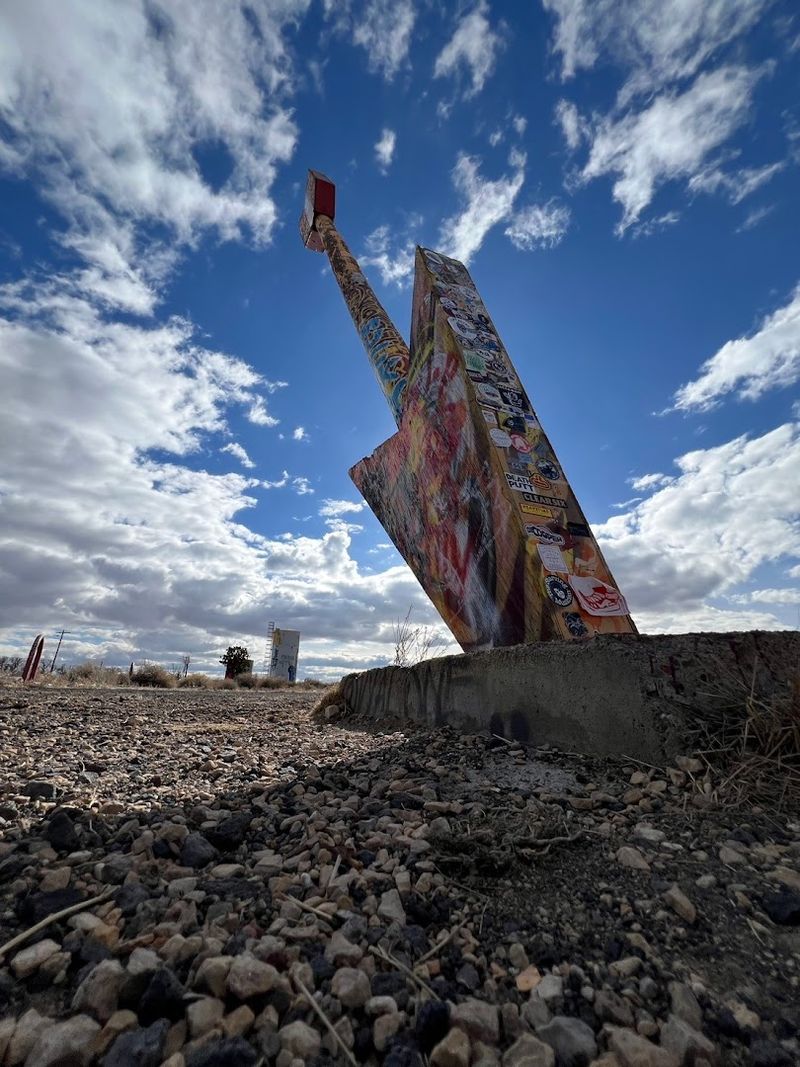
The name Twin Arrows implies two arrows — but for years now, only one has been standing. The fate of the second arrow has been a topic of conversation among Route 66 enthusiasts and regular visitors.
Reports suggest that one arrow lost its arrowhead first, leaving just a bare log sticking out of the ground, before eventually disappearing entirely.
Some visitors noticed the damage progressing over multiple trips. One photographer who stopped regularly documented the slow deterioration with sadness, wishing people would treat abandoned landmarks with more respect.
The second arrow’s decline felt like watching a piece of American roadside history crumble in real time.
Today, the single remaining arrow carries all the symbolic weight of the pair. It stands slightly crooked, tagged with paint, but still pointing skyward with stubborn dignity.
Visitors leave with a bittersweet feeling — grateful to have seen even one, but mourning the twin that is now just a memory.
How to Find Twin Arrows and What to Expect on Arrival
Finding Twin Arrows is straightforward if you know what to look for. The ruins sit along the old Route 66 alignment east of Flagstaff, Arizona, accessible from Interstate 40 via Exit 219.
Once you turn off onto the historic highway, the single remaining arrow becomes visible from a short distance away, leaning at its distinctive angle against the open sky.
The site has no formal parking lot, but cars pull off onto the dirt beside the ruins without much trouble. There are no restrooms, no visitor center, and no staff on site — this is completely self-guided exploration.
Cell service can be spotty in this stretch of desert, so downloading offline maps before you go is a smart move.
Plan for about 15 to 30 minutes if you want to walk around thoroughly and take photos. Early morning visits offer the best light and the lowest chance of sharing the space with other explorers.
Why This Forgotten Ruin Still Matters Today
Crumbling walls, missing roofs, and a single surviving arrow might not sound like much — but Twin Arrows Trading Post carries a significance that goes beyond its physical condition. It is a tangible piece of mid-century American road culture, a reminder of a time when the journey itself was the point and roadside stops were part of the adventure.
Places like Twin Arrows also serve as canvases for contemporary voices. The street art covering its walls speaks to issues that matter right now — indigenous rights, political resistance, and the power of public creative expression.
The ruins have become something new without losing their old identity.
Travelers who stop here often leave feeling unexpectedly moved. What looks like a forgotten eyesore from the highway turns out to be a layered, complicated, deeply human place.
Sometimes the most meaningful landmarks are the ones that have been left to tell their own story, unfiltered and unpolished.
Enjoyed this story?
Add Fast Food Club as a preferred source to see more of our reporting on Google.