


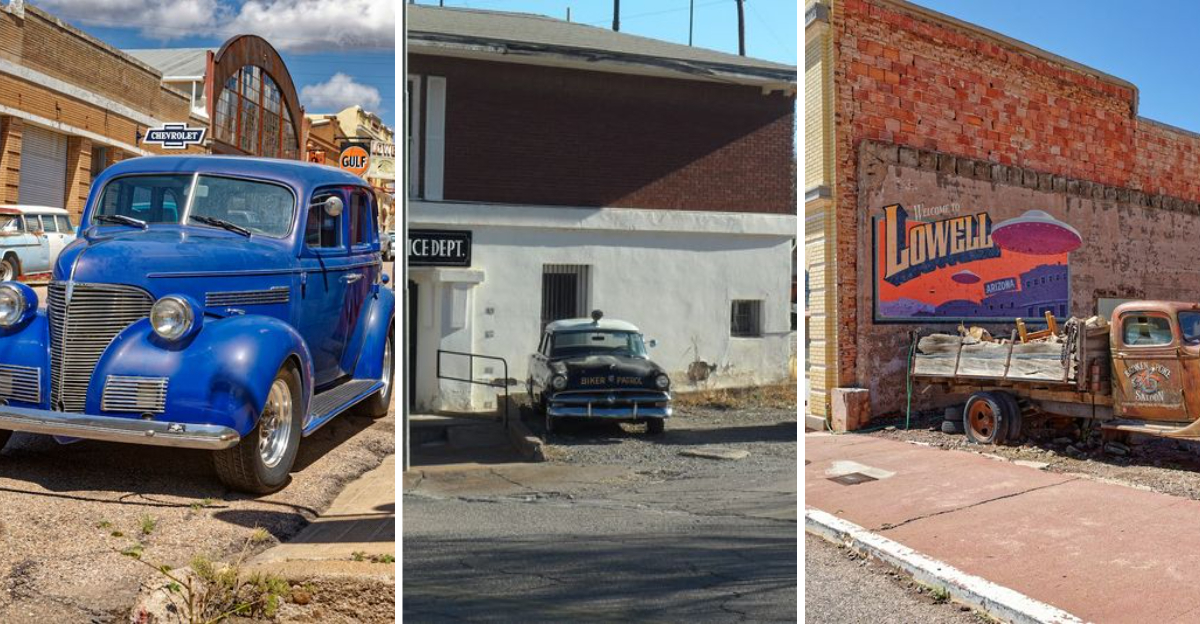
Tucked away in the rugged hills of Cochise County, Arizona, the ghost town of Lowell holds a secret that classic car fans have been buzzing about for years. Once a thriving mining community filled with families from Finland, Serbia, and Montenegro, Lowell was eventually swallowed up by the massive Lavender Pit copper mine and left to the desert winds.
Today, the crumbling streets of Old Lowell are lined with vintage cars frozen in time, sitting right where their owners left them decades ago. If you love history, nostalgia, and the sight of a rusted beauty baking under the Arizona sun, this place will absolutely blow your mind.
The Open-Air Classic Car Museum on Erie Street
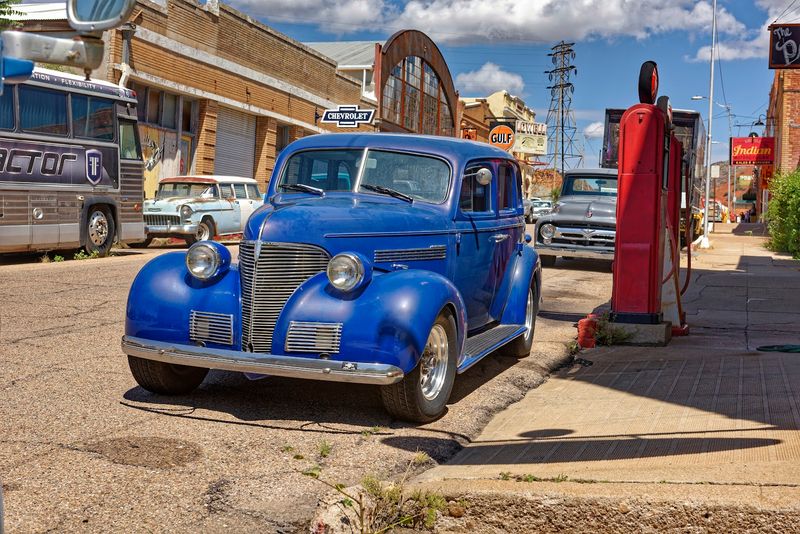
Walking down Erie Street in Lowell, Arizona feels like stepping straight into a time machine. The road is lined with classic cars that have been sitting in place for decades, slowly becoming part of the desert landscape itself.
Nobody moved them. Nobody sold them.
They just stayed.
What makes this stretch so special is that it was not planned as a museum. Life simply stopped here when the town was absorbed into Bisbee, and the cars were left behind like forgotten souvenirs.
Rust, sun, and time have turned them into outdoor sculptures that no artist could replicate.
Car enthusiasts from across the country make the trip specifically to photograph and admire these relics. Whether you recognize a 1950s Chevy or a old Ford pickup, the emotional punch of seeing them lined up under the Arizona sky is something truly unforgettable.
Lavender Pit Mine’s Role in Lowell’s Abandonment
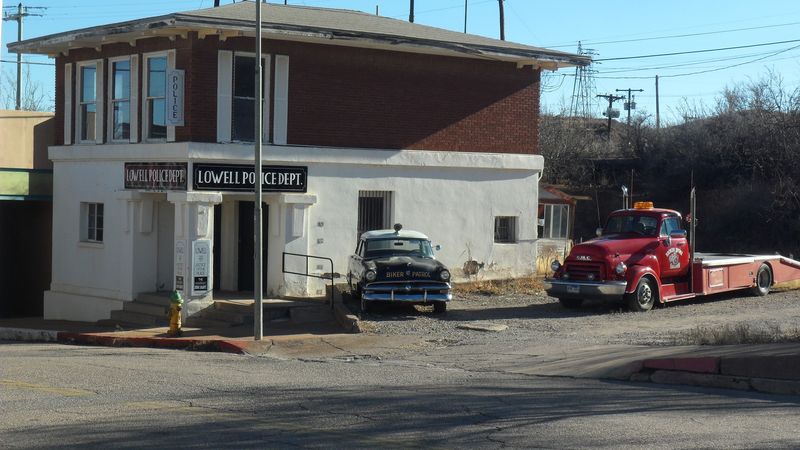
Here is a wild fact: the very mine that made Lowell famous is also the reason the town no longer exists in the way it once did. The Lavender Pit copper mine, one of the largest open-pit mines in Arizona history, expanded so aggressively in the mid-20th century that it consumed entire neighborhoods of Lowell.
Homes, businesses, and streets were swallowed by the growing pit. Residents were relocated, and the town was officially incorporated into Bisbee.
What remained on the edges became the eerie ghost-town stretch that visitors explore today.
The mine itself closed in 1974, leaving behind a jaw-dropping hole nearly 900 feet deep and a mile wide. Standing at the overlook, you can almost feel the scale of what happened here.
The abandoned cars nearby seem even more poignant when you understand the story behind the mine that changed everything.
Frozen-in-Time Storefronts That Frame the Cars
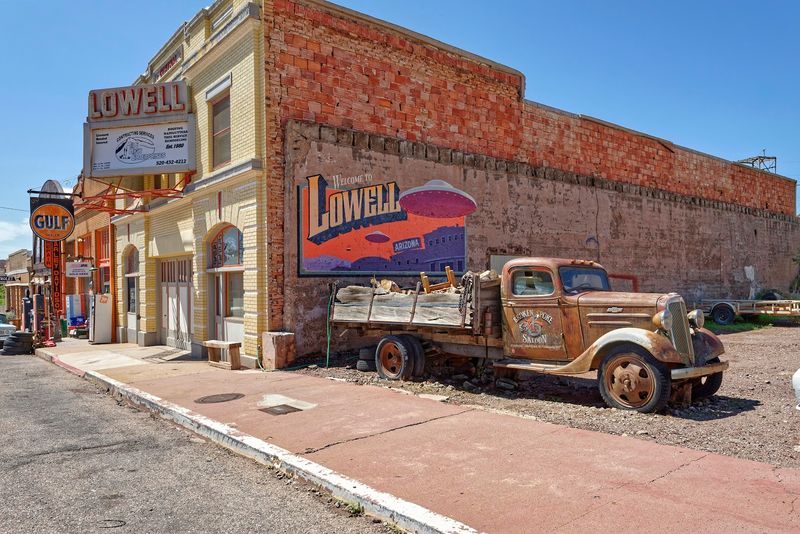
Imagine pulling up to a storefront where the sign is still hanging, the paint is still peeling in the same spot it started decades ago, and a classic car is parked right out front like the owner just ran inside for a minute. That is the magic of Lowell’s main strip.
The storefronts here were never renovated or repurposed on a large scale. Some have been lightly touched up by artists and quirky business owners who moved in later, but the bones of the old town remain raw and real.
Vintage signage, cracked glass, and sun-faded walls create a backdrop that photographers absolutely love.
For car enthusiasts, the combination of vehicle and setting is unbeatable. Seeing a rusted coupe parked in front of a ghost-town shop hits differently than any car show.
It feels lived-in, human, and deeply moving in a way that polished chrome never could.
The Multicultural Mining Heritage Behind the Neighborhood
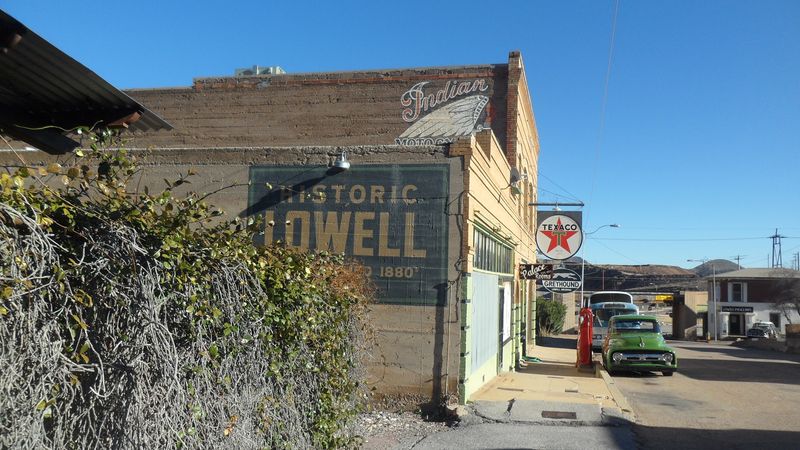
Long before the cars arrived, Lowell was a neighborhood buzzing with the sounds of many languages. Miners from Finland, Serbia, and Montenegro settled here in the early 1900s, drawn by the promise of steady work at the Lavender Pit and surrounding copper operations.
They built homes, raised families, and created a tight-knit multicultural community.
That human story gives the abandoned cars an extra layer of meaning. These vehicles were not just machines.
They belonged to real families who worked hard, lived fully, and eventually had to leave when the mine expansion claimed their homes.
Walking through what remains of Lowell today, you are walking through the legacy of immigrant labor that helped fuel America’s copper industry. The rusted cars and weathered buildings are quiet monuments to those communities.
Understanding that history makes every photograph taken on Erie Street feel like an act of remembrance.
Route 80 Access and the Road Trip Appeal
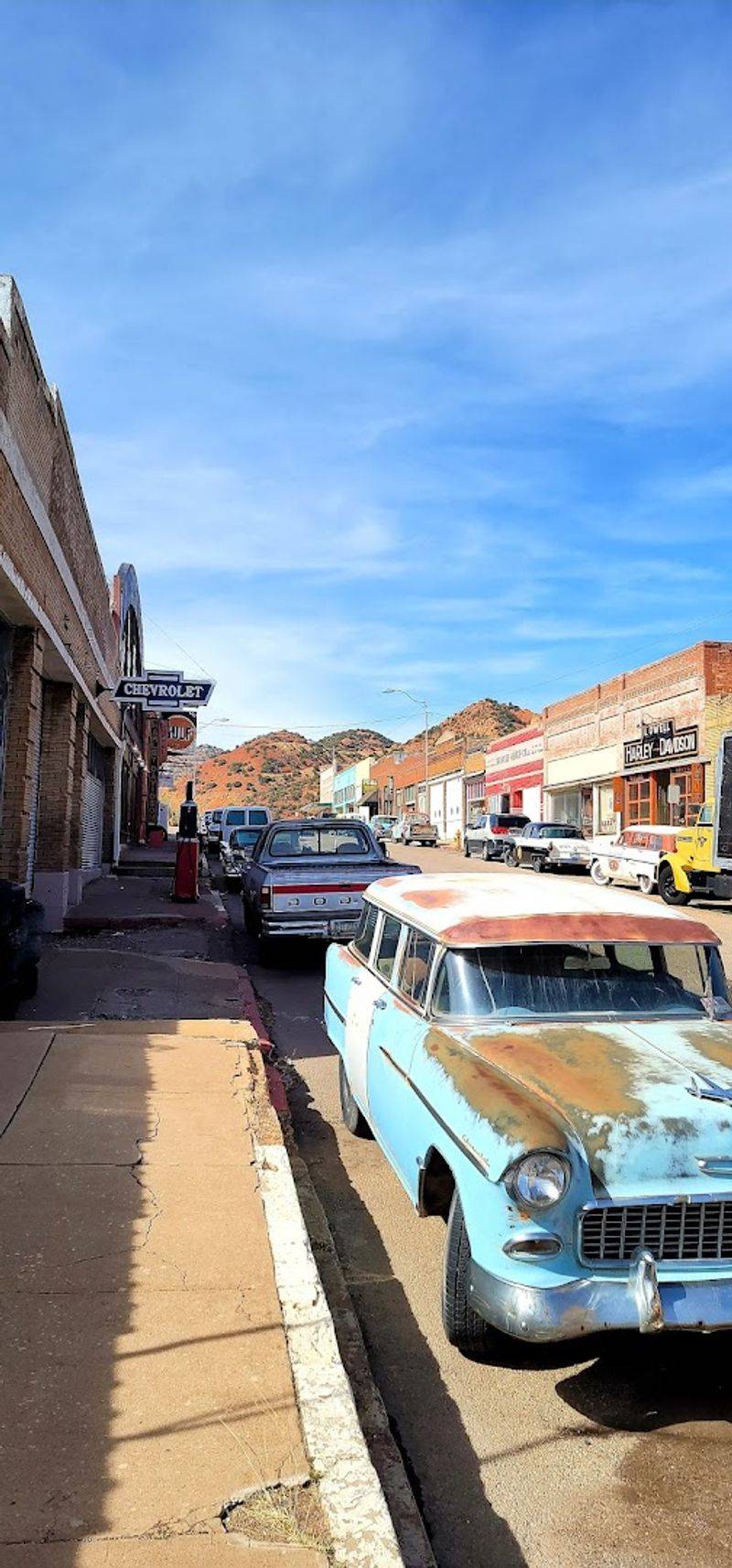
Getting to Lowell is half the adventure. Sitting just off Historic Route 80, the town is easily accessible from Bisbee and makes for a perfect stop on a classic American road trip through southern Arizona.
The drive itself is gorgeous, cutting through high desert terrain with sweeping mountain views that set the mood perfectly.
Route 80 has its own storied history, once serving as a major commercial highway connecting California to Georgia. Driving it today feels like honoring a tradition, especially when your destination is a street lined with cars from the same era the road was in its prime.
Many road trippers plan their southern Arizona routes specifically to include Lowell. Pair the stop with a visit to Tombstone or Bisbee’s historic district, and you have yourself a full weekend of Americana that no theme park could ever replicate.
Pack snacks and a camera.
Street Art That Breathes New Life Into the Ruins
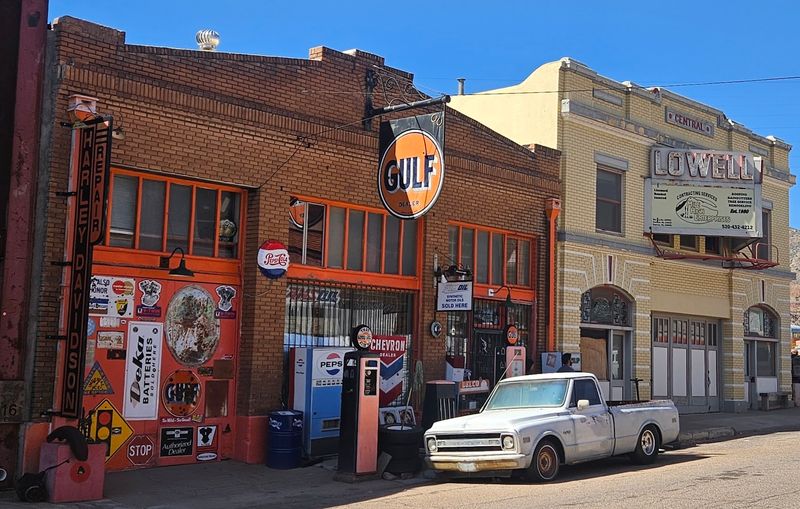
Not everything in Lowell is frozen in decay. Over the years, artists have quietly claimed some of the crumbling walls and turned them into vibrant canvases.
Murals in bold desert colors now share space with rusted bumpers and broken windows, creating a visual contrast that feels both chaotic and beautiful.
The street art adds a living, breathing energy to a place that could otherwise feel purely melancholy. Local and visiting artists have painted everything from abstract designs to portraits that seem to honor the town’s working-class past.
Some pieces are polished; others are raw and impulsive, which somehow makes them more powerful.
For photographers, the combination of street art and classic car is a dream composition. Imagine a faded mural of a miner’s face reflected in the dusty windshield of a 1940s sedan.
Lowell offers those kinds of unexpected, layered moments that keep visitors coming back again and again.
Photography Pilgrimages to Lowell’s Rusty Relics
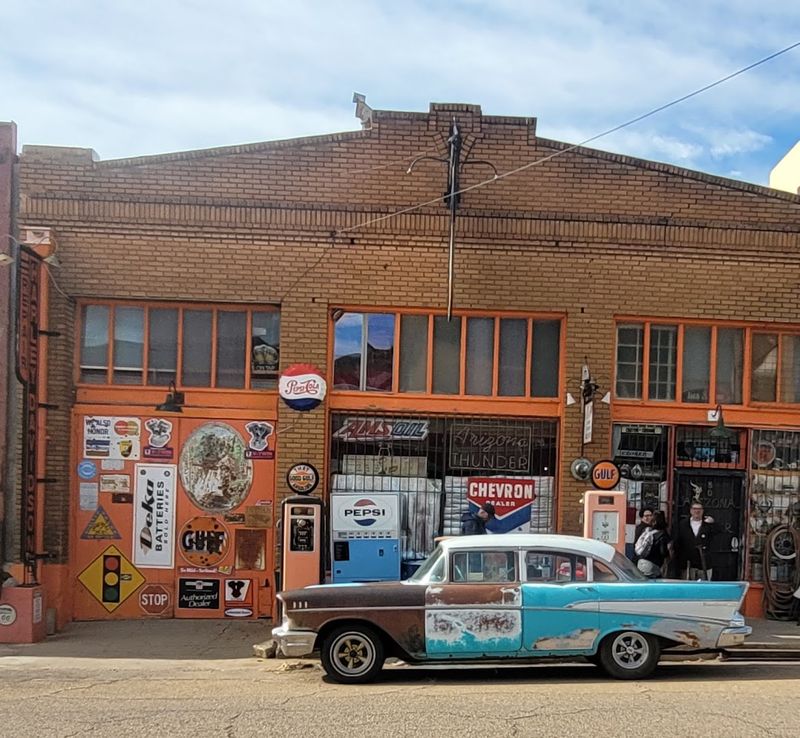
Word has spread through photography communities online, and Lowell has become something of a pilgrimage site for people who love capturing decay, texture, and Americana. The cars here offer endless compositional opportunities: peeling chrome, shattered glass, cracked leather seats baking under the sun, and rust patterns that look almost like abstract paintings.
Golden hour in Lowell is particularly special. When the sun dips low over the Mule Mountains, the warm light catches every curve of the old vehicles and turns the whole street into something cinematic.
Serious photographers plan their visits around sunrise and sunset for exactly that reason.
Even casual smartphone photographers walk away with stunning shots here. The setting does most of the work.
All you have to do is point and shoot, and you will capture something that looks like it belongs on the cover of a vintage Americana magazine. No filters needed.
Bisbee’s Connection and the Shared Border With History
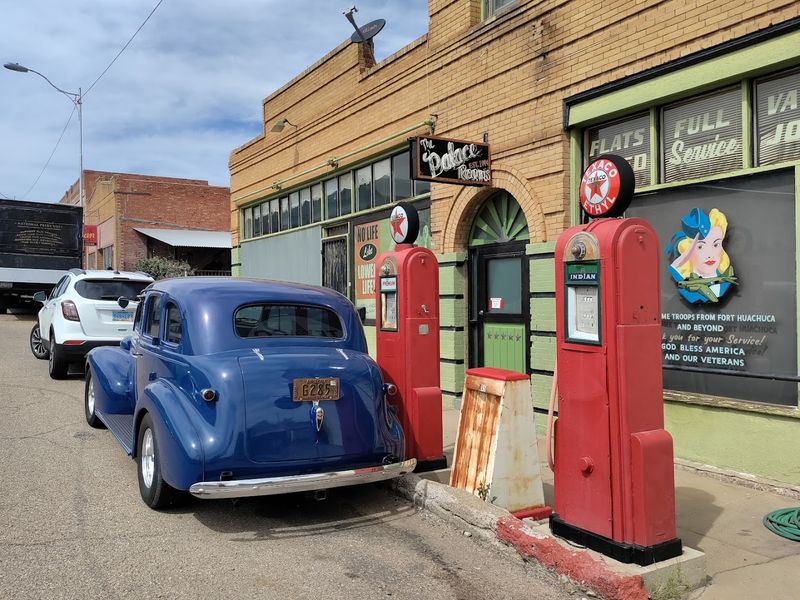
Lowell and Bisbee are so intertwined that it is sometimes hard to tell where one ends and the other begins. Lowell was officially incorporated into Bisbee in the early 1900s, making it a neighborhood rather than a separate city, though its identity has always felt distinct and a little wilder.
Bisbee itself is famous for its Victorian architecture, eclectic arts scene, and quirky residents who embrace the town’s strange and layered history. Visiting Lowell as part of a Bisbee trip gives you the full picture.
You see the polished, gallery-filled side of the area and then turn a corner into Lowell’s raw, unfiltered past.
The contrast is striking. Bisbee’s colorful hillside homes feel cheerful and intentional, while Lowell’s rusted cars and crumbling facades feel accidental and haunting.
Together, they tell a complete story of a mining region that boomed, busted, and reinvented itself in the most unexpected ways.
Classic Car Models Spotted Along the Strip
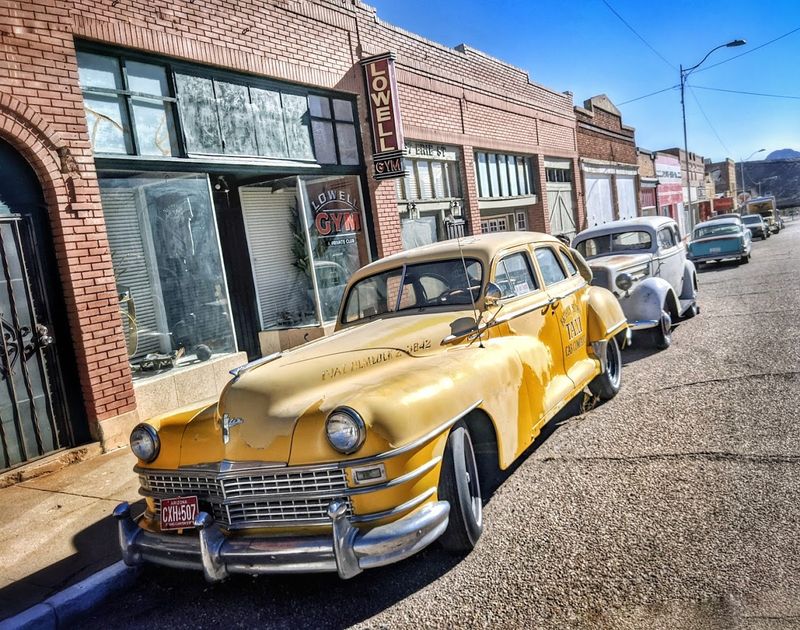
Car spotters who visit Lowell come prepared with notebooks and cameras, because you never quite know what model will turn up next. Visitors have documented everything from mid-century American sedans to vintage pickup trucks and old station wagons, all wearing their decades of desert sun like badges of honor.
Some cars are barely recognizable, reduced to skeletal frames and flat tires. Others are surprisingly intact, with body lines still elegant beneath the rust.
Spotting a fin-tailed 1950s beauty or a round-nosed 1940s coupe among the weeds is a genuine thrill for anyone who grew up flipping through old car catalogs.
No two visits to Lowell are exactly the same, either. Occasional new discoveries are made as brush clears and light shifts.
The cars feel like they are slowly revealing themselves over time, which gives the place an almost treasure-hunt quality that keeps enthusiasts returning season after season.
The Eerie Quiet That Makes Lowell Unforgettable
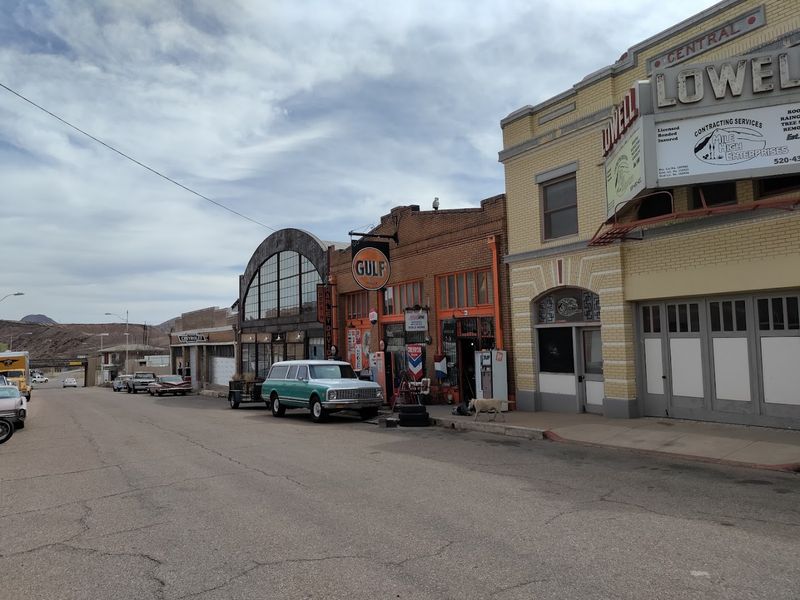
There is a particular kind of silence in Lowell that gets under your skin. Standing on Erie Street with nothing but wind, distant birdsong, and the occasional creak of a rusty door hinge, you feel the full weight of what was lost here.
It is not a sad silence exactly. It is more like a respectful pause.
Ghost towns across the American West each have their own atmosphere, but Lowell’s feels especially personal. Because the cars were left by real residents forced out by a mine expansion, the emptiness carries a human story.
You are not just looking at old machines. You are looking at someone’s last morning commute, never completed.
That emotional texture is what separates Lowell from any car museum or auto show. Museums curate.
Lowell just is. And somehow, that raw authenticity makes every cracked windshield and flat tire feel more meaningful than any polished showroom display ever could.
How the Desert Climate Preserved the Cars
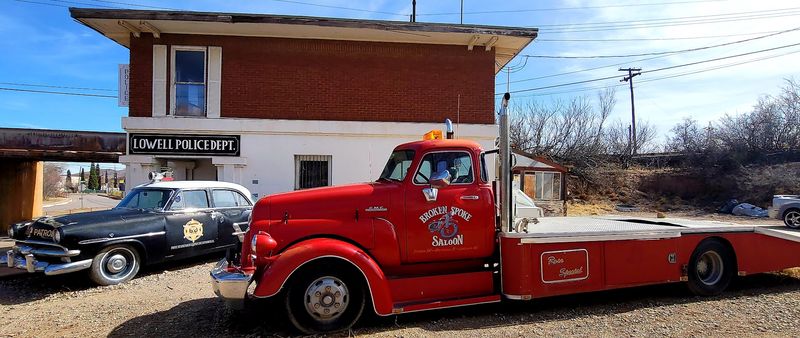
Here is something surprising: Arizona’s dry desert climate is actually one reason so many of the cars in Lowell are still recognizable. In wetter parts of the country, abandoned vehicles deteriorate much faster, with moisture accelerating metal rot and structural collapse.
The low humidity of the Sonoran Desert slows that process considerably.
That means cars left in Lowell decades ago still have visible body panels, readable trim details, and sometimes even intact interiors. The sun bleaches and cracks, yes, but the overall structure holds up far better than you might expect.
Rust appears, but it progresses slowly and creates beautiful patina rather than total destruction.
For car fans, this is genuinely exciting. Seeing a vehicle that is clearly from the 1940s or 1950s still standing in recognizable form after all these years out in the open is remarkable.
Arizona’s climate, for all its harshness, has accidentally acted as a preservative for these roadside relics.
Local Legends and Stories Surrounding the Abandoned Vehicles
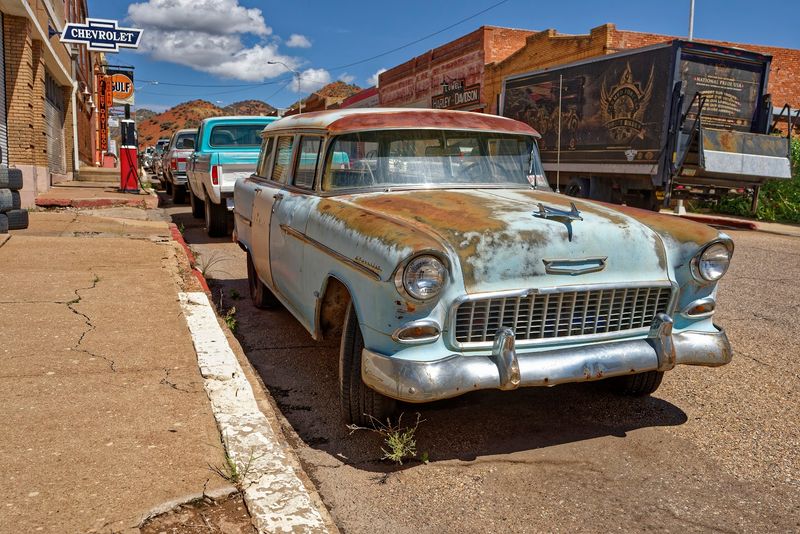
Ask anyone who grew up around Bisbee and Lowell, and they will have a story about the cars. Some locals swear certain vehicles belonged to specific families they knew.
Others pass down tales of the cars being used in their childhood as makeshift forts, playgrounds, and hiding spots during games of tag on summer evenings.
These oral histories give the rusted cars a social life that their current stillness hides. They were not always monuments.
They were transportation, they were pride, they were everyday life. Hearing those stories from long-time residents adds a warmth to the experience that no historical plaque could fully capture.
A few Bisbee residents have even started informal walking tours of the Lowell strip, sharing anecdotes passed down through generations. If you happen to meet one of these storytellers during your visit, stop and listen.
Their memories are the most valuable thing left in this remarkable, quietly legendary Arizona town.
Why Classic Car Fans Should Add Lowell to Their Bucket List
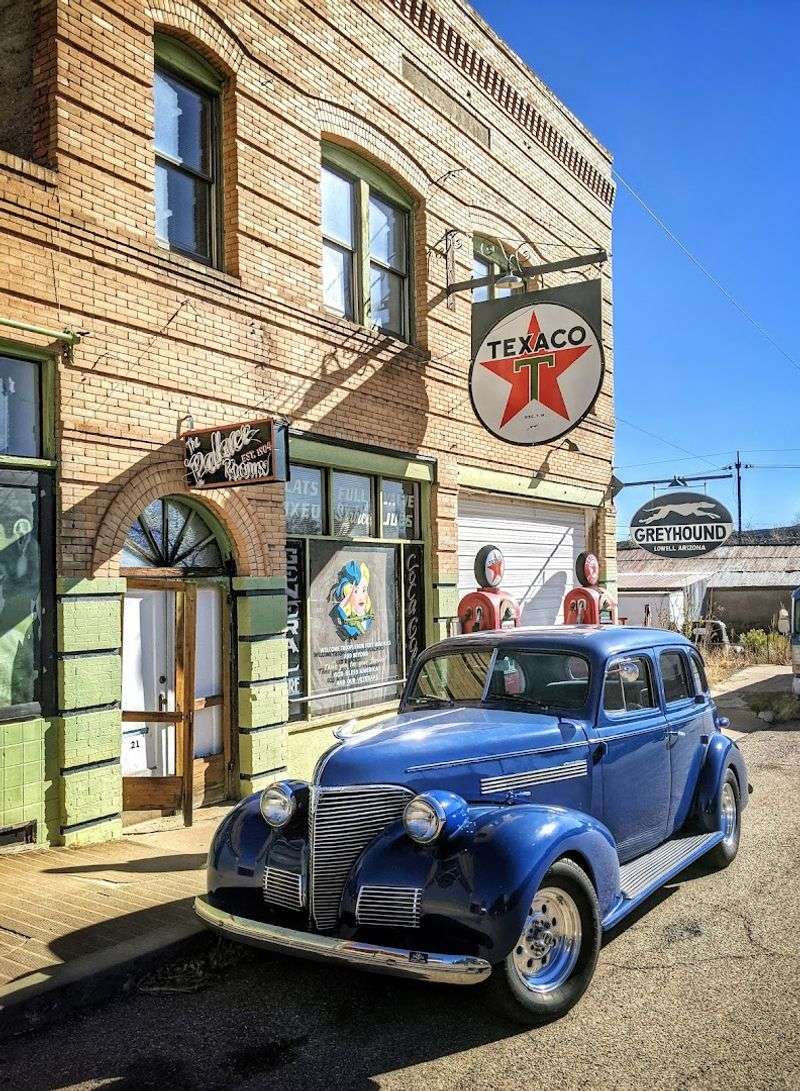
If you have ever stood at a car show wishing the vehicles had more soul, more story, more grit, then Lowell, Arizona is the answer you did not know you were looking for. No ropes, no ticket booths, no velvet barriers.
Just open desert air and decades of automotive history sitting right in front of you.
The experience is completely free and entirely unhurried. You can spend an hour or an entire afternoon wandering the strip, and nobody will rush you along.
Bring a picnic, bring your best camera lens, bring a friend who appreciates a good story told through rust and chrome.
Lowell is proof that the most powerful car collections are not always found in museums. Sometimes the best ones are the ones that happened by accident, left behind by a community that had to move on but whose wheels never did.
Add it to your list. You will not regret it.
Enjoyed this story?
Add Fast Food Club as a preferred source to see more of our reporting on Google.