


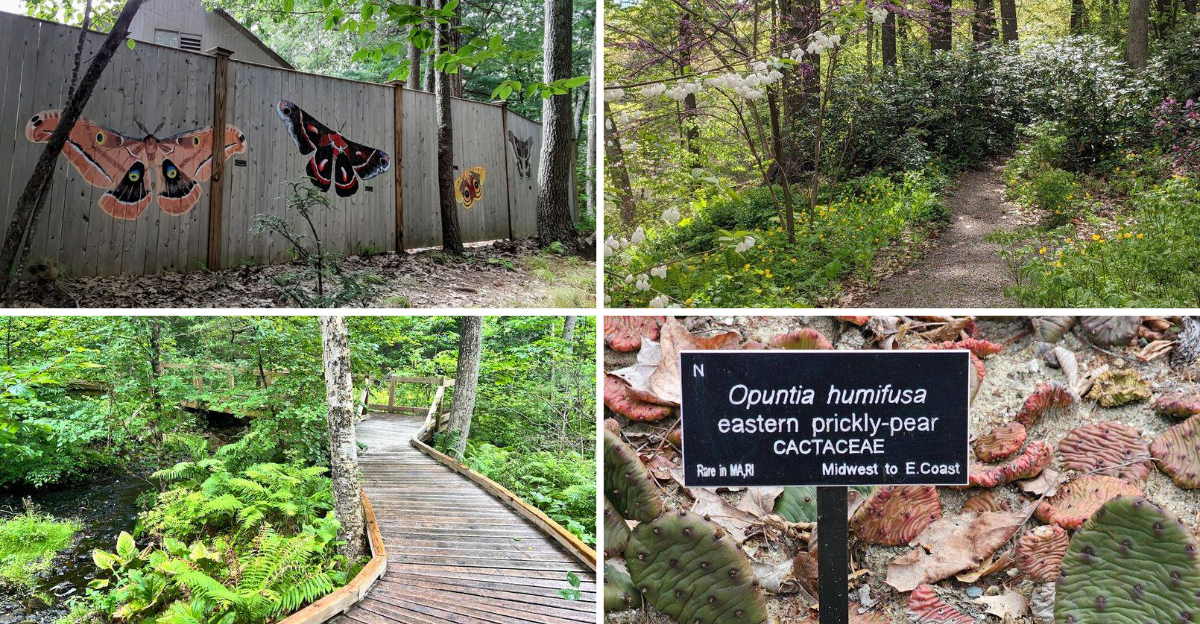
Tucked away in the forests of Framingham, Massachusetts, Garden in the Woods is one of New England’s most magical hidden gems. Managed by the Native Plant Trust, this 45-acre botanical garden features over two miles of winding paths through lush woodlands, babbling streams, and stunning native plant collections.
Whether you are a nature lover, a photographer, or simply someone looking for a peaceful escape, this enchanting destination has something special waiting for you. Pack your walking shoes and get ready for a day trip you will be talking about for years.
A Woodland Wonderland That Feels Straight Out of a Fairy Tale
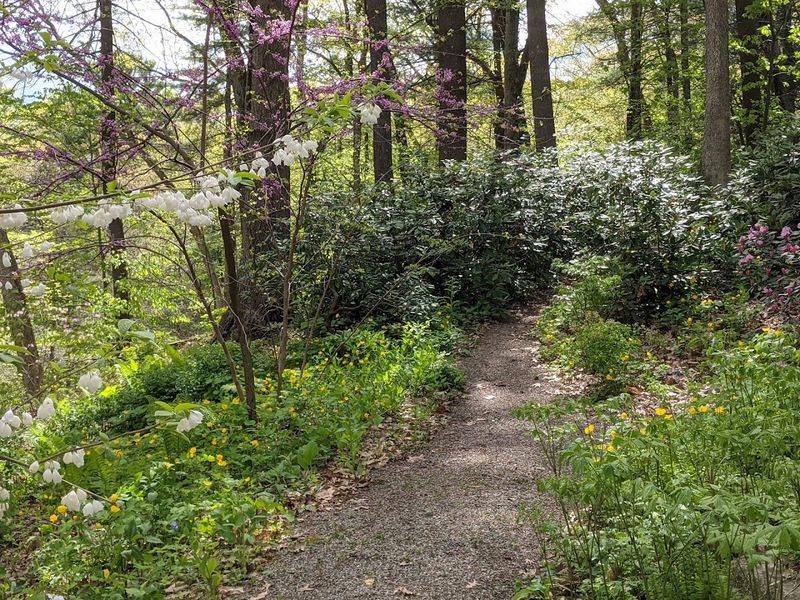
The moment you step onto the trails at Garden in the Woods, something magical happens. The dense forest canopy closes in around you, the sounds of the outside world fade away, and suddenly you are walking through what feels like a scene from a storybook.
Founded in 1934, the garden was carefully developed around a series of steep glacial ridges called eskers, giving the landscape a natural, dramatic character that no human designer could fully replicate. Mossy boulders, trickling streams, and arching tree branches create a setting that genuinely feels enchanted.
Visitors consistently describe the experience as peaceful and immersive. Even on a busy weekend, the winding paths and layered woodland create enough space that you rarely feel crowded.
Come with a curious mind and slow your pace — this place rewards those who take their time to look closely.
Getting There and Planning Your Visit
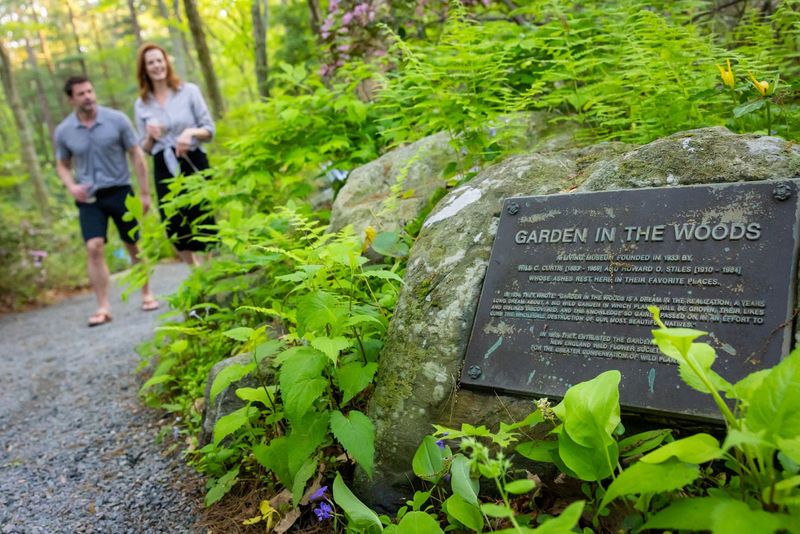
Garden in the Woods is located at 180 Hemenway Rd, Framingham, MA 01701, making it an easy drive from Boston and surrounding suburbs. The garden is open daily from 10 AM to 5 PM, so you have a full afternoon to explore at your own pace.
Admission is ticketed, and the Native Plant Trust strongly recommends reserving your spot online in advance, especially on weekends during peak spring and fall seasons. Arriving early on a weekday is a great way to enjoy the trails with fewer fellow visitors around.
Parking is available on site, though spots can fill up quickly during busy periods. The address is straightforward to navigate, and the entrance is well marked.
For questions or to plan ahead, you can reach the garden at +1 774-301-8465 or visit nativeplanttrust.org before your trip.
Two Miles of Trails Through Diverse Natural Ecosystems
One of the most impressive things about Garden in the Woods is just how much variety is packed into its trail system. Stretching just over two miles, the network of paths takes you through a surprising range of habitats including dense forest, open meadow, sandy plain, stream bank, and even a boggy wetland area.
The main loop is about a mile long and follows wide, well-groomed gravel paths that are comfortable for walkers of all ages and fitness levels. Smaller side trails branch off into quieter, more secluded corners of the garden where the atmosphere feels even more intimate and wild.
A detailed trail map is available for free at the visitor center near the entrance. An audio guide is also available for those who want a richer, more educational experience while walking.
Every turn on the trail genuinely reveals something new and worth pausing over.
Native Plants Labeled and Ready to Teach You Something New
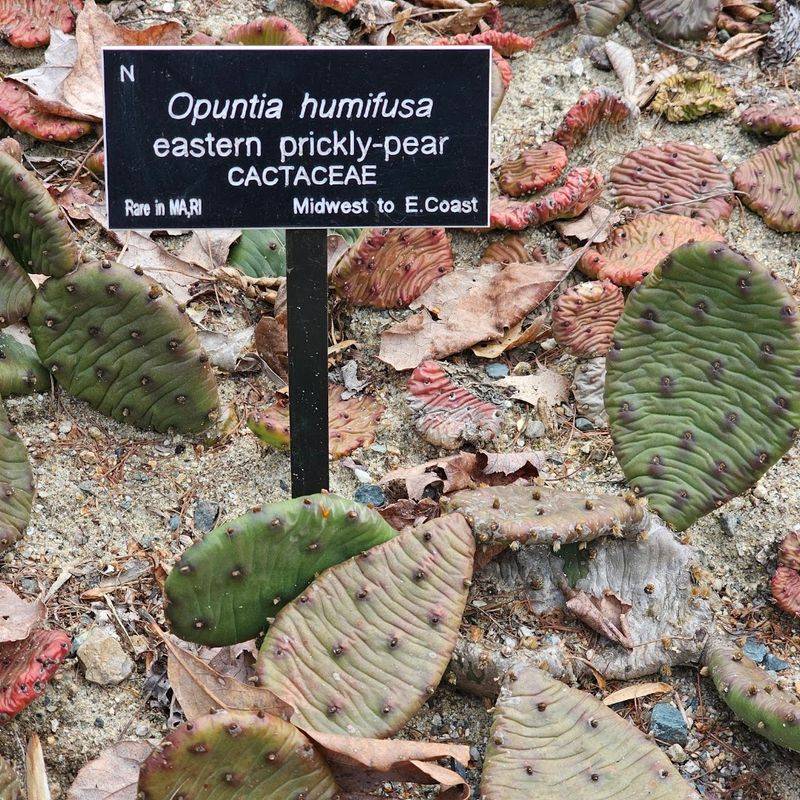
Here is something you do not find at every botanical garden: nearly every plant along the trails is clearly labeled with its common name, scientific name, and often additional ecological notes. Garden in the Woods is home to hundreds of native New England plant species, and the labeling system turns a casual stroll into a genuinely educational adventure.
Visitors with no prior botany knowledge leave feeling like they have learned something real and practical. One reviewer even mentioned learning about Massachusetts native cacti from a knowledgeable staff member named Joseph — proof that surprises are everywhere here.
The audio guide format adds another layer for curious visitors who want deeper context about what they are seeing. Whether you are a seasoned gardener or just someone who appreciates the outdoors, the labeled plant collections make every step of the walk feel intentional and rewarding.
The Lily Pond: A Quiet Spot Teeming With Wildlife
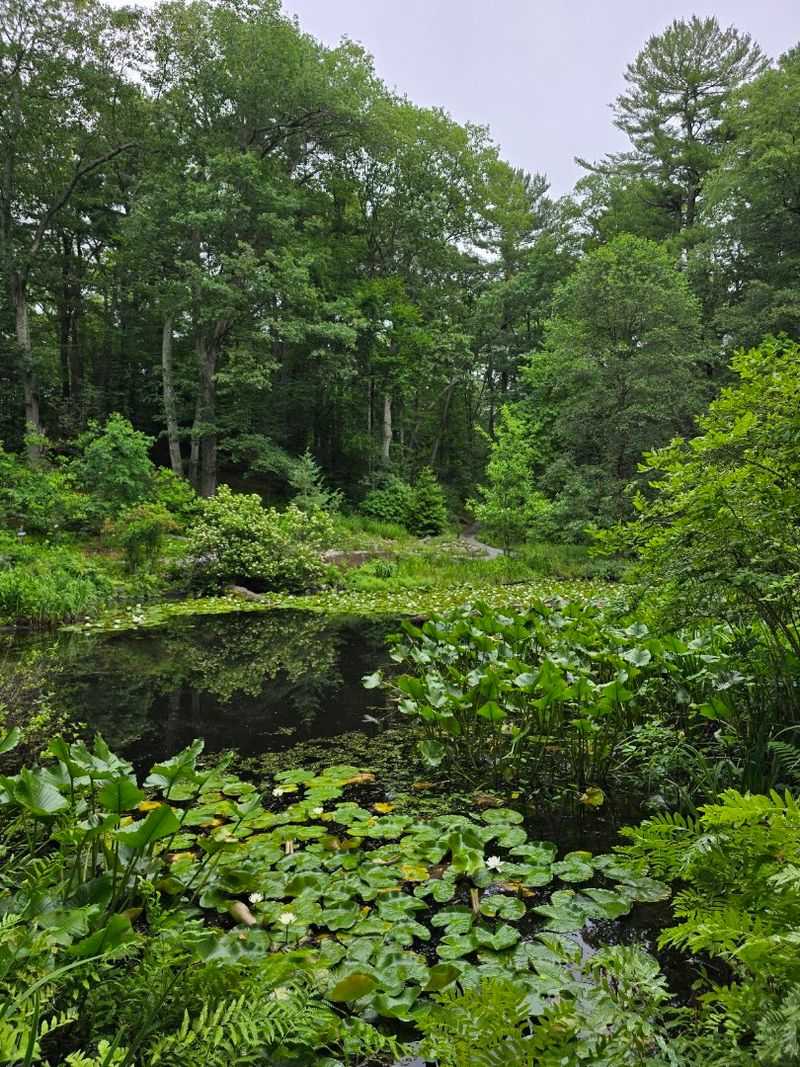
Somewhere along the main trail, the trees part just enough to reveal one of the garden’s most beloved features: a gorgeous lily pond that looks almost too picturesque to be real. Turtles bask on half-submerged logs, frogs call from the reedy edges, and water lilies float lazily across the surface.
Children and adults alike tend to linger here longer than they planned. There is something deeply calming about watching a painted turtle slide off a log into the dark water, or spotting a frog sitting perfectly still among the lily pads.
It is the kind of moment that makes you put your phone away and just be present.
Early morning visits tend to offer the most wildlife activity around the pond. Bring a pair of binoculars if you have them.
Even without any special equipment, the pond delivers one of the most memorable and photogenic scenes in the entire garden.
Streams, Small Waterfalls, and a Charming Wooden Boardwalk
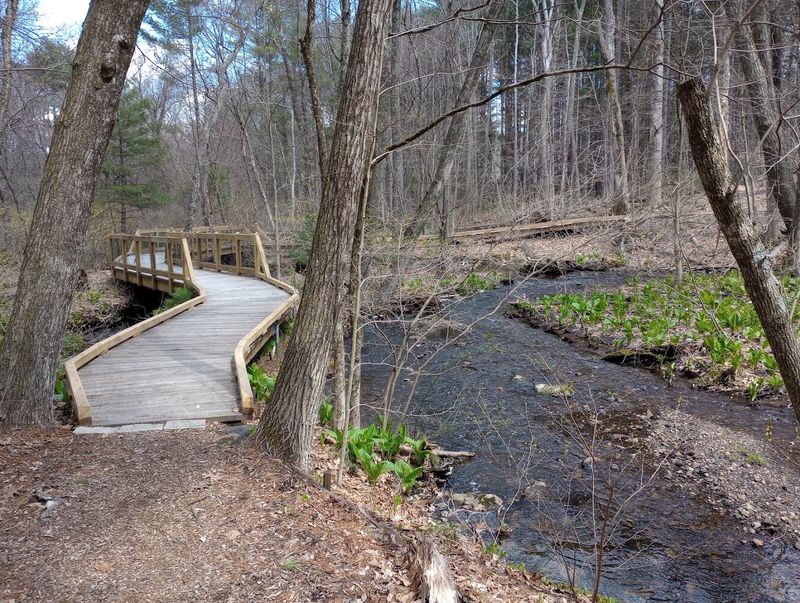
Water is woven throughout the landscape of Garden in the Woods in the most delightful ways. A gentle stream meanders through sections of the garden, occasionally spilling over mossy rocks to create small, musical waterfalls that you can hear before you see them.
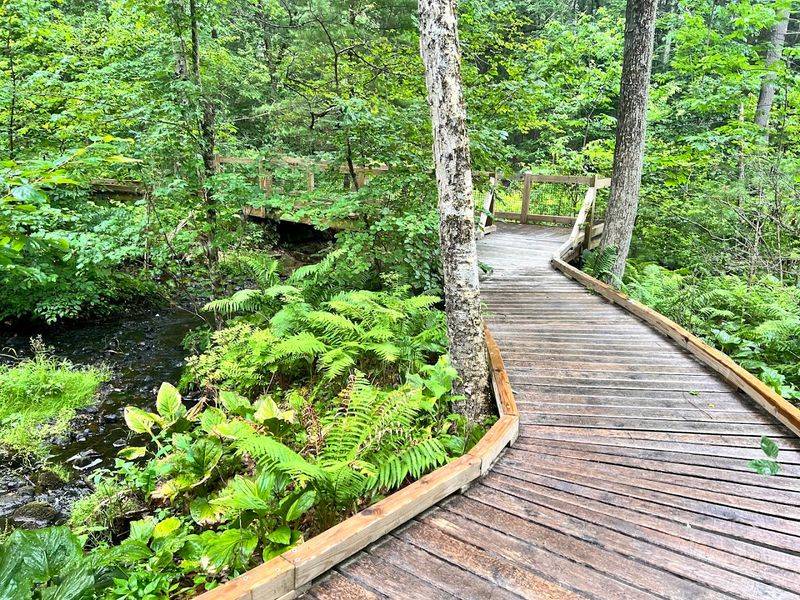
Newly renovated boardwalks carry visitors over the wettest and most sensitive areas of the trail, offering a close-up view of stream-side plant communities without disturbing them. Multiple reviewers specifically called out these boardwalks as a highlight worth taking the detour for, and it is easy to see why.
One visitor described sitting on a tiny bridge over a spring and simply listening to the water trickle — and honestly, that sounds like the perfect afternoon. The combination of moving water, overhanging ferns, and filtered woodland light creates an atmosphere that photographers and nature lovers find absolutely irresistible.
Do not rush past these sections.
Spring Blooms That Will Leave You Speechless
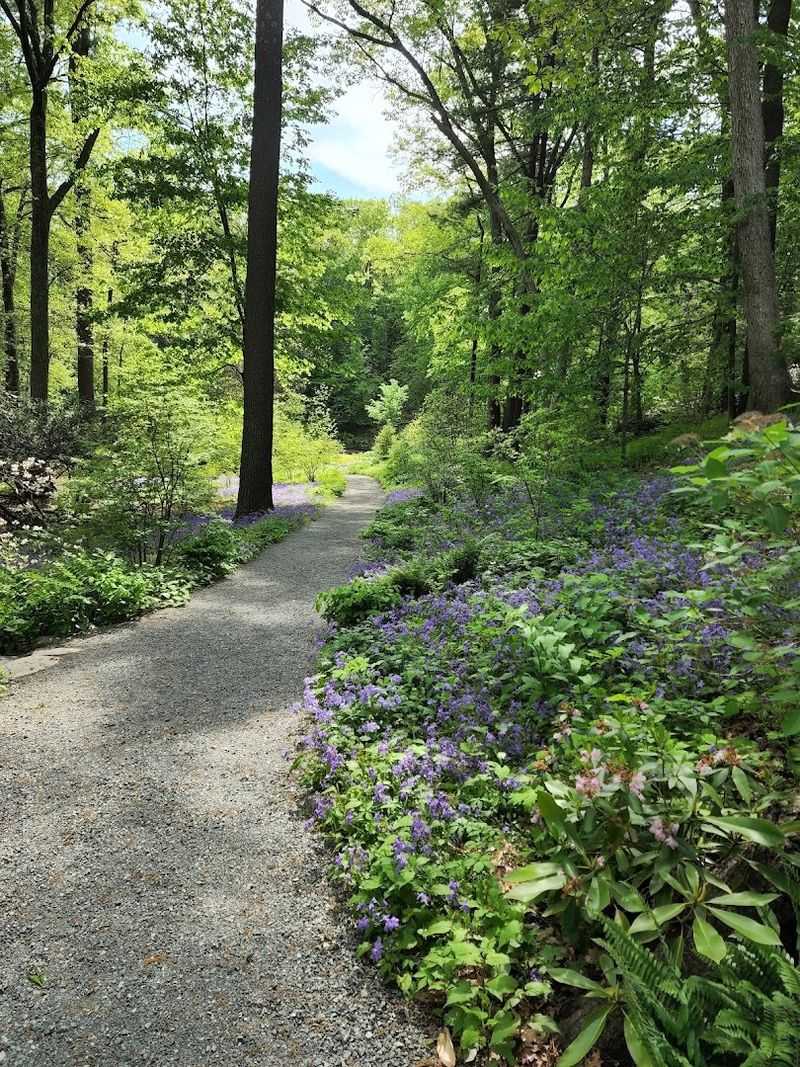
Spring is widely considered the most spectacular season to visit Garden in the Woods, and for good reason. Starting in April, the garden bursts into color as trilliums, trout lilies, bloodroot, and dozens of other native wildflowers push up through the forest floor in waves of white, yellow, and pink.
The timing of the blooms shifts year to year depending on weather, so no two spring visits are exactly alike. That unpredictability is part of what makes return trips so rewarding.
One visitor described going in May for her birthday and finding the local flowers in full, glorious bloom — a perfect natural celebration.
Even early spring visits before peak bloom have their own quiet charm, with the first green shoots appearing and the birds becoming increasingly active. If you can only visit once, aim for late April through May for the most dramatic floral display the garden has to offer.
Fall Foliage Turns the Garden Into Pure Magic
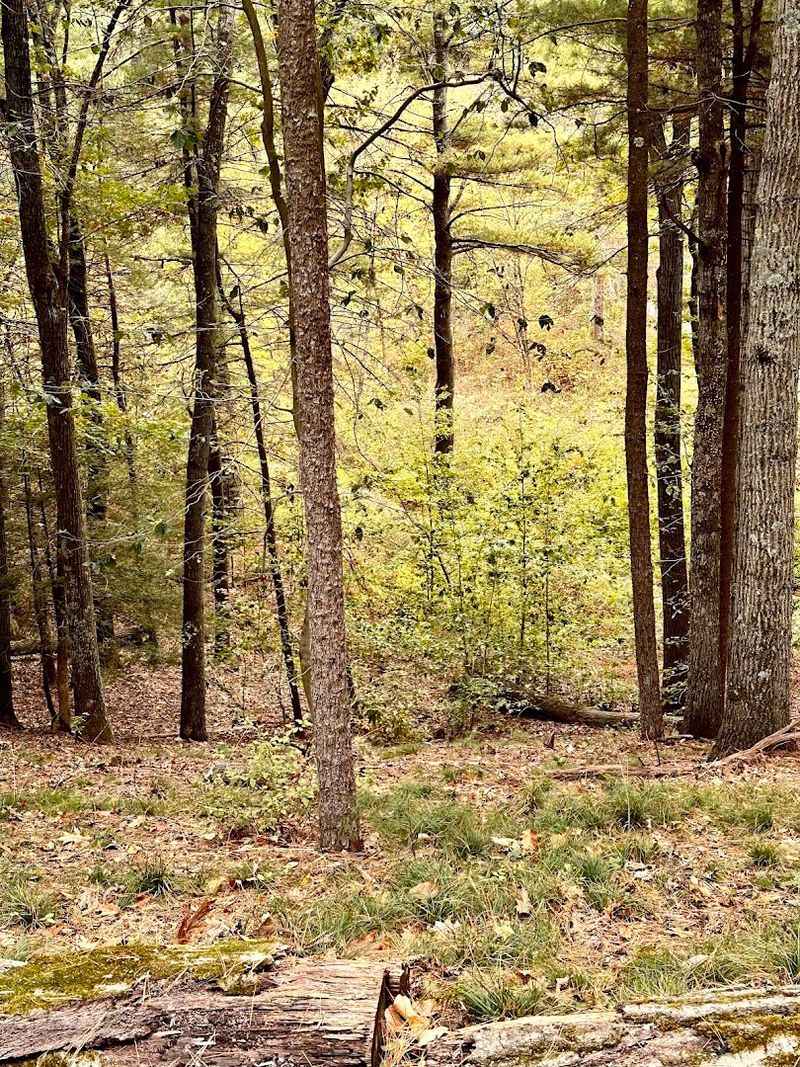
While spring gets most of the attention, fall at Garden in the Woods is a whole different kind of breathtaking. As September rolls into October, the native trees and shrubs shift into their warm autumn palette, painting the woodland in shades of deep red, burnt orange, and golden yellow.
The garden typically stays open through October 15th each season, so there is a window to catch the foliage at or near its peak. The lower foot traffic of the fall season means you can often have long stretches of trail almost entirely to yourself, which adds to the reflective, almost meditative quality of the experience.
Photographers especially love this time of year for the dramatic contrast between colorful canopy and the mossy green forest floor. Fruiting plants add interesting texture and color to the landscape as well.
Visiting in fall feels like discovering a completely different garden than the one that blooms in spring.
A Natural Playground That Kids Absolutely Love
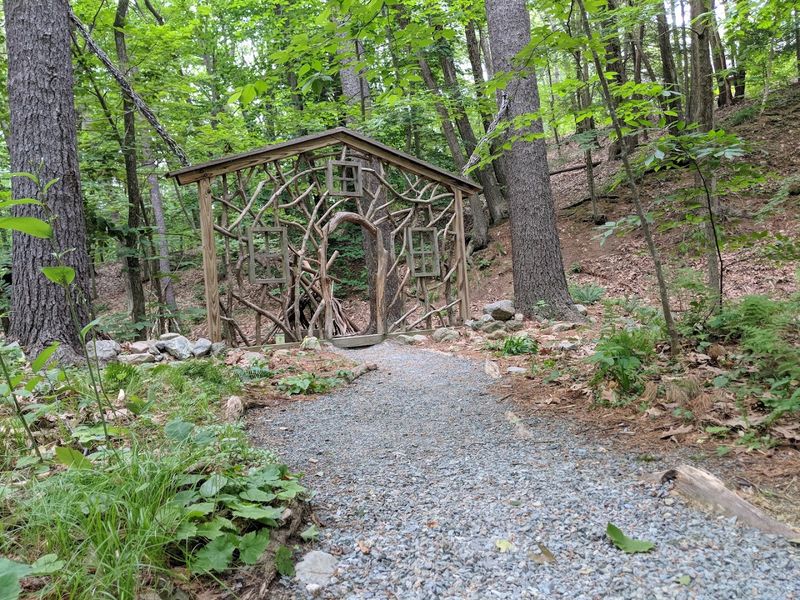
Families with kids will be happy to know that Garden in the Woods includes a creative play area built entirely from natural materials. Logs, stumps, and other woodland elements are arranged in ways that invite children to climb, balance, and explore without a plastic slide in sight.
The playground blends so naturally into the surrounding forest that it almost feels like a discovery rather than an installation. Children who might normally resist a nature walk tend to light up when they find this space, making it a clever way to get young ones genuinely excited about spending time outdoors.
Beyond the play area, the trails themselves are full of sensory delights for curious kids — splashing streams, spotting turtles, touching textured bark, and watching butterflies move between flowers. The wide, flat gravel paths also make the main loop manageable even for younger children and strollers on dry days.
The Visitor Center and Gift Shop Are Worth the Stop
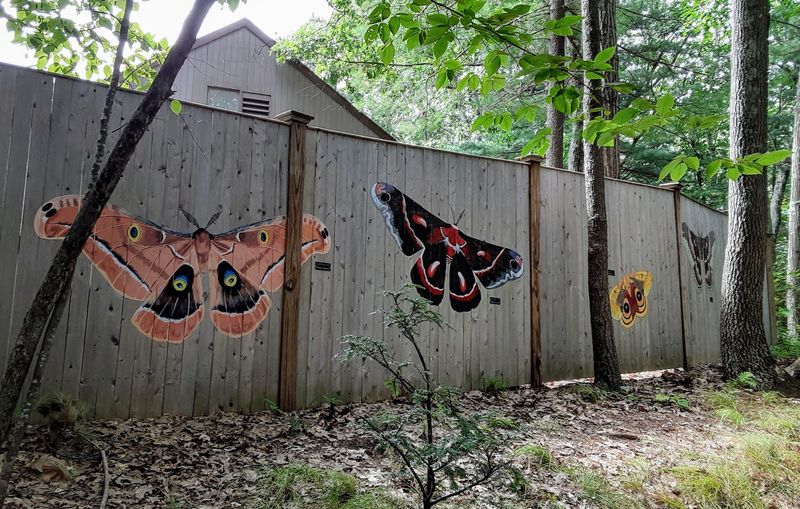
Perched at the top of the hill near the entrance, the visitor center at Garden in the Woods is a welcoming and well-stocked space that sets a warm tone for your visit. Free trail maps are available here, along with information about guided tours, upcoming seminars, and the history of the Native Plant Trust.
The attached gift shop is genuinely charming, filled with botanical books, nature-themed gifts, gardening tools, and unique items that make for meaningful souvenirs. Multiple visitors have praised the friendly and knowledgeable staff who are happy to chat about plants, trail recommendations, and local ecology.
One fun detail: the visitor center sits at the high point of the property, which means your return walk always ends with a gentle uphill climb back to the car. Think of it as a small fitness bonus after all that peaceful wandering.
The staff there consistently earns high praise for warmth and genuine enthusiasm.
Native Plants for Sale: Bring a Little Magic Home With You
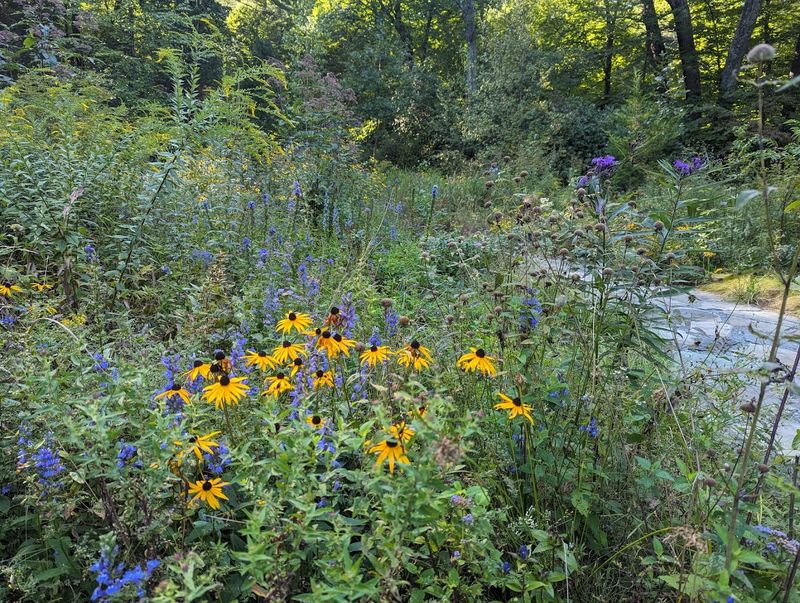
One of the most practical and exciting parts of a visit to Garden in the Woods is the opportunity to purchase native plants directly from the nursery near the entrance. The selection changes with the season and typically includes a wonderful variety of wildflowers, shrubs, ferns, and ground covers that are perfectly suited to New England gardens.
Buying native plants is one of the most impactful things a home gardener can do for local wildlife. Native species support pollinators, birds, and beneficial insects in ways that ornamental non-native plants simply cannot match.
The staff is knowledgeable and genuinely excited to help you choose plants that will thrive in your specific yard conditions.
Several visitors mentioned discovering new plant species on the trails and then finding them available for purchase on the way out. It is a beautifully circular experience — you fall in love with a plant on the path, then get to take it home and grow it yourself.
Guided Tours That Bring the Garden’s Story to Life
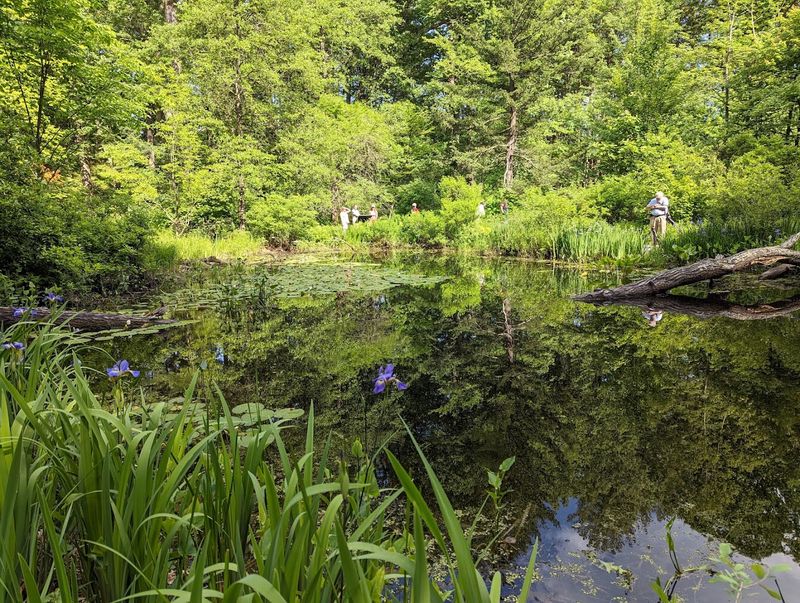
If you really want to understand what makes Garden in the Woods so special, booking a guided tour is absolutely worth it. Knowledgeable guides like Nancy bring the landscape alive with stories about individual plants, the ecological history of the site, and the remarkable group of women who founded the Native Plant Trust back in 1900.
One visitor recounted hearing the fascinating story of why bears eat skunk cabbage in the spring — the kind of quirky, memorable detail that you would never pick up from a trail sign alone. That mix of science, history, and storytelling makes the guided experience genuinely entertaining for adults and older kids alike.
Tours are available seasonally, so checking the Native Plant Trust website ahead of time is a smart move. Even if a formal tour is not available on your visit date, the staff near the entrance are always willing to share tips and insights about what is currently blooming and worth seeking out.
Photography Paradise: Every Corner Offers a Perfect Shot
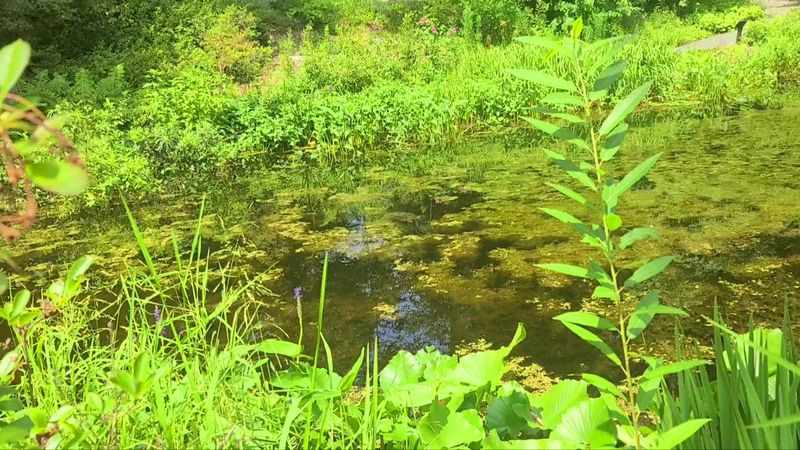
Ask any photographer who has visited Garden in the Woods and they will tell you the same thing: it is almost impossible to take a bad photo here. The layered woodland light, the reflective surface of the lily pond, the close-up textures of labeled native plants — every element of the garden seems designed to be visually captivating.
Morning visits offer the softest, most flattering light as it filters through the tree canopy. Macro photographers will go wild over the intricate details of native flowers, mosses, and insects.
Landscape shooters will find compositions around every bend in the trail, from misty stream crossings to sweeping meadow views framed by towering oaks.
Even smartphone photographers come away with gallery-worthy images. The manageable size of the trail system means you can take your time at each spot without feeling rushed.
Whether you are a hobbyist or a serious shooter, Garden in the Woods will fill your camera roll with images worth keeping.
Enjoyed this story?
Add Fast Food Club as a preferred source to see more of our reporting on Google.