


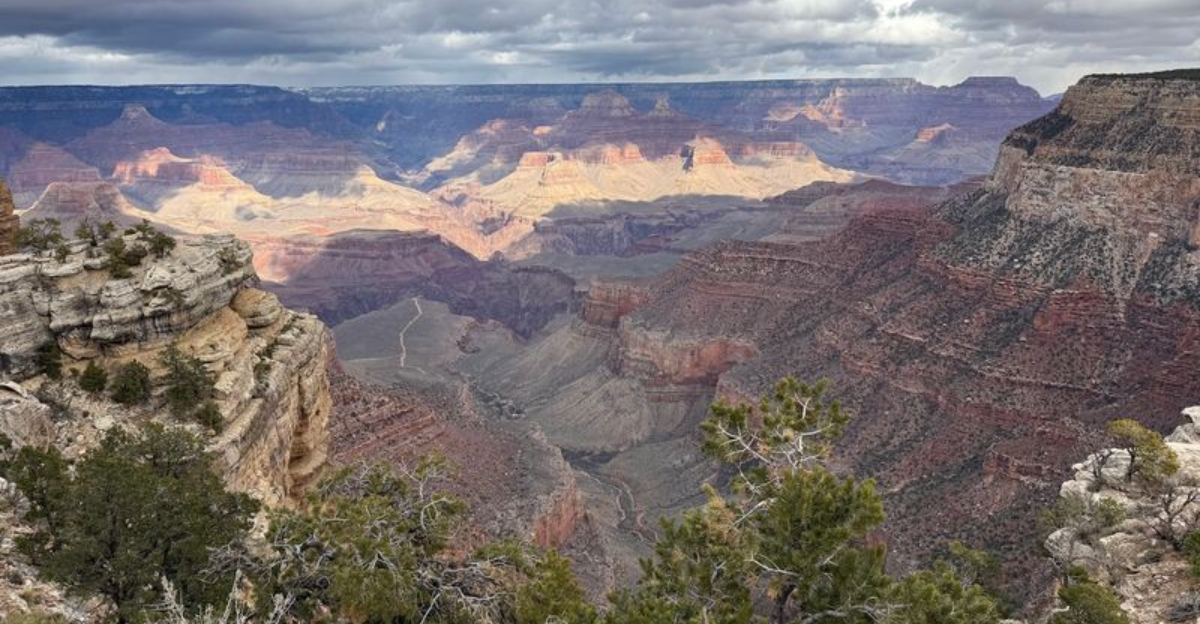
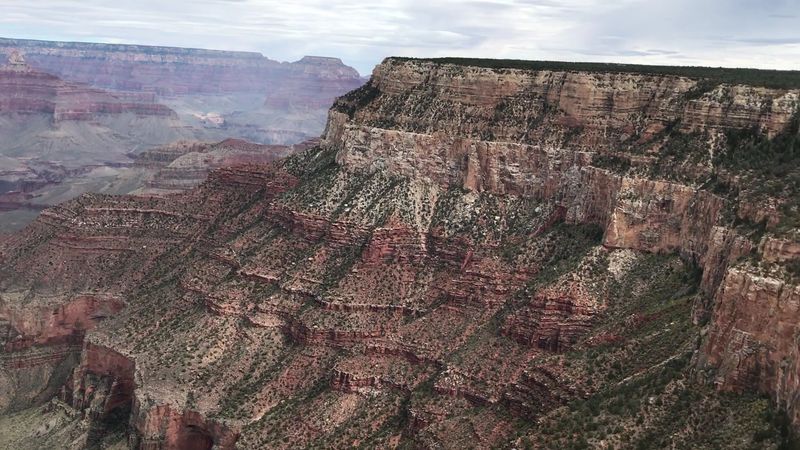
Standing at Trail View Overlook in Grand Canyon Village, Arizona, you get one of the most jaw-dropping bird’s-eye views of the entire Grand Canyon. From this elevated vantage point, the canyon stretches out in all its colorful, layered glory, making you feel like you’re floating above a world carved by time itself.
Whether you’re a first-time visitor or a seasoned explorer, this overlook delivers an experience that stays with you long after you’ve left. Here’s everything you need to know to make the most of your visit to this incredible spot.
The Bird’s-Eye View That Stops You in Your Tracks
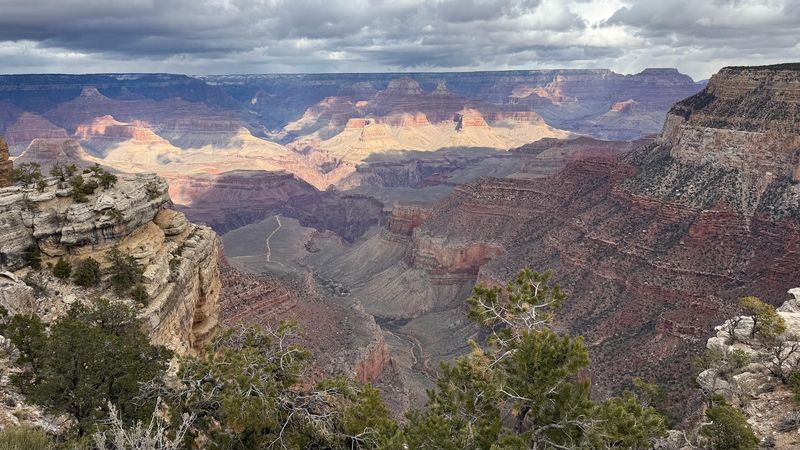
Some views make you gasp out loud, and Trail View Overlook is absolutely one of them. Perched slightly above the canyon’s rim, this overlook gives you a sweeping, wide-angle perspective that most viewpoints simply can’t match.
The 18-mile-wide canyon unfolds below you like a living painting.
Red, orange, and tan rock layers stack up like pages in a history book, each one telling a story millions of years in the making. Visitors often stand silently for several minutes, completely overwhelmed by what they’re seeing.
Even people who’ve visited multiple times say this view never gets old.
The elevated angle makes Trail View Overlook feel genuinely different from other stops along the South Rim. You’re not just looking at the canyon — you’re looking down into it, across it, and beyond it all at once.
Bring your camera, because words simply won’t do this justice.
Watching Hikers on the Bright Angel Trail Below
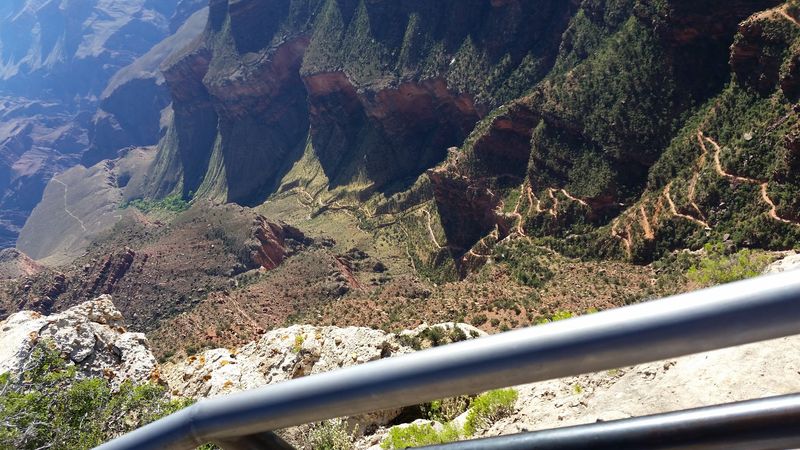
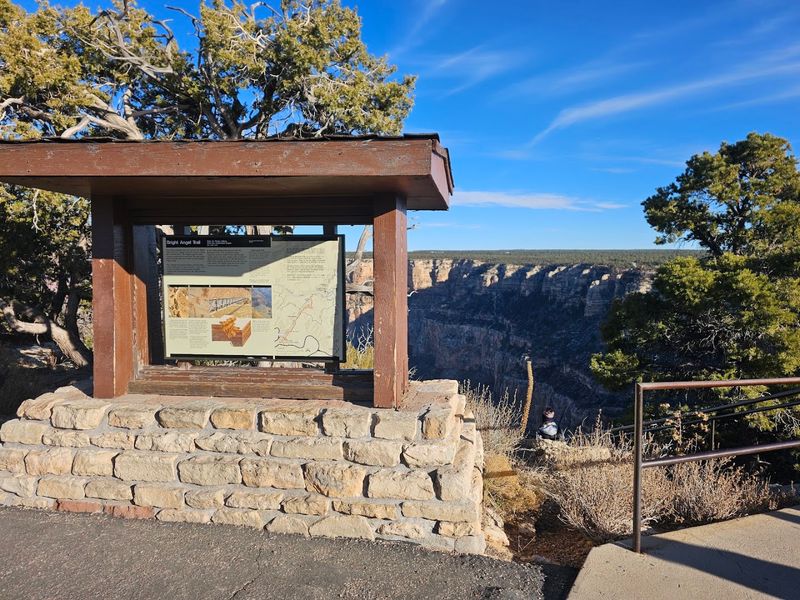
One of the coolest things about Trail View Overlook is that you can actually watch hikers making their way along the famous Bright Angel Trail far below. From up here, people look like tiny moving dots against the enormous canyon walls, and it instantly puts the sheer scale of the Grand Canyon into perspective.
Seeing someone hiking the trail from above is a humbling experience. What looks like a small path from the overlook is actually a well-traveled route that descends thousands of feet to the Colorado River.
It’s a great reminder of just how massive this place really is.
If you’re deciding whether to hike yourself, watching from this overlook gives you a realistic preview of what the trail looks like. Many visitors say that seeing the trail from above actually inspired them to lace up their boots and head down.
Layered Rock Formations That Tell a Million-Year Story
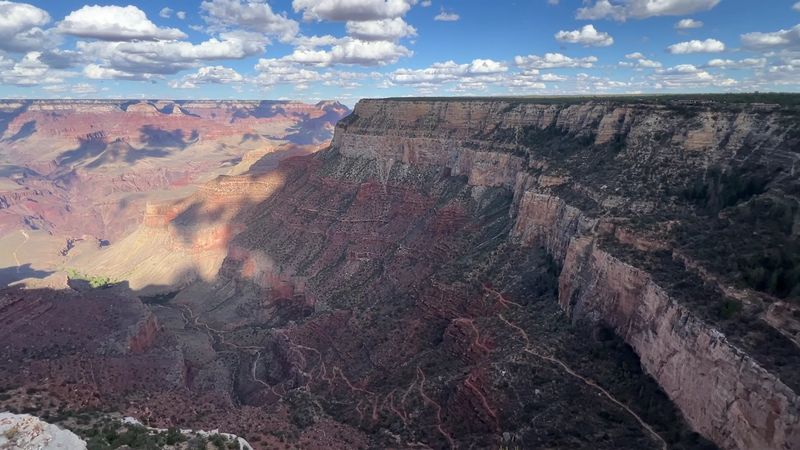
Geologists call the Grand Canyon one of Earth’s greatest natural textbooks, and once you see the rock layers from Trail View Overlook, you’ll completely understand why. Each distinct band of color represents a different geological era, some dating back nearly two billion years.
Standing here feels like staring straight into the planet’s past.
The layers shift from creamy limestone at the top to dark, ancient Vishnu Schist deep in the inner gorge. On a sunny day, those colors pop with incredible intensity — warm reds, dusty purples, and golden yellows all competing for your attention.
It’s a natural light show that changes throughout the day.
Even if geology isn’t your thing, the visual drama of those stacked formations is impossible to ignore. Photographers love arriving in the late afternoon when the sunlight hits the walls at an angle, making every layer glow with warm, rich tones.
Sunrise and Sunset Magic at the Overlook
Early birds, take note: the sunrise at Trail View Overlook is genuinely one of those life-changing moments that people rave about for years. As the first light creeps over the canyon’s edge, the rock walls transform from deep shadow to blazing gold in a matter of minutes.
It’s dramatic, it’s fast, and it’s absolutely worth waking up early for.
Sunset brings an equally spectacular show. The canyon walls glow with warm amber and deep crimson hues as the sun dips toward the horizon.
Visitors often describe feeling completely still inside while watching it, like the whole world has paused just for that moment.
The overlook faces in a direction that makes both sunrise and sunset viewing rewarding, though afternoon light tends to work best for photography. One tip from frequent visitors: arrive at least 20 minutes early to claim your favorite spot before the crowds gather.
Getting Here Via the Free Hermit Road Shuttle
Trail View Overlook is the very first stop along the Hermit Road shuttle route, which makes it super easy to reach without dealing with parking headaches. The free shuttle runs regularly throughout the day, and hopping on is as simple as showing up at any of the marked stops in Grand Canyon Village.
No reservations, no extra fees — just grab a seat and enjoy the ride.
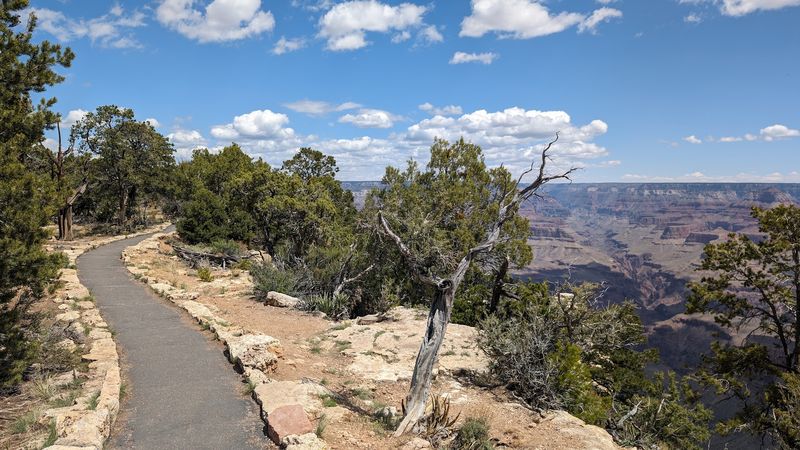
Hermit Road is closed to private vehicles during peak season, so the shuttle is actually the only way to reach Trail View Overlook by vehicle during those months. That said, the overlook is also walkable from the village along the paved Rim Trail, which takes roughly 20 minutes at a comfortable pace.
One thing to keep in mind: the shuttles stop running in the early evening, so plan your timing carefully if you want to catch the sunset and still have a ride back to the village.
Spotting Historic Landmarks From the Overlook
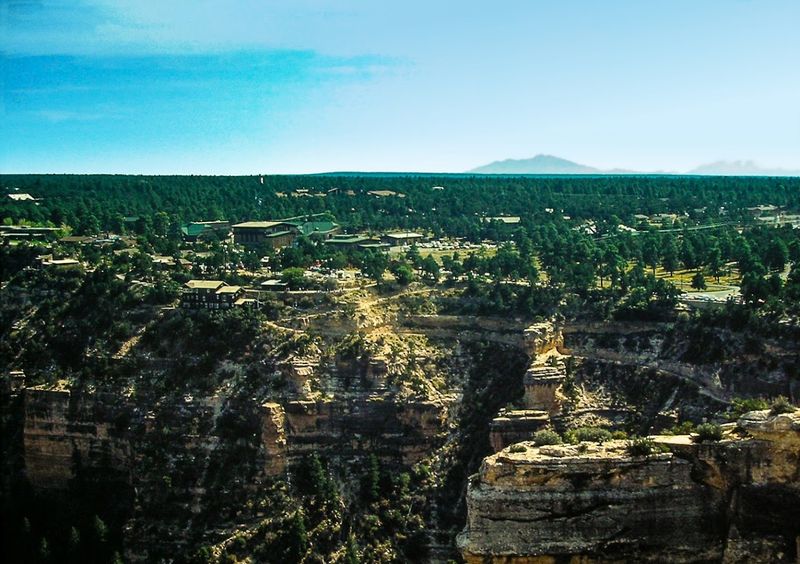
Trail View Overlook isn’t just about the canyon itself — it also offers a rare backward glance at some of Grand Canyon Village’s most beloved historic landmarks. Looking east from the overlook, you can spot Kolb Studio, Lookout Studio, and the stately El Tovar Hotel perched right along the rim.
Seeing these century-old buildings from a distance gives you a whole new appreciation for how they were positioned to maximize canyon views.
Kolb Studio was built by two photographer brothers in the early 1900s and still stands as a museum today. Lookout Studio, designed by architect Mary Colter in 1914, was intentionally built to blend into the canyon’s natural rock formations.
Spotting them from Trail View Overlook feels like finding hidden gems in a massive landscape.
Photography tip from experienced visitors: the village buildings are best photographed from this overlook in the afternoon, when the sun is at your back rather than shining directly into your lens.
Wildlife Encounters You Won’t Expect
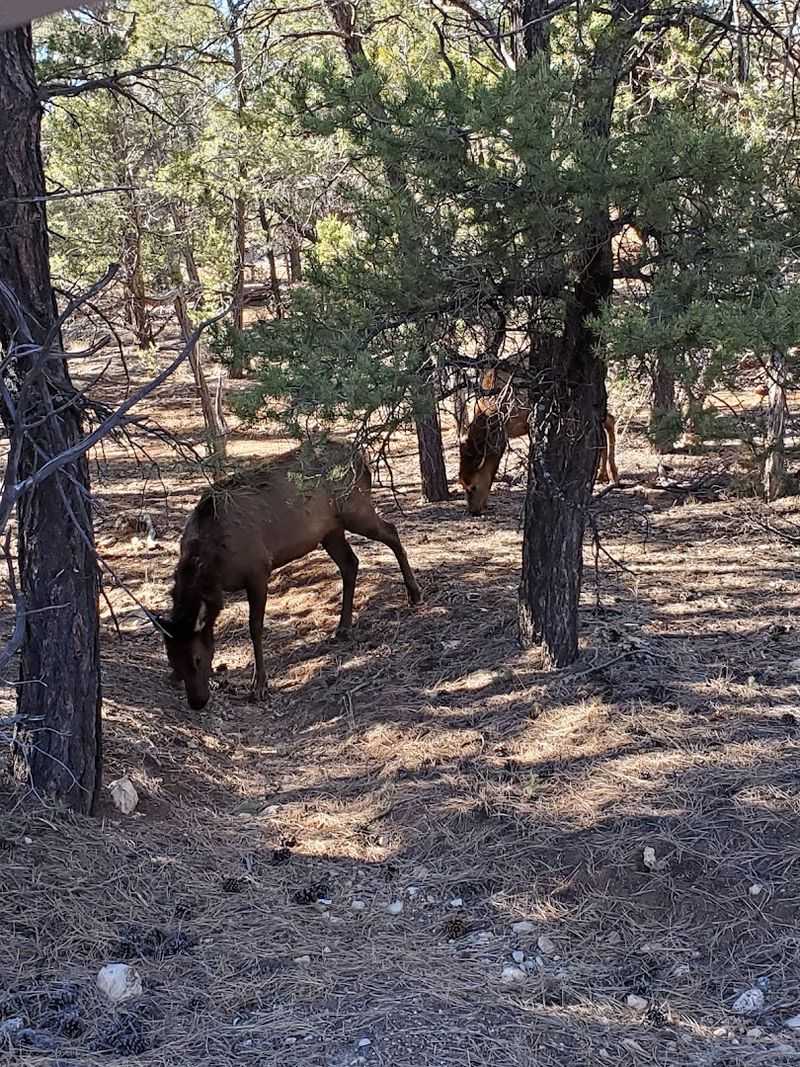
The Grand Canyon isn’t just about rocks and views — the wildlife here is genuinely surprising. Visitors at Trail View Overlook have reported spotting California condors gliding on thermal updrafts right at eye level.
With wingspans stretching up to nine and a half feet, these critically endangered birds are absolutely jaw-dropping to see up close.
Mule deer are another frequent visitor to the rim area, often wandering surprisingly close to the overlook platform. Squirrels are practically fearless here, darting around visitor feet in search of dropped snacks — though feeding them is strongly discouraged by park rangers.
Keeping wildlife wild is an important part of protecting the ecosystem.
One Arizona resident who visited for the first time at age 46 described being completely amazed by the wildlife alongside the views. The combination of dramatic scenery and unexpected animal encounters makes Trail View Overlook feel like a complete wilderness experience packed into one stop.
What to Bring for a Comfortable Visit
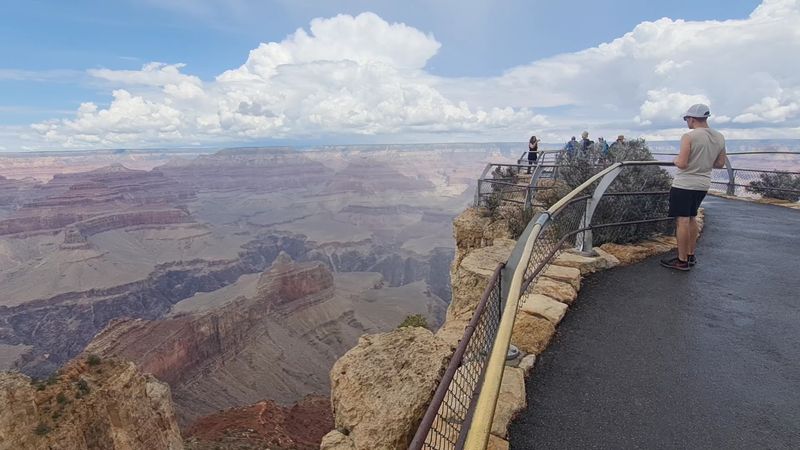
Comfort at Trail View Overlook starts with two non-negotiables: water and a hat. The Arizona sun is no joke, even in cooler months, and dehydration can sneak up on you faster than you’d expect when you’re caught up in the views.
Multiple visitors specifically call out bringing plenty of water as their top piece of advice for anyone heading to the canyon.
Layers are also a smart move, since canyon temperatures can swing dramatically between morning and afternoon. In winter months, the rim can be icy and bitterly cold, so sturdy footwear with good grip is a must.
Comfortable walking shoes work well for the paved Rim Trail that leads to the overlook.
Sunscreen is another item worth tucking into your bag, especially for longer visits. A small daypack makes it easy to carry everything without feeling weighed down.
Being prepared means spending more time enjoying the view and less time feeling miserable.
Best Time of Day and Season to Visit
Timing your visit to Trail View Overlook can make a huge difference in your experience. Early morning visits — arriving before 9 a.m. — mean shorter entry lines, more available parking, and cooler temperatures for walking the rim.
One visitor noted waiting only 10 minutes before 9 a.m. compared to a 45-minute wait around midday on the same day.
Spring and fall are widely considered the best seasons for visiting the South Rim. Temperatures are mild, crowds are more manageable than summer, and the canyon’s colors look especially vivid under softer seasonal light.
Summer is the busiest season, with peak crowds arriving between June and August.
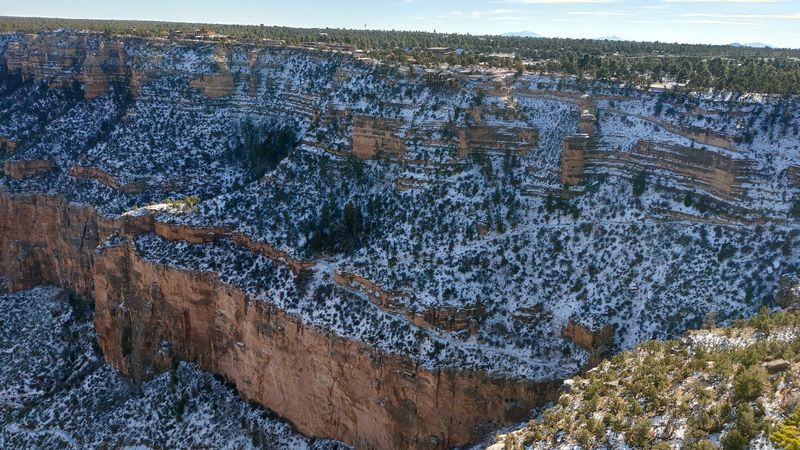
Winter visits have their own magic — a snow-dusted canyon rim is a sight few people expect but nearly everyone finds stunning. Just be prepared for icy paths and cold winds.
Weekdays consistently offer a quieter, more peaceful experience compared to weekends at any time of year.
Entry Fees and Passes Worth Knowing About
Getting into Grand Canyon National Park requires an entrance fee, but there are some smart ways to save money. A standard vehicle pass costs around $35 and covers all passengers in the car for seven days.
That means your visit to Trail View Overlook is included without any additional charge once you’re inside the park.
The America the Beautiful Annual Pass — sometimes called the National Parks Pass — costs $80 and grants access to all U.S. national parks for a full year. For anyone planning multiple park visits, this pass pays for itself quickly.
One visitor mentioned picking one up and using it across several parks on a single road trip.
Seniors, military members, and people with disabilities may qualify for free or discounted passes. Children 15 and under always enter for free.
Checking the National Park Service website at nps.gov/grca before your trip ensures you have the most current fee information and any seasonal updates.
Accessibility and Trail Conditions at the Overlook
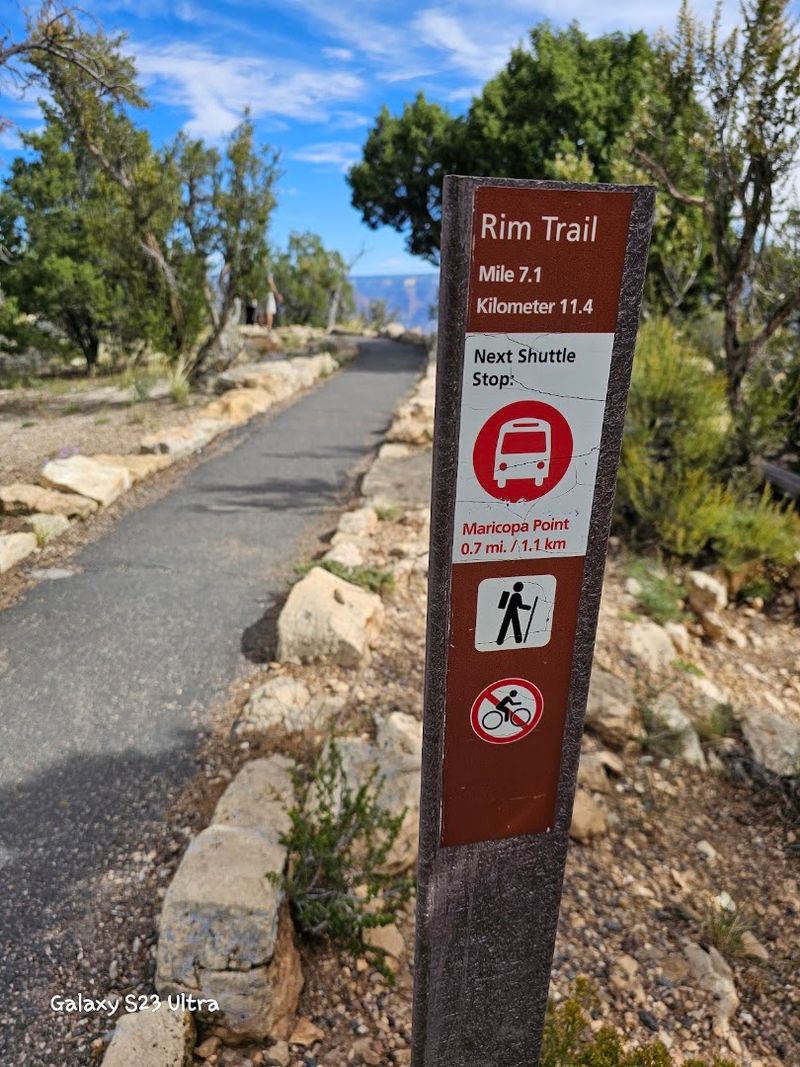
The paved Rim Trail connecting Grand Canyon Village to Trail View Overlook is one of the more accessible paths in the national park. The surface is smooth and flat for most of its length, making it manageable for strollers, wheelchairs, and visitors of all fitness levels.
The roughly 20-minute walk from the village is pleasant and packed with canyon scenery the entire way.
However, the stairs leading down to the actual overlook viewing point are not wheelchair accessible, which is worth knowing before you go. The shuttle bus also stops right at the overlook, offering an easy alternative for those who prefer not to walk.
Arriving by shuttle is especially popular with families and older visitors.
Winter conditions can add an extra challenge, with snow and ice sometimes making the path slippery. Microspikes or traction cleats are handy additions to your packing list if you’re visiting between November and March.
Always check current trail conditions on the NPS website before heading out.
Photography Tips for Capturing the Perfect Shot
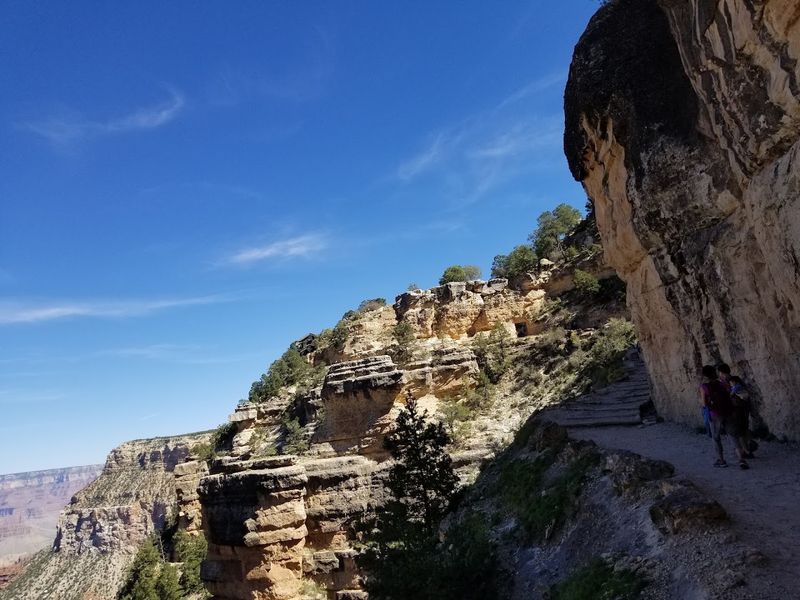
Trail View Overlook is a photographer’s dream, but getting the best shots takes a little planning. The overlook faces east, which means morning light shines directly into your lens when shooting toward the village — something experienced photographers specifically flag as a challenge.
Afternoon visits flip the script entirely, putting the sun at your back for crisp, well-lit canyon shots.
A wide-angle lens is your best friend here, since the canyon’s scale demands as much frame as possible to capture properly. Polarizing filters help cut glare and deepen the blue of the sky, making those already-vivid rock colors pop even more.
Shooting in RAW format gives you more flexibility when editing colors and shadows later.
Golden hour — the hour after sunrise or before sunset — consistently produces the most dramatic images. The warm, low-angle light rakes across the canyon walls, creating deep shadows and glowing highlights that make every layer of rock stand out beautifully.
Patience during those moments is always rewarded.
Why Trail View Overlook Deserves a Spot on Every Itinerary
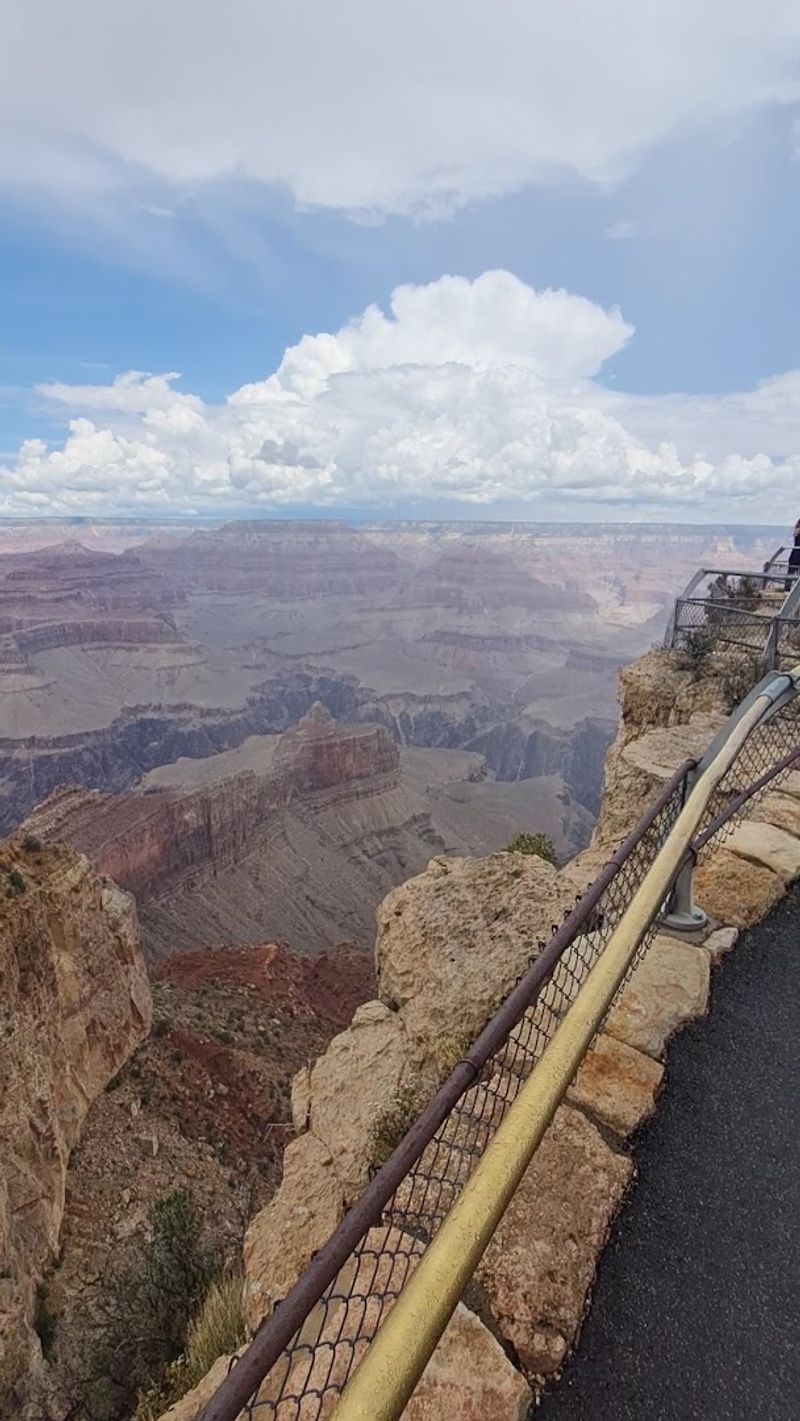
Out of all the stops along Hermit Road, Trail View Overlook consistently earns some of the highest praise from visitors — and for good reason. Its position gives you a combination of canyon depth, trail activity, historic village views, and wide-open sky that few other overlooks can match.
Rated 4.9 out of 5 stars by hundreds of visitors, this spot clearly delivers on its promise.
The fact that it’s completely free once you’re inside the park makes it even more of a no-brainer addition to any Grand Canyon itinerary. Several visitors describe spending only a few minutes here but walking away with memories that last a lifetime.
That’s a pretty incredible return on investment.
Whether you’re on a quick road trip stopover or spending several days exploring the canyon, making time for Trail View Overlook is always worth it. As one visitor put it simply: free, takes just a few minutes, but the memory lasts forever.
Enjoyed this story?
Add Fast Food Club as a preferred source to see more of our reporting on Google.