


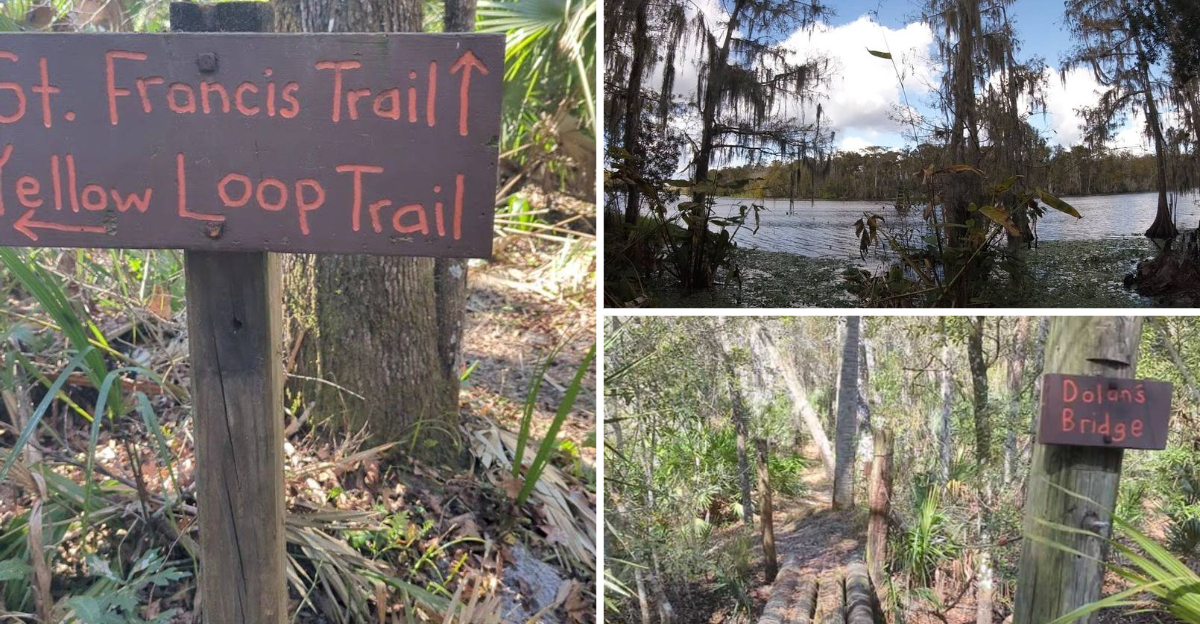
Tucked away near DeLand, Florida, the St. Francis Yellow Trail is an 8-mile loop that winds through wild, beautiful landscapes most people never get to see. What makes this trail truly special is the forgotten ghost town of St. Francis, a once-thriving riverside community that nature has slowly swallowed back up.
Hikers who make the journey are rewarded with river views, shaded forest paths, wooden boardwalks, and a real sense of stepping back in time. If you love adventure, history, and the outdoors, this hidden gem in Volusia County deserves a spot on your hiking list.
The Ghost Town of St. Francis
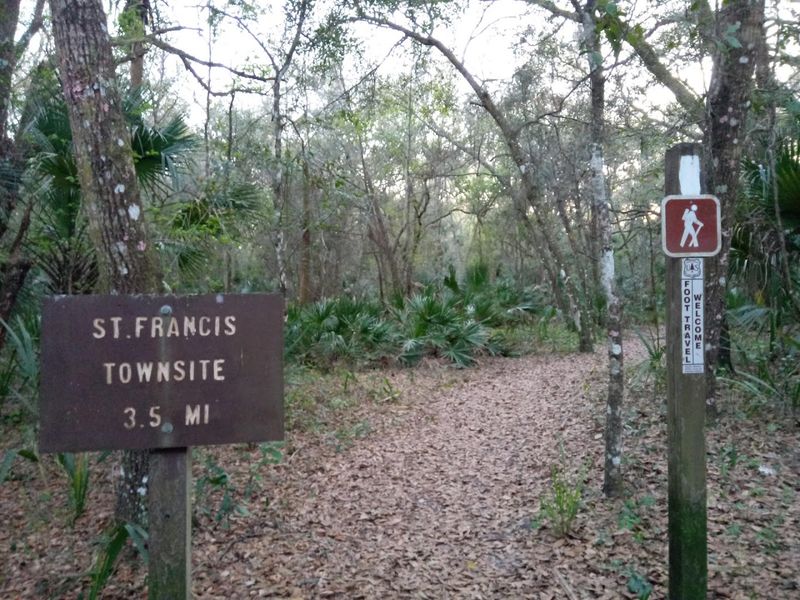
Somewhere along this trail, history is hiding in plain sight. At about 3.5 miles from the trailhead, a small sign points toward the old town site of St. Francis, a community that once stood along the St. Johns River and quietly disappeared from the map.
There are no grand ruins or dramatic crumbling buildings waiting for you. What you will find is a clearing, a few subtle clues, and a powerful sense that people once lived, worked, and built their lives right where you are standing.
The forest has done its best to erase the evidence.
Reviewers mention that trail markers point to the site but offer little explanation once you arrive. Bringing along some background research before your hike adds a lot to the experience.
Knowing the history of a place makes even an empty clearing feel like a fascinating story worth discovering.
The 8-Mile Loop Experience
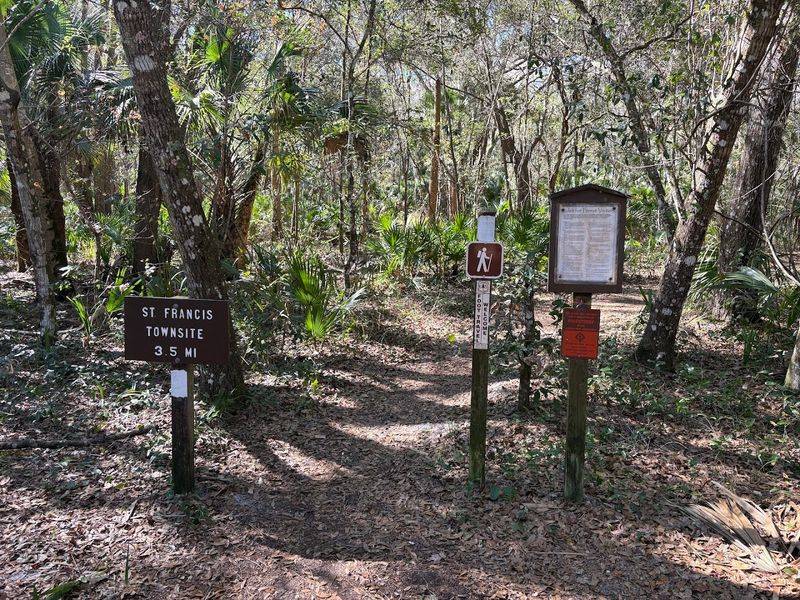
Eight miles might sound like a lot, but this trail earns every step. The St. Francis Yellow Trail combines with the St. Francis Trail to create a full loop that clocks in at roughly 7.8 to 8.6 miles depending on your route and any side trips you take along the way.
The terrain changes as you go, shifting between dry sandy stretches, muddy lowland patches, and shaded forest corridors. That variety keeps the hike interesting and makes you feel like you are moving through several different versions of Florida at once.
Most hikers with moderate fitness can complete the full loop in about three to four hours. Starting early in the morning is smart, especially in warmer months when the heat builds fast.
Packing enough water is non-negotiable since there are zero water sources anywhere along the trail.
The St. Johns River Views
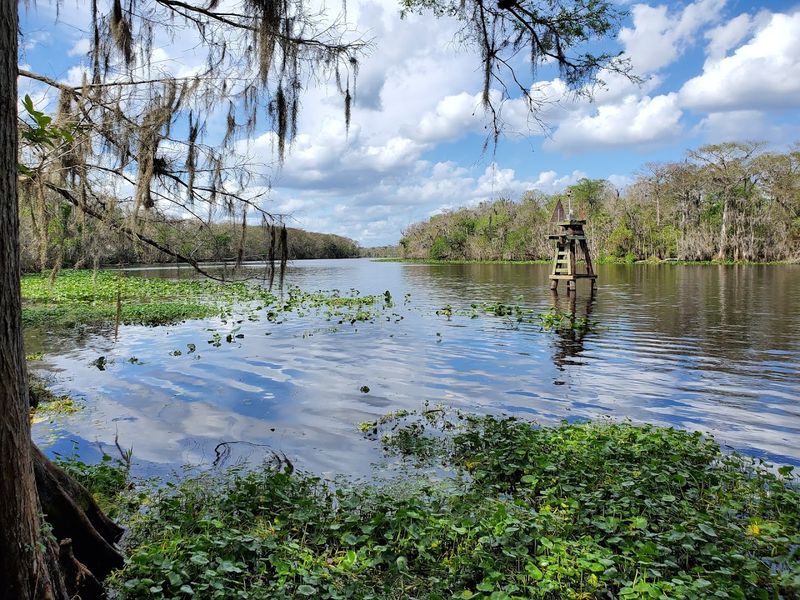
Reaching the St. Johns River feels like earning a reward after miles of wooded trail. The river view is not found directly on the main trail path but along a service road at the northernmost section of the loop, so it takes a little extra effort to get there.
Once you arrive, the payoff is worth it. The St. Johns River is one of the few rivers in North America that flows northward, and standing on its banks gives you a real sense of Florida’s wild, untamed character.
The water is wide, calm, and surrounded by natural beauty.
One reviewer mentioned spotting a group of campers set up along the riverbank, calling it the best spot on the entire trail to pitch a tent. Whether you are camping or just pausing for a photo, the river view is a highlight you will not forget.
Wooden Boardwalks and Log Bridges
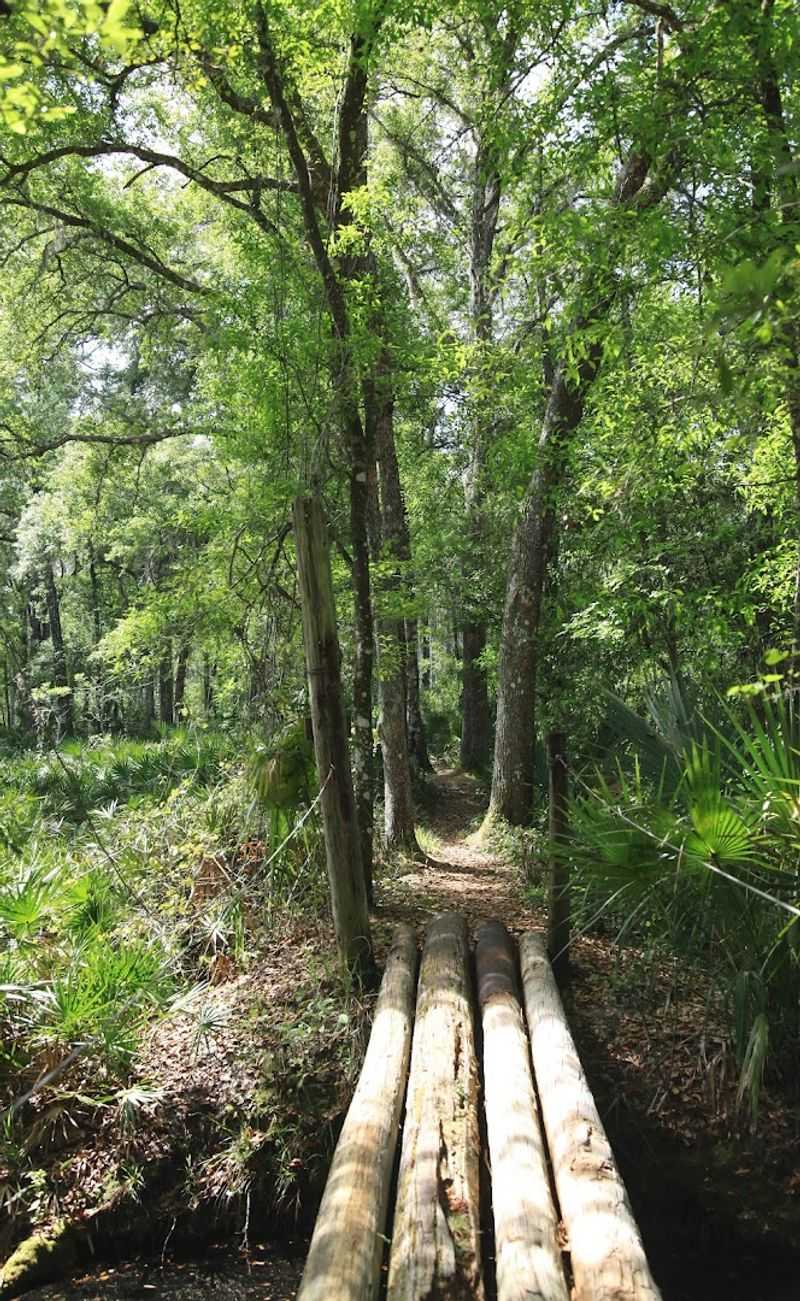
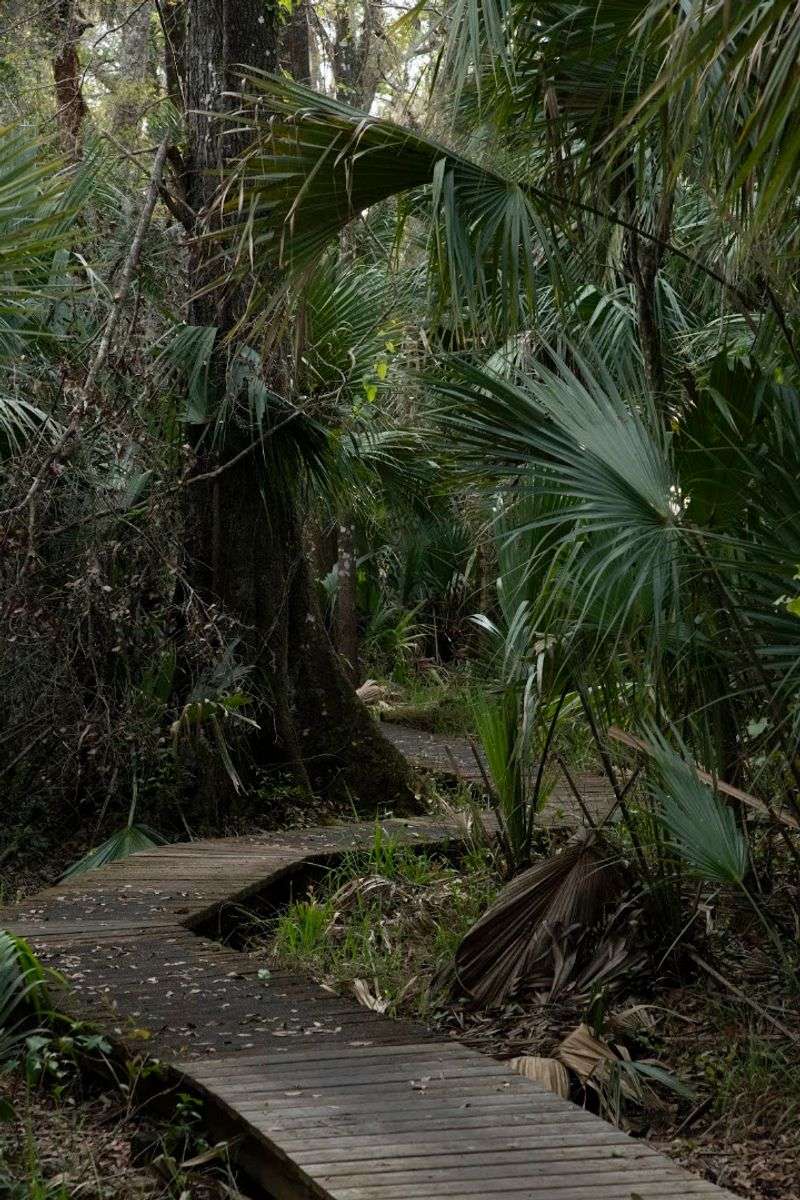
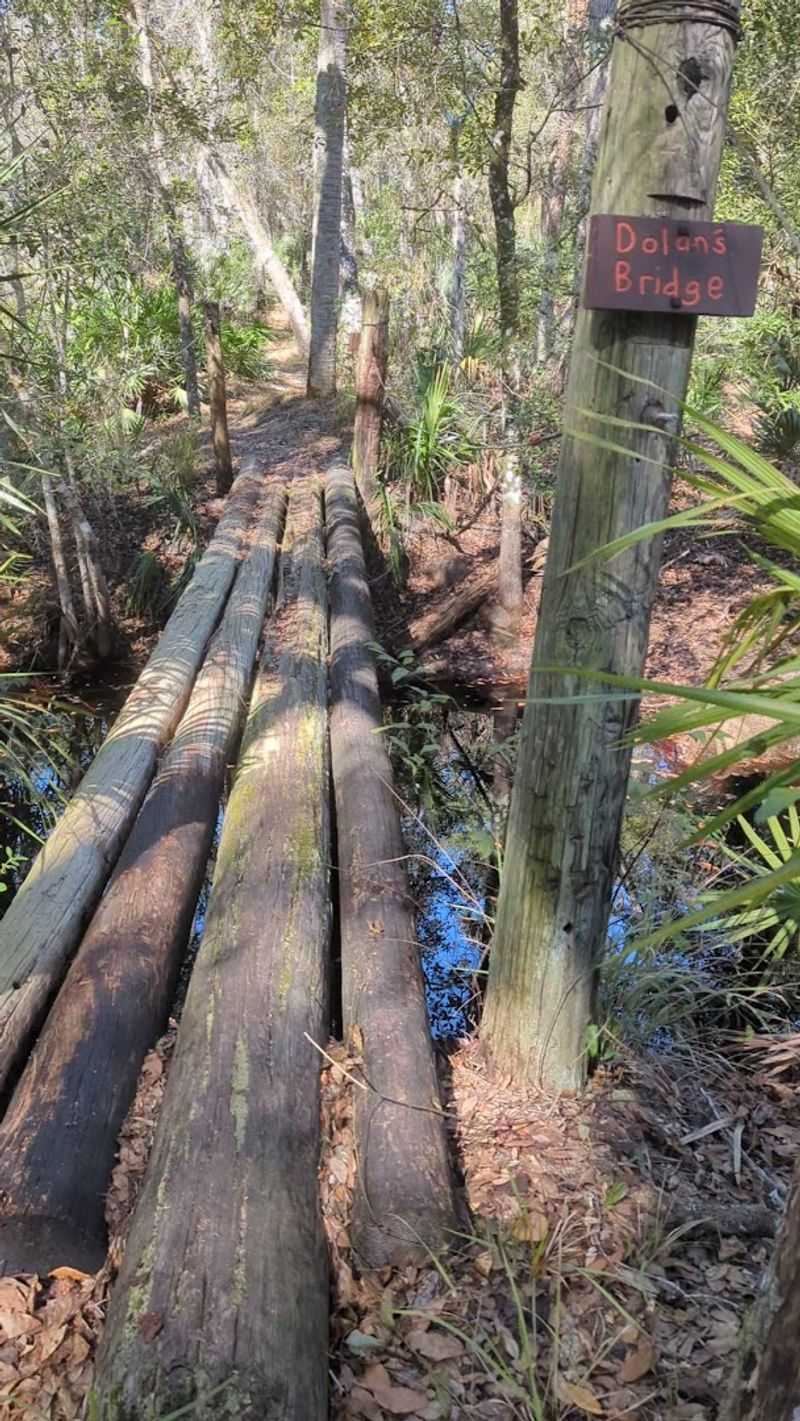
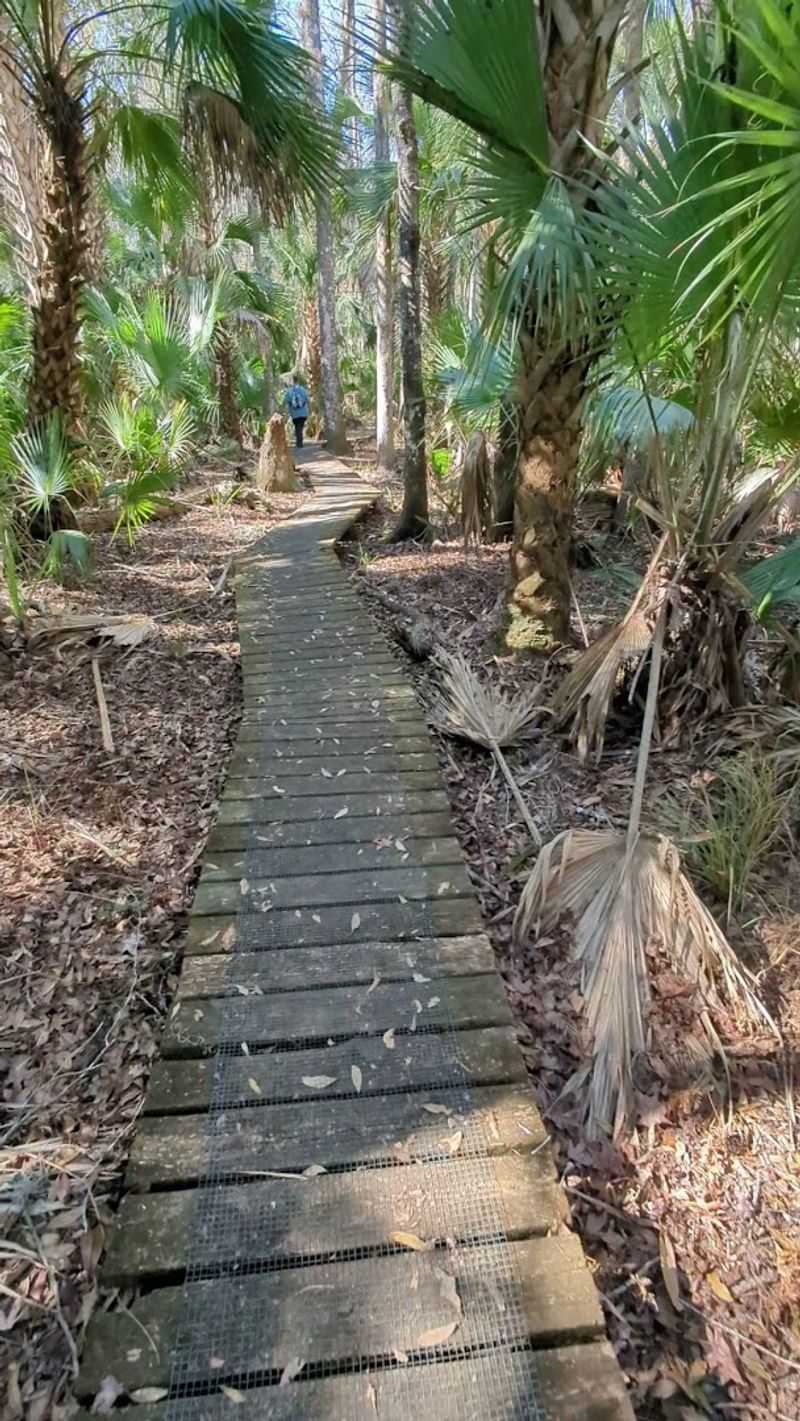
One of the most charming features of this trail is its collection of wooden boardwalks and handmade log bridges scattered throughout the route. They pop up just when the ground gets soggy, carrying you over creeks and marshy patches in a way that feels genuinely adventurous.
The log bridges in particular have a real character to them. There is something playful about crossing a bridge made from a single thick log, especially when you are deep in the Florida wilderness with no other hikers in sight.
Several reviewers mentioned loving this aspect of the trail.
A word of caution though: some of the wooden boards can be slippery, even when wearing boots. Walking through the center of each plank bridge rather than near the edges is a smart habit.
Wet weather makes these surfaces especially tricky, so take your time crossing them carefully.
Tick Awareness and Bug Preparation
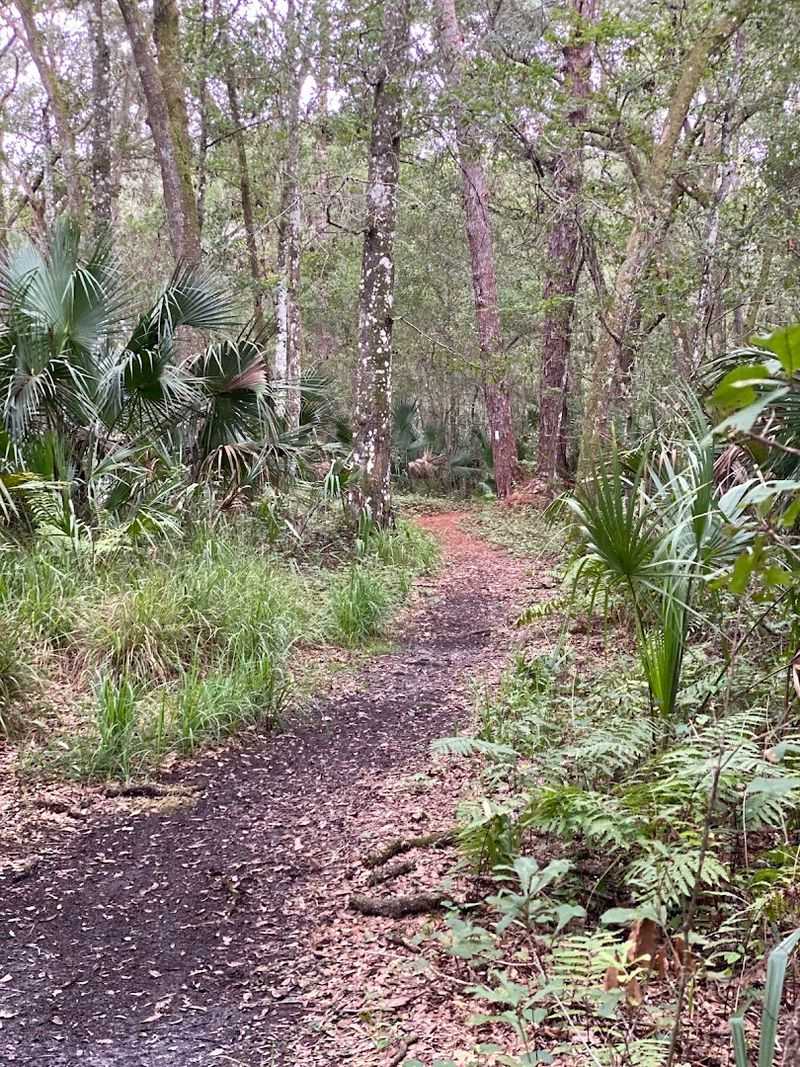
Here is the thing every potential visitor needs to know before hitting this trail: ticks are a serious and well-documented issue here. Review after review from hikers mentions finding ticks on their shoes, legs, clothes, and even skin after just a short distance into the trail.
Both deer ticks and smaller seed ticks have been reported in large numbers, especially during warmer and wetter months. Several hikers counted dozens on themselves after a single hike.
This is not meant to scare you away, but it is something you absolutely must prepare for before you go.
Wearing long socks pulled up over your pants, applying DEET-based repellent generously, and doing a full body check immediately after the hike are all essential steps. Avoid bringing dogs if possible, as multiple reviewers strongly advise against it.
Going during cooler months like November through February dramatically reduces tick activity on the trail.
Best Seasons to Visit
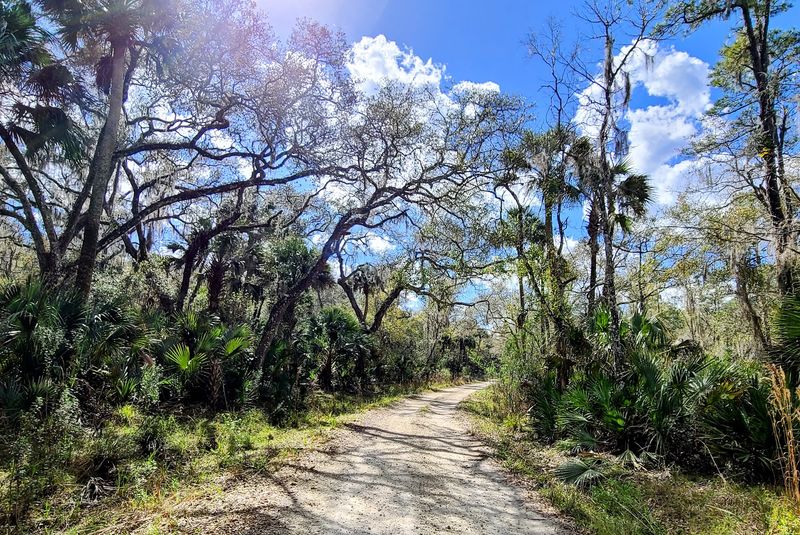
Timing your visit to the St. Francis Yellow Trail makes a massive difference in your experience. Spring and fall are widely considered the sweet spot, offering cooler temperatures, lower humidity, and a much more manageable bug population than summer brings.
Winter hiking here is genuinely pleasant. Temperatures stay mild, the air is crisp, and the forest takes on a quieter, more peaceful mood.
Several reviewers specifically recommend the cooler months for this trail, citing fewer ticks and more comfortable conditions overall.
Summer visits are possible but come with real challenges. Heat, humidity, mosquitoes, and peak tick season all hit at once, making the experience considerably tougher.
If a summer hike is your only option, start before sunrise, pack heavy on bug spray, and keep your hike shorter than usual. The trail is far more enjoyable when the Florida heat is not working against you at every step.
Trail Markings and Navigation Tips
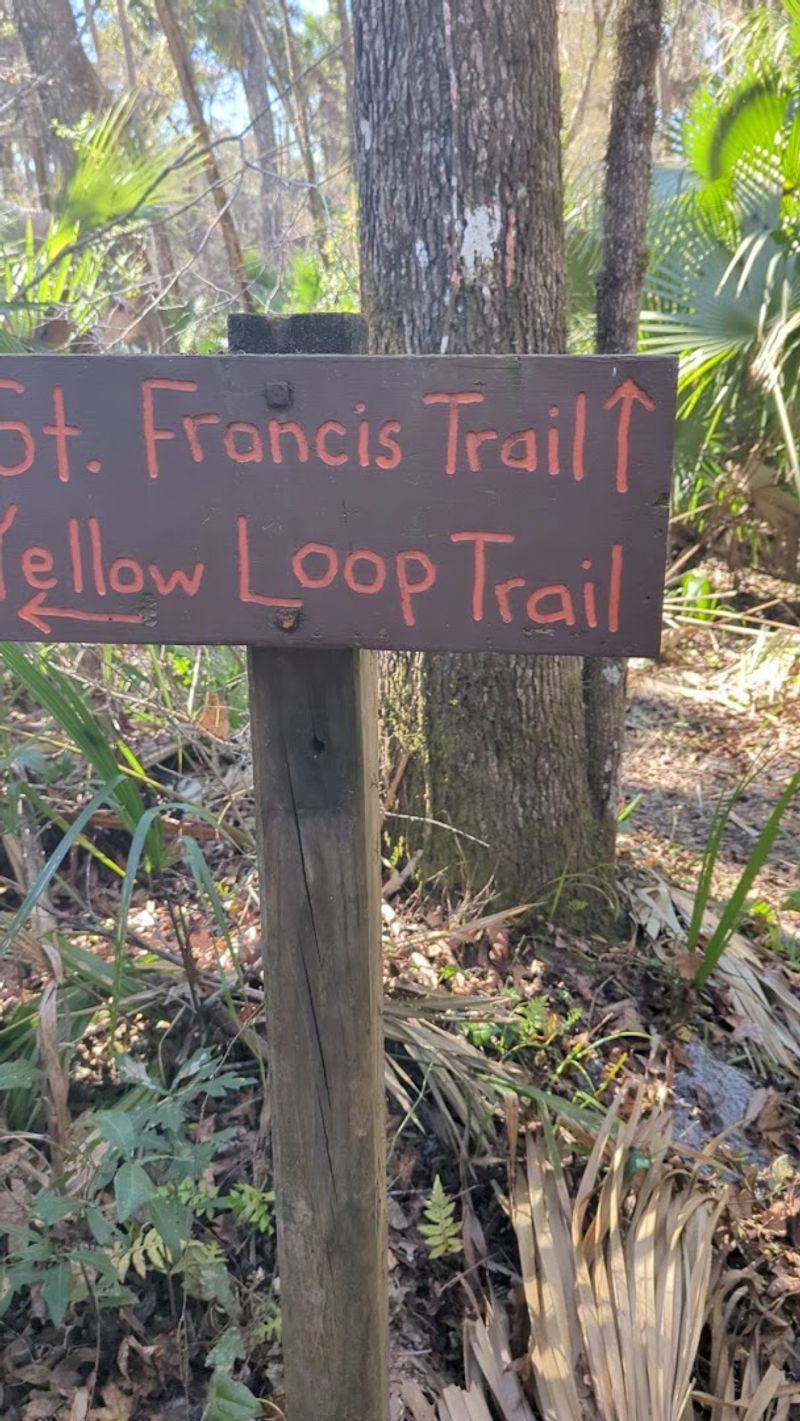
Getting lost on a trail is never fun, and the St. Francis Yellow Trail has enough intersections to keep you on your toes. The good news is that the trail is generally well marked with yellow blazes painted on trees, guiding you through the loop with reasonable consistency.
One reviewer offered a very useful tip: if you reach an intersection and cannot spot a white blaze, you are probably heading the wrong direction. Paying close attention at every fork in the trail is key, especially in sections where the path becomes overgrown or less defined.
At least one hiker mentioned accidentally ending up on a road about 1.5 miles from the trailhead after losing the loop. Carrying a downloaded offline map on your phone as a backup is a smart move.
Apps like AllTrails have the route mapped out and can save you a frustrating detour.
The Dead River Side Trip
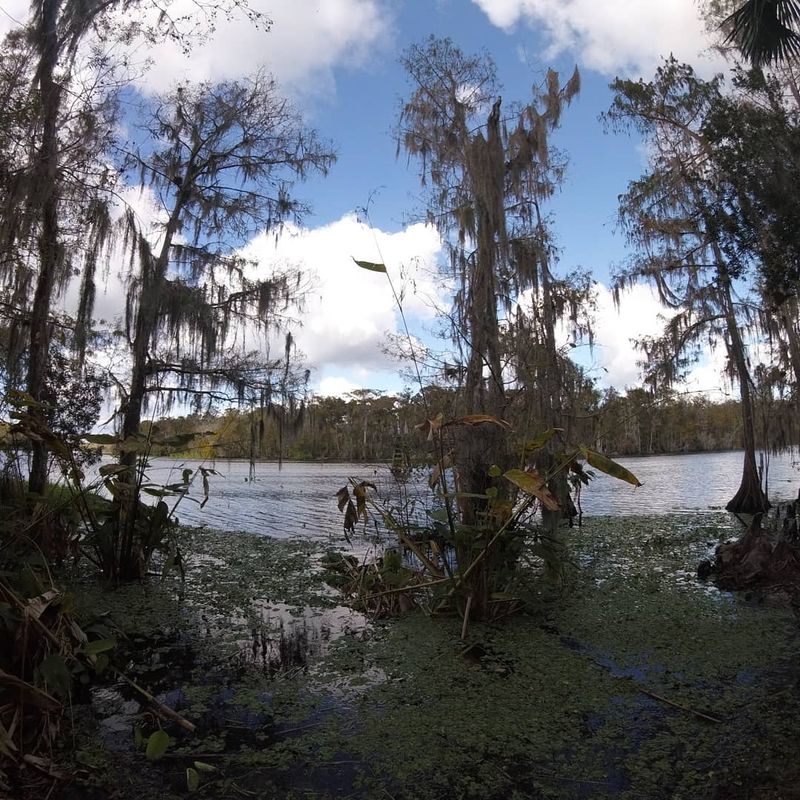
Along the trail, there is an opportunity to take a short detour to see the Dead River, a quietly eerie stretch of water that adds an unexpected layer of atmosphere to the hike. The name alone is enough to spark curiosity, and the view does not disappoint those willing to take the side trip.
The Dead River sits in a heavily wooded area near the St. Johns River and has the kind of still, dark water that feels completely untouched by time. Spanish moss hangs from cypress branches overhead, and the silence is almost total on calm days.
One reviewer specifically mentioned visiting both the Dead River and the St. Johns River during their 8.6-mile hike, calling the combined experience a highlight of the entire trail. If you have the energy and the time, taking both side trips is absolutely worth the extra steps you will add to your total mileage.
Parking and Trailhead Setup
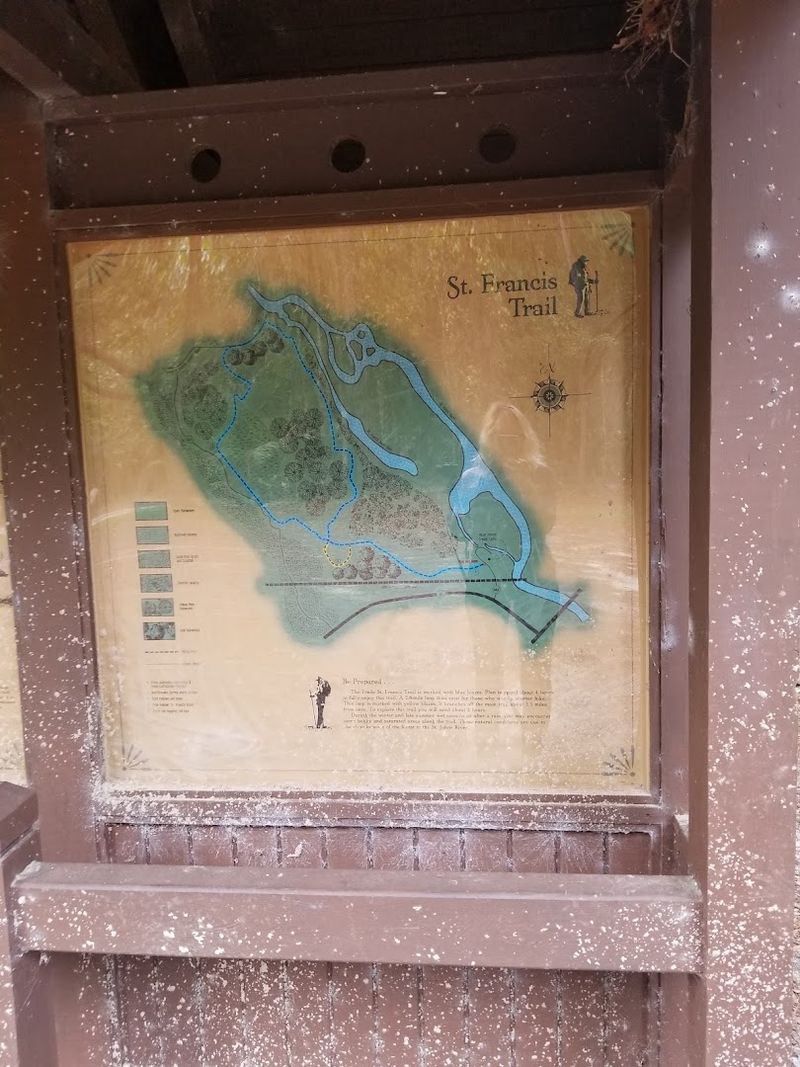
Starting your adventure at the St. Francis Yellow Trail is straightforward, and that is actually a relief compared to some Florida trailheads that are tricky to locate. The parking area at River Forest Blvd in DeLand offers plenty of space and feels like a safe, secure spot to leave your vehicle for several hours.
There are no bathroom facilities at the trailhead, so plan accordingly before you arrive. There is also no water available anywhere on the trail, which means everything you need to drink must come with you in your pack.
For an 8-mile hike, bringing at least two liters of water per person is a solid baseline.
The trailhead is clearly marked and easy to find using GPS coordinates or a standard navigation app. Arriving early on weekends helps you snag a good parking spot and gets you on the trail before the Florida sun starts doing its thing by mid-morning.
Wildlife and Nature Along the Route
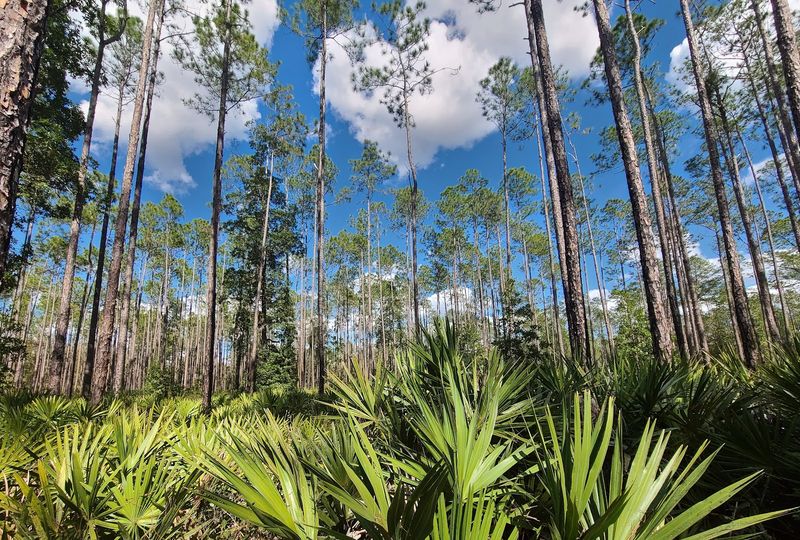
Florida is packed with wildlife, and the ecosystems along the St. Francis Yellow Trail reflect that richness beautifully. The trail passes through several distinct habitats, including pine flatwoods, hardwood hammocks, and riverside lowlands, each supporting its own community of plants and animals.
Some hikers report seeing very little wildlife during their visits, while others have spotted birds, deer, and various reptiles depending on the time of day and season. Early morning hikes tend to produce the best wildlife sightings before human activity quiets the forest creatures down.
Even without dramatic animal encounters, the natural scenery is genuinely impressive. Towering live oaks draped in Spanish moss, thick palmetto undergrowth, and the sound of wind moving through a high tree canopy create an immersive Florida wilderness experience.
One reviewer beautifully described it as “wild Florida,” and that phrase captures the spirit of this trail perfectly.
Connecting to the Florida National Scenic Trail
Here is a cool bonus for serious hikers: the St. Francis Yellow Trail connects to the Florida National Scenic Trail at its northern end. That means adventurous hikers can extend their journey well beyond the standard 8-mile loop if they have the legs and the ambition for it.
The Florida Trail is one of the eleven National Scenic Trails in the United States and stretches for over 1,000 miles across the state. Connecting to it from the St. Francis trailhead opens up a much larger backcountry experience for those who want to go deeper into wild Florida.
One reviewer offered a practical heads-up for anyone considering the extension: be very mindful of how far you walk north, because you will most likely need to return the same way, doubling your total distance. Planning your turnaround point before you start is smart hiking practice no matter how experienced you are.
Trail Conditions and Maintenance
Honest trail conditions reports from real hikers paint a picture of a path that is mostly well maintained but has its rough patches. Muddy sections appear after rain, especially in low-lying areas near the river.
Some parts of the trail can feel overgrown, with spider webs stretching across the path early in the morning.
The boardwalks and puncheon sections, while charming, have received mixed reviews. Some boards are loose, and a few spots remain wet even when elevated walkways are present.
Walking through the center of each wooden bridge and testing your footing before committing your full weight is genuinely good advice.
Overall, the trail earns its 4.1-star rating because the imperfections feel like part of the wild experience rather than serious safety hazards. Coming prepared with waterproof boots, trekking poles, and a willingness to get a little muddy makes all the difference between a frustrating outing and a fantastic one.
Essential Gear for the St. Francis Yellow Trail
Packing smart for this trail is honestly half the battle. Given the trail’s reputation for ticks, muddy terrain, and zero amenities, your gear choices can make or break the entire experience before you even take your first step into the forest.
Start with waterproof hiking boots that cover your ankles, long pants tucked into tall socks, and a generous application of DEET-based insect repellent on all exposed skin and clothing. Bringing a small pack of extra repellent to reapply mid-hike is a move you will thank yourself for later.
Beyond bug defense, carry at least two liters of water per person, high-energy snacks, a fully charged phone with an offline trail map downloaded, and a basic first aid kit. Trekking poles help a lot on slippery boardwalks and muddy stretches.
Wearing light, moisture-wicking layers keeps you comfortable as temperatures shift throughout the day on a longer hike like this one.
Enjoyed this story?
Add Fast Food Club as a preferred source to see more of our reporting on Google.