


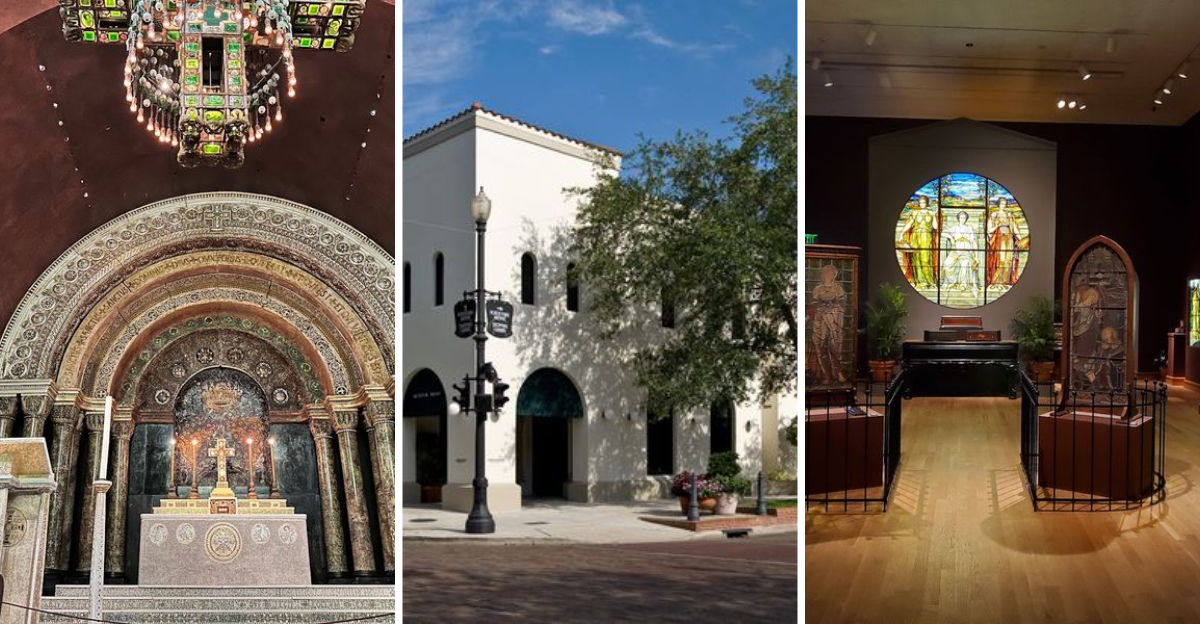
Tucked along the charming brick-lined streets of Winter Park, Florida, the Charles Hosmer Morse Museum of American Art holds one of the most jaw-dropping secrets in the entire country. Inside its walls lives the world’s most comprehensive collection of works by Louis Comfort Tiffany, the legendary American artist known for his breathtaking stained glass creations.
Best of all, admission is incredibly affordable, and on Friday evenings, entry is completely free. Whether you’re an art lover or just curious, this museum is a must-visit experience you won’t forget.
The Tiffany Chapel: A World’s Fair Masterpiece Reborn
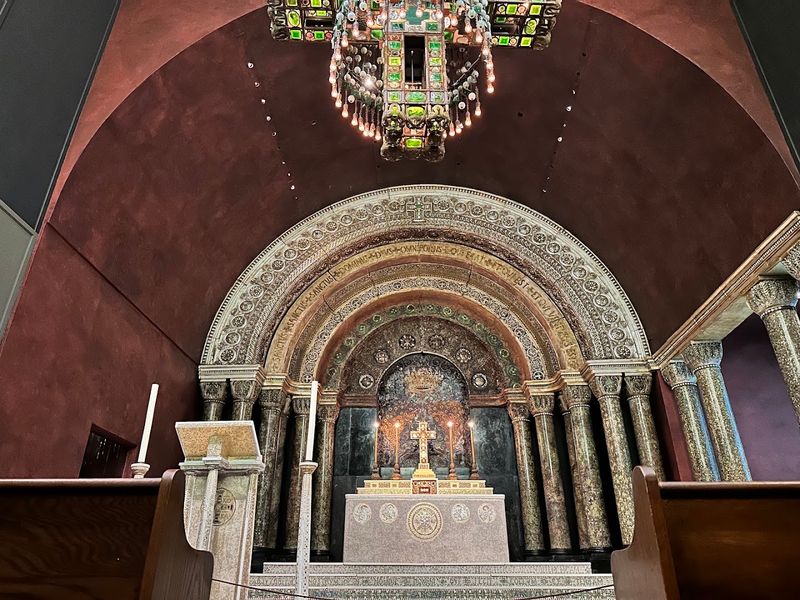
Imagine stepping into a sacred space that once stunned millions of visitors at the 1893 Chicago World’s Columbian Exposition. That’s exactly what you get when you walk into the restored Tiffany Chapel at the Morse Museum.
Louis Comfort Tiffany designed this breathtaking space himself, and it remains one of the most remarkable examples of American decorative art ever created.
After the World’s Fair, the chapel was nearly lost forever before being carefully restored and reassembled inside the museum. Every mosaic tile, every leaded glass panel, and every Byzantine-style column tells a story of extraordinary craftsmanship.
Sitting inside this chapel feels genuinely spiritual, even if you have no religious background at all.
Museum staff members are often present to explain the chapel’s history in warm, welcoming detail. Visitors consistently call it the emotional highlight of their entire visit.
Plan to linger here longer than you expect.
Louis Comfort Tiffany: The Genius Behind the Glass
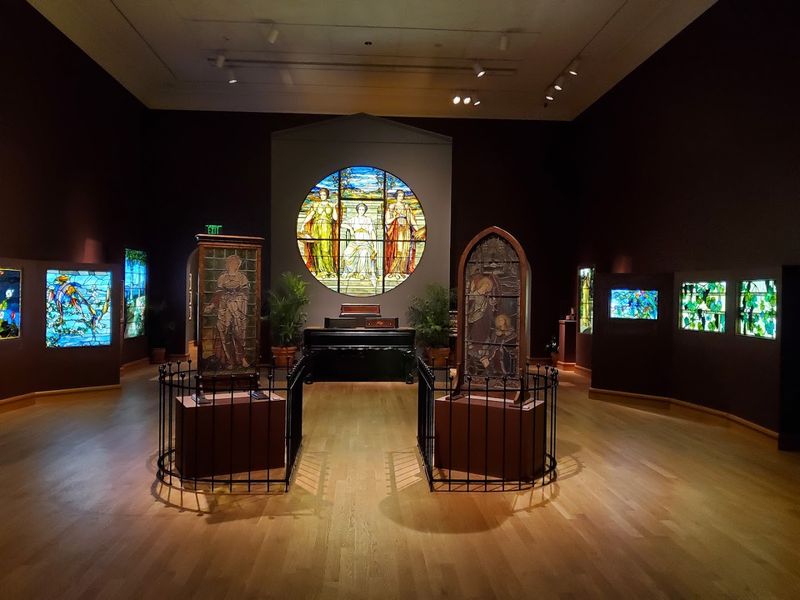
Most people recognize the Tiffany name from jewelry stores, but Louis Comfort Tiffany was something far more extraordinary. Born in 1848, he was the son of the famous jeweler Charles Lewis Tiffany, yet he carved out his own identity as one of America’s greatest decorative artists.
His work with glass, light, and color changed the art world forever.
The Morse Museum dedicates significant gallery space to telling Tiffany’s personal story through biography displays, videos, and artifacts. You’ll learn how he developed his signature iridescent Favrile glass, which shimmers and shifts color depending on the light hitting it.
His creative process was obsessive, innovative, and deeply personal.
Two short documentary videos near the museum entrance are absolutely worth watching before exploring the galleries. They give you the backstory that makes every lamp, window, and decorative object feel much more meaningful.
Knowing his life story transforms the entire visit.
Stained Glass Windows That Will Stop You in Your Tracks
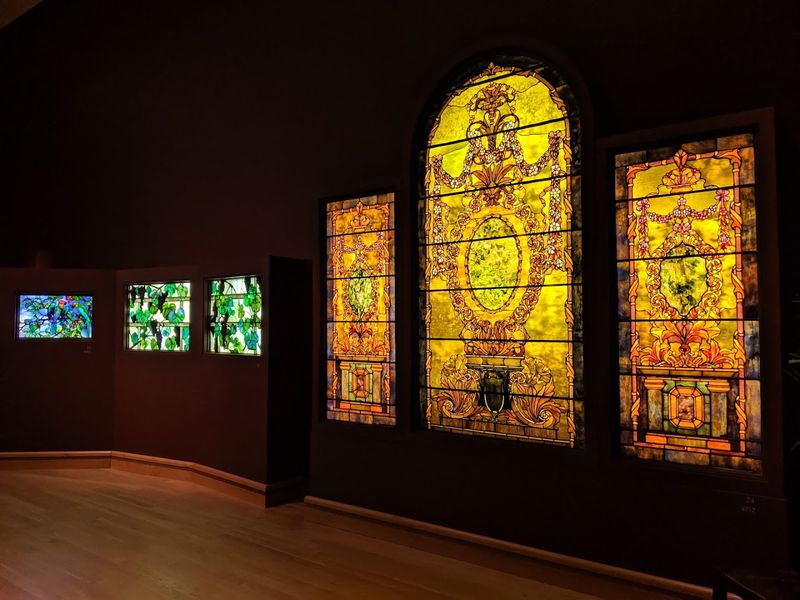
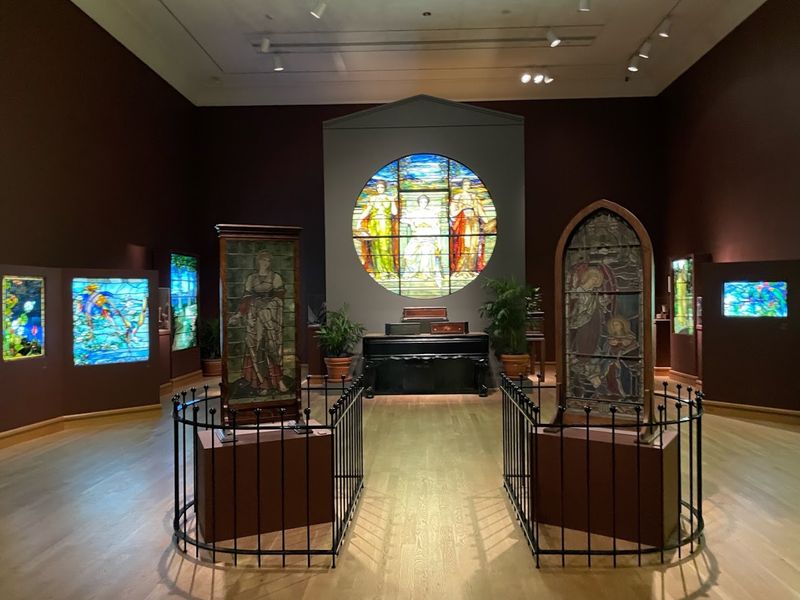
There’s a moment every visitor experiences inside the Morse Museum when they round a corner and suddenly face a wall of massive, glowing Tiffany stained glass windows. Natural and artificial light floods through the panels, turning the gallery into something that feels more like a dream than a museum.
These windows represent Tiffany at his absolute artistic peak.
Each window tells a story, from sweeping landscape scenes to delicate floral arrangements and biblical narratives. Tiffany didn’t just paint with pigments; he manipulated glass itself, layering textures and colors to create depth and movement that flat paintings simply cannot achieve.
The effect is genuinely stunning in person, far beyond what photos can capture.
Printed guides and QR codes throughout the gallery help visitors understand each window’s history and symbolism. You can easily spend 30 minutes just in this section alone.
First-timers often say they had no idea glass could be this beautiful.
Iconic Tiffany Lamps Up Close and Personal
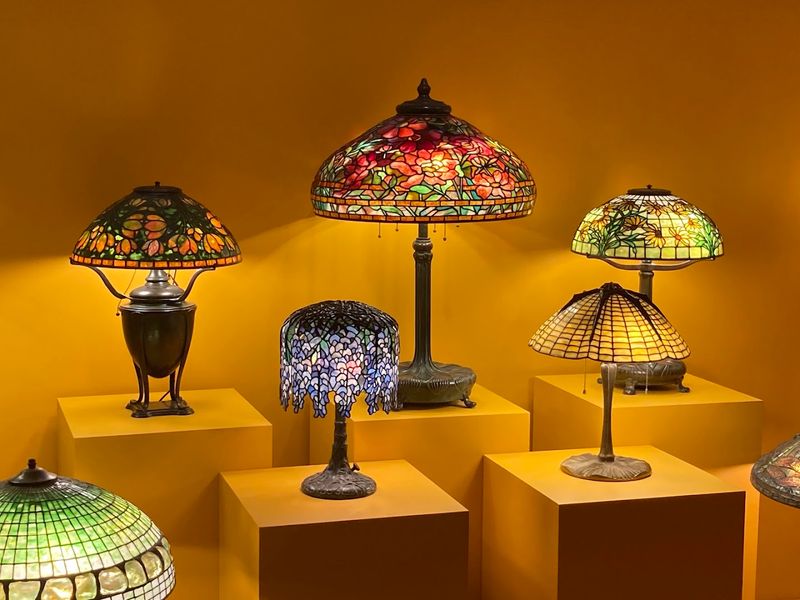
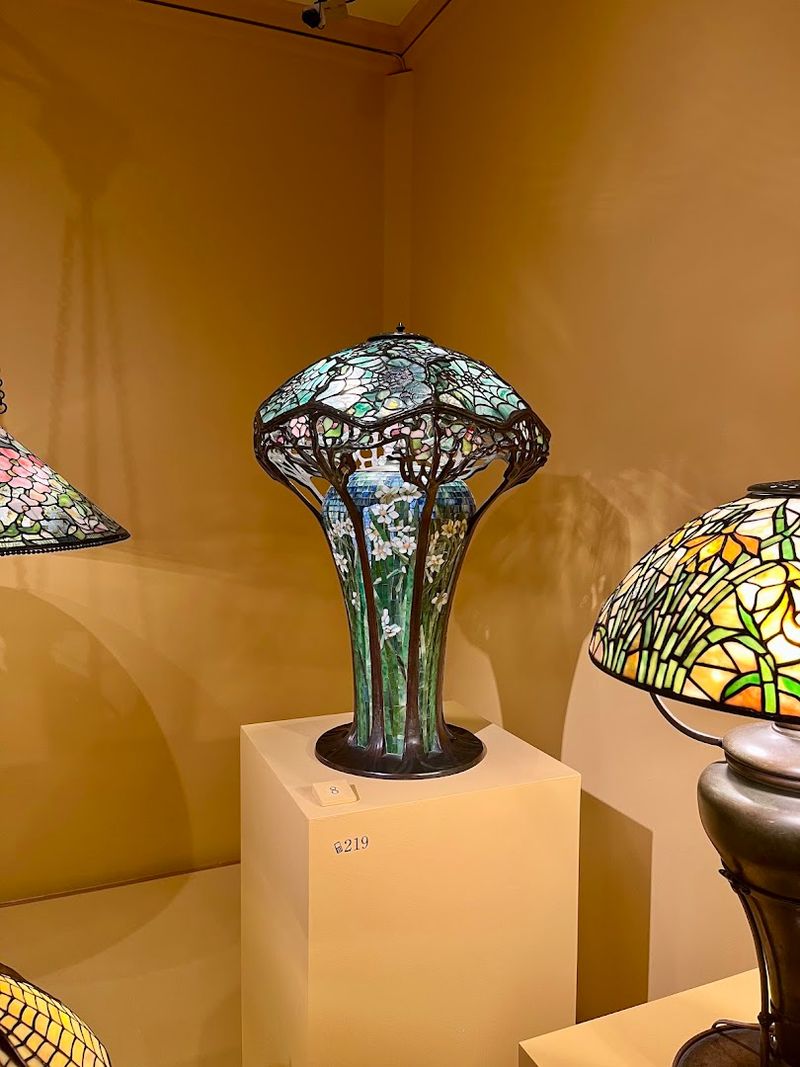
If you’ve ever admired a Tiffany lamp in a magazine or movie and wondered what one looks like in real life, prepare yourself for a serious treat. The Morse Museum displays an extraordinary range of authentic Tiffany Studios lamps, from small accent pieces to grand floor lamps with elaborate leaded glass shades.
Each one glows with a warmth that feels almost alive.
Dragonfly patterns, wisteria blooms, peony clusters, and geometric designs all appear across the lamp collection, showcasing how endlessly creative Tiffany’s studio really was. These weren’t mass-produced items; skilled artisans hand-cut and soldered thousands of individual glass pieces to build each shade.
The level of patience and precision involved is honestly mind-blowing.
The gallery lighting is carefully designed to show off each lamp’s glow without overwhelming the space. Visitors with even a passing interest in decorative arts tend to become completely absorbed here.
Budget at least 20 minutes just for the lamp gallery.
Favrile Glass: Tiffany’s Iridescent Secret Weapon
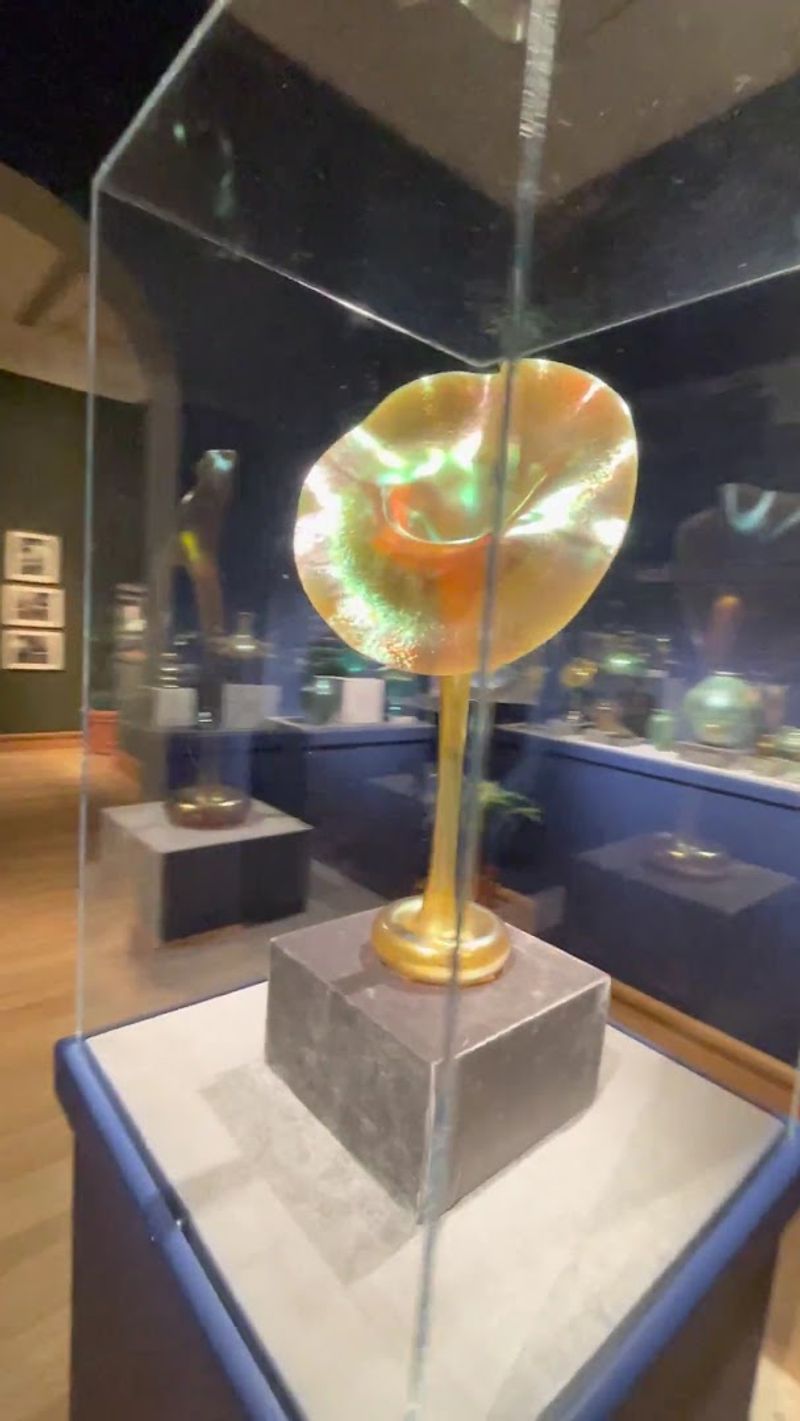
Favrile glass is one of those things you have to see in person to truly appreciate. Tiffany developed this one-of-a-kind material in the 1890s, and it quickly became his signature.
The word “Favrile” comes from an old English word meaning handmade, and that craftsmanship shows in every single piece on display at the Morse Museum.
What makes Favrile glass so special is its surface. Rather than painting color onto glass, Tiffany fused metallic oxides directly into the molten material during production.
The result is an otherworldly iridescent sheen that shifts between gold, bronze, blue, and green depending on how light hits it. No two pieces ever look exactly the same.
The museum’s Favrile collection includes vases, bowls, and decorative objects of all shapes and sizes. Some pieces are delicate and flower-like, while others feel bold and sculptural.
Spending time with this collection reveals just how far ahead of his time Tiffany really was.
Tiffany’s Laurelton Hall: Rooms Brought Back to Life
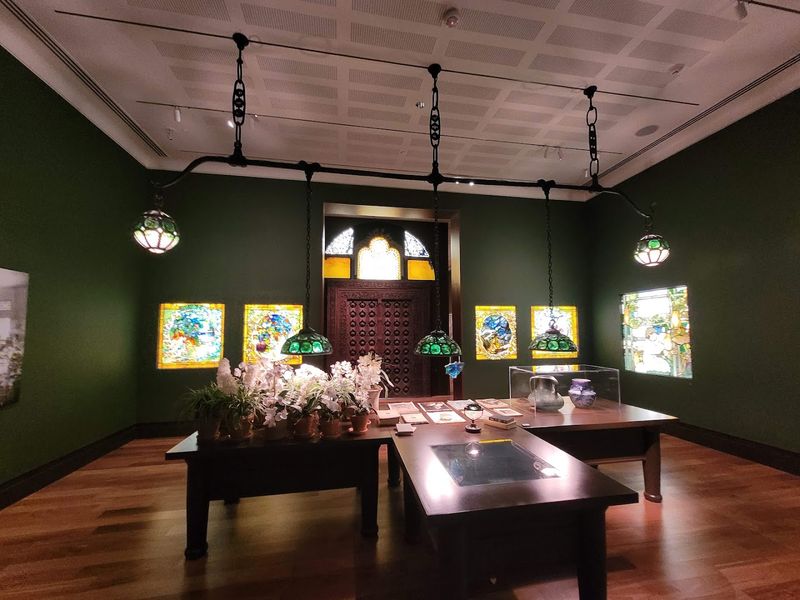
Laurelton Hall was Louis Comfort Tiffany’s grand personal estate on Long Island, and it was every bit as spectacular as you’d imagine. Sadly, a fire destroyed much of the property in 1957, but the Morse Museum worked tirelessly to rescue and restore key architectural elements from the wreckage.
Today, those rescued pieces are reassembled into a wing that recreates the feeling of walking through Tiffany’s actual home.
Whole rooms and architectural fragments, including decorative columns, loggia elements, and custom-designed panels, are presented in a way that gives visitors a genuine sense of how Tiffany lived and thought. His home was itself a total work of art, blending architecture, nature, and decorative craft into one cohesive vision.
Every doorway and surface was intentional.
This section of the museum is particularly moving because it connects the art to the man’s personal life. Seeing how Tiffany surrounded himself with beauty in his everyday environment makes his artistic mission feel incredibly human and relatable.
American Art Pottery That Deserves Its Own Spotlight
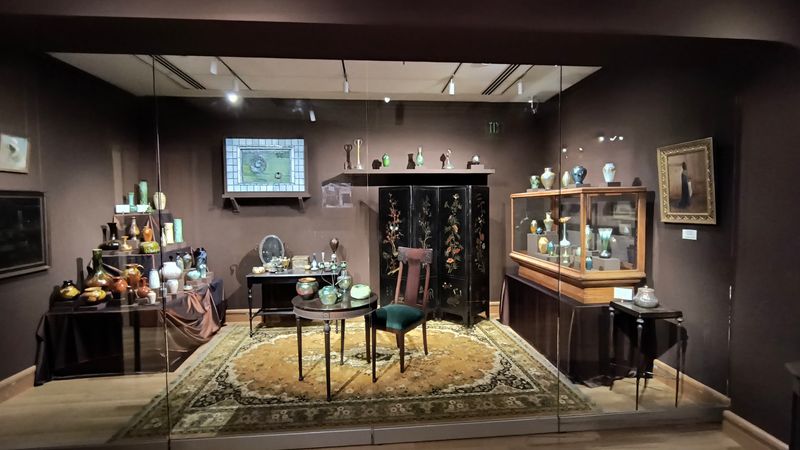
Beyond Tiffany’s glass creations, the Morse Museum holds a genuinely impressive collection of American art pottery that often surprises first-time visitors. Pottery from this era was anything but plain.
Artists were experimenting with rich glazes, organic forms, and nature-inspired decorations that reflected the broader Art Nouveau movement sweeping through America and Europe at the time.
Brands and studios like Rookwood, Grueby, and other celebrated American pottery makers are represented throughout this section of the museum. The earthy tones, flowing lines, and handcrafted textures create a warm contrast to the sparkle of the glass galleries nearby.
It’s a satisfying visual change of pace that keeps the overall museum experience feeling fresh.
Many visitors who come primarily for Tiffany end up spending more time in the pottery galleries than they planned. The pieces have a quiet, grounded beauty that rewards slow, careful looking.
Kids especially enjoy spotting the animals and plants hidden within the decorative designs.
Paintings and Graphics From the Gilded Age
The Gilded Age was a wildly creative period in American history, and the Morse Museum captures its artistic energy beautifully. Alongside the Tiffany masterworks, the museum displays paintings, graphics, and works on paper that reflect the broader cultural moment Tiffany was working within.
These pieces provide important context that makes the Tiffany collection even richer.
American painters of this era were experimenting with light, color, and subject matter in ways that would eventually influence modern art. Portraits, landscapes, and allegorical scenes hang alongside decorative objects, creating a sense of the total artistic environment of the late 19th century.
Seeing these works together helps visitors understand how Tiffany both absorbed and transformed the artistic trends of his time.
Even if paintings aren’t your primary interest, this section is worth slowing down for. The quality of the works on display is genuinely high, and the thoughtful gallery arrangement makes everything feel connected.
History and beauty meet here in a very satisfying way.
Free Friday Evenings With Live Music
Here’s one of the best-kept secrets about the Morse Museum: every Friday evening, admission is completely free, and live musicians perform throughout the galleries. Local and regional musicians set up inside the museum, filling the space with music that somehow makes the Tiffany glass glow even brighter.
It’s one of the most unique cultural experiences available anywhere in Central Florida.
The free Friday program runs during the museum’s extended evening hours, giving visitors who work during the day a perfect opportunity to experience the collection without rushing. Couples, families, and solo art lovers all tend to show up, creating a relaxed, community-centered atmosphere that feels nothing like a typical museum visit.
The combination of live music and extraordinary art is genuinely magical.
Arriving early on a free Friday is a smart move, as the museum can get busier than usual. Bring the whole family or make it a date night.
Either way, you’ll leave feeling like you discovered something truly special.
Incredibly Affordable Admission for Everyone
In a world where museum admission prices keep climbing, the Morse Museum stands out as a refreshing exception. Adult tickets are just $8, and students pay only $3, making this one of the most budget-friendly cultural experiences in all of Florida.
For the quality and scope of what’s inside, that price feels almost unbelievably low.
Groups, families, and school trips all benefit from these modest prices. A group of three student friends recently shared that they paid just $9 total for their entire visit, and they described it as one of the best afternoons they’d spent in a long time.
Value like that is genuinely rare in the museum world today.
The museum is also supported by its founding family’s endowment, which helps keep admission costs low without compromising the quality of exhibits or maintenance. Every dollar spent here goes directly toward preserving one of America’s most extraordinary art collections.
Supporting this museum feels good in every sense of the word.
A Peaceful Courtyard Garden Worth Discovering
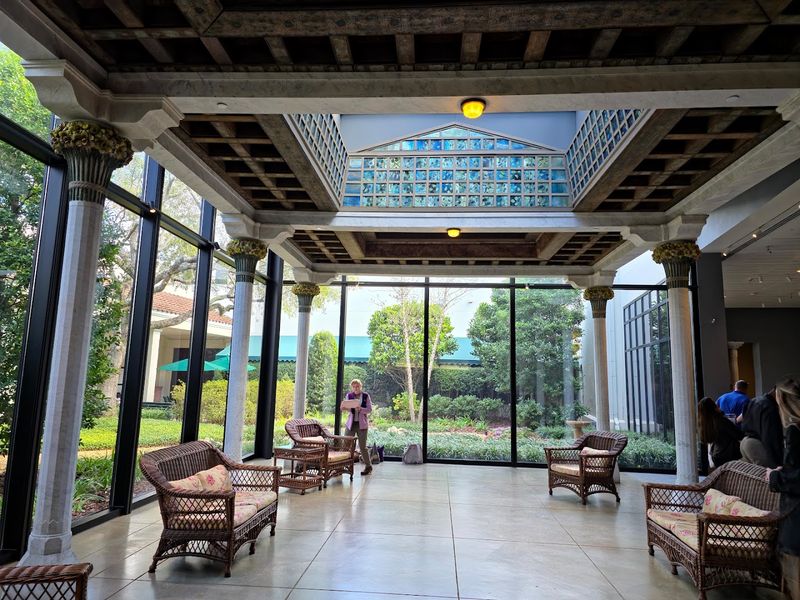
After wandering through gallery after gallery of stunning art, sometimes you just need a moment to breathe and process everything you’ve seen. The Morse Museum’s courtyard garden is the perfect place to do exactly that.
Tucked just off the main gallery spaces, this outdoor area offers a quiet, green retreat that feels like a genuine reset button.
The garden is small but beautifully maintained, with comfortable seating and natural Florida plantings that create a calm, shaded environment. Several visitors have described it as one of their favorite unexpected discoveries at the museum.
It’s the kind of spot where you sit down for five minutes and end up staying for twenty.
Families with younger children especially appreciate having an outdoor space to decompress mid-visit. The garden also serves as a lovely spot to review your photos, check the museum map, and decide which galleries you still want to revisit.
Don’t rush past it on your way to the next exhibit.
The Gift Shop: Art You Can Actually Take Home
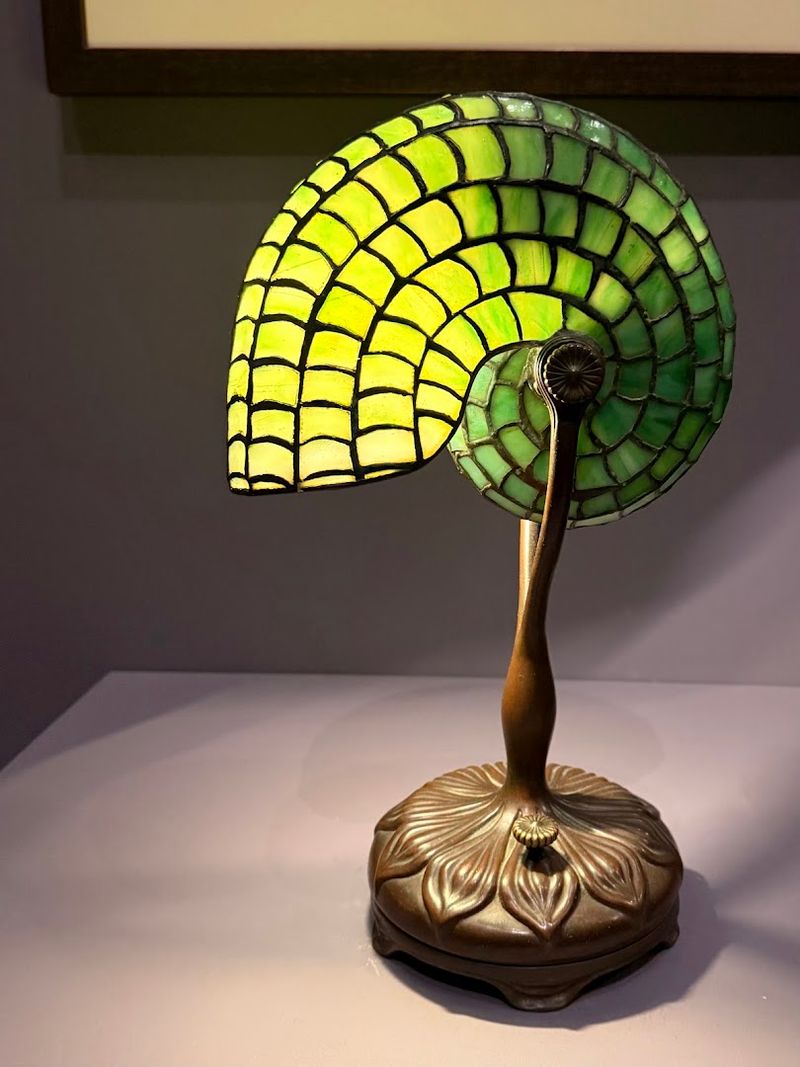
Walking through the Morse Museum gift shop feels like a natural extension of the galleries themselves. The merchandise is thoughtfully curated to reflect the Tiffany aesthetic, featuring jewelry, decorative glass pieces, art books, scarves, and home accessories inspired by the collection.
Nothing here feels like generic tourist junk.
Tiffany-style ornaments, replica lamp shades, stationery, and prints make for meaningful souvenirs that will remind you of the visit every time you see them at home. The shop is particularly popular during the holiday season, when the Tiffany-inspired ornaments and decorative pieces feel especially fitting.
Prices range widely, so there’s something available for almost every budget.
Multiple reviewers specifically called out the gift shop as a highlight of their visit, not just an afterthought. The staff is knowledgeable and happy to help you find something that matches your taste.
Exiting through the gift shop on your way out is a genuinely enjoyable final chapter to a remarkable museum experience.
Location, Parking, and Planning Your Visit
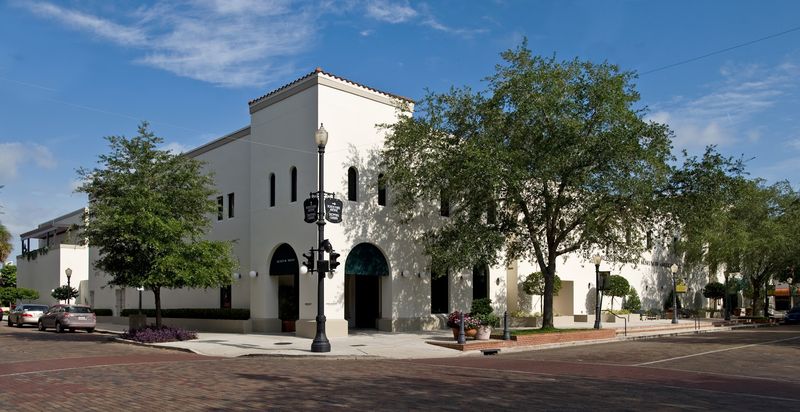
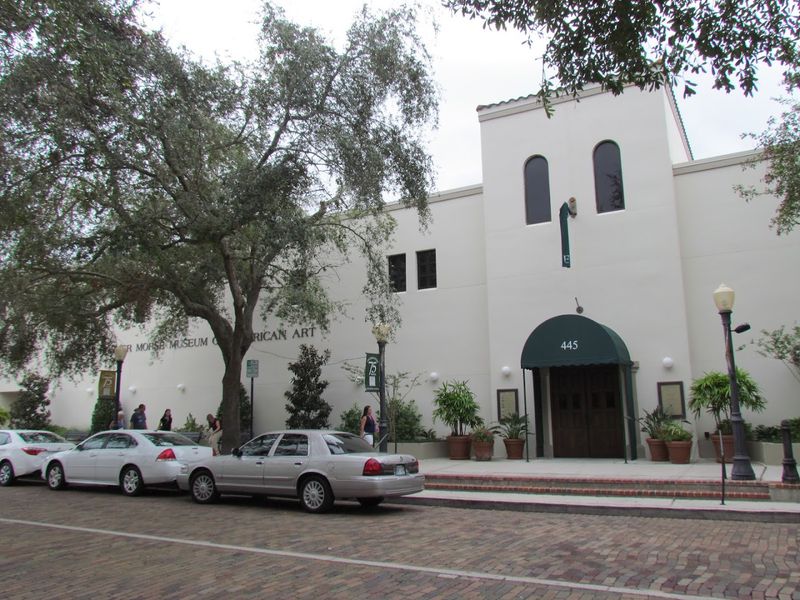
Getting to the Morse Museum is surprisingly easy, even though Winter Park’s Park Avenue area can get busy on weekends. The museum is located at 445 N Park Ave, right in the heart of one of Florida’s most beautiful and walkable neighborhoods.
A free parking garage sits directly across the street, which visitors consistently praise as a huge convenience.
The museum is open Tuesday through Saturday from 9:30 AM to 4 PM, and Sundays from 1 to 4 PM. It is closed on Mondays.
Arriving when the doors open on a weekday morning is a great strategy for a quieter, more relaxed experience. The phone number is 407-645-5311 if you need to confirm hours or ask questions before your trip.
After your visit, the surrounding Park Avenue area offers excellent restaurants, boutique shops, and even Rollins College with its own museums and gorgeous campus architecture. Plan at least two to three hours total for the museum, then explore the neighborhood at your leisure.
This entire area makes for a genuinely wonderful day out.
Enjoyed this story?
Add Fast Food Club as a preferred source to see more of our reporting on Google.