


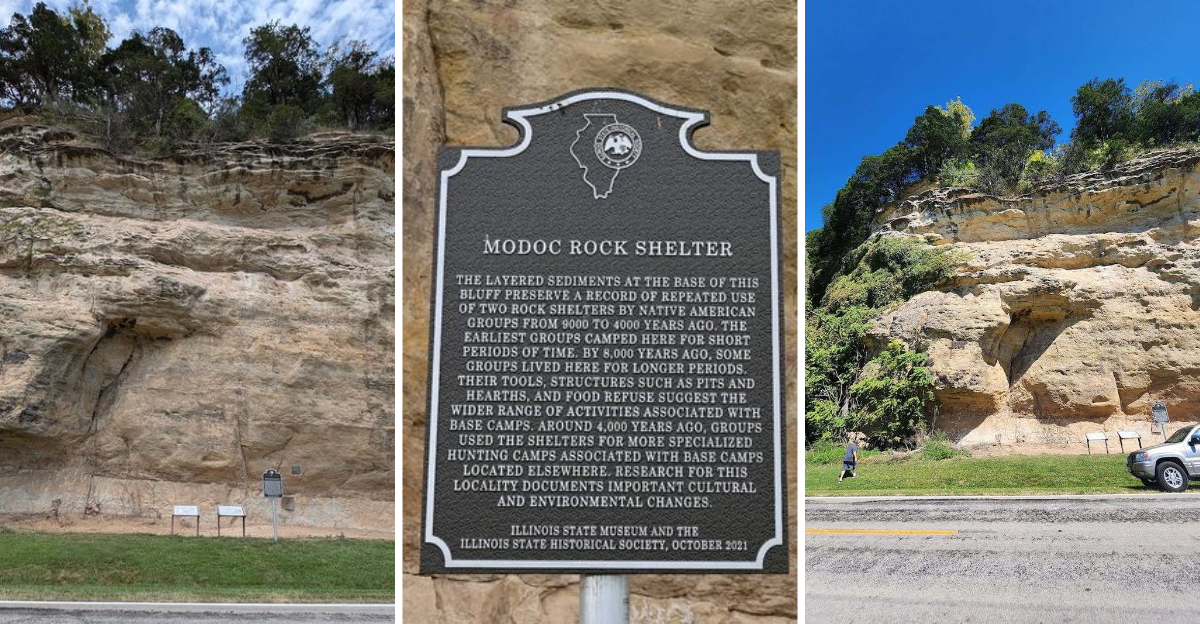
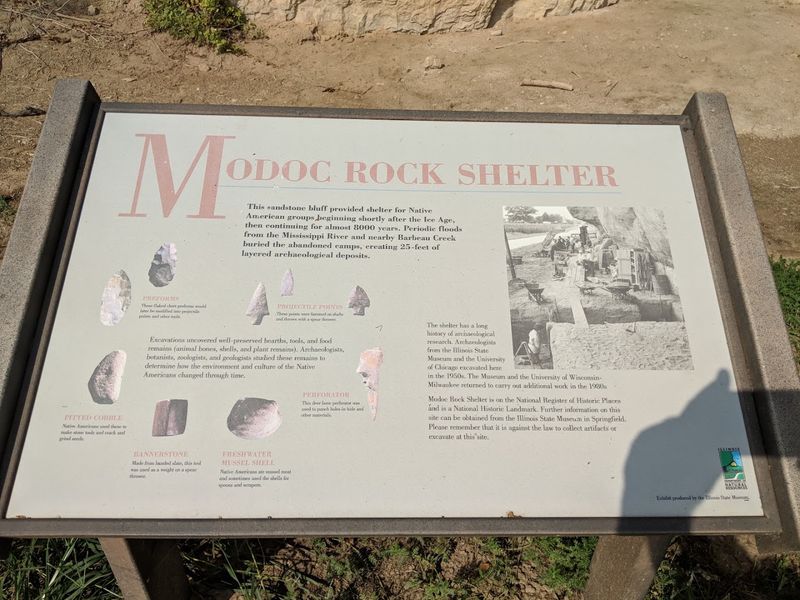
Tucked along a quiet two-lane highway near Prairie Du Rocher, Illinois, the Modoc Rock Shelter National Historic Landmark is a place where thousands of years of human history quietly wait to be discovered. This ancient rock overhang sheltered Native American peoples for over 10,000 years, making it one of the most significant archaeological sites in the entire Midwest.
Archaeologists once dug 25 feet deep here, uncovering layer after layer of human life. If you love history, nature, or simply stumbling onto hidden gems, this overlooked landmark deserves a spot on your road trip list.
A 10,000-Year-Old Home Hidden in Plain Sight
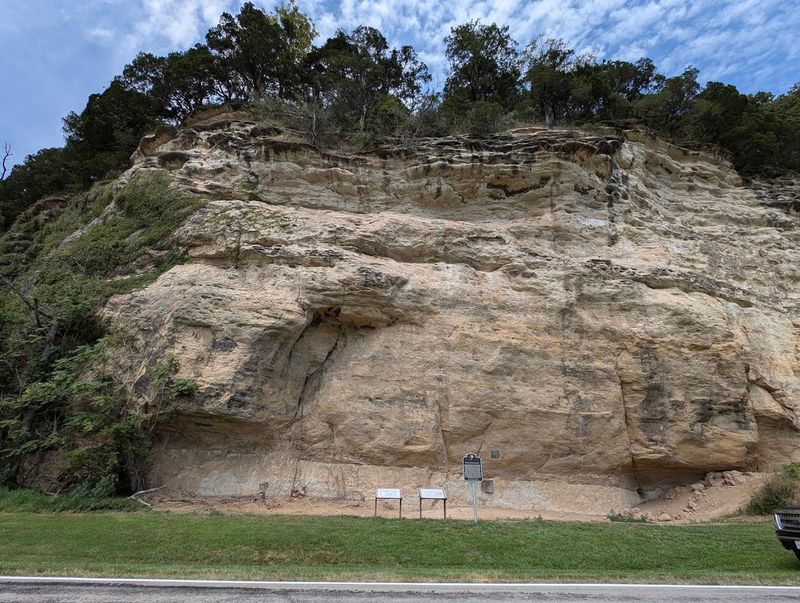
Most people drive right past it without a second glance. The Modoc Rock Shelter sits quietly along a rural Illinois highway, but beneath its rocky overhang lies one of the longest records of continuous human habitation ever found in North America.
Archaeologists discovered that people lived here for more than 10,000 years, stretching back to the end of the last Ice Age. That kind of timeline is almost impossible to wrap your head around.
When excavations reached 25 feet below the surface, each layer told a new story about the people who once called this shelter home. Hunters, gatherers, and early communities all left traces behind.
Visiting this site means standing in a spot where countless generations before you once stood, looked out at the same bluffs, and made their lives work.
Why It Earned National Historic Landmark Status
Not every old place earns the title of National Historic Landmark. The federal government reserves that designation for sites with exceptional national significance, and Modoc Rock Shelter checks every box.
The shelter was formally excavated in the 1950s by archaeologist Howard Winters, whose findings revealed an almost unbroken record of prehistoric human activity. The depth and density of artifacts found here were unlike almost anything else discovered in the Midwest at the time.
Earning National Historic Landmark status means the site is recognized alongside places like Independence Hall and Gettysburg. That might surprise visitors who pull off the highway expecting something more dramatic.
But the quiet, unassuming nature of this site is exactly what makes the landmark status so striking. The history here is not on display in a museum — it is literally embedded in the ground beneath your feet.
Southern Illinois Bluffs: The Perfect Natural Setting
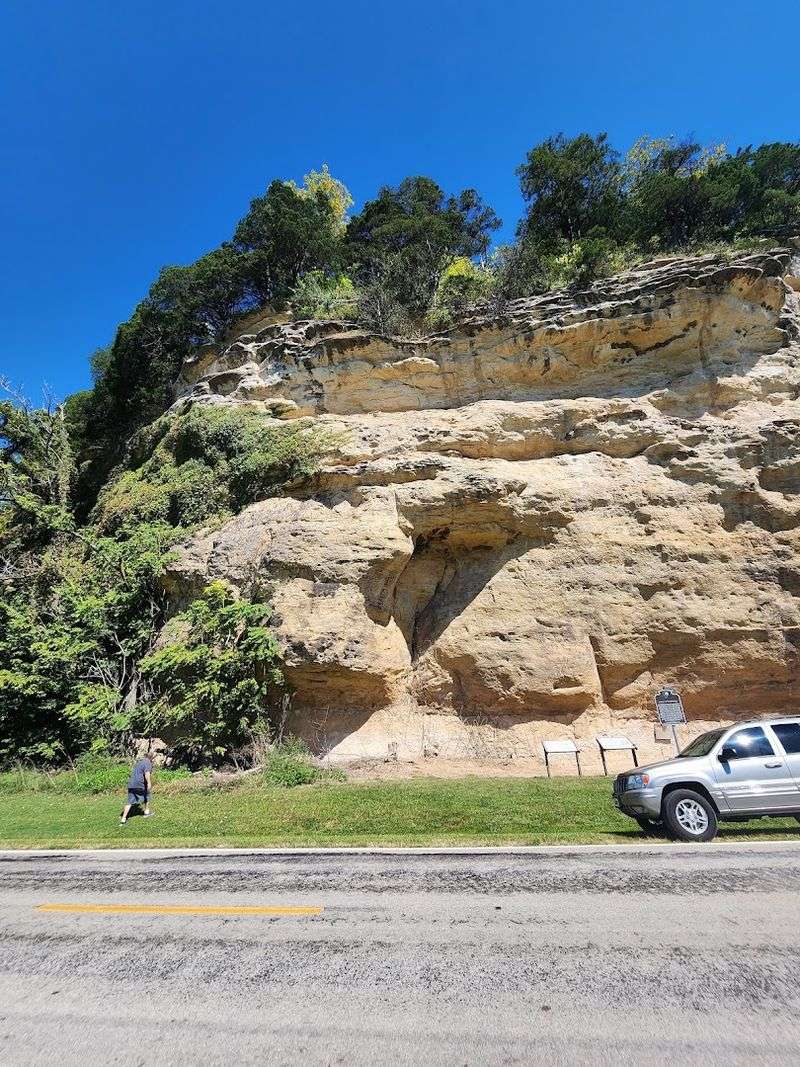
The landscape surrounding Modoc Rock Shelter is genuinely breathtaking. Rolling bluffs, forested ridgelines, and the wide Mississippi River floodplain stretch out in every direction, painting a picture that feels more like the American frontier than modern Illinois.
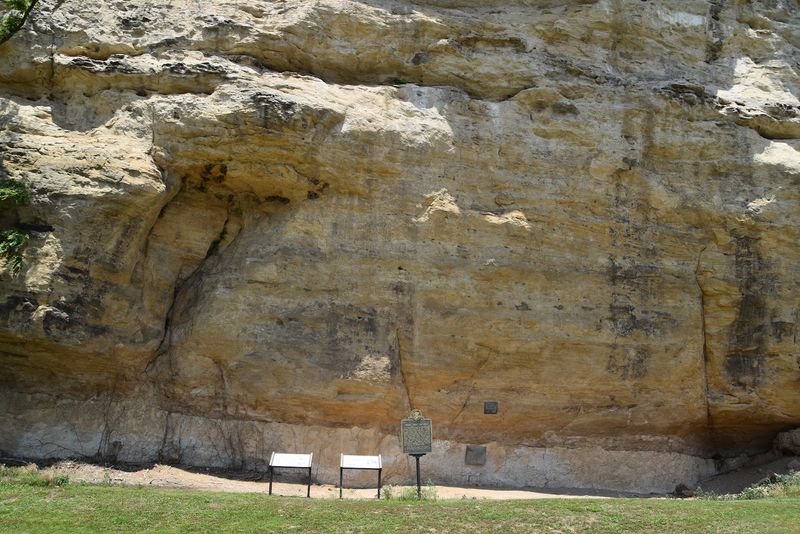
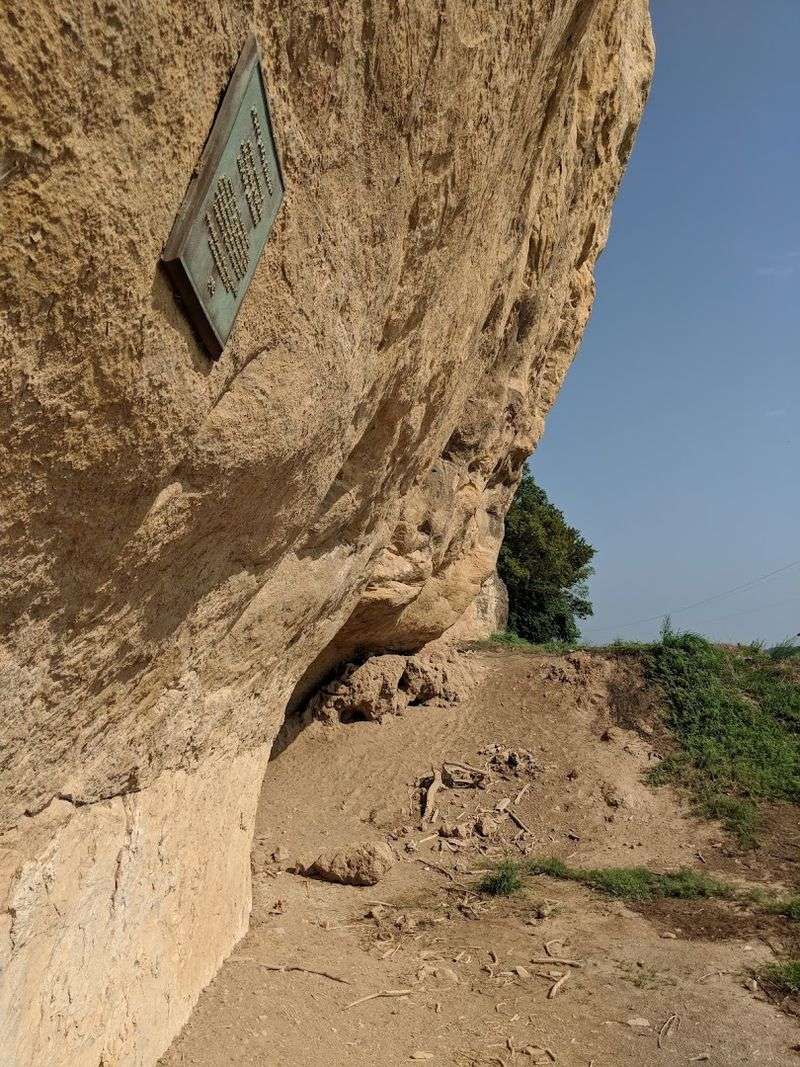
The rock formation itself is part of the ancient limestone bluffs that line this stretch of the river valley. These bluffs have been shaped by millions of years of erosion, and the overhang that created the shelter was a natural gift for the people who discovered it thousands of years ago.
Several visitors have noted that even if the history does not grab you immediately, the scenery absolutely will. The bluffs here are rugged and raw in the best possible way.
Pair that natural beauty with a site that carries 10,000 years of human memory, and you have a destination worth the detour.
Cliff Swallows and Wildlife Worth Watching
Here is something you might not expect from a prehistoric archaeological site: it doubles as a fantastic wildlife-watching spot. Cliff swallows have claimed the rock overhang at Modoc Rock Shelter as prime nesting territory, and during the warmer months, dozens of birds dart in and out of their carefully crafted mud nests.
Watching these agile little birds swoop and glide along the bluff face is genuinely entertaining. They are incredibly fast fliers, and seeing them navigate the rocky surface with precision is a treat for bird enthusiasts and casual observers alike.
The surrounding area also supports a healthy mix of woodland wildlife, from white-tailed deer browsing the forest edges to red-tailed hawks circling overhead. Bringing a pair of binoculars makes the visit even more rewarding.
The shelter attracts life in every era, it seems, whether that life arrived 10,000 years ago or just this spring.
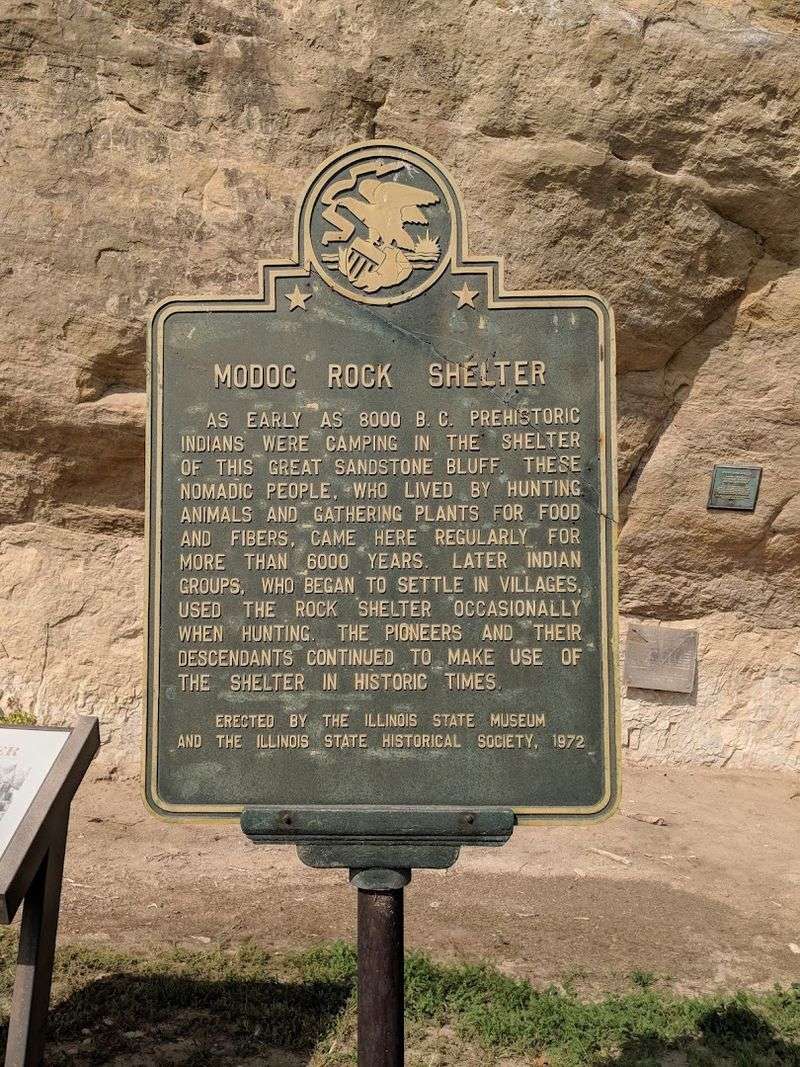
Reading the Story on the Signage Plaques
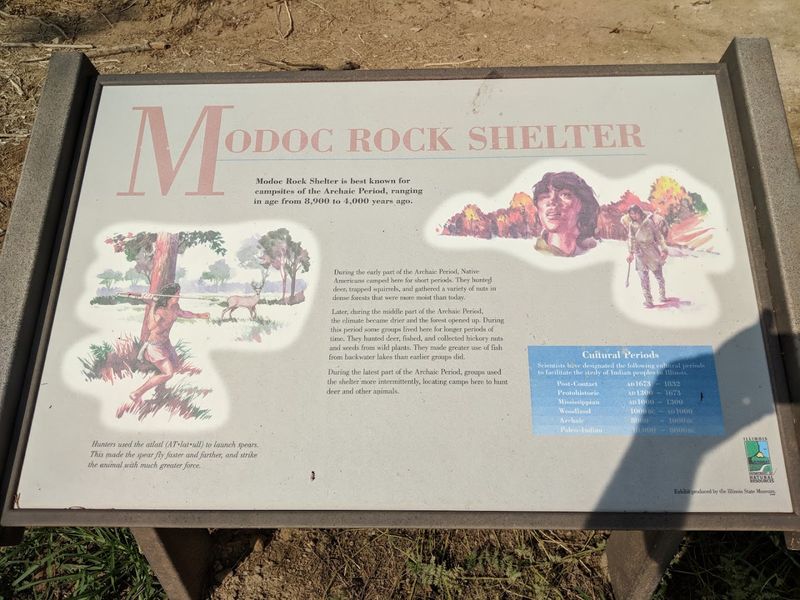
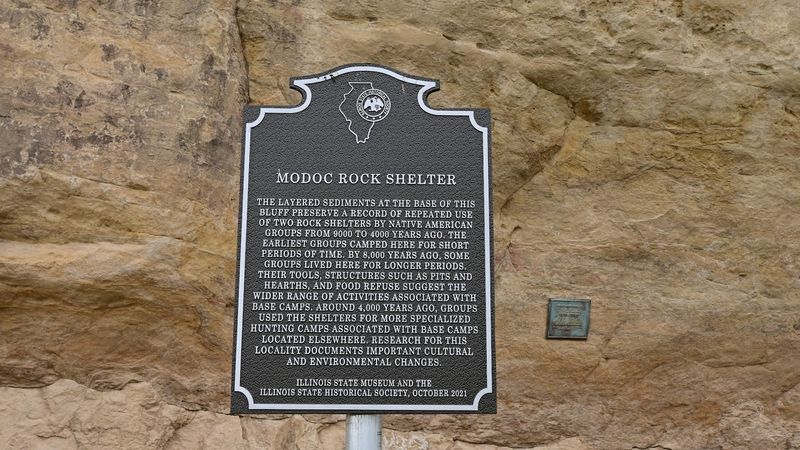
When you arrive at Modoc Rock Shelter, a small collection of signage plaques greet you with the site’s story. They cover the archaeological excavations, the timeline of human habitation, and the significance of the findings — all without needing a tour guide to explain things.
Some visitors have noted that the signs are beginning to show their age, with weathering and fading affecting readability in spots. Still, the information they carry is fascinating enough to make the effort worthwhile.
You get a condensed but surprisingly detailed history of the site in just a few minutes of reading.
Think of the plaques as a mini outdoor museum exhibit. They ground the experience and help visitors understand why this particular rock overhang matters on a national scale.
Before you explore the formation itself, spending a few minutes with the signage puts everything into meaningful context and sharpens your appreciation for what you are seeing.
Combining It With Fort de Chartres for a Full Day Out
One of the smartest ways to visit Modoc Rock Shelter is to pair it with nearby Fort de Chartres State Historic Site, just a short drive away. Fort de Chartres is an 18th-century French colonial fortress built from limestone, and it offers a completely different but equally compelling slice of Illinois history.
Together, the two sites create a full day of exploration that spans from prehistoric Native American culture all the way through French colonial settlement. That is a remarkable range of human history packed into one corner of southern Illinois.
Several reviewers have specifically recommended combining the two stops, calling the combination a natural fit. Fort de Chartres has proper parking, restrooms, and interpretive programs that round out the experience nicely.
Starting at Modoc Rock Shelter and finishing at the fort gives your day a satisfying narrative arc, moving from ancient times to the colonial era in just a few miles.
Parking Realities and How to Visit Safely
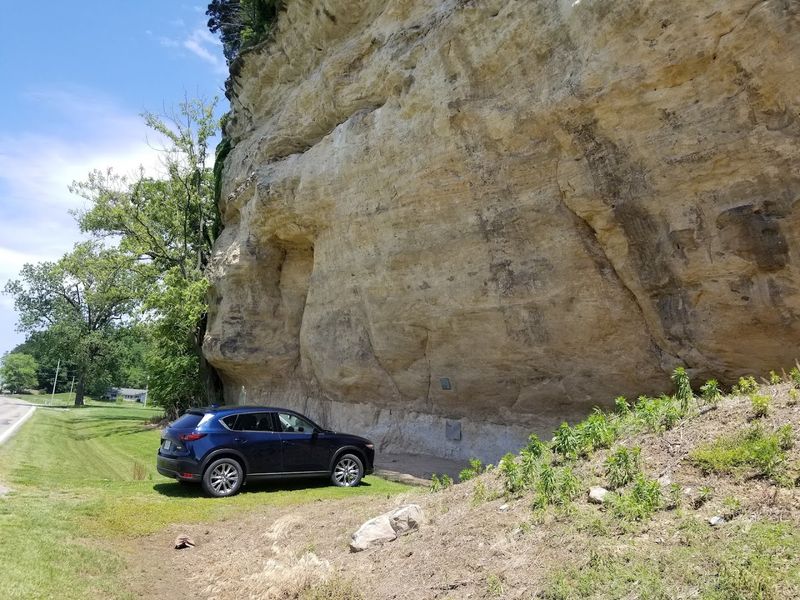
Let’s be straightforward about one of the most common complaints from visitors: parking at Modoc Rock Shelter is genuinely tricky. The site sits directly along a two-lane state highway, and there is no dedicated parking lot.
Most people pull onto the grassy shoulder or edge of the road.
The highway can see moderate traffic, so visiting during off-peak hours — early mornings or weekdays — makes the stop safer and less stressful. Always pull completely off the road surface and watch for traffic when stepping out of your vehicle.
The good news is that the visit itself is brief enough that the parking situation rarely becomes a dealbreaker. Most people spend 10 to 20 minutes at the site, which means you are not leaving your car in a precarious spot for long.
A little extra caution goes a long way toward making the experience enjoyable rather than nerve-wracking.
What the 25-Foot Excavation Actually Revealed
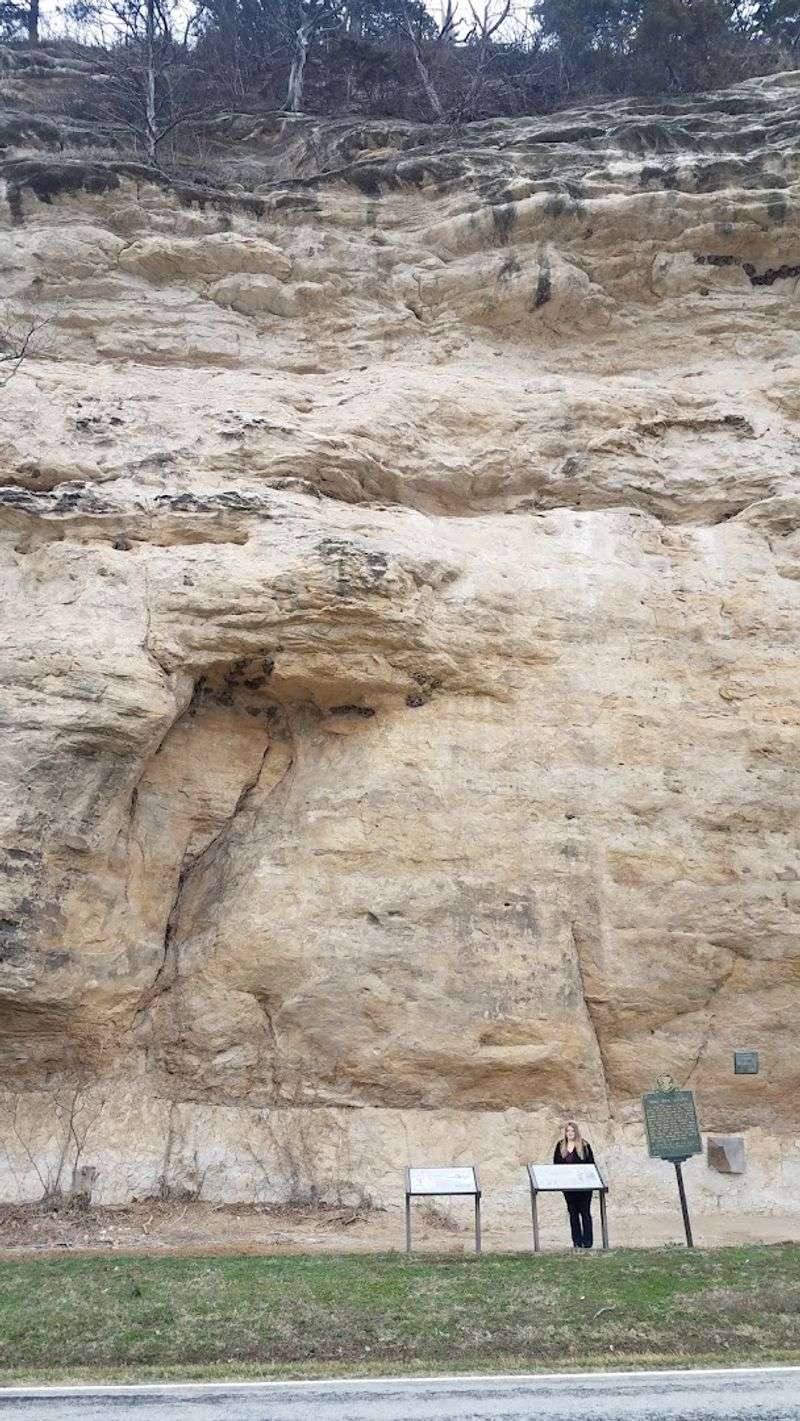
Twenty-five feet might not sound like much until you realize each foot represents hundreds or even thousands of years of accumulated human activity. When Howard Winters led excavations at Modoc Rock Shelter in the 1950s, the depth of cultural deposits stunned the archaeological community.
Artifacts recovered from the dig included animal bones, stone tools, shells, and organic materials that helped researchers understand diet, technology, and daily life across multiple prehistoric periods. The lowest layers dated back to approximately 8000 BCE, placing the earliest inhabitants here at the tail end of the Pleistocene epoch.
Each layer acted like a chapter in a very long book, with earlier chapters buried deepest and more recent ones closer to the surface. That stratigraphy gave archaeologists a rare, nearly uninterrupted record of human adaptation over millennia.
Few sites anywhere in North America offer that kind of depth, which is exactly why Modoc Rock Shelter matters so much to science and history.
Native American History Preserved at the Site
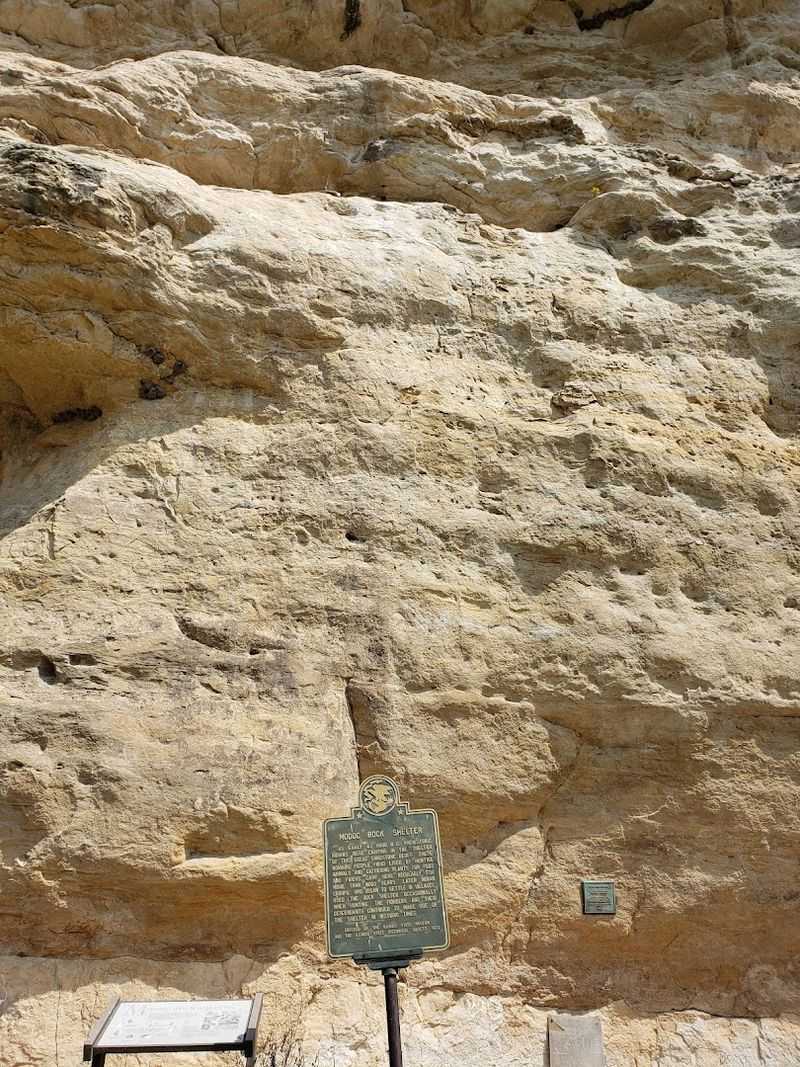
For thousands of years before European explorers ever set foot in Illinois, Native American peoples lived, hunted, and gathered along these bluffs. Modoc Rock Shelter preserves physical evidence of that deep and layered heritage in a way that few other places can match.
The people who sheltered here were not a single group but many successive communities spanning different cultural periods — from Paleo-Indian hunters tracking Ice Age megafauna to later Archaic period peoples who developed more complex social structures and trade networks.
Standing at the shelter today, it is humbling to think about the generations of families who woke up here, watched the sun rise over the river valley, and went about their daily lives. Their tools, their food remains, and their presence are literally buried in the earth around you.
Honoring that history with respect and curiosity is the best way any modern visitor can approach this remarkable place.
Open Around the Clock: Visiting on Your Schedule
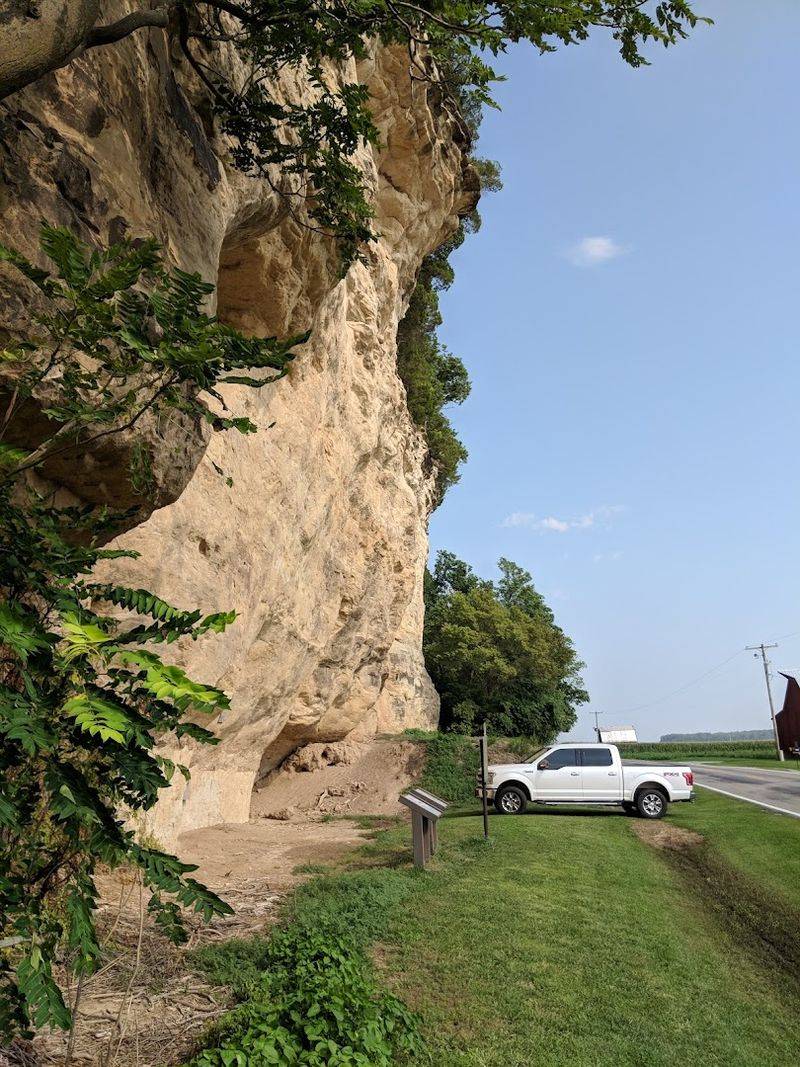
One surprisingly convenient fact about Modoc Rock Shelter: it is open 24 hours a day, every day of the week. There are no ticket booths, no closing times, and no reservations required.
You simply show up, pull off the road, and experience the site on your own terms.
That kind of open access is rare for a National Historic Landmark. It means early risers can catch the site bathed in morning light, while afternoon visitors enjoy the warmth of the bluffs in full sun.
Photographers especially appreciate the flexibility, since golden hour lighting transforms the limestone face into something genuinely spectacular.
The trade-off for that freedom is the lack of amenities. There are no restrooms, no visitor center, and no staff on site.
Planning accordingly — bringing water, snacks, and a fully charged phone — ensures the spontaneous visit stays pleasant. The open hours make it an easy add-on to any road trip through the area.
How to Find It Without Driving Past
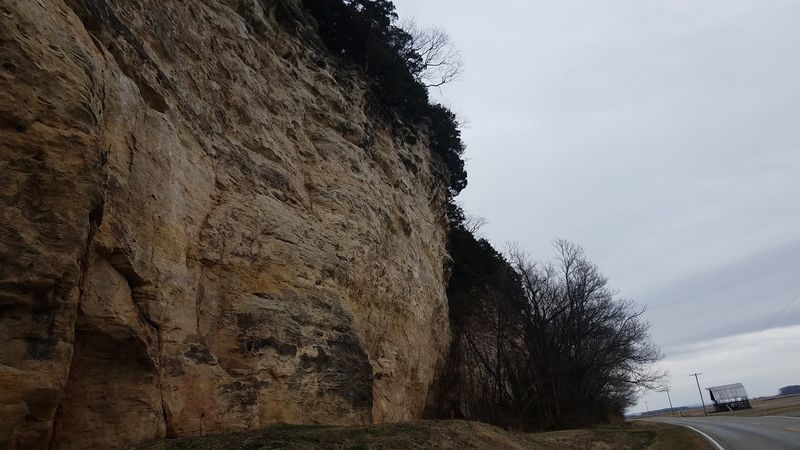
Multiple visitors have confessed to driving right past Modoc Rock Shelter the first time. The site is not dramatically announced, and the signage along the highway is easy to miss if you are not actively watching for it.
A little preparation before you leave home makes a big difference.
The shelter is located along Illinois Route 3, south of Prairie Du Rocher. Plugging the coordinates 38.0628, -90.0640 directly into your GPS or mapping app gives you the most precise navigation.
Google Maps does list the site, though some users report that the pin placement can be slightly off depending on your app version.
Slowing down as you approach the bluff line is key. The rock formation itself is visible from the road once you know what to look for — a large limestone overhang jutting out from the bluff face.
Driving slowly and keeping your eyes on the bluff rather than the road shoulder helps enormously.
Connecting Modoc to the Broader Cahokia Region
Modoc Rock Shelter does not exist in isolation. It sits within one of the most historically rich corridors in all of North America — the American Bottom region of southwestern Illinois, home to Cahokia Mounds, Fort de Chartres, and dozens of other significant cultural sites.
Cahokia, located about 60 miles north of Prairie Du Rocher, was once the largest pre-Columbian city north of Mexico, home to tens of thousands of people at its peak around 1100 CE. Modoc Rock Shelter predates Cahokia by thousands of years, offering a window into the ancient roots that eventually gave rise to complex civilizations like Cahokia.
Visiting both sites on an extended trip creates a powerful sense of the long human story in this region. Start at Modoc to understand the deep prehistoric foundations, then travel north to Cahokia to see how those early cultures eventually evolved into something truly extraordinary.
The two sites complement each other beautifully.
Why Understated Sites Like This One Deserve More Love
Not every historic site needs a gift shop, a parking garage, and a Hollywood-style visitor experience to be worth your time. Modoc Rock Shelter is proof that some of the most meaningful places in America are also the most quietly presented.
Sure, it lacks the bells and whistles of a major tourist attraction. But that simplicity is part of its charm.
You are not filtered through a ticket line or herded along a guided tour — you are just there, standing in front of something ancient and real, making your own connection to it.
Travelers who appreciate authenticity over spectacle tend to rate experiences like this one far above polished tourist destinations. The Modoc Rock Shelter rewards curiosity, patience, and a genuine interest in the past.
If you are the kind of person who finds joy in discovering overlooked corners of American history, this quiet little landmark along an Illinois highway is absolutely worth the stop.
Enjoyed this story?
Add Fast Food Club as a preferred source to see more of our reporting on Google.