


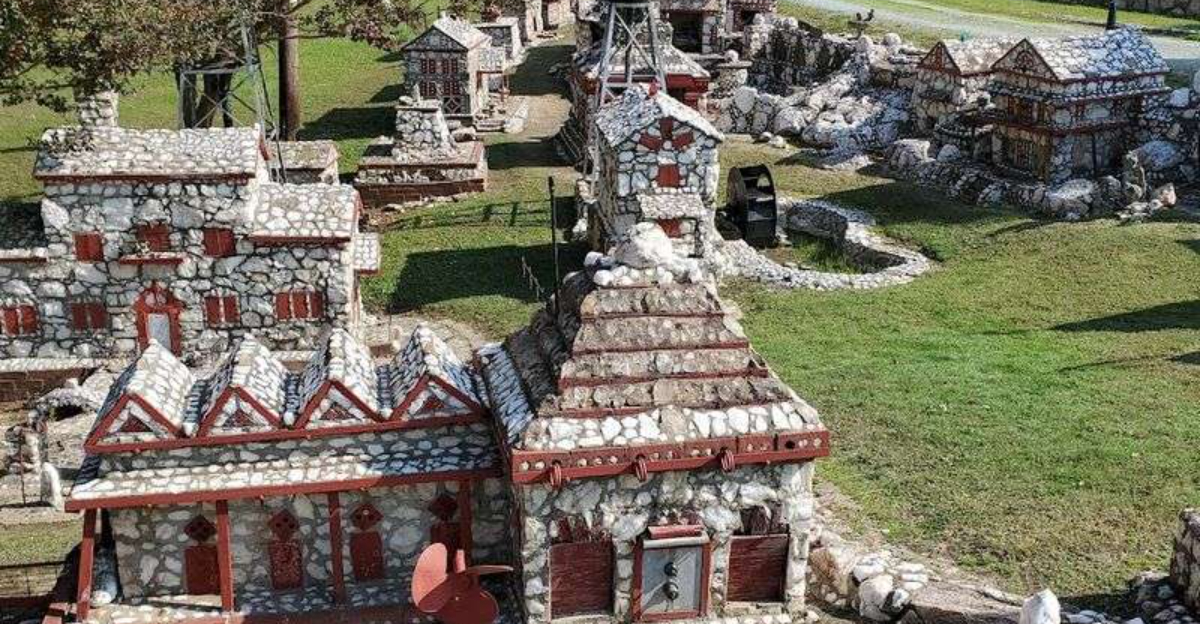
Tucked away along a quiet stretch of NC-86 in Prospect Hill, North Carolina, Shangri-La Stone Village is the kind of place that makes you do a double-take. Built by a retired farmer named Henry Warren starting in the 1970s, this miniature stone village is a one-of-a-kind piece of folk art that has charmed visitors for decades.
It’s completely free to visit, easy to find, and packed with surprising details that reward anyone willing to slow down and look closely. If you love quirky roadside discoveries, this hidden gem deserves a spot on your must-see list.
The Remarkable Story Behind Henry Warren’s Vision

Not every legend starts with a grand announcement. Henry Warren was a retired farmer who quietly began turning his property in Prospect Hill, North Carolina into something extraordinary during the 1970s.
With no formal training, he built an entire miniature village using stone, mortar, quartz, brick, and all kinds of reclaimed materials.
What makes his story so moving is that he did it purely out of love and creativity. There were no ticket sales, no grand opening ceremonies, just a man with a vision and the patience to see it through.
Warren invited the public to enjoy his work freely, and that generous spirit still lives on today.
He has since passed away, but his handcrafted village continues drawing visitors from across the country. His legacy is proof that one person’s quiet dream can become a community treasure that lasts far beyond a single lifetime.
What Shangri-La Stone Village Actually Looks Like

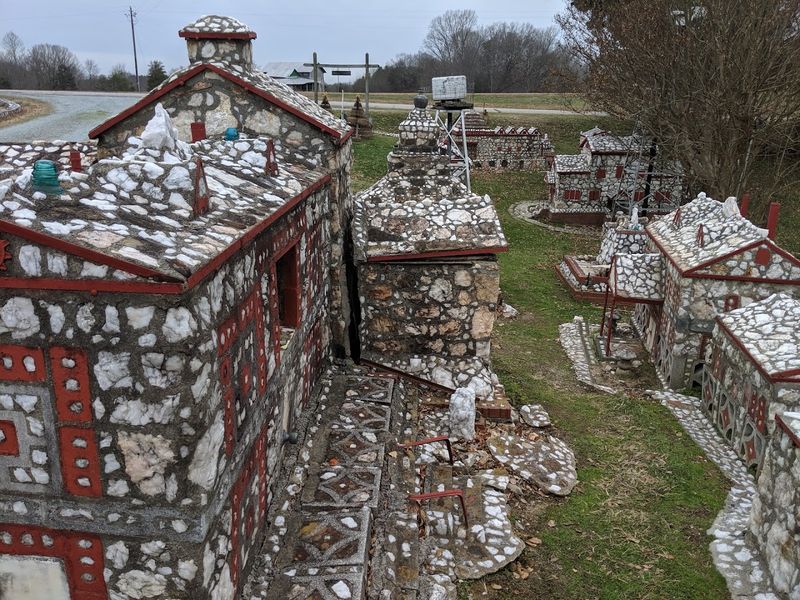
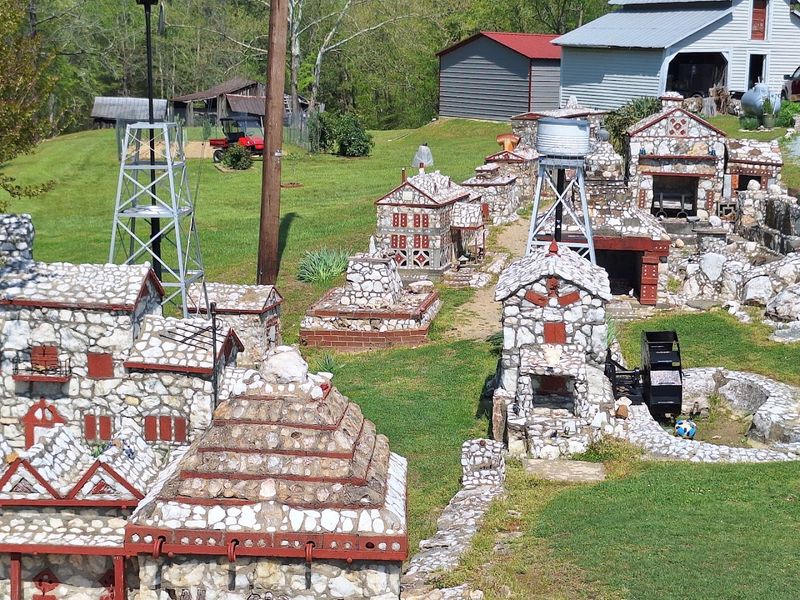
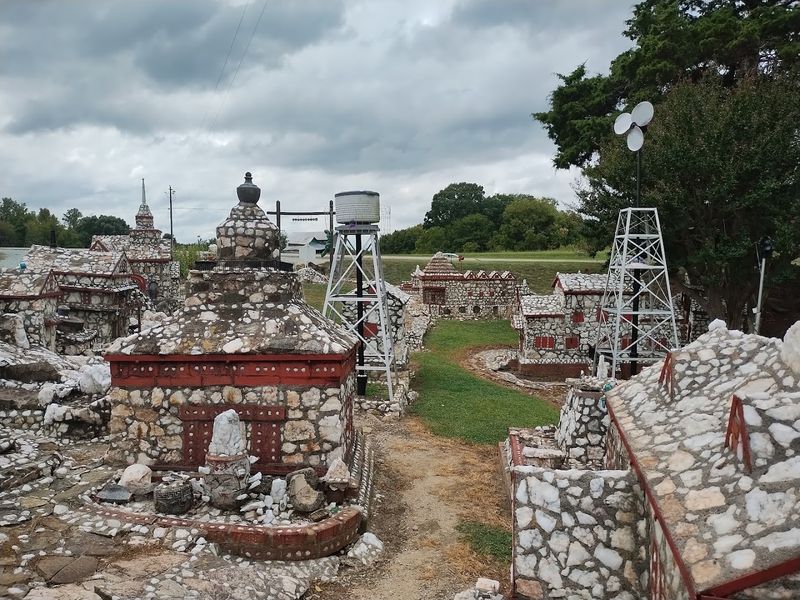
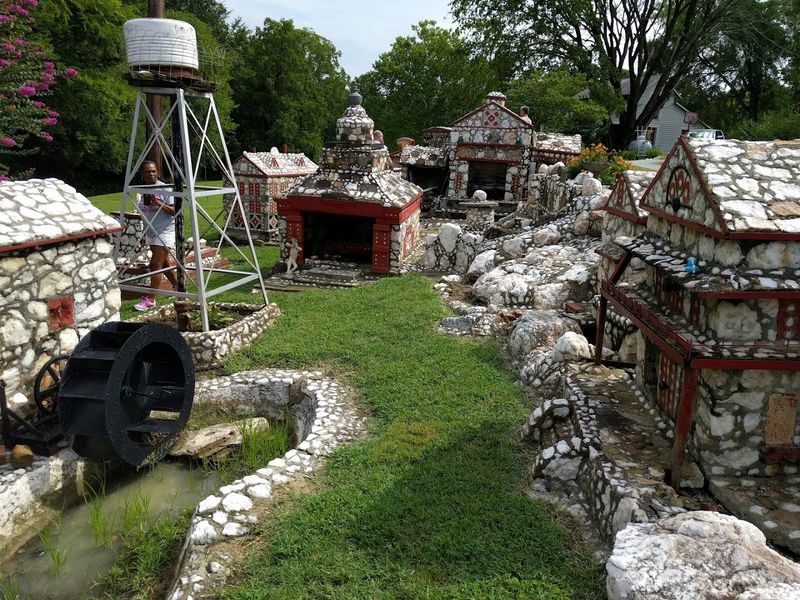
Picture a row of tiny buildings no taller than five feet, each one carefully crafted from stone, quartz crystals, brick, and recycled materials. That is exactly what greets you when you pull up to Shangri-La Stone Village on NC-86 in Prospect Hill.
The structures include miniature churches, small houses, and even a grist mill, all arranged like a real working town.
Every building is packed with fine details that reward a slow, curious walk. Quartz crystals and rose quartz pieces decorate rooftops, catching sunlight in ways that feel almost magical.
Aqua phone insulators top several roofs, and a gear shift cleverly serves as a mill wheel.
The whole village sits on a sloping yard, almost as if it was carved out of the hillside perfectly. Visitors often say it looks far bigger and more detailed than they expected from photos alone.
Getting There and Finding Parking Without Any Hassle

Finding Shangri-La Stone Village is surprisingly straightforward. The address is 11535 NC-86 in Prospect Hill, North Carolina, and the village sits right along the roadside, making it easy to spot as you drive by.
Many visitors have stumbled upon it completely by accident and stopped out of pure curiosity.
Parking is free and relatively simple. Street parking is available directly in front of the property, and the volunteer fire department next door has a gravel lot that visitors have used when needed.
Just be respectful and avoid blocking the fire department garage doors.
No tickets are required, no reservations are needed, and no staff will stop you at a gate. You simply pull up, get out, and start exploring.
For road trippers planning a route between cities like Raleigh and Roanoke, this makes for an effortless and rewarding detour that costs absolutely nothing.
Admission Is Free and Always Has Been

One of the most refreshing things about Shangri-La Stone Village is that it has always been completely free. Henry Warren built this place as a gift to the public, and that tradition has never changed.
There are no entrance fees, no donation boxes pressuring you at the gate, just friendly signs welcoming you to look around and enjoy yourself.
For families traveling on a budget, this is a wonderful find. You can spend 20 to 30 minutes exploring every structure, signing the guest book, and taking photos without spending a single dollar.
That kind of generosity feels rare in today’s world of paid experiences and tourist traps.
Several reviewers have mentioned wishing there was a way to leave a tip or contribute to maintenance costs, which shows how much people appreciate the place. For now, the best way to give back is simply to share it with others.
Signing the Guest Book Is a Must-Do Moment

Tucked inside a mailbox at the entrance of Shangri-La Stone Village is something wonderfully old-fashioned: a guest book. Visitors are invited to write their name, the date of their visit, and where they traveled from.
It sounds simple, but flipping through those pages and seeing entries from people all over the country adds a surprisingly emotional layer to the whole experience.
Along with the guest book, there is an article about the construction of Shangri-La and the man who built it. Reading it while standing right there among the tiny stone buildings gives you a much deeper appreciation for what you are looking at.
Do not rush past the mailbox on your way in. Take a minute to read a few entries, add your own, and feel connected to the long line of curious travelers who have stood in exactly the same spot and felt exactly the same wonder.
The Quirky Toys and Tokens Left by Visitors
Walk slowly through Shangri-La Stone Village and you will start noticing something delightful tucked into doorways, windowsills, and corners of the tiny buildings. Visitors have been leaving small tokens for years, including miniature toys, painted rocks, coins, and even single earrings.
These little offerings have turned the village into a living, ever-changing art installation.
The toys in particular give the village a playful personality. Kids who visit often feel like the tiny buildings have actual citizens living inside them, which sparks imagination in a way that no museum exhibit ever could.
One reviewer described the whole scene as magical and whimsical, and it is hard to argue with that.
If you plan to visit, consider bringing something small to leave behind. A painted rock, a tiny figurine, or even a special coin makes you part of the ongoing story of this remarkable place.
Incredible Craftsmanship Hidden in Every Detail
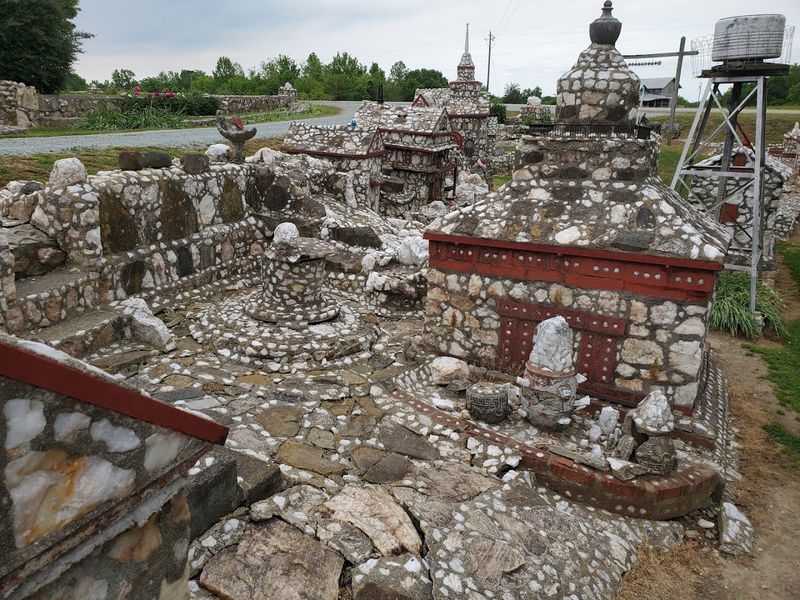
Henry Warren was not a trained architect or stonemason, which makes the craftsmanship at Shangri-La Stone Village even more jaw-dropping. Look closely at any structure and you will find details that took serious skill and patience to pull off.
Quartz crystals and rose quartz pieces cover rooftops like natural tile, glittering in the sunlight in ways that stop visitors mid-step.
Recycled and reclaimed materials appear throughout the village in surprisingly clever ways. A milk crate becomes a front porch.
A gear shift doubles as a grist mill wheel. Aqua phone insulators perch atop rooflines like tiny decorative finials.
Every piece has a purpose and a personality.
Stone used for the structures was quarried directly from the property, which means the village is quite literally made from the land it sits on. That connection between the earth and the art gives Shangri-La a rootedness that feels deeply intentional and beautifully human.
Perfect Stop for Photographers Looking for Something Unique

If you carry a camera wherever you go, Shangri-La Stone Village will absolutely deliver. The combination of tiny stone buildings, sparkling quartz rooftops, colorful visitor tokens, and a gently sloping yard creates a visual playground that rewards every angle you try.
Getting low to the ground makes the miniature structures look almost life-sized, which produces some genuinely stunning shots.
The lighting here can be magical, especially in the morning or late afternoon when sunlight catches the quartz crystals embedded in the rooftops. Shadows and textures across the rough stone surfaces add depth that flat photography rarely captures, so this is a place worth visiting with intention.
Photographers who love folk art, Americana, or roadside oddities will find plenty to work with. Even smartphone snappers walk away with gallery-worthy images.
One reviewer called it a perfect stop for anyone looking for something different, and the photos prove that point every time.
How Long Should You Plan to Spend There
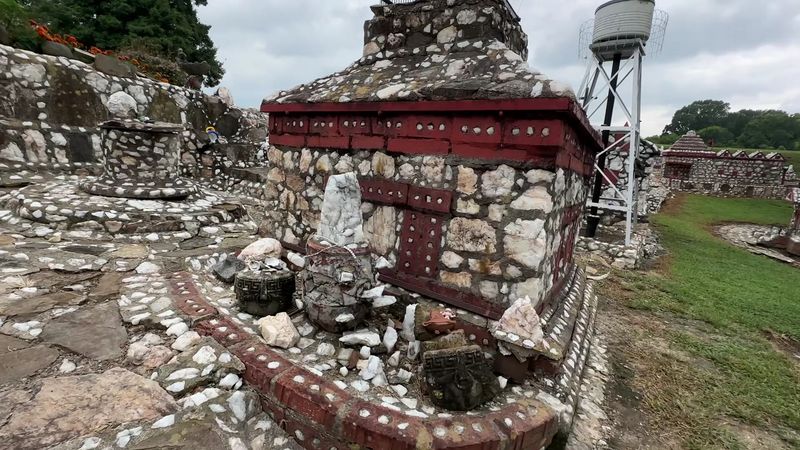
Honest answer: you can see the entire village in as little as five minutes if you rush. But rushing through Shangri-La Stone Village means missing most of what makes it special.
Visitors who take their time, peering into tiny windows, reading the guest book, and examining individual structures, typically spend between 20 and 30 minutes on site.
Families with kids tend to linger longer because children love discovering the toys and trinkets tucked inside the buildings. Dog owners will be happy to know the site is pet-friendly, so leashed pups are welcome to explore alongside their humans.
The open-air layout means there is plenty of space without feeling crowded.
Think of it as a refreshing pause rather than a major destination. It fits perfectly into a larger road trip itinerary as a low-pressure, high-reward stop that gives everyone a chance to stretch their legs and shake off the highway monotony.
Nearby Attractions Worth Pairing With Your Visit
Shangri-La Stone Village is a great anchor for a half-day adventure in the Prospect Hill area. Just a couple of miles up the road sits the old Warren’s Store, which has been reimagined as Cackawacky Vintage.
It is open Friday through Sunday and offers a fun browse through antiques, collectibles, and quirky finds that match the spirit of the stone village perfectly.
The surrounding countryside is also worth a slow drive. The rural roads around Prospect Hill offer beautiful scenery, especially in fall when the foliage turns.
Birdwatchers will appreciate the area too. One visitor reported spotting 18 different bird species using a birding app during a single visit to the stone village.
For those traveling between Raleigh and Roanoke, this stretch of NC-86 makes for an ideal scenic detour. Combining Shangri-La with Cackawacky Vintage gives you a genuinely memorable couple of hours off the beaten path.
What Makes This Place Feel Different From Other Roadside Attractions
Plenty of roadside attractions grab your attention with flashy signs and inflated promises. Shangri-La Stone Village does the opposite.
There is no marketing hype, no gift shop, and no tour guide. What you get instead is a quiet, deeply personal piece of folk art that feels like stumbling into someone’s private world.
Reviewers consistently describe it as feeling like a labor of love rather than a tourist product. That distinction matters.
You sense the hours, the care, and the imagination that went into every stone placement. It does not feel manufactured or commercial.
It feels human in the truest sense.
The absence of crowds also helps. Many visitors arrive to find themselves completely alone with the village, free to explore at their own pace without anyone rushing them along.
That kind of unhurried, personal experience is increasingly rare, which is exactly why Shangri-La feels so refreshing and genuinely worth seeking out.
Tips for Making the Most of Your Visit
A few small preparations can turn a good visit into a great one. First, bring something to leave behind.
Painted rocks, small toys, coins, or any little token you feel connected to will become part of the village’s ongoing story. It is a tradition that makes the experience feel participatory rather than passive.
Wear comfortable shoes since the yard slopes and the ground is uneven in places. Bring a camera or make sure your phone is charged because you will absolutely want photos.
Morning visits tend to offer softer light and a better chance of having the village to yourself.
Read the article in the guest book mailbox before you start walking around. Understanding Henry Warren’s story before you look at his work changes everything.
Suddenly each stone structure carries weight and meaning that a quick glance alone would never reveal. Slow down, breathe it in, and let the place surprise you.
Why Shangri-La Stone Village Deserves Way More Attention

With a 4.8-star rating across hundreds of reviews, Shangri-La Stone Village is clearly doing something right. Yet most people in North Carolina have never heard of it.
That gap between quality and recognition is exactly what makes it such a special find for those who stumble upon it.
Folk art of this scale and sincerity deserves a wider audience. Henry Warren spent years building something beautiful, functional, and entirely free for anyone to enjoy.
Places like this are becoming rarer as land gets developed and personal creative projects get bulldozed in favor of progress.
Sharing Shangri-La with friends, posting about it on social media, or simply telling someone about it after your visit helps keep its memory alive. One reviewer mentioned visiting for over 50 years, which says everything about the kind of lasting impression this tiny village leaves.
Some places earn their magic quietly, and this is absolutely one of them.
Enjoyed this story?
Add Fast Food Club as a preferred source to see more of our reporting on Google.