


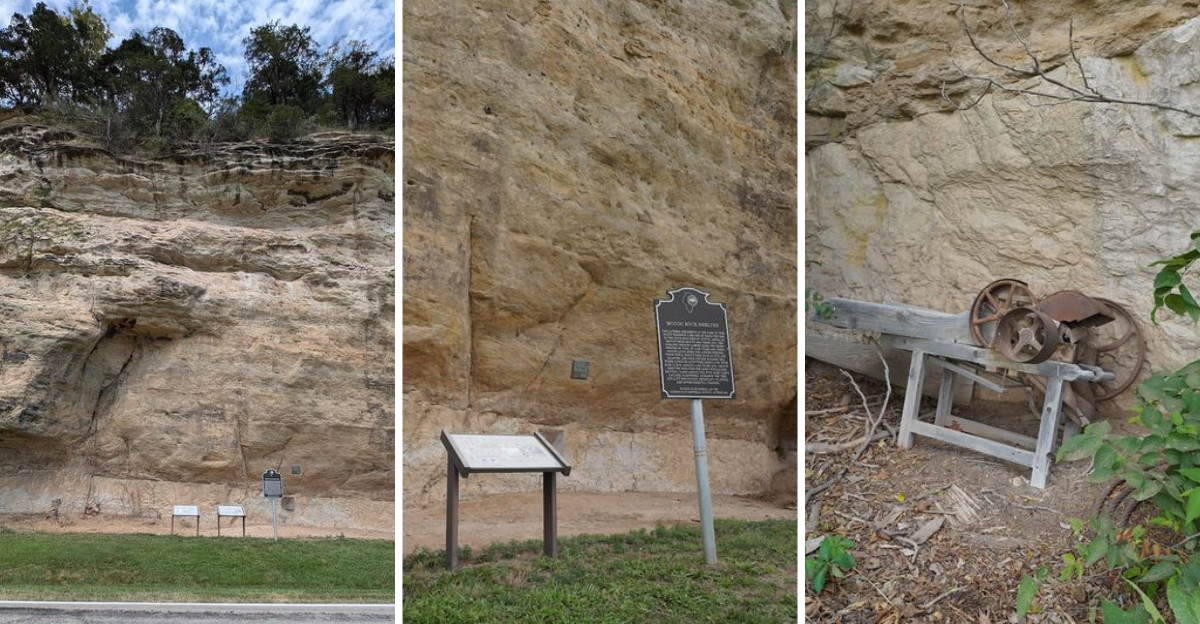
Tucked along a quiet two-lane highway near Prairie Du Rocher, Illinois, the Modoc Rock Shelter is one of the most remarkable prehistoric sites in the entire Midwest. For thousands of years, ancient people used this natural limestone overhang as a home, a meeting place, and a source of survival.
Archaeologists have uncovered layer upon layer of human history buried beneath its floor, making it a true window into the distant past. Whether you are a history lover or just someone who enjoys a good road trip discovery, this hidden gem is worth knowing about.
A Natural Shelter That Stood the Test of Time
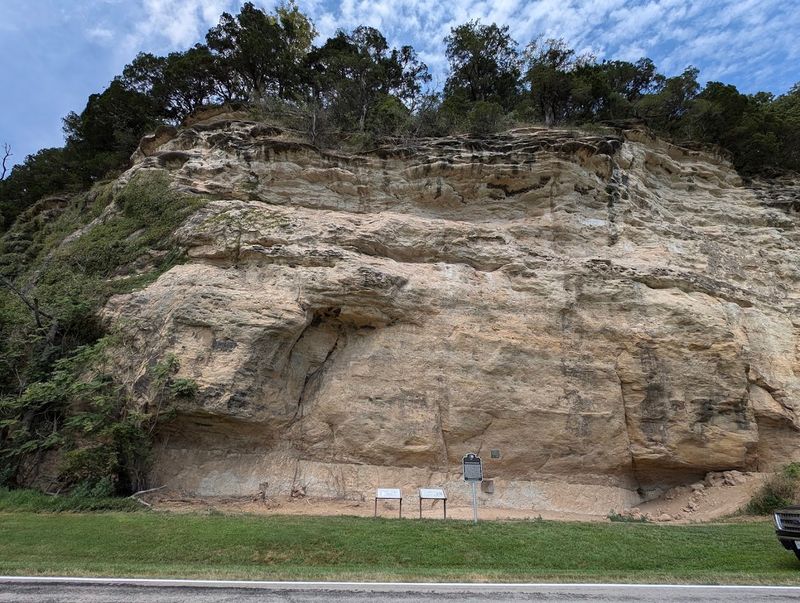
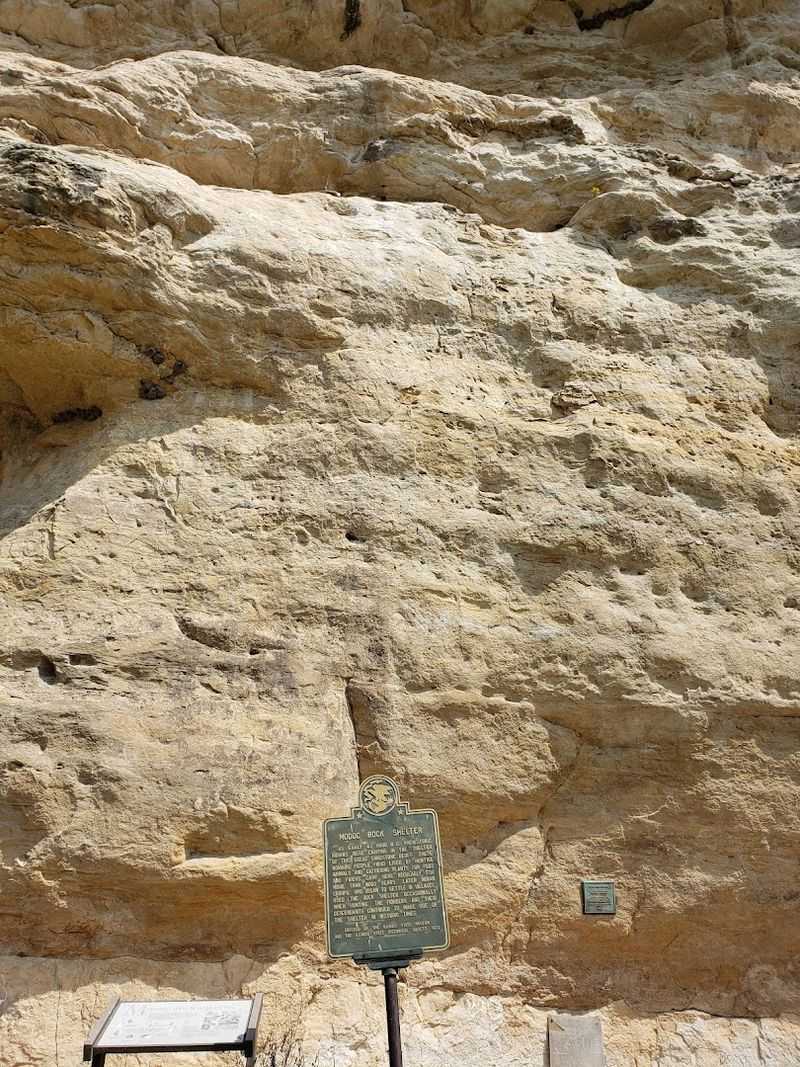
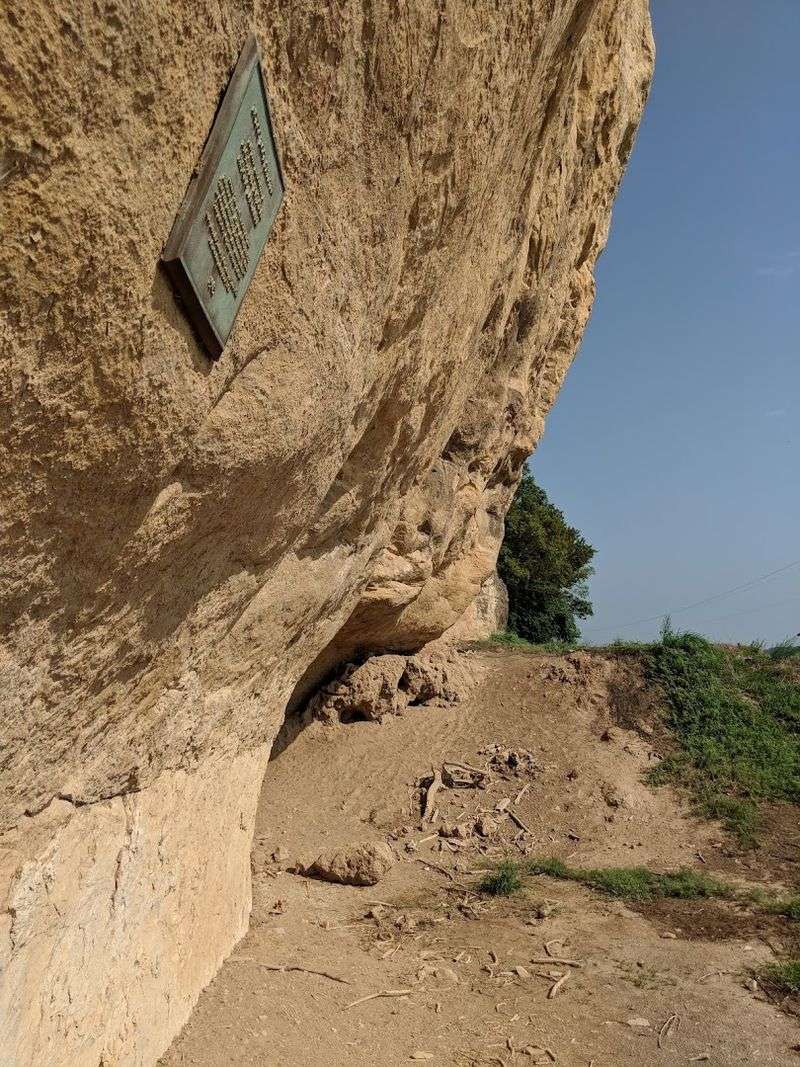
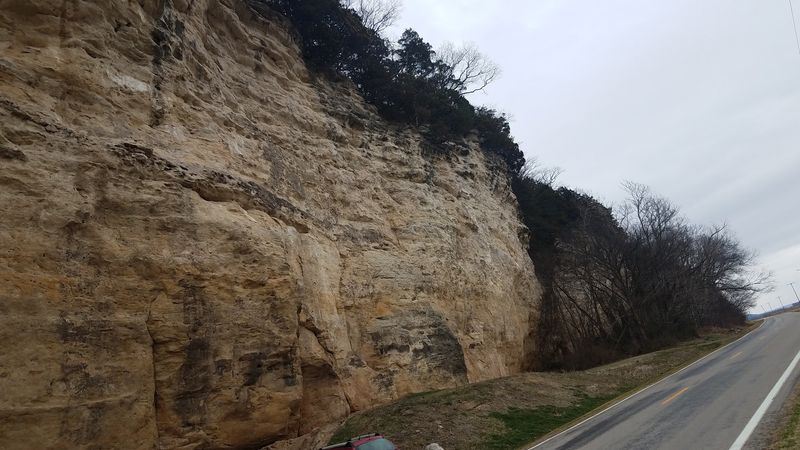
Long before modern buildings existed, nature provided its own version of shelter. The Modoc Rock Shelter is a massive limestone overhang carved by ancient geological forces along the bluffs of the Mississippi River valley near Prairie Du Rocher, Illinois.
What makes this place extraordinary is how perfectly it served human needs. The overhanging rock provided protection from wind, rain, and harsh temperatures for thousands of years.
People kept returning to this spot generation after generation, leaving behind clues about their daily lives.
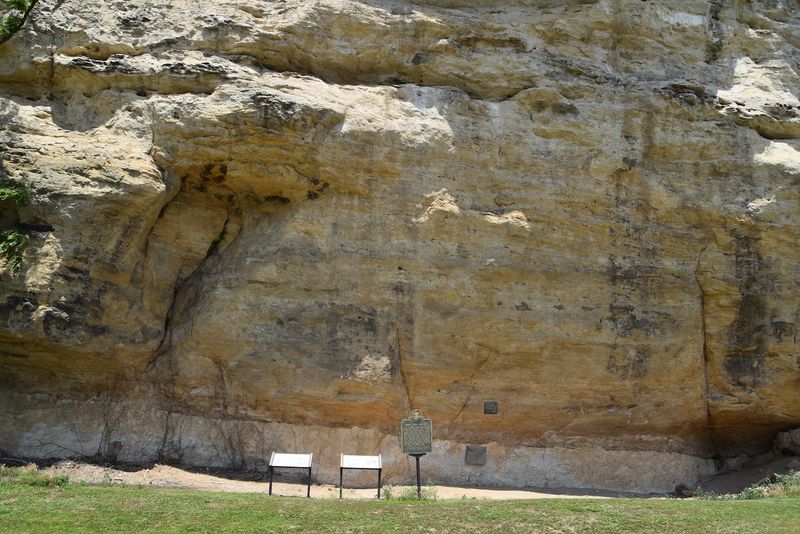
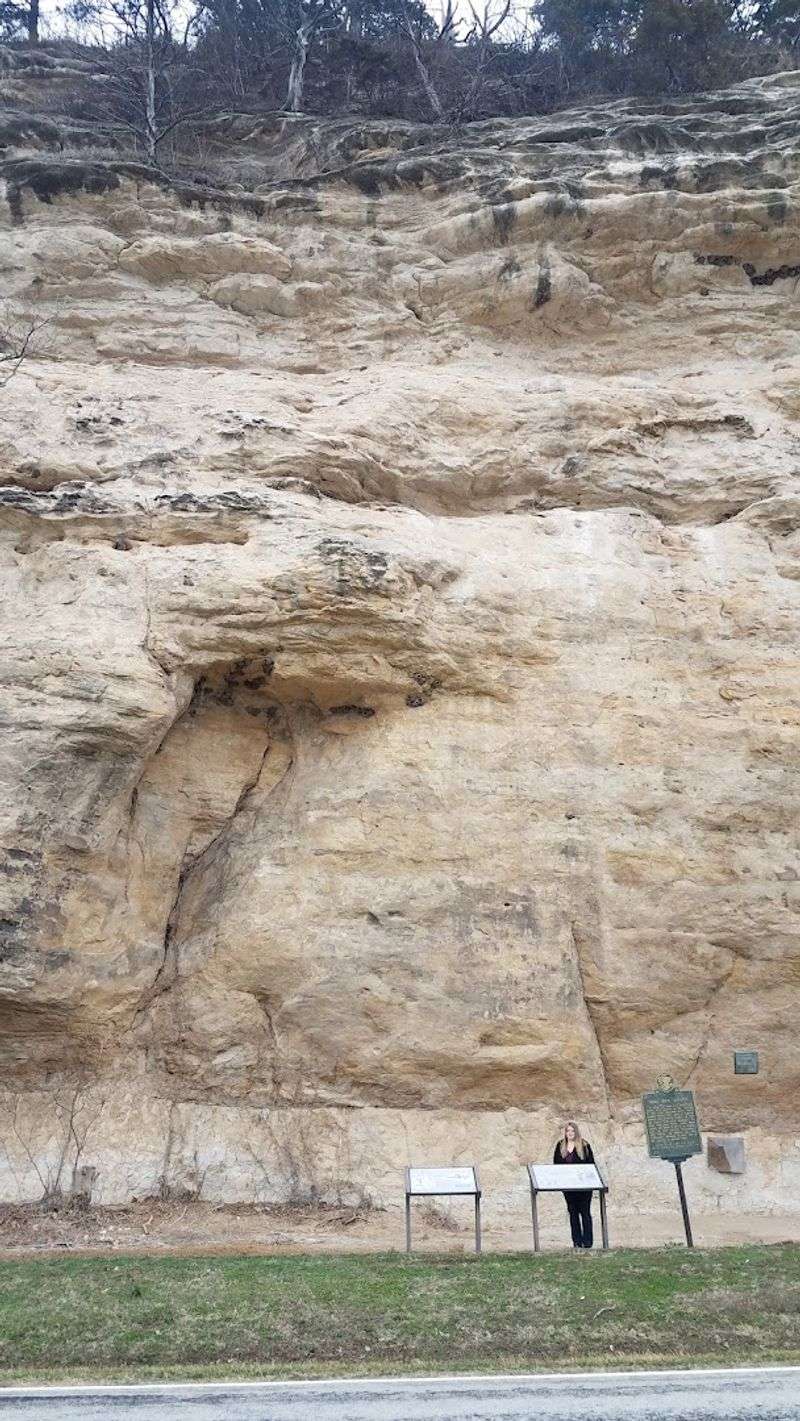
Visitors today can still see the impressive rock face rising above the roadside. Even without stepping inside, standing near it gives you a powerful sense of how ancient people saw the natural world as their home.
The shelter’s sheer size and presence make it genuinely awe-inspiring to witness in person.
Over 10,000 Years of Human Occupation
Few places in North America can claim a human history as deep as the Modoc Rock Shelter. Archaeological evidence suggests people lived at or near this site for more than 10,000 years, making it one of the oldest continuously used locations in the entire Midwest.
That kind of timeline is almost impossible to wrap your head around. When the earliest people arrived here, woolly mammoths were still roaming parts of the continent.
Generation after generation found value in this sheltered spot along the bluffs.
Researchers discovered this remarkable depth of occupation by carefully excavating the site down nearly 25 feet. Each layer of soil told a different chapter of the story, revealing how cultures changed, adapted, and survived across millennia.
Modoc is not just old — it is profoundly, almost unimaginably old in human terms.
The 1952 Excavation That Changed Everything
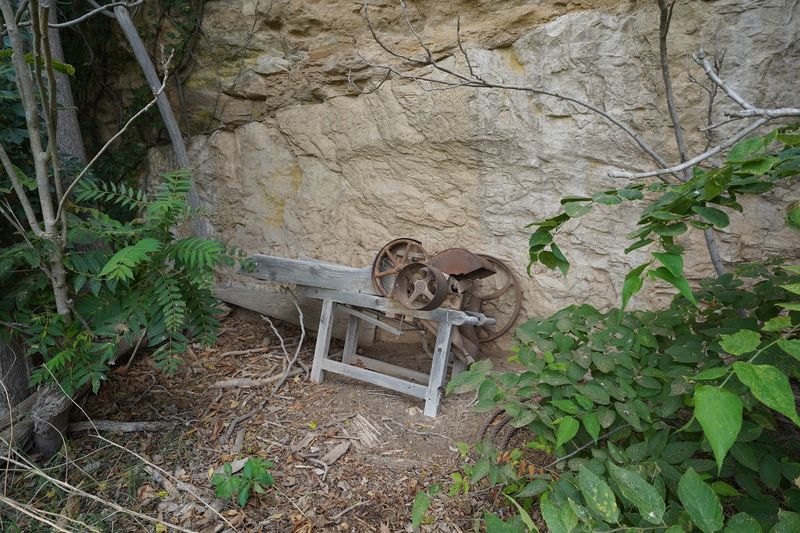
Back in 1952, a team of archaeologists from the Illinois State Museum began one of the most significant excavations in Midwestern history right here at Modoc. What they uncovered would reshape how scientists understood prehistoric life in the region.
Digging down nearly 25 feet through tightly packed sediment, researchers found thousands of artifacts, animal bones, and plant remains. Each level represented a different era of human activity, stacked like pages in a very old book.
The sheer depth of the dig made headlines in the archaeological community.
Before this excavation, experts had little idea that people were living in this part of Illinois so far back in time. Modoc essentially rewrote the early chapters of Illinois history.
The 1952 dig remains one of the landmark moments in American archaeology and continues to inform research decades later.
Archaic Period People Called This Place Home
The people most closely associated with Modoc Rock Shelter belonged to what archaeologists call the Archaic period, roughly spanning from 8,000 to 1,000 BCE. These were skilled hunter-gatherers who knew the land intimately and used every available resource around them.
They hunted deer, elk, and smaller animals. They fished the nearby rivers and gathered wild plants, nuts, and berries.
Modoc gave them a reliable, sheltered base from which to operate throughout the changing seasons.
Artifacts recovered from the site include spear points, bone tools, grinding stones, and shell ornaments — all signs of a rich and organized way of life. These were not wandering nomads without purpose.
They were resourceful, intelligent communities who built meaningful lives in this landscape long before written history began. Their story deserves to be told and remembered.
What the Artifacts Tell Us About Daily Life
Every object pulled from the soil at Modoc carries a story. Archaeologists recovered thousands of artifacts during excavations, and each one offers a tiny but meaningful peek into how ancient people lived, worked, and expressed themselves.
Stone spear points reveal hunting strategies and show how weapon technology evolved over centuries. Grinding stones suggest that plant foods like seeds and nuts were an important part of the diet.
Bone tools point to sophisticated craftsmanship and the clever use of animal remains.
Perhaps most touching are the personal items — shell beads and ornaments that suggest ancient people cared about beauty and identity just as we do today. Finding these objects thousands of years later creates an unexpected human connection across time.
Modoc’s artifacts are not just museum pieces; they are voices from people who lived full, complex lives right here in Illinois.
The Role of the Mississippi River Valley in Survival
Location was everything for ancient people, and Modoc’s position in the Mississippi River valley was no accident. The river provided a constant supply of fresh water, fish, and waterfowl, while the surrounding forests and prairies offered game, edible plants, and raw materials for tools.
The bluffs themselves served as natural landmarks that helped people navigate the landscape. Seasonal flooding of the river deposited rich soil, encouraging plant growth that attracted animals and made foraging easier.
Living near the bluffs meant having both shelter and access to abundant food sources nearby.
Even today, driving through this part of southern Illinois, you can feel why ancient communities were drawn here. The river valley is beautiful, fertile, and full of life.
Modoc sits at the heart of a landscape that has supported human beings — and countless other species — for an almost unimaginable stretch of time.
National Historic Landmark Status and Why It Matters
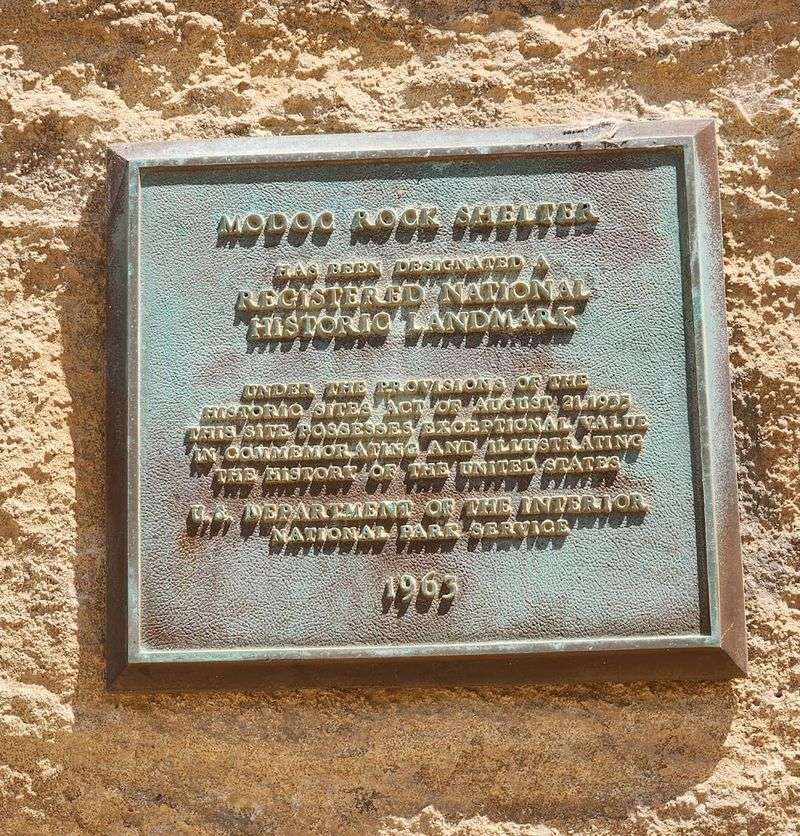
Earning National Historic Landmark status is no small achievement. Only a tiny fraction of historic properties in the United States receive this designation, and Modoc Rock Shelter is among them — recognized for its exceptional importance to American prehistory and archaeology.
This status means the federal government acknowledges Modoc as irreplaceable. Landmarks like this are protected from development and destruction, ensuring that future generations can still learn from and visit them.
Without that protection, sites like Modoc can disappear forever under roads, buildings, or neglect.
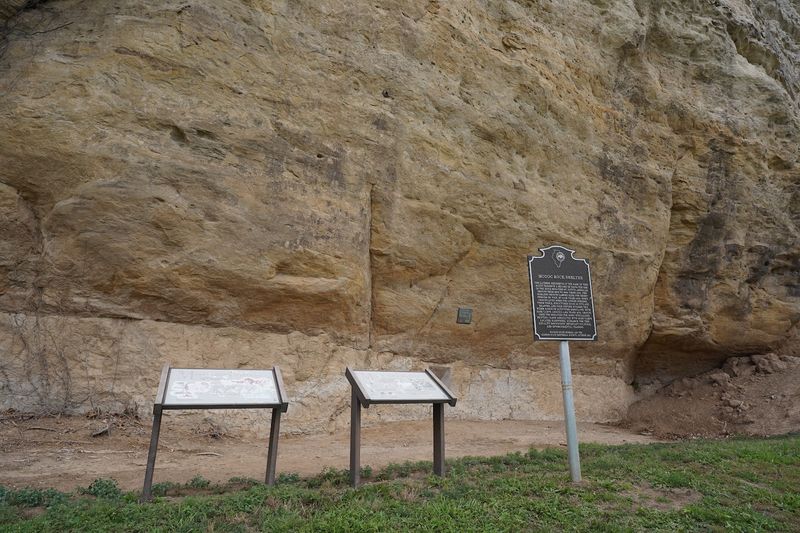
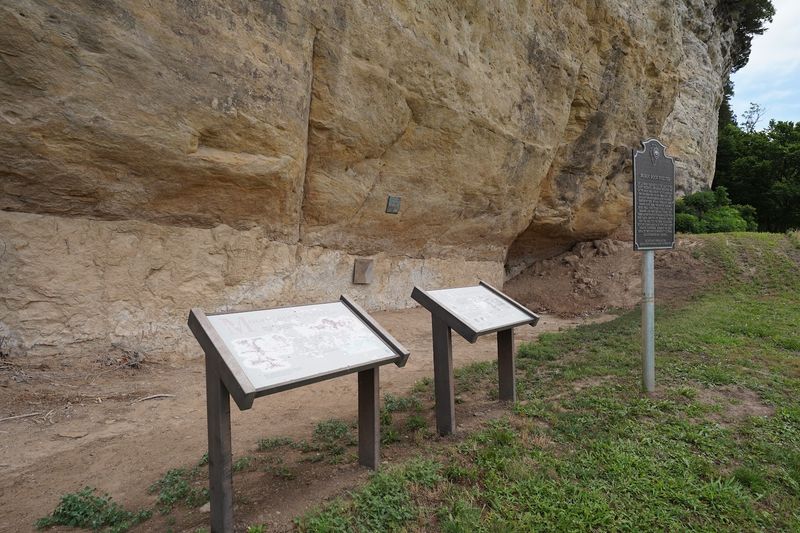
For visitors, the landmark designation is a helpful signal that you are standing somewhere genuinely significant. Plaques on-site explain the history and importance of the shelter.
Though the signage has seen better days according to some visitors, the stories those signs carry remain as powerful as ever. Protecting Modoc means protecting a piece of all of our shared human story.
Cliff Swallows and the Living Ecosystem Around the Shelter
History is not the only thing thriving at Modoc Rock Shelter. Nature has claimed a share of this ancient space too.
Cliff swallows have built dozens of mud nests beneath the rock overhang, turning the prehistoric shelter into a busy bird community each spring and summer.
Watching these small, acrobatic birds swoop and dart around the bluff is genuinely delightful. They use the same sheltering qualities that attracted ancient humans — protection from rain and wind — to raise their young.
In a way, the swallows are continuing a very long tradition of calling Modoc home.
The surrounding landscape is equally alive with native plants, insects, and wildlife typical of the Mississippi River valley. Visiting Modoc is not just a history lesson; it is also a chance to observe a thriving natural ecosystem right alongside one of Illinois’s most important prehistoric landmarks.
Nature and history share this space beautifully.
Visiting Modoc: What to Expect When You Arrive
Honesty goes a long way when describing a visit to Modoc Rock Shelter. This is not a polished tourist attraction with a gift shop and guided tours.
What you will find is a raw, roadside landmark full of genuine historical weight — and a few practical challenges.
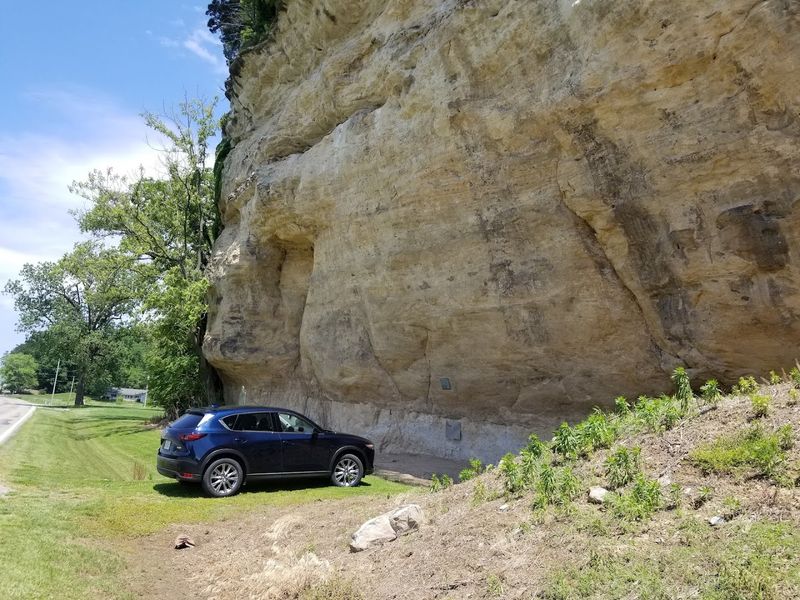
Parking is limited. Most visitors pull off onto the grass beside the highway, which sits along a moderately busy road.
The shelter itself is right there, visible from your car, and walking up to it takes only a minute or two. The site is open 24 hours a day, every day of the year.
Bring your patience and your curiosity. Read the on-site plaques carefully before looking around.
Combining a stop here with nearby attractions like Fort de Chartres State Historic Site makes for a wonderfully rich day of exploring southern Illinois history. Short visits work perfectly for this spot.
How Modoc Compares to Other Prehistoric Sites in Illinois
Illinois is surprisingly rich in prehistoric history, and Modoc Rock Shelter holds its own alongside some of the state’s most famous sites. Cahokia Mounds near Collinsville is perhaps the best-known, representing a massive Native American city that thrived around 1,000 CE.
Modoc predates Cahokia by thousands of years.
While Cahokia impresses with its enormous earthen mounds and evidence of complex urban society, Modoc offers something quieter and older — a direct connection to the earliest human inhabitants of the region. Both sites tell essential chapters of the same long story.
Visiting both in the same trip gives you an incredible sense of how Native American cultures in Illinois evolved over thousands of years. Some reviewers have suggested pairing Modoc with Fort de Chartres, just a short drive away.
Together, these sites cover an astonishing sweep of human history in one compact corner of southern Illinois.
The French Colonial Connection in the Surrounding Area
Modoc Rock Shelter sits in a region layered with history well beyond its prehistoric roots. The town of Prairie Du Rocher itself carries a French name, a reminder that French explorers and settlers arrived in this part of Illinois during the early 1700s, establishing communities along the Mississippi River bluffs.
Nearby Fort de Chartres was once the most powerful French colonial outpost in North America’s interior, controlling trade and diplomacy across a vast territory. The bluffs that sheltered ancient Archaic people later watched French soldiers, missionaries, and fur traders pass through the same landscape.
This layering of cultures — prehistoric, Native American, and European colonial — makes the Prairie Du Rocher area one of the most historically dense corners of Illinois. Modoc is the oldest chapter, but it exists within a much bigger, richer story.
Exploring all of these layers together makes for an unforgettable visit.
Why Some Visitors Feel Underwhelmed and What to Know Before You Go
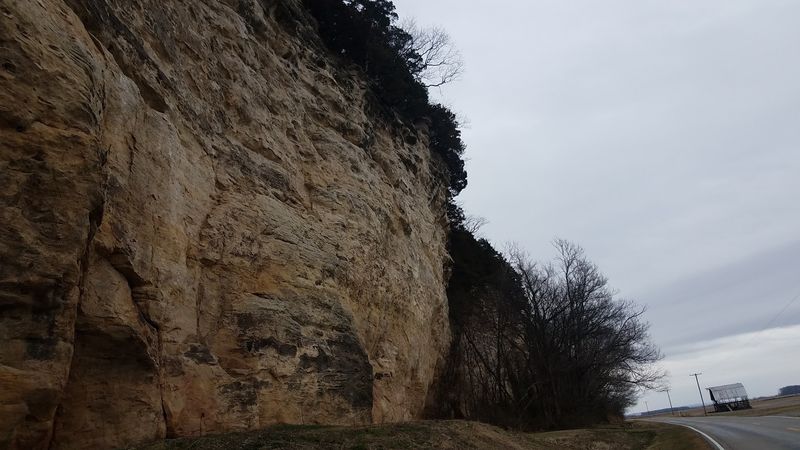
Not every visitor leaves Modoc Rock Shelter feeling blown away, and that is worth addressing honestly. Several reviews mention arriving expecting something more visually dramatic, only to find a roadside overhang with aging plaques and no formal parking area.
Managing expectations before you visit makes a real difference.
Modoc is not about spectacle. Its power lies in what happened here over thousands of years, not in what you can see with your eyes alone.
Without some background knowledge of its archaeological significance, the site can feel underwhelming to casual passersby.
Reading about Modoc before you visit — even just a few minutes of research — transforms the experience completely. Knowing that people lived here when glaciers still covered parts of North America changes how you look at that rock face.
Come curious, come informed, and you will leave with a genuine appreciation for one of Illinois’s most quietly extraordinary places.
Preserving Modoc for Future Generations
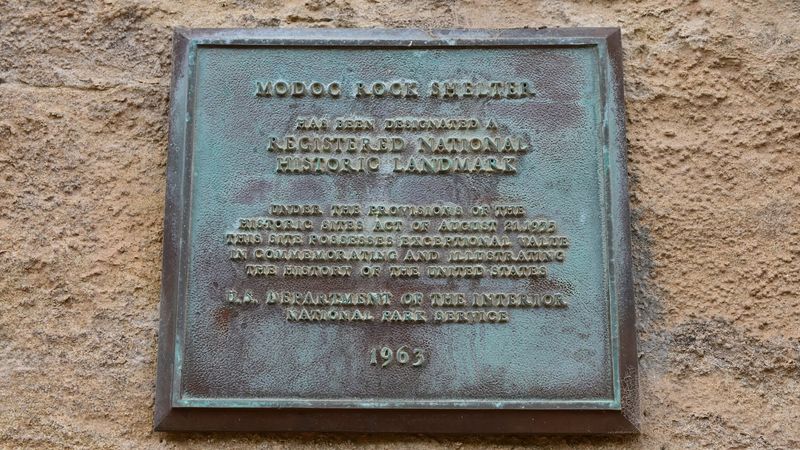
Preservation is one of the most important conversations happening around sites like Modoc Rock Shelter. Visitors have noted that the on-site signage is beginning to deteriorate, and the lack of formal parking infrastructure makes access tricky for many people.
These are real challenges that deserve attention.
National Historic Landmark status provides legal protection, but physical upkeep requires ongoing effort and funding. Organizations, local governments, and history advocates all play a role in keeping places like Modoc accessible and informative for future visitors.
Every generation has a responsibility to pass these stories forward.
You can help simply by spreading the word. Telling friends about Modoc, leaving thoughtful reviews, or supporting Illinois historical preservation organizations all contribute to keeping this remarkable site alive in the public consciousness.
Ancient places like this do not maintain themselves — they need communities of people who care enough to champion their survival and continued relevance.
Enjoyed this story?
Add Fast Food Club as a preferred source to see more of our reporting on Google.