


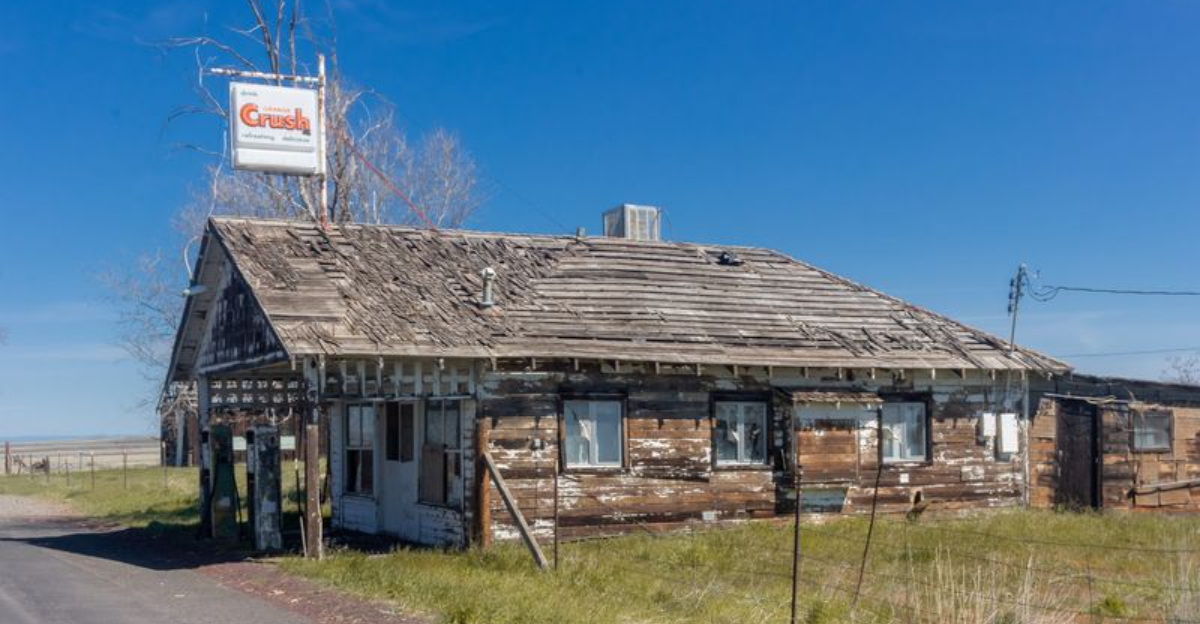
Tucked away in Sherman County, Oregon, the tiny community of Kent sits quietly at the crossroads of U.S. Route 97 and Dobie Point Road.
Once a lively stop for travelers and settlers, Kent has slowly been swallowed up by the surrounding high desert landscape, earning its reputation as one of Oregon’s most fascinating ghost towns. Nature has crept in from every direction, reclaiming buildings, roads, and memories that once defined this small but spirited place.
If you love history, mystery, and the wild beauty of the Pacific Northwest, Kent is a story you need to hear.
The Forgotten Crossroads of Sherman County
Some places earn their fame through crowds and noise. Kent, Oregon earned its place in history through silence.
Sitting right at the intersection of U.S. Route 97 and Dobie Point Road, this tiny community was once a genuine crossroads for people moving through the high desert of Sherman County.
Travelers heading between Grass Valley to the north and Shaniko to the south would pass directly through Kent. For a brief window in time, that steady flow of people gave the town a pulse.
Wagons, horses, and eventually automobiles all rolled through this same patch of Oregon earth.
Today, the intersection still exists, but the energy is gone. Sparse traffic hums past where a community once thrived.
Standing at that crossroads, you can almost feel the echoes of a busier era pressing up through the cracked pavement beneath your feet.
Sherman County’s Best-Kept Secret
Sherman County is not a place most people think of when they plan an Oregon road trip. That is exactly what makes it so special.
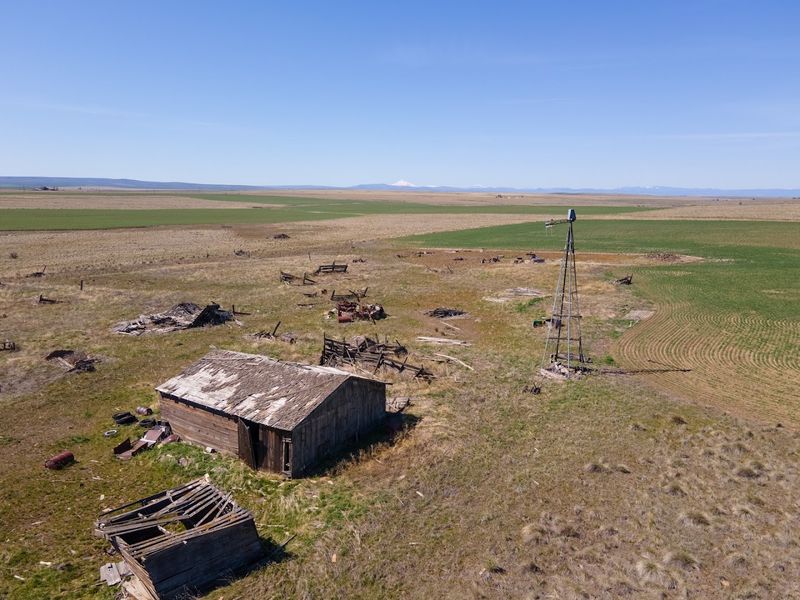
Covering a rugged stretch of the Columbia Plateau, this county is home to rolling wheat fields, dramatic canyons, and the kind of wide-open sky that makes you feel incredibly small.
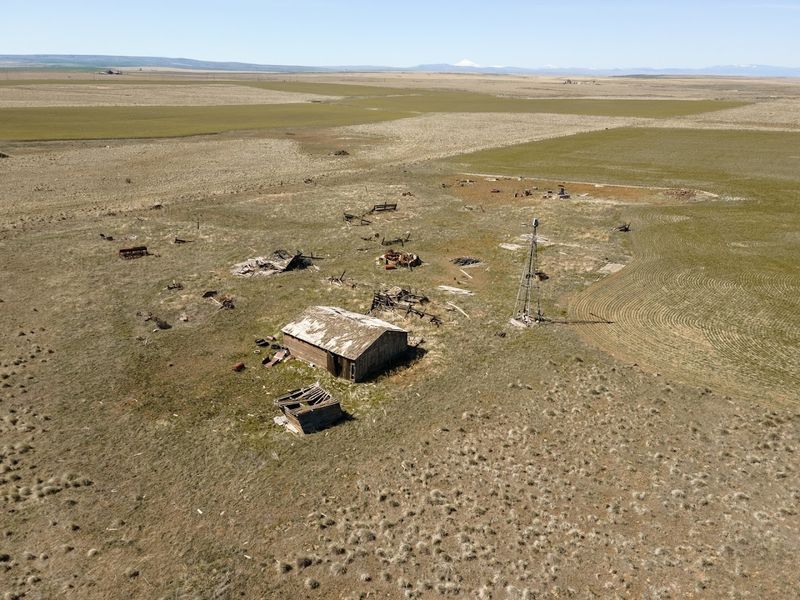
Kent fits right into that picture. Tucked among the hills and dry grasses, the community blends so seamlessly into the landscape that you could almost drive past it without realizing anything was ever there.
Locals in the region know about Kent, but outsiders rarely stumble upon it by accident.
For history enthusiasts and adventure seekers, discovering Sherman County feels like finding a door that was never meant to be opened. Behind that door is a world of forgotten stories, crumbling structures, and landscapes that look almost untouched by the modern age.
How Kent Got Its Start
Every ghost town has an origin story, and Kent’s is rooted in the practical needs of a growing Oregon frontier. The community formed in the late 1800s as settlers pushed into Sherman County, drawn by the promise of farmland and open range.
A post office was established, giving the settlement an official identity and a ZIP code that still exists today: 97033.
Having a post office was a big deal back then. It meant the government recognized your town as real, and it gave residents a sense of permanence.
Mail connected isolated communities to the outside world in ways that felt almost magical in the 1800s.
Kent grew steadily around that postal hub, with small businesses and homesteads filling in the gaps. For a generation of Sherman County families, this was home base, a place where neighbors gathered, news was shared, and community meant everything.
The Post Office That Outlasted Everything
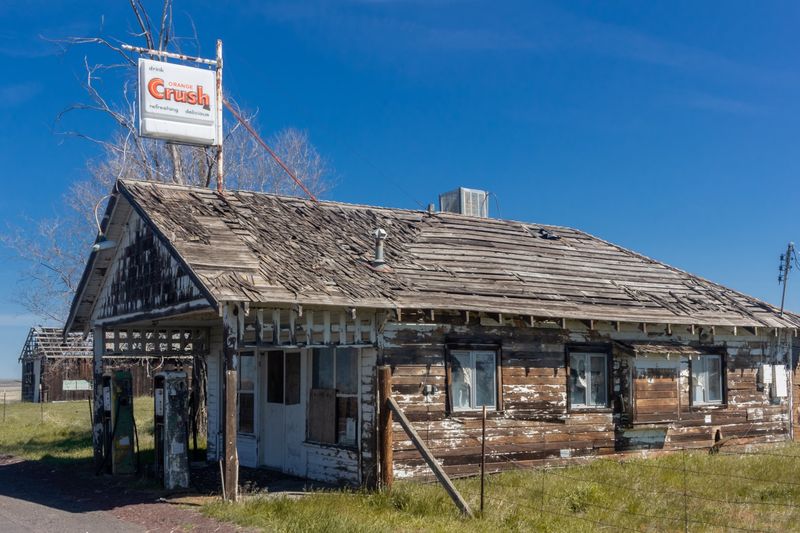
Here is something surprising about Kent: the post office is still technically active. While the town itself has largely faded from the map, the Kent post office holds on with its ZIP code 97033 still in use.
That tiny detail says a lot about how places like Kent survive, not as communities, but as administrative ghosts.
Post offices in rural areas often outlive the towns they serve. They become anchors for the handful of remaining residents and ranchers who still need a mailing address in the middle of nowhere.
In Kent’s case, the post office is one of the last official signs that this place ever existed at all.
It is oddly comforting to think about letters still being addressed to Kent, Oregon 97033. Somewhere in that ZIP code, life continues in a quiet, stubborn way that mirrors the resilience of the high desert itself.
Nature’s Slow and Steady Takeover
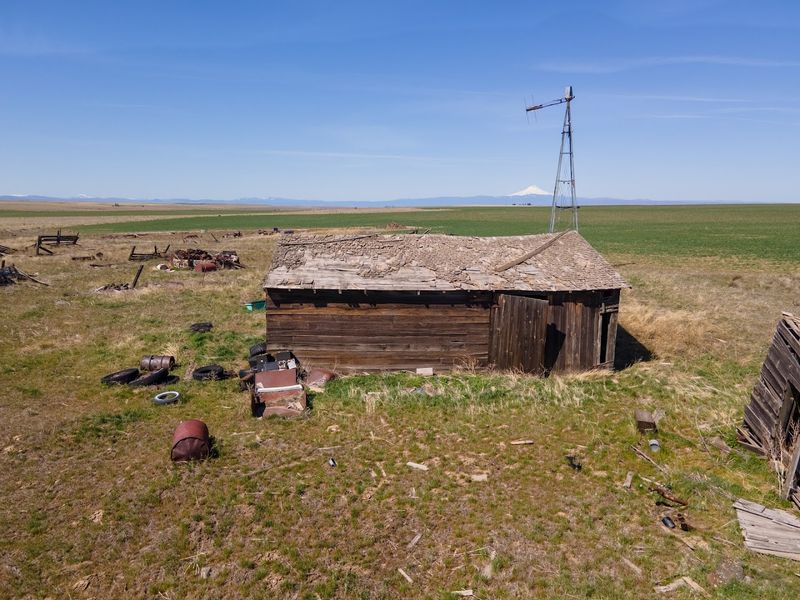
When people leave a place, nature does not wait for an invitation to move in. In Kent, the process happened gradually, the way a slow tide fills an empty beach.
Sagebrush pushed through floorboards. Grasses crept up walls.
Wind and rain worked on rooftops until they gave way entirely.
The high desert is relentless in its reclamation efforts. Unlike wetter climates where vines and trees can swallow a building in just a few years, the Oregon plateau works more patiently.
The process is slower here, but no less complete. Over decades, Kent’s structures have settled back into the earth they were built on.
Walking through the area today feels like watching a time-lapse in slow motion. Buildings that once held families, goods, and conversations are now just shapes under layers of dust and plant life.
Nature always wins in the end, and Kent is proof of that quiet, inevitable truth.
Life Between Grass Valley and Shaniko
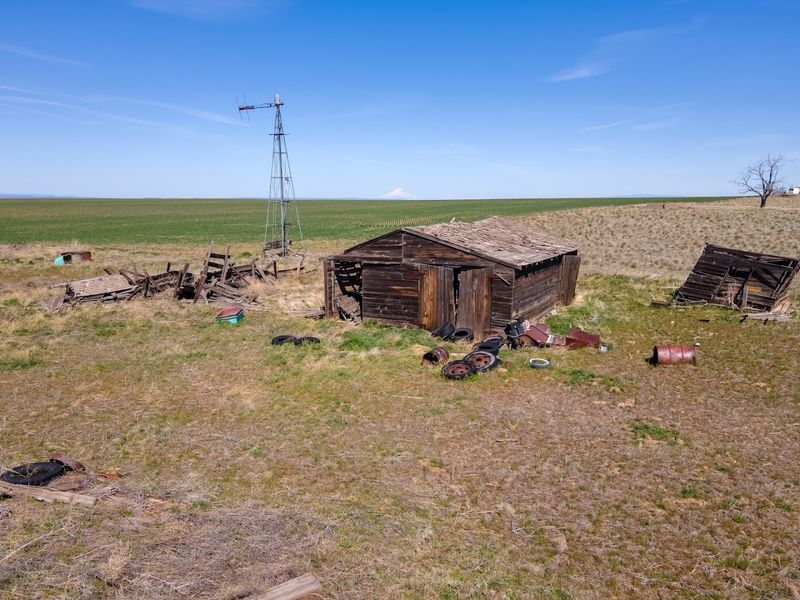
Geography shaped Kent’s identity more than almost anything else. Positioned directly between Grass Valley to the north and Shaniko to the south, the community sat in a natural travel corridor that made it a logical stopping point for anyone moving through the region.
That location was both a blessing and a curse.
Shaniko, once called the wool-shipping capital of the world, drew significant traffic through this stretch of Oregon. Grass Valley served as another modest hub of activity.
Kent sat between them like a comma in a sentence, easy to pause at but just as easy to skip over.
When transportation patterns shifted and highways bypassed smaller communities, places like Kent lost their reason for existing on a map. The traffic that once gave the town life simply rerouted itself, leaving Kent stranded between two other small towns that managed, just barely, to hang on a little longer.
The High Desert Landscape That Surrounds It All
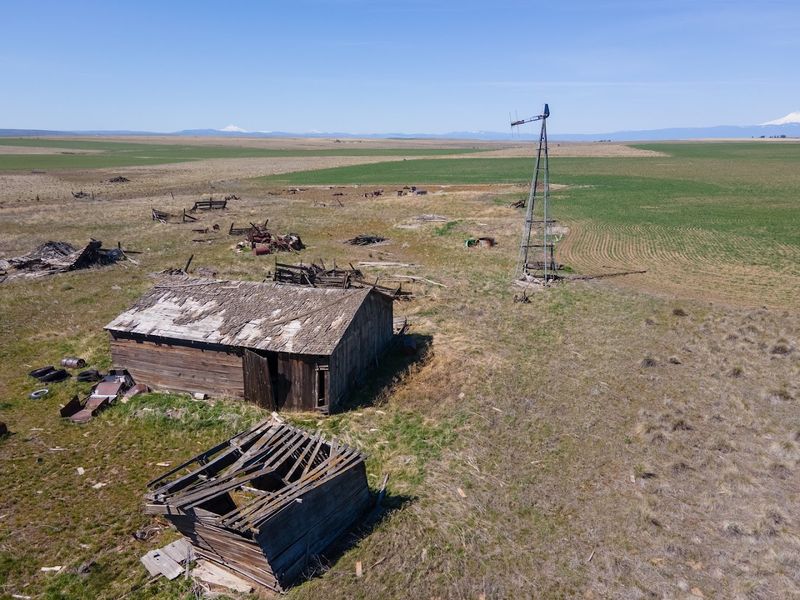
You cannot talk about Kent without talking about the land it sits on. The high desert of north-central Oregon is one of the most underrated landscapes in the entire Pacific Northwest.
Stark, windswept, and hauntingly beautiful, it stretches out in every direction like a painting that forgot to add people.
Elevation, dry air, and dramatic temperature swings define life on the Columbia Plateau. Summer days bake under a relentless sun, while winter nights can drop well below freezing.
The plants and animals that thrive here have adapted to extremes that would discourage most living things.
For visitors exploring Kent, the landscape itself becomes part of the experience. There is a raw, unfiltered quality to the scenery that feels different from Oregon’s more famous forests and coastlines.
The silence out here is not empty; it is full of wind, birdsong, and the distant rustle of grass bending in a breeze that never quite stops blowing.
Abandoned Structures Frozen in Time
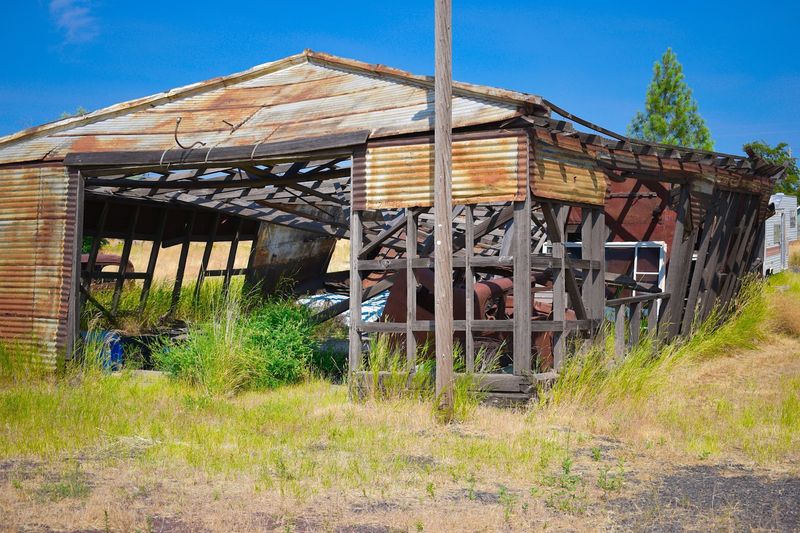
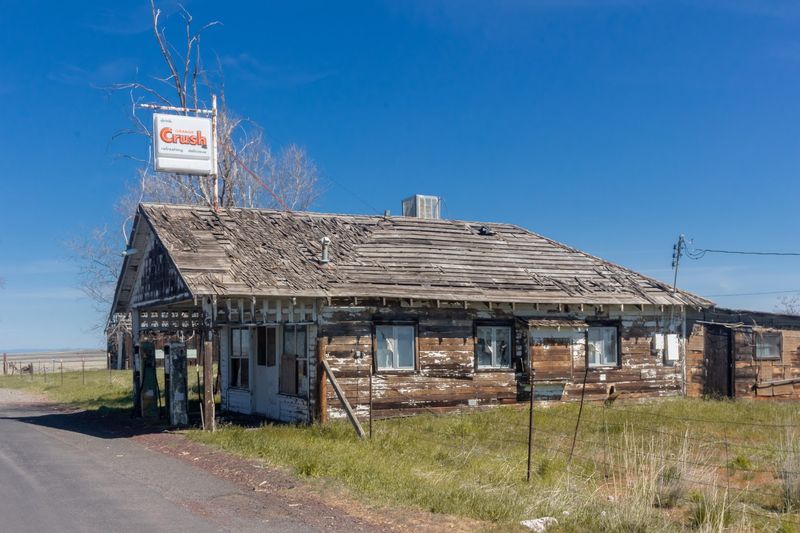
There is something deeply moving about a building that has been left behind. In Kent, the remaining structures carry that feeling in every cracked board and rusted nail.
They were built by real people with real intentions, meant to last for generations. Instead, they became monuments to impermanence.
Old farmhouses, sheds, and outbuildings dot the area in various states of collapse. Some still stand with surprising dignity, walls intact and rooflines holding their shape against the constant desert wind.
Others have given up entirely, folding into themselves like exhausted old travelers finally sitting down to rest.
Photographers and history lovers make special trips to document these structures before they disappear completely. Every visit is a race against time, because each winter storm, each dry summer, and each passing year takes a little more away.
What remains is a fragile, irreplaceable snapshot of a life that most people today can barely imagine living.
Wildlife That Moved In After the People Left
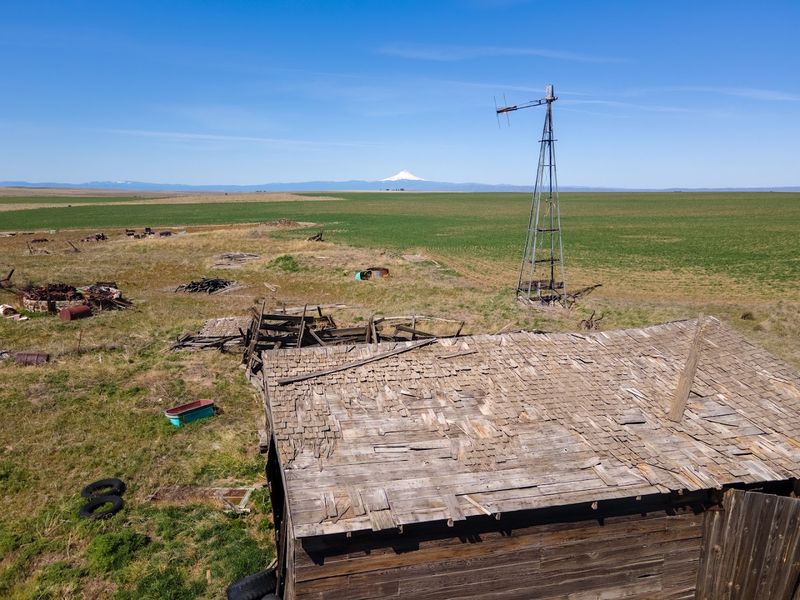
When the last residents packed up and moved on, the animals wasted no time moving in. Kent’s abandoned buildings and open land became a refuge for the kind of wildlife that prefers space over company.
Mule deer graze where gardens once grew. Hawks circle overhead where chimney smoke used to rise.
The high desert around Kent supports a surprisingly rich variety of species. Coyotes, jackrabbits, horned lizards, and a wide range of raptors all call this stretch of Sherman County home.
In a place where human activity has faded, the natural food chain has reasserted itself with quiet confidence.
Birdwatchers visiting the area are often rewarded with sightings of golden eagles, ferruginous hawks, and prairie falcons soaring above the open terrain. It is one of those places where the wildlife feels completely unbothered by visitors, going about their business as if humans were always just a temporary guest in their world.
The Eerie Quiet That Visitors Never Forget
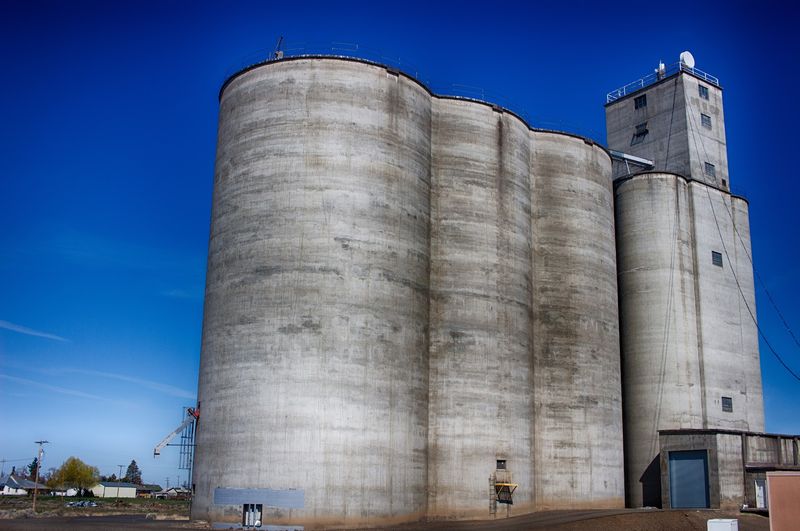
Ask anyone who has visited Kent what they remember most, and the answer is almost always the same: the quiet. Not a peaceful, Sunday-morning kind of quiet, but a deep, layered silence that feels like the land itself is holding its breath.
It is the kind of stillness that makes your own heartbeat sound loud.
Ghost towns carry a specific emotional weight that is hard to describe until you have felt it yourself. Kent delivers that feeling in full force.
Standing among the remnants of what was once a living, breathing community, you become acutely aware of everything that is missing: voices, footsteps, the smell of a wood stove, the sound of a screen door swinging shut.
That absence is the whole point. Kent does not need dramatic ruins or famous history to leave an impression.
The quiet alone is enough to make most visitors stop, look around slowly, and feel something they cannot quite name.
Why Ghost Towns Like Kent Matter to Oregon History
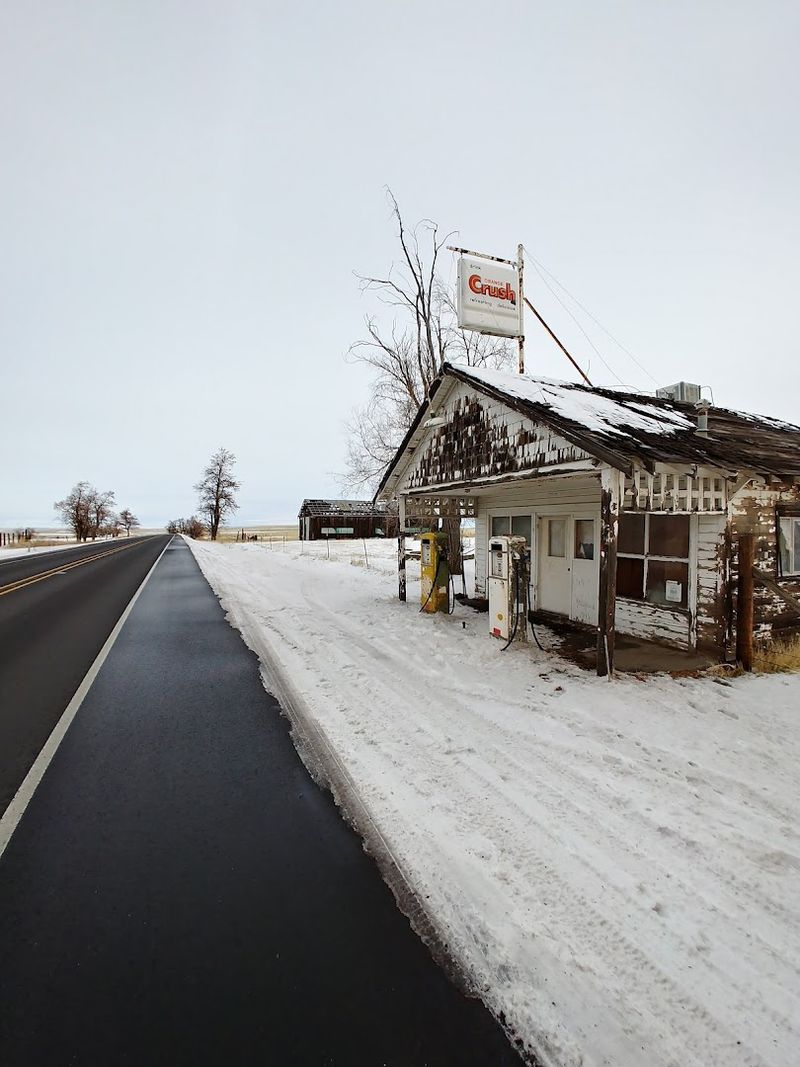
Ghost towns are not just sad footnotes in a history book. They are physical records of how people lived, what they valued, and why certain dreams did not survive the pressures of time and economics.
Kent, Oregon tells that story with honesty and without any polish applied over the hard parts.
Oregon’s settlement history is full of communities that boomed briefly and then quietly folded. Understanding why those places rose and fell helps us understand the larger forces that shaped the Pacific Northwest: railroads, agriculture, migration patterns, and the unpredictable nature of frontier economics.
Preserving awareness of places like Kent keeps those lessons alive. You do not need a museum or a monument to honor a ghost town.
Sometimes all it takes is a curious traveler willing to pull off the highway, walk around quietly, and pay attention to what the landscape is still trying to say. History speaks loudest in silence.
Road Tripping Through Oregon’s Forgotten Communities
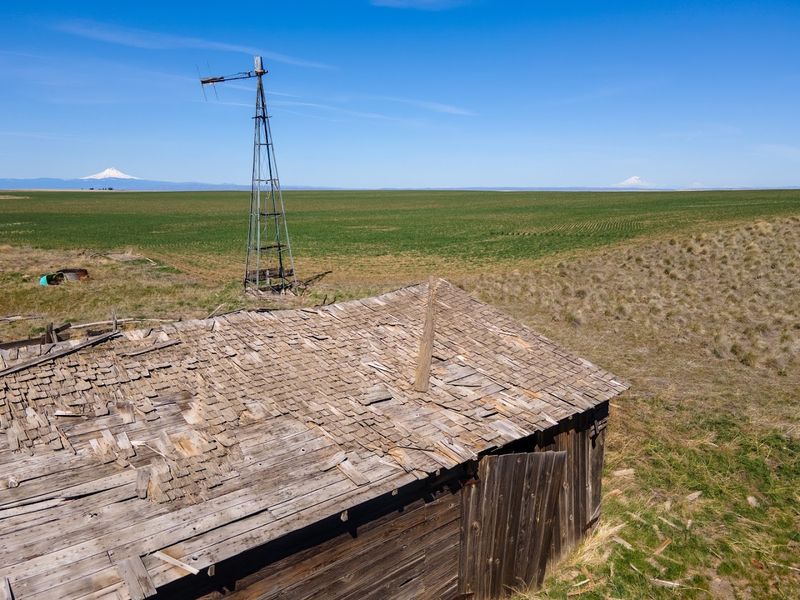
A road trip through north-central Oregon is one of the most rewarding and underrated drives in the entire state. Starting from The Dalles and heading south on U.S.
Route 97, travelers pass through a sequence of small communities that read like a list of places time forgot. Kent is one of the highlights of that journey.
Pairing a stop at Kent with visits to nearby Shaniko and Antelope creates a full day of ghost town exploration that history buffs absolutely love. Each community has its own personality and its own version of the same fundamental story: people arrived, built something, and eventually moved on.
The drive itself is part of the appeal. Wide-open roads, minimal traffic, and scenery that shifts from canyon views to wheat fields to open desert make every mile feel like a reward.
Pack a lunch, charge your camera, and give yourself plenty of time to wander without a schedule holding you back.
What Kent Looks Like Today and How to Visit
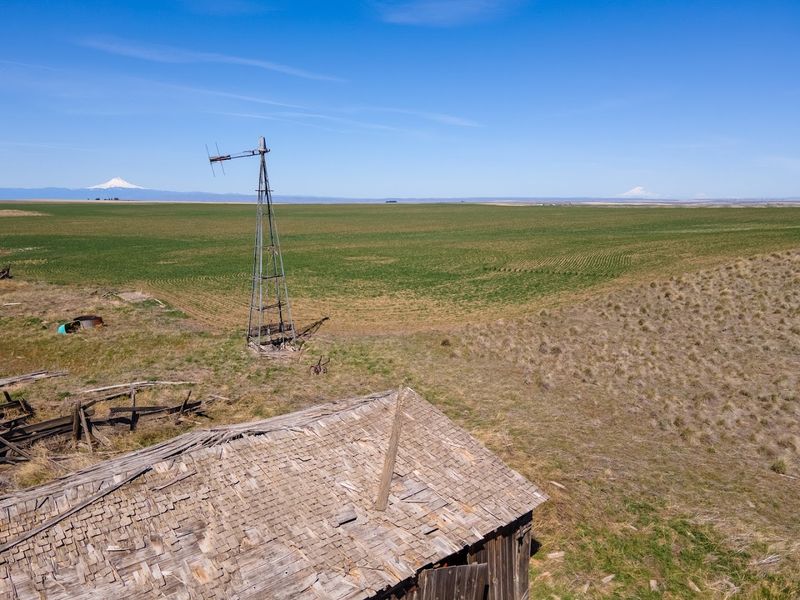
Kent today is a shadow of what it once was, but it is still worth the detour for curious travelers. The community sits right along U.S.
Route 97, making it easy to find without needing any special navigation skills. A simple slowdown and a turn onto Dobie Point Road puts you right in the heart of what remains.
Visitors should come with realistic expectations. There are no gift shops, no guided tours, and no information kiosks.
What you get instead is raw, unfiltered access to a place that has been left largely alone. Bring water, wear sturdy shoes, and always respect private property when exploring around old structures.
The best time to visit is spring or early fall, when temperatures are manageable and the light is gorgeous for photography. Sunrise and sunset paint the high desert in colors that make even a crumbling old shed look like a masterpiece.
Kent rewards those who show up ready to look closely and linger a little longer.
Enjoyed this story?
Add Fast Food Club as a preferred source to see more of our reporting on Google.