


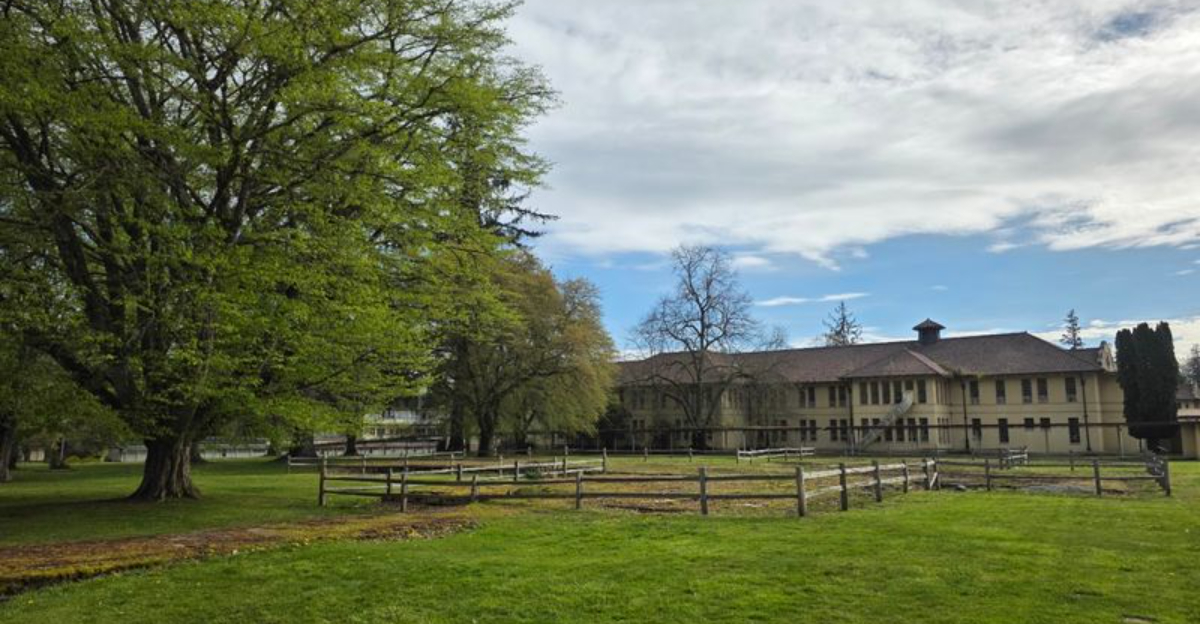
Tucked away in the foothills of the Cascades near Sedro-Woolley, Washington, Northern State Hospital is one of the most haunting reminders of America’s complicated mental health history. Built in the early 1900s, this sprawling campus once housed thousands of patients and operated almost like its own self-sufficient town.
Today, the crumbling buildings and overgrown grounds draw history lovers, urban explorers, and curious visitors from across the Pacific Northwest. If you have ever wondered what secrets an old asylum can hold, Northern State Hospital has plenty of stories left to tell.
The Origins of Northern State Hospital
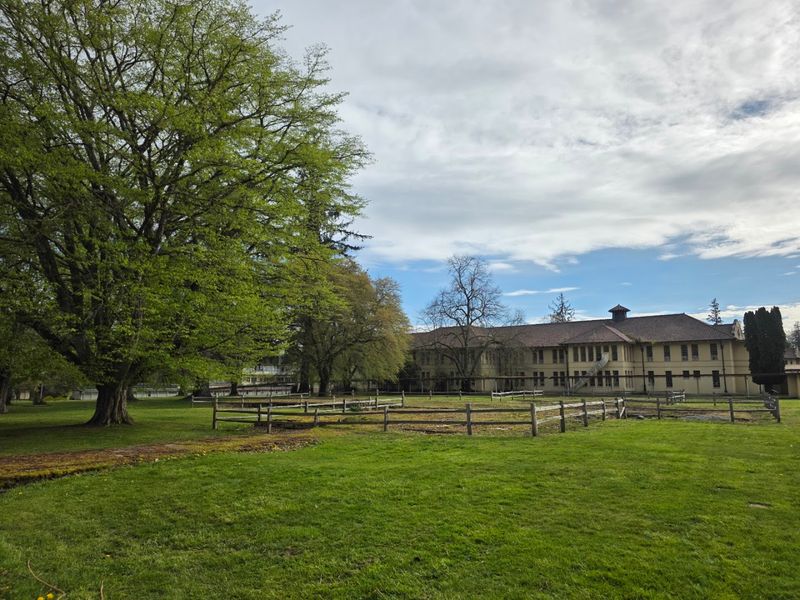
Long before the term “mental health” was widely used, Washington State was searching for a solution to overcrowded facilities. Northern State Hospital opened its doors in 1912, established by the state legislature to relieve pressure on Eastern State Hospital in Medical Lake.
The site near Sedro-Woolley was chosen carefully. Planners believed that fresh mountain air, open farmland, and a peaceful rural setting would help patients recover faster.
This idea was part of a broader philosophy called the “curative colony” model, which was popular in the early 20th century.
At its peak, the hospital campus stretched across more than 1,000 acres. It was designed to be nearly self-sufficient, with its own farm, dairy, power plant, and even a cemetery.
The founding vision was hopeful, even if the reality that followed was far more complicated and troubling.
Architecture That Tells a Dark Story
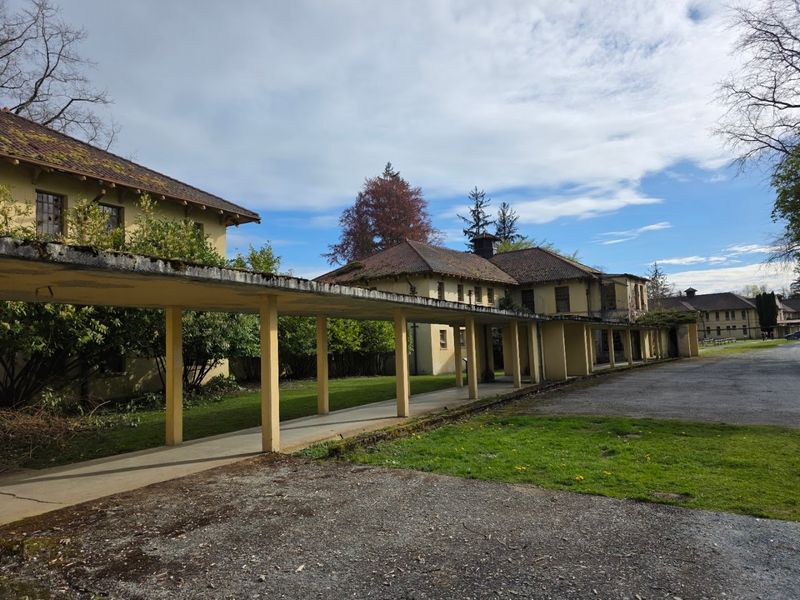
Walking around what remains of Northern State Hospital, the buildings themselves feel like they are whispering old secrets. The original structures were built in the Kirkbride-influenced style, featuring long corridors, tall arched windows, and imposing brick facades meant to project calm and order.
Over time, additional wings and utility buildings were added as the patient population grew rapidly. The architecture shifted from hopeful and dignified to purely functional, reflecting a system under strain.
Some buildings were constructed quickly and cheaply, showing the cracks of budget constraints even before they aged.
Today, many of the original structures still stand, though they are heavily deteriorated. Crumbling plaster, rusted ironwork, and collapsed ceilings create an eerie atmosphere that photographers and historians find both fascinating and deeply sobering.
The buildings are a physical record of a place where care and neglect existed side by side for decades.
The Self-Sufficient Farm Colony
One of the most unusual aspects of Northern State Hospital was that it functioned like a small town. Patients were expected to work on the hospital farm as part of their treatment, a practice that was considered therapeutic at the time but is now viewed very differently.
The farm produced vegetables, dairy products, and meat that fed the entire campus population. At its height, the operation included hundreds of acres of cultivated fields, a large dairy herd, orchards, and a slaughterhouse.
Patients did much of this labor under staff supervision.
While the idea of “work therapy” sounds questionable today, advocates at the time genuinely believed structured outdoor work helped restore mental balance. The farm was also a financial necessity, helping to offset the enormous cost of running such a large institution.
Remnants of the old farm infrastructure can still be spotted across the property today.
Life Inside the Wards
Behind the brick walls and heavy doors, daily life for patients at Northern State Hospital was shaped by rigid routines and limited personal freedom. Wards were segregated by gender, and patients had little say in their daily schedules, meals, or treatments.
At its most crowded, the hospital held well over 2,700 patients, far exceeding its intended capacity. Overcrowding meant that staff were stretched thin and conditions deteriorated.
Personal space was almost nonexistent, and privacy was a luxury most patients never experienced.
Recreational activities like dances, movies, and outdoor walks were offered, but they existed alongside harsher realities. Restraints, isolation rooms, and controversial treatments were also part of life inside the wards.
Former staff and patients who spoke about their experiences painted a picture of a place that tried to help but was frequently overwhelmed by the scale of human suffering it was asked to manage.
Controversial Treatments Used at the Hospital
Northern State Hospital was a product of its era, and that meant patients were subjected to treatments that would be considered unacceptable by modern medical standards. Hydrotherapy, which involved prolonged immersion in hot or cold water, was commonly used to calm agitated patients.
Insulin coma therapy was also practiced here during the mid-20th century. Patients were given large doses of insulin to induce a coma, which doctors believed could reset disturbed brain chemistry.
The procedure was risky and often left patients physically weakened.
Lobotomies were performed at the hospital as well, particularly during the 1940s and 1950s when the procedure was promoted as a breakthrough treatment for severe mental illness. Looking back, these methods reflect how poorly mental illness was understood at the time.
The stories of patients who endured these treatments are a sobering reminder of why medical ethics and patient rights matter so deeply.
The Forgotten Cemetery on the Grounds
Hidden in a quiet corner of the Northern State Hospital property lies one of its most solemn features: a cemetery where hundreds of patients were buried, many of them identified only by numbers rather than names. For decades, the identities of those buried here were largely forgotten.
Patients who died at the hospital and whose families could not afford burial or did not claim their remains were interred on the grounds. The numbered markers were a cost-saving measure that also stripped the deceased of their individual identities, a painful symbol of how the system dehumanized those in its care.
In recent years, advocates and historians have worked to restore dignity to those buried here by researching records and adding proper name markers where possible. The cemetery serves as a powerful reminder that behind every number was a real person with a life, a story, and a family who may never have known what happened to them.
The Hospital at Its Peak Population
By the 1950s, Northern State Hospital had grown into one of the largest psychiatric institutions in the Pacific Northwest. The patient population swelled to over 2,700 people at its peak, creating enormous pressure on staff, facilities, and resources.
The sheer scale of the operation during this era is staggering to consider. Hundreds of employees worked around the clock to manage patient care, farm operations, maintenance, and administration.
The campus buzzed with activity that resembled a small, self-contained city more than a hospital.
Despite the numbers, individual patient care suffered. With so many people to manage and limited funding from the state, meaningful treatment was often replaced by simple custodial care.
Patients spent years, sometimes their entire adult lives, within the hospital walls. The peak population years are a striking example of how good intentions can be overwhelmed by systemic failures and underfunding in public health systems.
The Road to Closure
The beginning of the end for Northern State Hospital came in the 1960s and 1970s, when a nationwide shift in mental health policy changed everything. The movement toward deinstitutionalization encouraged releasing patients from large state hospitals into community-based care programs.
New psychiatric medications developed in the 1950s and 1960s made it possible for many patients to function outside of an institutional setting. Federal and state governments saw deinstitutionalization as both a humanitarian reform and a cost-saving opportunity, and funding for large state hospitals was steadily cut.
Northern State Hospital began discharging patients and reducing its population through the late 1960s and into the 1970s. The last patients left in 1973, and the hospital officially closed its doors after more than six decades of operation.
The closure left behind hundreds of empty buildings, a massive piece of state property, and a community that had depended on the hospital as a major employer.
What Happened to the Property After Closure
After Northern State Hospital closed in 1973, the state of Washington was left with a massive property and no clear plan for what to do with it. The buildings sat largely unused for years, slowly falling into disrepair as vandals, weather, and time took their toll.
Eventually, portions of the land were transferred to Skagit County and repurposed for various community uses. The Northern State Recreation Area was established on part of the old farm grounds, offering hiking trails, disc golf, and open green space for local residents.
It is a surprisingly peaceful place given its intense history.
Some of the historic buildings were stabilized and preserved, while others were demolished due to safety concerns. The campus today is a patchwork of restored spaces, ruins, and outdoor recreation areas.
Visitors can walk the same grounds where patients once labored, now surrounded by wildflowers and mountain views instead of institutional walls.
Urban Exploration and Ghost Hunting at Northern State
For thrill-seekers and history enthusiasts alike, Northern State Hospital has become one of Washington State’s most talked-about destinations for urban exploration. The combination of decaying architecture, tragic history, and remote setting creates an atmosphere that is genuinely hard to find anywhere else.
Ghost hunters have visited the site for years, reporting strange sounds, unexplained shadows, and equipment malfunctions that they attribute to paranormal activity. Whether or not you believe in ghosts, the stories add another layer of intrigue to an already fascinating place.
Several local paranormal groups have conducted overnight investigations on the grounds.
It is worth noting that unauthorized entry into the abandoned buildings is illegal and genuinely dangerous due to structural instability. Floors can give way, ceilings can collapse, and hazardous materials like asbestos are present in many older sections.
Responsible visitors stick to the public recreation areas and admire the buildings from a safe, respectful distance.
The Hospital’s Role in Local Skagit County History
For the residents of Sedro-Woolley and the broader Skagit County community, Northern State Hospital was far more than just a psychiatric institution. For decades, it was one of the largest employers in the region, providing jobs for hundreds of local families as nurses, doctors, farmworkers, and administrators.
The hospital shaped the local economy and culture in ways that are still felt today. Many longtime Sedro-Woolley residents have parents or grandparents who worked at Northern State.
Their personal stories add a deeply human dimension to the institution’s history that goes beyond the grim headlines.
Local historical societies have worked hard to document and preserve the hospital’s complex legacy. Oral history projects have gathered firsthand accounts from former staff and community members who remember the campus in its active years.
These personal narratives help paint a fuller, more nuanced picture of a place that was simultaneously a source of community pride and a site of profound suffering.
Preservation Efforts and Historic Recognition
Saving what remains of Northern State Hospital has been a labor of love for historians, preservationists, and community advocates in Skagit County. Several of the original brick structures have been placed on the Washington State Historic Register, offering them a degree of legal protection against demolition.
Preservation groups have argued that the buildings represent an important and often uncomfortable chapter in the history of mental health care in America. Tearing them down, they say, would be erasing a story that deserves to be remembered and learned from.
The architecture itself is considered historically significant as an example of early 20th-century institutional design.
Funding for restoration has been a constant challenge, as maintaining large deteriorating structures is enormously expensive. Community fundraisers, state grants, and volunteer efforts have all played a role in keeping preservation hopes alive.
The goal is to eventually create an interpretive center where visitors can learn about the hospital’s full history in a thoughtful, respectful setting.
Why Northern State Hospital Still Matters Today
More than 50 years after its closure, Northern State Hospital continues to spark important conversations about mental health, human rights, and the responsibility of society toward its most vulnerable members. The failures and tragedies that occurred here did not happen because people stopped caring; they happened because of systemic underfunding, outdated science, and a lack of patient advocacy.
Visiting the site today, or simply learning about its history, encourages people to think critically about how mental health care is handled right now. Are we making the same mistakes in different forms?
Are people with mental illness still being warehoused rather than truly helped?
Northern State Hospital stands as a chilling landmark not just because of its eerie abandoned buildings, but because of what those buildings represent. The stories held within its crumbling walls challenge us to do better, to listen harder, and to make sure history does not quietly repeat itself in modern institutions.
Enjoyed this story?
Add Fast Food Club as a preferred source to see more of our reporting on Google.