


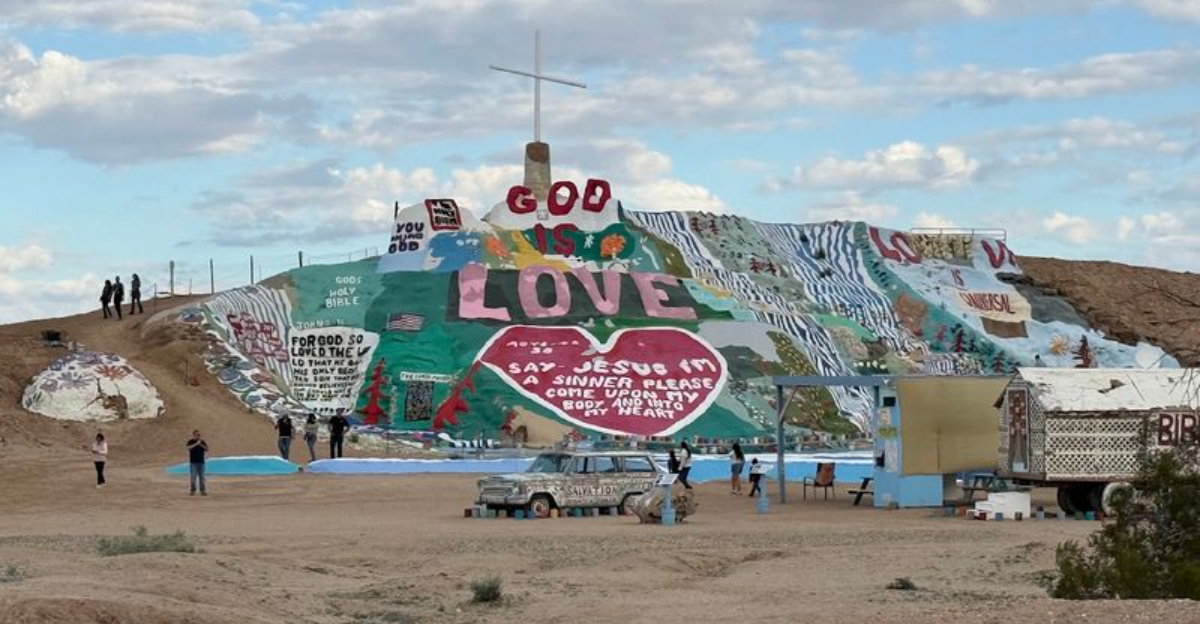
Tucked away in the scorching California desert near Niland, Salvation Mountain is one of the most surprising and colorful landmarks you will ever see. A man named Leonard Knight spent decades covering a hillside with adobe, hay bales, and thousands of gallons of paint to share a simple message of love with the world.
What started as a personal mission became a nationally recognized folk art treasure that draws visitors from every corner of the globe. Whether you are drawn by faith, curiosity, or a love of art, this place has a way of leaving a lasting impression on everyone who makes the journey out to see it.
Leonard Knight: The Man Behind the Mountain
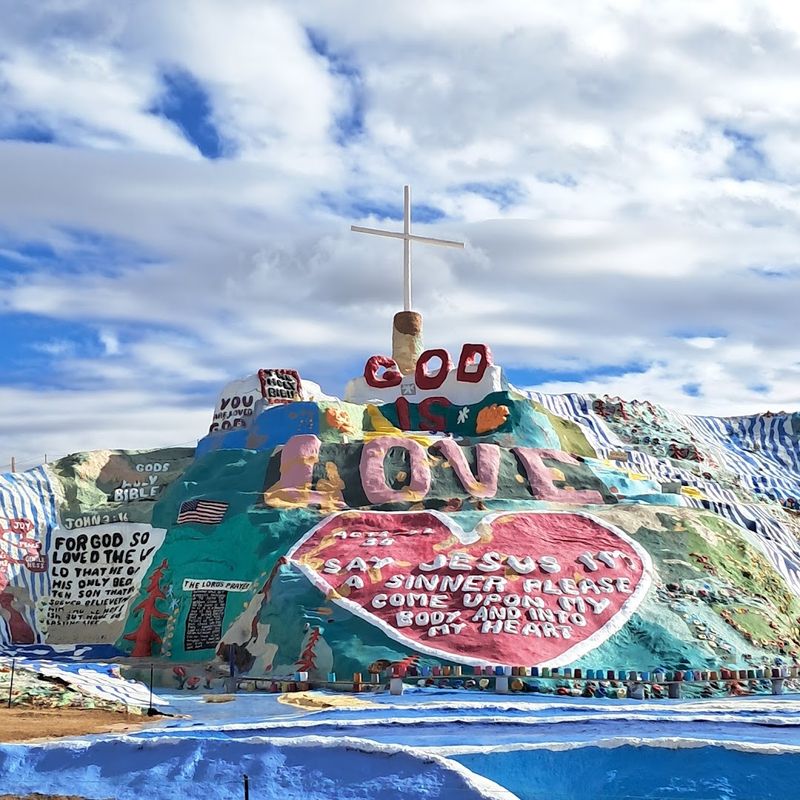
Not many people can say they built a mountain, but Leonard Knight came pretty close. He arrived in the California desert near Niland in the early 1980s with a simple balloon project that never quite got off the ground.
Instead of giving up, he planted his feet in the sand and started building something far more lasting.
Leonard mixed adobe, hay bales, and donated paint to sculpt a hillside into a living, breathing work of art. His hands were always covered in color, and his heart was always full of purpose.
Visitors who met him often described him as one of the most joyful and genuine people they had ever encountered.
He lived on-site for over 28 years, tending to the mountain every single day. Leonard passed away in 2014, but his legacy continues to inspire people from all over the world who make the trip out to see his life’s work.
How Salvation Mountain Was Actually Built
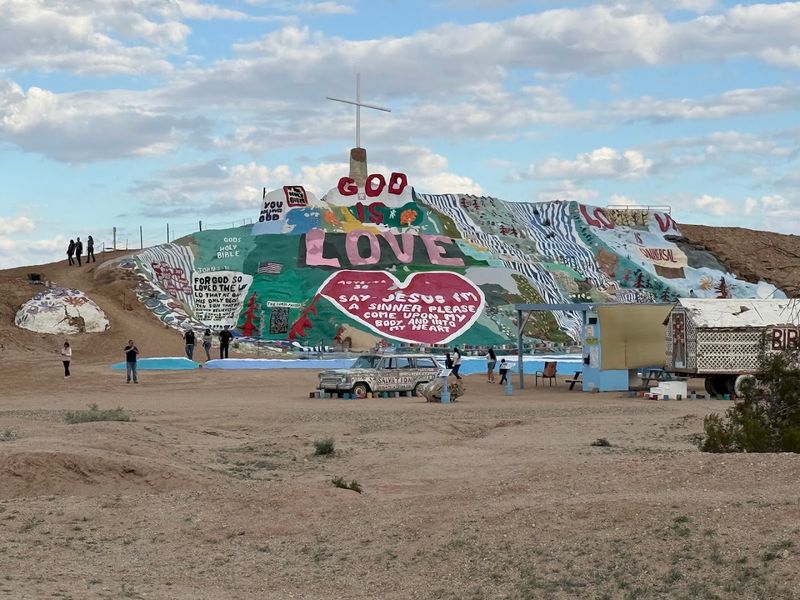
Building a mountain by hand sounds like something out of a tall tale, but Leonard Knight actually pulled it off using the most humble materials imaginable. Adobe clay, straw, and hay bales formed the basic structure, while donated latex paint brought the whole thing to life in vivid color.
Over the years, Leonard applied an estimated 100,000 gallons of paint to the surface.
The construction process was never rushed. Leonard worked at his own pace, layering material on top of material, fixing cracks, and repainting sections that faded under the brutal desert sun.
He treated every square inch of the mountain like it mattered deeply.
The result is a structure that feels surprisingly solid and organic, almost like it grew naturally from the desert floor. Visitors are often amazed to learn that one person, working mostly alone, created something so large and so full of detail entirely by hand.
The Message of Love That Started It All
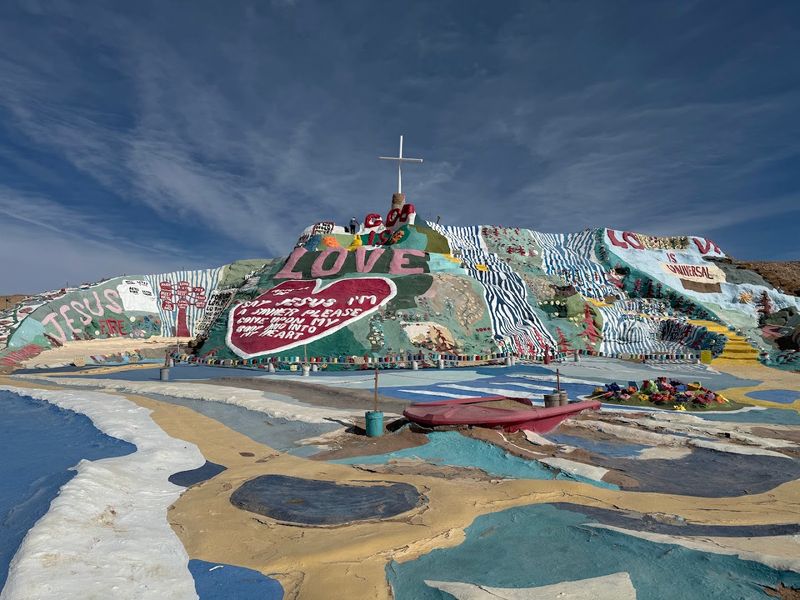
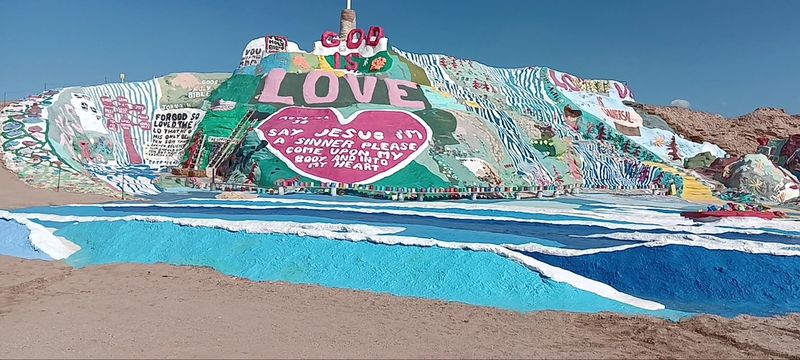
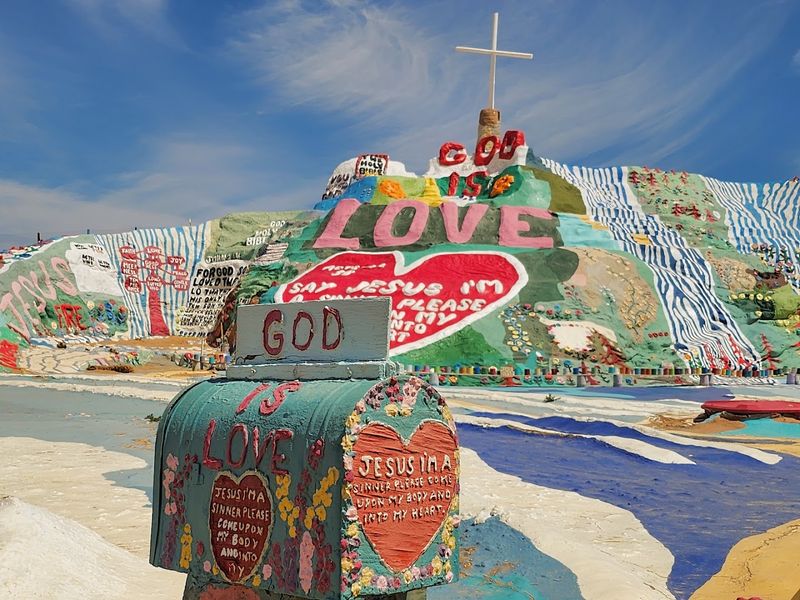
At the very heart of Salvation Mountain is a message that Leonard Knight wanted the entire world to hear: God is Love. Those three words are painted in enormous letters across the front of the mountain, impossible to miss when you first pull up to the site.
For Leonard, it was never about complicated theology or religious debate.
He wanted to keep things simple and joyful, focusing on love as the foundation of everything. Visitors of all backgrounds, religious or not, have said the message feels warm rather than preachy.
That openness is a big part of why so many people connect with the place on such a personal level.
One reviewer put it perfectly: “It’s not about religion or dogma. It’s just about love.” That spirit is woven into every painted flower, every Bible verse, and every handmade path that winds its way up the mountain.
The Wildly Colorful Folk Art That Covers Every Inch
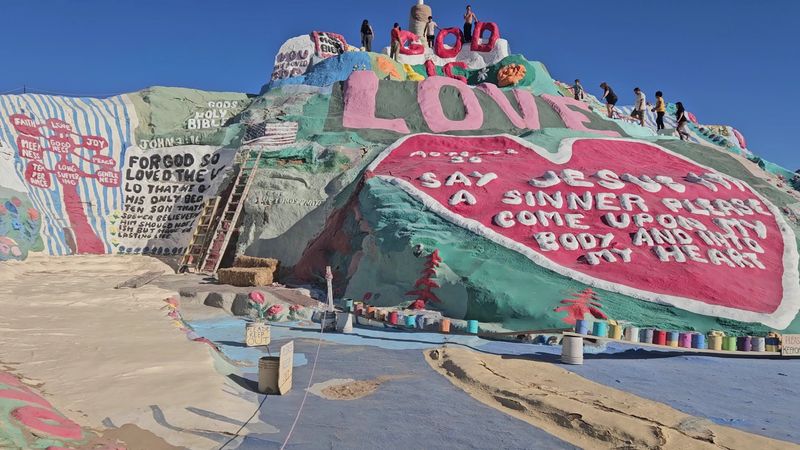
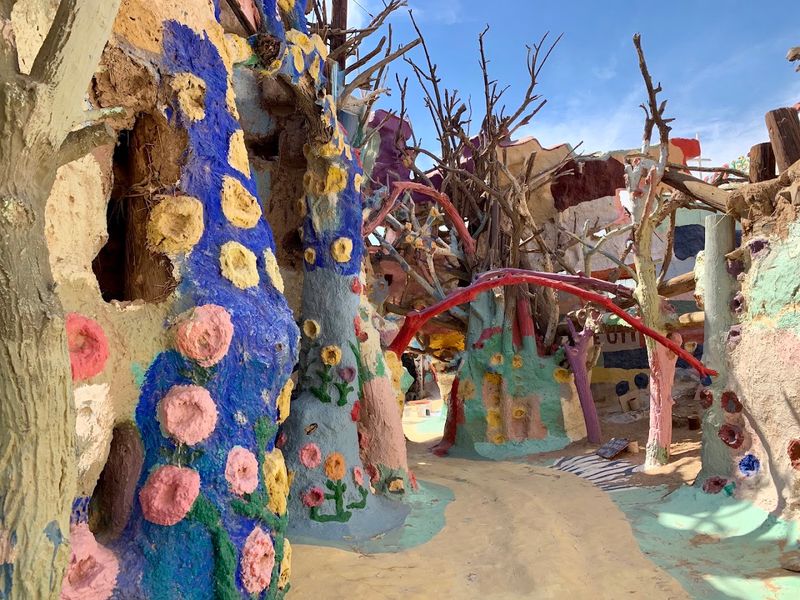
Walking up to Salvation Mountain for the first time feels like stepping inside a giant painting. Every surface bursts with color, from deep reds and sunny yellows to electric blues and leafy greens.
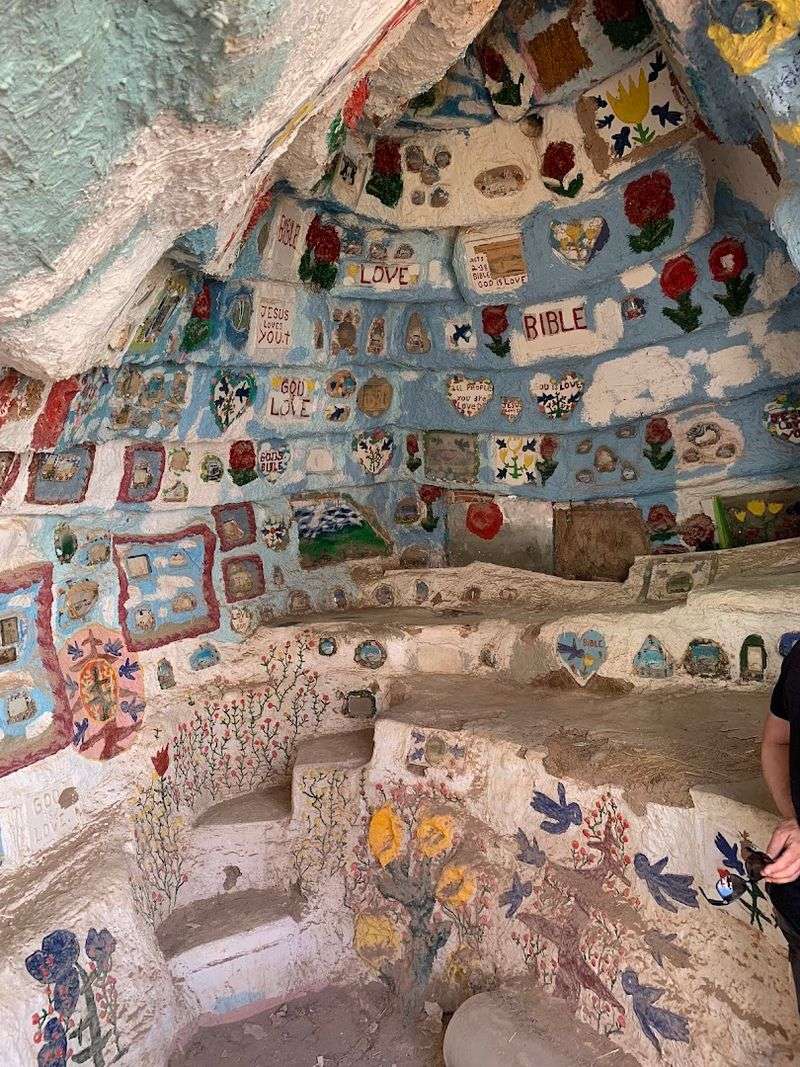
Flowers, rivers, trees, and Bible verses are layered across the adobe in a way that feels joyful and almost dreamlike.
Leonard had no formal art training, which makes the sheer scope of the artwork even more remarkable. He painted intuitively, guided by faith and enthusiasm rather than any strict artistic method.
The result is something that art critics and everyday visitors alike have called genuinely extraordinary.
The folk art style gives the whole installation a handmade warmth that polished gallery pieces rarely achieve. Even the imperfections feel intentional, like every crack and brushstroke tells part of the story.
Volunteers work hard to keep the colors vibrant, and many visitors are surprised by just how fresh and bright everything still looks today.
Climbing the Mountain: What the Walking Path Is Like
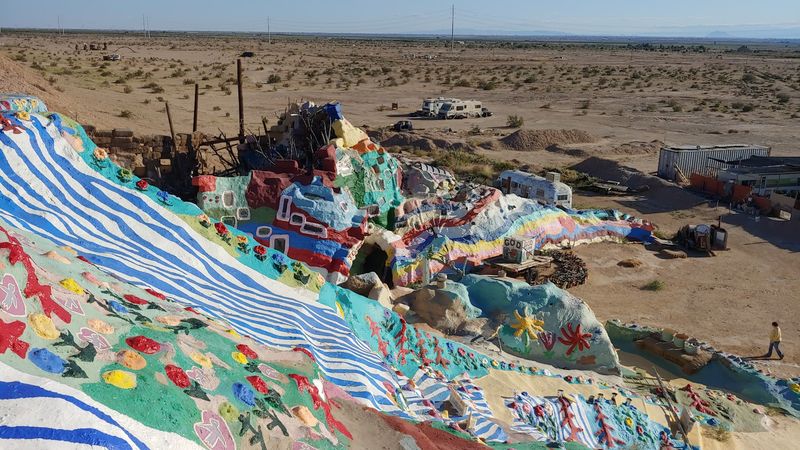
One of the most memorable parts of visiting Salvation Mountain is actually walking up it. A winding path leads visitors through the layers of the mountain, offering close-up views of the artwork that you simply cannot appreciate from the parking area below.
The climb is not very long, but the desert heat can make it feel more intense than expected.
Comfortable shoes are a smart choice, and bringing water is basically non-negotiable. The path can get steep in a few spots, and the adobe surface is uneven in places.
One reviewer who visited mentioned being out of breath by the top but said the view from up there made every step worth it.
From the summit, you get a sweeping look at the surrounding desert landscape, including glimpses of the Salton Sea in the distance. It is the kind of view that quietly reminds you why Leonard chose this particular corner of the world to share his message.
The Audio Tour: Hearing Leonard’s Voice for Yourself
Imagine walking through a giant piece of art while the person who created it tells you the story in their own words. That is exactly what the Salvation Mountain audio tour offers.
By scanning a QR code on-site, visitors can listen to Leonard Knight himself explain his vision, share his humor, and describe the years of effort that went into building the mountain.
Bringing a pair of earbuds or headphones along is highly recommended for anyone planning to take the tour. Several visitors have called it one of the most moving parts of the entire experience, saying that hearing Leonard’s voice makes the whole place feel alive in a completely different way.
His warmth and humor come through clearly in the recordings, making it easy to understand why so many people who met him in person described the encounter as unforgettable. The audio tour adds a deeply personal layer to an already remarkable visit.
Admission Is Free: No Tickets, No Fees
Here is something that surprises a lot of first-time visitors: getting into Salvation Mountain costs absolutely nothing. There are no tickets to buy, no entrance fees to pay, and no reservations required.
You simply drive up, park for free, and start exploring at your own pace.
That open-door spirit fits perfectly with Leonard Knight’s original vision. He never wanted money to stand between anyone and his message of love.
The mountain was always meant to be a gift to the world, freely given and freely received by anyone willing to make the journey out to the desert.
While admission is free, leaving a small tip or donation is a kind way to support the volunteers and staff who work hard to preserve the site. One reviewer put it simply: the place is completely free, so there is really no reason not to stop by if you are anywhere in the area.
The Volunteers and Caretakers Who Keep It Alive
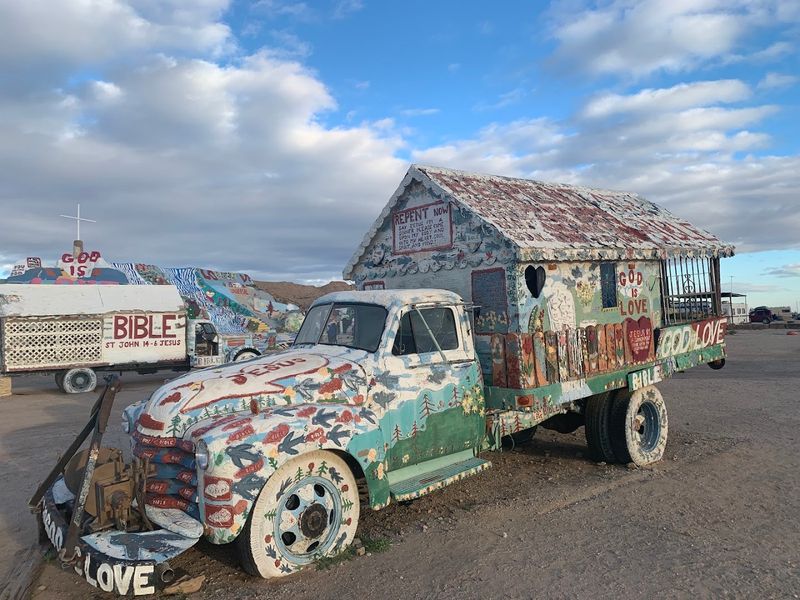
Salvation Mountain did not stop evolving when Leonard Knight passed away in 2014. A dedicated group of volunteers and on-site caretakers have taken on the responsibility of preserving and maintaining the mountain, keeping Leonard’s vision alive for every new generation of visitors who finds their way out to the desert.
Reviewers consistently mention the volunteers as one of the highlights of the experience. Words like friendly, knowledgeable, and welcoming come up again and again.
One visitor from Canada specifically praised the on-site caretaker for being a great source of information, while another noted that a volunteer stayed past closing time to give a short history lesson to late arrivals.
The effort these folks put in is visible in how clean and vibrant the mountain looks. Keeping a large outdoor folk art installation in good shape under the harsh desert sun is no small task, and the team that does it deserves a lot of credit.
Salvation Mountain and Its Connection to Slab City
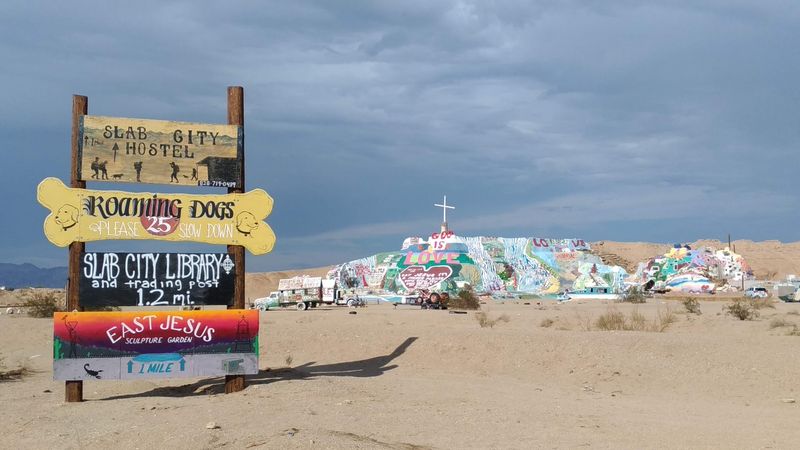
Salvation Mountain sits right on the edge of one of the most unusual communities in the United States: Slab City. Often called “the last free place in America,” Slab City is an off-grid settlement built on the concrete slabs of a former military base.
People from all walks of life live there year-round, entirely outside the traditional housing system.
The two locations attract very different types of visitors, but they share a spirit of unconventional living that makes this corner of the California desert unlike anywhere else. Several reviewers mentioned that driving through the area gave them a real sense of how some Americans choose to live completely off the grid.
If you are planning a visit to Salvation Mountain, pairing it with a quick look at Slab City next door is a natural addition to the trip. Just go in with an open mind, because the experience has a way of shifting your perspective in unexpected ways.
Famous Appearances in Film and Pop Culture
Salvation Mountain has made more than a few appearances on the big screen, and perhaps its most famous moment came in the 2007 film “Into the Wild,” based on the true story of Christopher McCandless. The film brought widespread attention to the mountain and introduced it to audiences around the world who had never heard of the remote California desert landmark.
Since then, the site has appeared in music videos, documentaries, travel shows, and countless social media posts. Huell Howser, the beloved California travel host, was among the many who visited and celebrated the mountain as a uniquely Californian treasure.
That cultural visibility has helped draw a steady stream of curious travelers who first heard about Salvation Mountain through a screen before eventually deciding to experience it in person. For many visitors, the place lives up to every bit of the hype, and then some.
Best Time to Visit and What to Expect From the Desert Heat
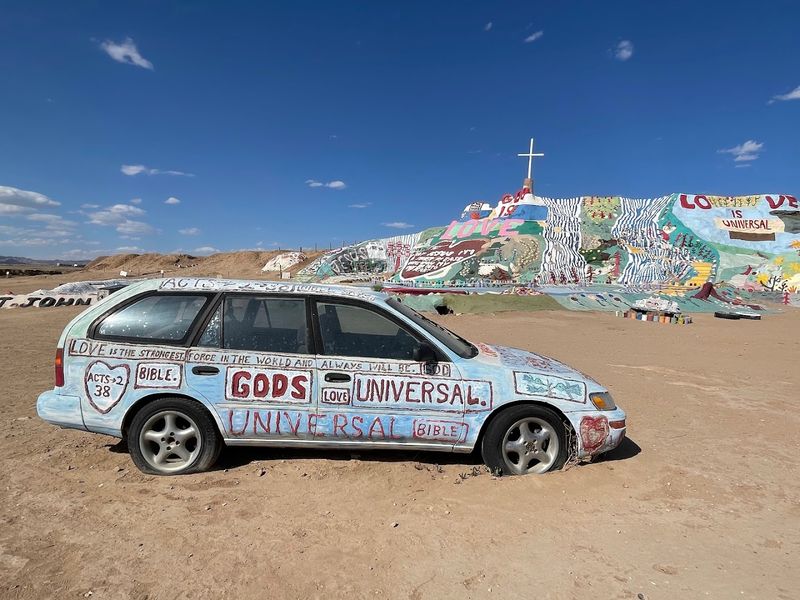
Timing your visit to Salvation Mountain can make a big difference in how much you enjoy it. The site is open every day from 8 AM to 4:30 PM, and getting there early in the morning is strongly recommended.
The desert around Niland can get brutally hot, especially between spring and fall, when temperatures regularly climb well above 90 degrees Fahrenheit.
One reviewer visited in late March and described it as the hottest day of their entire road trip, even though it was only 90 degrees. The open desert environment with no shade amplifies the heat in ways that can catch visitors off guard if they are not prepared.
Bringing plenty of water is not optional; it is essential. A large water jug is a smarter choice than a single small bottle.
Wearing a hat, sunscreen, and light-colored clothing will also make the experience significantly more comfortable, letting you take your time and really soak everything in.
Getting There: Road Conditions and Practical Travel Tips
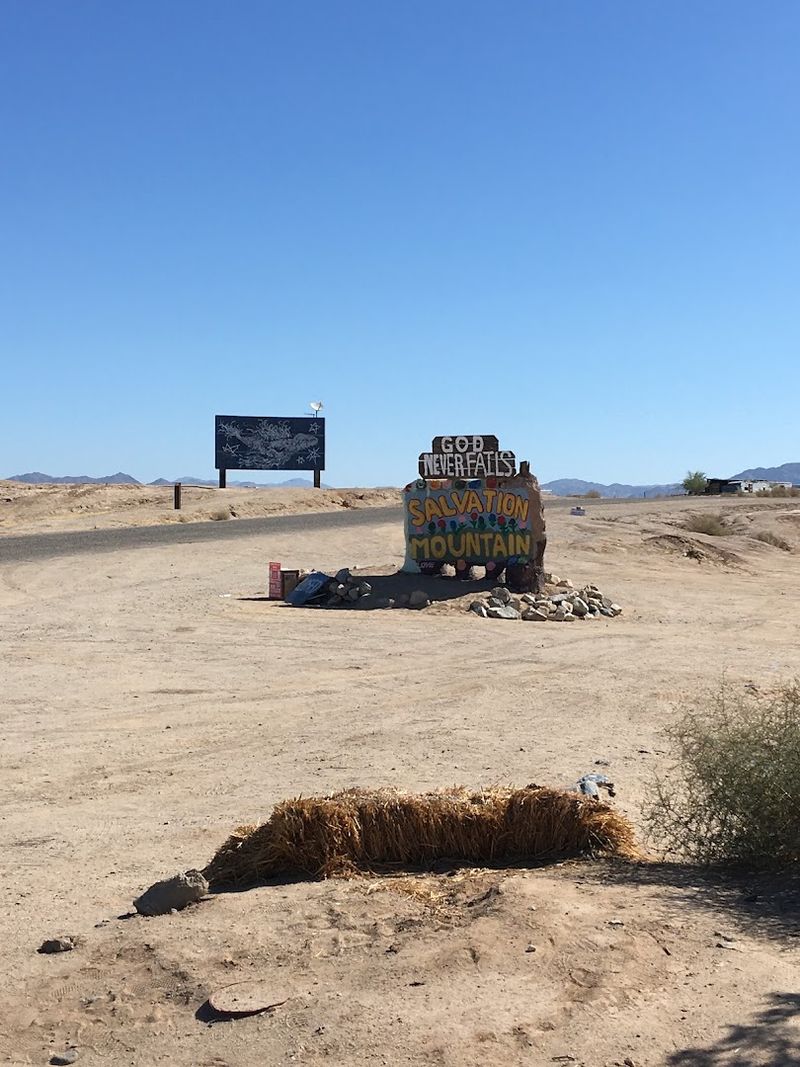
Reaching Salvation Mountain is part of the adventure, and knowing what to expect from the road will save you some stress. The drive takes you through the small town of Niland and then along roads that are not exactly in showroom condition.
Multiple reviewers warned about significant dips in the road caused by drainage culverts, some of which are easy to miss if you get distracted by the scenery.
One visitor described bottoming out their rental car on one of those dips, so slowing down is genuinely important advice. The road is passable for regular cars, but going carefully and staying alert will protect both your vehicle and your trip.
Once you arrive, parking is free and straightforward. The site address is Beal Road, Niland, CA 92257, and the phone number is 760-624-8754.
The official website at salvationmountaininc.org has additional visitor information if you want to plan ahead before making the drive.
Why Salvation Mountain Belongs on Every Road Trip Bucket List
Some places earn their spot on a bucket list because they are grand or expensive or hard to reach. Salvation Mountain earns its place for completely different reasons.
It is free, it is open every day, and it was built by one person with paint and determination and a whole lot of heart. That combination is genuinely rare.
Pairing a visit here with stops at the Salton Sea or nearby Bombay Beach makes for an unforgettable desert day trip. The whole stretch of landscape east of the Salton Sea has a haunting, beautiful quality that is unlike anything else in California, and Salvation Mountain sits right at the center of it.
Whether you come for the art, the history, the message, or just the sheer curiosity of seeing something this extraordinary in the middle of the desert, you are almost certain to leave feeling like the drive was more than worth it.
Enjoyed this story?
Add Fast Food Club as a preferred source to see more of our reporting on Google.