


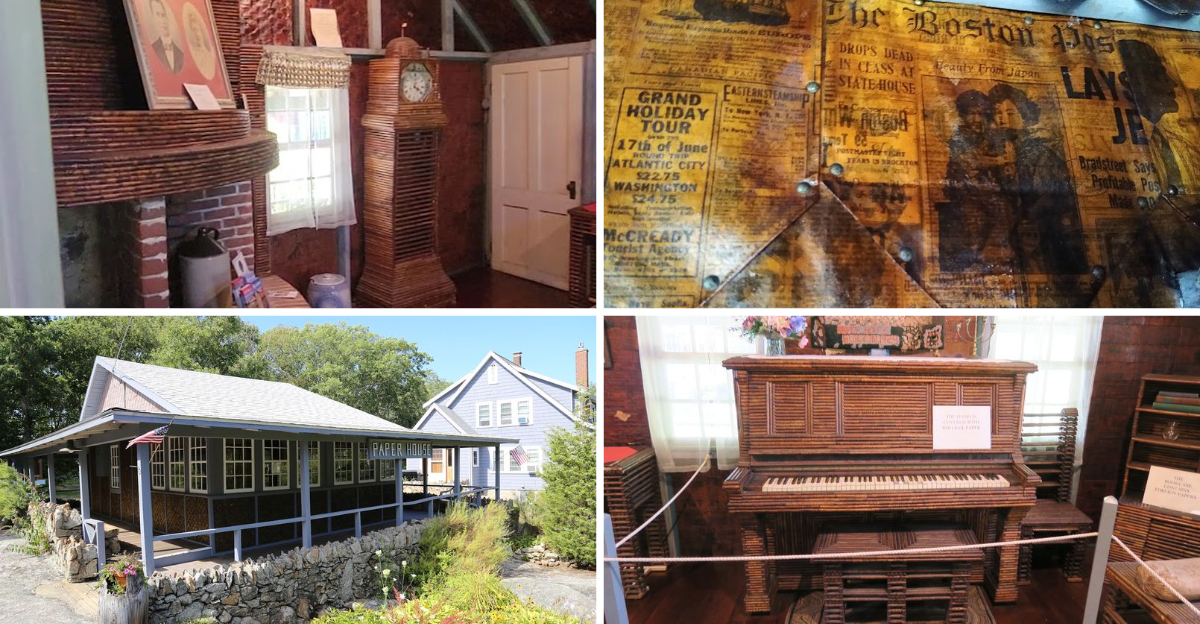
Tucked away on a quiet street in Rockport, Massachusetts, sits one of the most jaw-dropping homes you will ever come across. The Paper House at 52 Pigeon Hill Street was built using nothing but old newspapers, and it has been standing strong since 1922.
What started as one man’s creative experiment turned into a century-old landmark that continues to amaze visitors from all over the world. If you have never heard of this place, get ready to have your mind completely blown.
The Brilliant Mind Behind the Paper House
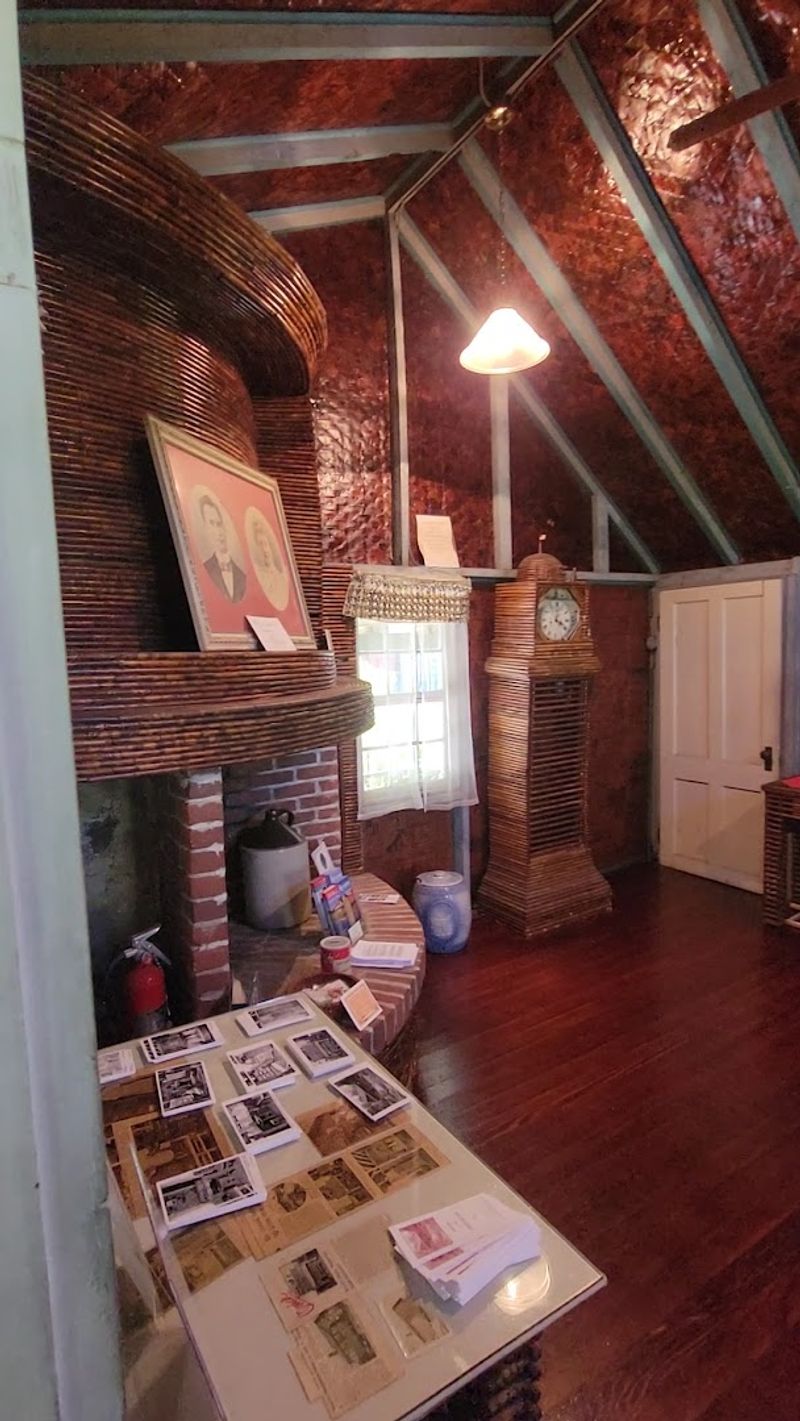
Not every engineer spends their weekends dreaming up ways to reuse old newspapers, but Elis Stenman was not your average engineer. Back in 1922, this mechanical engineer began constructing a summer cottage in Rockport, Massachusetts, with a wild and wonderful idea in mind.
Instead of throwing away old papers, he decided to use them as a building material. He mixed newspapers with a homemade paste of flour and water, layered them carefully, and then varnished the finished product to protect it from the weather.
What makes this even more remarkable is that Stenman did not stop at the walls. He kept going, building furniture, clocks, and more, all from newspaper.
His neighbors even pitched in to help. The entire project took roughly 20 years to complete, proving that patience and creativity can turn something ordinary into something truly extraordinary.
One Hundred Thousand Newspapers and Counting
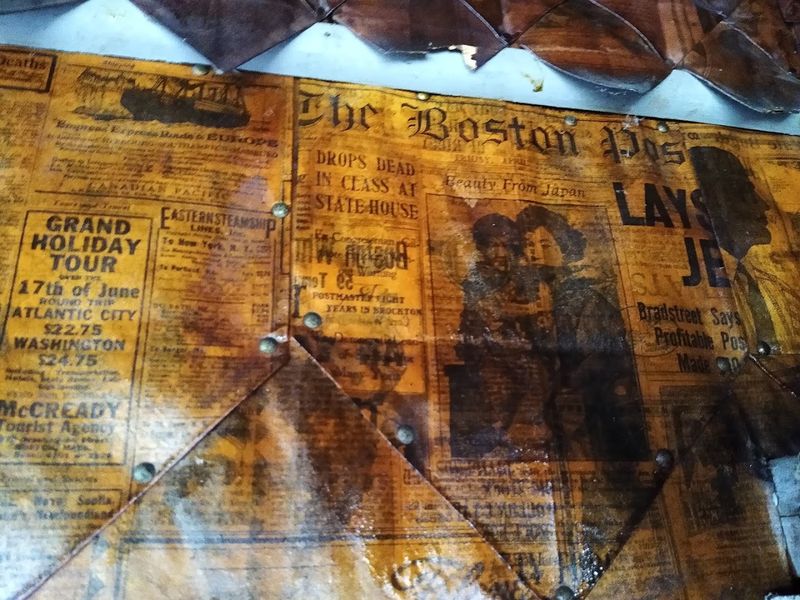
Try to picture 100,000 copies of newspapers all stacked, rolled, and pressed together to form a house. That is exactly what happened here, and the result is nothing short of mind-bending.
Each section of wall was built by layering newspapers together until they were thick enough to provide real insulation and structural support. The layers were then coated in varnish to keep moisture and rot at bay.
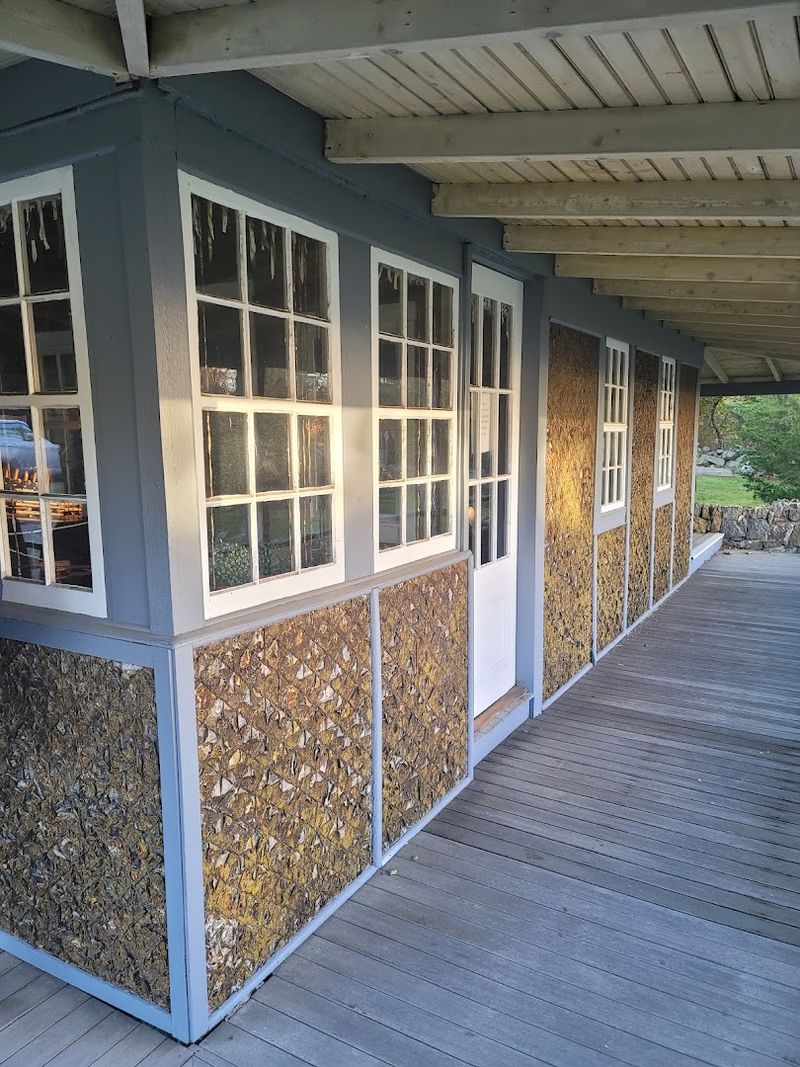
Visitors who look closely at the exterior can actually spot the edges of old papers peeling back slightly from years of weathering, giving the house a look unlike anything else.
There is even a small hole cut into one of the interior walls so guests can peek inside and see just how the construction was done. Seeing those layers up close makes you realize how much effort and precision went into every single inch of this one-of-a-kind building.
A Summer Cottage With a Very Unusual Frame
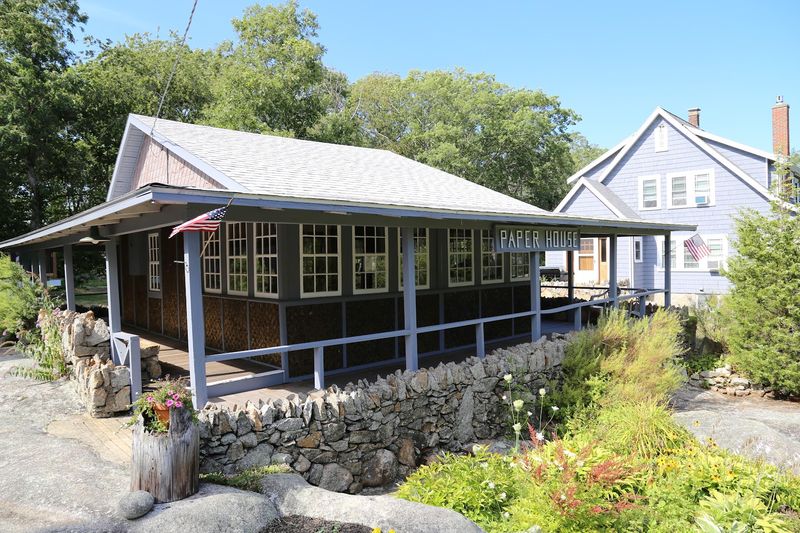
At first glance, the Paper House looks like a charming little cottage you might spot anywhere along the New England coast. But look a little closer, and you will notice something is very different about those walls.
The house started with a traditional wooden frame, which gave it the basic structure needed to stand safely. From there, Elis Stenman filled in everything else using his newspaper and paste technique.
The roof and floor remained wood for practical reasons, and the fireplace was built from brick because, well, paper and fire are not exactly a great combination.
Everything else, though, is newspaper. The walls, doors, and most of the interior elements were all crafted from old printed pages.
Standing inside this tiny structure, it is hard to believe that something so fragile-looking has managed to survive nearly a century of New England weather without falling apart.
Newspaper Furniture That Will Make Your Jaw Drop
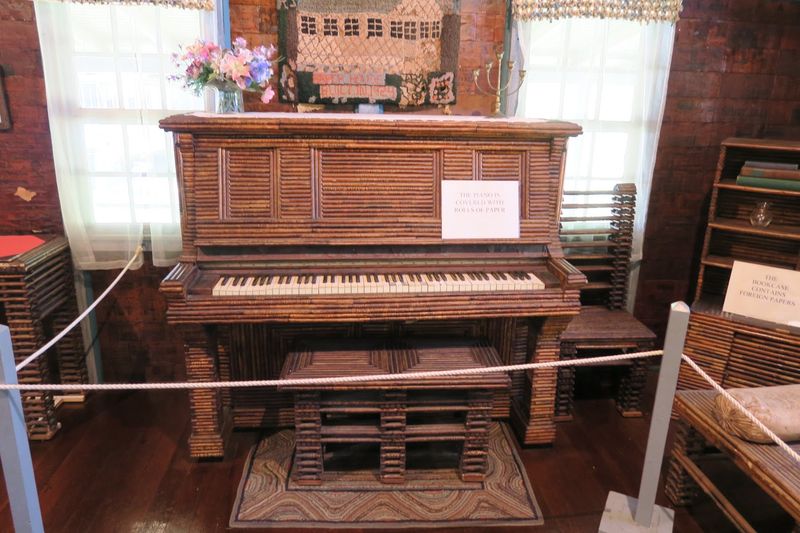
Building a house from newspaper is already impressive enough. But Elis Stenman was just getting warmed up when the walls were done.
Once the structure was complete, he turned his attention to furnishing the place, and he used the exact same material. Inside the Paper House, you will find chairs, a writing desk, a grandfather clock, and even a piano, all crafted from tightly rolled and varnished newspaper.
Visitors consistently say the paper piano is one of the most impressive pieces in the entire home.
What makes the furniture even more fascinating is the detail that went into each piece. Stenman was deliberate about which papers he used for what.
The writing desk, for example, is made from newspapers that covered Charles Lindbergh’s famous transatlantic flight. That kind of thoughtful storytelling built right into the furniture makes every piece feel like a tiny time capsule waiting to be explored.
The Writing Desk That Tells a Famous Story
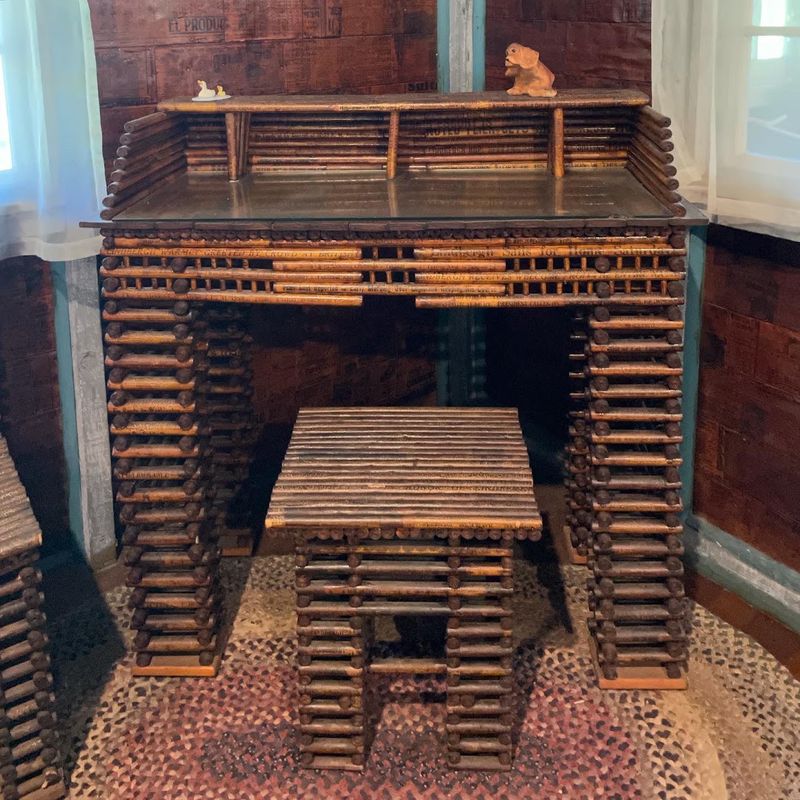
Some furniture holds memories. The writing desk inside the Paper House holds history, and it does so in the most literal way possible.
Elis Stenman built this desk using newspapers that reported on Charles Lindbergh’s legendary solo flight across the Atlantic Ocean in 1927. When you look closely at the surface, you can actually make out the old headlines and text from those historic editions.
It is like reading a piece of living history while sitting right next to it.
Stenman was careful to position the newspaper pages so that the headlines faced outward, making them readable to anyone who took the time to look. That level of thoughtfulness turned a simple piece of furniture into something much more meaningful.
Visitors often spend extra time at this desk just trying to read the old print, connecting with a moment in history through something as everyday as a newspaper.
World War One Headlines Woven Into a Cot
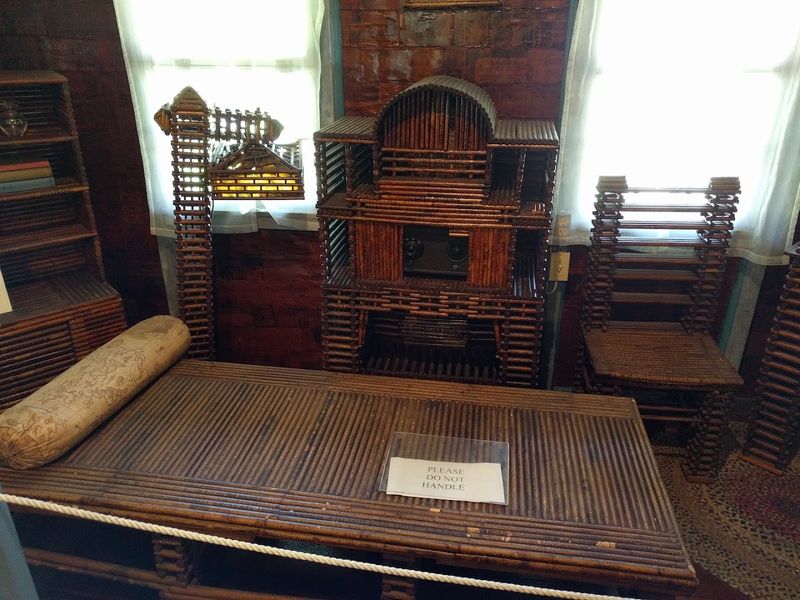
Sleeping on a piece of history takes on a whole new meaning when you visit the Paper House in Rockport. One of the most striking items inside the cottage is a cot built entirely from newspapers covering World War One.
Elis Stenman used papers from that era to construct this simple sleeping surface, and the headlines from one of history’s most defining conflicts are literally woven into its structure. Running your eyes across the old print feels like stepping back in time to a world that most people today only read about in textbooks.
The cot is a quiet but powerful reminder of how much thought Stenman put into every single item he created. He was not just building furniture.
He was preserving moments, events, and stories that mattered. Each rolled-up page carries weight far beyond the paper it is printed on, making the cot one of the most emotionally resonant pieces in the entire house.
Woven Newspaper Curtains You Have to See Up Close
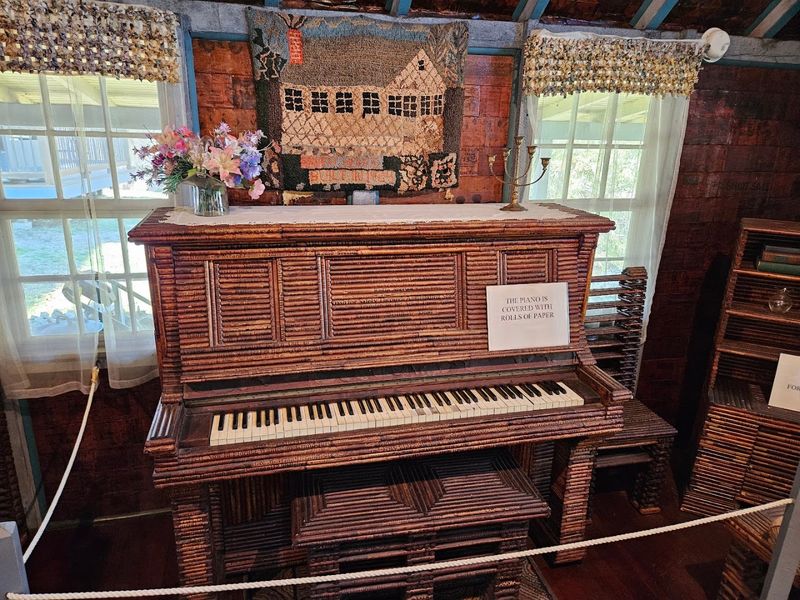
You might expect to find curtains made from fabric, lace, or maybe even wood blinds. At the Paper House, though, the curtains are made from newspaper, and they are genuinely beautiful.
Elis Stenman wove strips of old newspaper together to create window coverings that are both functional and completely one-of-a-kind. The weaving technique he used gave the curtains a texture and pattern that looks almost like wicker or rattan from a distance.
Up close, you can see the individual strips of print that make up each panel.
Many visitors say the curtains are one of the details that surprises them most. It is easy to expect walls and furniture made from paper, but curtains?
That level of commitment to the material is what sets the Paper House apart from any other quirky roadside attraction you might visit. Every corner of this tiny home holds another unexpected discovery waiting to catch your eye.
How the Varnish Kept Everything Together for a Century
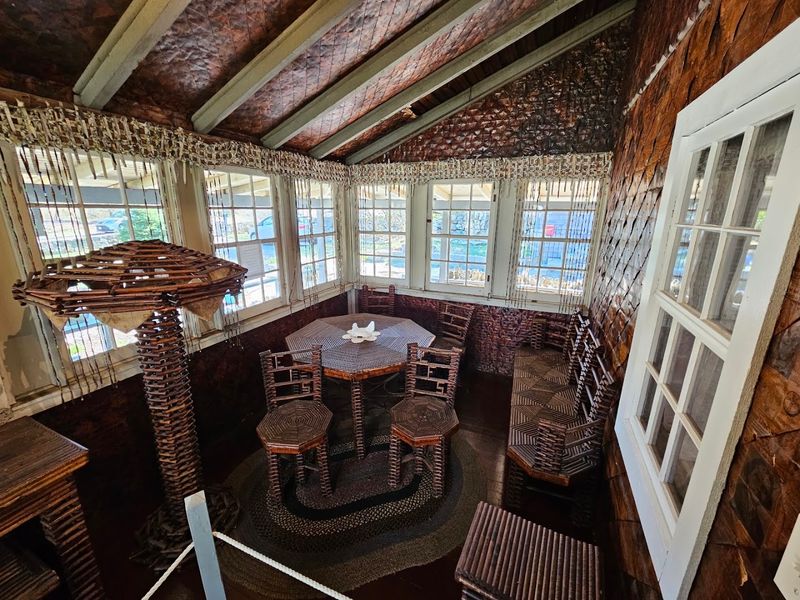
Paper and rain are not exactly best friends. So how has a house made entirely from newspaper managed to survive nearly 100 years of Massachusetts weather?
The answer is varnish, and lots of it.
After layering the newspapers into walls and furniture, Elis Stenman coated everything in a thick layer of varnish. This protective finish sealed the paper from moisture, slowed down the natural deterioration process, and gave the surfaces a smooth, almost wood-like appearance.
The technique worked so well that the interior of the house still looks remarkably well-preserved today.
On the outside, some wear and weathering is visible, with edges of newspaper layers peeling slightly over time. But considering that most paper products last only a few years before breaking down, the fact that these varnished walls are still standing is a true testament to Stenman’s engineering mind.
Sometimes the simplest solutions turn out to be the most effective ones.
Visiting the Paper House Is Easier Than You Think
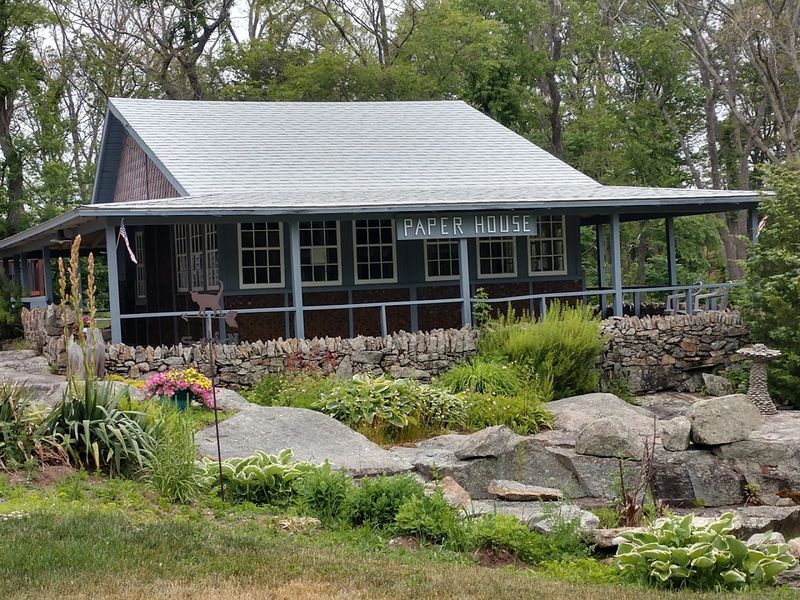
Some historic landmarks require advance booking, pricey tickets, and a whole lot of planning. The Paper House keeps things wonderfully simple, and that is a big part of its charm.
Located at 52 Pigeon Hill St in Rockport, the house is open daily from 10 AM to 5 PM. There is no formal admission fee.
Instead, visitors are asked to leave a small donation of around two dollars per person in an honor-system box located near the adjacent property. You let yourself in, take your time, and explore at your own pace without anyone rushing you along.
Most visitors spend about 15 minutes inside, which is just the right amount of time to take everything in without feeling overwhelmed. Parking is street parking in the surrounding neighborhood, so it is easy to find a spot.
For a quick and fascinating detour during a Rockport visit, this place absolutely delivers on every level.
A Neighborhood Gem That Flies Under the Radar
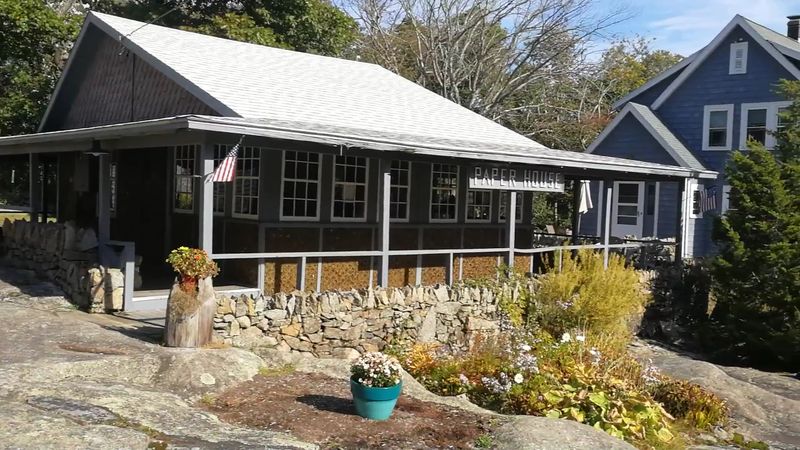
The Paper House is not the kind of attraction you will find plastered on giant billboards along the highway. It sits quietly in a regular neighborhood, and that is exactly what makes stumbling upon it feel so special.
Several visitors have mentioned that the house is easy to drive past without noticing it. It blends into the surrounding neighborhood, looking almost like any other small New England cottage from the outside.
But once you know what you are looking for, the sight of those newspaper-layered walls makes the whole thing feel like a hidden treasure finally uncovered.
The low-key nature of the place adds to its appeal. There are no crowds, no tour guides talking over each other, and no gift shop pushing overpriced souvenirs.
Just a quiet, fascinating little house that rewards the curious traveler who takes the time to seek it out. Sometimes the best finds are the ones hiding in plain sight.
Modern Amenities Inside an Old-School Paper Shell
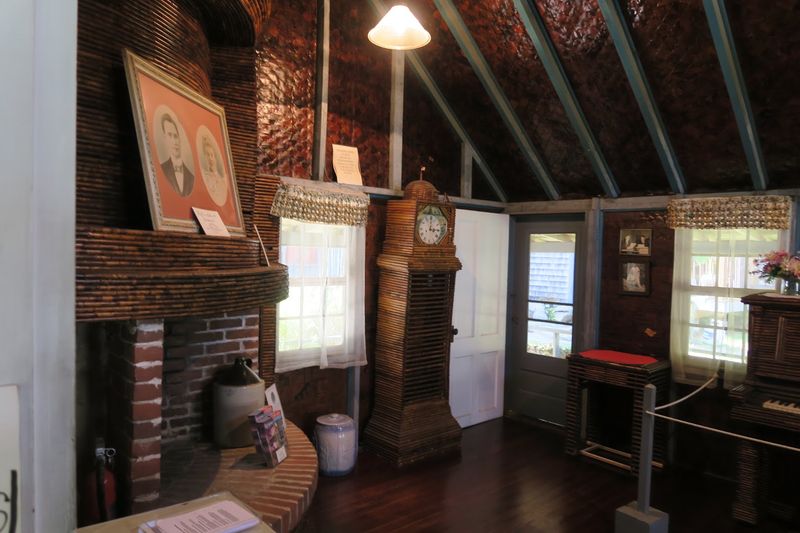
When you hear that a house is made from old newspapers, you might picture something fragile, cold, and completely unlivable. The Paper House will quickly change that assumption.
Despite its unusual construction, the cottage actually includes running water, electricity, and a working fireplace. The fireplace is built from brick, for obvious safety reasons, and the floor and roof are made from wood.
These practical choices mean the house is not just a novelty, it is a functional space that could genuinely be used as a summer retreat.
The combination of newspaper walls and real-world utilities creates a fascinating contrast that visitors find both amusing and impressive. One reviewer noted being genuinely surprised to find a stove inside, as if paper and cooking equipment are an unlikely pairing.
That mix of the quirky and the practical is a huge part of what makes the Paper House such a memorable stop on any Massachusetts road trip.
What Makes This Place Worth Every Minute of Your Time
With a 4.3-star rating from over 200 reviews, the Paper House has clearly won over a lot of hearts. But what is it that keeps people talking about this tiny newspaper cottage long after they have driven away from Rockport?
Part of the appeal is the sheer audacity of the idea. Building a house from newspaper sounds almost silly at first, and then you see it standing nearly 100 years later and realize it is actually genius.
The craftsmanship, the patience, and the creativity all hit you at once when you are standing inside those varnished paper walls.
Another part of the magic is how personal the whole experience feels. You wander in on your own, move at your own pace, and discover things at your own speed.
There is no script, no tour guide, and no crowd. Just you, a remarkable piece of human ingenuity, and a whole lot of old newspapers doing something nobody thought possible.
Plan Your Trip to the Paper House in Rockport
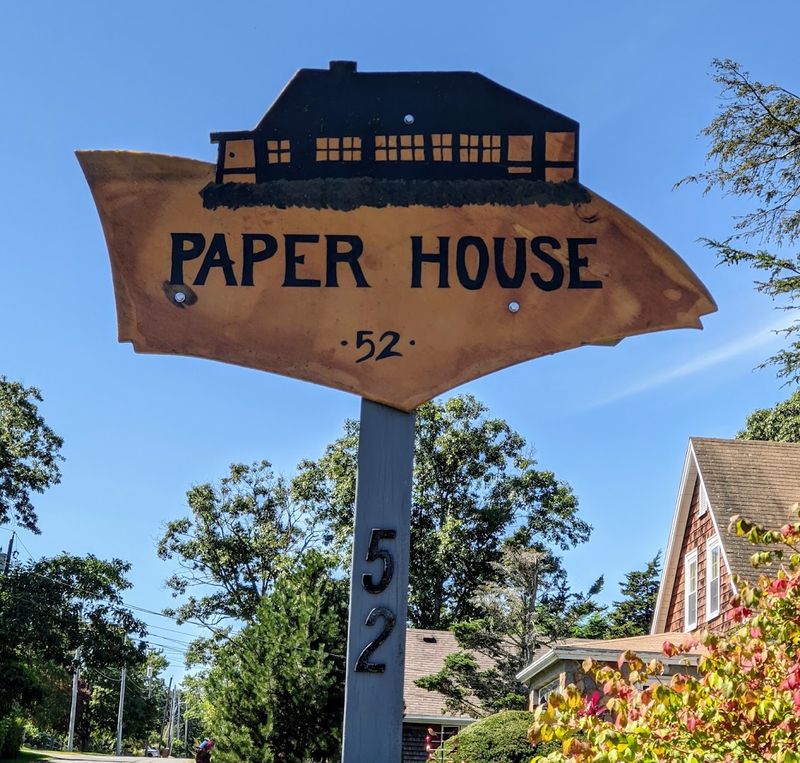
Ready to see this newspaper wonder for yourself? Planning a visit to the Paper House is about as stress-free as it gets, which makes it a perfect addition to any Cape Ann road trip.
The house is located at 52 Pigeon Hill St, Rockport, MA 01966, and is open seven days a week from 10 AM to 5 PM. Keep in mind that the season typically ends around November 1, so plan your visit during the warmer months to avoid a wasted trip.
If you have questions, you can reach the property at 351-444-8931 or check out the official website at paperhouserockport.com.
Rockport itself is a beautiful coastal town with great food, art galleries, and ocean views, so the Paper House fits perfectly into a full day of exploring. Bring a couple of dollars for the donation box, wear comfortable shoes, and give yourself a few minutes to simply stand in awe of what one determined engineer built from a pile of old newspapers.
Enjoyed this story?
Add Fast Food Club as a preferred source to see more of our reporting on Google.