


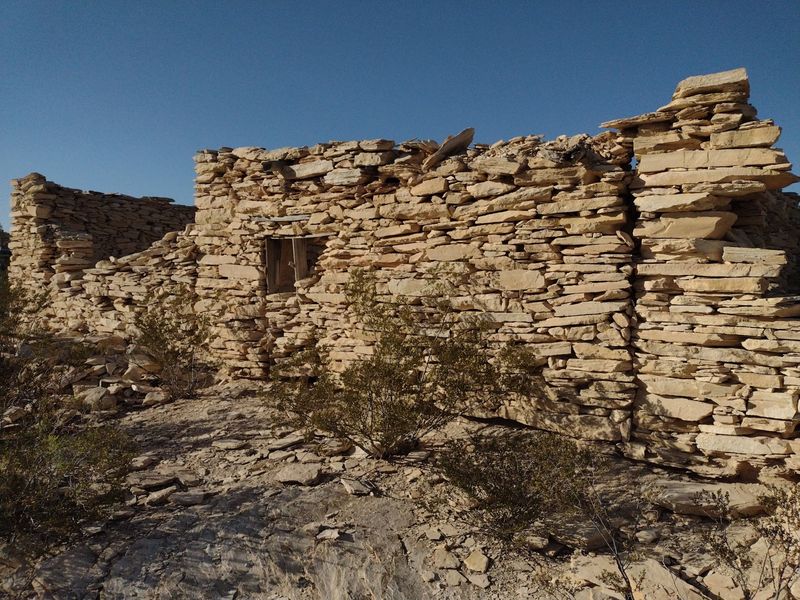
Far out in the Big Bend country of West Texas, past the last convenience store and the final stretch of paved road, sits a cluster of stone ruins that once buzzed with more than a thousand people. Today the walls stand half open to the sky, the old company store has become a porch where guitars come out at night, and the wind carries stories that refuse to fade.
This place mixes mining history, desert scenery, and a stubborn community that never fully packed up and left. Keep reading to learn where it hides, why it emptied out, and what makes it one of the most fascinating stops near Big Bend National Park.
There is a lot more here than crumbling adobe, and the details might surprise you.
Where the Ruins Sit on the Map
Tucked into the far southwestern corner of Texas, this old settlement rests along Texas 79852, a quiet stretch of highway that wanders toward the Rio Grande. The nearest big landmark is Big Bend National Park, and the town of Terlingua serves as a gateway to that vast desert country.
Getting here takes commitment. The closest sizable towns are hours away, and the drive rolls through wide open land with few services in between.
Most people arrive by car, often as part of a longer trip through the Big Bend region. Alpine and Study Butte are common waypoints, and the route delivers long views of the Chisos Mountains before the ruins come into sight.
The site sits at a high desert elevation, which keeps the air a touch cooler than you might expect for a place this deep in Texas. Roads are paved on the main approach, though several side lanes turn to gravel and dust.
Once you reach the cluster of stone buildings, parking is casual and free. The whole area invites slow wandering rather than a quick photo stop, so plan to linger longer than you first think.
A Mining Boom That Rose and Faded
Long before it earned the ghost town label, this settlement thrived on quicksilver. Cinnabar ore, the source of mercury, was discovered in the surrounding hills in the late 1800s, and the mining companies that moved in turned the area into a busy industrial community.
At its peak the district supported well over a thousand residents. The Chisos Mining Company ran much of the operation, and workers and their families built homes, a school, a store, and a church into the rocky terrain.
Mercury was valuable, and for a stretch the mines here ranked among the most productive in the country. Wages, supplies, and daily life all revolved around the ore pulled from deep underground.
Fortunes shifted as demand dropped and the richest veins ran thin. The company that anchored everything eventually folded in the 1940s, and without work the population drained away.
What remained were the sturdy stone shells of buildings that could not be carried off. Those ruins became the backbone of the ghost town you can explore today, a quiet monument to an industry that once defined the region.
Stone Walls and Open Sky
Wandering among the remains gives you a real sense of how people carved a life out of unforgiving ground. Many structures were built from local rock and adobe, and their thick walls have weathered decades of sun and wind.
Some buildings stand nearly whole, with doorways and window openings framing the desert beyond. Others have crumbled to low foundations, leaving outlines of rooms where families once gathered.
The old Chisos Mining Company store is one of the most recognizable landmarks. Its long porch has become a natural gathering spot, and the building anchors the center of the settlement.
Scattered across the hillside you will also find the shells of miners’ dwellings, many little more than partial walls now. Walking between them reveals just how tightly the community was packed into the rocky slope.
Above it all stretches an enormous sky, mostly empty and wide. The contrast between the fragile human ruins and the vast open land is what makes the setting feel so memorable, and it rewards those who take their time exploring on foot.
The Porch That Became a Stage
Most people expect silence in a ghost town, yet the old store porch flips that idea on its head. In the evenings it turns into a casual gathering place where locals and travelers settle in with instruments and conversation.
Live music drifts out here on many nights, informal and unpolished in the best way. Someone brings a guitar, others join in, and the porch fills with an easygoing crowd watching the light fade over the desert.
The scene has become something of a tradition for the small community that still calls the area home. It is a reminder that the town never truly emptied, even after the mines closed.
Sunsets from the porch draw a steady crowd, since the western horizon stretches on for miles. People arrive early to claim a spot and stay long after the color drains from the sky.
The mood is friendly and unhurried, welcoming to strangers who wander up. Regulars mention that the porch is where the modern spirit of the place really comes alive, blending history with everyday desert living.
The Historic Cemetery
One of the most striking corners of the settlement is its old burial ground, still cared for after all these years. Simple wooden crosses and stone markers dot the ground, many dating back to the mining era.
The site tells the story of the working families who lived and struggled here. Hand made markers and small offerings show that the community has never forgotten the people who came before.
Each year the cemetery takes on special meaning during Day of the Dead observances. Candles, marigolds, and decorations appear across the grounds as families and visitors honor those buried here.
The tradition ties the modern town to its Mexican and border heritage, which runs deep in this part of Texas. The blend of cultures shaped daily life during the mining days and still colors local customs.
Quiet and reflective, the cemetery asks for respect rather than loud sightseeing. Walking its rows offers a grounded contrast to the more social scene near the store, and it deepens your understanding of who this town was really built by.
A Basecamp for Big Bend Adventures
Adventure seekers often use this desert outpost as a launch pad for exploring the wider region. Big Bend National Park sits within easy reach, offering mountain trails, canyons, and river country just a short drive away.
Big Bend Ranch State Park lies nearby as well, adding even more rugged backcountry to the mix. Between the two, the area serves as a convenient home base for days of outdoor exploring.
The Rio Grande winds through the region and draws people to river trips through dramatic canyon walls. Outfitters in the surrounding communities help arrange guided outings for those who want to get on the water.
Hiking, stargazing, and scenic driving all rank high on the list of things to do. The remote setting means very little light pollution, so the night sky here puts on a genuine show.
Because services are limited, most people stock up on fuel and supplies before heading deeper into the parks. Using the ghost town as a base makes those long adventure days far more manageable, and it keeps history within arm’s reach.
Desert Skies After Dark
When night falls out here, the show is really just beginning. Far from any city glow, the region is known for some of the darkest skies in the country, and the stars come out in overwhelming numbers.
The Milky Way arcs clearly overhead on cloudless nights. With so little artificial light, even faint stars stand out, making the desert a favorite spot for people who love watching the sky.
The high desert elevation and dry air help keep viewing conditions crisp. Many travelers plan their trips around new moon periods to catch the darkest possible skies.
Ruins silhouetted against the stars create scenes that photographers travel far to capture. The combination of old stone walls and a blazing sky feels both eerie and beautiful at once.
Bring a jacket, since desert nights can turn surprisingly cool even after warm days. Settling in to watch the stars over the old mining town is one of the quiet highlights that keeps people coming back to this corner of Texas.
The Famous Chili Cook-Off Legacy
Few small desert towns can claim a place in culinary history, but this one earned it decades ago. The area became famous as a birthplace of the modern chili cook-off, an event that started in the late 1960s and grew into a beloved tradition.
Every autumn the region draws large crowds for competitions that fill the desert with tents, camps, and cooking teams. The gathering has become one of the defining events of the local calendar.
The cook-off tradition helped put the tiny community back on the map long after the mines closed. It brought new energy and a steady stream of curious travelers to an otherwise remote spot.
The festivities blend competition with a laid back desert party atmosphere. People come from across the country to take part, camp under the stars, and soak up the offbeat spirit of the place.
Even outside of festival season, the cook-off heritage remains a proud part of local identity. It is one more reason this weathered old town keeps surprising the people who make the long trip to reach it.
Planning Your Visit and Getting There
Reaching this remote settlement takes some forethought, but the trip is straightforward once you commit to the distance. The ghost town sits along Texas 79852 near Study Butte, and it is easiest to reach by car.
Alpine is the nearest larger town and a common stopping point for fuel, groceries, and other supplies. From there the drive south leads through open desert toward the Big Bend area.
The grounds themselves are open to the public, and wandering the ruins does not require a ticket. Casual exploring on foot is the main way people experience the site.
Fill your fuel tank before arriving, since gas stations are few and far between out here. Carrying plenty of water is smart as well, given the dry desert climate.
Fall through spring tends to bring the most comfortable weather, while summer days can be intensely hot. Timing your visit for cooler months makes exploring far more pleasant, and it lets you enjoy the porch and the surrounding parks without racing the midday sun.
Why This Desert Relic Stays With You
Some places fade from memory the moment you leave, but this old mining town tends to linger. The mix of crumbling stone, wide desert, and a community that refused to vanish gives it a character all its own.
History buffs find plenty to chew on in the mining ruins and the storied cemetery. Adventure travelers get a perfect base for Big Bend country, and stargazers get skies that few other places can match.
The living side of the town, from porch music to the cook-off legacy, proves that ghost town does not always mean empty. There is real warmth here beneath the rugged surface.
Remote as it is, the effort of getting here becomes part of the reward. The long drive filters out the crowds and leaves room for a slower, more thoughtful kind of visit.
Anyone drawn to the offbeat corners of Texas will find this weathered outpost worth the journey. It stands as a quiet reminder that even the places left behind can still have plenty of life left in them.
Enjoyed this story?
Add Fast Food Club as a preferred source to see more of our reporting on Google.