


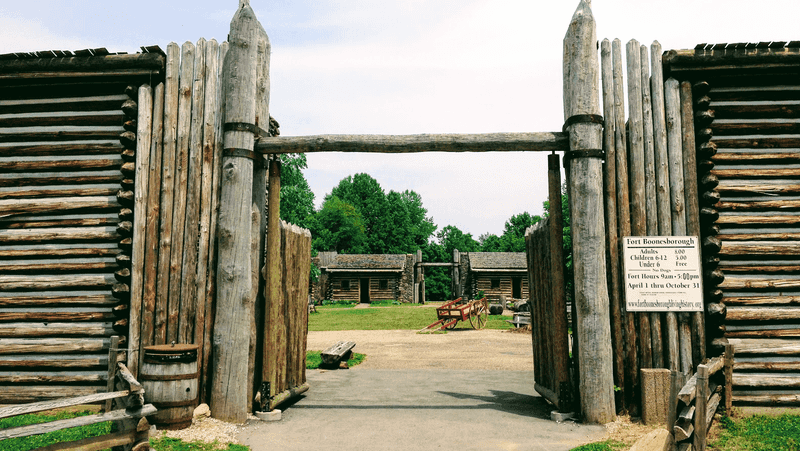
Somewhere along the Kentucky River sits a reconstructed frontier settlement where people in period clothing still work looms, shape iron, and explain how surveyors mapped the wild land more than two centuries ago. The name attached to this spot belongs to one of the most famous pioneers in American history, and walking through its wooden gates feels like stepping back into the 1770s.
There are cabins to explore, cannons perched on a hill across the water, and short trails that connect the modern park to the original settlement below. Families come here to learn, camp, and picnic, and kids leave knowing a little more about how the frontier really worked.
Keep reading to find out exactly where this fort hides, what waits inside its walls, and how to plan a visit that turns a history lesson into a real adventure.
Where the Frontier Fort Stands Today
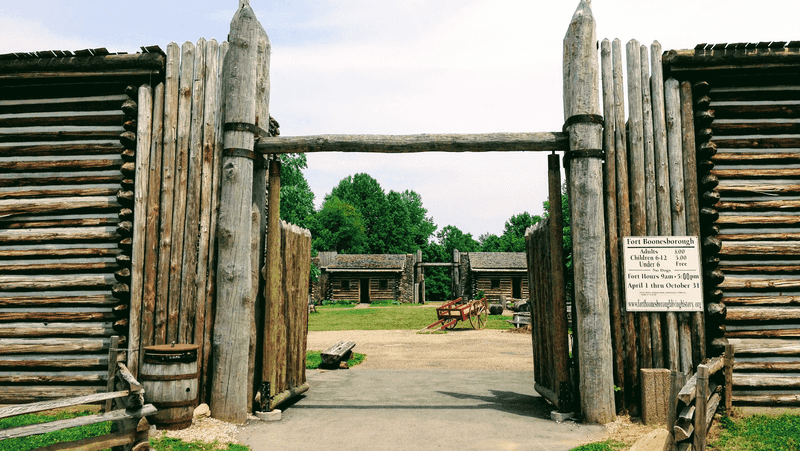
Tucked along the banks of the Kentucky River, Fort Boonesborough State Park sits at 4375 Boonesboro Rd in Richmond, Kentucky. The address points to a reconstructed Colonial fort that recreates one of the earliest settlements west of the Appalachian Mountains.
A small heads-up before you go: there are actually two signs for the same park along the highway. One directs you to the original settlement site, and the other leads to the replica fort, which sits at a different exit farther up the road.
The replica is the main attraction, and it earns plenty of praise from folks who make the drive. Regulars mention that the fort is not tucked inside the campground section itself but a bit farther along, which can throw off first-timers relying on their phones.
Once you find the right entrance, the payoff is worth the small navigation puzzle. The reconstructed fort features rows of cabins, lookout corners, and exhibits that bring frontier life into focus.
Named for pioneer Daniel Boone, the site carries real weight in American history. Getting your bearings early makes the rest of the day run much smoother.
Daniel Boone and the Story Behind the Walls
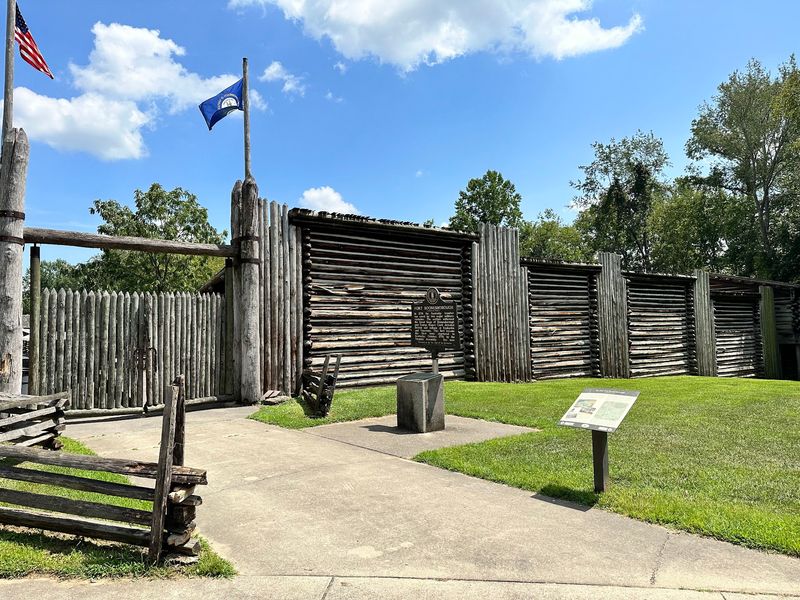
Long before there were highways and exit signs, Daniel Boone led settlers into this stretch of Kentucky wilderness and helped build cabins that grew into a small stone fort. The park keeps that origin story front and center, and you can still see where the original settlement took root down by the river.
The history here is genuine, not invented for tourists. Markers scattered across the grounds explain how the area was settled and what daily life demanded of the people who lived here.
One neat detail keeps popping up from families who visit: some people actually find ancestors listed on the stones commemorating the earliest settlers. That kind of personal connection turns a general history stop into something far more meaningful.
Fans of the old Daniel Boone television series often notice that real frontier life looked quite different from the screen version. The exhibits inside help fill in that gap with honest, hands-on detail.
2024 marked the 250th anniversary of the original Fort Boonesborough, a milestone that drew special free-admission weekends. History this old rarely feels this alive.
Cabins, Crafts, and Living History Demonstrations
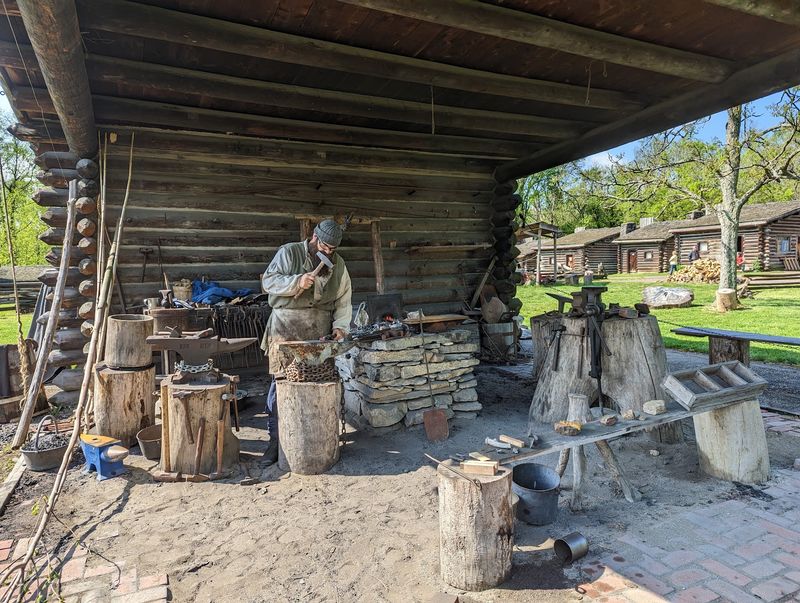
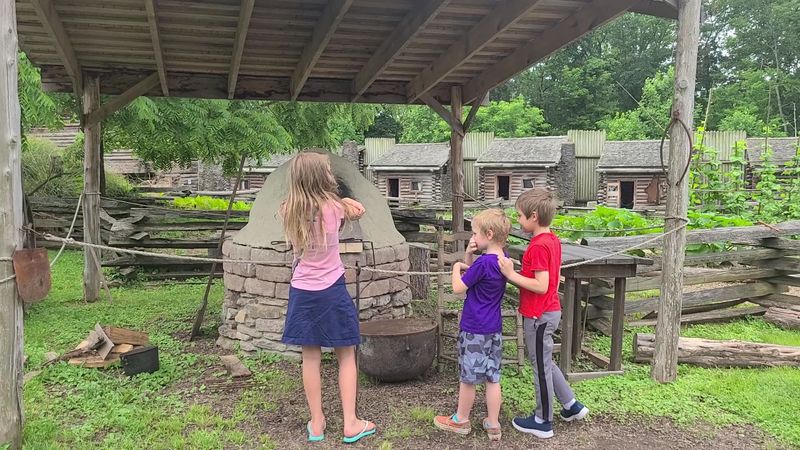
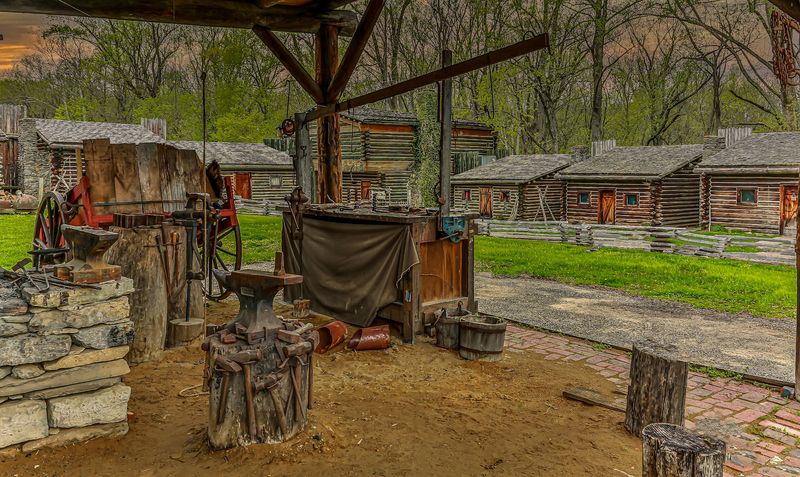
Rows of cabins line the inside of the fort, and each one tells a different piece of the frontier story. Behind their wooden doors, costumed craftspeople demonstrate the skills that once kept a settlement running.
People in period dress explain how a looming machine turns raw fibers into yarn and cloth, while others walk guests through the way early surveyors mapped the untamed land. There are demonstrations of gunsmithing, iron work, candle making, and even axe throwing tutorials.
The staff earns steady compliments for being friendly and genuinely knowledgeable. They seem eager to answer questions and share stories, which makes the crafts feel less like static displays and more like real conversations.
Not every cabin is open to walk into, and some are marked as offices or supply areas. Still, the ones you can enter offer plenty to see and learn.
A weaver telling upbeat stories, a gunsmith sharing his craft, a demonstrator shaping iron: these small encounters stitch the whole experience together. Frontier skills that once meant survival now double as fascinating lessons.
The Two-Story Lookout and Corner Blockhouse
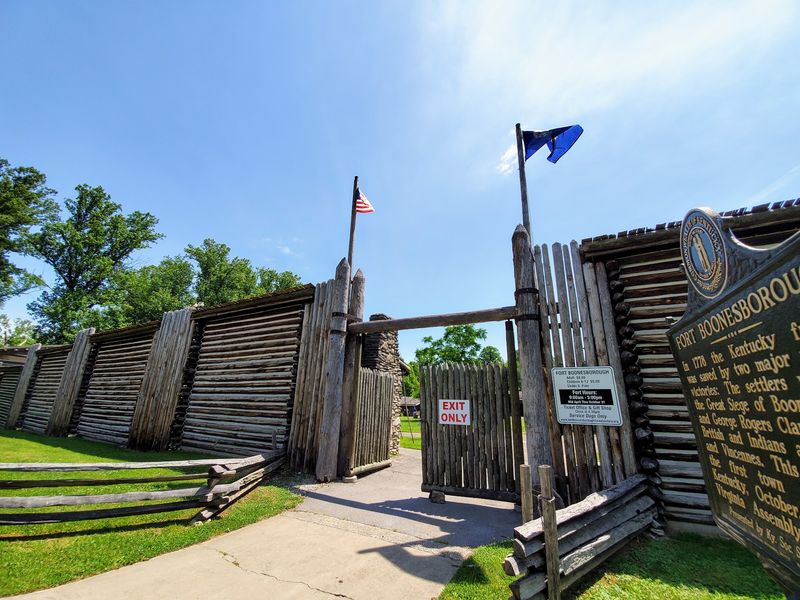
Rising above the log walls, one corner of the fort climbs two stories high and serves as a lookout point. That elevated blockhouse gave frontier settlers a way to watch the surrounding land, and today it stands as one of the fort’s most striking structures.
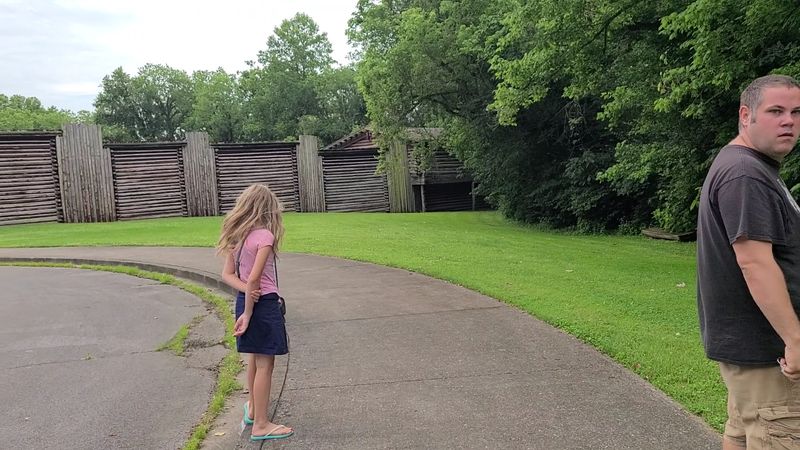
The design tells you a lot about how these settlements were built for both shelter and defense. Walls of stacked logs enclose the grounds, and the raised corners let people keep an eye on the horizon.
Counting the cabins is almost a game for some guests, with tallies landing around 26 buildings inside the walls. The layout gives you a real sense of scale for how a self-contained frontier community operated.
Every structure served a purpose, from living quarters to workspaces for the various crafts. Walking the perimeter helps you understand how tightly organized these forts had to be.
Standing beneath that two-story corner, the practicality of frontier engineering comes into clear view. It is one of those features that quietly explains a whole era.
The Riverside Trail and Hilltop Cannon
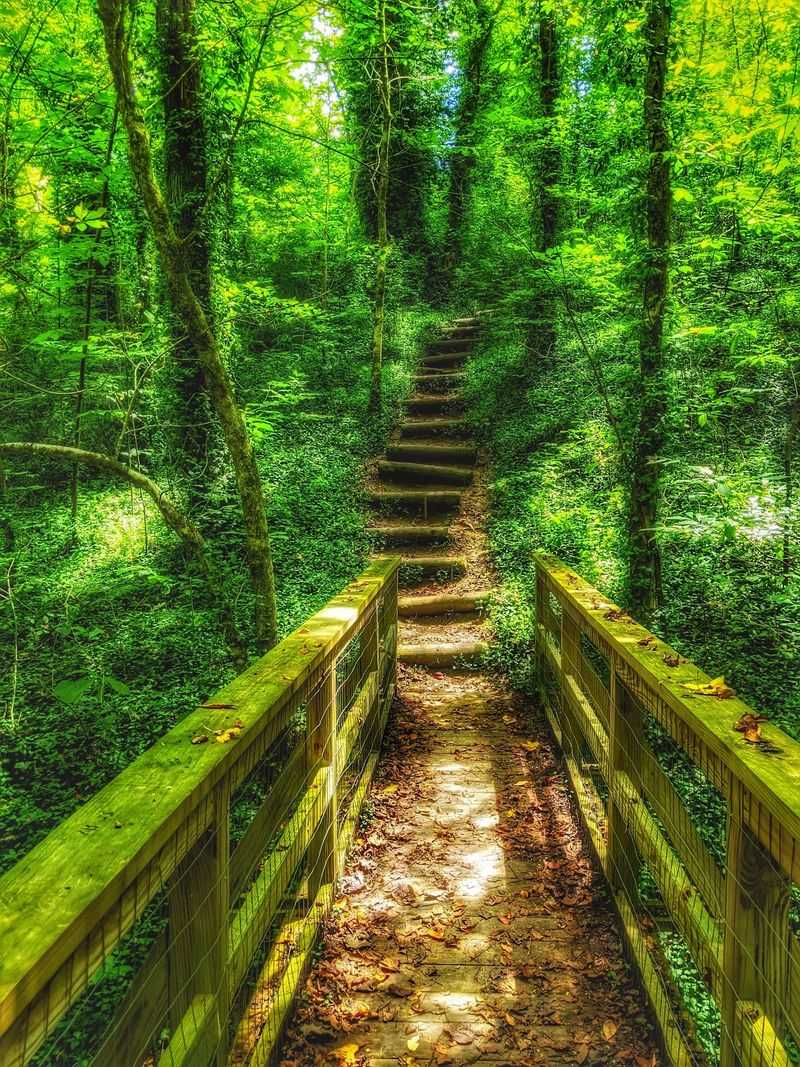
Adventure seekers get a bonus beyond the fort walls, thanks to a hillside trail that crosses toward the Kentucky River. The path climbs up to a cannon perched on top of the hill, and reaching it delivers a genuine sense of accomplishment.
The climb is no joke, and the incline can get your heart rate up on the way to the summit. The reward, though, is a close look at an impressive, nearly working-condition cannon that anchors the view.
The original settlement site rests below the replicated fort, right alongside the river. Down there you will find more markers packed with information about the early days of the area.
Trail options are on the shorter side, so this is more of a quick jaunt than an all-day trek. Some guests wish there were more mileage to explore, but the short hike still adds variety to the visit.
Between the riverbank history and the hilltop cannon, the outdoor portion pairs nicely with the indoor exhibits. It gives your legs something to do after all that reading and learning.
A Campground Built for Family Getaways
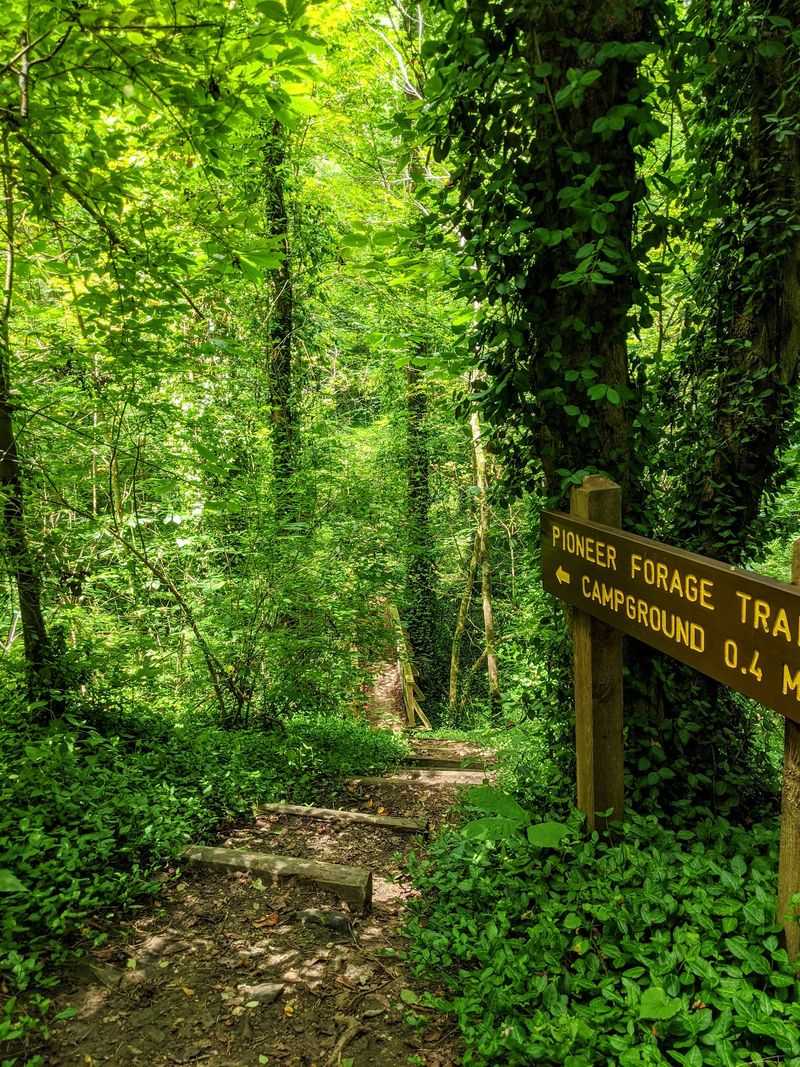
Beyond the history, the park doubles as a full-service recreation base with a campground that families rave about. Sites sit nicely spaced apart with plenty of shade, though the layout leans more toward RVs than tents since the spots sit fairly close together.
The amenities read like a checklist for a comfortable stay. There are clean bathrooms and shower houses, a laundry room with reasonable prices, and a well-stocked camp store that even carries RV parts.
Recreation options keep everyone busy between fort visits. Guests find mini golf, basketball courts, volleyball courts, playgrounds, picnic areas, and river access for launching a boat.
Parking is generous and roomy enough for large rigs, and cell coverage reaches across the property. Leashed dogs are welcome around the grounds, though not inside the fort itself.
Note that flooding damaged the power grid and closed the campground for repairs, with funding rolling in as it becomes available. The pool sustained damage too and entered a design phase for its own restoration.
Seasonal Events and Holiday Celebrations
Timing your trip around a festival can turn a good visit into a memorable one. The fort hosts seasonal celebrations throughout the year, and these special weekends often bring extra activities for kids and adults alike.
Autumn brings a fall and Halloween festival weekend loaded with things for families to do. Campers sometimes score free admission days during these events, which sweetens the deal considerably.
The Christmas celebration stands out as a real highlight. Guests can make a keepsake cloth doll, snap a photo with Santa, and enjoy hot chocolate, hot cider, and cookies during a self-guided tour of the decorated fort.
Summertime brings living-history reenactments of daily life inside the walls, when the fort feels most active. The 250th anniversary weekend even opened the gates for free.
Golf carts sometimes buzz around during busy festival days, and things can get lively with kids joyriding them. Planning around one of these events packs the most value into a single trip.
Hours, Admission, and Getting There
Planning ahead matters here, because the fort keeps a limited schedule. Gates open Wednesday through Sunday from 9 AM to 5 PM, with the last entry around 4:45, and the site stays closed on Monday and Tuesday.
Admission runs about $8 for adults and roughly $5 to $6 for children and seniors, based on what guests report paying. Special anniversary and festival weekends have offered free entry, so it pays to check the calendar.
Restrooms are available on site, and there is a small gift shop plus vendors who sometimes sell handmade items crafted the old-fashioned way. A short movie about building memories also plays for guests.
The park sits at 4375 Boonesboro Rd in Richmond, Kentucky, and the official website through Kentucky State Parks lists the most current details. Remember the two-sign situation so you head to the replica fort, not just the original site.
You can reach the staff by phone at +1 859-527-3131 for questions before you go. A little planning keeps the whole day running smoothly.
Is the Fort Worth the Trip
Weighing it all together, this reconstructed fort earns a strong 4.5-star rating across more than 2,400 pieces of feedback, and most people leave glad they stopped. Families consistently call it fun, clean, and well worth the price of admission.
The magic really depends on timing, though. When the living historians, craftspeople, and reenactors are present, the place feels interactive and alive with knowledge and stories.
Show up on a slower midweek day and you might find fewer demonstrators around, which some guests found underwhelming. Weekends and festival dates tend to deliver the fullest experience, so plan accordingly if hands-on crafts are your goal.
Even on quieter days, the cabins, markers, and river history give you something genuine to explore. A visit typically takes an hour or so, making it an easy addition to a Kentucky road trip.
For anyone curious about frontier life and the story of Daniel Boone, Fort Boonesborough State Park rewards the detour. Pick a lively day, find the right sign, and let the past do the talking.
Enjoyed this story?
Add Fast Food Club as a preferred source to see more of our reporting on Google.