


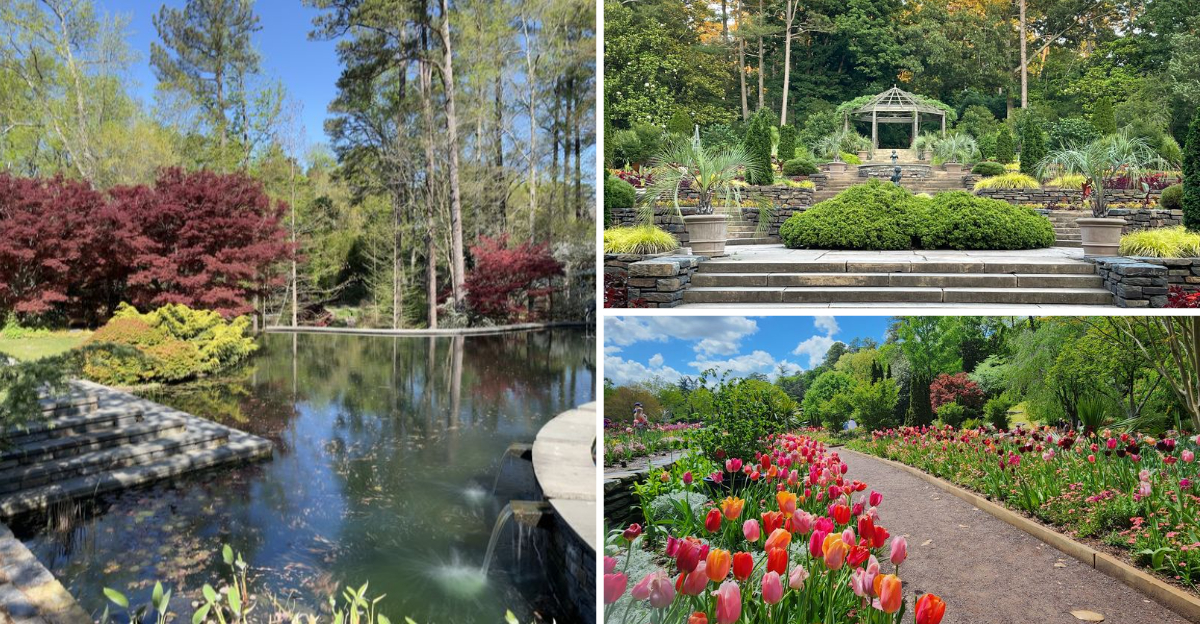
Some places make you slow your steps without really deciding to. A 55-acre patch of Durham does exactly that, with five miles of paths winding past koi ponds, a red arched bridge, and terraces that seem to belong in an old fairy tale.
Springtime turns the whole scene into rows of tulips and clouds of cherry blossoms, while quieter seasons trade color for calm. The best part might surprise you: getting in costs nothing at all.
What follows is a friendly walk through its story, its most talked-about corners, and the small tips that make a visit smoother.
A Green Landmark on the Edge of Duke’s Campus
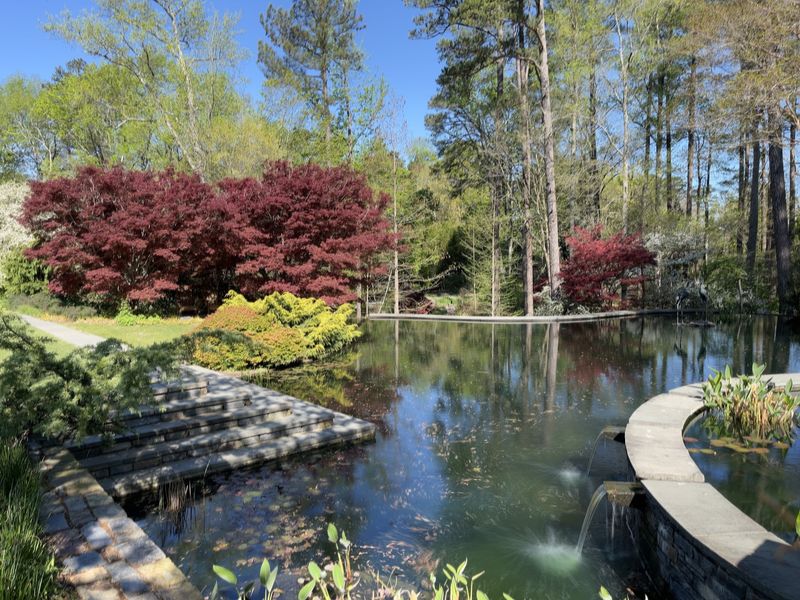
Tucked into the western side of Durham, North Carolina, this botanical wonder sits at 420 Anderson St, Durham, NC 27705, right on the grounds of Duke University. The property spreads across 55 acres and threads together five miles of walking paths, so there is always another turn waiting to be explored.
The name honors Sarah P. Duke, and the space has grown into one of the most celebrated public gardens in the country.
With a 4.9-star average built from more than 9,200 pieces of feedback, it has clearly earned its reputation.
Regulars describe it as an oasis, a calm break from the pace of a busy university town. Students, families, and folks passing through Durham all seem to find their own reason to wander in.
Beyond the flowers and ponds, there is an amphitheater tucked into the grounds, plus formal terraces and wilder, more natural sections. The variety means a single visit rarely covers everything.
Many people leave already planning a return trip for a different season.
Historic Terraces That Anchor the Grounds
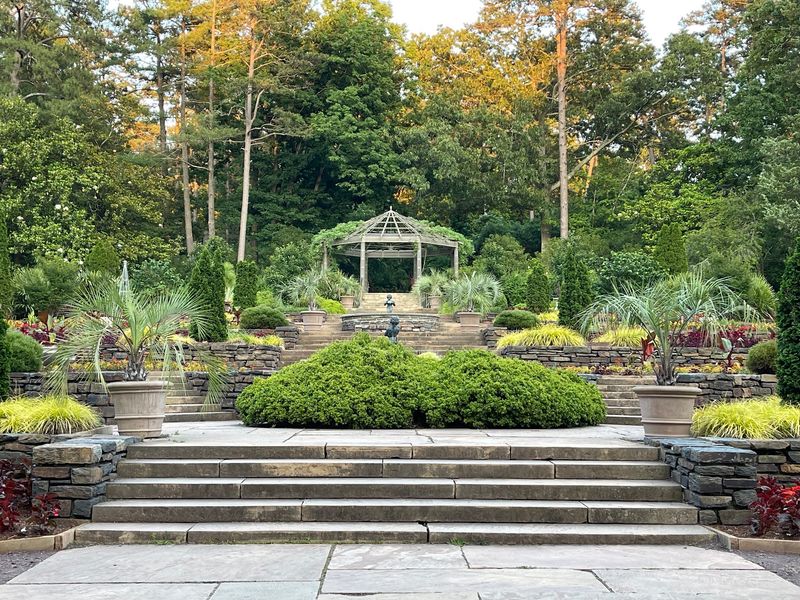
Ask anyone what to see first, and the Historic Terraces usually top the list. These carefully shaped garden beds climb in tiers, giving the space a formal, curated feel that photographs beautifully from nearly every angle.
The terraces represent the older, more structured heart of the property. Their thoughtful design shows off how much planning goes into keeping the beds looking sharp through the changing seasons.
People often pause here longer than they expect, drawn in by the layered arrangement and the water features that sit nearby. It is the kind of spot where benches fill up quickly on pleasant afternoons.
What makes the terraces special is their contrast with the rest of the grounds. Step away from the polished symmetry and you soon reach looser, more natural areas, so the terraces act as a grand front door to everything else.
Photographers gravitate here for good reason. The tiered structure creates a natural stage, and during peak bloom the color practically stacks itself into neat, storybook rows.
Tulips and Cherry Blossoms Steal the Spring Show
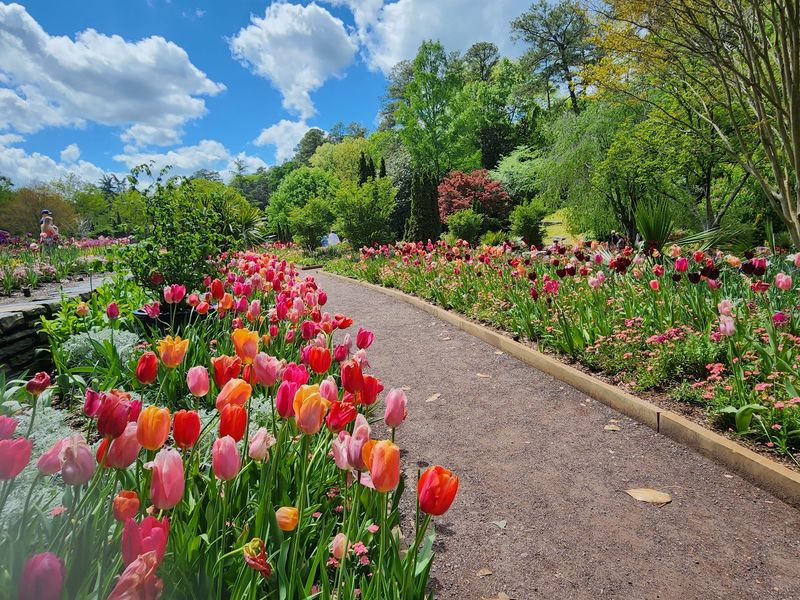
Spring is when this garden turns into pure theater. The tulip display draws the most attention by far, with rows upon rows of vivid color arranged into scenes that look almost too tidy to be real.
Cherry blossom season adds its own magic, filling the Asian section with soft blooms that turn a simple walk into something memorable. Early March brings another treat, when magnolias drop their petals like snow and daffodils pop up across the grounds.
Timing matters more than people realize. Some arrive expecting tulips and roses only to find mostly greenery, so checking the bloom calendar before heading over is smart advice.
Different corners peak at different moments, which is part of the fun. A March visit might catch the daffodils, while a later trip could reward you with lotus flowers near the water.
For anyone chasing that picture-perfect floral view, spring is the season to circle on the calendar. Just aim your visit around the blooms you most want to catch.
The Asiatic Arboretum and Its Famous Red Bridge
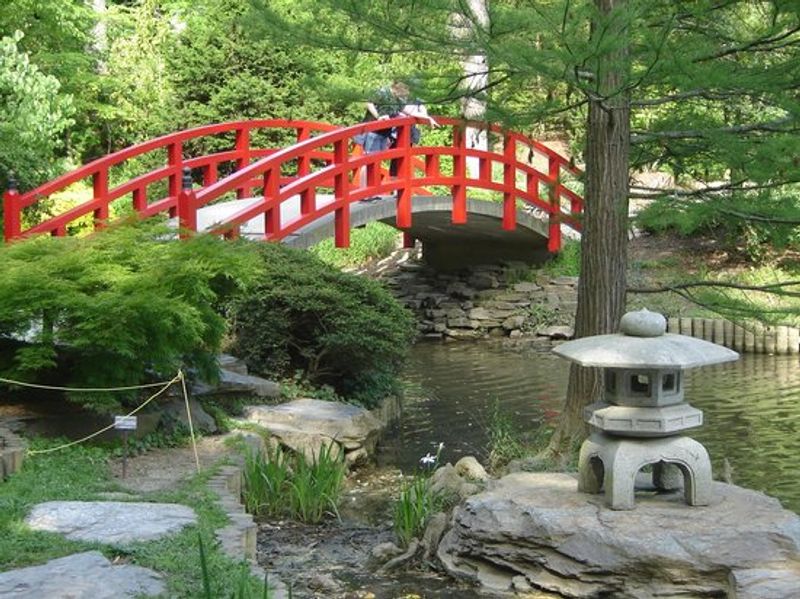
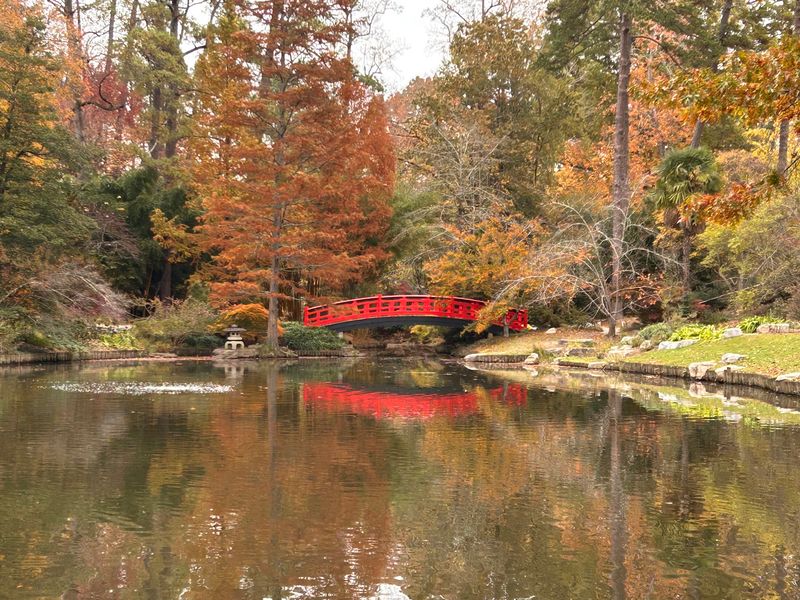
Cross the pond and you reach one of the most photographed corners of the entire property. The Asiatic Arboretum leans into a Japanese-inspired design, complete with an arched red bridge that has become something of a signature.
Japanese maples fill the area, and a few Fuyu persimmon trees hang their fruit just out of easy reach. The blend of trees, water, and quiet paths gives this section a distinct mood all its own.
The red bridge and its koi pond pull in young photographers by the dozen, and it is common to spot photo shoots happening near the water features. Even when busy, the space keeps its calm.
Some people spend hours right here without moving on to the rest of the grounds. During cherry blossom season especially, this is where the crowds and the beauty tend to gather.
Between the maples, the persimmons, and that bright bridge, the arboretum feels like a whole garden folded neatly inside a larger one.
Native Plants and Naturalized Wild Corners
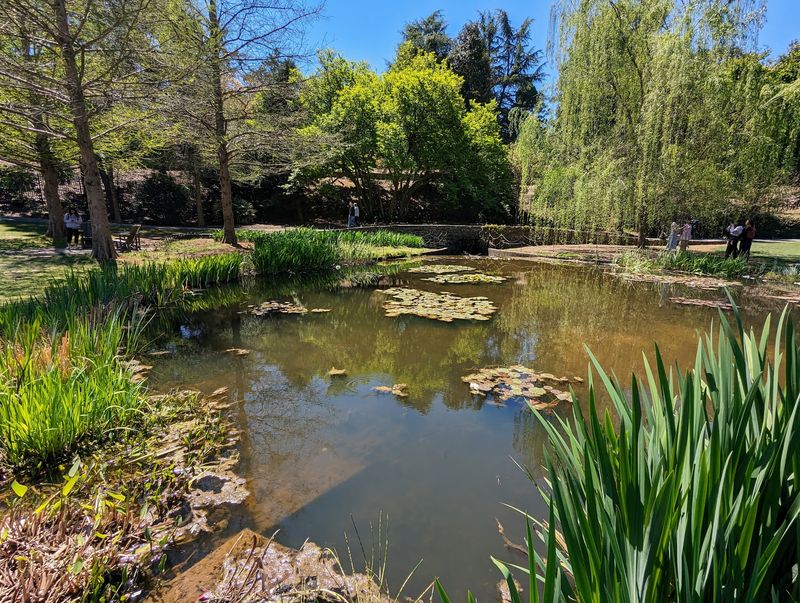
Not every part of the grounds is buttoned up and formal. The Blomquist Garden of Native Plants offers a looser, more natural experience, showing off species that belong to the region.
These naturalized areas feel closer to a backyard wildlife habitat than a manicured showpiece. Wandering through them gives a nice change of pace after the polished terraces and tidy tulip beds.
Wildlife shows up here too. One family even spotted a bird chasing a snake, a reminder that these corners function as real habitat and not just decoration.
The contrast between formal and wild is part of what keeps the property interesting across repeat visits. You can move from carefully curated color into something that feels almost untouched within a short stroll.
For plant lovers curious about what naturally grows in North Carolina, this section doubles as an easy outdoor lesson. It is educational without ever feeling like homework.
A Calm Retreat That Works for Every Age
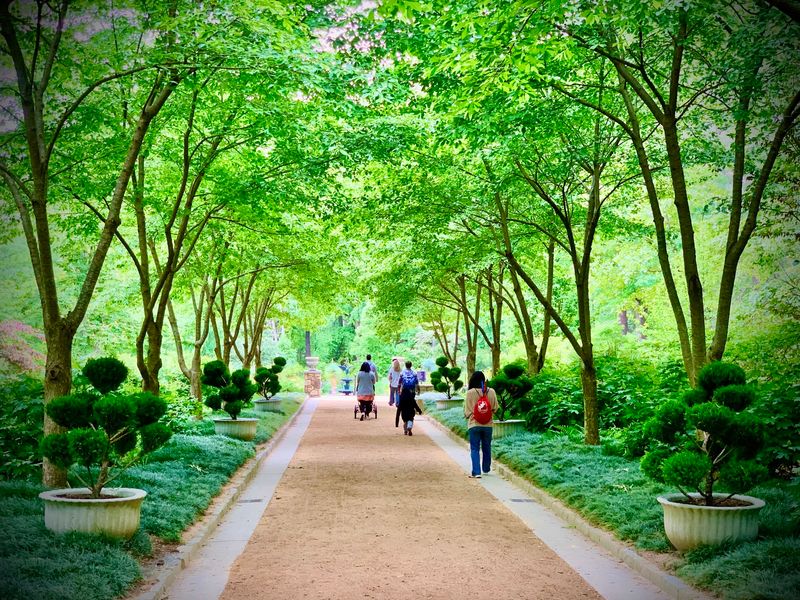
Peaceful is the word that comes up again and again, and for good reason. The grounds are dotted with benches and chairs, so finding a quiet place to sit and take in the view is rarely a problem.
Families with young children appreciate the large open play area, which gives kids room to move while adults enjoy the calmer stretches nearby. A wagon can be handy for little ones on the longer loops.
The sheer size helps too. Even on busy weekends, the property is big enough that you can usually drift into a section with fewer people around.
Older folks find it just as welcoming. The paved paths make much of the garden accessible, and plenty of resting spots mean there is no pressure to rush.
Whether the goal is photography, a slow stroll, a picnic, or simply some quiet time outdoors, the space seems built to hand each person their own version of a good afternoon.
Hours, Parking, and Practical Tips Before You Go
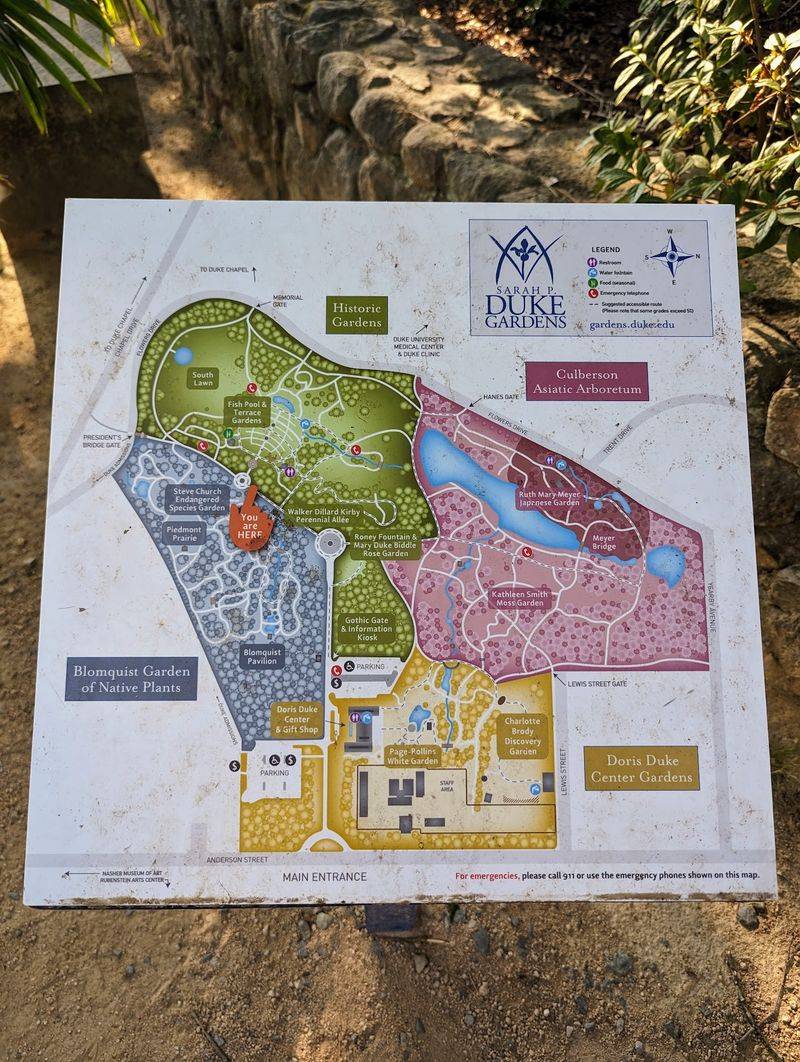
Planning a smooth visit comes down to a few key details. The gardens open daily from 9 AM to 5 PM, seven days a week, so there is a wide window to work with.
Admission is free, which surprises a lot of first-timers, though parking is not. The main entrance charges about two dollars per hour, and some people prefer to park a bit further out and walk in for easier access.
One quirk worth knowing: the parking system asks you to pay upfront before you know how long you will stay, and adding time can mean re-entering your details. Budget roughly two to four hours to explore, depending on your pace.
Restrooms are scattered throughout and generally clean, with water fountains available along the way. Bringing your own water is still a good idea on warm days, along with sun protection.
For the quietest experience, aim for a weekday morning. Weekends and major holidays draw crowds, and big campus events like graduation can fill the prettiest spots fast.
Why This Storybook Garden Earns Its Reputation
Few free attractions manage to feel this generous. Between the historic terraces, the red-bridged arboretum, the native plant corners, and the seasonal floral shows, the property packs remarkable variety into its 55 acres.
The upkeep is a big part of the charm. The beds, paths, and water features stay in excellent shape, and the grounds read as clean and thoughtfully cared for across the seasons.
It works as both a destination and a habit. Locals return for a quick reset, while travelers passing through Durham build an afternoon around it.
Timing your trip around peak bloom rewards you with the most dramatic scenery, but even a chilly January walk turns up its own quiet beauty. There is genuinely no wrong season to show up.
Between the calm atmosphere, the accessible paths, and that no-cost welcome, this Durham garden has quietly become one of the finest green spaces in North Carolina. Bring good shoes, a little patience for parking, and plenty of time to linger.
Enjoyed this story?
Add Fast Food Club as a preferred source to see more of our reporting on Google.