


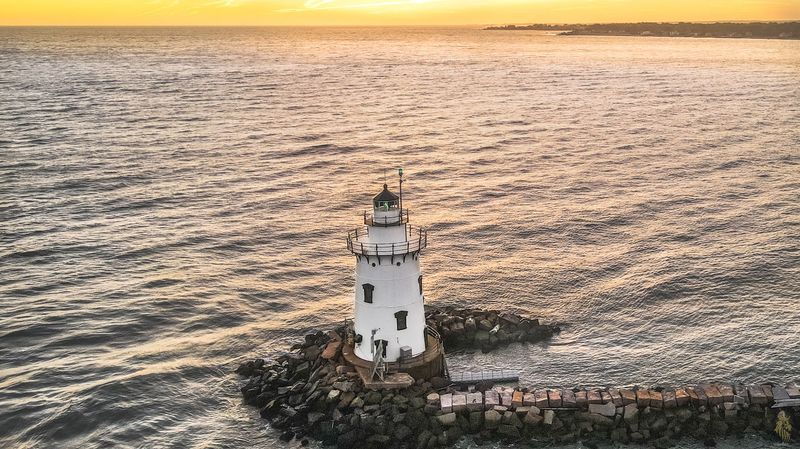
Some lighthouses beg to be photographed from far away, and this one has learned to keep its distance with style. Sitting out on the water off the Connecticut coast, it has become one of those landmarks people spot from the highway and instantly want to chase.
The catch is that reaching it is a whole adventure of its own, wrapped up in private roads, quiet neighborhoods, and a golf course with a genuinely lovely view. There is a story here about who owns the shoreline, why access gets complicated, and how you can still enjoy the sight without stepping on anyone’s toes.
Stick around and you will learn where it stands, what to expect when you go looking, and the smartest way to appreciate a beacon that guards the mouth of a river.
Where the Beacon Stands Guard
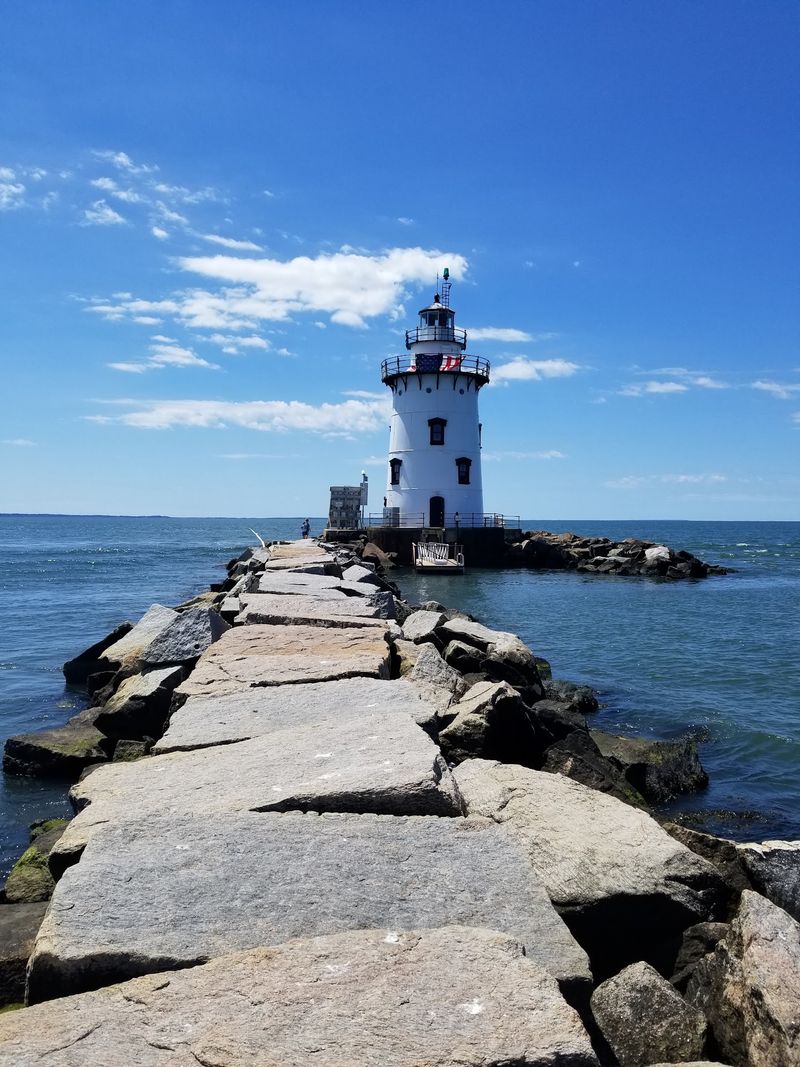
Out where the Connecticut River meets Long Island Sound, the Saybrook Breakwater Lighthouse rises from the water off Old Saybrook, Connecticut. The listed address is simply Long Island Sound, Old Saybrook, CT, which tells you right away that this is not a place with a tidy parking lot and a welcome desk.
The lighthouse marks the entrance to the river, a job it has quietly handled for generations. Boaters passing through the area treat it as a trusted signpost.
What makes the location tricky is that the land closest to it is a private residential neighborhood. The beacon itself sits offshore, so even getting a close look takes planning and patience.
People who love maritime landmarks often plot a route here without realizing how the surrounding streets are set up. The payoff is real, but so is the effort.
A Landmark With a Long Watch
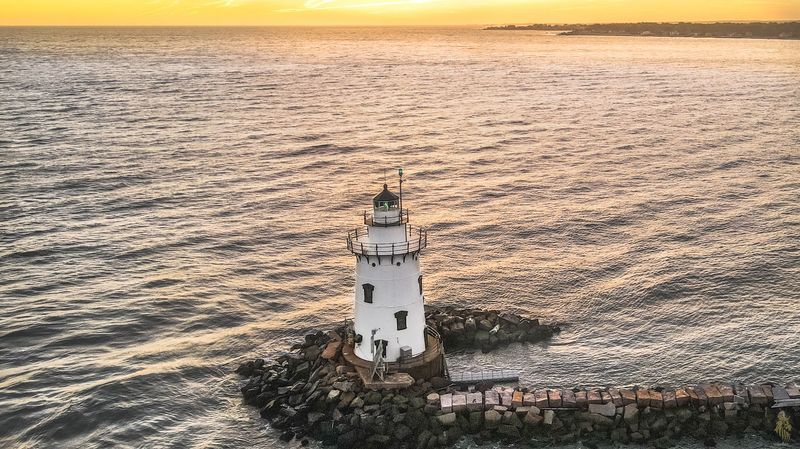
Every coastline has its old faithful, and along this stretch of Connecticut the breakwater light has been doing steady duty for a very long time. It stands where the river empties into the Sound, a spot that has always needed a clear signal for boats.
The structure carries the classic look of a working lighthouse, the kind that has earned its place in local memory. Folks who grew up nearby know it as part of the scenery.
Its historic status is a big reason travelers feel drawn to it. There is a certain pull to landmarks that have kept watch through decades of storms and calm days alike.
Because it sits on a breakwater surrounded by water, the tower has always been more about function than foot traffic. That practical purpose shaped everything about how people experience it today.
Understanding that history helps explain why the approach feels so protective. The beacon was built to be seen from the water first and foremost.
The View From the Highway
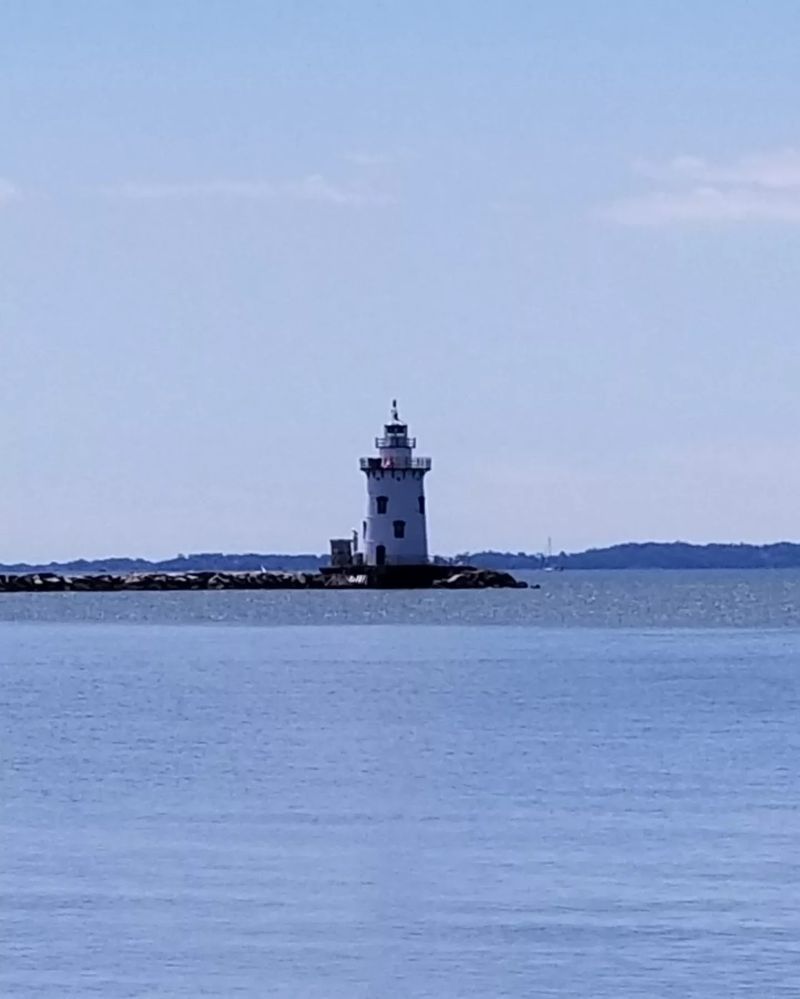
Here is a fun surprise for road trippers. You can actually spot this lighthouse while cruising along I-95 in Connecticut, which turns an ordinary drive into a mini sightseeing moment.
The Raymond E. Baldwin Bridge near Lyme gives one of the better vantage points.
Drivers crossing there catch the tower sitting out on the water, and it never fails to grab attention.
That highway glimpse is part of the landmark’s charm. Plenty of people fall for it from behind the wheel long before they ever try to reach it on foot.
It also means you do not have to fight through private streets just to say you saw it. A well-timed look from the bridge counts for a lot.
If you enjoy collecting landmark sightings during travel, this one rewards the observant passenger. Keep your eyes toward the Sound as you approach the river crossing and the beacon should reveal itself.
Private Roads and the Access Puzzle
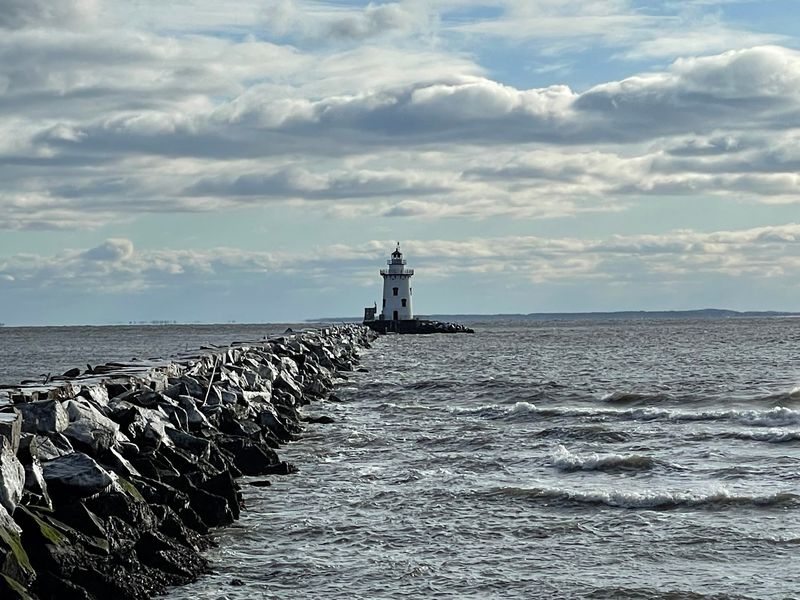
Now for the part that trips up a lot of hopeful sightseers. The most direct routes toward the lighthouse pass through a private residential neighborhood, and the streets there are marked for residents only.
Signs make the rules clear once you turn in. Many travelers report driving up expecting an entrance and instead finding private road notices at nearly every turn.
The frustration is understandable, especially for those who plan a special trip around visiting. Some drive hours only to reach a dead end without public parking.
Knowing this ahead of time changes the whole experience. Instead of hunting for a way in that does not exist, you can set realistic expectations and enjoy the landmark from spots that are open to everyone.
Respecting the local rules matters too. The neighborhood is private property, and the smart move is to admire the beacon without wandering onto restricted streets.
The Golf Course Vantage Point
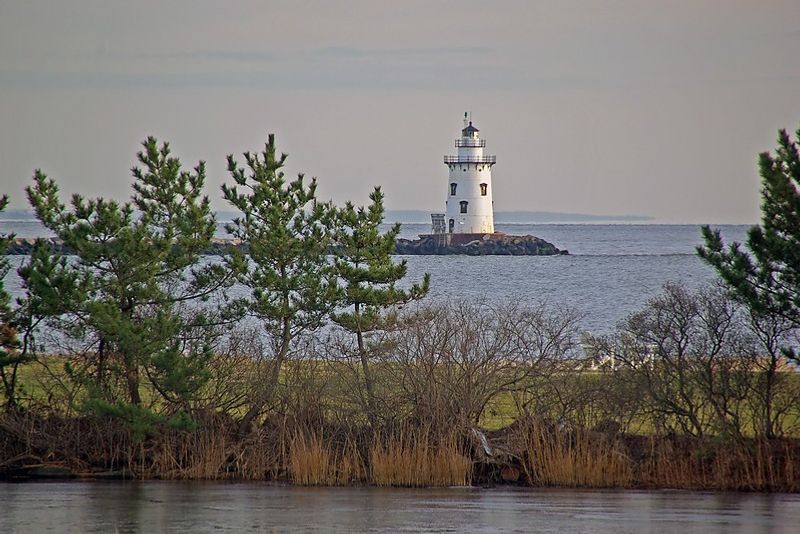
Good news hides inside all the access talk. A walk along the nearby golf course offers a genuinely beautiful view toward the water and the beacon beyond.
People who take that route often come away pleasantly surprised. The open coastal scenery makes the trip feel worthwhile even when the lighthouse stays out of arm’s reach.
The distance actually adds to the appeal here. Seeing the tower framed against the Sound from a grassy overlook has its own quiet reward.
For anyone chasing a peaceful stroll with a payoff at the end, this is the angle worth seeking. It sidesteps the private road drama entirely.
Bring a camera with a decent zoom if you have one. The extra reach helps you capture the beacon clearly across the water while you enjoy the walk.
The Rocky Path for Determined Walkers
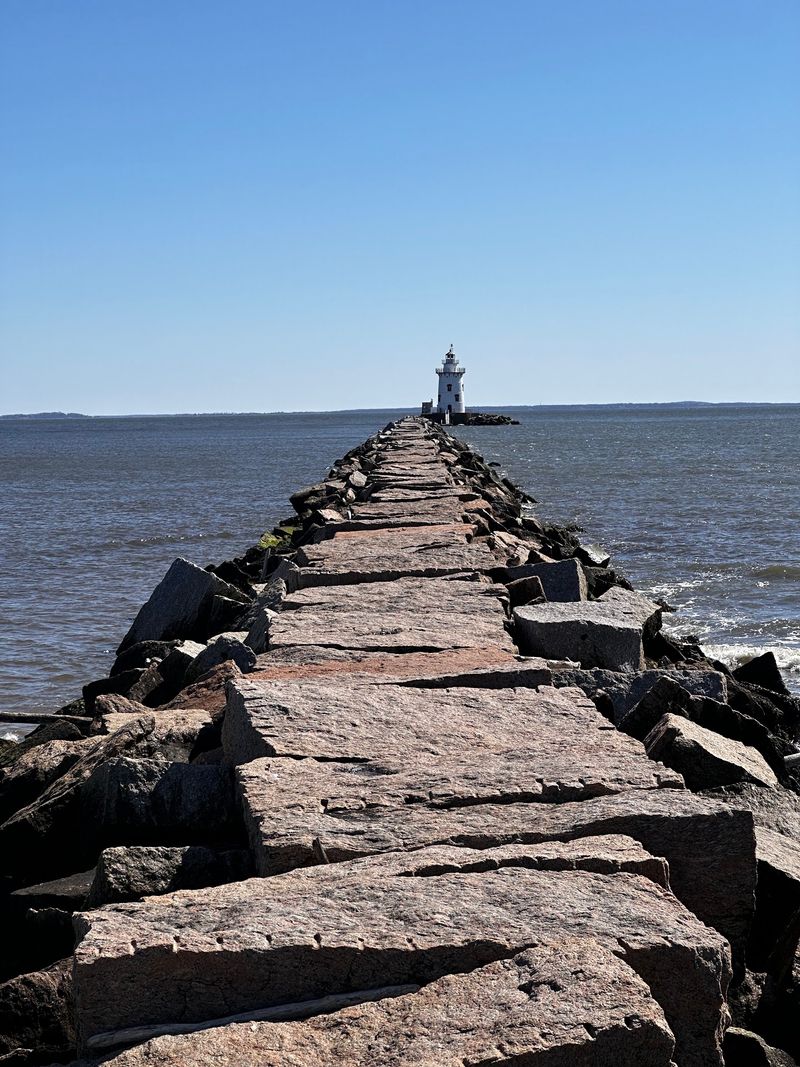
For the truly determined, there is a rugged way to get closer that rewards patience with a striking landscape. It involves parking near an older lighthouse toward the exit of the area, then following a foot path down toward the shore.
The trail eventually narrows to a walking-only stretch. At the end, an open landscape unfolds, with the breakwater beacon sitting out in the Sound.
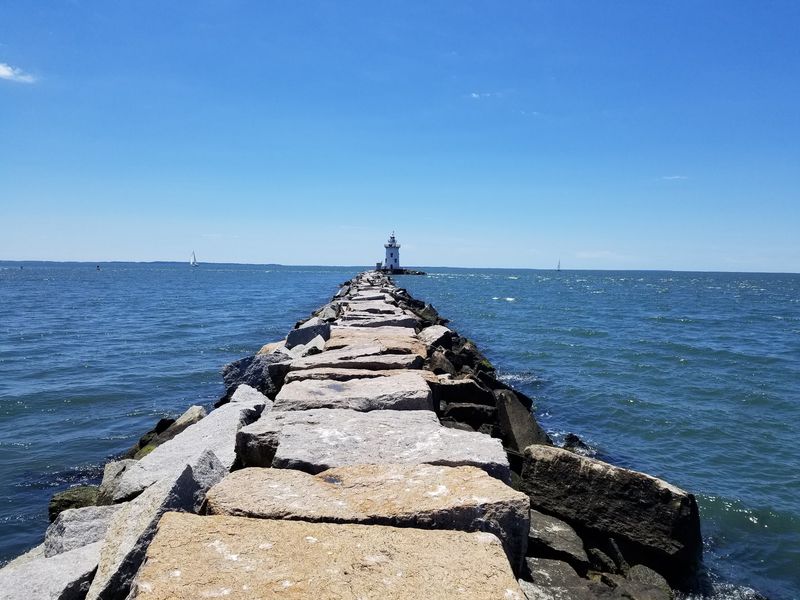
Reaching the tower means crossing a path of large stones. They are described as firm underfoot, though the crossing still takes care and steady footing.
This is not a casual stroll for everyone. It suits hikers who do not mind effort and who come prepared for a bit of a workout.
The reward is that closer connection to a landmark most people only view from afar. For adventurous souls, the extra sweat pays off in scenery.
Why Opinions Are So Divided
Few landmarks split people quite like this one. The overall rating sits at a modest 2.9 stars across 34 reviews, and the reason is not the lighthouse itself but the struggle to reach it.
Travelers who expected easy public access often leave disappointed. Turned away at private streets, they voice real frustration about the missing signage and closed-off routes.
On the flip side, some folks give it top marks. Hikers who found the stone path, walkers who enjoyed the golf course view, and highway spotters who love seeing it from the bridge all speak fondly of the beacon.
The split makes sense once you know the setup. Go in expecting a drive-up attraction and you will be let down.
Go in treating it as a distant landmark to admire, and it delivers.
Managing expectations is really the secret. The star average tells a story about access, not about the charm of the tower.
A Neighborhood That Guards Its Shore
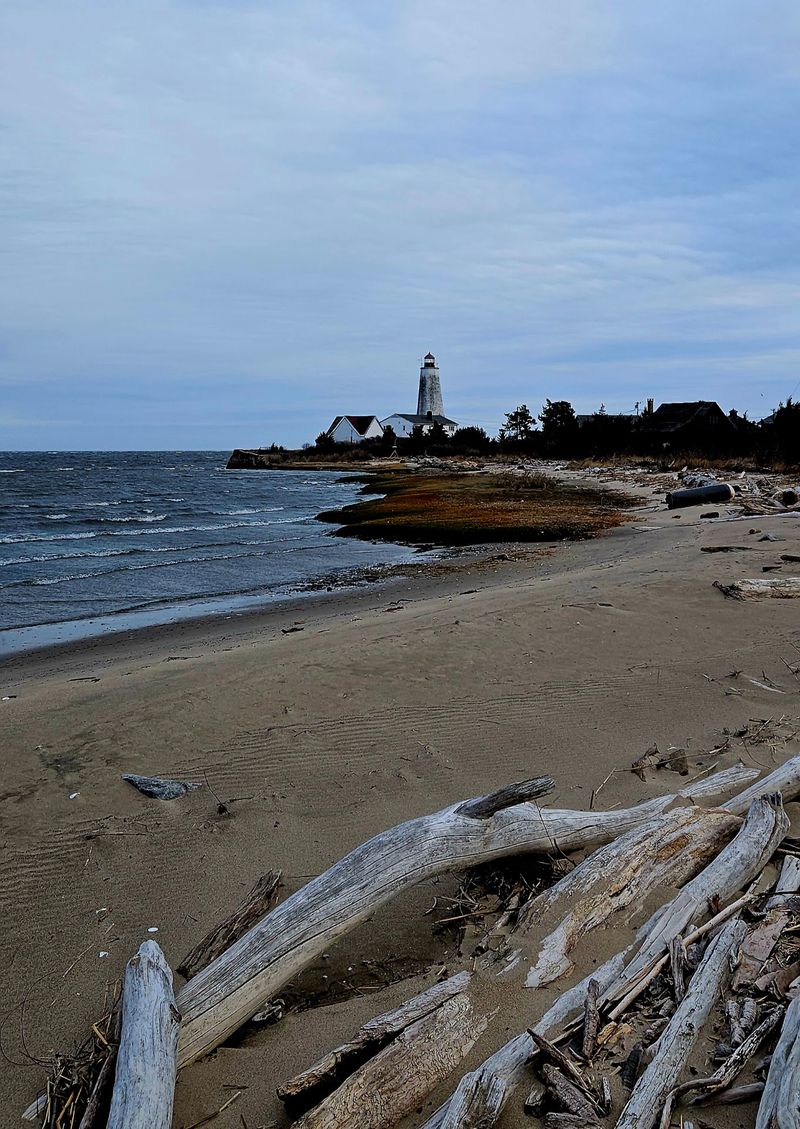
The land around the beacon tells its own story about the Connecticut coast. The immediate area is a community of grand homes, a private beach, and that nearby golf course, all wrapped inside residents-only streets.
Access is limited on purpose. Some locals appreciate the quiet that comes with keeping tourist traffic out of their neighborhood.
That mix of private beach and private road defines the whole visitor experience. It is a big part of why so many people mention the words private and public when they describe the place.
The setup reflects a wider pattern along the shoreline, where stretches of coast are often held back for residents or paid access. It is worth understanding before you plan.
None of this changes how handsome the lighthouse looks from afar. It simply means the surrounding scenery is not an open playground for drop-in guests.
Planning a Smart Visit
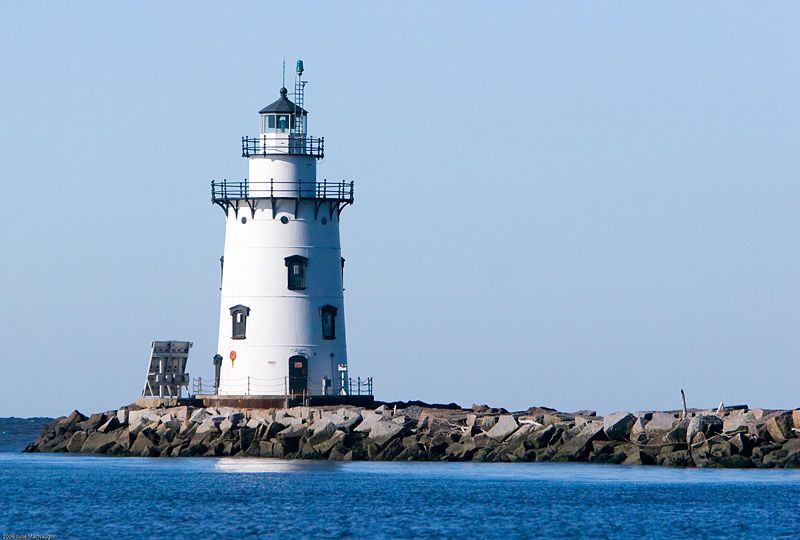
A little prep goes a long way toward a happy trip here. Since the closest streets are private and there is no public parking at the neighborhood entrance, the winning strategy is to aim for the spots that are open to everyone.
The golf course walk stands out as the most reliable way to enjoy a beautiful view without any access headaches. The Baldwin Bridge sighting works great for those passing through on I-95.
Pack a camera with a telephoto lens if you can. That extra zoom turns a distant beacon into a satisfying photo, which is exactly how many people end up capturing it.
Skip the temptation to drive down marked private roads. It leads to dead ends and does not get you closer to the tower.
Set your expectations toward admiring from a distance, and the day becomes a pleasant coastal outing rather than a wild goose chase.
Worth the Detour or Not
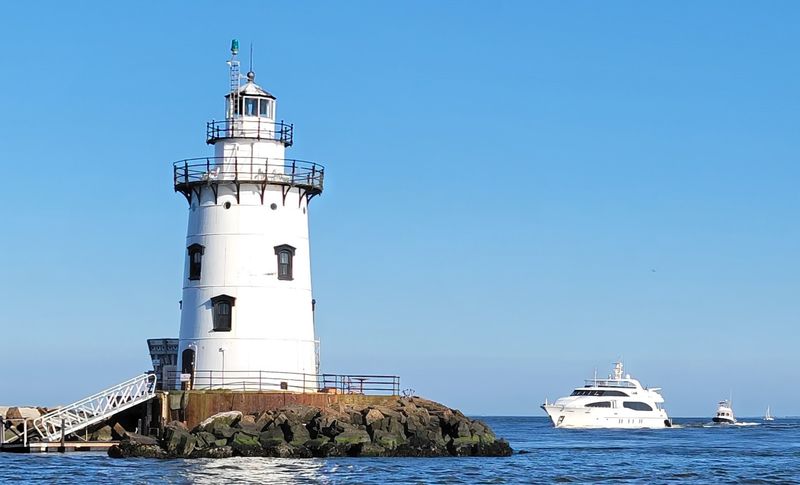
So where does that leave a curious traveler? The answer depends entirely on the kind of visit you want.
Show up hoping to park, walk right up, and tour the tower, and you will hit a wall of private road signs and leave grumbling. That mismatch is behind most of the frustration people feel.
But treat this as a landmark to appreciate from the golf course path, the highway bridge, or the rugged stone route for hardy hikers, and it becomes a rewarding stop along the Connecticut shore.
The lighthouse has kept its watch over the river mouth for generations, and that history alone makes it worth a look. Just meet it on its own terms.
Come with the right plan and a bit of patience, and this offshore beacon gives you a memorable slice of the Sound without any drama.
Enjoyed this story?
Add Fast Food Club as a preferred source to see more of our reporting on Google.