


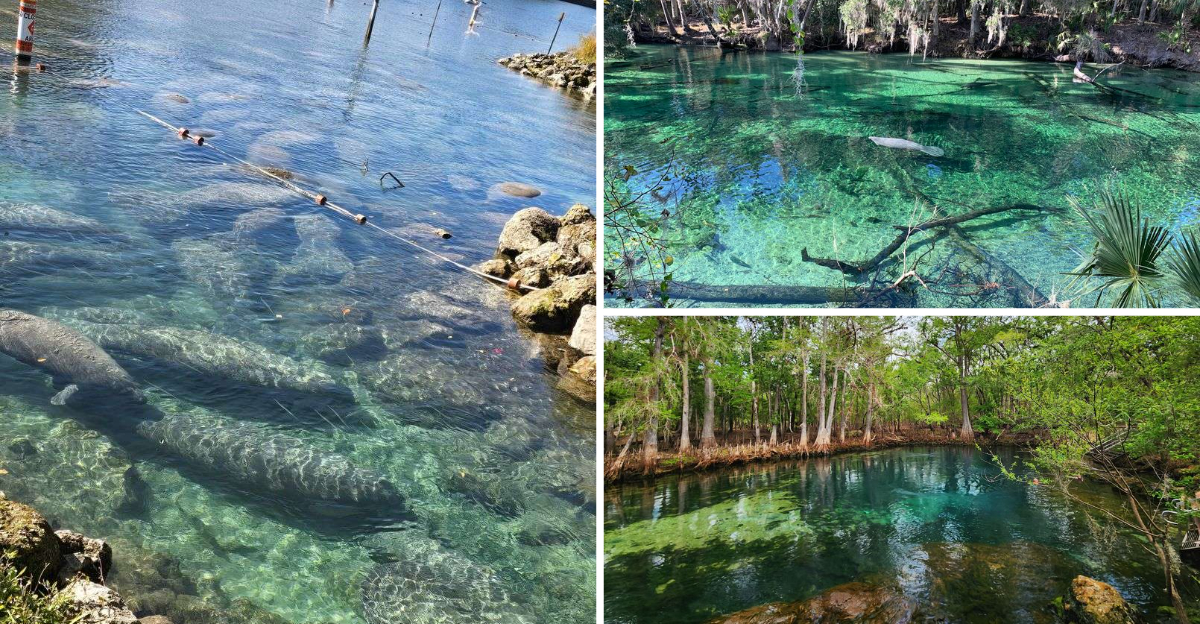
Florida sits on top of one of the largest collections of freshwater springs on the planet, and the water in many of them stays crystal clear all year long. That clarity is a big deal in winter, when manatees swim in from cooler rivers to warm up in the steady 72-degree spring water.
Watching one of these round, slow-moving creatures float past your kayak or snorkel mask is the kind of thing you remember for a long time. Here are eight springs across Florida where the water is clear enough to actually see manatees glide by, along with what makes each one worth the trip.
1. Three Sisters Springs, Crystal River
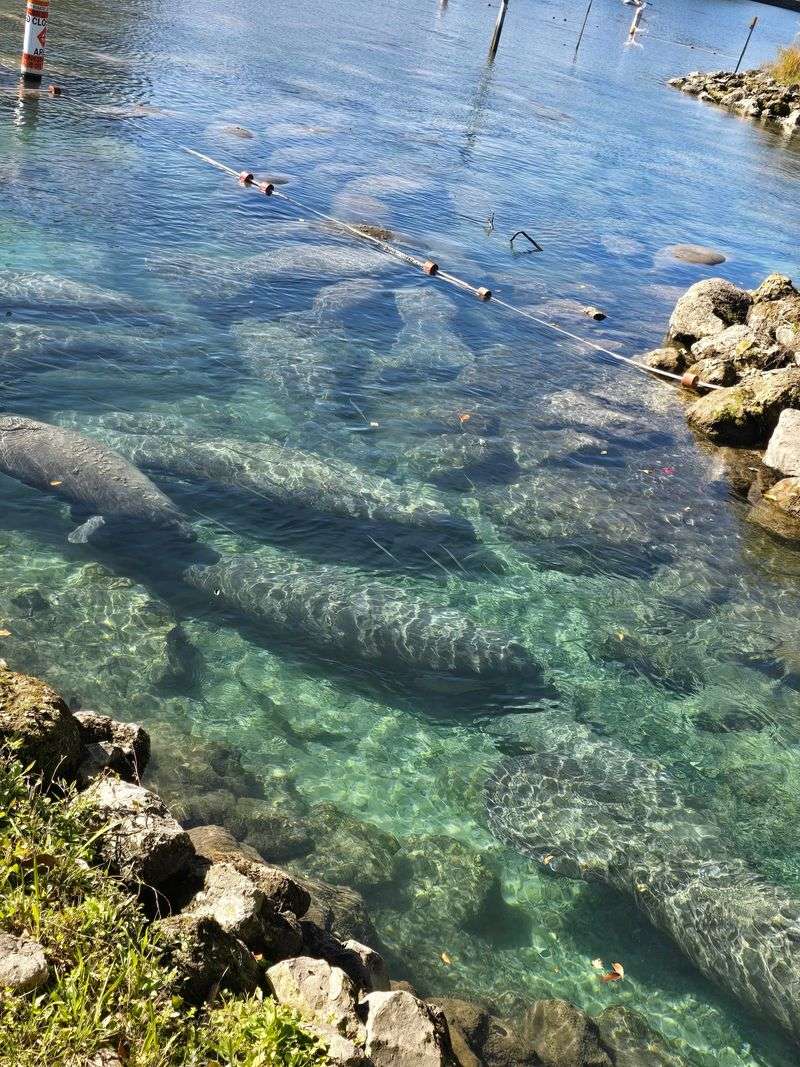
Winter turns this spot into one of the best manatee-watching places in the whole country. Dozens of manatees pack into the warm, shallow water when temperatures drop, and the clarity here is remarkable.
Three Sisters is part of the Crystal River National Wildlife Refuge. You can view it from a boardwalk that loops around the springs, which is a great option if you would rather stay dry.
If you want to get in the water, Crystal River is one of the few legal places in Florida where guided swim-with-manatees tours operate. Rules are strict to protect the animals, so you look but keep a respectful distance.
Access to the boardwalk usually requires a refuge entry fee, and winter weekends get busy. Going early in the day gives you the calmest water and the best odds of a crowd of manatees.
2. Blue Spring State Park, Orange City
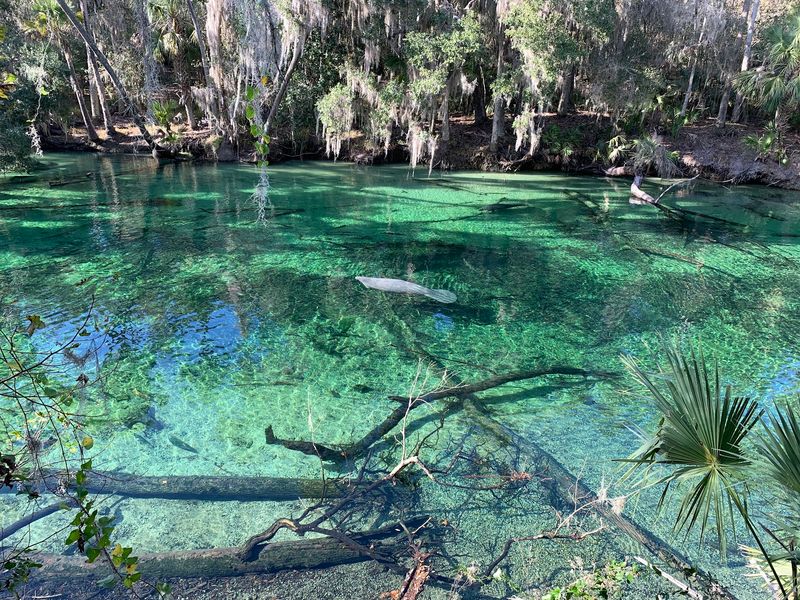
On cold mornings this spring becomes a manatee magnet, sometimes holding several hundred of them at once. The spring run stays a constant 72 degrees, which is why the animals crowd in when the nearby St. Johns River gets chilly.
A long boardwalk follows the spring run, giving visitors clear overhead views of manatees resting below. During manatee season, swimming and diving in the run are closed to protect them, so the boardwalk is the main show.
The park charges a per-vehicle entry fee and can reach capacity on winter weekends, so arriving early matters.
Once the weather warms and the manatees head back out, the spring reopens for swimming, snorkeling, and tubing. That gives Blue Spring two very different personalities depending on the season.
3. Manatee Springs State Park, Chiefland
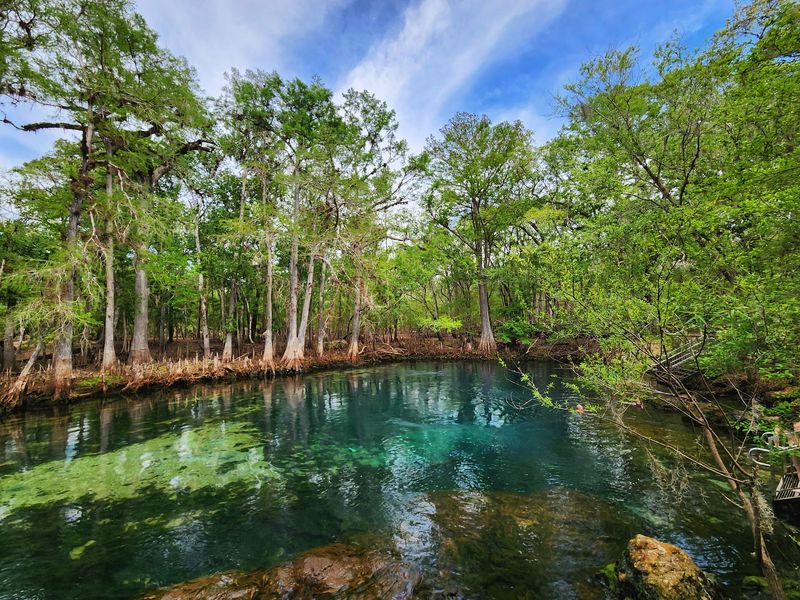
The name gives away the main attraction, but there is more here than the animals it is named for. The spring pumps out a huge volume of clear water that flows through a cypress-lined run into the Suwannee River.
Manatees move into the warm run during winter, and a boardwalk lets you watch them travel between the spring and the river.
When manatees are not around, the spring is popular for swimming, snorkeling, and cave diving, since a large underwater cave system connects to the head spring.
Facilities include picnic areas, a campground, and shaded trails through the woods. The park charges a small vehicle entry fee, and its location in the Big Bend region makes it feel quieter than the busier springs farther south.
4. Homosassa Springs, Homosassa
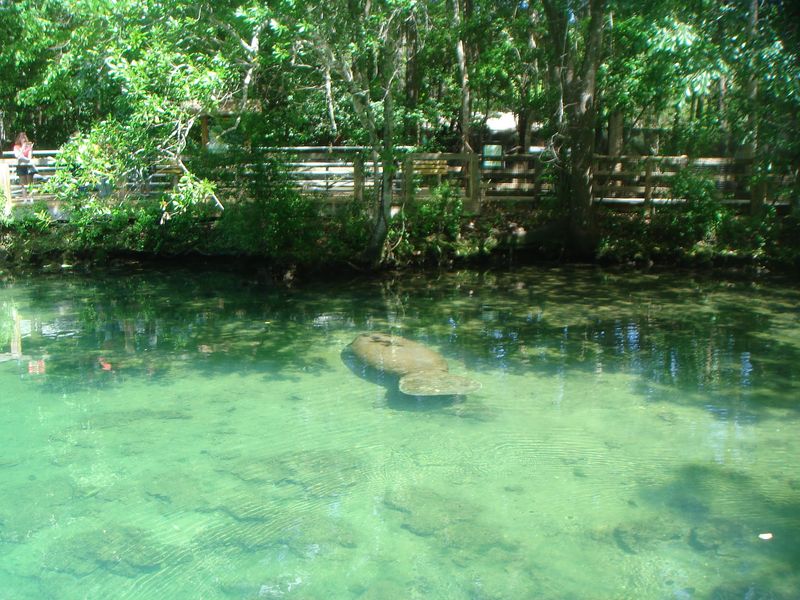
An underwater observatory called the Fish Bowl lets you stand below the surface and look out into the spring at eye level with the wildlife. It is a rare setup that turns manatee watching into something close to an aquarium visit, except the water is natural.
Homosassa Springs Wildlife State Park is also a rehabilitation site, so you can often see resident manatees that are recovering, along with wild ones that visit through a connecting canal.
The park doubles as a wildlife education center, with native Florida animals on display along its walking paths.
Admission is charged per person, and a pontoon boat or tram carries visitors to the main spring area. It is a solid pick when you want a guaranteed manatee sighting rather than leaving it to chance.
5. Wakulla Springs, Wakulla Springs State Park
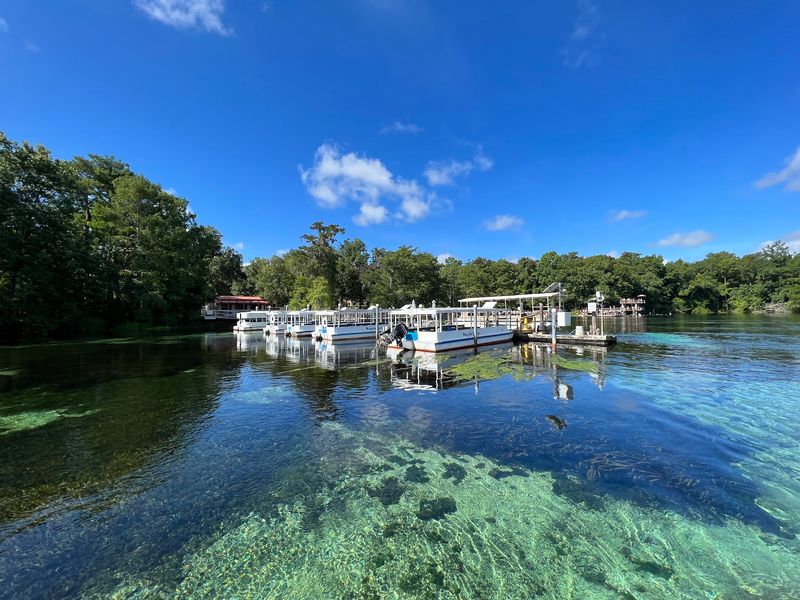
One of the largest and deepest freshwater springs in the world sits inside this state park south of Tallahassee. The clarity here can be striking, and glass-bottom boat tours run when conditions allow.
Manatees show up in the spring run during cooler months, sharing the water with alligators, turtles, and wading birds. Guided river boat tours give you a good chance of spotting them along with the rest of the wildlife.
The park is home to a historic 1930s lodge with old Florida architecture and a marble-lined dining room.
There is a per-vehicle entry fee, plus a separate charge for the boat tours. A designated swimming area near the spring head lets visitors cool off in the warmer months.
6. Weeki Wachee Springs, Weeki Wachee
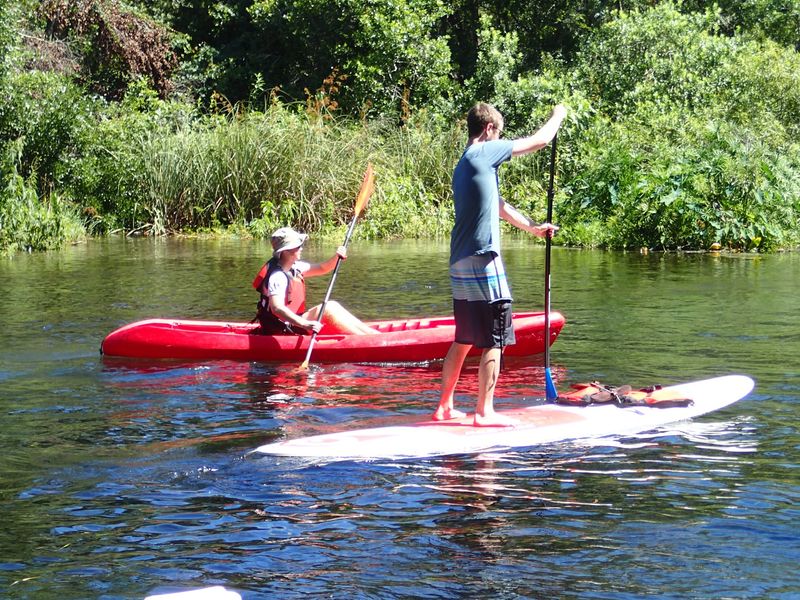
Famous for its long-running underwater mermaid shows, this spring feeds a clear river that is one of the best paddling routes in the state. The Weeki Wachee River stays clear enough that you can watch fish and, at times, manatees moving beneath your kayak.
The mermaid theater has been performing since the 1940s and is still part of the state park experience.
Kayak and paddleboard trips down the river are extremely popular, especially in summer, so launches are limited and often booked in advance.
The park charges admission and includes Buccaneer Bay, a spring-fed water park with slides. Manatees are more common in the lower stretches of the river during cooler months, so timing and a bit of patience help.
7. Silver Glen Springs, Ocala National Forest
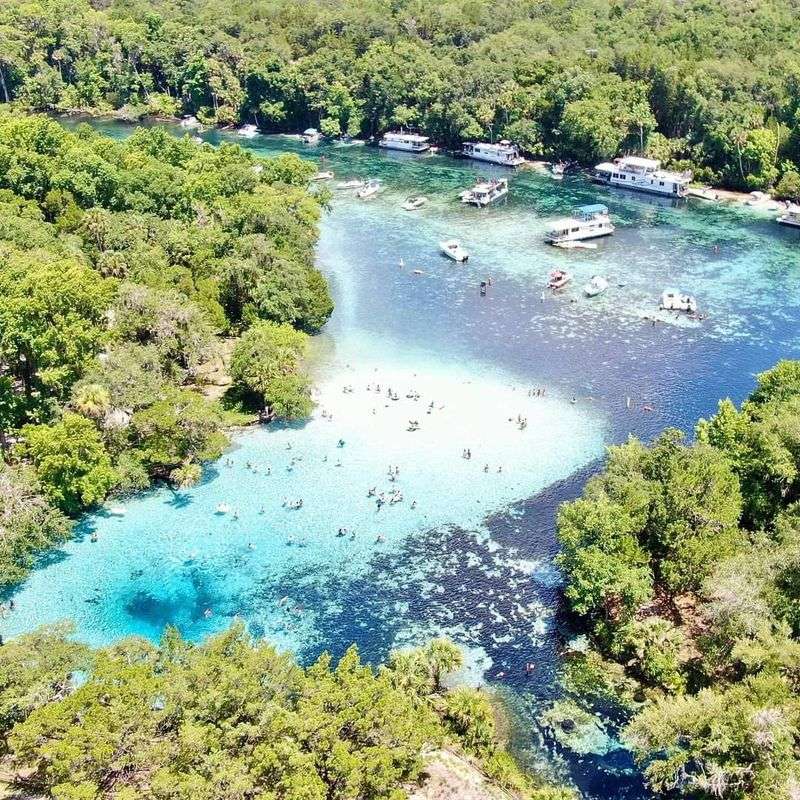
Tucked inside the Ocala National Forest, this spring pours out an enormous flow of clear water that connects to Lake George. Large schools of fish gather in the spring pool, and the visibility is often excellent.
Manatees travel in from Lake George during cooler months, following the warm spring run.
The swimming area has a sandy bottom that slopes gently, making it a comfortable spot for families to wade and snorkel. Two large spring vents, sometimes called the Natural Well, are popular for viewing fish.
Run by the U.S. Forest Service, the recreation area charges a day-use fee and can fill up on warm weekends.
There are picnic tables and restrooms, but it keeps a more rustic, forest feel than the big state parks.
8. Fanning Springs, Fanning Springs State Park
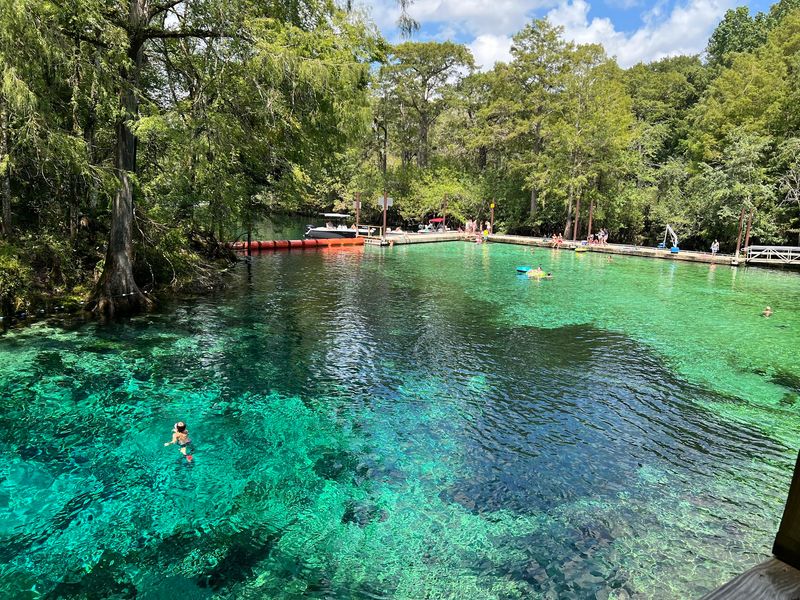
Right along the Suwannee River, this compact spring makes an easy stop with a big payoff. The water is clear and stays around 72 degrees, and manatees sometimes swim up from the river during winter.
A deck and stairs lead directly into the swimming area, so getting in and out is simple.
The park is small compared to others on this list, which makes it a relaxed choice if you want less of a crowd. It connects to the Nature Coast State Trail, a converted rail-trail popular with cyclists and walkers.
A modest per-vehicle fee gets you in. Because the spring flow has varied over the years, checking current conditions before visiting is a smart move.
Enjoyed this story?
Add Fast Food Club as a preferred source to see more of our reporting on Google.