


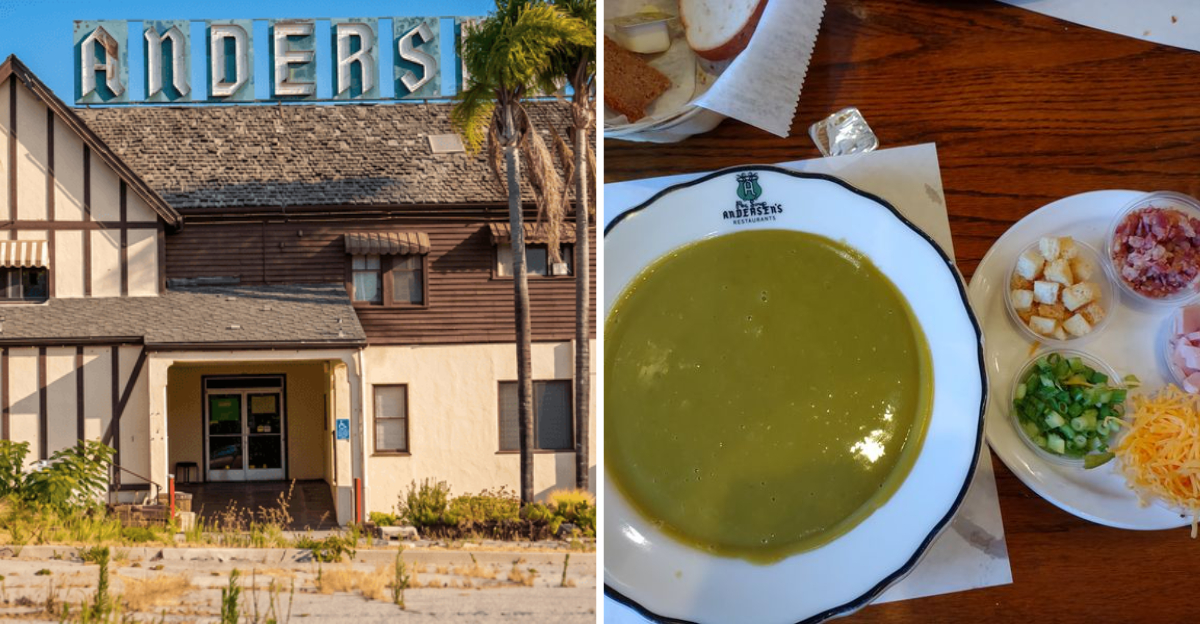
Some road trips are built around a single bowl of soup, and this one has drawn travelers off Highway 101 for generations. Tucked along California’s Central Coast, near the windmills of Solvang and the rolling hills of Santa Barbara wine country, sits a landmark that turned a humble green soup into a full-blown destination.
Families have detoured for decades, kids grew up and brought their own kids, and the parking lot filled with road-trippers all chasing the same simple comfort. There is a bakery, a gift shop, a little museum, and stained glass that has watched the highway change for a century.
The story behind it is quirkier than you might expect, and the reasons people keep coming back go well beyond one steaming bowl. Keep reading to find out what makes this Danish roadside stop so beloved.
The Roadside Landmark On Avenue Of Flags
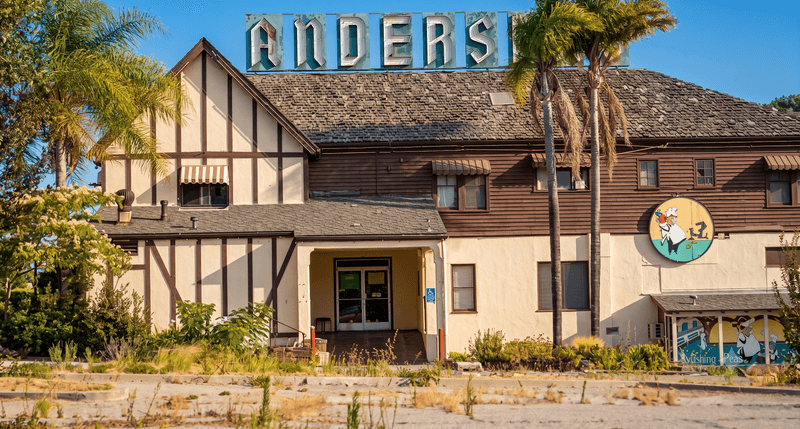
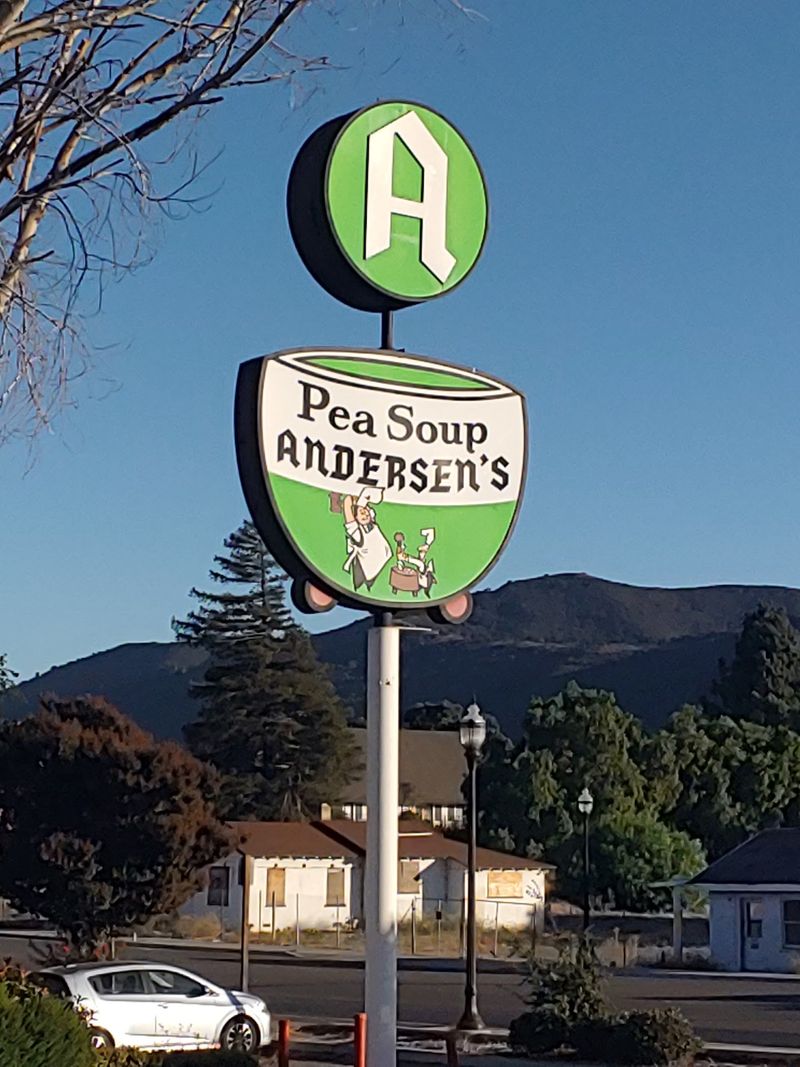
Green soup put a small California town on the map, and the address that made it famous is 376 Ave of Flags, Buellton, CA 93427. The spot has anchored this stretch near Highway 101 for so long that generations of drivers have treated it as a required pit stop.
Buellton sits in Santa Barbara County, close to Solvang and the Santa Ynez Valley. That location made it a natural resting point for anyone traveling up or down the coast.
The restaurant is a Danish-style spot known for wholesome, classic dishes, with split-pea soup as the headliner. It carries a $10 to $20 range and has earned a 4.2-star standing across thousands of guest ratings.
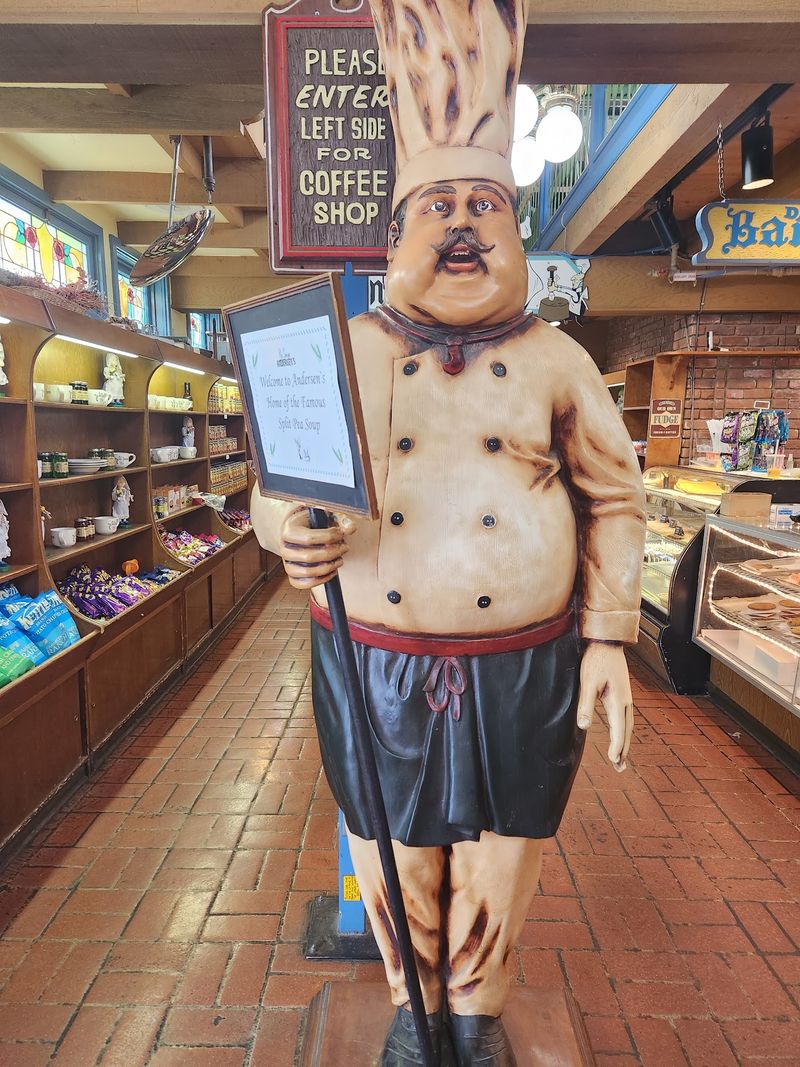
Beyond the dining room, the property sprawls into a bakery, a travel store, and a little corner devoted to the town’s history. That mix is why a quick stretch of the legs can easily turn into an hour or two.
Long before the food arrives, the building itself signals that something old and cheerful is waiting inside. It is the kind of place people plan around, not just pass by.
A Century Of Green Soup History
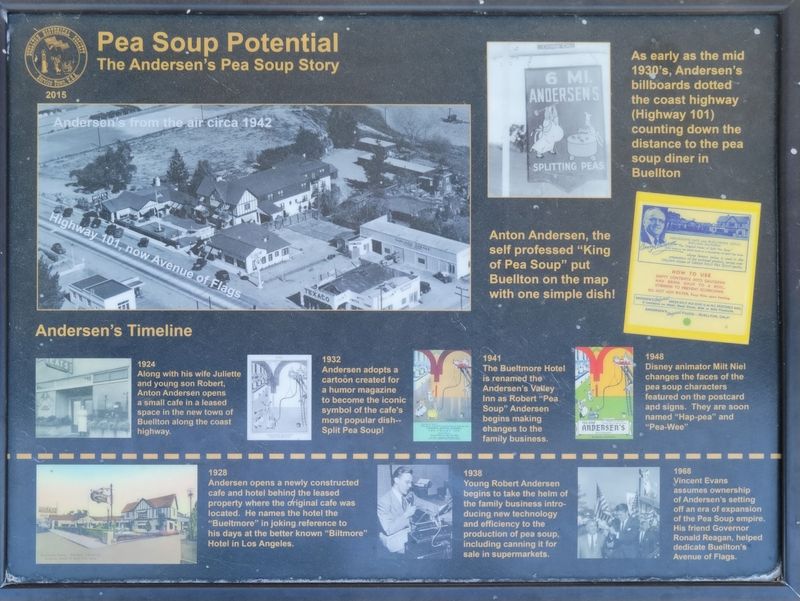
Survival is the quiet superpower here. The restaurant has been serving guests since the 1920s, weathering nearly a hundred years of changing highways, changing cars, and changing tastes.
What began as a small roadside cafe grew into a full landmark, all built around one unlikely star ingredient. The soup became a brand, complete with cans you can buy and take home.
Part of the charm is how the place leaned into its own story instead of hiding from it. A section of the building doubles as a nod to Buellton’s past, letting guests learn about the town and the old highway it once depended on.
That history is not just decoration. Families who first stopped here as children now return decades later, sometimes after 40 years away, and find the spirit of the place intact.
Modernization trimmed a few edges over the years, but the core identity held firm. Longevity like this is rare for a roadside stop, and it is a big reason the drive still feels worth it.
Stepping Back Fifty Years In The Dining Room
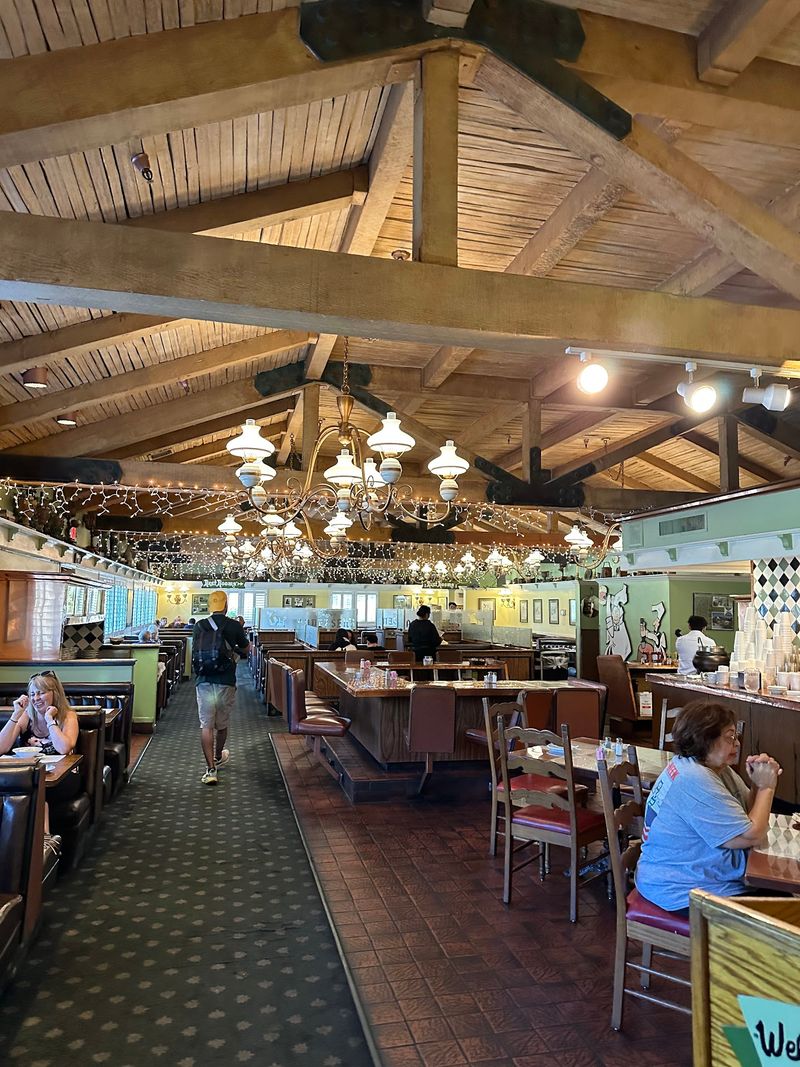
Time slows down the moment guests settle into the dining room. The space looks much as it has for decades, with old music playing and a vibe that leans hard into nostalgia.
Stained glass windows are a standout feature, still in remarkably good shape after all these years. They give the room a character that newer restaurants simply cannot fake.
The building is large, and the interior matches, with plenty of room to spread out. Some corners feel more like a garden sunroom than a classic diner, which adds a bit of variety to where guests end up seated.
Regulars often describe the atmosphere as dated in the best possible way, with well-kept tables and chairs that carry their years gracefully. The aging look is not a flaw so much as part of the experience.
For anyone who loves quirky, historic spaces, the room delivers exactly that feeling. It is a place where the setting is half the reason to visit.
The Soup That Started The Legend
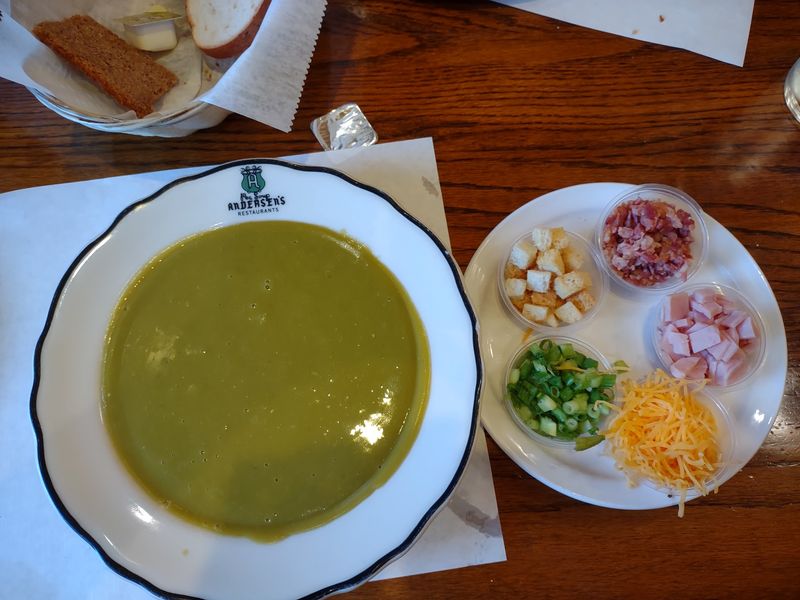
One dish carries this entire legend on its back, and it lives up to the hype. The split-pea soup is described as creamy, light, and full of flavor, without being overly salty.
Plenty of guests arrive as skeptics, expecting something dull, and leave as full-blown converts. The version served here is a world apart from the canned kind, with a rich, smooth character and no questionable chunks.
A pleasant surprise for many is that the soup is vegetarian, which broadens who can enjoy it. It is made fresh, and it shows up across breakfast, lunch, and dinner menus alike.
The soup often arrives with bread on the side, and extra toppings are available for those who want to build it up. A large bowl can be genuinely filling on its own.
People have been ordering it for 35 years and more on their trips through the valley. When a single menu item can pull travelers off the highway across generations, it has clearly earned its fame.
All You Can Eat And The Traveler’s Special
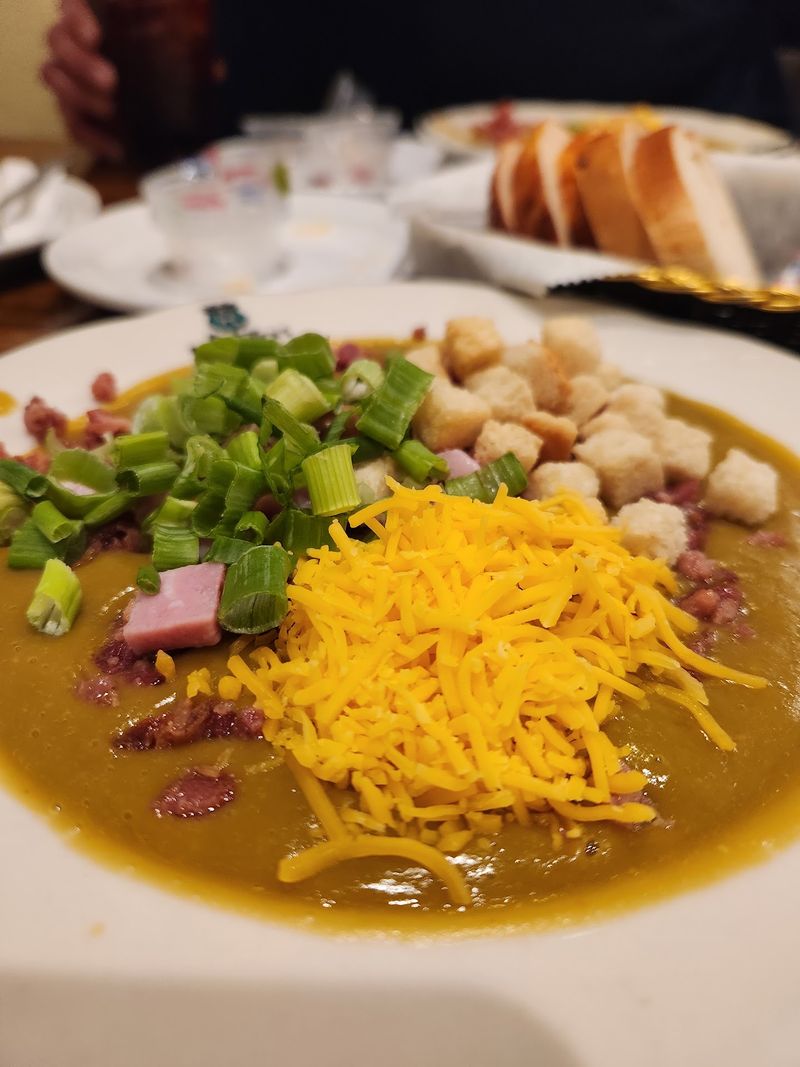
Bottomless comfort is a real option here, and it has a loyal following. The kitchen offers all-you-can-eat pea soup, which turns a single bowl into a delightful challenge.
The traveler’s special bundles unlimited soup with bread and a shake, making it a favorite for road-trippers who want to refuel properly. A few bowls in, most guests admit they are thoroughly filled.
The milkshakes get their own quiet fan club, often called worth the order all on their own. Pairing the shake with endless soup is the kind of combo that makes a long drive feel rewarded.
Portions in general run generous, so nobody leaves hungry. That value matters when the whole point of the stop is comfort and refueling.
For families spreading out across a big table, the unlimited setup keeps everyone happy at their own pace. It is a smart way to make the signature dish the centerpiece of the meal.
More Than Soup On The Menu
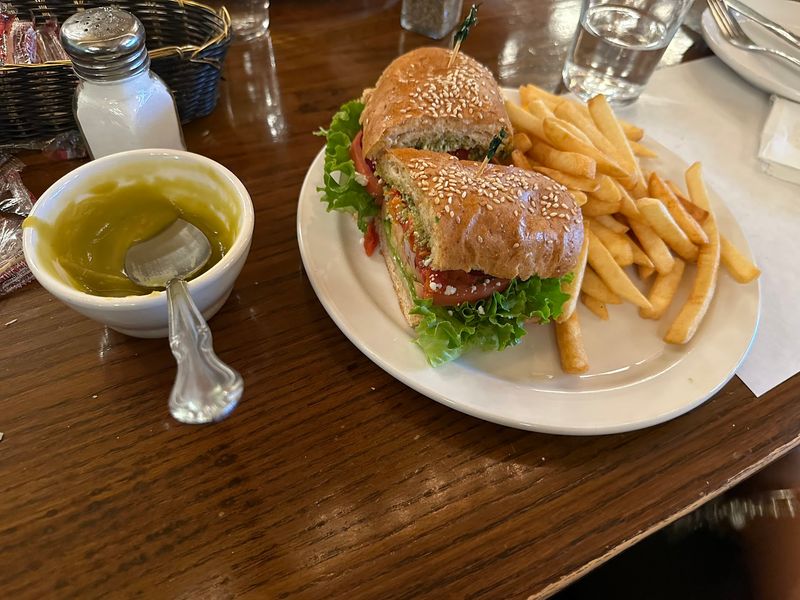
Green soup may be the headliner, but the supporting cast pulls its weight. The Monte Cristo sandwich has a devoted following and shows up often as a must-order.
The chicken pot pie earns steady praise for its creamy, well-seasoned filling and a thick, flaky top that stands out from the usual soft crusts. It lands as hearty and satisfying.
Other classics round out the lineup, including chicken fried steak, a BLT, meatloaf melts, and a Danish sausage served with onion gravy. It reads like a greatest-hits list of down-home diner cooking.
Combos let guests pair a half sandwich with soup, which is a popular way to sample the star without skipping the rest. The chicken salad sandwich is one such pairing that draws happy nods.
Not every dish is a home run, and a few items land softer than others. Still, the breadth of the menu means there is plenty to explore beyond the famous bowl.
The Bakery, Gift Shop, And Little Museum
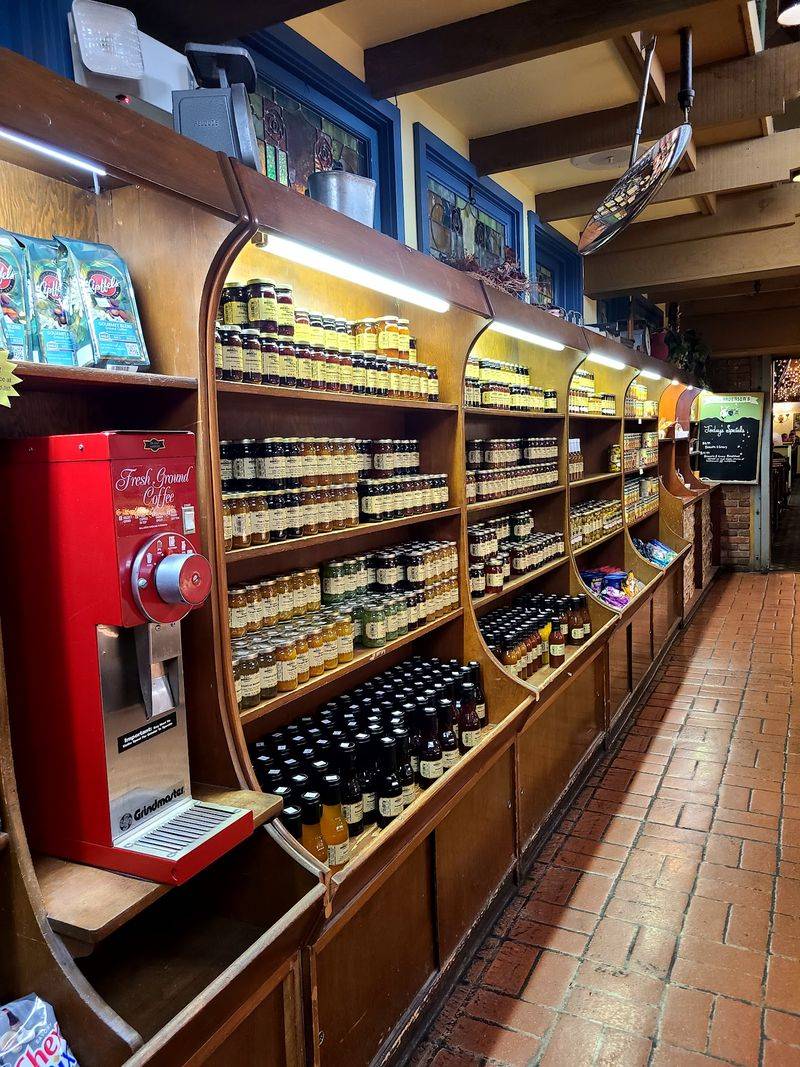
Half the fun happens before anyone sits down to eat. The property folds in a bakery, a travel store, and a corner devoted to Buellton’s local history.
The bakery turns out authentic Danish pastries, and there are honey bread pudding desserts that guests happily order after their meal. Fresh breads round out the case.
The gift shop is a browser’s playground, stocked with souvenirs and canned pea soup to take home. Andersen’s seasoning is another popular grab-and-go item for the pantry.
A small museum for the city adds an educational layer, and it is a handy way to pass the time while a takeout order is being prepared. History buffs get a little bonus here.
Some corners even stay decked out with Christmas decorations, adding to the offbeat charm. Between the pastries, the keepsakes, and the local lore, the stop offers far more than a meal.
Timing Your Visit And Beating The Crowd
Smart timing can make or break the experience. The tourist rush tends to build around noon on weekends, so arriving early keeps the wait short.
Guests who show up around 10 a.m. often get seated right away, turning a busy landmark into a relaxed morning stop. Midweek visits, even in summer, also tend to run quieter.
The soup being available all day helps too, since breakfast diners can order it just as easily as the dinner crowd. That flexibility is a gift for early risers and night owls alike.
Later in the evening still works, with seating available before the closing hour, though cutting it close leaves less time to linger. A little planning goes a long way.
Since the restaurant sits right off Highway 101, it slots naturally into a coastal drive between Los Angeles and points north. A morning stop lets guests enjoy the food, the shop, and the museum without the peak-hour shuffle.
Why The Drive Still Pays Off
Roadside icons that make it to their tenth decade are worth savoring, and this one has plenty left to give. The building shows its age, and a freshening up would not hurt, but many guests count that lived-in feel as part of the appeal.
What keeps people coming is the mix of history, character, and a signature soup that genuinely wins over doubters. Add a bakery, a gift shop, and a slice of local lore, and a quick stop easily stretches into an afternoon.
Prices have climbed over the years, landing a touch higher than a classic roadside cafe once charged. Even so, the portions are generous and the experience feels distinct.
Families return across decades, and first-timers often leave surprised at how much they enjoyed the place. That loyalty is the truest measure of its staying power.
For travelers threading through the Central Coast, Pea Soup Andersen’s remains a landmark worth the detour. Bring an appetite, grab a can to go, and let the highway wait a little longer.
Enjoyed this story?
Add Fast Food Club as a preferred source to see more of our reporting on Google.