


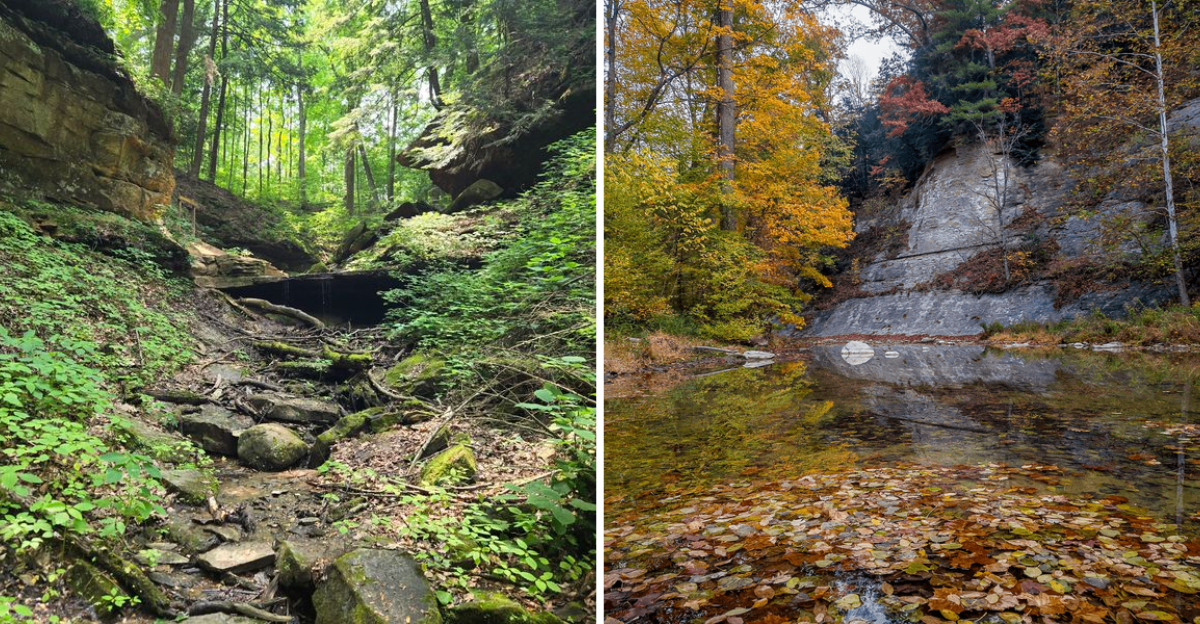
There is a corner of Indiana where wooden ladders lean against sandstone walls, streams trickle through shadowy ravines, and you might not pass another soul all afternoon. Most people speed past it on their way to the busier park down the road, which is exactly why this one still feels like a secret.
The trails here get rugged and muddy, the canyons drop steep, and the views over the creek below reward every careful step. Adventurers come for terrain that feels wild instead of paved, and they leave already planning a return trip.
What follows is a full look at the ravines, the ladders, the campground, and the little details that make a day here worth the drive. Keep reading before the crowds finally catch on to this quiet Midwest hideaway.
Where the Ravines Begin
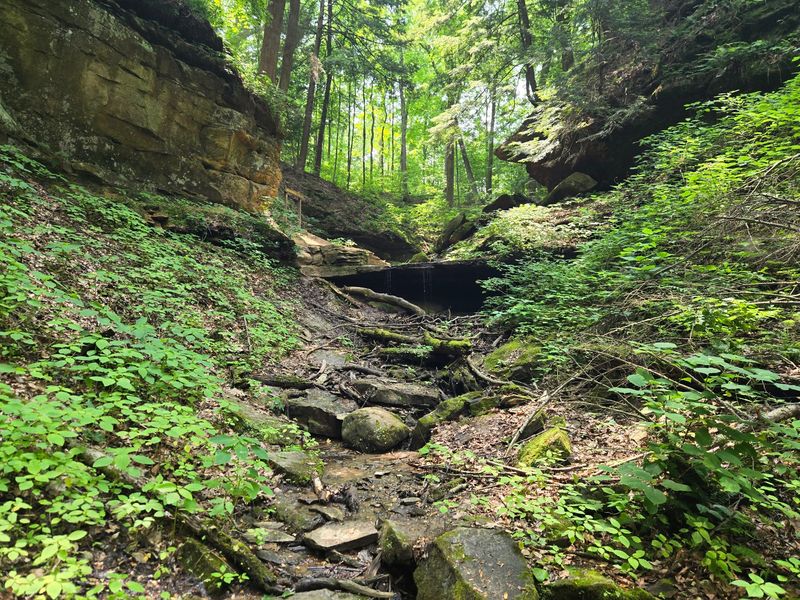
Tucked away at 7751 S 890 W in Waveland, Indiana, this park sits in a pocket of the state most travelers never explore. The address may feel like it belongs in the middle of nowhere, and that isolation is a big part of the appeal.
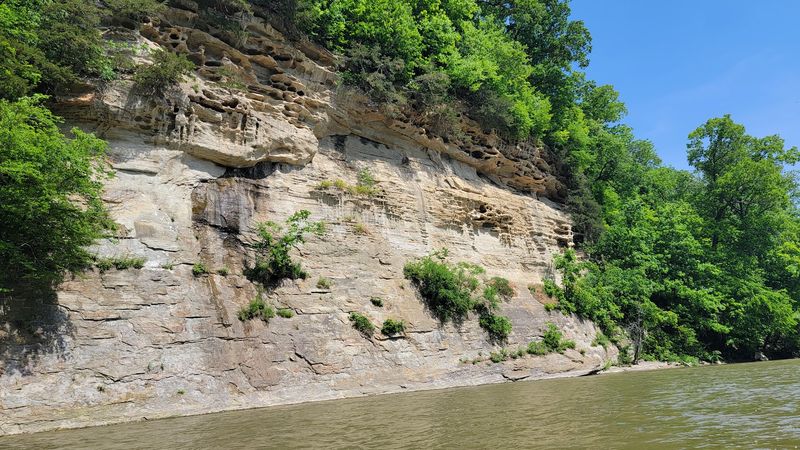
Sandstone cliffs wrap around Sugar Creek, forming the dramatic backdrop for hiking, canoeing, fishing, and camping. The land is a recreational area with a protected nature preserve woven through it.
Reaching it takes a bit of intention, since the trails often lack cell service once you head into the ravines. That disconnection is not a flaw, but rather the whole point of coming.
Regulars describe the terrain as truly off the beaten path, with a rugged character that never feels manufactured. It rewards anyone willing to trade convenience for genuine wilderness.
Living in the Shadow of a Famous Neighbor
Down the road sits Turkey Run, the park that grabs all the headlines and all the crowds. Because of that, this quieter neighbor tends to get overlooked, which turns out to be a hidden blessing.
People who know both places often argue that the features here match or even beat the bigger name. The difference is that you can hike for hours without bumping into a parade of other people.
What this park lacks in amenities, it makes up for in solitude and a more natural, untamed feel. There is no inn and no restaurant, so the experience stays focused on the outdoors.
Folks describe walking the trails and feeling like the only ones there, especially in colder or quieter seasons. Being underrated has kept the place refreshingly uncrowded, and longtime visitors would rather keep it that way.
Ladders That Turn Hiking Into Adventure
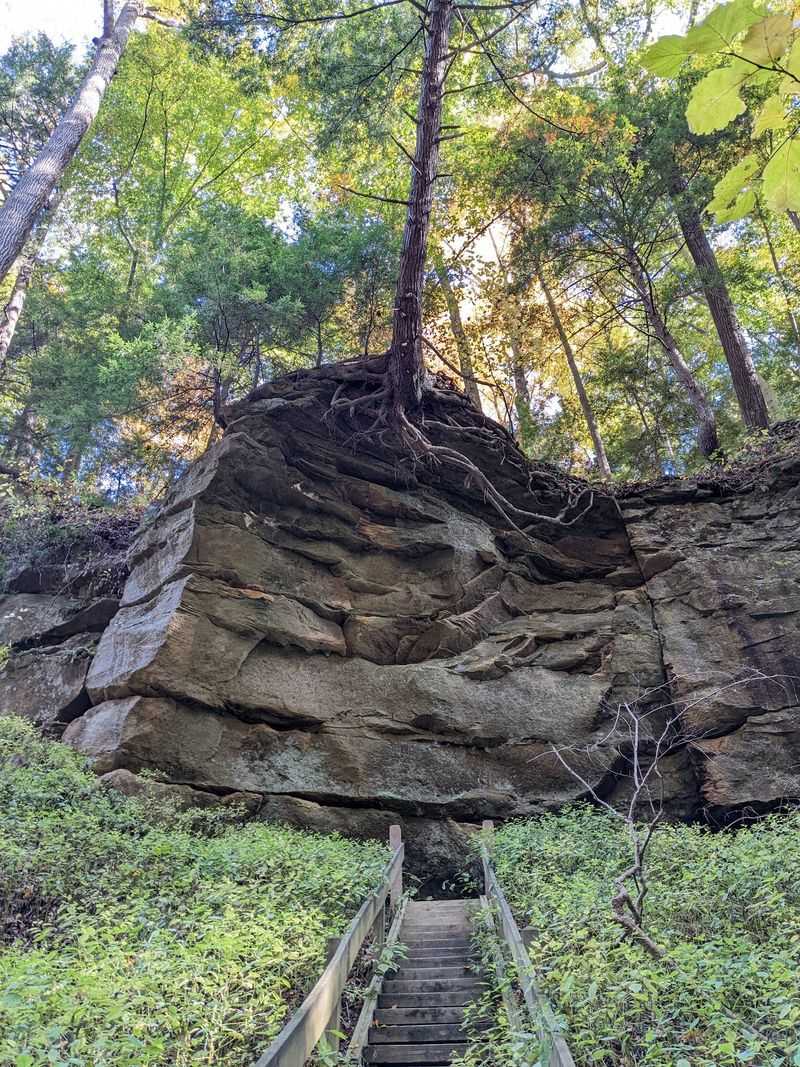
Few things make a trail memorable like a wooden ladder bolted into a rock wall. Several routes here require climbing these ladders to continue from one ravine section to the next.
The ladders show up often enough to earn frequent mentions among the park’s signature features. They add a playful, hands-on element that turns an ordinary walk into a small climbing quest.
Dog owners get a friendly warning about this quirk. One hiker with a very large dog ended up hoisting the pup up a ladder after not checking the map first, which makes for a funny story but a real logistical puzzle.
Reading the trail details ahead of time saves you from surprises. The gatehouse hands out easy-to-read maps that clearly show which paths involve the ladder scrambles.
Trail 4 and Its 200-Foot Plunge
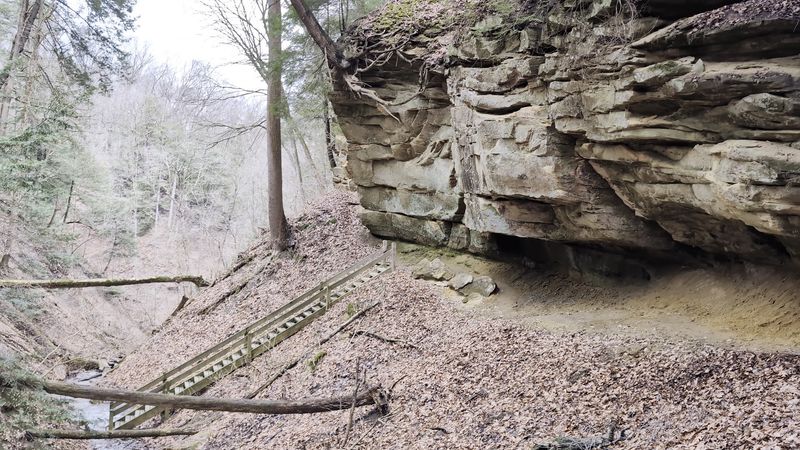
Anyone chasing elevation will want to seek out Trail 4. It drops roughly 200 feet from top to bottom, and while going down feels easy, the climb back up is a different story entirely.
Along the way, the route mixes ladders with ravine walks, and small newts sometimes appear near the water. A little waterfall tucked along this path adds a quiet reward for the effort.
Hikers who tackle the rugged portions of Trails 4 and 5 often describe the terrain as an adult playground. The scale of the canyons makes you feel delightfully small as you move through them.
Proper footwear matters more here than almost anywhere else in the park. The steep sections and stream crossings demand shoes that grip and that you do not mind getting wet.
The Six Ravine Challenge
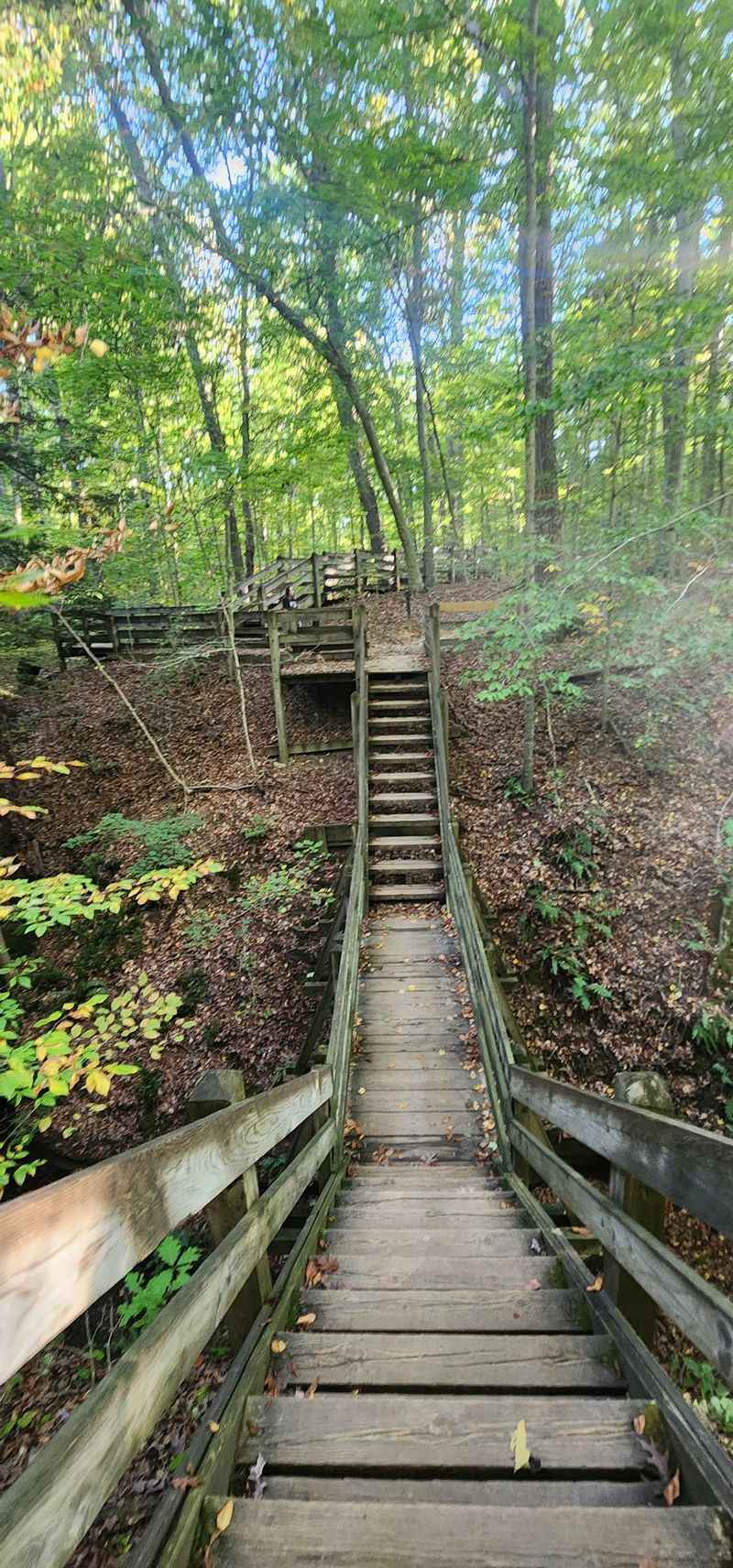
Serious hikers can string together a bigger loop known as the six ravine challenge. It links several trails into one satisfying day of climbing, scrambling, and ravine walking.
The route weaves through highlights like Devil’s Punch Bowl and Prospect Point on Trail 1, then pushes into rugged woods on Trail 5. Trail 4 delivers the ladders and newts, while Trails 7 and the backpack trail carry you back toward the start.
Completing the whole thing can take a few hours, and that is without lingering. Most people stop constantly to take in the rock formations and views along the way.
Plenty of parking waits at the entrance, with restrooms positioned in the center where the trails converge. That central hub makes the ambitious loop easier to manage than it first appears.
Sugar Creek and Its Silver Ribbon
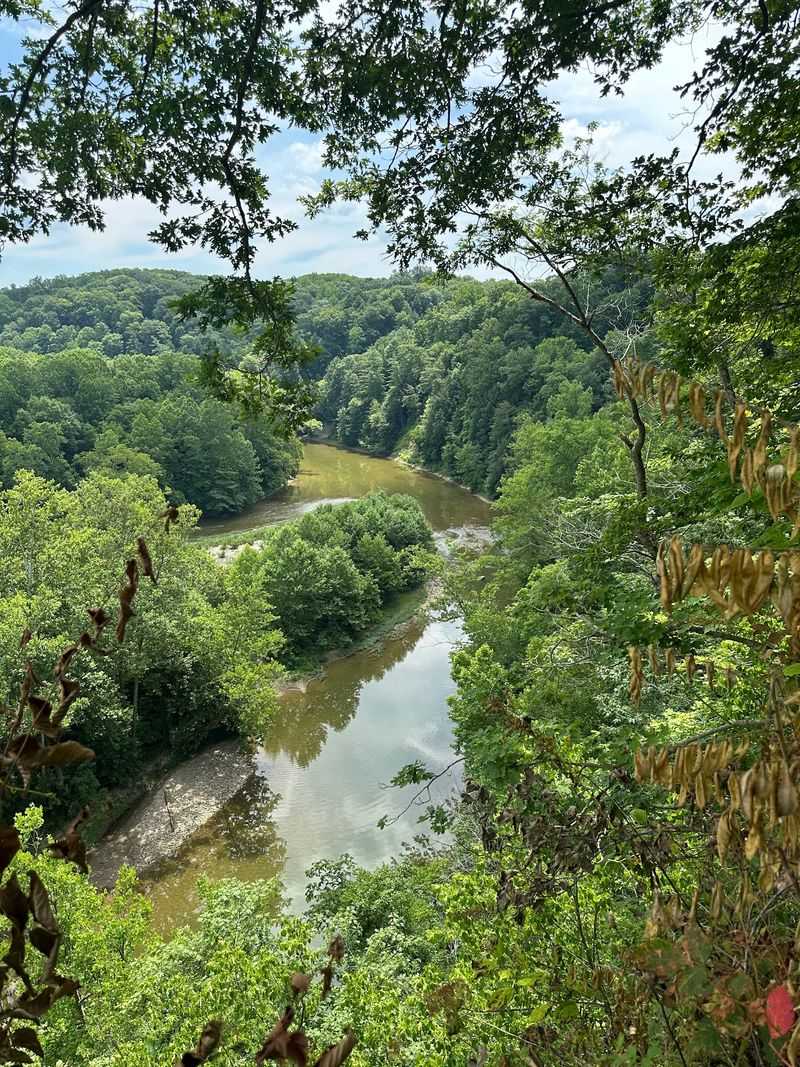
Below the cliffs, Sugar Creek winds through the valley and shapes the entire landscape. The overlooks that peer down toward the water rank among the most impressive sights in the park.
From the high points, the creek stretches out like a thin silver ribbon threading through the trees. These views into Sugar Creek draw praise even from folks who have seen plenty of parks.
The water is more than scenery, too. Canoeing and fishing both happen here, and some people float down toward the neighboring park and paddle their way through the day.
Water access earns steady approval, and the creek gives the whole place its geological story. Every ravine and cliff owes its shape to the patient work of this quiet waterway.
Waterfalls That Follow the Rain
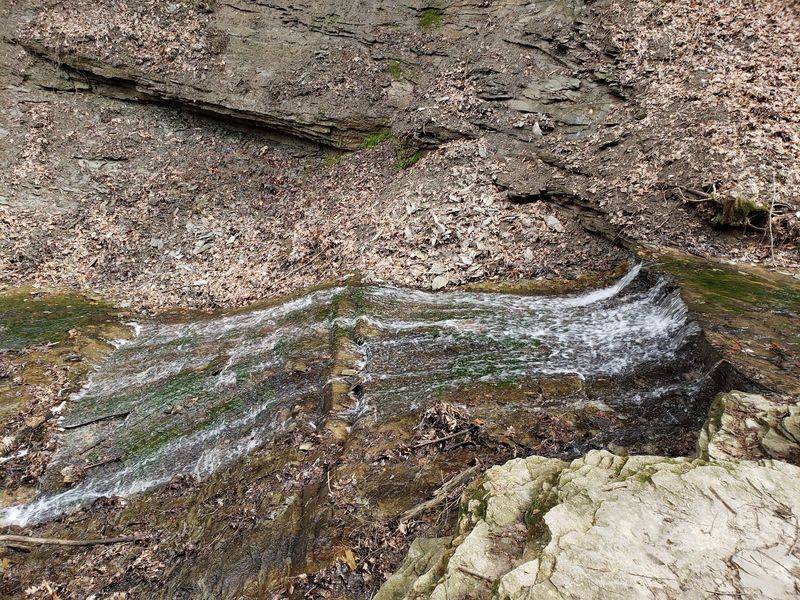
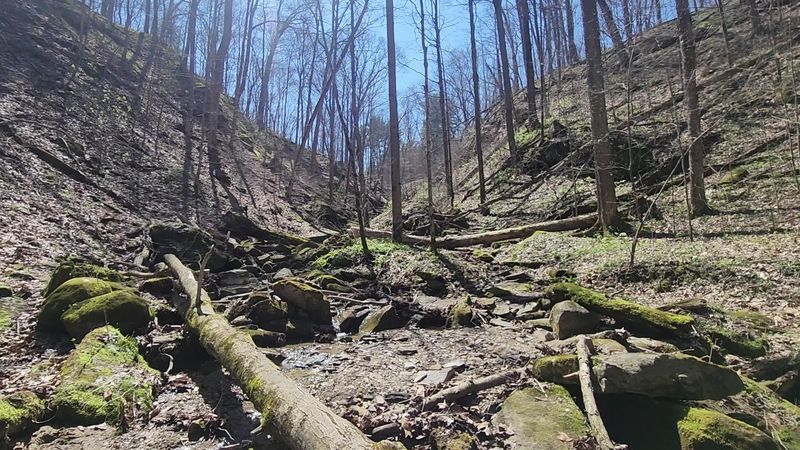
Timing your visit around the weather unlocks something special. After a good rain, the streams start flowing and small waterfalls appear all along the trails.
Several cascades and lookout points dot the park, and the falls come alive when the water is high. The scenery shifts from peaceful to genuinely dramatic once the streams are running.
One observation deck along Trail 1 sits high above the treetops and looks straight out over a waterfall. On a clear night, the moon reflects off the water in a way that makes the climb worthwhile.
Getting there involves rough creek bed walking and a fair number of stairs. The reward at the top, however, keeps people coming back and recommending the trek to anyone who asks.
When Autumn Sets the Woods Aglow
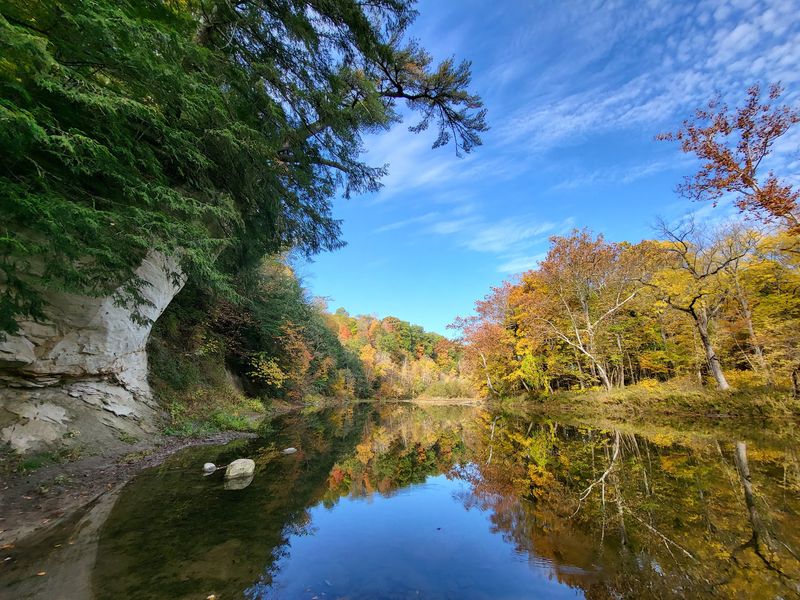
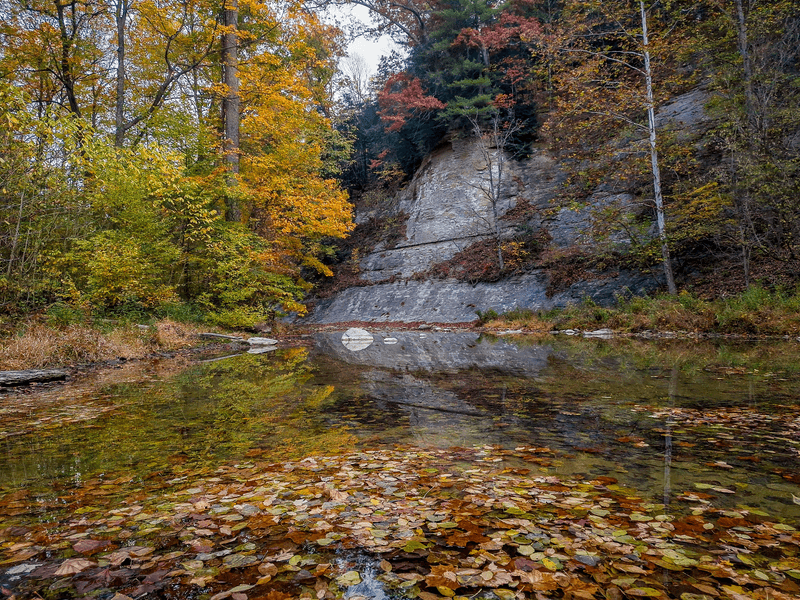
Fall may be the park’s finest hour. The forest turns to amber, crimson, and gold, forming a bright canopy over the trails.
The crisp air and rustling leaves give every hike the feel of a peaceful retreat. Rugged ravines and sandstone cliffs look even more striking framed by the seasonal color.
The overlooks shine in autumn, with Sugar Creek visible far below the blazing treetops. It becomes the kind of scene that people remember long after the trip ends.
What stands out most during this season is the quiet. The park stays less crowded than others, letting visitors soak in the landscape without the noise of a packed trailhead.
Camping With a Side of Privacy
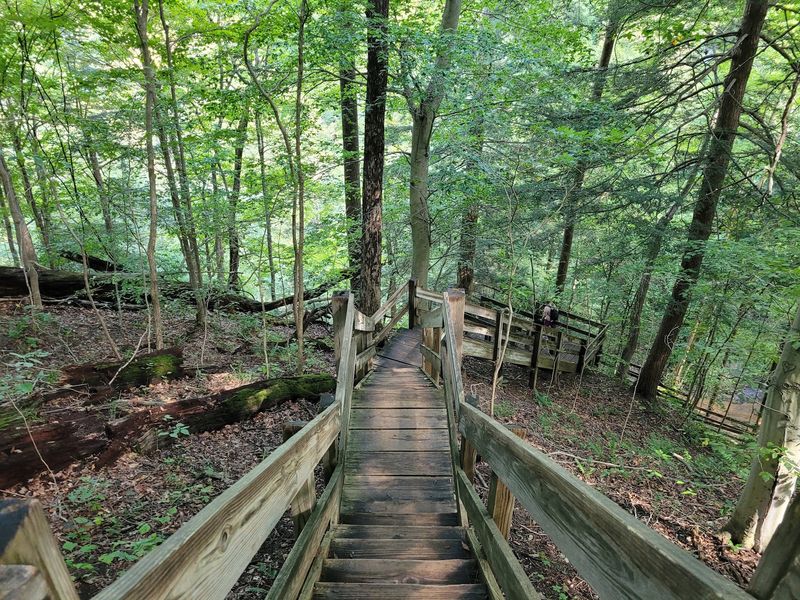
For those who want more than a day trip, the campground delivers. Camping earns steady praise, with sites that offer noticeably more privacy than many other state park campgrounds.
The sites stay well maintained, and the bath and shower house sits conveniently nearby. Families who stay several nights tend to leave happy with the setup.
A couple of practical notes help. Restroom supplies like paper and soap sometimes run low, and the picnic tables at the sites run a bit smaller than usual.
Quiet hours here actually stay quiet, which is not always a given at busy parks. The combination of seclusion and clean facilities makes it an easy pick for a weekend under the stars.
The Raccoons Who Run the Place
Every good campground has its resident characters, and here the raccoons steal the show. These bold locals are not the least bit deterred by humans.
Campers quickly learn to secure their supplies, because the raccoons will happily investigate anything left out. They earn frequent mentions, which tells you how memorable these furry visitors can be.
Beyond the raccoons, the park teems with wildlife, plants, and even fascinating mushrooms. First-time hikers often marvel at the variety they spot in a single outing.
Newts turn up along the wetter ravine trails, adding to the cast of small creatures. The abundance of life makes the whole park feel wonderfully alive and a little wild.
Trails for Every Kind of Legs
Not every route here demands a mountain goat’s confidence. The park mixes easy trails with extreme ones, so both a casual stroller and a determined hiker can find their pace.
The rugged terrain of Trail 2 draws thrill seekers, though it may not suit young children or older hikers. Trail 3 rewards the effort with rock formations and stream crossings for those who want a challenge.
Gentler paths make the park a fine choice for families or a relaxed outing with dogs. A single day can hold both a mellow walk and a steep scramble depending on your mood.
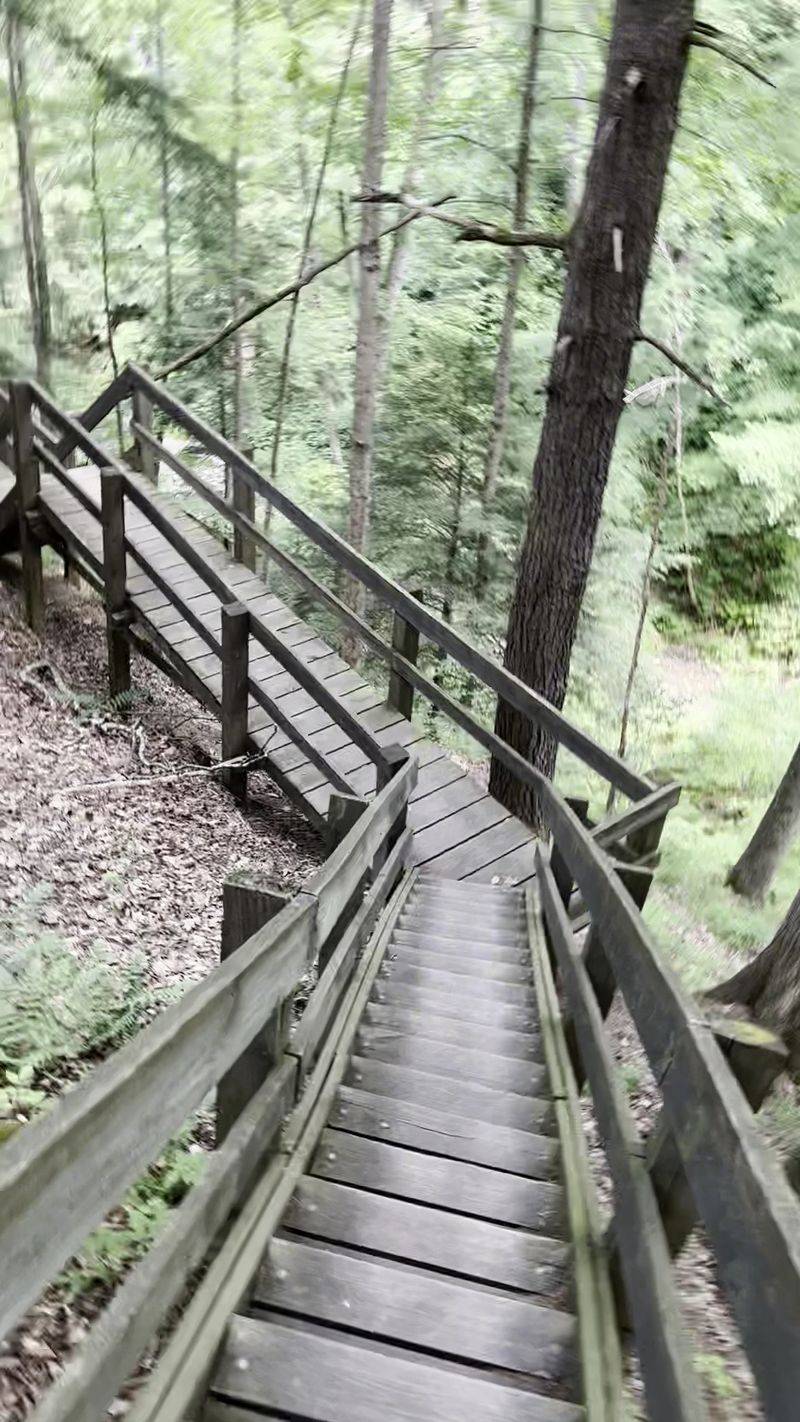
One handy tip circulates among regulars: hike Trail 1 counterclockwise, because the stairs at the end can be brutal the other way. Small planning choices like that make a big difference on the ground.
Rugged by Nature, Not by Neglect
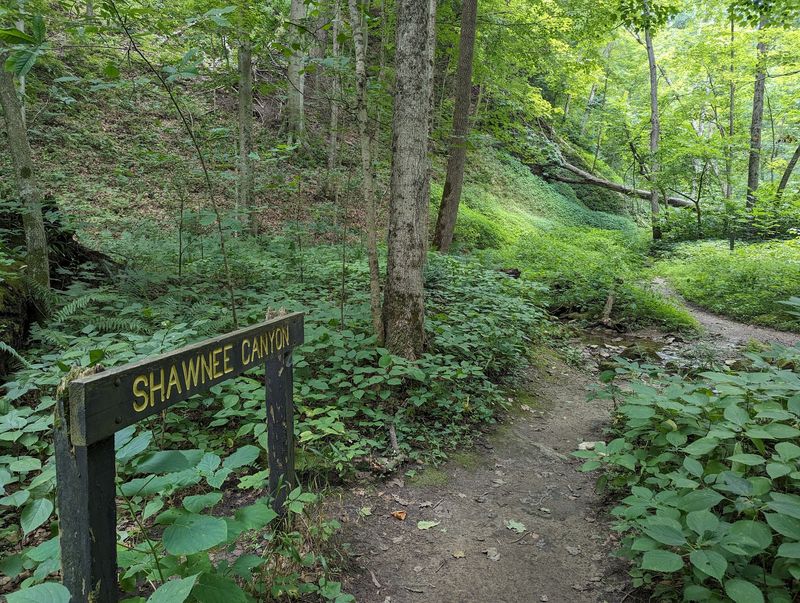
Part of the charm comes from how untamed everything feels. The trails lean natural rather than polished, and that roughness is exactly what many hikers seek out.
Some steps run loose or missing, and a few stairways show their age. For some, this only adds to the rugged atmosphere and the sense of real adventure.
Others have wished for more consistent upkeep, noting older signs and trails that could use fresh markers. A couple of paths, like Trail 8, might benefit from extra guidance for newcomers.
Good footwear remains the single most repeated piece of advice. The terrain demands respect, and the reward is a landscape that never feels sanitized or overly managed.
Hours, Fees, and Getting There
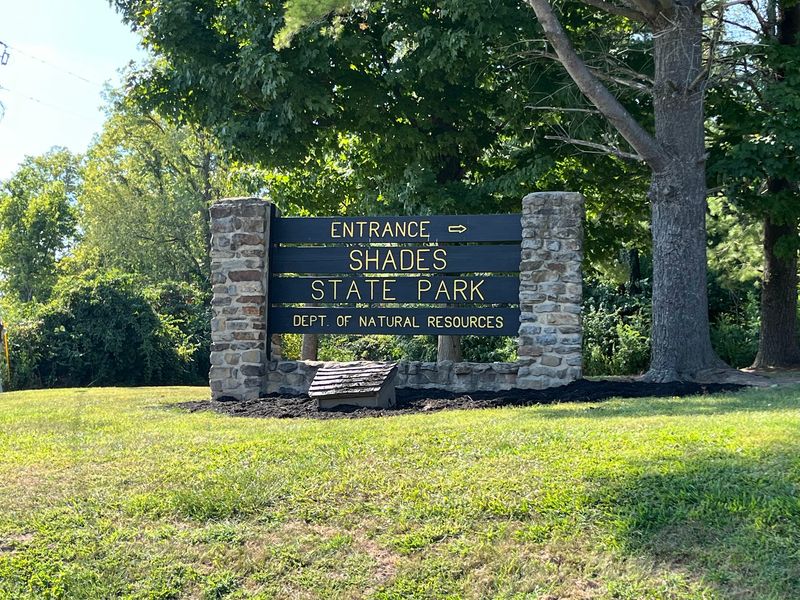
Planning a visit is refreshingly simple. The park opens at 7 AM and closes at 11 PM every day of the week, giving you plenty of daylight for long hikes.
Entry costs run about 15 dollars for out-of-state vehicles and 7 dollars for in-state ones, which many find reasonable compared to other state parks. You can reach the park by phone at 765-435-2810 or check details at the Indiana DNR website.
Since most trails lack cell service, grabbing a paper map for just a dollar at the entrance is smart. The gatehouse maps are easy to read and clearly mark the ladder routes.
Ample parking sits at the entrance, with restrooms in the center where the trails meet. A tiny bit of preparation goes a long way toward a smooth day here.
Why This Quiet Park Sticks With You
Some places fade from memory the moment you leave, and this is decidedly not one of them. People describe it as somewhere you will never forget, and the sentiment shows in how often they plan to return.
The combination of sandstone ravines, ladder climbs, and near-empty trails creates an experience that feels both adventurous and calming. A day here can leave you refreshed and ready to do it all again.
It suits solo wanderers, families with sturdy shoes, dog owners who read the map, and campers craving privacy. The lack of an inn or restaurant only sharpens the focus on the outdoors.
Come after a good rain, bring shoes you do not mind soaking, and give yourself time to linger at the overlooks. Quiet, rugged, and quietly spectacular, this Indiana hideaway is worth beating the crowds to find.
Enjoyed this story?
Add Fast Food Club as a preferred source to see more of our reporting on Google.