


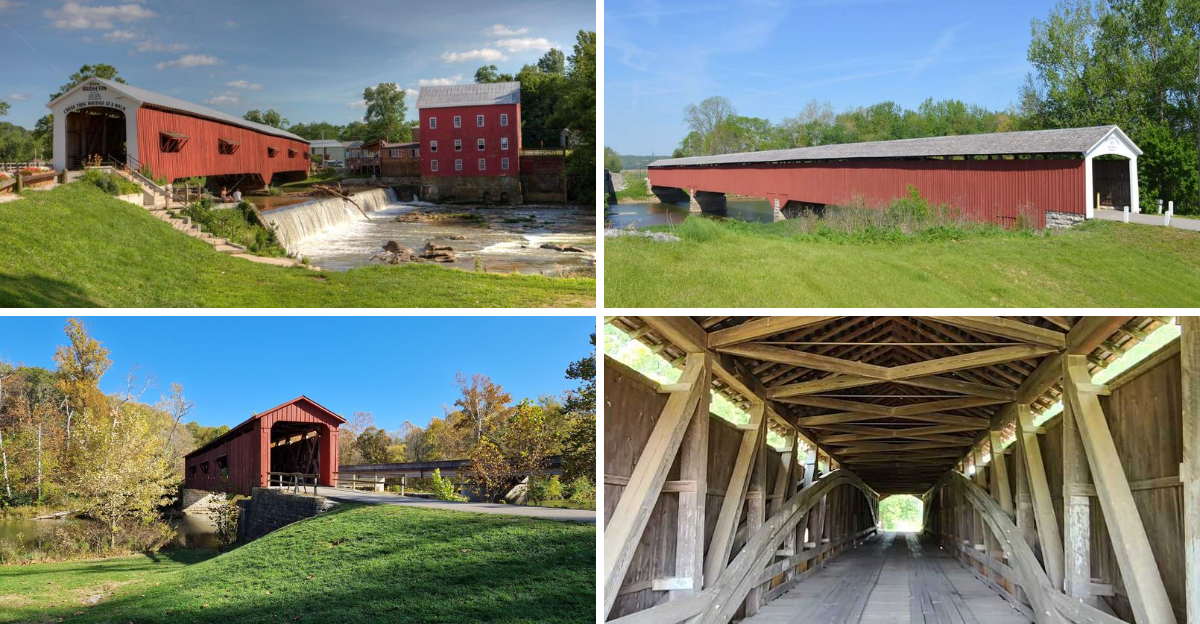
Indiana holds more historic covered bridges than almost any other state, and Parke County alone claims the title of Covered Bridge Capital of the World. These wooden crossings are more than old shortcuts over creeks.
They are pieces of engineering history, weekend photo spots, and the reason thousands of people plan fall road trips through the countryside every year. Some are still open to cars, others are limited to foot traffic, and a few sit inside quiet parks where you can picnic nearby.
This list rounds up seven of the most memorable ones across the state, with a little about what makes each one stand out. Grab a map, pack a snack, and get ready to add a few backroads to your next drive.
1. Bridgeton Covered Bridge, Bridgeton
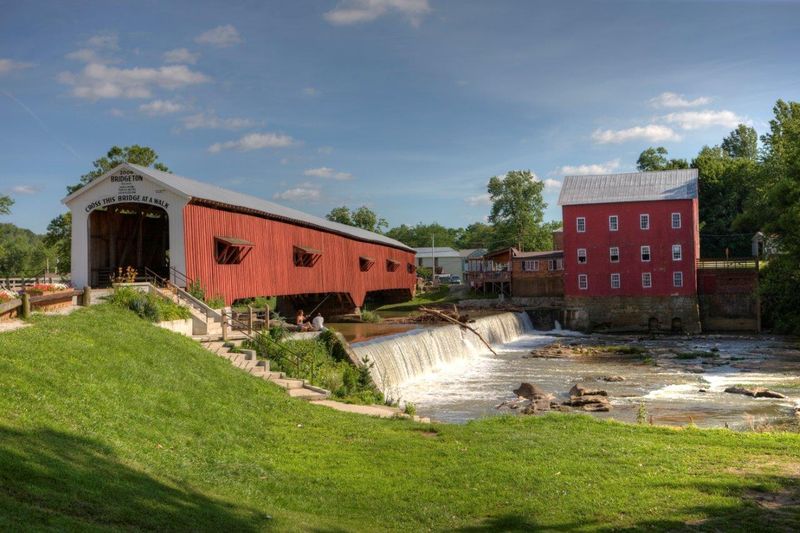
Few bridges come with their own waterfall and mill, but Bridgeton delivers both. The double-span structure crosses Big Raccoon Creek right beside the historic Bridgeton Mill, which makes it one of the most photographed spots in Parke County.
The original 1868 bridge was lost, and the current one is a faithful reconstruction completed in 2006. The rebuild kept the classic Burr arch design that Indiana bridge builders favored.
The setting is what pulls people in. You get the red covered bridge, the low dam and falls, and the working mill all in one small village.
Bridgeton sits at the heart of the annual Parke County Covered Bridge Festival, so if you visit in October, expect crowds, food vendors, and slow traffic. For a calmer look, come on a weekday in late spring or summer when you can actually hear the water and take your time with photos.
2. Medora Covered Bridge, Medora
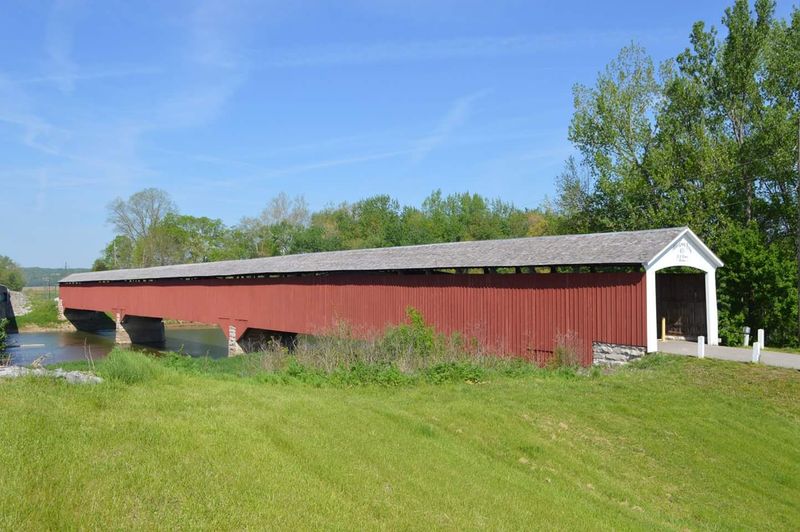
Length is the headline here. Stretching over 430 feet across the East Fork of the White River, the Medora Covered Bridge is recognized as the longest historic covered bridge in the United States.
Built in 1875, it uses a Burr arch truss design across three spans. The sheer size makes it feel different from the shorter, cozier bridges elsewhere in the state.
Cars no longer drive across it, but the bridge has been restored and is open to pedestrians. Walking the full span gives you a real sense of just how ambitious 19th century builders were.
Medora sits in Jackson County in southern Indiana, a bit off the main tourist trail. That distance keeps the crowds thin, so you can usually stroll the length without dodging other visitors.
It is an easy stop if you are already exploring the Brownstown or Seymour area.
3. Cataract Falls Covered Bridge, Spencer
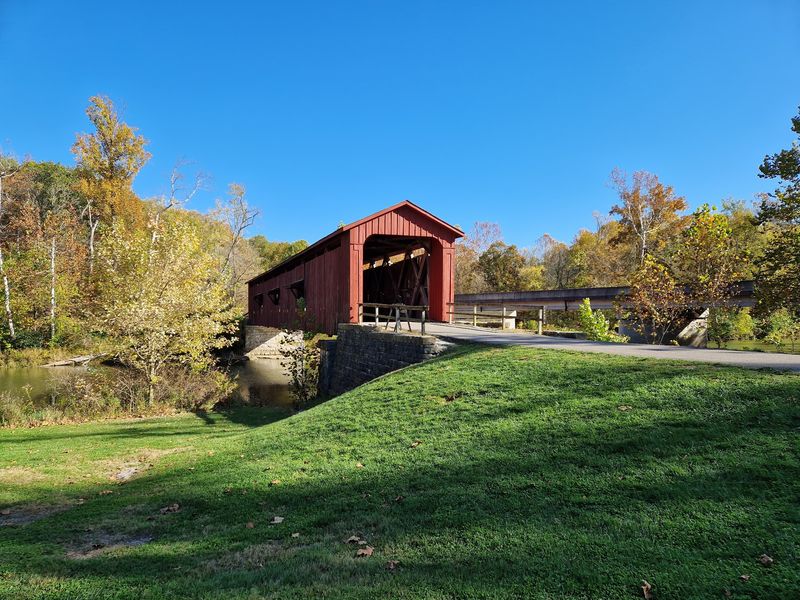
Pair a covered bridge with the largest waterfall by volume in Indiana and you have a reason to point the car toward Owen County. The bridge sits near the Upper Falls at Cataract Falls State Recreation Area.
The 1876 single-span bridge crosses Mill Creek and shows off the Smith truss design. It has been preserved as a historic landmark rather than a busy roadway.
What makes this stop special is the combination. You can see the bridge, then walk over to the Upper and Lower Falls, which are among the most impressive cascades in the state.
There is parking near the falls and short trails connecting the viewing areas. Spring rains make the water most dramatic, while fall brings the color.
Either way, it is a two-for-one destination that rewards the extra miles into the woods.
4. Cedar Ford Covered Bridge, Rockville
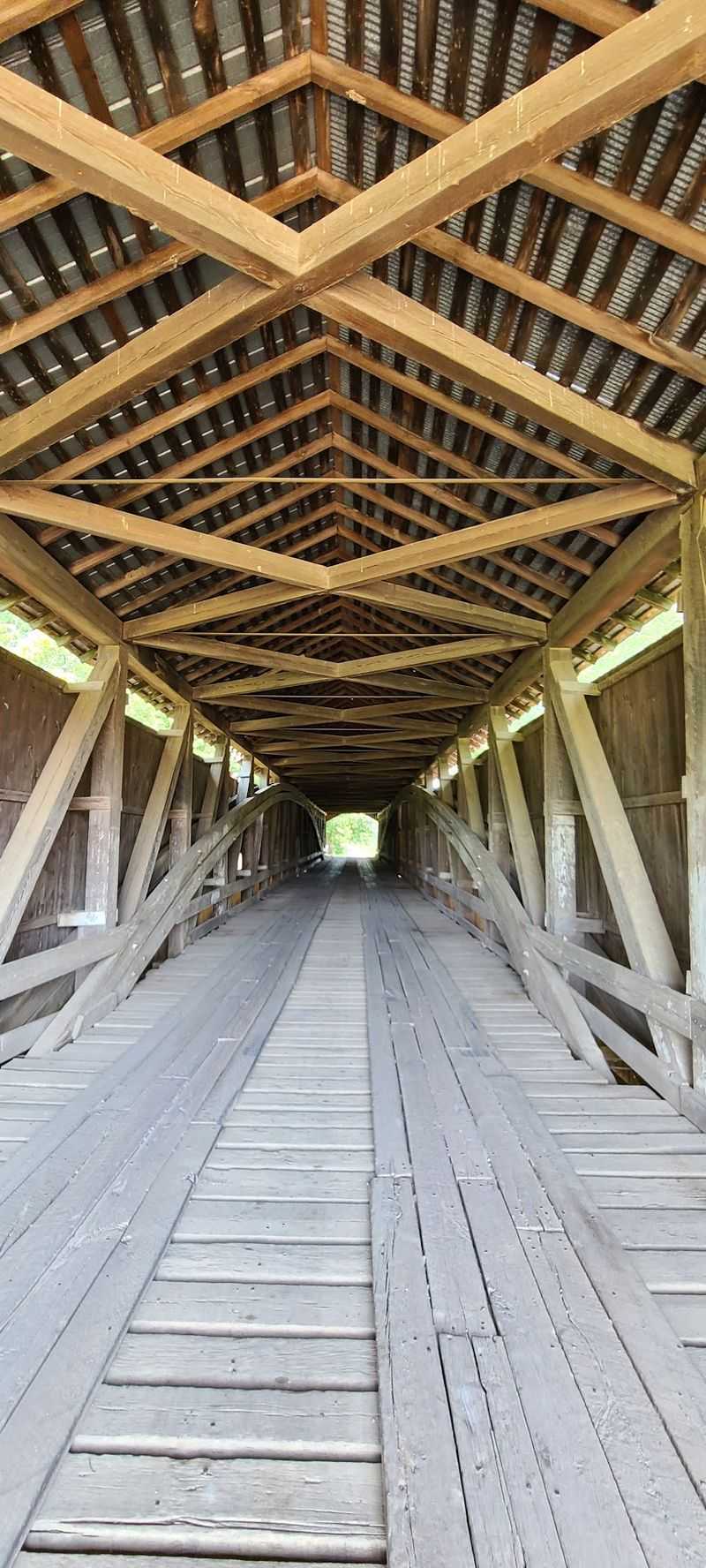
Not every historic bridge stayed put. Cedar Ford was relocated to Billie Creek Village near Rockville, where it became part of a re-created early 1900s Indiana settlement.
The bridge is one of several covered bridges gathered at the village, which makes the spot a rare chance to see multiple bridges in a single walkable area.
Billie Creek Village includes historic buildings, a working farm setting, and grounds that host seasonal events. Walking the property, you cross bridges the way travelers once did, on foot and at an easy pace.
Because everything is grouped together, this is a smart stop for families who want maximum bridge sightings without a long day of driving between them. Check the village schedule before you go, since access and events vary by season.
5. Roann Covered Bridge, Roann
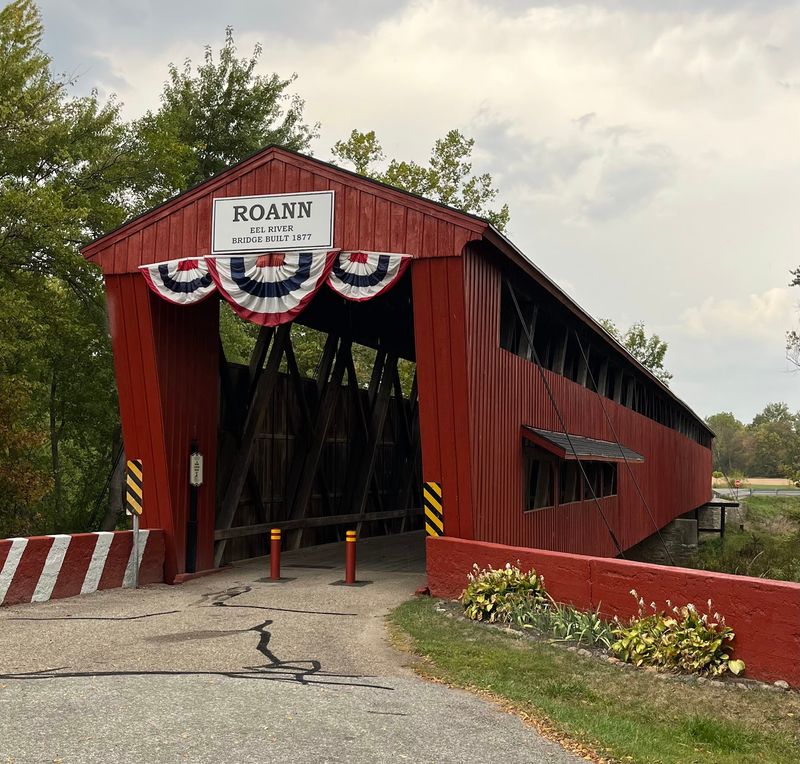
Small towns and covered bridges go hand in hand, and Roann proves it. The bridge spans the Eel River right at the edge of this quiet Wabash County community.
Built in 1877 with a Howe truss and later extended, the Roann Covered Bridge is listed on the National Register of Historic Places. It survived a fire in the 1990s and was carefully restored.
The town leans into its bridge heritage with an annual Roann Covered Bridge Festival, drawing visitors for food, music, and local crafts each fall.
The bridge still carries local traffic, so you can actually drive through it, which adds a bit of nostalgia to the visit. Roann sits in north-central Indiana, an easy detour if you are traveling near Wabash or Peru.
It is the kind of stop that pairs well with a slow loop through farm country.
6. Mansfield Covered Bridge, Mansfield
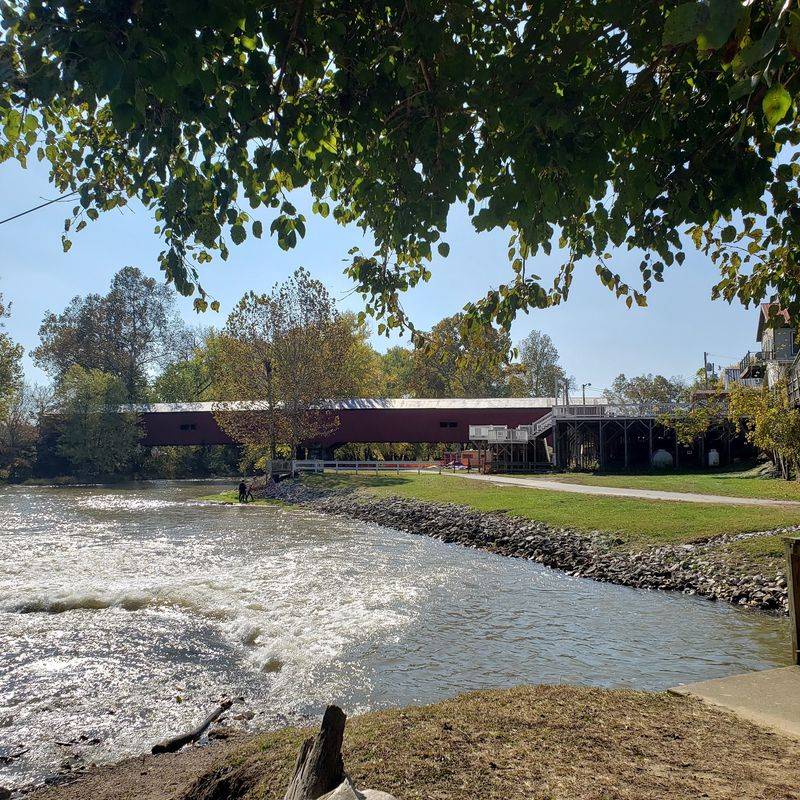
A grist mill, a creek, and a big red bridge sit together in Mansfield, another Parke County favorite that packs a lot into a tiny village. The Mansfield Roller Mill is a historic site right beside the water.
The double-span bridge crosses Big Raccoon Creek and dates to 1867, built with the Burr arch design that shows up again and again across the county.
The mill and bridge combination makes this a top photography and festival location, especially during the October covered bridge season.
Outside festival weeks, Mansfield is peaceful, and you can wander between the mill grounds and the bridge without a crowd. The village also has spots to grab a bite and browse local goods during busy weekends.
If you are building a Parke County bridge loop, this one belongs on the route alongside Bridgeton.
7. Ceylon Covered Bridge, Geneva
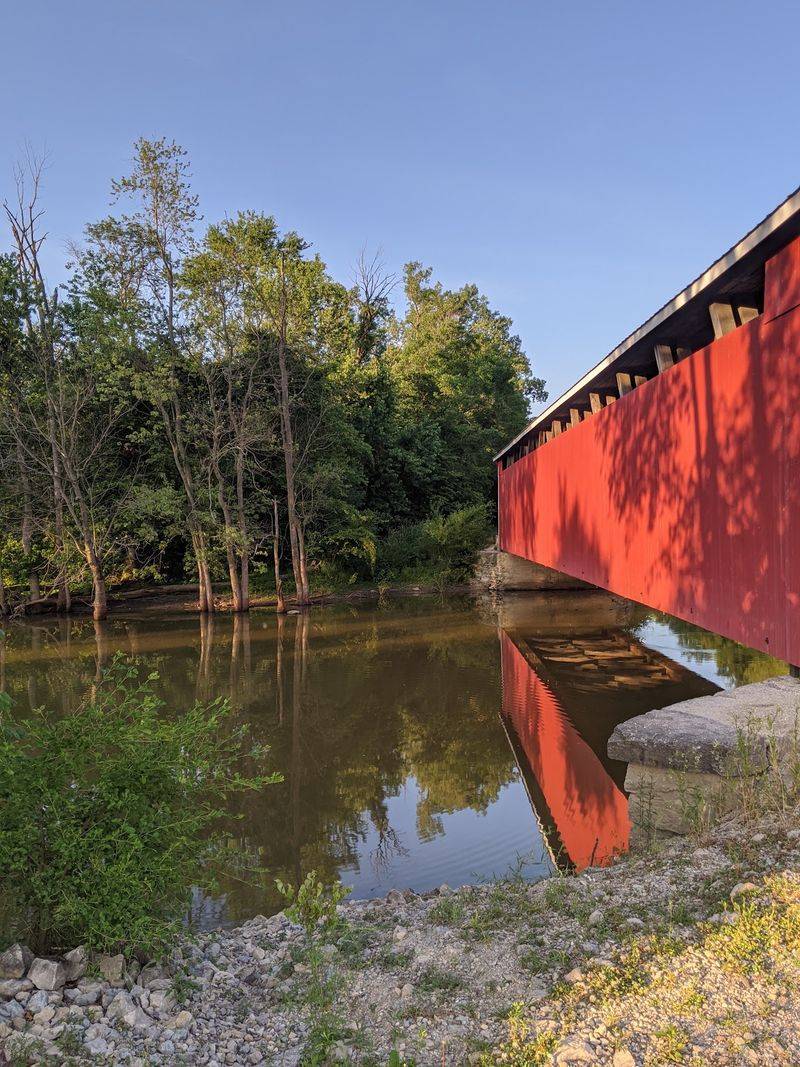
Eastern Indiana gets its moment with the Ceylon Covered Bridge near Geneva in Adams County. It crosses the Wabash River in a part of the state better known for farmland than tourist stops.
The bridge dates to 1879 and uses a Smith truss design. After years of wear, it was restored and preserved so visitors could keep enjoying it.
Because it sits away from the heavy Parke County crowds, Ceylon offers a quieter experience. You can take your time along the river without the festival bustle.
The surrounding Geneva area is tied to Indiana author Gene Stratton-Porter, whose historic home and nature preserve are nearby. That makes it easy to combine a bridge visit with a bit of literary and outdoor history.
For travelers exploring the eastern edge of the state, Ceylon is a rewarding and often overlooked find.
Enjoyed this story?
Add Fast Food Club as a preferred source to see more of our reporting on Google.