


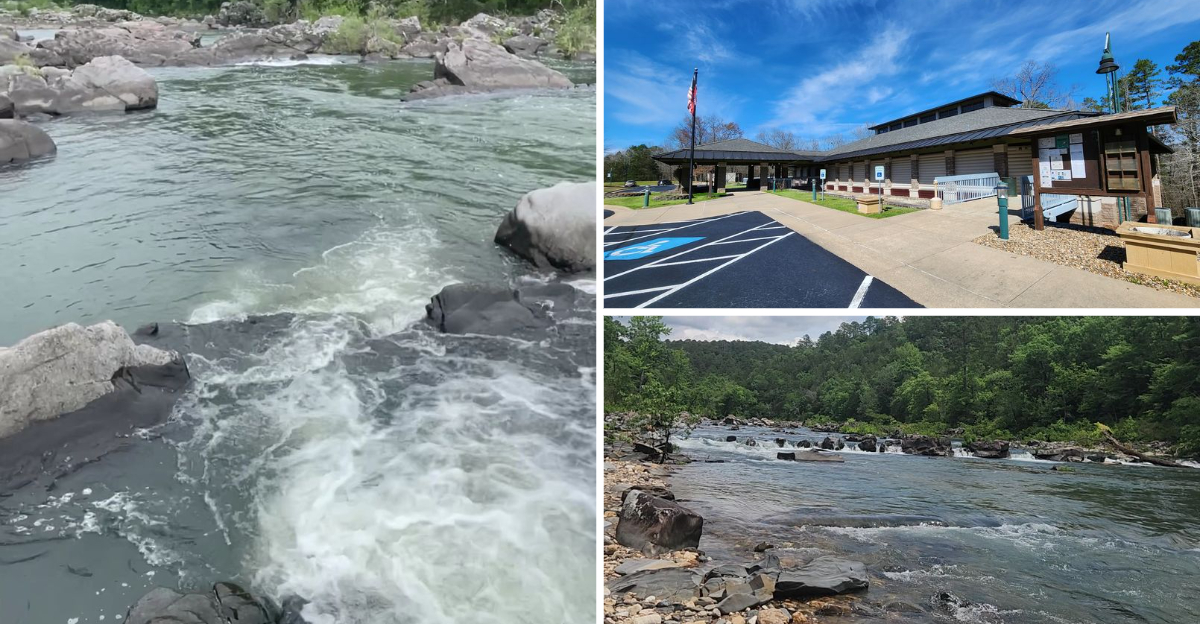
Some places make you work for the reward, and this one asks you to bounce down a rocky gravel road before it shows off. Tucked into the southwestern corner of Arkansas, this park guards a wild river that tumbles over ledges and around house-sized boulders with almost nobody around to notice.
There is a twelve-mile trail here where you can walk for hours and never cross paths with another soul. Families spread out on sunny rocks, kayakers plan their next run, and photographers chase the moving water.
The name itself carries a warning, and the river lives up to it. Keep reading to find out where this quiet stunner sits, what makes its falls so special, and the practical notes that will keep your trip smooth from the first mile marker to the last.
Where The Wild River Runs
Way down in the southwestern corner of Arkansas, near the small town of Wickes, sits a park built around one of the state’s most untamed rivers. The address is 1980 US-278, Wickes, AR 71973, and that highway is your friendly landmark before the adventure gets rougher.
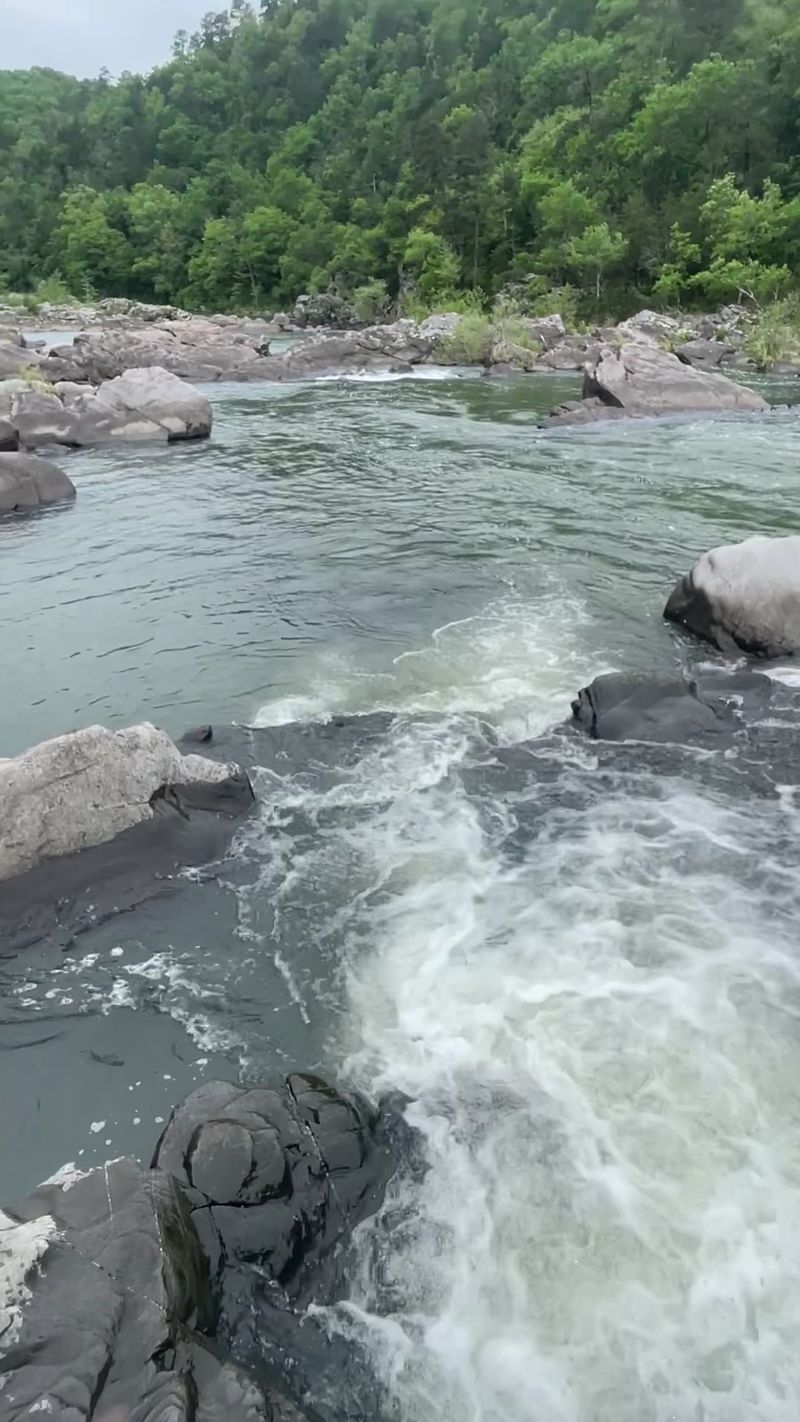
The park protects the Cossatot River from where it drops out of the Ouachita Mountains, keeping the whole corridor completely natural. No dams tame this stretch, so the water moves fast and free.
The name comes with a reputation for being challenging, and the river earns it with rocky rapids and swift current. Even during dry spells, the water keeps moving with real energy.
Because the park spreads across a long river corridor, you drive to different access points and then continue on foot. That layout keeps the crowds thin and the scenery constantly changing.
With a 4.8-star standing across hundreds of ratings, this park has quietly earned devoted fans. Many of them return year after year, treating it like a personal secret worth protecting.
A River That Started In The Mountains
Origins matter, and this river’s story begins high in the Ouachita Mountains before it carves its way south. That mountain birthplace gives the water its speed and its stubborn wild streak.
The entire length inside the park stays protected, which means it runs one hundred percent natural from top to bottom. That protection is a big part of why the current stays lively.
Even when rain has been scarce, the flow keeps moving quickly, surprising folks who expect a lazy trickle in dry months. During flood stages, major river crossings can vanish under rushing water entirely.
The higher water levels transform the whole place, turning calm swimming spots into serious rapids. Some folks time visits around big water just to witness the power up close.
Preserving a river in its raw state is rarer than it sounds, and that rarity is the quiet heart of this park. What you see here is close to what the land looked like long before highways arrived.
The Falls Worth The Bumpy Drive
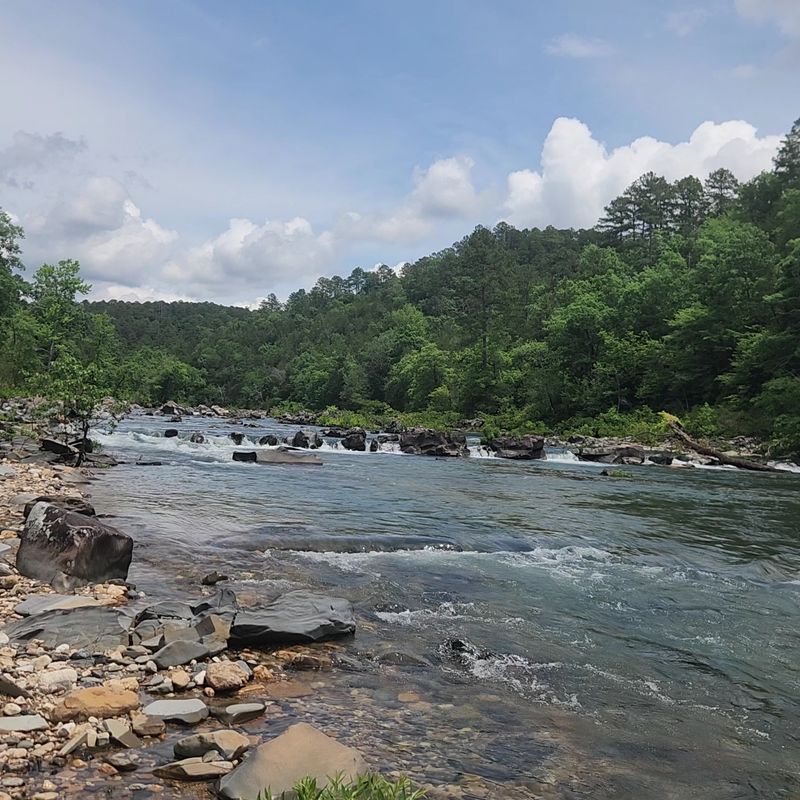
Cossatot Falls is the showstopper, and reaching it involves a very rocky gravel road that tests both patience and suspension. A truck or higher-clearance vehicle makes the trip easier, though small cars have made it too.
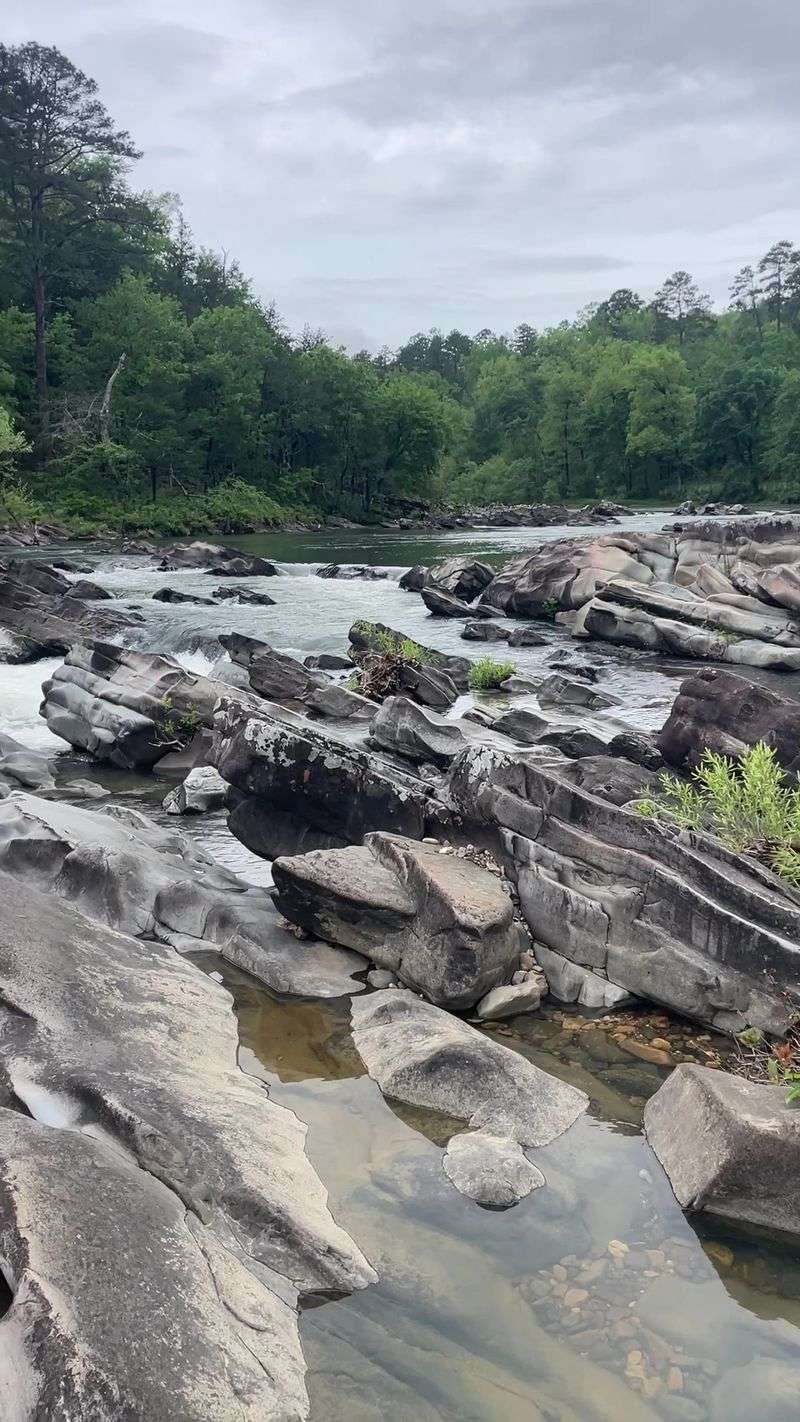
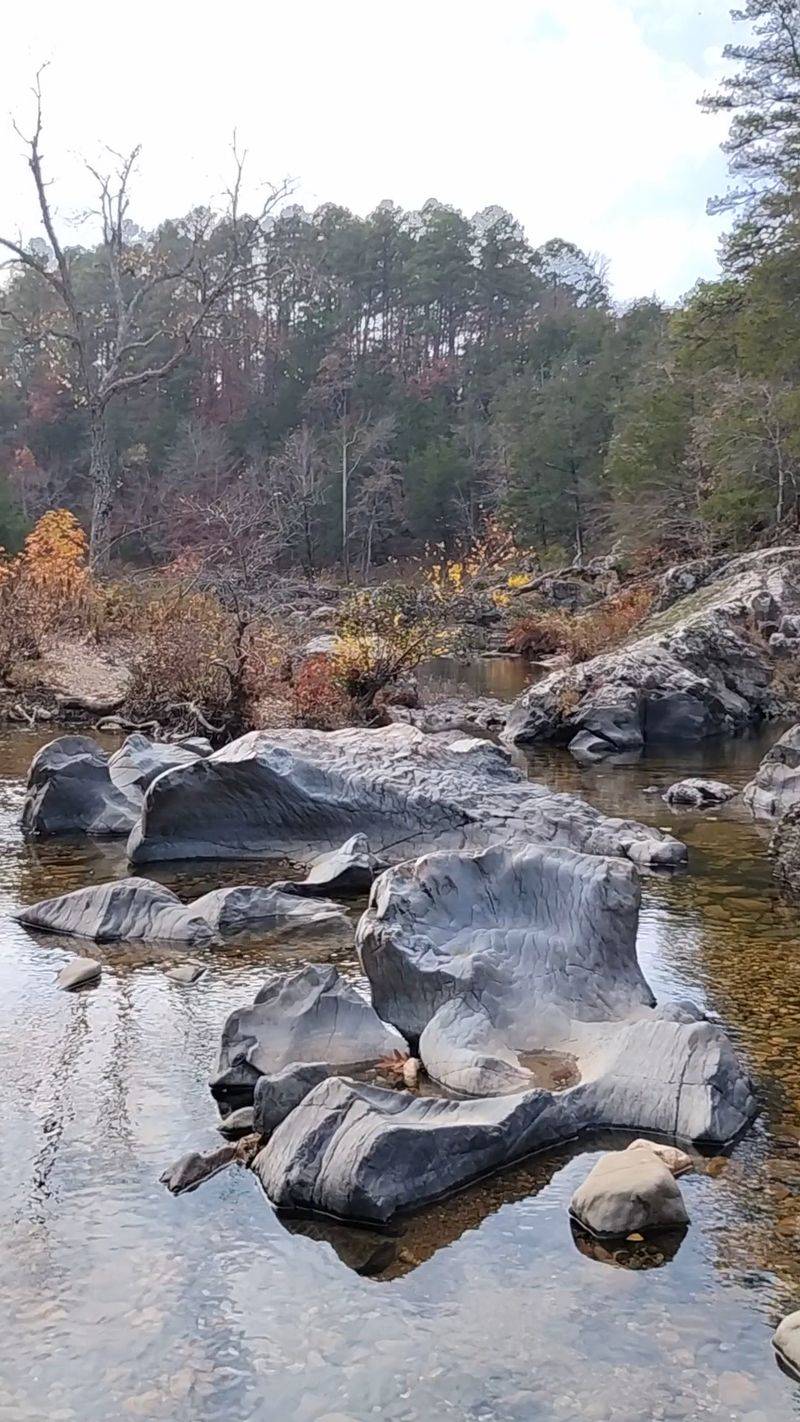
Once you park, the reward is a stretch of river tumbling over ledges and around massive boulders. People love scrambling across the rocks and settling in among them for hours.
The falls sit upstream from the visitor center, quite a way down that dirt road. Parking is limited at the falls, and a posted sign asks that trailers stay away.
Surfaces below the waterline turn extremely slippery, so anyone hiking the falls should move carefully. Sturdy shoes that grip and can get wet make all the difference.
On warm days, folks swim, wade, and hop between the rocks until the sun starts to fade. It is the kind of spot that easily swallows a whole afternoon.
Trails That Belong Only To You
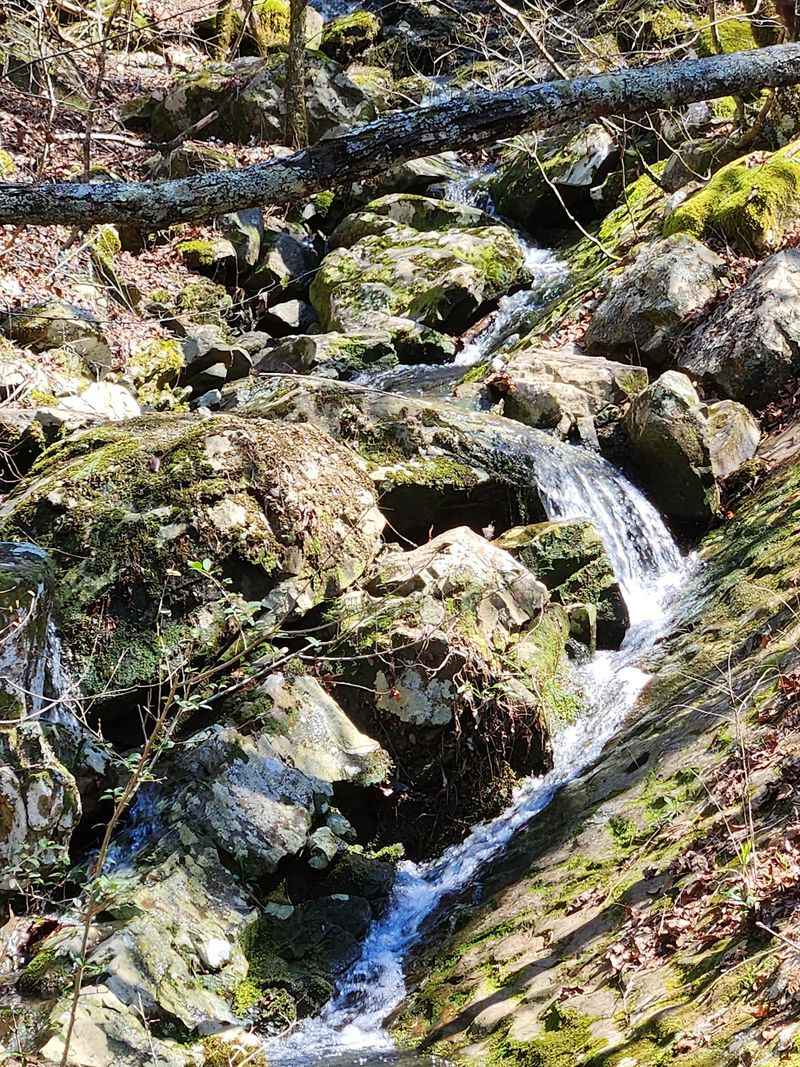
Solitude is easy to find on the River Corridor Trail, a 12.5-mile route where you can walk repeatedly and never bump into another hiker. That kind of quiet is a genuine luxury on any trail.
Backpackers have hiked upstream and floated back down, turning the corridor into a full weekend loop. The trail passes numbered bridges to cross and clusters of wildflowers along the way.
For something shorter, the Harris Creek Trail runs about 3.5 miles at a moderate pace, taking roughly two hours with photo stops. Deer and plenty of armadillos often make appearances along the path.
Trails here are well marked and easy to follow, which helps first-timers relax and enjoy the scenery. During high water, though, some crossings flood over the trail and force you to turn back.
Good sturdy hiking shoes and extra bug spray are smart companions out here. The effort pays off with views that stay with you long after the walk ends.
Whitewater For The Brave
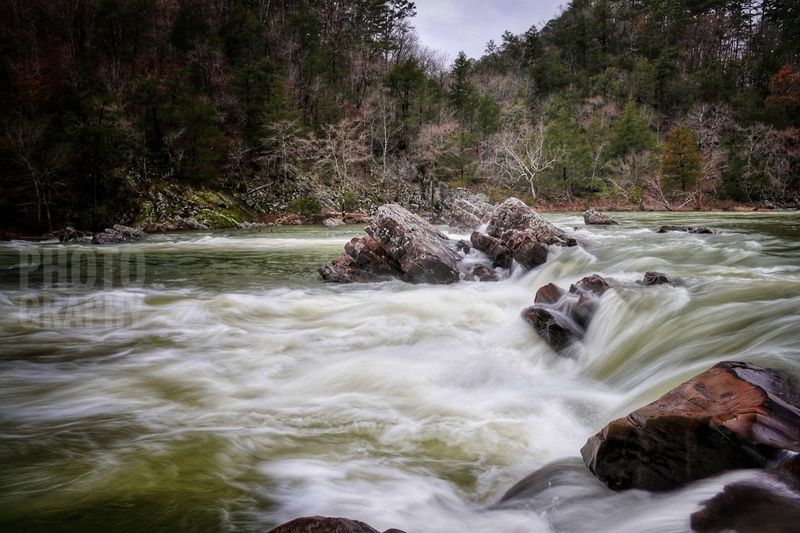
Paddlers keep this river on their bucket lists, and for good reason, since the Cossatot is known as a great kayaking run. The rapids offer a real challenge for those chasing moving water.
Even without much rain, the flow stays quick enough to keep things interesting. When levels rise, the whitewater ramps up into something more serious.
There is a dedicated kayak camping area behind the dam at the Horseshoe camp area. That setup lets paddlers roll out of their sleeping bags and straight onto the water.
Some folks come specifically to whitewater kayak and plan return trips around the best conditions. Watching the river read like a puzzle of currents and drops is part of the draw.
Cliff jumping, rafting, and fishing round out the river activities for the adventurous crowd. Safety awareness matters most here, because the current does not slow down for anyone.
The Visitor Center Surprise
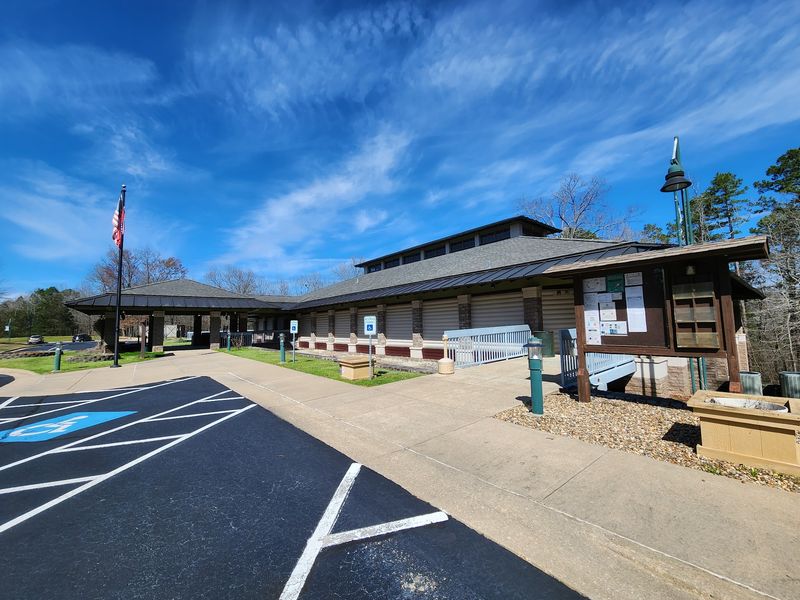
Before the gravel roads and river rocks, most trips start at the large visitor center, and it delivers more than a map rack. Exhibit areas, interactive displays, and a wildlife observation room give families plenty to explore indoors.
The front desk is staffed by kind folks who help book campsites and make the planning feel stress-free. One family got set up for two nights without a single headache.
Kids often enjoy the reptile talks, and the staff have a patient, welcoming way with younger visitors. Those small touches turn a quick stop into a highlight.
Clean restrooms, plenty of Arkansas park pamphlets, and a gift shop round out the building. The shop leans a bit pricey, so browse with that in mind.
A playground sits right beside the center, giving little ones a place to burn energy. The center stands across the road from the route toward the campgrounds and falls.
Camping Close To The Water
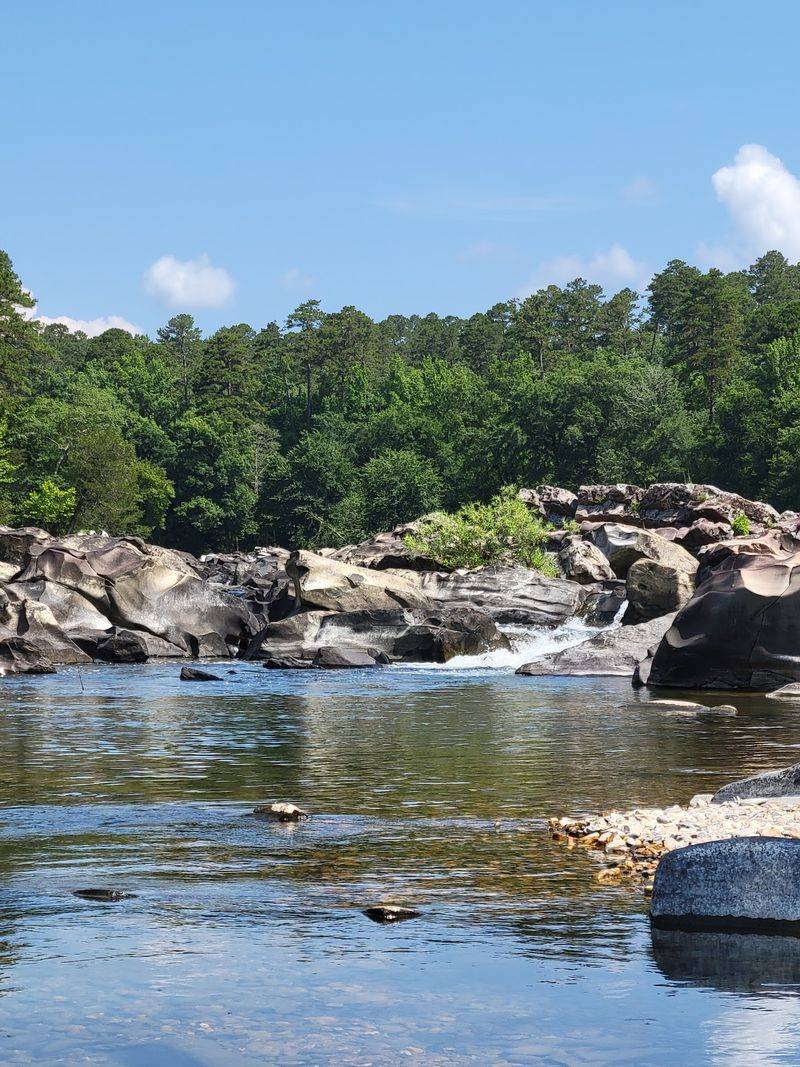
Falling asleep steps from a moving river is the appeal at the primitive camp areas like Sandbar and Cossatot Falls. Both spots keep things rustic with vault toilets and no running water beyond the river itself.
The falls area offers only a handful of pull-up spots, so arriving early on busy days helps your odds. When those fill, other camp spots scatter along the river as backups.
The ground has a gravel base that makes driving tent stakes tricky, so plan your setup accordingly. Overnighters tend to be few, which keeps the atmosphere calm and quiet.
A quick heads-up on the composting restrooms, since the odor can be strong, and packing something to help is a good idea. Keeping trash hidden overnight also spares you a raccoon visit.
For a more polished base with electric, water, and clean bathhouses, some campers stay at nearby Daisy State Park, roughly forty minutes away. That option pairs comfort with day trips into the wild.
A Calm Escape For Families And Wanderers
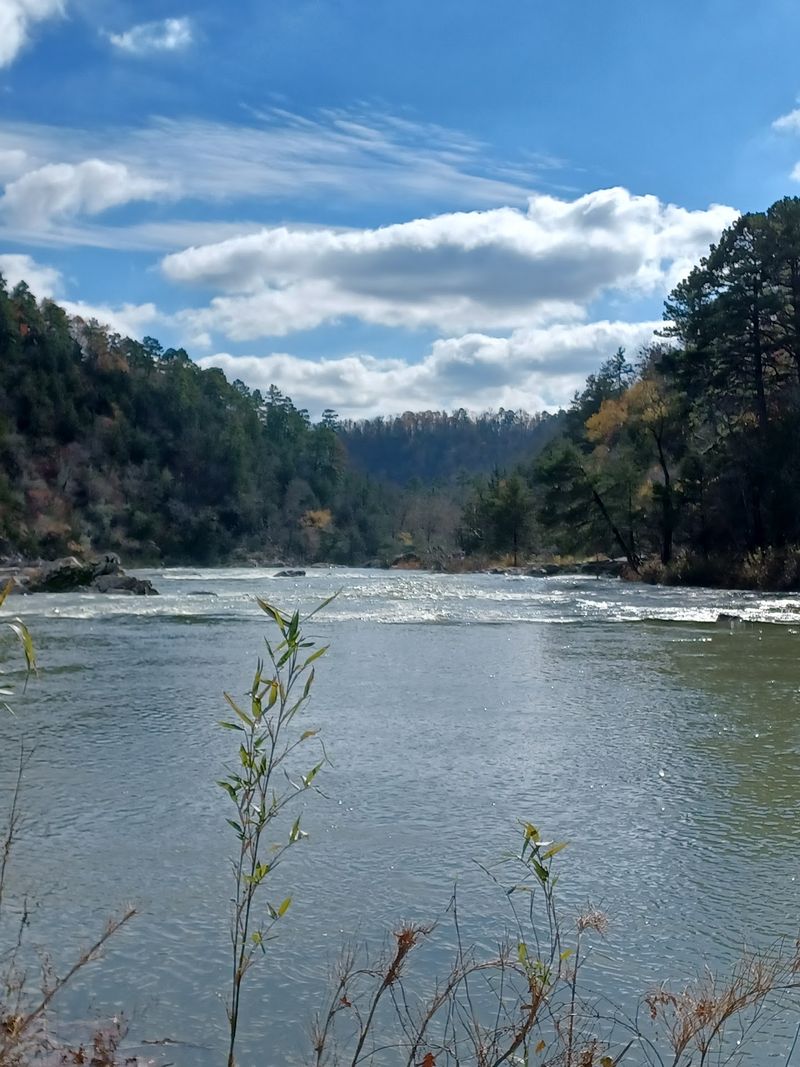
Friendly energy defines this park on warm days, when folks spread out with plenty of room to relax. Benches placed around the park invite you to sit and watch the water roll by.
Families settle in easily here, with the playground, the swimming spots, and the wide-open rocks giving kids space to play. The clear water and the sound of the falls set a peaceful mood.
Day-trippers outnumber overnighters, yet the place still feels quiet and unhurried. Turtles and other small creatures occasionally turn a walk into a happy discovery.
A gentle caution for older or less-mobile guests, since some areas can be tough to navigate over the rugged terrain. The beauty remains, but the footing asks for care.
Solo hikers, paddlers, and big families all find their own version of a good day here. That flexibility is what keeps people coming back season after season.
Planning Your Visit Without The Guesswork
Timing your trip is simple, since the park runs 8 AM to 5 PM every day of the week. That daytime window gives you solid hours to explore both the center and the river.
Getting there is the trickier part, because cell service can drop to nothing and GPS may not register the back roads. Printing directions and carrying a hard copy map is genuinely smart advice.
The route to the falls campsite can be hard to follow after dark, so arriving in daylight saves a lot of confusion. That rocky gravel road demands extra care right after rain.
Pack food, water, and a bag for your trash, and please carry everything back out with you. Comfortable shoes that grip wet rock will keep the day pleasant.
Set against the Ouachita foothills, this quiet park rewards the travelers willing to go a little farther than the map suggests. The rushing river, the rocky falls, and the empty trails are waiting for anyone ready to make the trip.
Enjoyed this story?
Add Fast Food Club as a preferred source to see more of our reporting on Google.