


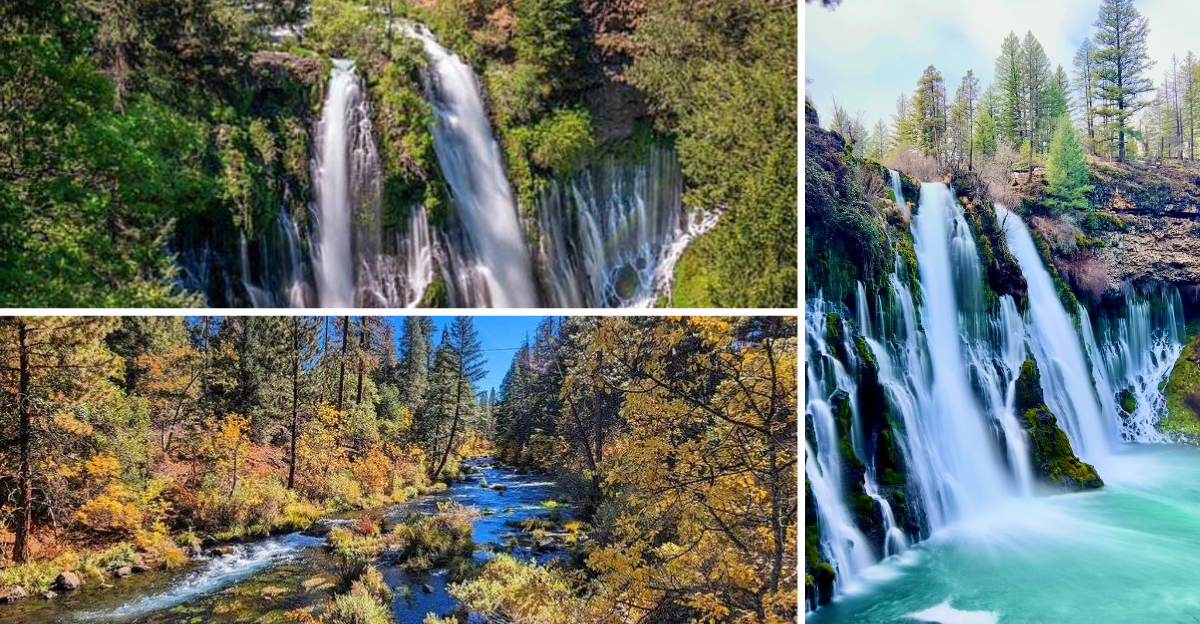
Somewhere north of Redding, a wall of water plunges 129 feet and never really stops, fed not just from the top but straight out of the rock face itself. A short, easygoing loop wraps all the way around it, close enough that the roar follows you the whole way.
You can spot the whole show from near the parking lot, so nobody gets left behind on account of tired legs. There is camping, a lake at the far end, and a paved path that carries you right to the base.
This little corner of Northern California draws a steady crowd for good reason, and the story behind the falls is stranger than most people expect. Stick around and you will learn where to park, when to arrive, and why this spot keeps people coming back.
Where the Roar Begins in Burney
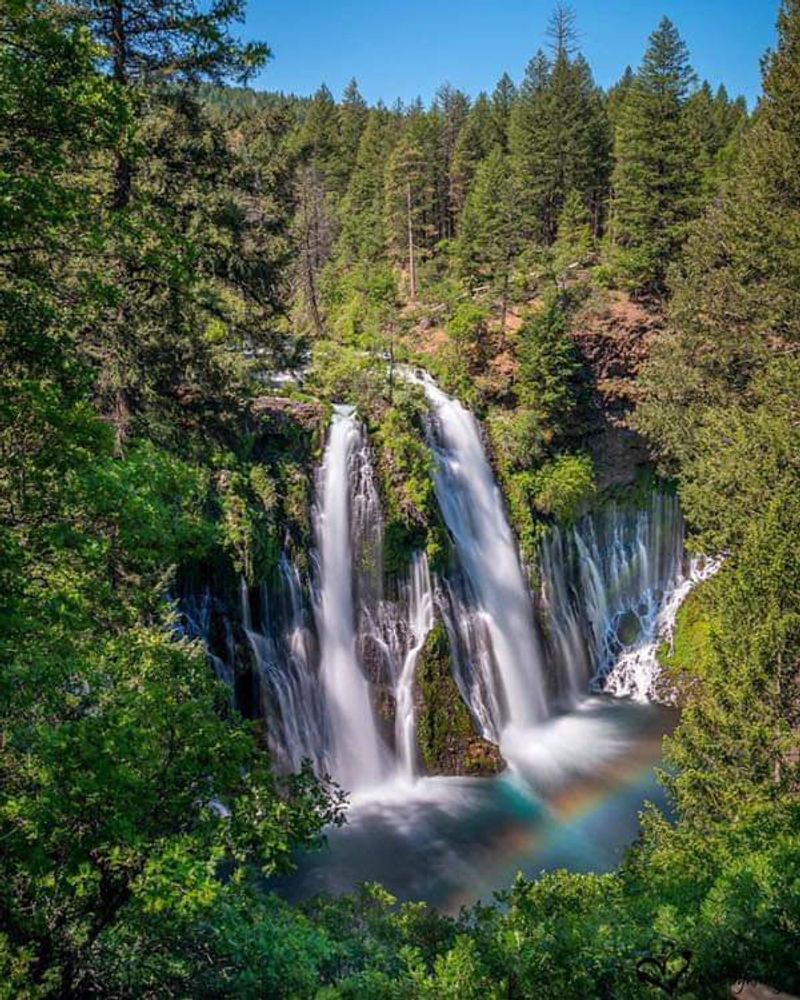
Tucked along Highway 89 outside the small town of Burney, this park keeps its full name a mouthful: McArthur-Burney Falls Memorial State Park, at 24898 CA-89, Burney, CA 96013. Redding sits about an hour and twenty minutes away by car, making it a comfortable day trip for folks in the region.
The star attraction is a 129-foot waterfall set inside a forested landscape built for camping, picnicking, and hiking. What sets it apart is how quickly you reach the action.
You can see the falls practically from the parking lot, which means mobility is rarely a dealbreaker here. A paved path leads down toward the base for those who want a closer look.
With a 4.8-star average across nearly 3,000 people weighing in, the park has earned a loyal following. The description on the books is simple: forest, water, and a whole lot of reasons to stay a while.
Getting oriented takes almost no time at all, and that ease is a big part of the charm.
A Waterfall Fed From the Rock Itself
Most waterfalls pour over an edge and call it a day. Not this one.
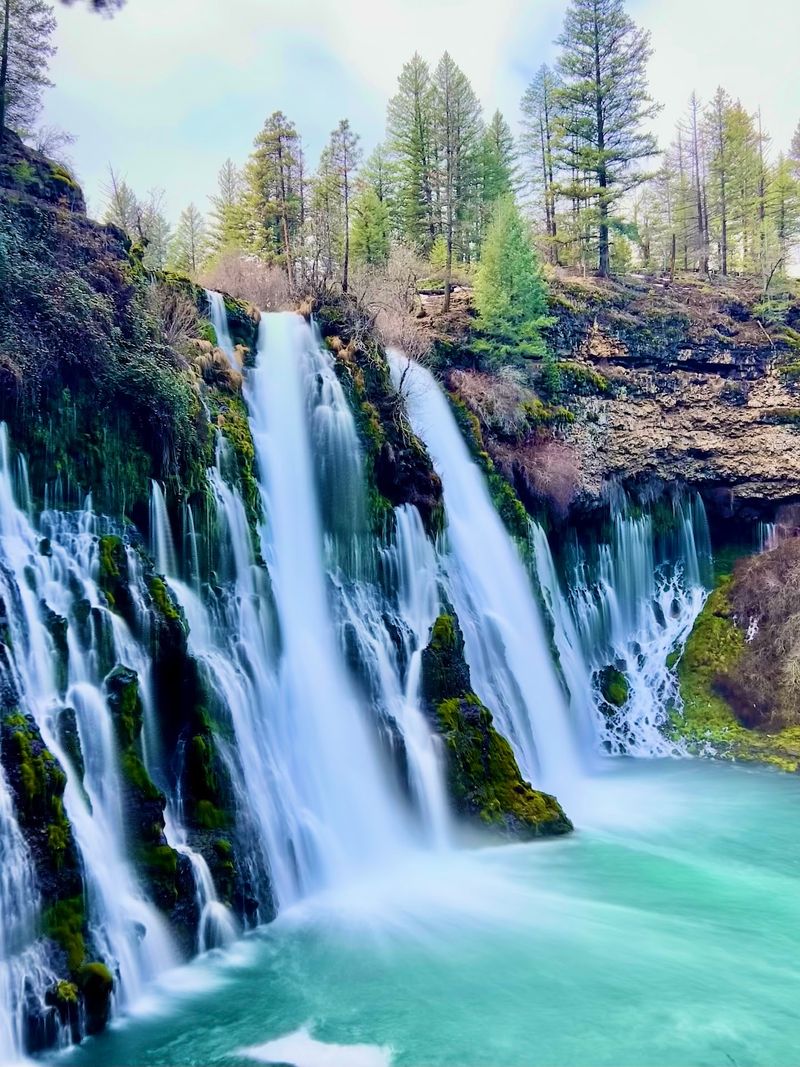
A large share of its flow does not come from the top of the cliff at all, but instead streams straight out of the porous granite, fed by an underground spring.
That quirk gives the falls their signature look, with water seeming to sweat through the rock face itself. The effect is genuinely unusual and helps explain why some people have called it the eighth wonder of the world.
High water seasons bring the biggest show, when the falls swell and the sound turns thunderous. Even in quieter stretches, the spring keeps things flowing.
The water gathers in a clear pool at the base, ringed by greenery that stays lush through much of the year. It is the kind of natural feature that rewards a second glance.
Knowing how the water actually gets here turns a pretty view into a small geology lesson worth remembering.
The Loop That Wraps the Whole Show
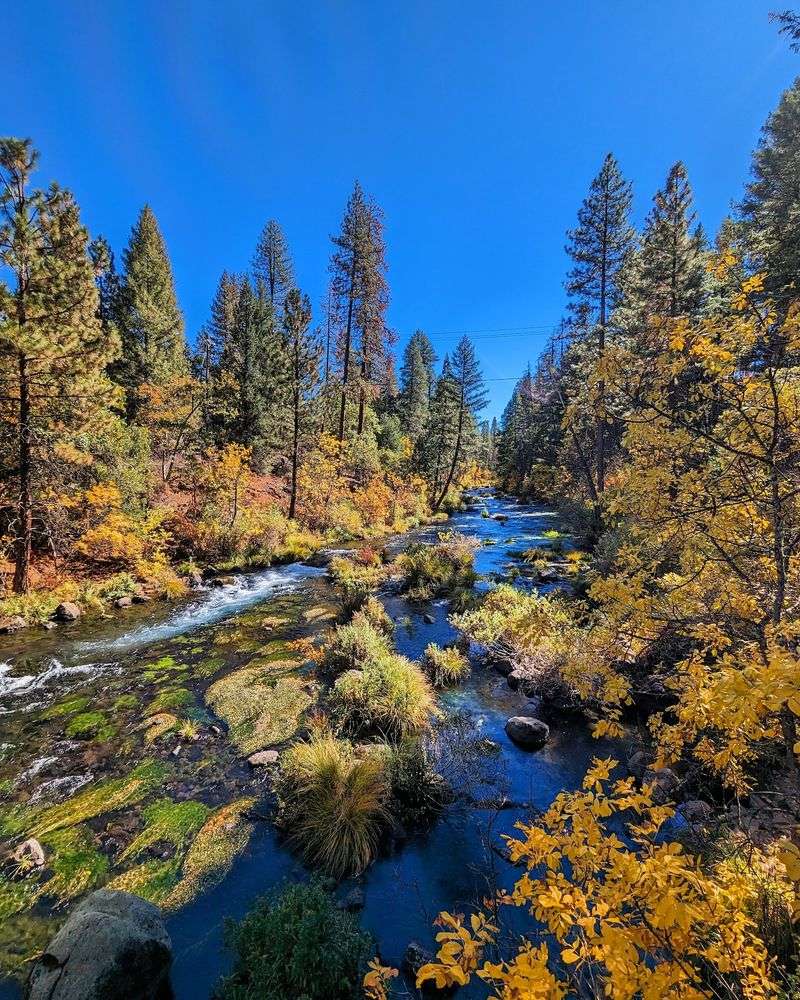
Roughly 1.2 miles long, the loop trail circles the falls and crosses the creek by way of two bridges. The route hands you the waterfall from a whole range of angles, so no single viewpoint has to do all the work.
The paved section runs down to the bottom, while the loop itself turns to dirt and gets a little rocky in spots. There is real elevation change packed into that mile, and the climb back up counts as the tougher stretch.
Benches are scattered along the way for anyone who wants to rest. Good shoes make the whole thing easier, though the trail stays friendly enough for a wide range of fitness levels.
Carrying a bottle of water for the return climb is a smart move. Bathrooms and drinking fountains sit near the trailhead at the start.
Short, scenic, and varied, the loop delivers far more than its modest length suggests.
An Easy Walk Almost Anyone Can Manage
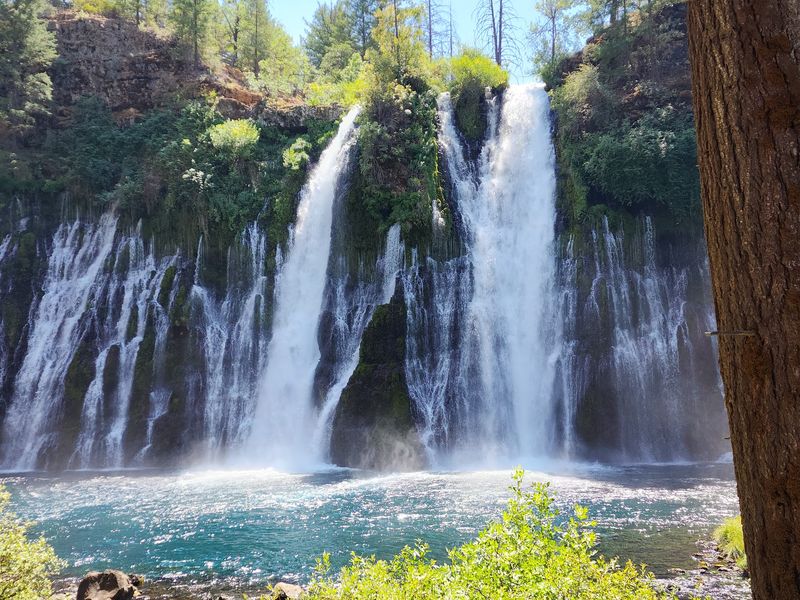
Accessibility ranks high on the list of reasons this park stays busy. A short 0.3-mile hike carries you right to the falls, and they stay in view the entire way down.
The paved path to the base makes it doable for older family members and even little ones in tow. For anyone dealing with mobility challenges, the view from up top requires almost no effort at all.
The trail down is often described as gentle rather than grueling, and the walk back up tends to surprise people with how manageable it feels. That balance of ease and payoff is rare.
Families appreciate that nobody gets stranded because the trailhead itself opens onto a strong view. The steeper full loop remains optional for those craving a bit more.
Few natural showstoppers ask so little of you and give back so much in return.
Camping, Cabins, and Lake Britton
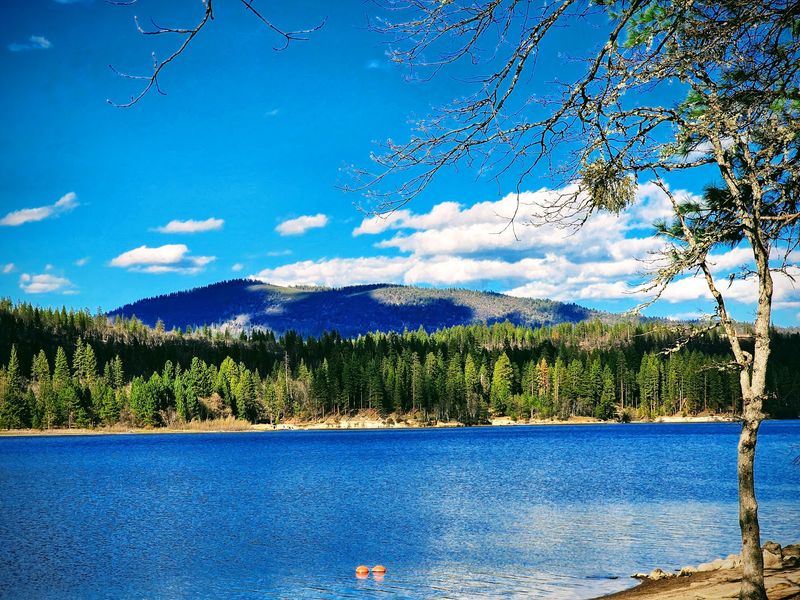
Plenty of people turn a quick visit into an overnight stay. The park offers campsites and rentable cabins in designated areas, and many who come for the falls end up planning a return trip just to sleep under the trees.
Campers speak fondly of the sites, calling them a highlight in their own right. Booking ahead is strongly encouraged, since demand runs high.
At the far end of the park sits Lake Britton, complete with day-use areas, bathrooms, and a boat launch. It rounds out the offerings for anyone wanting more than a single trail.
A general store on site sells sandwiches, snacks, drinks, and souvenirs, handy for restocking without leaving. That convenience keeps a multi-day trip simple.
Reservations made in advance are the difference between a smooth arrival and a scramble, so plan early and settle in.
A Peaceful Retreat for Nature Lovers
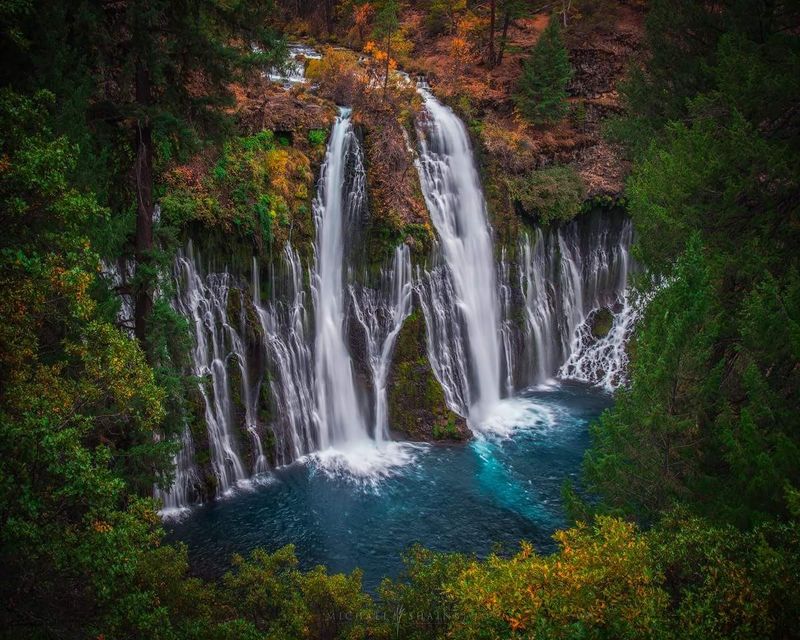
Some come here purely to slow down. The park has become a go-to spot for quiet reflection, with the constant sound of falling water setting a calm backdrop the whole way around the loop.
The pool at the base draws people who want to sit and take in the scene rather than rush through it. Cool mist near the water adds to the restful feel of the place.
Wildlife shows up too, with plenty of fauna moving through the greenery. That mix of water, forest, and quiet makes the park feel restorative.
It suits solo wanderers, couples, and anyone chasing a mental reset. The scenery holds up any time of year, earning it a reputation as magical across all four seasons.
For those who value stillness over adrenaline, this corner of Northern California quietly delivers.
A Backdrop Worth Framing
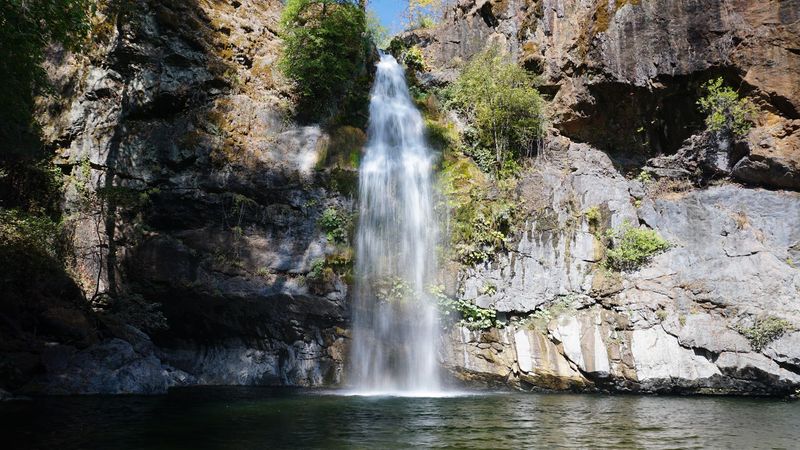
Cameras get a serious workout here. The falls make a dramatic backdrop, and the park has grown popular for engagement photos and special-occasion shots.
A bridge a short walk downstream offers another prime spot for framing a picture. The varied angles along the loop mean photographers rarely run out of compositions.
Timing matters more than people expect. Arriving around noon can put the sun directly behind the falls, which makes shots from the bottom tricky.
Morning or late afternoon light tends to produce far better results, especially at the base. A little planning around the sun pays off big.
Whether the goal is a keepsake or a milestone portrait, the setting hands you a memorable frame with almost no effort required.
Hours, Fees, and Smart Timing
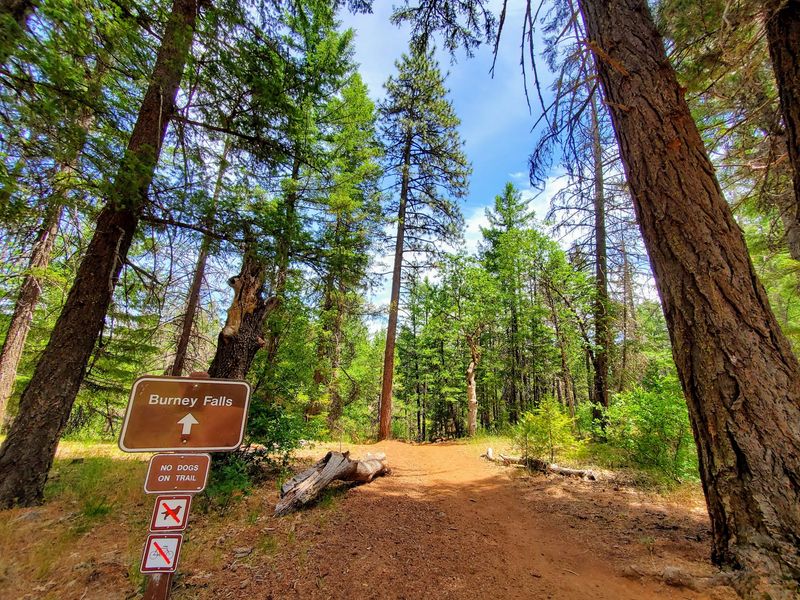
Planning the logistics keeps the day smooth. The park runs daily from 8 AM to 8:30 PM, so there is a generous window to work with.
Parking carries a $10 fee, and the lots fill up fast during peak times. If attendants say parking is full except near the lake, circling the closer lots usually turns up a spot as people leave, saving the roughly 1.5-mile walk from the lake to the trailhead.
Going early or swinging by in the mid to late afternoon, around 2 to 3, helps sidestep the heaviest crowds. Comfortable shoes are worth packing for the loop.
Dogs are not allowed on the trail, though they are welcome at the lake. Bug spray comes recommended for warmer months.
Reach the park along Highway 89, and remember that reservations for camping should be locked in ahead of time.
With those basics sorted, McArthur-Burney Falls Memorial State Park earns its steady acclaim, pairing an easy loop with one of Northern California’s most striking waterfalls. It is the rare stop that rewards the casual visitor and the seasoned hiker alike, and it tends to leave people already plotting a return.
Enjoyed this story?
Add Fast Food Club as a preferred source to see more of our reporting on Google.