


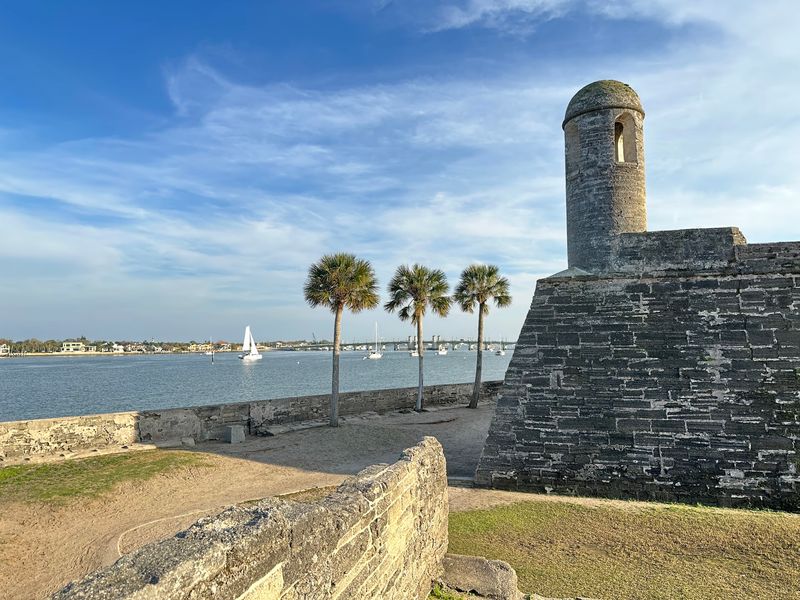
A fort made mostly of tiny seashells sounds like something out of a made-up story, yet one very real Spanish stronghold has stood along the Florida coast for more than three centuries. Its walls have soaked up cannon fire, survived repeated attacks, and never once been taken by force.
This star-shaped landmark sits in the oldest city in the country, complete with a working drawbridge, a wide dry moat, and rows of old cannons pointing over the bay. Families climb its stairs, kids earn Junior Ranger badges, and history fans lose track of time reading exhibit after exhibit.
The best part is how affordable and easy it is to explore on your own schedule. Keep reading to learn where it is, what makes those seashell walls so special, and how to plan a smooth visit.
A Coastal Landmark in the Nation’s Oldest City
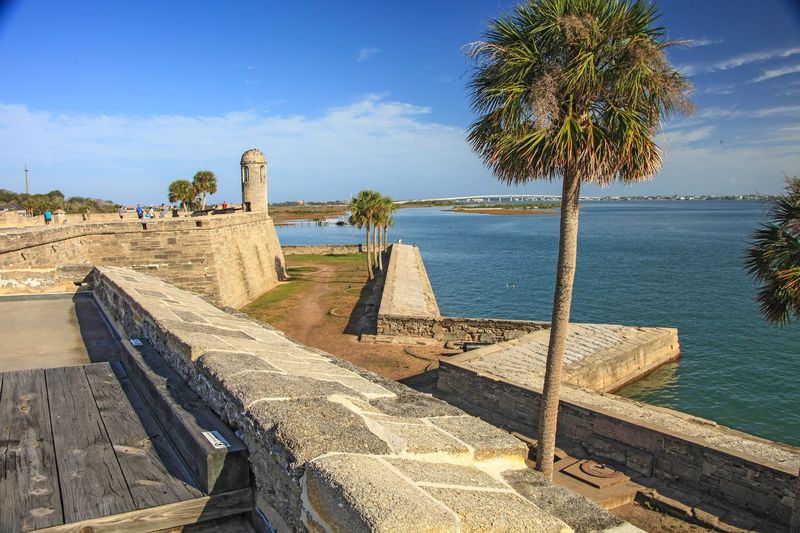
Right in the heart of downtown St. Augustine, Florida, this centuries-old fortress guards the edge of Matanzas Bay. You will find it at 11 S Castillo Dr, St. Augustine, FL 32084, an easy walk from the shops and cobbled streets that make the city famous.
Castillo de San Marcos National Monument holds the title of the oldest masonry fort in the continental United States. It was completed back in 1695, long before the country itself existed.
The setting places it steps away from historic St. George Street, so a visit here pairs naturally with the rest of the old town. Managed by the National Park Service, the site blends military history with sweeping water views.
People often describe it as the central piece of the whole city, the point around which St. Augustine’s story revolves. Its four-pointed, star-shaped design still cuts a striking outline against the sky.
Getting acquainted with the fort means understanding it was built to protect Spanish Florida for generations. That mission shows in every thick wall and corner bastion you will explore.
Walls Made From Ancient Seashells
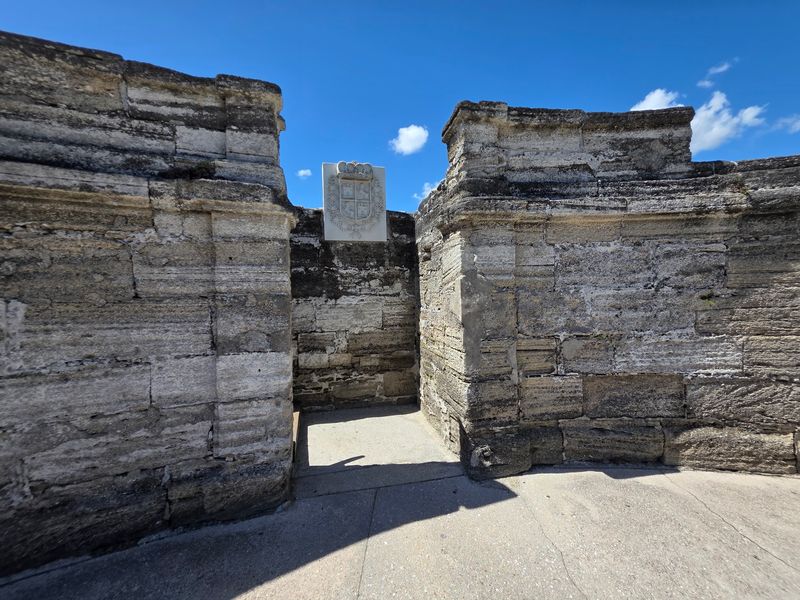
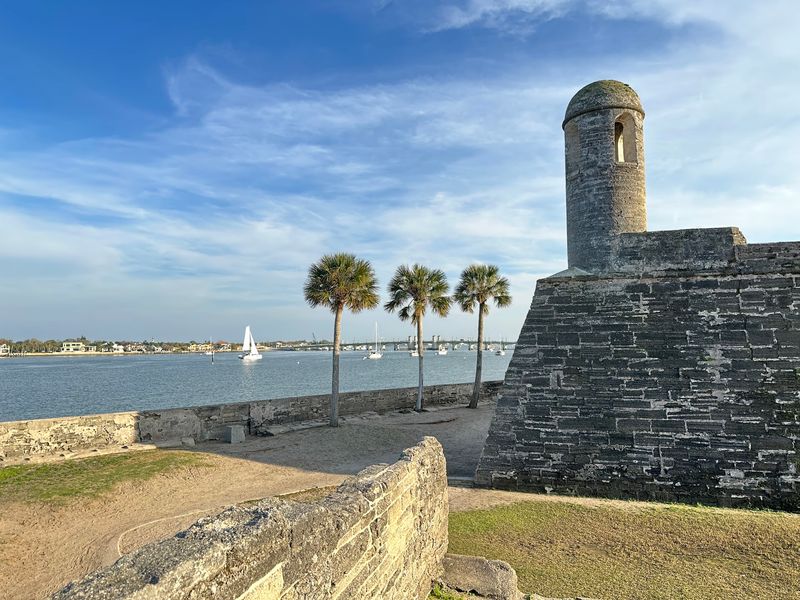
Here is the detail that surprises almost everyone who leans in close: the entire fort is built from a stone made of tiny seashells and shell fragments. That material is called coquina, and it was quarried nearby before being hauled to the building site.
What makes coquina remarkable is how well it held up under attack. The soft, shell-packed stone absorbed cannon fire rather than shattering, which helps explain why the fort was never taken by force.
Bits of shell and stone make up the walls from top to bottom, and the fact that they have lasted this long amazes people who study the construction. Even after careful restoration work, the original character shines through.
Standing beside the walls, you can actually pick out the little shells pressed into the surface. It turns an ordinary history stop into something you keep thinking about afterward.
Few forts anywhere share this seashell secret, which is a big part of why this one feels so unusual. The material alone earns it a spot on any Florida travel list.
Crossing the Drawbridge and Dry Moat
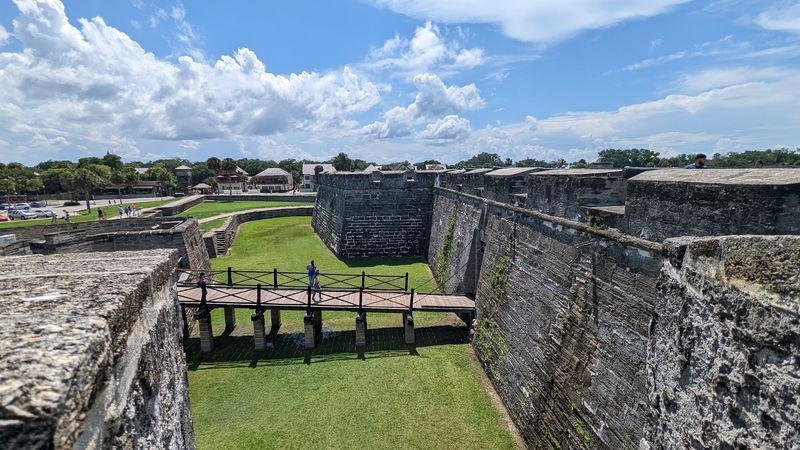
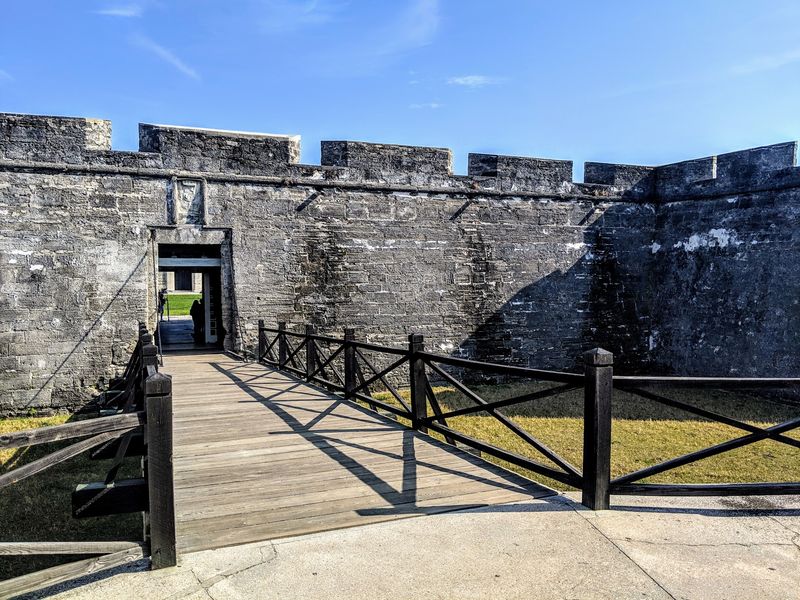
The journey inside begins with a wooden drawbridge, which sets the tone before you even reach the gate. Walking across it gives a real sense of how soldiers once entered this stronghold.
Beneath the bridge stretches a wide dry moat, a clever defensive feature that once slowed down anyone trying to attack. Rather than water, this moat used open ground to expose approaching threats.
The moat and drawbridge together formed a formidable first barrier, and both remain in place for you to see up close. It is easy to picture the daily routine of the troops stationed here as you pass through.
Crossing that threshold often becomes the first memorable moment of a visit. The transition from the modern street to the old entrance is surprisingly dramatic.
Little touches like these help the fort tell its story without a word. Even young explorers tend to slow down and take it all in as they enter.
Cannons Lining the Gun Deck
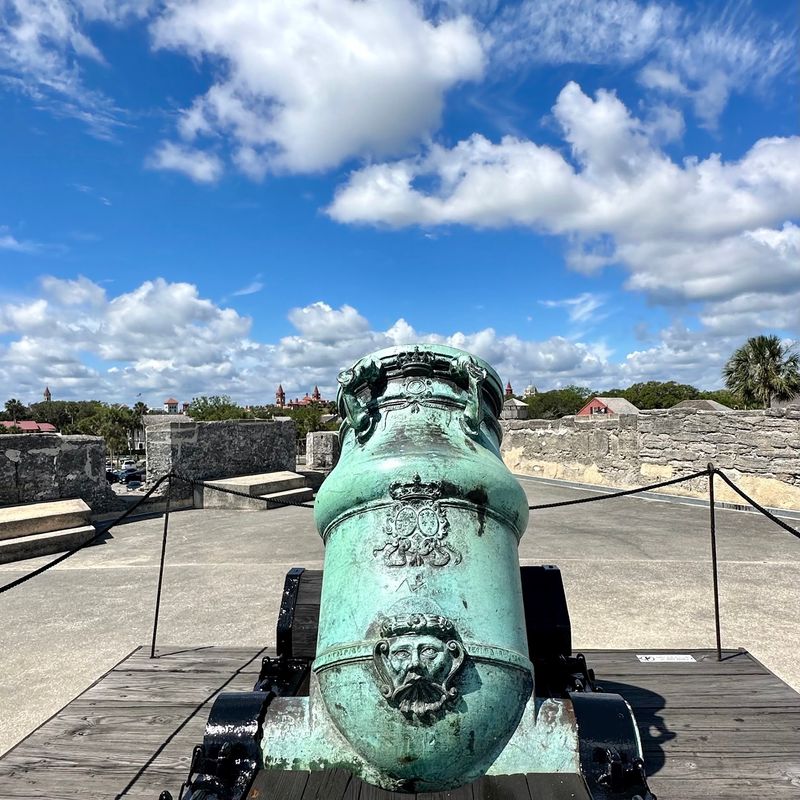
Up on the ramparts, historic cannons stand in a row, pointing out toward the water just as they did centuries ago. Climbing to this upper level rewards you with both the guns and the scenery.
The gun deck lets you walk right alongside the cannons and mortars, seeing them up close in a way photos never quite capture. Each one hints at the fort’s role in defending Spanish Florida.
Cannon firing is one of the most talked-about experiences here, and the National Park Service sometimes demonstrates the steps a gun crew had to follow to load one. Watching that process brings the old routine to life.
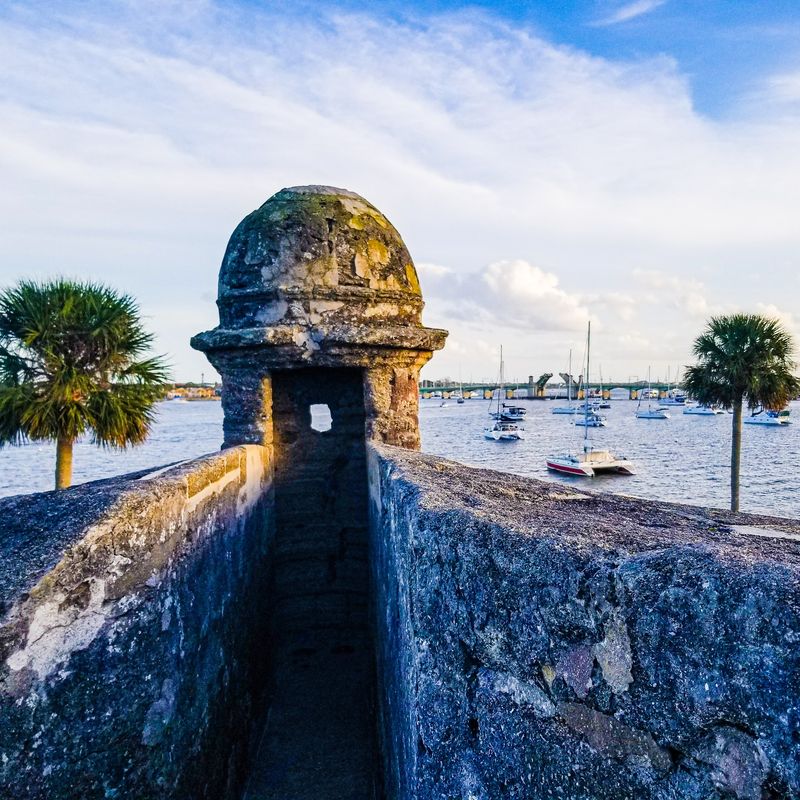
Exploring the sentry posts and turrets scattered along the walls adds to the fun. Families with kids especially enjoy poking around these lookout spots.
Do keep in mind that thunderstorms can close off the upper deck for safety. On a clear day, though, this is the highlight many people remember most.
Sweeping Views Over Matanzas Bay
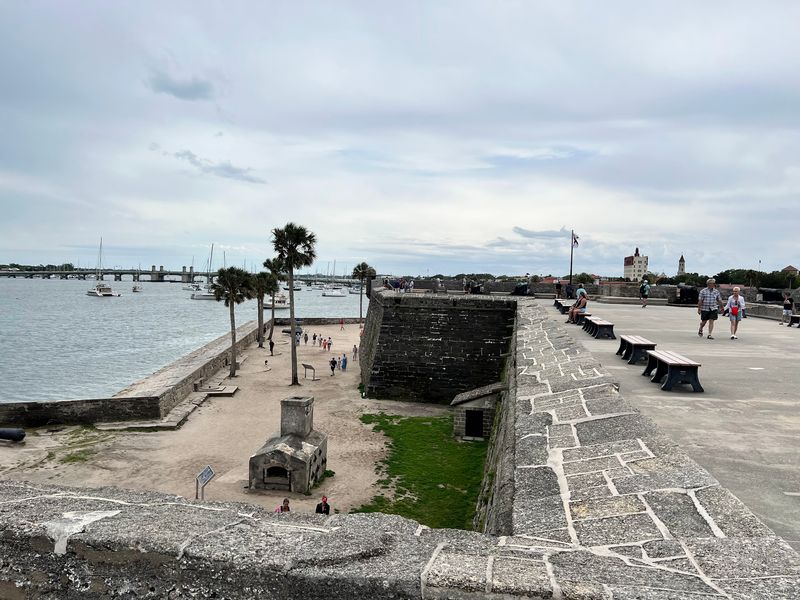
Climb to the top of the fort and the reward is a wide-open look across Matanzas Bay. The waterfront views stretch out in every direction, giving you a break from all the history below.
Benches line the upper level, so you can sit down and simply enjoy the water and the breeze. On an overcast, breezy day, that spot becomes one people never want to leave.
The vantage point overlooking the bay reminds you exactly why the fort was placed here in the first place. Its position guarded the harbor and the city behind it.
Around sunset, the St. Augustine skyline and the water make for beautiful scenery. Photographers find plenty of great angles from this height.
Some people plan to stay just an hour, then end up lingering because the view is so pleasant. It turns a quick stop into a relaxed afternoon.
A Fort That Was Never Taken by Force
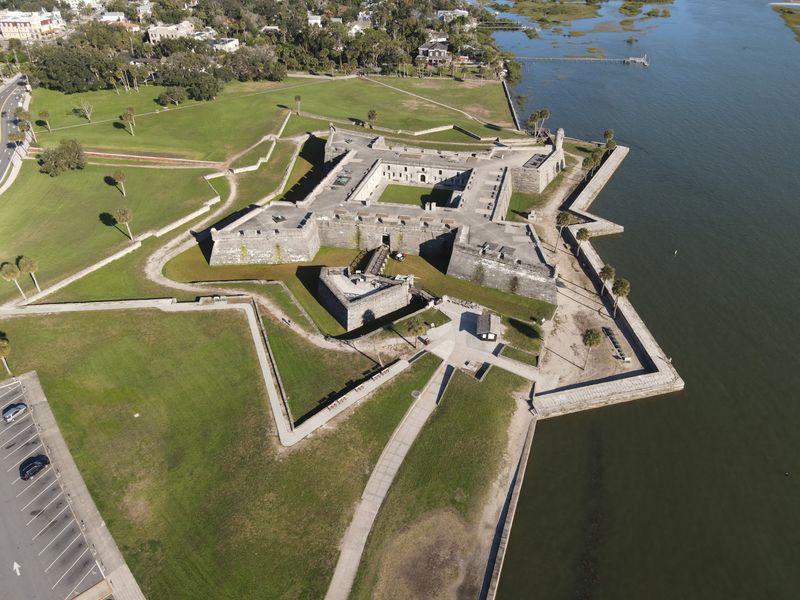
Few forts can claim a record like this one. Completed in 1695, it endured repeated British sieges over the years and was never captured by force.
Credit goes partly to its star-shaped layout, with thick walls and corner bastions designed to maximize defense while reducing weak points. This was advanced military architecture for its day.
The design intended to keep attackers exposed while protecting the soldiers inside. Every angle served a purpose, and that thoughtful planning still impresses people who walk the walls.
Add the shell-based coquina stone, which absorbed cannon fire, and you have a stronghold that outlasted every attempt to take it. History fans call the whole story genuinely shocking in the best way.
Learning how it held firm across centuries of conflict gives the visit real weight. It is a rare place where the walls themselves are the heroes of the tale.
Exhibits and Rooms Packed With History
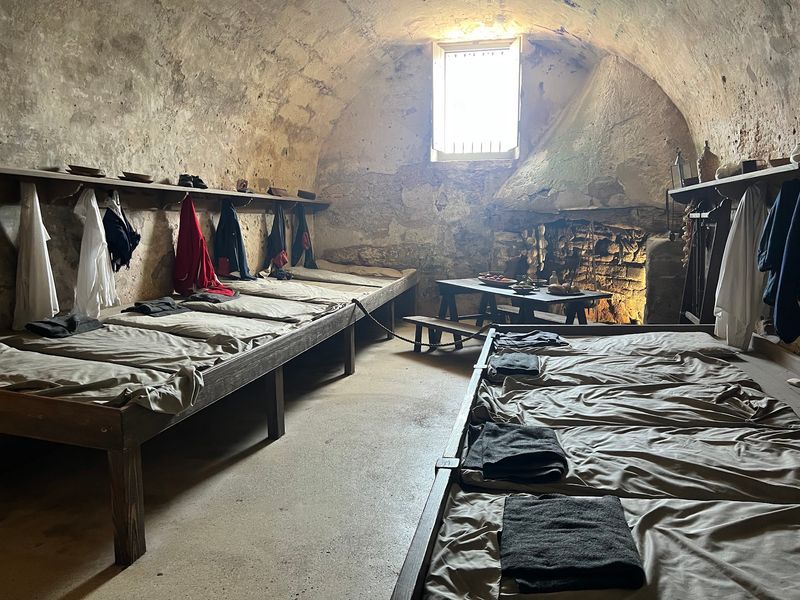
Step inside the walls and you will find room after room filled with displays. Each space holds tidbits of information that reveal how the fort functioned and why it mattered.
The exhibits cover the fort’s historical importance and even show how the federal government works to preserve the site today. Reading through them turns textbook history into something you can see and touch.
Many rooms include documentary-style content, and there is a fascinating film that explains the history behind everything. For students learning about early American and Spanish colonial times, this is a place where lessons come alive.
People often spend well over an hour going room to room, and history buffs frequently stretch that to two. There is simply a lot to absorb.
Some wish for even more detailed stories about daily life in the fort, which speaks to how curious the exhibits leave you. That hunger to learn more is a good sign for any museum.
Living History and Friendly Rangers
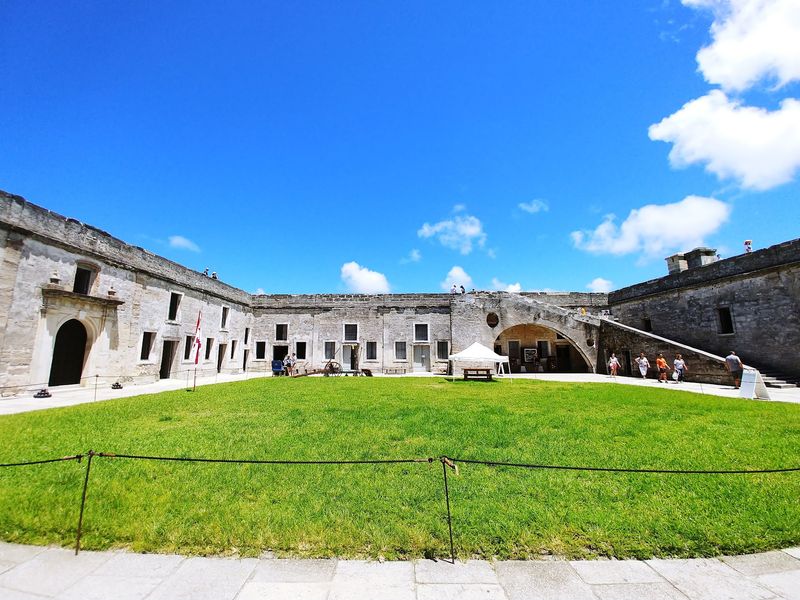
Costumed reenactors and knowledgeable park rangers add a human touch to the old stone. Their demonstrations and stories often become the parts of the day people talk about later.
Rangers here have a reputation for being both friendly and full of amazing facts. Families frequently mention how much their kids learned just by chatting with the staff.
One helpful tip that gets passed around is to tour the fort in a clockwise direction, advice that staff members are happy to share. Little pointers like that make the self-guided experience smoother.
Living history demonstrations, including gun crew reenactments, enrich the whole stop and keep it engaging for all ages. The exhibits inform you, but the people bring it to life.
Warm, welcoming staff turn a good outing into a great one. That personal attention is a big reason the site earns such steady praise.
Fun for Families and the Junior Ranger Crowd
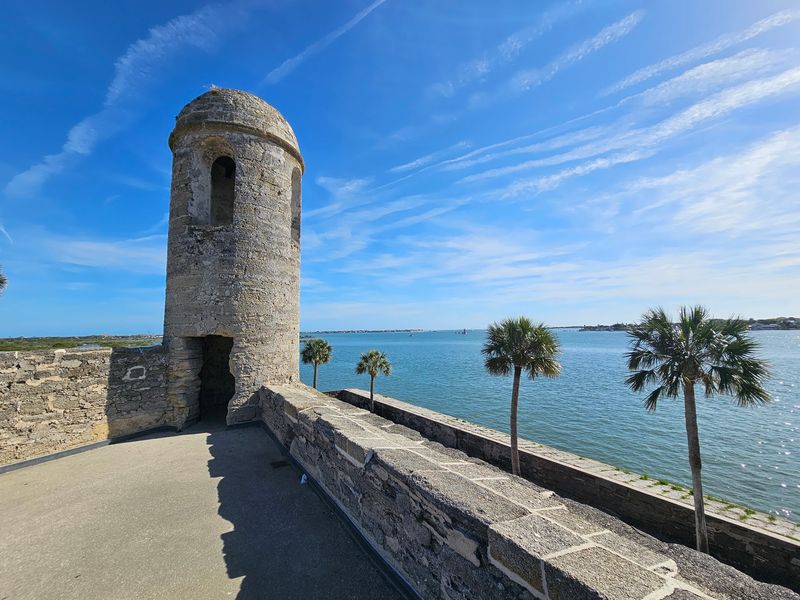
Kids find plenty to love within these walls, and the fort welcomes visitors of all ages. Turrets, cannons, and lookout posts make exploring feel like an adventure rather than a lesson.
The Junior Ranger program stands out as a highlight for younger guests. The activities are fun and manageable even for little ones, including preschoolers.
Parents note that the fort brings school topics to life, which makes it a smart pick for students studying U.S. history. Learning happens almost by accident here.
A quick heads-up for families with strollers: reaching the upper level means hauling gear up the stairs. The reward at the top makes the effort worthwhile.
Between the badges, the cannons, and the views, children stay engaged from start to finish. It is the rare historic site where the whole family leaves happy.
Self-Guided Tours at Your Own Pace
No guided tour is required to enjoy this place, which many people appreciate. You can wander freely from the drawbridge to the gun deck on your own schedule.
The self-guided setup means you decide how long to linger at each display or cannon. Some breeze through in about an hour, while others take their time and stay much longer.
Walking around at your own pace suits history buffs and casual explorers alike. It also works well as a quick stop to stretch your legs during a busy day in the old town.
Every corner seems to hold a story, so slowing down pays off. Those who want a deeper dive often say they would happily return for a second, more thorough visit.
Freedom to roam is part of the charm here. There is no rushing and no rigid schedule, just you and centuries of history.
Hours, Admission, and the Gift Shop
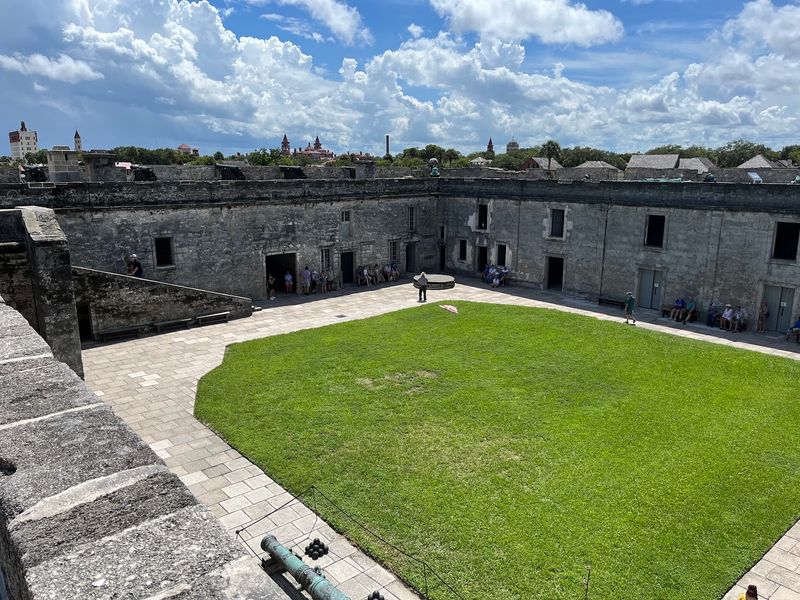
Planning is simple since the fort keeps steady hours. It is open every day of the week from 9 AM to 5 PM, so you can fit it into almost any itinerary.
Admission runs about $15 for anyone over the age of 15, and that fee does not include parking. If you hold the America the Beautiful National Parks Pass, entry is covered, which makes the trip even better value.
The price gets you into the fort and up onto the walls, where the cannons and views await. Most people agree the cost is fair for such a well-preserved landmark.
Inside you will find a gift shop stocked with souvenirs, along with restrooms for convenience. Just note that drinks are not sold on site, so bring your own water.
With reasonable hours and a modest ticket, the fort is an easy yes. A little planning around parking is really the only homework needed.
Parking Tips and Getting There
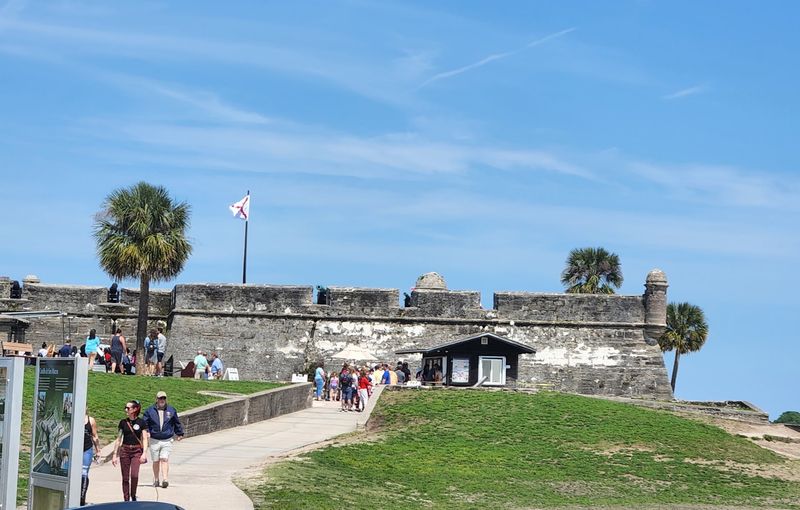
The one true challenge of a visit is parking, so it helps to plan ahead. The lot directly in front of the fort fills quickly, and spots can be tough to snag.
Payment there works by credit card or a QR code on a pole in the lot, with rates that vary by how long you stay. Expect a minimum of around 1.5 hours and costs in the neighborhood of $10 per hour.
A public parking garage sits across the street, and many travelers prefer it. Parking there keeps the car sheltered and puts you near the visitor center and restrooms.
Spots in the front lot do open up if you are patient, so circling for a bit can pay off. Some people even walk over from a nearby hotel and enjoy the stroll.
Once you are parked, everything else is a short walk. Sorting out the car is really the only tricky part of the whole day.
Best Time to Visit and What to Bring
Timing your trip can make a real difference in comfort. Summer inside the fort gets extremely warm, especially up on the exposed top deck where there is little shade.
Packing water, wearing sunscreen, and choosing comfortable shoes are smart moves for a clear, bright day. The upper level heats up fast when the sun is out.
An overcast, breezy day can actually be ideal, turning the rooftop into a pleasant spot to sit and enjoy the view. Weekdays tend to be a bit less crowded, though popular times can still draw a crowd.
Keep in mind that exploring involves hard surfaces and stairs to reach the upper section. Most people manage fine, but it is worth knowing if walking or climbing is a concern.
Come prepared and the visit stays enjoyable in any season. A little foresight keeps the focus on the history instead of the heat.
Why This Seashell Fort Belongs on Your List
Holding a stellar 4.7-star average across more than 38,000 pieces of feedback, this fort clearly leaves a strong impression. People of all ages call it a highlight of any trip to St. Augustine.
The combination of seashell coquina walls, a working drawbridge, rows of cannons, and bay views makes it hard to match. Add friendly rangers and hands-on history, and the appeal only grows.
Many describe it as a must-see, the very heart of the oldest city in the country. It manages to be both educational and genuinely enjoyable at the same time.
Whether you love history, architecture, or simply exploring unusual places, this landmark delivers. Families, students, and curious travelers all find something to remember.
Set aside an hour or two, sort out parking, and let the seashell walls tell their centuries-old story. Odds are you will leave already thinking about coming back.
Enjoyed this story?
Add Fast Food Club as a preferred source to see more of our reporting on Google.