


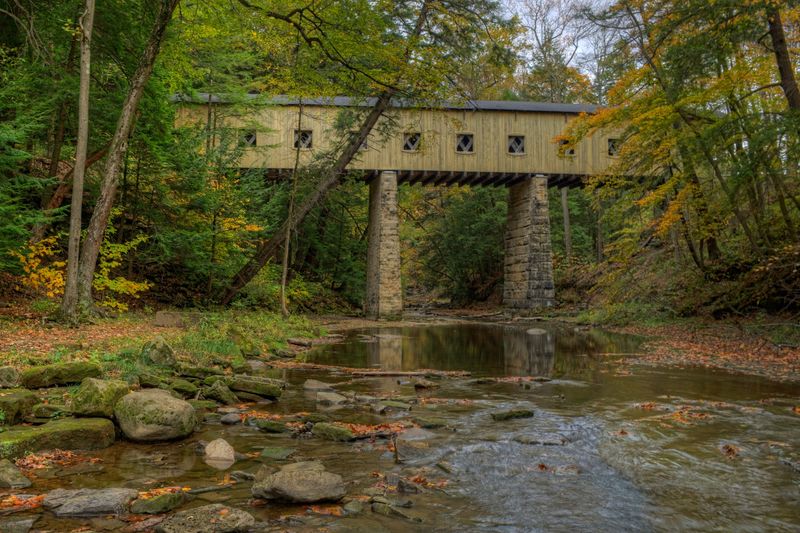
Ohio has more historic covered bridges than almost any other state, and driving out to find them is half the fun. These old wooden spans sit along quiet country roads, crossing creeks and rivers that most people speed past without noticing.
Some date back to the 1800s and still carry cars today, while others are preserved for walking and photos. If you like slow drives, rolling farmland, and a little history along the way, this list is for you.
Here are eight Ohio covered bridges that make the trip out into the countryside feel worth every mile.
1. Bridge of Dreams, Brinkhaven
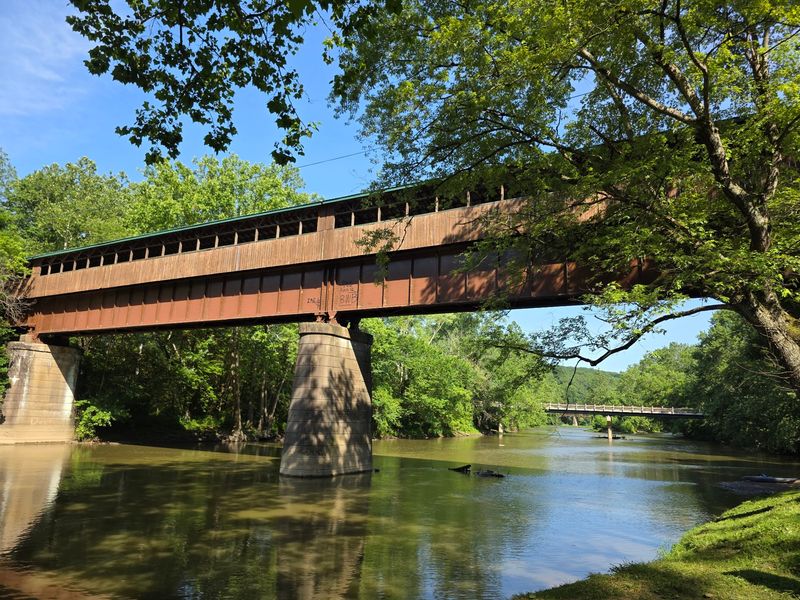
Stretching more than 350 feet across the Mohican River, the Bridge of Dreams is one of the longest covered bridges in Ohio. It sits along the Mohican Valley Trail near Brinkhaven, which means you can walk or bike right across it.
The bridge was rebuilt on an old railroad crossing, so the setting feels open and scenic with the river running below. Its red exterior stands out against the surrounding woods, especially in fall.
Since it is part of a rail trail, this is a great pick if you want to actually spend time at a bridge instead of just driving past. Bring comfortable shoes and a camera.
The trail parking makes it easy to stop, stretch, and take in the view over the water.
2. Smolen-Gulf Bridge, Ashtabula
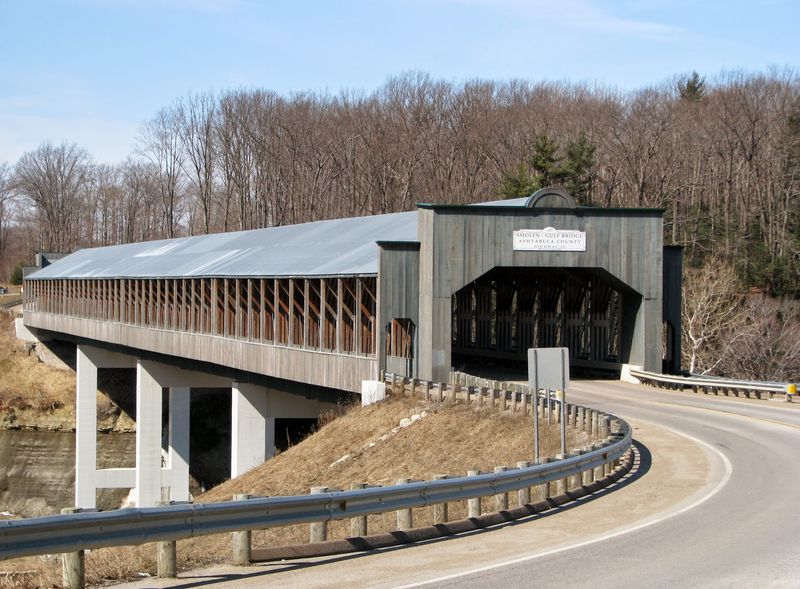
Holding the title of the longest covered bridge in the United States, the Smolen-Gulf Bridge measures over 600 feet. Even better, it was completed in 2008, proving covered bridge building did not end in the 1800s.
The bridge carries traffic high above the Ashtabula River, giving drivers a real sense of height as they cross. The setting through the gorge is especially striking when the leaves change color.
Ashtabula County is often called the covered bridge capital of the region, so this stop makes a natural starting point for a longer bridge-hopping day. There is a small park area nearby if you want to pull over and look up at the towering structure.
For anyone who thinks all covered bridges are tiny and old, this one flips the idea completely.
3. Harpersfield Covered Bridge, Ashtabula County
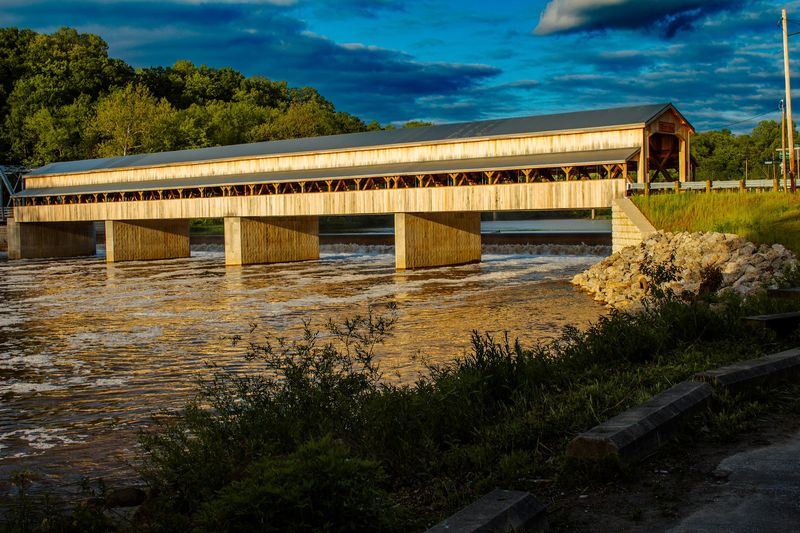
Water is the real star at Harpersfield, where the bridge crosses the Grand River beside a low dam. The result is a wide, scenic view that draws photographers all year.
This span is one of the longest historic covered bridges in the state and includes a separate steel walkway added after flooding years ago. That means you can safely walk alongside the bridge and enjoy the river below.
There is a county park at the site with picnic areas, so it is easy to turn a quick stop into a relaxed afternoon. Families often come here to fish, wade near the shallows, and spread out a lunch.
If you only have time for one bridge in Ashtabula County, the mix of history, water, and picnic space makes this a strong choice.
4. Roseville Road Covered Bridge, Muskingum County
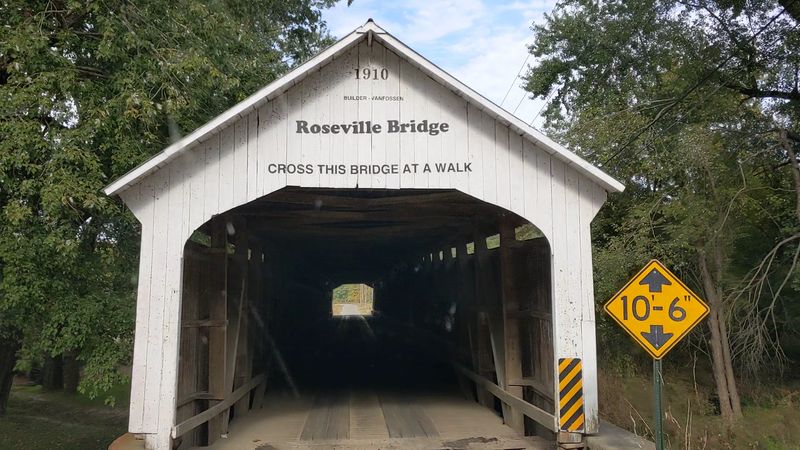
Quieter and more off the beaten path, the covered bridges around Muskingum County reward drivers who enjoy winding rural roads. The area southeast of Columbus is full of farmland and gentle hills that make the drive itself a pleasure.
Ohio’s southeastern counties hold many of the state’s older bridges, and exploring here feels like stepping back in time. The pace is slow, and the scenery is classic country Ohio.
Because these bridges sit on lesser-traveled roads, you often get them all to yourself. That makes for peaceful photos without crowds.
Pack a paper map or download directions ahead of time, since cell signal can drop out in the rural stretches. Half the adventure is the search, and the reward is finding a weathered wooden bridge waiting quietly around a bend.
5. Everett Road Covered Bridge, Cuyahoga Valley National Park
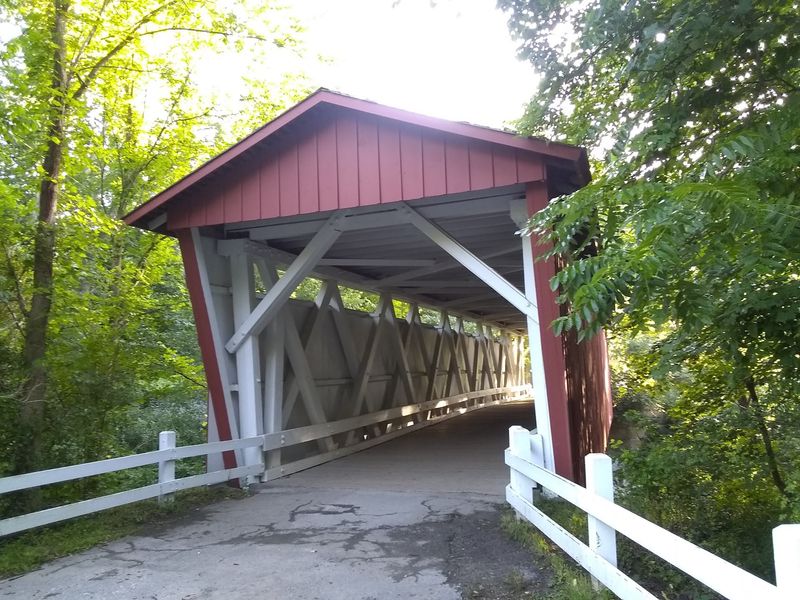
Set inside Cuyahoga Valley National Park, the Everett Road Covered Bridge is the only remaining covered bridge in the park. That alone makes it a special stop for anyone exploring northeast Ohio.
The bridge crosses Furnace Run and connects to nearby hiking trails, so you can combine your visit with a walk in the woods. It sits within an easy drive of Cleveland and Akron.
Because the national park is free to enter, this is a budget-friendly outing that pairs a piece of history with real outdoor time. Trails, picnic spots, and other park attractions are all close by.
The white siding with red trim gives it a clean, storybook look. For families who want a short walk and a photo stop, this one fits neatly into a larger day in the park.
6. Eldean Covered Bridge, Miami County
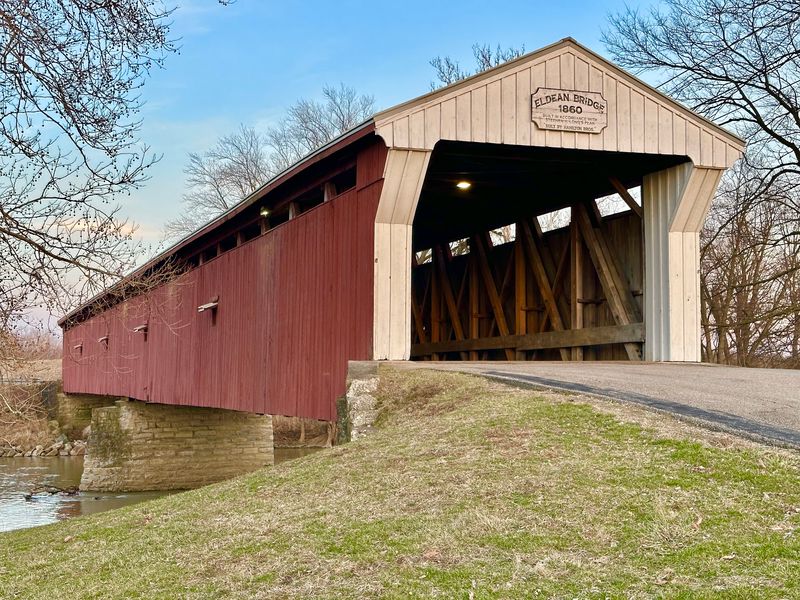
Dating to the 1860s, the Eldean Covered Bridge near Troy is one of the oldest and longest of its kind still standing in Ohio. It crosses the Great Miami River and is recognized as a National Historic Landmark.
The bridge uses a long truss design that engineers still admire today. Its age and length make it a favorite for history buffs and photographers alike.
A small park sits nearby with river access, so it is easy to pull over and take in the full view of the span. The western Ohio location makes it a good stop when traveling between Dayton and points north.
For anyone curious about how these bridges were built to last, this one offers a genuine 1800s example that is still holding strong.
7. Netcher Road Covered Bridge, Ashtabula County
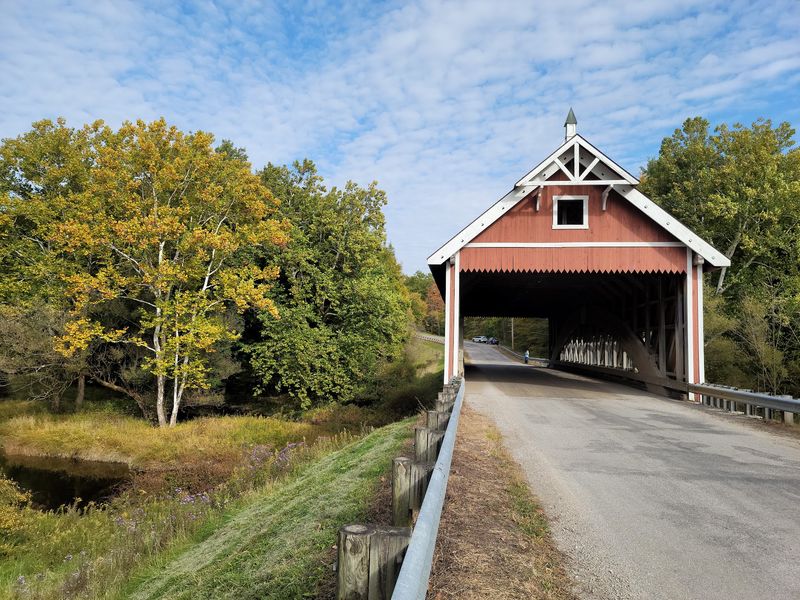
Fancier than most, the Netcher Road Covered Bridge shows off a neo-Victorian design with decorative touches you do not usually see on rural spans. Its pointed portals and detailed trim make it a standout.
Built in the early 2000s, it proves that new bridges can still carry old charm. The design was chosen to reflect the historic character of Ashtabula County.
The white exterior and clean lines photograph beautifully in every season. It is another good stop on a county bridge tour.
Because it is newer, the structure is in excellent shape, which is nice if you want a bridge that looks postcard-ready. Pair it with the nearby historic spans for a fun compare-and-contrast drive through the countryside.
8. Germantown Covered Bridge, Montgomery County
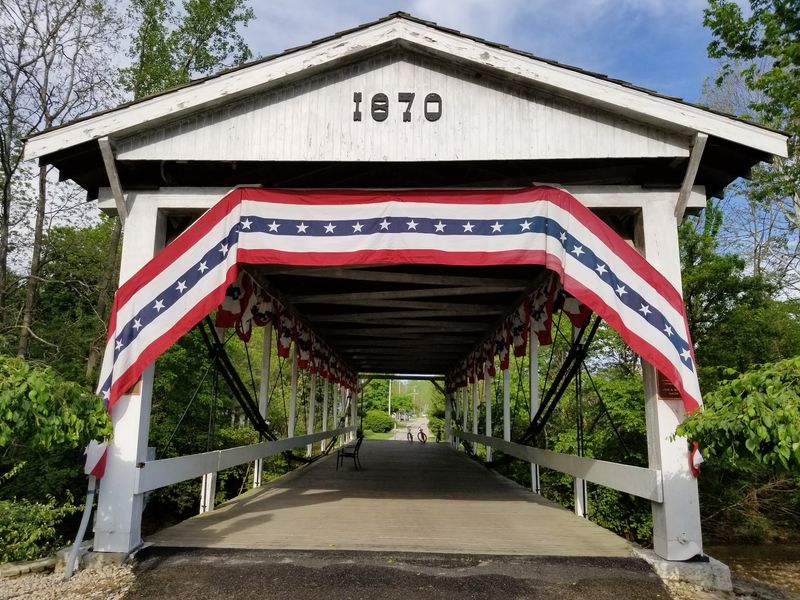
Unusual in shape, the Germantown Covered Bridge uses a rare inverted bowstring truss design that sets it apart from nearly every other bridge on this list. The curved framework makes it instantly recognizable.
Built in the mid-1800s, it once carried traffic over Little Twin Creek and is now preserved as a historic site. It sits in a park-like setting that is easy to visit.
Its odd engineering has made it a point of interest for people who study bridge construction. Even casual visitors notice right away that this one looks different.
The southwest Ohio location near Dayton makes it a convenient stop for a short history outing. If you want a bridge with a story that is truly one of a kind in the state, Germantown is the one to end your drive on.
Enjoyed this story?
Add Fast Food Club as a preferred source to see more of our reporting on Google.