


Portland has a habit of lining up on sidewalks before most offices open, and the prize is usually a croissant. Laminated pastry, made from thin sheets of dough folded around butter again and again, has turned into a small civic hobby here.
One busy bakery counter in Northwest Portland explains that habit better than any guidebook could. By the end of this story, you will know what to order, when to show up, and why the line keeps coming back every morning.
A Busy Counter in Northwest Portland
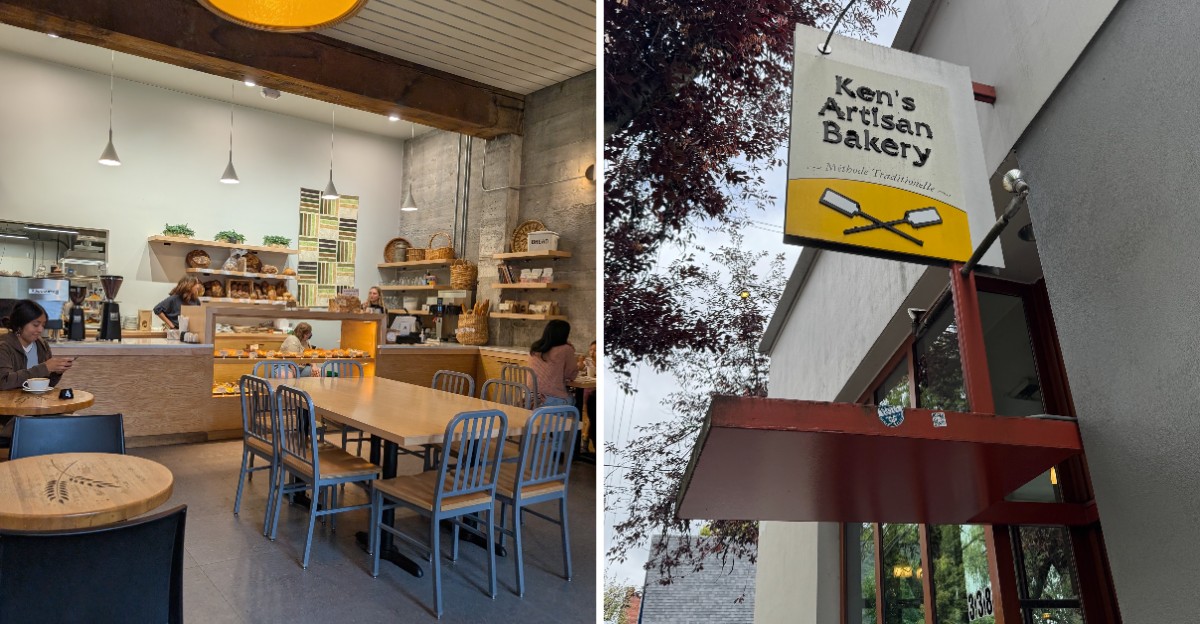
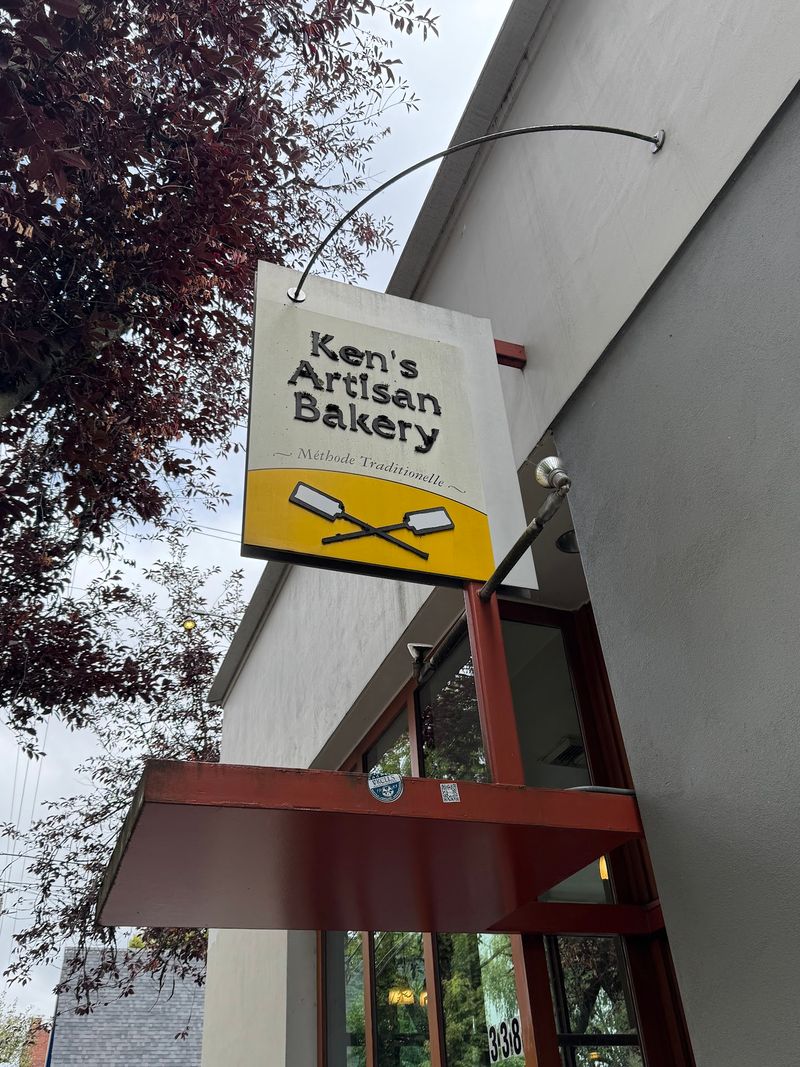
Every obsession needs a headquarters, and for a large share of Portland’s croissant fans, that headquarters is Ken’s Artisan Bakery.
The shop sits at 338 NW 21st Ave, Portland, OR 97209, in the United States. It occupies a stretch of Northwest Portland that fills up early with people who clearly planned their morning around a pastry case.
At heart, it is a bakery with a counter-serve setup. You line up, you point, you order, and the staff keeps things moving at a steady clip.
The official description calls it a local fixture that supplies fresh baked goods and French bistro fare. That short line covers a lot of ground, because the counter handles both the morning pastry rush and a midday lunch crowd.
Laminated pastry is the headline act, though. Croissants come up more than any other item when people talk about the place, and several flavors have developed small fan clubs of their own.
The location also works well for anyone mixing a bakery stop into a bigger day. Washington Park is close enough that some people walk straight over from the park with their pastry plans already set.
So before the layers and the lines, it helps to know the basic shape of things. There is one counter, one busy room, and a case that rarely stays full for long.
Big Windows and an Old-Fashioned Room
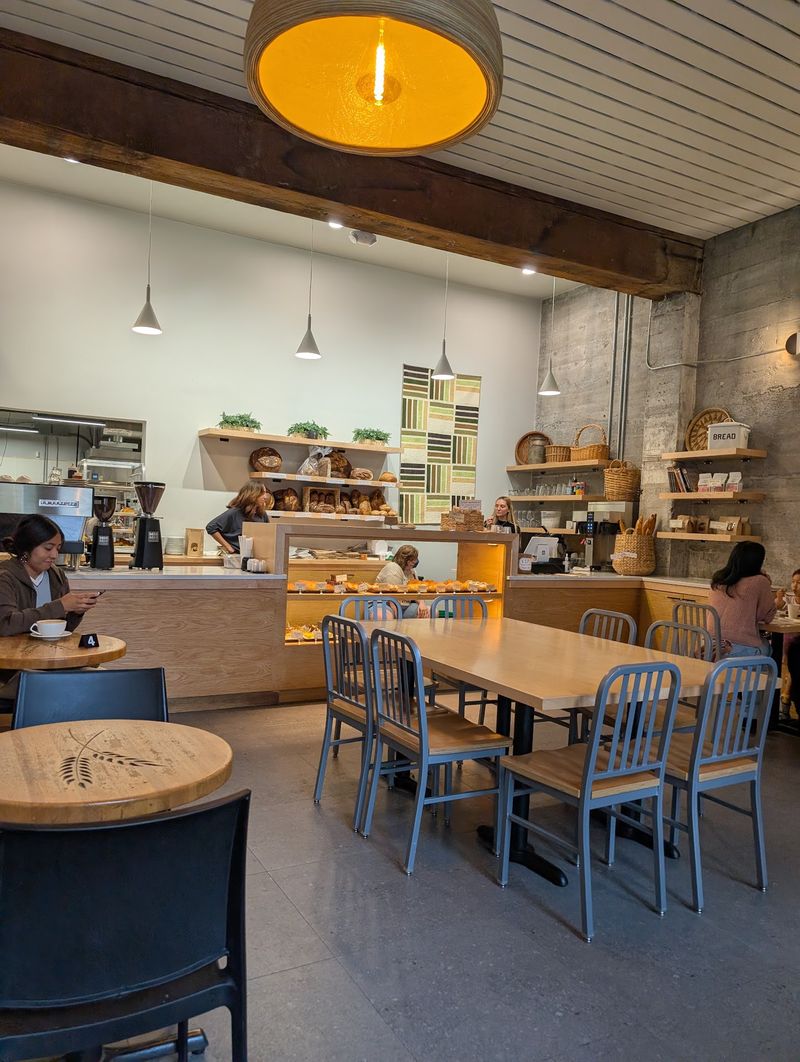
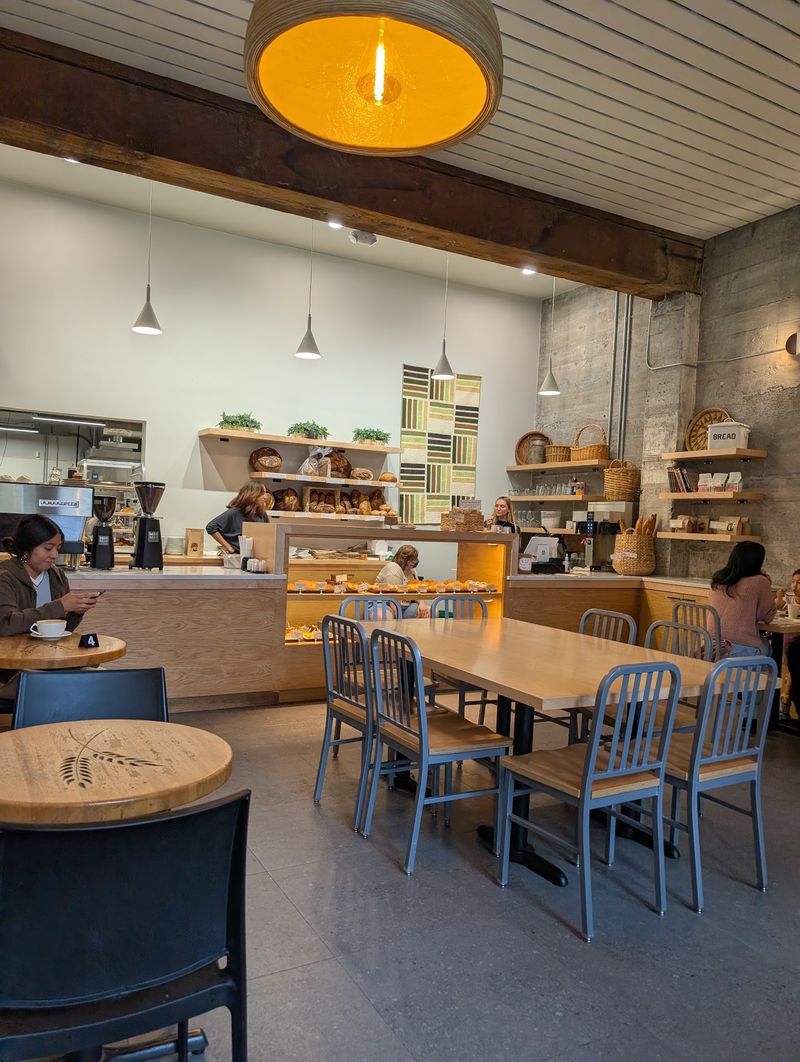
Good bakeries rarely waste space on decoration, and this one spends its square footage wisely.
The interior leans old-fashioned, with a big front window that faces the street. Nothing about the room feels staged or overly styled.
Seating comes in two main forms. There is a long communal table that holds about eight people, plus a set of small round tables sized for two.
That arrangement shapes the whole experience. Strangers end up elbow to elbow at the long table, which can mean sharing space with a student taking notes, a family splitting a box of pastries, or friends catching up over coffee.
Seating is limited, and people say so plainly. On busy mornings the room can feel cramped, and snagging a table often comes down to timing and a bit of luck.
Some call the quarters close in a good way, and that is a fair read. The room has a lived-in quality that suits a neighborhood bakery.
A handy tip for crowded days: there is a bookstore next door, and some people carry their coffee over there once the bakery tables are taken.
Takeout is always an option, too. Plenty of croissants leave in paper bags, headed for a park bench or a kitchen table.
The Folded-Butter Craft Behind the Case
Here is a small kitchen fact that explains a big city habit: a croissant is mostly a lesson in patience.
Laminated dough is made by wrapping a slab of butter in dough, then rolling and folding it over and over. Each fold multiplies the layers, and the finished pastry depends on those layers staying separate in the oven.
The process takes time, careful temperature control, and a steady hand. That is part of why a truly good croissant is not something most people bake at home on a Tuesday.
Portland tends to reward careful craft, and bakeries that commit to this slow method often earn loyal followings. Ken’s counter is a clear case study.
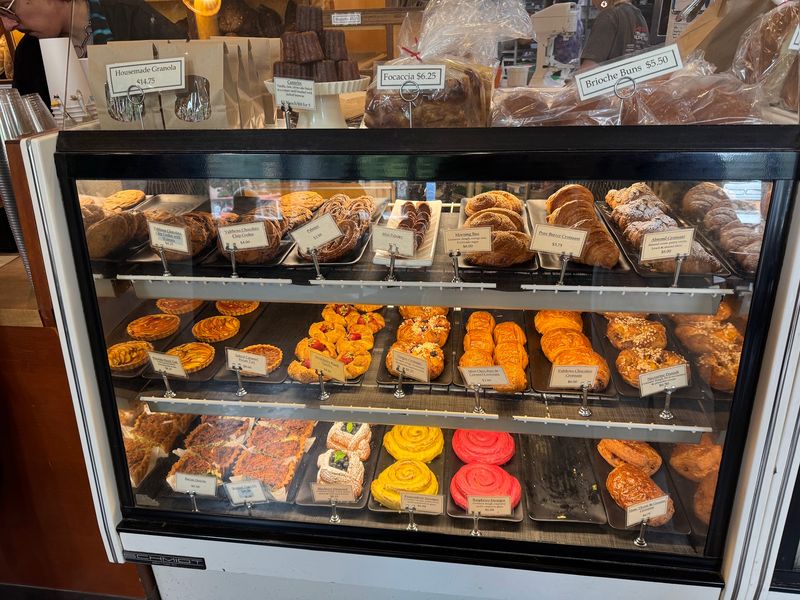
The pastry case shows just how far the technique can stretch. The same basic idea turns up as classic croissants, filled croissants, savory versions with cheese, spiral morning buns, palmiers, and escargot-style coils.
Consistency is what people keep pointing to. The bread and the pastries earn praise for careful craftsmanship and for nothing feeling overdone, which is exactly the goal with laminated baking.
More than a few out-of-town guests say their trip here reminded them of bakeries in Paris. For a counter on NW 21st Avenue, that is quite the compliment.
The Oregon Croissant and Its Classic Cousins
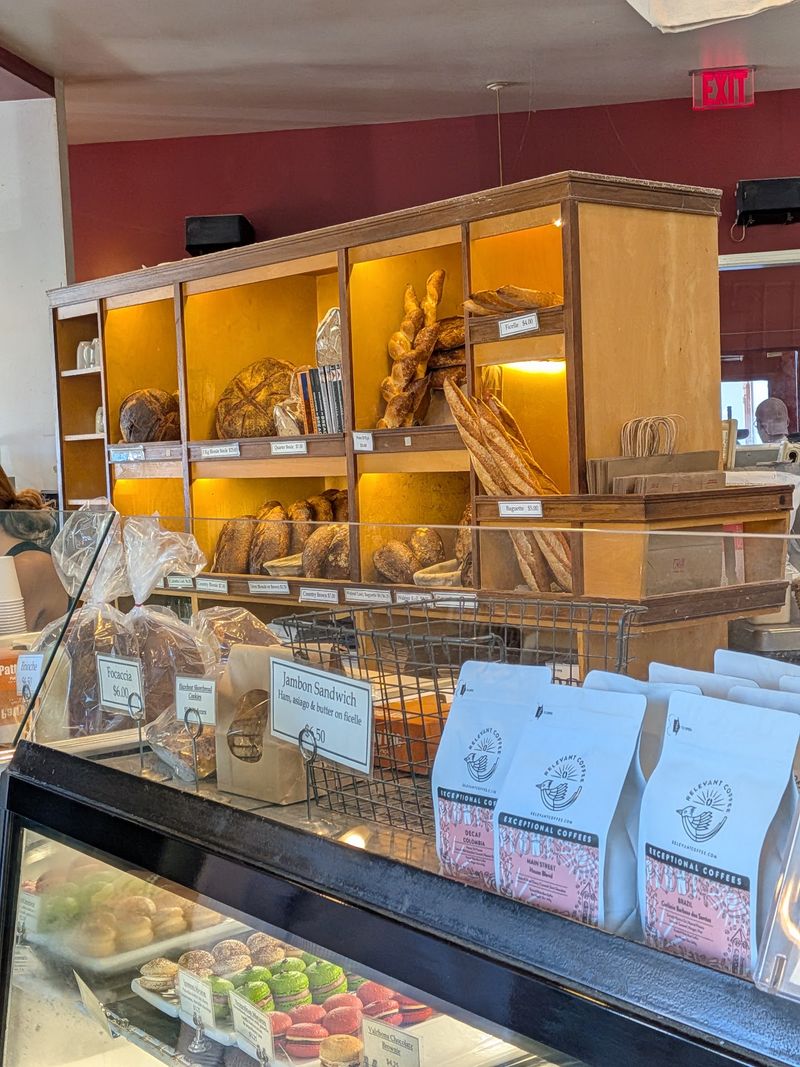
Ask a regular which croissant to order first, and the answer often has a state name in it.
The Oregon croissant is one of the most talked-about items on the counter. It carries a berry filling, and fans rank it as a standout, with some ordering it on every single trip to town.
Plenty of people pair it with something savory, which tells you a lot about how the case works. Few people stop at one pastry here.
The classics hold their own, too. The plain butter croissant, the chocolate croissant, and the almond croissant all show up frequently in orders, often bought together as a trio.
That trio travels well. Some folks take all three home and turn them into breakfast later, adding a little filling of their own at the kitchen counter.
The almond croissant also lands on lunch trays as a sweet finish to a midday order.
Now for the practical math. Specialty croissants such as the Oregon and the goat cheese versions run roughly 6 to 7 dollars each, and most people consider the prices reasonable for the work involved.
Budget accordingly, because the display case has a way of turning one croissant into four.
Goat Cheese, Leeks, and the Savory Side
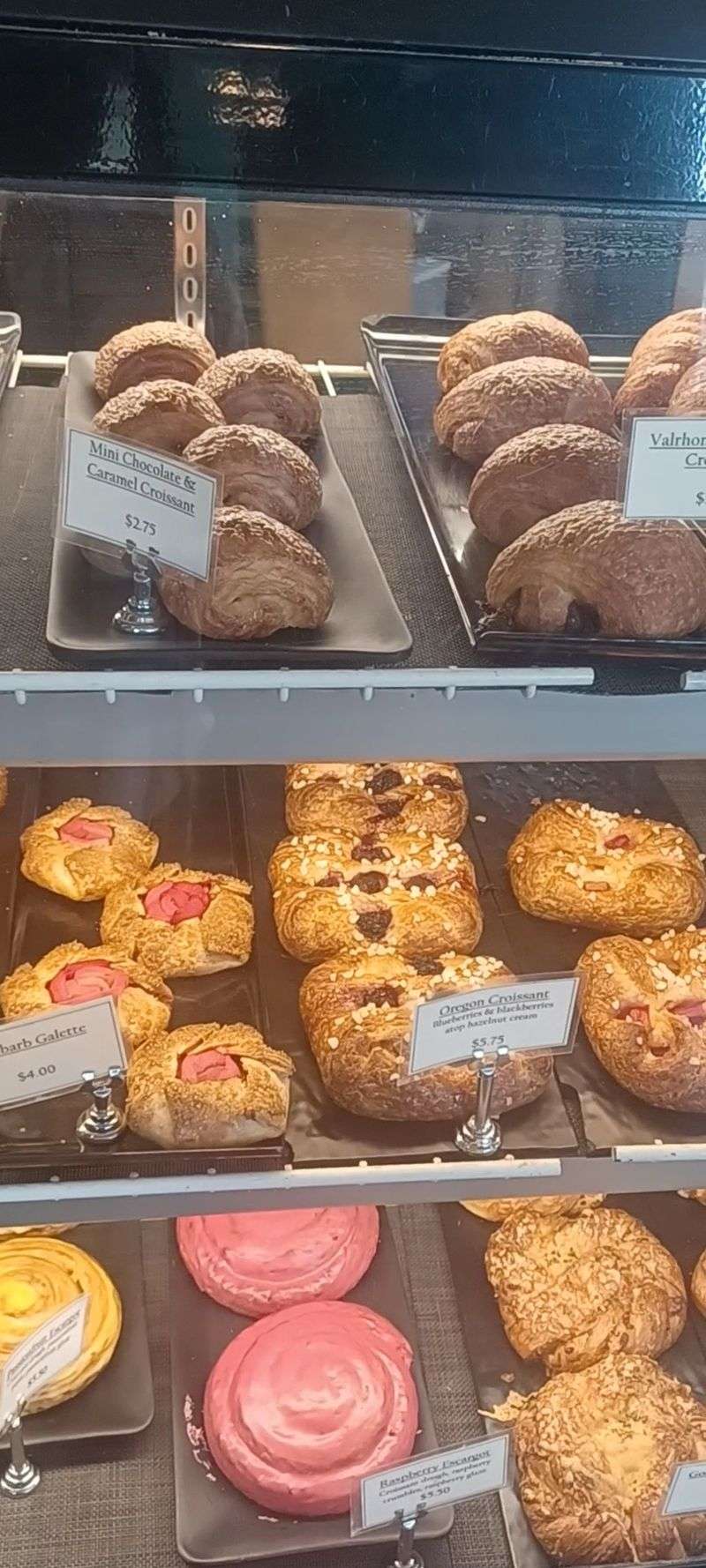
Not every laminated pastry needs sugar to win a following.
The goat cheese croissant is one of the most mentioned items at Ken’s, with dozens of people bringing it up by name. It pairs goat cheese with leeks inside the layered dough, turning a breakfast pastry into something close to a light meal.
A related favorite adds ham and thyme to goat cheese and Gruyere. Families who order across the menu to get a feel for the place sometimes single this one out as the best item of their whole stop.
Others simply call it the ham croissant and speak about it with the kind of devotion usually saved for a favorite hometown spot.
Savory croissants make a lot of sense at a counter that also serves French bistro fare. They bridge the gap between the early pastry crowd and people arriving closer to lunch.
A common strategy is to split the order. One person grabs the Oregon croissant, the other grabs the goat cheese and leek, and both halves get traded across the table.
It is a small ritual, but it captures the local approach well. Portland pastry fans rarely choose between sweet and savory when they can simply have both.
Spirals, Coils, and Palmiers Beyond the Croissant
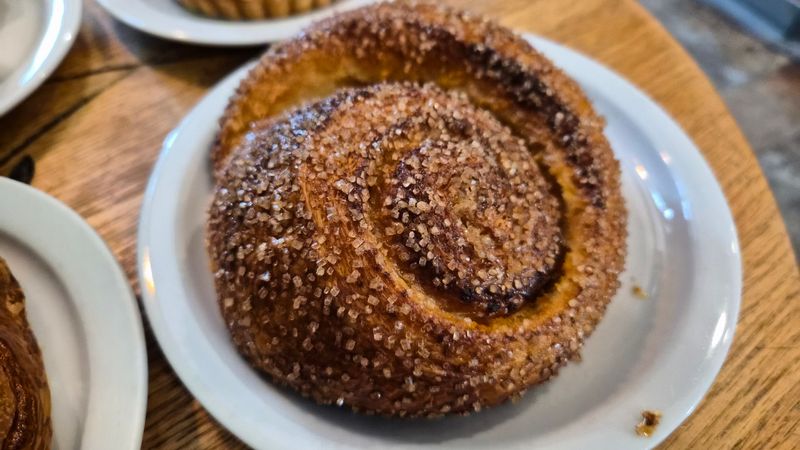
Croissants get the headlines, but some of the most interesting work in the case comes in other shapes.
The morning bun is a spiral of laminated dough finished with orange zest. Many people adore it, while opinions split on how much zest ends up near the center.
Escargot pastries, named for their snail-shell coil, are another highlight. The raspberry escargot in particular has fans who rank it right alongside the Oregon croissant.
Then there is the palmier, a folded, heart-shaped pastry made from laminated dough and sugar. It tends to sell out, and snagging the last one in the case counts as a small victory.
Danishes round out the lineup. The apricot Danish draws more mixed opinions than the croissants, which says a lot about how high the bar sits here.
For a first trip, pick one croissant and one of these side characters. That way you get the flagship plus a sense of the full range.
The variety also explains why so many people return. There is almost always another shape on the shelf waiting for next time.
Lines, Crowds, and Who Feels at Home Here
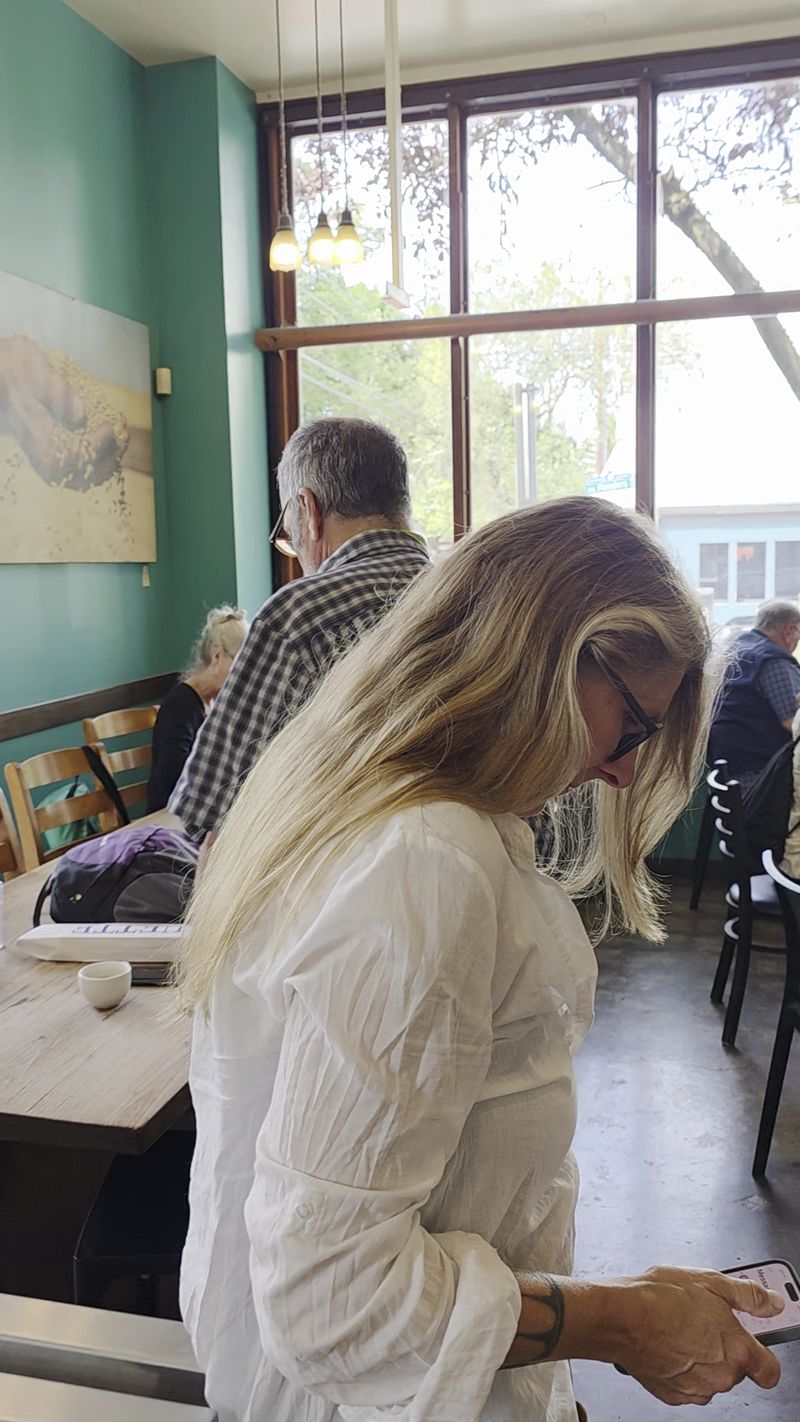
Nobody accidentally ends up in a line that reaches the front door, and at Ken’s, that line is part of the story.
Friday mornings can bring a queue that starts outside the shop. Around 9:30 on a busy day, a line is common.
The good news is that it moves. Waits of roughly ten minutes are typical, thanks to a staff that works with real efficiency.
Service style gets described in different ways. Many find the team kind and helpful, while others call the exchange quick and businesslike rather than chatty.
Expect a big-city bakery rhythm instead of a small-town gab session. The focus stays on getting quality pastries into your hands fast.
Coffee plays a strong supporting role. The mocha uses house-made chocolate and comes in an 8-ounce size, and lattes can be ordered with oat milk and house-made vanilla.
Vegan diners should plan ahead. The pastry case is built on butter, but there is a selection of breads for those skipping dairy and eggs.
The room suits solo readers, families, and friends who do not mind a crowd. Anyone hoping for a quiet, roomy cafe may prefer the takeout route.
Timing, Hours, and a Soft Verdict
Early birds get the full shelf, and that is not just a saying at this counter.
The bakery is open every day of the week from 8 AM to 4 PM. An arrival near opening gives you the best shot at the complete lineup, and one Monday morning trip rewarded a pair of regulars with their first look at the full collection.
Later arrivals can still do well, but popular items such as palmiers can run out. Holiday stops may find the case much thinner, sometimes down to bread alone.
Breakfast works a little differently than some expect. There is no dedicated breakfast menu, so mornings belong to pastries, and lunch orders were already available by about 9:50 on one Friday.
Budget about 6 to 7 dollars for a specialty croissant, plus coffee. Seating is limited, so a to-go bag makes a smart backup plan.
So does the counter live up to the hype? People who treat a well-made croissant as a small daily reward will likely leave happy.
Ken’s is less about fuss and more about focus. The layers are the point, and the line on NW 21st Avenue suggests Portland agrees.
Enjoyed this story?
Add Fast Food Club as a preferred source to see more of our reporting on Google.