


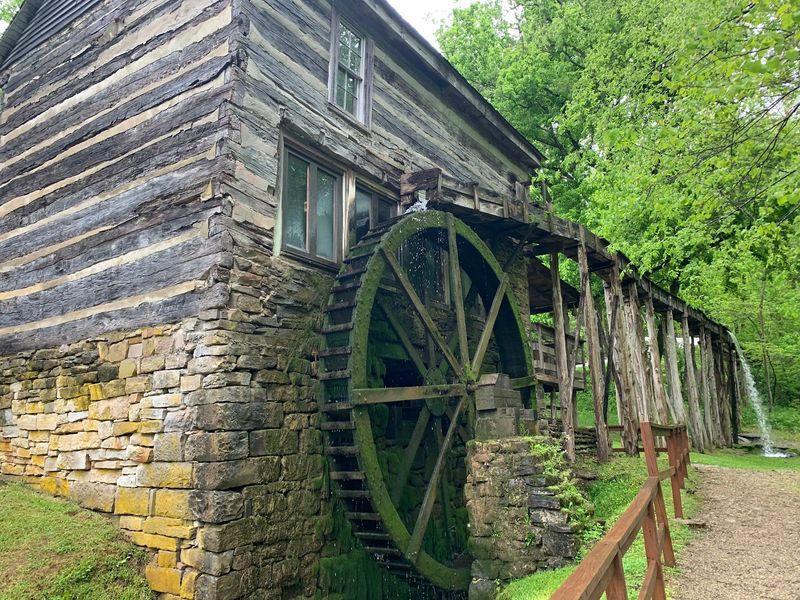
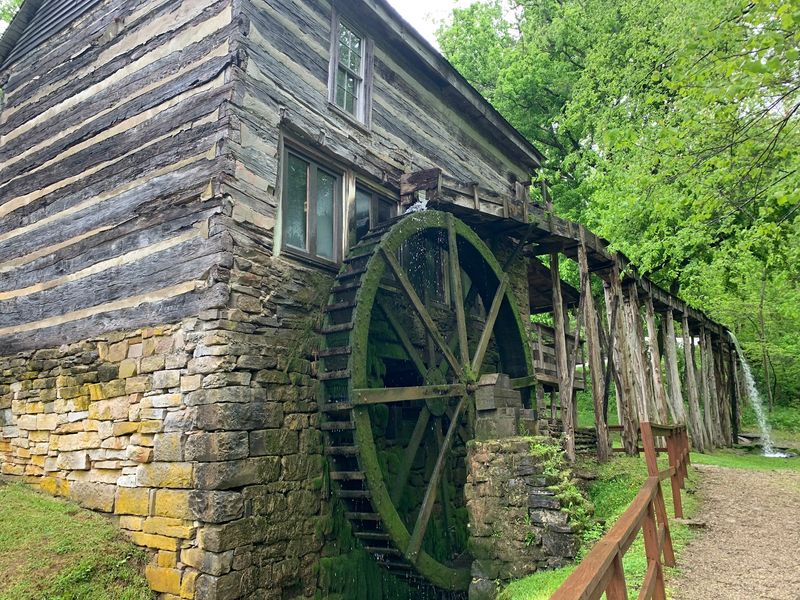
Somewhere under the hills of southern Indiana, a stream races through solid rock, and a walking path crosses right over the top of an underground waterfall. Up on the surface, a water-powered grist mill still turns, goats wait for snacks, and a gift shop sells geode nightlights to anyone who wants to take a little cave glow home.
It sounds like three separate day trips packed into one, but it all sits on a single property near the small town of Mauckport. Keep reading for the pioneer history, the cave formations, the famous spiral staircases, and the practical tips that make one hour underground and a full afternoon on top go smoothly.
An Unassuming Driveway with a Big Payoff
Nobody would guess the scale of this place from the parking lot. A steep gravel drive leads up to a plain lot, and first impressions stay modest until the tour begins.
Squire Boone Caverns sits at 100 Squire Boone Rd SW, Mauckport, IN 47142, in the southern part of Indiana, United States.
The attraction combines two experiences in one stop. Below ground, a guided tour winds through a cave system packed with formations, rushing water, and history.
Above ground, an old pioneer village setting holds a working grist mill, a rock shop, a candle shop, a gift shop, and a small petting area with pigs and goats.
The whole operation is built as a family venue, so the pace stays friendly for young kids and older guests alike. School field trips, church groups, family reunions, and bus tours all turn up here.
A zipline adds a bit of extra thrill for anyone who wants to see the property from above instead of below.
The cave tour itself runs about an hour, but many people end up spending most of the day. Between the mill, the shops, and the animals, there is plenty to fill the time before and after the walk underground.
The first real clue that this detour is worth it comes when the tour group heads toward the cave entrance.
The Pioneer Behind the Name
Every cave has rocks, but not every cave has a family saga attached. The story of Squire Boone and his life runs through the entire tour here, and it is a big reason people leave talking about history as much as geology.
Guides weave his life story into the walk, stopping at formations and passages to explain how the Boone family connects to this land.
The storytelling is not a dry list of dates. Guides are known for bringing a genuine passion for the history to each group, which turns the tour into something closer to a guided adventure through the past.
People regularly walk out saying they learned a ton while staying entertained the whole time.
Squire Boone left a practical mark on the property too. The water-powered grist mill on the grounds is the one he built, and it still works today.
That link between the underground world and the pioneer village above gives the visit a clear thread from start to finish.
The staff clearly feel connected to that legacy as well. Many of them describe a deep, hard-to-name attachment to the place, and some guests say the same after a single tour.
With the backstory in hand, the next step is the path itself, and it has a few twists.
Spiral Stairs and Steel Walkways
Leg day, meet cave day. The trail through the caverns includes a lot of stairs, and a couple of them spiral tightly enough to earn their own reputation.
Those spiral staircases are narrow and a bit steep, but they are not overly difficult for most people. Comfortable shoes and a quick stretch beforehand are smart moves.
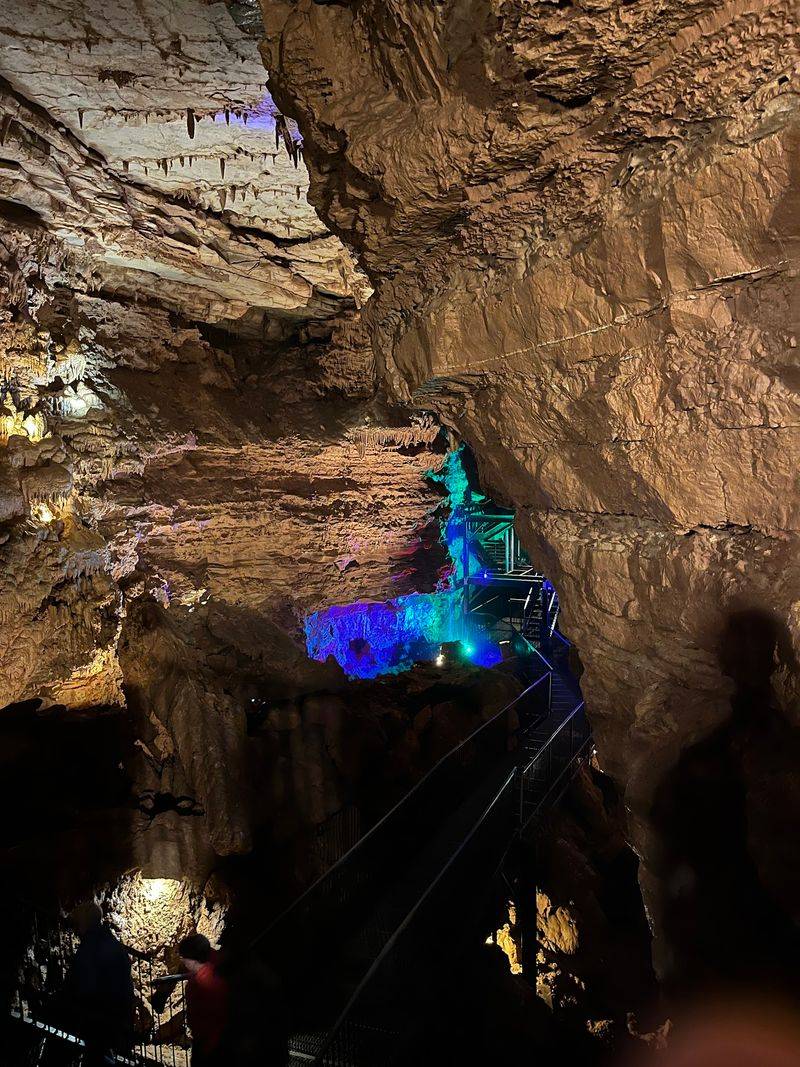
The rest of the route mixes natural stone, concrete paths, and elevated steel mesh walkways. Handrails appear wherever the footing gets tricky.
That thoughtful design keeps groups moving safely even when the water below is running high. Parents with children as young as five report feeling secure the whole way through.
There is one important limit to know before booking. The cave is not handicap accessible, so anyone who uses a wheelchair or struggles with stairs should plan accordingly.
Beyond that, the tour works well for a wide range of ages. Kids, grandparents, and everyone in between tend to handle it without trouble.
Signage around the property is clear, and the grounds stay clean and organized for what is a rugged natural area.
Once the stairs are behind you, the real star of the underground show makes itself known, and it moves fast.
A River Runs Through It
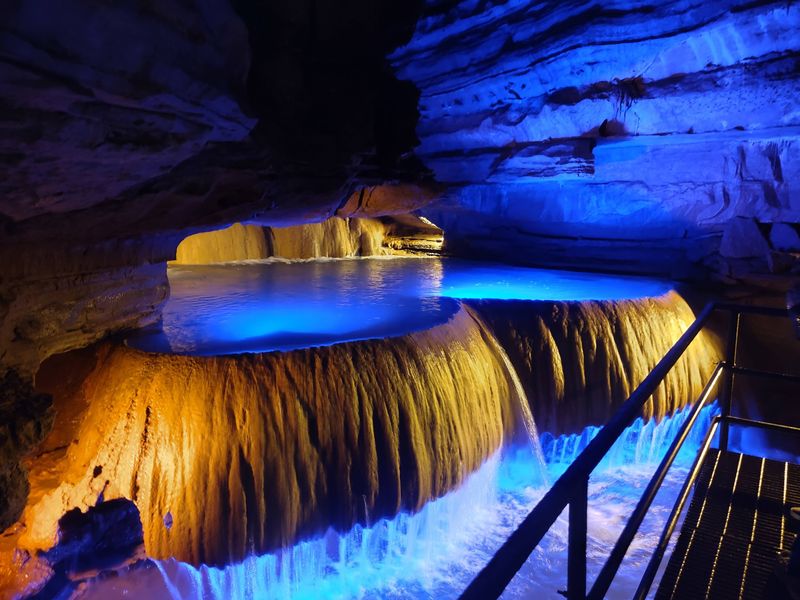
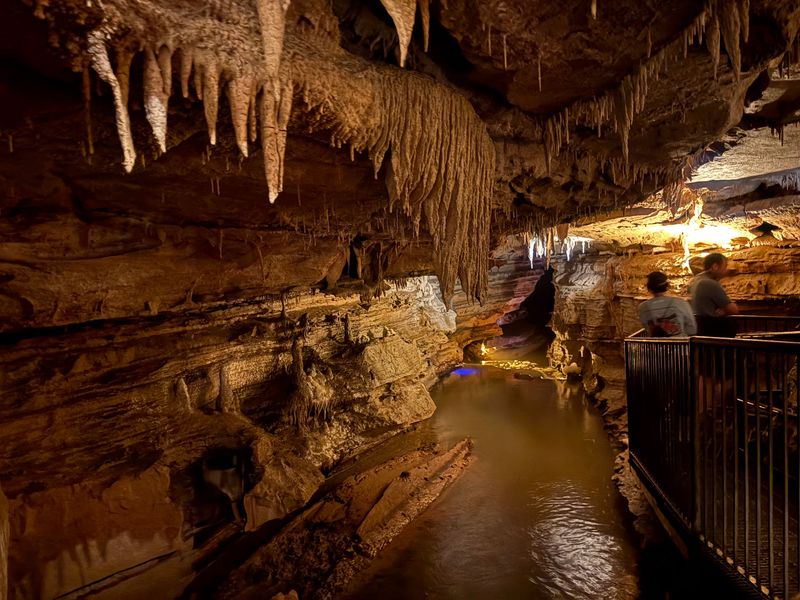
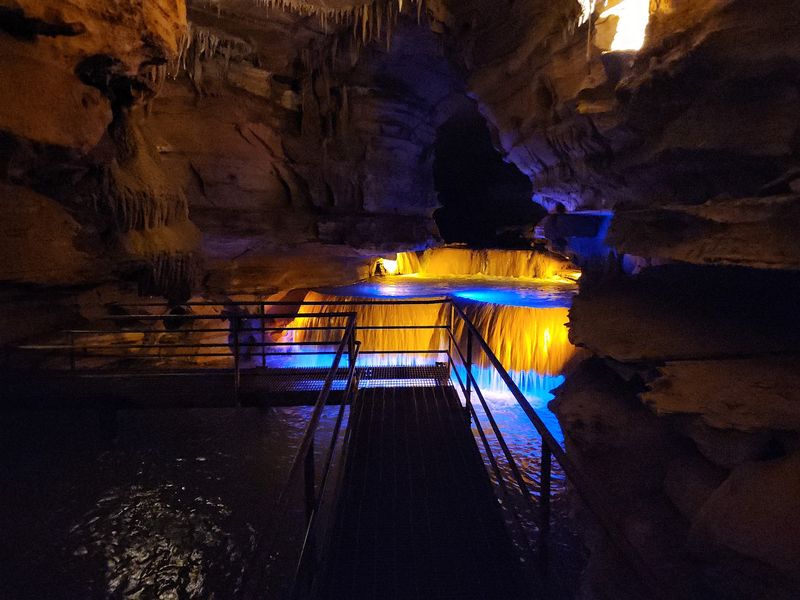
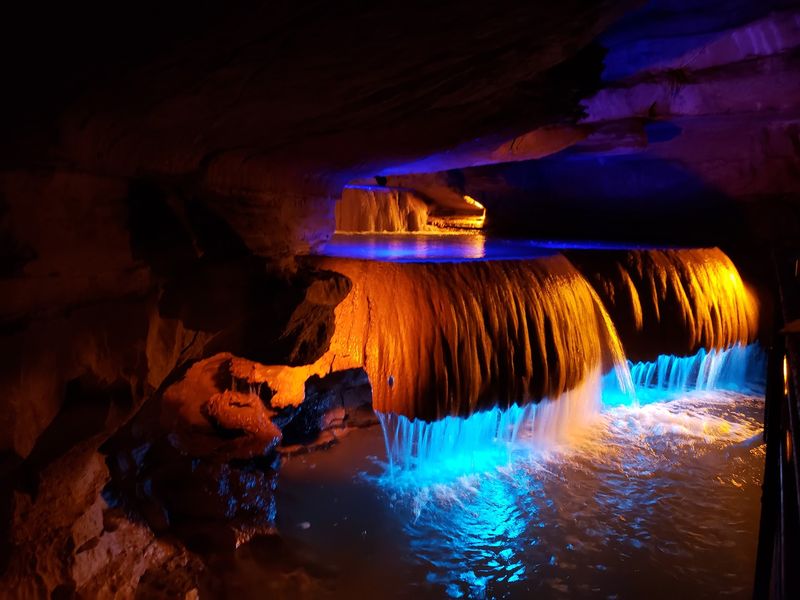
Water is the headliner in this cave, and it does not share the stage quietly. A stream flows right through the caverns, and the path walks directly over the top of a waterfall.
Multiple waterfalls appear along the route, which sets this tour apart from drier caves in the region.
One of the standout features is a very large rimstone dam. These formations build up where mineral-rich water pools and spills over, and this one ranks among the most memorable sights on the walk.
After heavy rain, the stream picks up serious speed. Some groups have toured when the underground rivers were overfull from flooding, and they called it a rare chance to see the cave at full strength.
Guides keep everyone safe during those high-water days. The elevated walkways and handrails make a big difference when the current is strong.
Calmer pools exist too. Some stretches hold still, crystal clear water that lets you see straight to the bottom.
The water shapes almost everything else in the cave, including the formations that hang overhead and rise from the floor.
Those formations deserve a closer look, and the lighting makes that easy.
Stalactites, Flowstone and Translucent Surprises
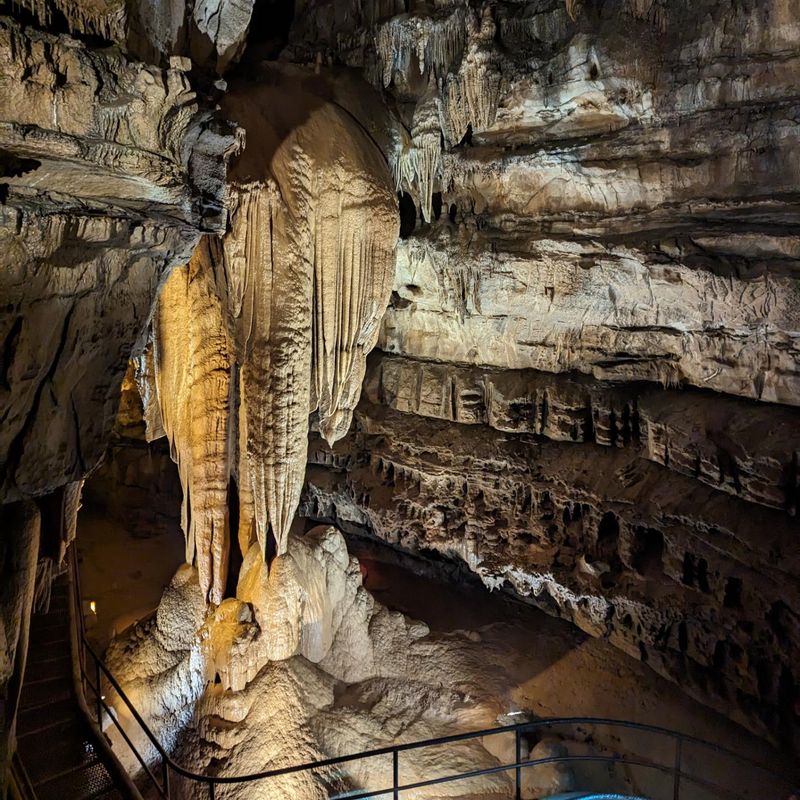
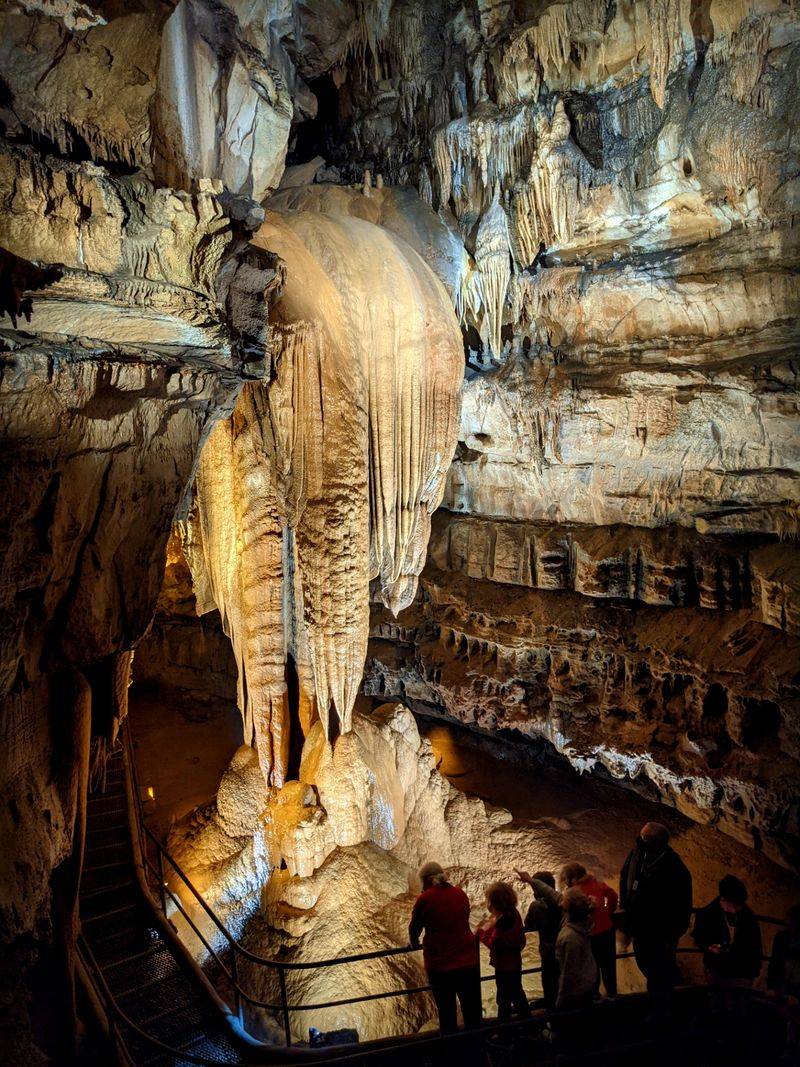
Count the stalactites if you like, but you will lose track quickly. The tour is packed with stalactites and stalagmites of every size and shape.
Some formations are translucent, which surprises even experienced cave fans. Several people have said it was the first time they had seen formations like that in any cave.
Many consider this the most beautiful cave system in Indiana because of its wide variety of formations. Flowstone, dams, and hanging features show up one after another.
The lighting design earns plenty of credit. It highlights the natural shapes without taking over the scene, so the cave still looks like a cave and not a stage set.
Guides point out formations along the way and explain how they formed. Geological facts mix with local lore, so the science never feels like homework.
Even cave guides from other attractions have toured here and tested the staff with tough science questions. The guide handled them well, which says a lot about the depth of knowledge on these tours.
Bring a phone with some free storage space, because the photo opportunities keep coming.
Keep an eye low to the ground, though, because not everything down here is made of stone.
Small Residents of the Deep
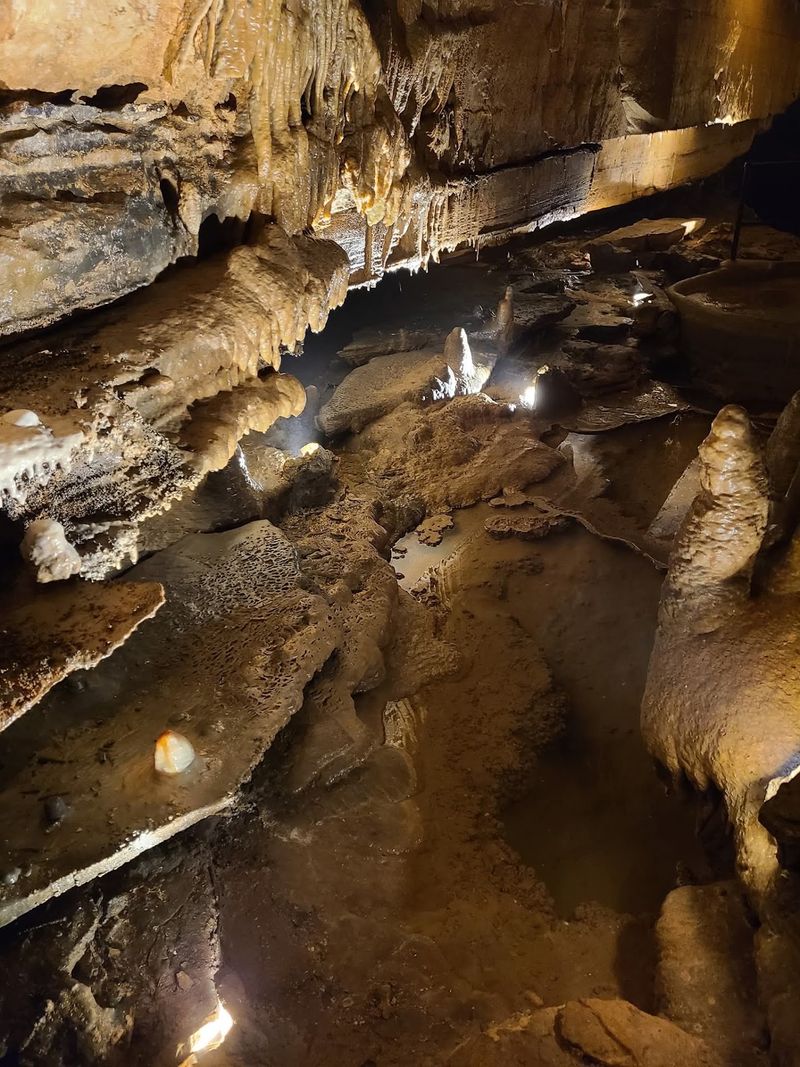
Some of the best surprises in the caverns are only a few inches long. Small creatures call this cave home, and sharp-eyed groups sometimes spot them.
A small salamander has been seen just after the cave entrance. Crayfish have been spotted in the crystal clear water of a still pool.
These sightings are not guaranteed, of course. Wildlife keeps its own schedule, and the animals are not part of any show.
Still, the chance of seeing a living creature adds a fun layer of discovery for kids. Children who might lose interest in rock formations often light up at the thought of finding a salamander.
Guides can share information about the animals that live in caves like this one. That makes the underground feel less like a museum and more like a working ecosystem.
Keep hands on the rails and off the walls and formations. Cave environments are delicate, and the creatures that live there depend on them staying that way.
A little patience at the pools can pay off. Slow down, look closely, and the water may reveal a resident or two.
Then comes the moment that many people remember long after the tour, when the lights go out.
The Total Darkness Moment
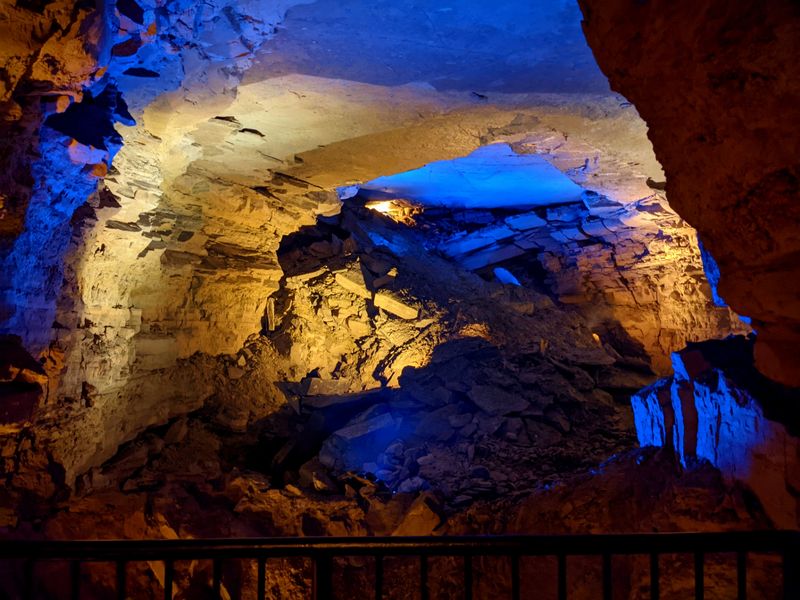
At one point during the tour, the guide switches off every light. The result is total darkness, deeper than anything most people experience above ground.
Kids especially love this part. Church youth groups and school classes often name it as a highlight of the entire trip.
It is a short pause, but it lands with real impact. For a moment, the cave feels exactly as it did before anyone installed a single bulb.
Surprisingly, even people who are afraid of the dark have said they felt at peace during this part of the tour. Some describe a strong connection to the earth that is hard to put into words.
That feeling seems to stick. One person first came on an elementary school field trip, never forgot it, and returned as an adult to find the magic still there.
Guides handle the moment calmly and bring the lights back before anyone gets restless. It fits neatly into the flow of the tour without dragging on.
For families, it can be a great talking point on the drive home. Ask the kids to guess how long the lights were off, and the answers will vary wildly.
Much of the magic here, including that dark moment, depends on the people leading the way.
Guides Who Steal the Show
Ask anyone about their tour, and the guide’s name usually comes up within the first minute. The staff here have built a strong following for their knowledge and friendliness.
Guides take time to answer every question. They share local lore, geology, and fun facts, and they adjust easily to mixed groups of little kids and older adults.
Many people describe their guide as funny, smart, and familiar with every corner of the cave. That mix of humor and expertise keeps the hour moving.
Groups on the last tour of the day have noted that they never felt rushed. The guides let the experience unfold at a comfortable pace.
One small tip is worth keeping in mind. It can be hard to hear the guide unless you stay close, so try to stay near the front of the group.
The team has said it is working on helping guides project their voices better. In the meantime, a spot near the leader makes a real difference.
The friendliness does not end at the cave exit. Staff in the rock shop and candle shop earn the same warm praise, and everyone seems happy to be there.
Back on the surface, a piece of working history is waiting just a short walk away.
A Grist Mill That Still Turns
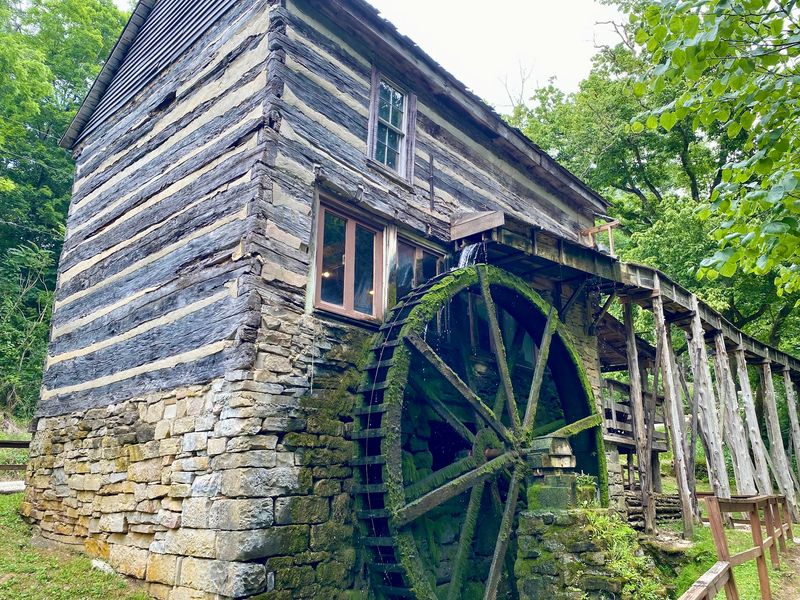
Plenty of historic sites display old machinery behind ropes. This one actually runs.
The property keeps the original water-powered grist mill that Squire Boone built, and it is still working today. It is a rare chance to see pioneer engineering doing the job it was made for.
The mill fits into the old pioneer village setting that gives the grounds their character. It turns the visit into part natural wonder and part Indiana history lesson.
Some people skip the cave entirely and come just for the mill and the shops. That speaks to how much the surface attractions can stand on their own.
The mill also makes a natural stop for school and church groups. Kids who just learned about Squire Boone underground can see something he built with their own eyes.
Pair it with a stroll around the grounds, which stay tidy and well organized. There are nice outdoor spots for a picnic nearby as well.
History buffs will want to linger here longer than planned. The combination of a working mill and a cave connected to the same family is not something found at many attractions.
For the kids, though, the next stop might be the highlight of the whole day.
Goats, Gems, Candles and a Zipline
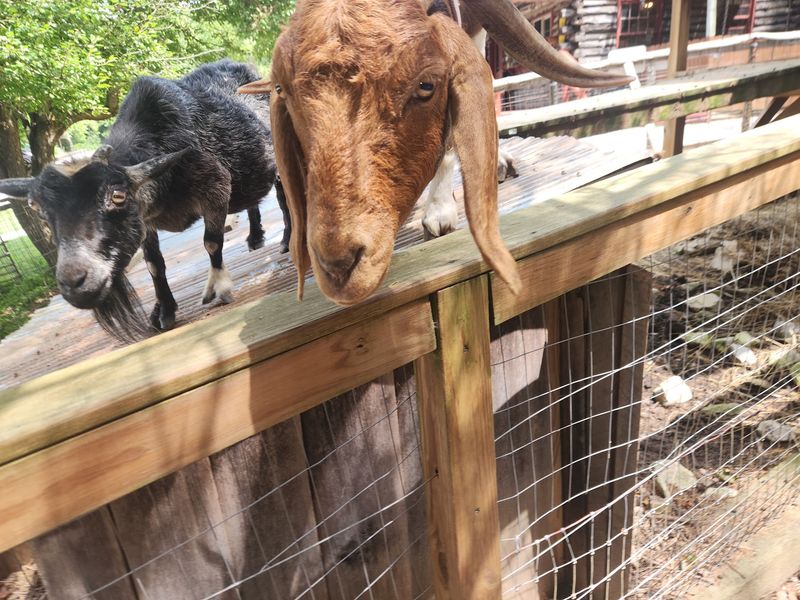
Waiting for the next tour has never been this busy. Pigs and goats hang out near the gift shop, and they are happy to walk right up for treats and attention.
The petting zoo stays clean, and the animals are friendly. Feeding them ranks as a bonus favorite for families.
Gem mining, also called rock panning, gives kids a hands-on activity with a prize at the end. Candle making lets everyone create a souvenir of their own.
The candle shop and rock shop both carry items worth browsing. The gift shop stocks cute magnets, geode nightlights, and sweatshirts, often at surprisingly affordable prices with some discounts.
A zipline rounds out the lineup for thrill seekers. Be aware that it has size and weight limits, so very tall or larger guests may not be able to ride.
A quick heads up for Monday trips. Some of the smaller shops and the snack shop may be closed on certain days, so plan around that if a specific activity matters.
All of these extras make it easy to turn a one-hour tour into a full day. Pick a few, mix them in with the cave, and nobody runs out of things to do.
Before any of that, though, a little planning helps everything run smoothly.
Tickets, Hours and Packing Smart
Good news for spontaneous planners: no advance booking drama is required. Tickets can be bought on the day of your trip, and tours leave from the gift shop about every hour.
Squire Boone Caverns is open daily from 10 AM to 4 PM. Arriving earlier gives more time for the extras.
Adult tickets have run about 26 to 27 dollars, and both cash and card are accepted. The tour lasts roughly an hour, and many say it feels like one of the longest cave tours in southern Indiana.
Parking is free, with plenty of space out front. The lot is entirely gravel, and the drive up is steep, which is worth knowing for low or manual cars.
Clean restrooms with multiple stalls are in the gift shop. Use them before heading underground.
Water bottles are not allowed on the tour, so leave them in the car. An average backpack is permitted, but pockets or a small zippered bag usually do the trick.
Pack a light jacket, since the cave runs cooler than the surface, and drips from the ceiling are common. A hood comes in handy for those drips, and shorts are fine.
Sturdy, comfortable shoes are a must for all those stairs.
The Verdict from Cave Country
Southern Indiana has no shortage of caves, so choosing one can feel like a coin toss. Among people who have toured several, this one keeps landing at the top of the list.
Some who visited Marengo Cave on the same day preferred this tour. Others who have been to Mammoth Cave say this spot is worth the drive on its own merits.
The appeal comes from the mix. There is rushing water, translucent formations, a total darkness moment, and a working pioneer mill, all led by friendly and knowledgeable staff.
It suits families with young children, school and church groups, reunions, and bus tours of older guests. It also suits anyone who likes history served alongside their geology.
The main caveat is accessibility. Stairs and narrow spiral staircases mean it will not work for everyone.
For most people, though, the day comes together easily. Buy tickets on arrival, feed the goats, take the tour, and save time for the mill and shops.
More than a few guests leave planning a return trip before they even reach the car. That kind of loyalty tends to come from places that deliver on what they promise.
Underground or on top, this corner of Mauckport makes a strong case for itself, one staircase at a time.
Enjoyed this story?
Add Fast Food Club as a preferred source to see more of our reporting on Google.