


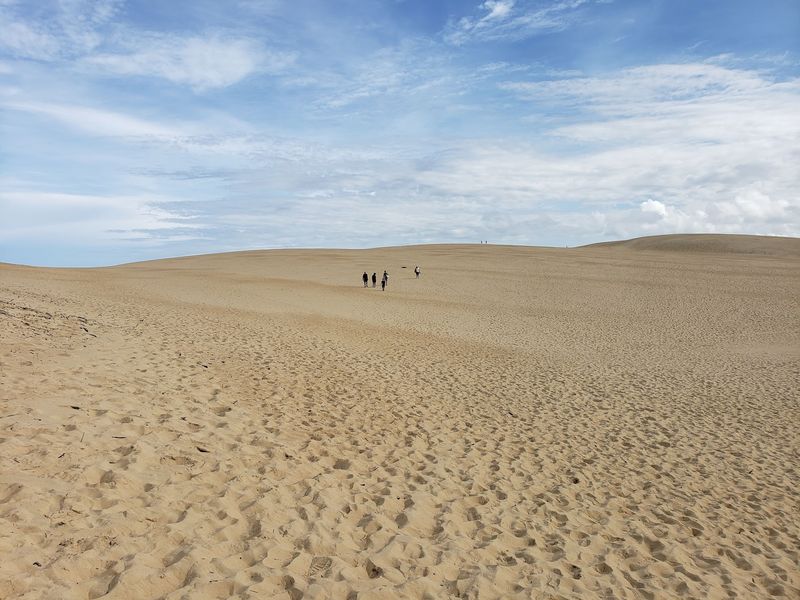
Most beach trips on the Outer Banks end at the waterline, but one spot in Nags Head sends people climbing uphill through mountains of sand. It holds the tallest dune on the entire East Coast, and it costs nothing to explore.
Kites fill the sky, hang gliders launch from the slopes, and the view from the top takes in the sound on one side and the Atlantic Ocean on the other. There is even an old castle slowly rising out of the dunes, and the full story of this unusual place is waiting in the sections ahead.
A Desert Tucked Into Nags Head
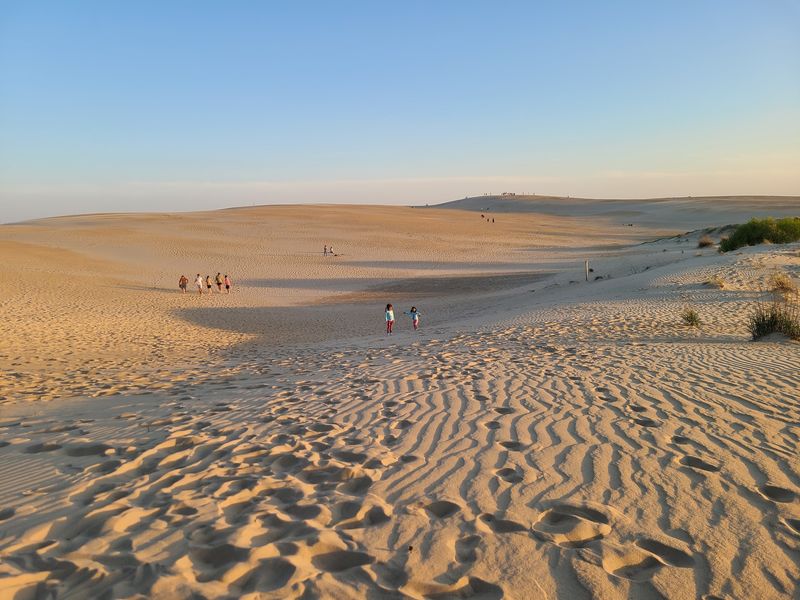
Sand dunes usually hug the edge of the ocean in a thin, polite line. On this part of the North Carolina coast, they grew ambitious and turned into a full landscape of their own.
Jockey’s Ridge State Park sits at 300 W Carolista Dr, Nags Head, NC 27959, right in the heart of the Outer Banks. The park is home to the tallest sand dune on the East Coast, which is a pretty bold title for a region better known for lighthouses and fishing piers.
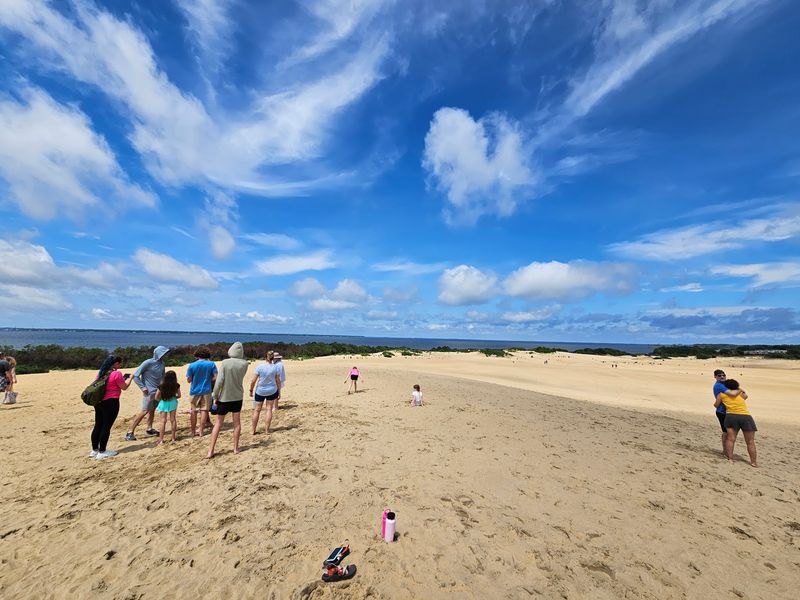
What makes the setting so striking is how suddenly it appears. Houses, shops, and parking lots give way to an open sweep of sand that stretches toward the sound.
From certain points in the dunes, nothing but sand fills the view in every direction. That sense of total escape is a big reason the park has become a regular stop for families returning to the Outer Banks year after year.
The park is classified as a North Carolina state park, and it carries an impressive 4.8-star standing across thousands of opinions. Hang gliding, hiking, kite flying, and sunset watching all happen on the same shifting ground.
Entry is free, parking is free, and the dunes are open daily. Not bad for a place that feels like a detour to another continent without leaving Dare County.
The real question is what keeps drawing people back, and the answer starts with the sand itself.
Dunes That Refuse to Sit Still
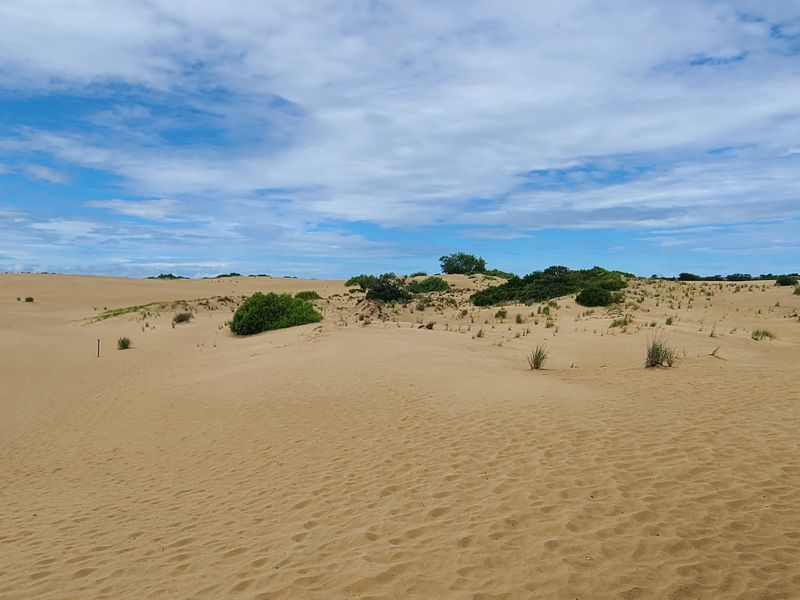
Here is a fun fact for trivia night. The biggest landmark in this park has no fixed address of its own, because it moves.
The dunes at Jockey’s Ridge are constantly shifting with the wind. Longtime fans of the park point out that each trip looks a little different from the last, since ridges, slopes, and hollows rearrange themselves over time.
That restless quality is part of the charm. A family that climbed the main dune a decade ago will find a new shape waiting on their next trip.
The shifting sand has also produced some surprising discoveries, which comes up later in this story. For now, it is enough to know that the ground under your feet is a work in progress.
The park itself has been a fixture on the Outer Banks for a long time, and it has seen big improvements over the last several years. Boardwalks and covered rest areas now make the approach to the dunes much easier than it used to be.
Donation boxes give people a way to support the park so future generations can enjoy the same climb. It is a small gesture for a landscape that never stops working on itself.
Of course, the headline act is the tallest dune of them all, and it deserves its own spotlight.
The East Coast’s Tallest Dune
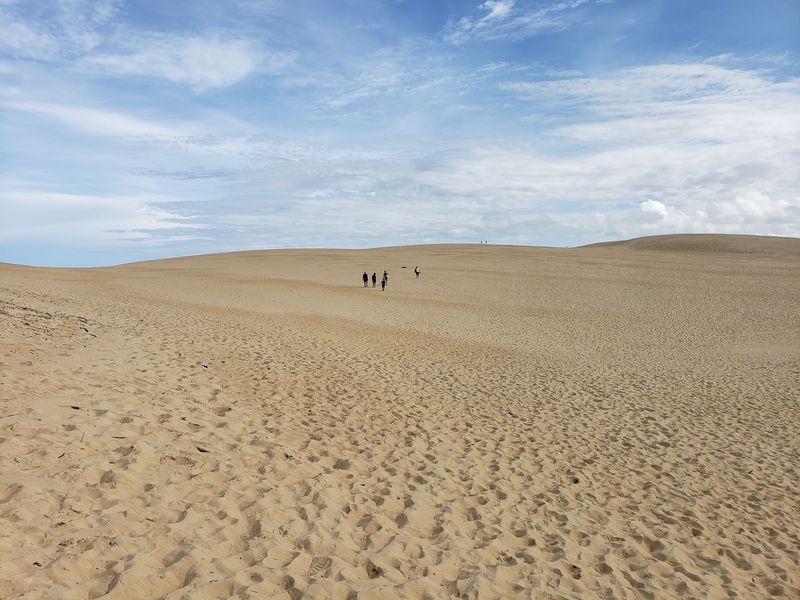
Calf muscles, consider yourselves warned. The climb to the top of the tallest dune on the East Coast is short, but it is a real workout.
Sand gives way with each step, so the hike takes more effort than the distance suggests. Families with kids usually reach the tallest dune in roughly 20 minutes from the parking area.
The good news is that the dune is not as vast as it first appears. A quick trip up and back down can take just a few minutes once you reach the base.
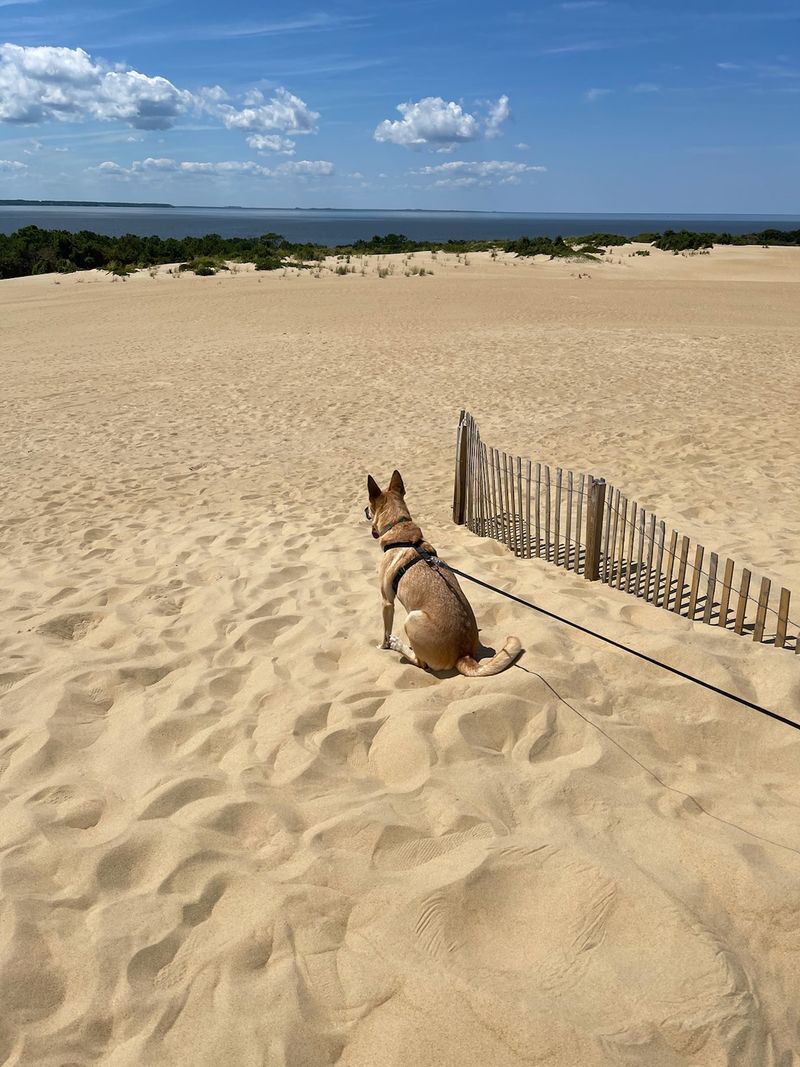
Many people find the effort manageable even with sore knees, especially early in the day. Dogs are welcome too, and plenty of four-legged hikers make the trek alongside their owners.
Once at the summit, the reward is a full 360-degree view over the Outer Banks. Plenty of people end up sitting on top for an hour or more, simply taking it all in.
There is no shade on the open sand, so a hat and sunscreen matter. Water is a must as well, since the climb burns through energy faster than expected.
Getting to the top is only half the fun. What you see from up there is where the park truly shows off.
Sound on One Side, Ocean on the Other
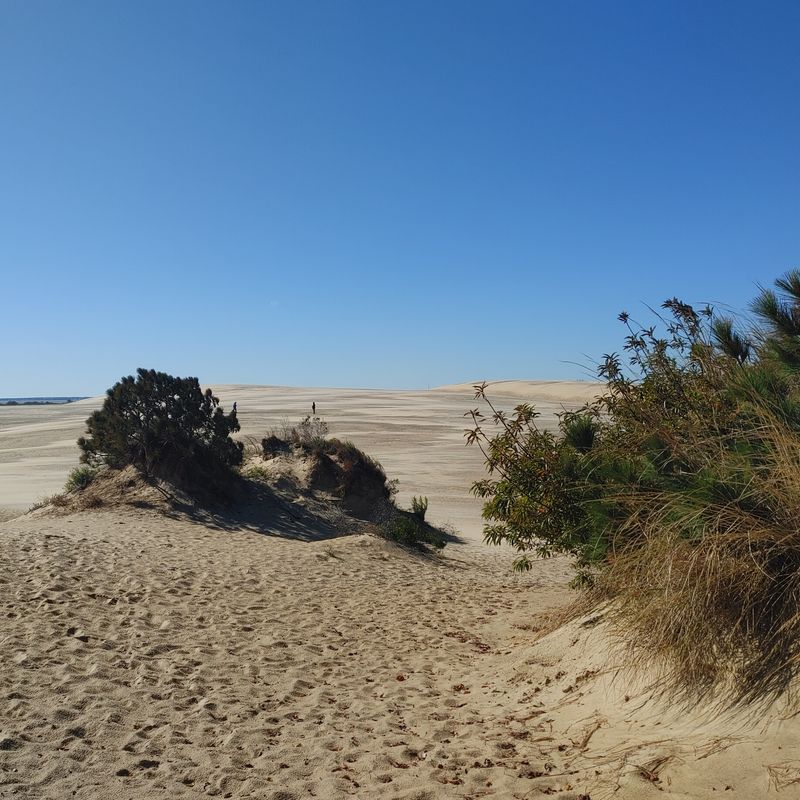
Few places on the Outer Banks let you look at two different bodies of water from the same patch of ground. The summit at Jockey’s Ridge is one of them.
To the west lies Roanoke Sound, the calmer bay side of Nags Head. To the east, the Atlantic Ocean stretches out past the rooftops of town.
That double view is one of the most talked-about features of the park. It gives a clear sense of just how narrow this strip of barrier island really is.
Canals near the sound are also visible from the high points. On clear days, the whole layout of the island comes into focus like a map drawn in real life.
Some hikers keep going past the summit and head down the far side toward the sound. The shoreline there can be a bit rocky, and wading in is an option for the curious.
Wildlife sightings pop up along the water, including crabs going about their business near the edge. It adds a small nature bonus to an already big view.
Cloudy weather does not ruin the trip either. The panorama holds up well even under gray skies, though the most famous show happens when the day starts winding down.
A Boardwalk Built for Everyone
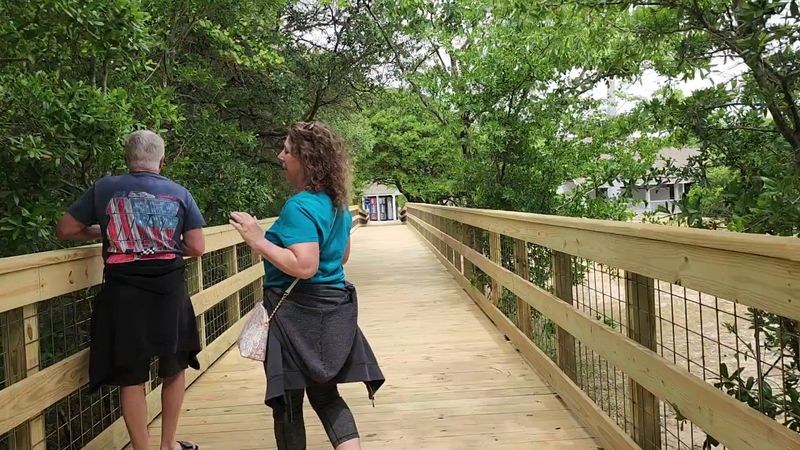
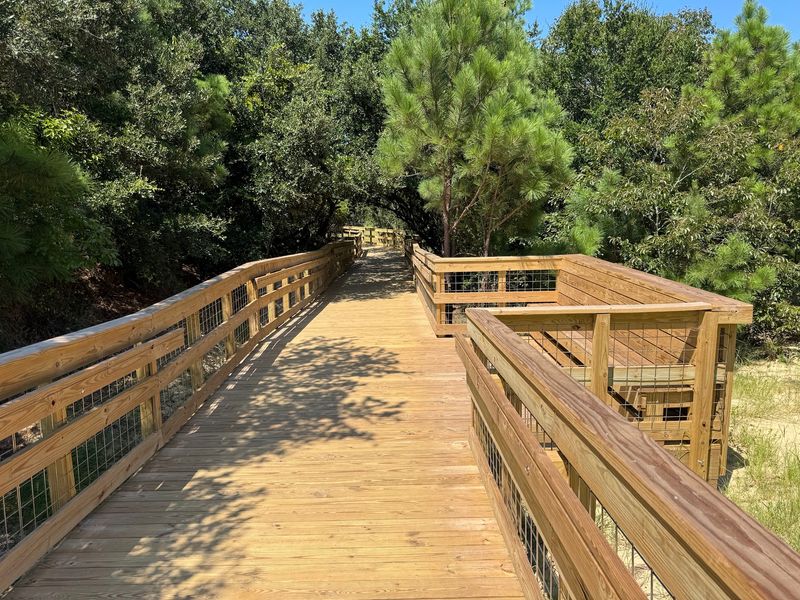
Not everyone wants to wrestle with soft sand from the first step, and the park has a smart answer for that. A newly built raised boardwalk now runs from the parking area deep into the dunes.
The walkway extends far out onto the flat section of sand, ending close to the base of the tallest dune. It does not climb any hills, so the final ascent still happens on foot in the sand.
Shaded pavilions and benches are spaced along the route. These rest stops make the walk easier for kids, older hikers, and anyone who simply wants a breather.
A covered area waits at the end of the boardwalk as well. It is a handy spot to regroup before tackling the dune or to watch hang gliders without climbing at all.
The full round trip on the boardwalk takes about 30 minutes at a relaxed pace. Surrounded by dunes on all sides, many people say the walk feels like being transported to another country.
The project wrapped up after a stretch of construction at the entrance. Now it stands as one of the biggest upgrades the park has seen in years.
Once the walk is done, timing becomes the next big decision, and evening tends to win.
Golden Hour Over Roanoke Sound
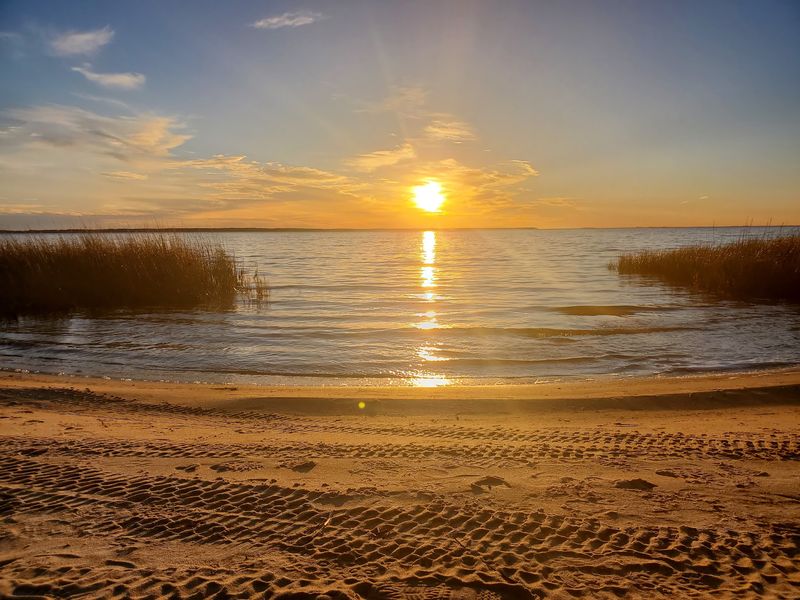
Sunset at Jockey’s Ridge has earned a reputation all its own. Hundreds of people single it out as the best time to be on the dunes.
The sun drops over Roanoke Sound, which sits on the western side of the park. From the top of the tallest dune, the whole scene unfolds with nothing blocking the horizon.
Arriving about 30 minutes before sunset gives enough time to climb and find a good spot. That window also tends to produce excellent photos as the light shifts across the sand.
Evenings bring a calmer mood to the park. Families spread out along the ridge, kids run down the slopes, and conversations slow down as the sky changes color.
Here is an insider tip worth remembering. A day with some early rain often leads to a clear evening, packed sand, and a lovely sunset once the clouds move off.
Surface temperatures also drop later in the day, which makes the climb more comfortable. Summer afternoons can be intense, so waiting for evening is a strategy many locals swear by.
The park stays open until 9 PM on its listed schedule, so there is time to linger. Just be ready for company, since the sunset crowd is loyal.
During the daylight hours, though, the sky belongs to something else entirely.
Kites Rule the Afternoon Sky
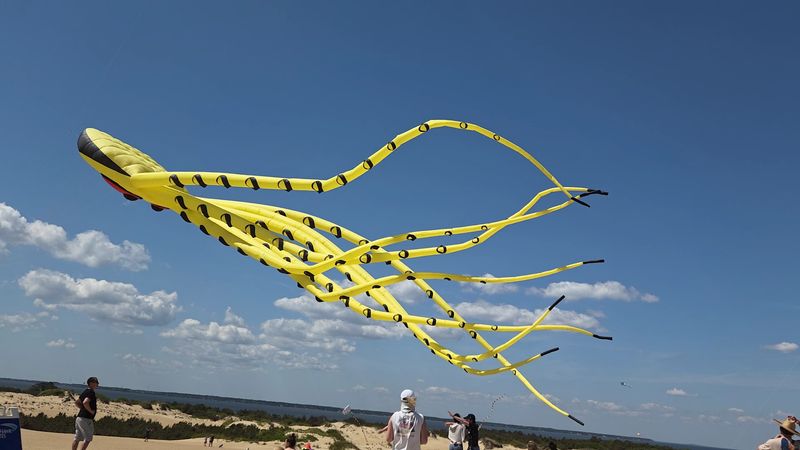
The wind here is not just weather. At Jockey’s Ridge, it is an invitation to grab a kite and head uphill.
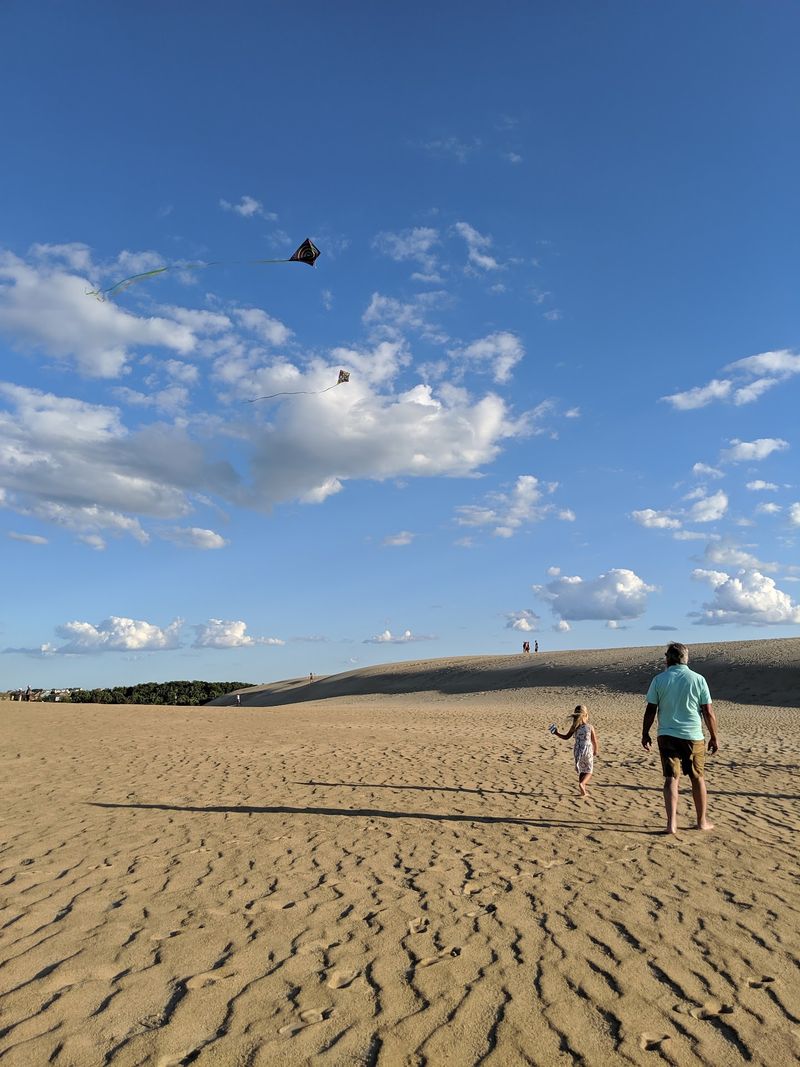
Kite flying ranks among the most popular activities in the park. Open dunes and steady breezes create ideal conditions for everything from simple diamond kites to more elaborate designs.
Families often make it a tradition, with parents and kids launching kites together from the slopes. Even a cloudy day can bring strong enough wind for a good flight.
The park also hosts a kite festival, which draws crowds of enthusiasts. The wind does not always cooperate on schedule, but the event still delivers a fun atmosphere.
Other gatherings pop up throughout the year as well. An art show during Memorial Day weekend has featured work displayed at the welcome center, and races on the dunes have been held here too.
For anyone packing for the trip, a kite belongs near the top of the list. Kitty Hawk Kites sits directly across the street, which makes last-minute shopping easy.
Kites are not the only things riding the wind at this park. Some people strap themselves to much bigger wings.
Hang Gliders and Sandboarders
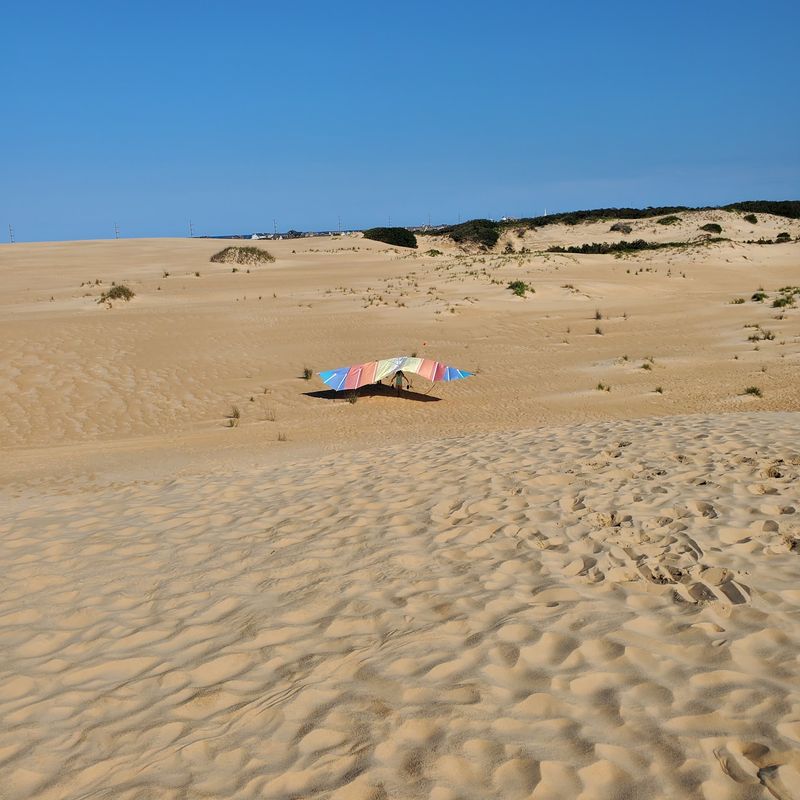
Some people climb the dunes for the view. Others climb them so they can leave the ground entirely.
Hang gliding is one of the signature activities at Jockey’s Ridge. The tall, open dunes and reliable wind make the park a natural training ground, and a hang gliding school operates here.
Watching the gliders is a pastime in itself. The boardwalk offers an easy vantage point for spectators who prefer to stay firmly on their feet.
Sandboarding is another way to enjoy the slopes with a little speed. Riders carve down the dunes on boards, turning the sand into a playground.
Sleds work too for those who want a simpler ride. Bringing one along adds a dose of adventure for braver members of the group.
Kitty Hawk Kites, located across from the park, is closely tied to the hang gliding scene in the area. It makes planning a lesson or picking up gear fairly straightforward.
Even a quick stop can include a glimpse of someone soaring overhead. The combination of flying, sliding, and climbing gives the park an energy that goes well beyond a typical beach day.
Yet one of the strangest sights here has nothing to do with sport. It is buried history coming back up for air.
The Castle Rising From the Sand
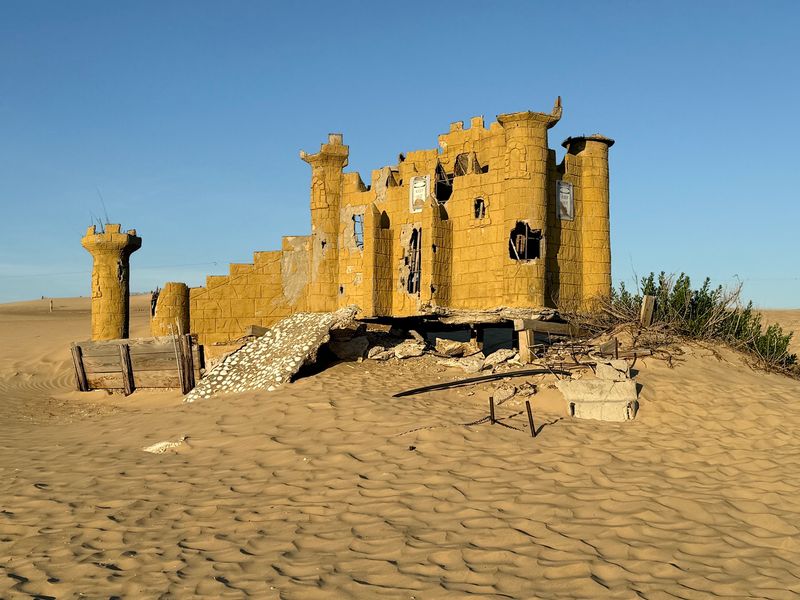
Not every park can say that a castle surfaced on its grounds. Jockey’s Ridge can, and the story is one of the quirkiest on the Outer Banks.
Years ago, a miniature golf course operated in the area. As the dunes moved, the course was buried beneath the sand.
Over time, the same shifting dunes began to uncover a castle from that old course. It emerged slowly, and longtime fans made a habit of returning each year to see how much more had appeared.
The castle is now fully exposed, sitting near the side of the park that faces Kitty Hawk Kites. It has become a favorite backdrop for photos.
There is a catch, though. Now that it is completely out in the open, the structure is weathering quickly.
That makes a trip to see it feel a bit time-sensitive. Nobody knows exactly how long it will last, or what the moving sand might reveal next.
The castle serves as a perfect reminder of how active this landscape really is. Dunes here do more than sit pretty; they bury, reshape, and occasionally hand back pieces of the past.
Beyond the castle, the park offers a trail with an even bigger claim to fame.
Where a 1,000-Mile Trail Finally Ends
Hikers who start in the North Carolina mountains have a long way to go. Their journey on the Mountains-to-Sea Trail wraps up right here at Jockey’s Ridge.
The trail stretches roughly 1,000 miles across the state. Having its finish line at the tallest dune on the East Coast gives the route a fittingly dramatic ending.
Day hikers do not need to walk across North Carolina to enjoy the trail system, of course. The park offers multiple routes into the dunes, each with a slightly different experience.
A nature trail winds over the dunes toward Roanoke Sound. It can be combined into a longer hike that loops back to connect with the boardwalk and return to the parking area.
The sandy trails provide a good workout and plenty of variety. Some hikers spend about an hour wandering through the dunes with their dogs.
Walking barefoot is popular on the dunes when conditions allow. After some rain, shallow pools of clean water sometimes collect in low spots, and feet dry quickly afterward.
Timing matters on these trails, especially in summer. Midday hikes in the heat can be tough, so early morning or later afternoon tends to be kinder.
Before heading out on any trail, the welcome center is a smart first stop.
Welcome Center Perks and Photo Stops
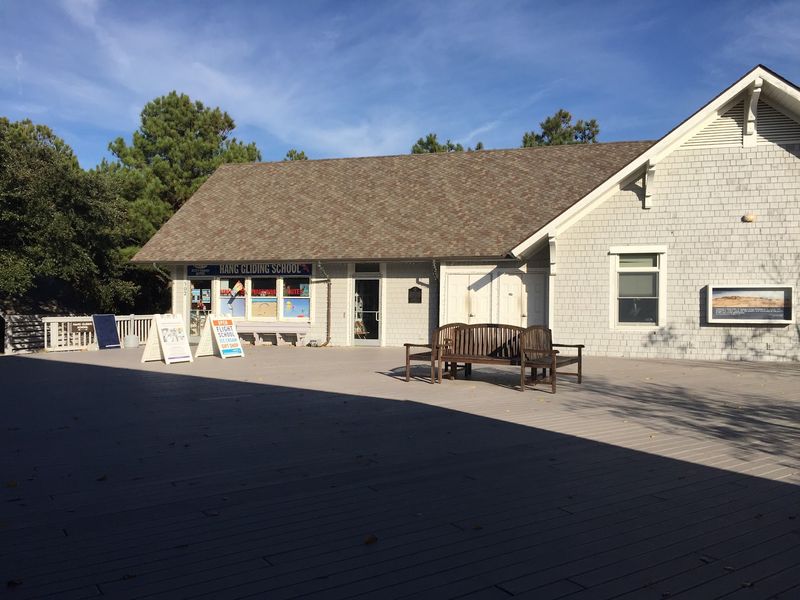
A clever little detail at the welcome center wins over dog owners right away. There is a designated dog parking area where pets can wait for about 10 minutes while their people step inside.
That short break is perfect for using the restrooms, checking out exhibits, or browsing any art on display. It solves a common problem for families traveling with pets.
Inside, interactive displays keep kids busy and curious. The staff earn frequent praise for being friendly and helpful.
Restrooms here are known for being clean, which matters after a sandy hike. Picnic benches around the area offer a place to regroup and rest.
Keep in mind that the welcome center keeps shorter hours than the dunes. It has been known to close around 4 PM, while the park itself stays open into the evening.
Photo opportunities are scattered around the grounds too. A hang glider display near the parking area is a popular spot for group shots.
A newer photo installation added in a recent season has also caught attention. Its monolith design stands out against the sand, and a selfie stand gives everyone a chance to capture the trip.
Photos are fun, but the park also works hard to make sure everyone can reach the dunes in the first place.
Dunes Within Reach for Every Ability
Steep sand and limited mobility do not usually go well together. Jockey’s Ridge has found ways to close that gap.
The new boardwalk is fully accessible for wheelchairs and strollers. It runs right up toward the tallest dune, surrounding users with the landscape without requiring a climb.
Shaded seating areas along the way add comfort for anyone who needs frequent breaks. The covered area at the end provides a relaxing place to watch the action on the slopes.
For those who want to go further into the dunes, the park offers another thoughtful option. People can schedule a time for a ranger to drive them through the park in a utility vehicle.
Guests with health conditions or physical limits have praised this service. It allows them to experience the dunes up close even when climbing is not possible.
The rangers leading these rides are known for being friendly and knowledgeable. A short tour can turn a limited trip into a memorable one.
Calling ahead to arrange a ride is the best approach, since it requires scheduling. Details can be found through the official North Carolina state parks website.
With access covered, the only thing left is planning the actual trip.
Hours, Parking, and a Smart Packing List
Good news first: this adventure is free. There is no charge to enter Jockey’s Ridge State Park, and parking costs nothing as well.
The lot is roomy, so finding a space is usually easy. Multiple paths lead from the parking area into the dunes.
According to its current listing, the park is open daily from 8 AM to 9 PM. Hours can shift with the seasons, so checking the official site at ncparks.gov before arriving is a wise move.
Packing smart makes a big difference out here. A hat, sunscreen, and plenty of water top the list since the sand offers no shade.
Footwear deserves special attention. Sturdy closed shoes beat sandals, because summer sand gets hot enough to be uncomfortable and even cause burns.
An umbrella can help anyone who struggles in the heat. Early morning trips are another great way to beat rising temperatures.
One more trick comes from seasoned regulars. On days when rain falls earlier, the sand becomes firmer and much easier to walk on, which is especially helpful with kids.
Dry, loose sand can make the climb feel twice as long. A little weather planning goes a surprisingly long way.
Why the Climb Earns Its Spot
Plenty of Outer Banks regulars admit they drove past this park for years. They assumed it was just another state park with a hiking trail, and then they finally stopped.
That first climb tends to change minds fast. Towering dunes, a view of two different waters, and wide-open space create a scene unlike anything else along the coast.
The park suits a wide range of travelers. Families with young kids, dog owners, hikers, photographers, and adrenaline seekers all find something worth their time.
Thoughtful touches round out the experience. The accessible boardwalk, ranger-guided rides, dog parking, and clean facilities show real care for the people who come here.
Then there are the extras that make each trip unique. A castle rising from the sand, a trail ending after 1,000 miles, and sunsets that pull crowds back night after night.
Best of all, the price of admission is zero. That leaves more budget for a kite, a hang gliding lesson, or another day in Nags Head.
With its strong reputation and constantly changing terrain, this is a place that rewards repeat trips. The dunes will look a little different next time, and that might be the best reason of all to come back.
Enjoyed this story?
Add Fast Food Club as a preferred source to see more of our reporting on Google.